A sinister parade of heavy music led by the reigning succubus of Black and Doom Metal.
I got to know Black/Gothic Metal band Cadaveria a couple of months ago while listening to The Metal Moose Show, and basically after that I had to go after more of their excellent obscure music. The band is led by the diabolical Italian beauty Cadaveria (aka Raffaella Rivarolo), known for being the former singer of Symphonic Black Metal band Opera IX. Now, after over ten years in action, the band releases their fifth full-length album, Silence, a sinister parade of Black and Doom Metal, with Gothic influences from the 80’s and the unique feminine touch by Cadaveria.
Despite being extremely hard for bands to stay relevant in Heavy Metal doing this type of dark music, more due to their demanding fans rather than to the music itself, Cadaveria somehow manage to reinvent their musicality with each release, avoiding that feeling of “I’ve heard that before a million times” from any person that gets in contact with their music, no matter if it’s a diehard fan or a brand new listener. Of course the music by Cadaveria is not light-hearted or commercial at all, so do not expect to listen to it anywhere, but only where it really matters: in the underground music world.
The opening track, Velo (The Other Side of Hate), which by the way is probably a play on words with “LOVE”, is the perfect representation of Melodic Black Metal with devilish feminine vocals (can I say Cadaveria is like the reigning succubus of Black Metal?), alternating traditional Black Metal with more symphonic parts and with Frank Booth and Dick Laurent doing an awesome job on guitars. Following that great start, as the name of the song says Carnival of Doom has an awesome Doom Metal punch, being brutal but delicate at the same time, with Cadaveria’s clean vocals redefining the meaning of the word “mesmerizing”, while in Free Spirit there’s a slight change in the band’s approach, with its guitar lines and vocals focusing on a more melancholic tune inspired by Gothic/Doom Metal from the 80’s.
The Soul That Doesn’t Sleep emanates despair and darkness, with Cadaveria beautifully switching between harsh and clean vocals while the rest of the band maintains a morbid rhythm, solidifying the overall result, followed by Existence, which gets closer to apocalyptic Black Metal with drummer Marçelo Santos conducting the rhythm. In the modern and amazing Out Loud, the band offers us a heavy and furious tune with hints of Thrash and Death Metal, sounding like an even more wicked version of Arch Enemy and making it a perfect choice for circle pits, while Death, Again, which begins in the darkest and most melancholic way possible, has that type of hypnotizing melody, with Cadaveria making it even more enjoyable.
The last part of Silence brings to the listener an interesting mix of good, bad and, of course, dark tunes, starting with Exercise1, too generic compared to the rest of the album; Almost Ghostly, a feminine version of Paradise Lost blended with Tristania, with highlights to its amazing vocal lines; Loneliness, another excellent technical track with Gothic elements dominating the entire song; and finally Strangled Idols, again a more melodic and dark song, with its raw Rock N’ Roll vein being very beneficial to the overall energy of the song.
You can check the official album trailer HERE, visit the band’s official Facebook page, and of course buy their music and merchandise at their webshop or on iTunes. If there was a parade of Black and Doom Metal, Silence would definitely be its sinful and delectable soundtrack.
Best moments of the album:Carnival of Doom, The Soul That Doesn’t Sleep and Out Loud.
Worst moments of the album:Existence and Exercise1.
Released in 2014 Scarlet Records
Track listing 1. Velo (The Other Side of Hate) 4:14
2. Carnival of Doom 3:28
3. Free Spirit 4:44
4. The Soul That Doesn’t Sleep 3:34
5. Existence 4:56
6. Out Loud 3:16
7. Death, Again 5:04
8. Exercise1 3:54
9. Almost Ghostly 4:22
10. Loneliness 4:42
11. Strangled Idols 5:00
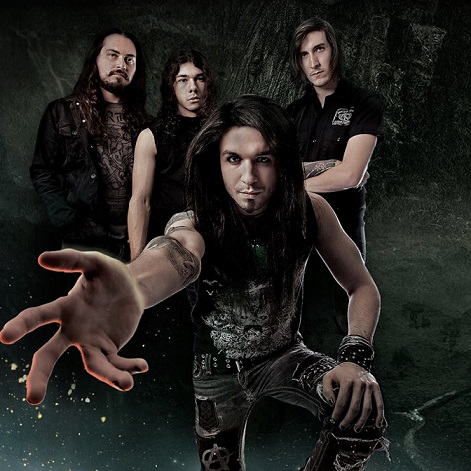
Band members Cadaveria – vocals
Frank Booth – guitar
Dick Laurent – guitar
Killer Bob – bass
Marçelo Santos – drums
These promising American death metallers return with an interesting mix of symphony, harmony and darkness.
As promised HERE, it’s time to review Virus Of The Mind, the brand new album by one of the most promising Melodic Death Metal groups in the market today (and they’re not from Sweden this time), American band Starkill. Sounding like a hybrid of Behemoth and Arch Enemy, with lots of symphonic elements and the band’s own unique dark touch, this is an excellent choice for fans of a more contemporary Symphonic and Melodic Black/Death Metal, which is at the same time brutal but very harmonious.
Born in 2008 in Bloomington, Indiana under the name of Ballistika and then Massakren, before changing it once and for all to Starkill and moving to Chicago, Illinois, the band was kind of “catapulted” to significant stardom at the end of 2012 when they signed to Century Media Records, releasing their debut album Fires Of Life in 2013. Now with Virus Of The Mind they sound even more prepared for reaching new heights, especially due to their capacity of mixing so many different genres and subgenres of heavy music such as Melodic Death Metal, Power Metal, Thrash Metal and Symphonic Black Metal in the most professional and polished way possible.
And their symphonic vein can be noticed from the very beginning of the opening track, Be Dead or Die, where the awesome keyboard lines blend perfectly with its Power Metal-ish drums at the speed of light by Spencer Weidner, all guided by one of the band’s trademarks, the harsh growls by Parker Jameson. Winter Desolation follows a more Melodic Death Metal line, especially its riffs and solos à la Arch Enemy, and the first “batch” of clean vocals is a welcome addition in order to expand their music range, while Breaking the Madness elevates the adrenaline of the listener, being perfect for live performances. Moreover, despite the vocals being so harsh, it’s easy to understand the dark and interesting lyrics Parker is singing (“Madness permeates / Into my body and my mind, it starts to break / Bit there is fucking nothing left to take / Nothing to feel / Trapped in the labyrinth, losing sight of what is real / So hard to tell which way to go”).
The title-track Virus of the Mind is a very symphonic tune where the smooth keyboard notes make an interesting paradox with the harsh vocals, while the also atmospheric and dark Skyward focus on the synergy between its guitar effects and keyboard notes. Before Hope Fades, one of the singles of the album, is a good reason why they should stick to fast and heavy music: it sounds a lot like the bland material from the last couple of albums by Nightwish (except for the vocals, of course), being so pop and generic it doesn’t represent at all the true heavy music the band is capable of doing. At least they get back on track with some Symphonic Black Metal the likes of Dimmu Borgir in Into Destiny, albeit the clean vocals do not sound as if they belonged to this song.
The last part of Virus Of The Mind has its awesome and pretty bad moments at the same time, starting with the amazing apocalyptic musicality in God of This World, focusing heavily on its keyboards and the more obscure and violent lyrics (“I shall smite the earth with a curse / Enemies to ashes on the soles of my feet / Shedding blood as long as it takes / To cease this engine of grief”), followed by My Catharsis, where all elements of Melodic Death Metal can be found: very technical guitar solos, fast drums, heavy riffs and huge doses of guttural vocals. And finally, Convergence, which was supposed to sound more epic, but in fact it doesn’t live up to the expectations and ends up being just filler and, consequently, the worst song of the whole album by far.
In summary, the second installment by those American death metallers is not only a nice and professional combination of harmony and darkness, but above all it also helps consolidate Starkill in the heavy music scene today as one of the most promising names in Melodic Death Metal. Well, I guess we can already stop calling them “promising”, as they’re indeed a reality, right? And if they keep providing us such enjoyable music, maybe one day they can go even further and reach the status of classic.
Best moments of the album:Be Dead or Die, Breaking the Madness and God of This World.
Worst moments of the album:Before Hope Fades and Convergence.
Released in 2014 Century Media Records
Track listing 1. Be Dead or Die 4:36
2. Winter Desolation 5:16
3. Breaking the Madness 3:55
4. Virus of the Mind 4:47
5. Skyward 4:05
6. Before Hope Fades 4:52
7. Into Destiny 4:02
8. God of This World 5:39
9. My Catharsis 3:54
10. Convergence 4:18
Band members Parker Jameson – lead guitar, vocals, keyboards
Tony Keathley – guitar, backing vocals
Shaun Andruchuk – bass guitar
Spencer Weidner – drums
Dark instrumental metal for people who love fast and furious music, recommended especially for the ones that cannot stand harsh vocals.
I know a lot of people that really enjoy the vigorous instrumental parts played by most Thrash, Death and Black Metal bands and artists. However, because of the aggressiveness of the guttural or harsh vocals that go along with those types of extreme music, they end up running away from those bands. If you find yourself in a similar situation, I have a very decent alternative for you: Russian Blackened Experimental Metal band Second To Sun and their new EP, entitled Three Fairy Tales, provides you modern and avant-garde heavy metal music, with elements of Black Metal and ethnic Finno-Ugric music, without those vocals that usually give you some undesired shivers.
Second To Sun was formed in Russia in 2012 by guitarist Vladimir Klimov, having released an EP entitled The God’s Favourite Whore (when the band suffered some lineup changes) and their first full-length album named Based On A True Story in 2013, before releasing now in 2014 their new EP. Bassist Anton Danilevski and drummer Theodor Borovski truly help Vladimir in his journey to create instrumental music that doesn’t sound annoyingly technical and consequently too snobbish, neither so basic to the point it becomes stale or uninspired. And they actually succeed in their proposal as we can see in this good (but short) album.
Based on the name of the EP, each one of the three tracks represents a different fairy tale, and they even have a specific image created for them, but as there are absolutely no vocal lines in any of them you’ll have to figure out their meaning by yourself. Starting the EP we have The Trapper, which focus on a more Symphonic Black Metal sonority blended with some modern and progressive music elements, as if Dream Theater joined the “dark side” of music. In addition, its heavy bass lines follow the pounding drums really well, plus a weird Russian voice giving the song an extra touch of creepiness.
In Merämaa, the best of the three songs in my opinion, their progressiveness reaches its limit, intensified by some Nu Metal riffs and electronic elements, with its guitar lines being a mix of traditional Black Metal and video game-ish music. It’s almost as if the guitar is “trying” to actually speak! And finally Second To Sun offer us the more traditional song Barmaley, with highlights to its amazing double bass generating a more apocalyptic sounding. They prove with this song why they don’t need a singer to create captivating music, with kudos to bassist Anton Danilevski for his extremely strong bass lines throughout the whole song.
You can find Three Fairy Tales available for purchase at Second To Sun’s official BandCamp page, where you can also check the exclusive artwork for each of the three songs (just click on their info link). If one day they’ll add a singer to the band no one really knows, but so far they have been doing an excellent job letting their instruments speak on their behalf, crafting music highly recommended for fans of extreme metal that are not really fond of guttural vocals.
Best moments of the album:Merämaa.
Worst moments of the album: As I always mention when I review an EP, let’s wait for a full-length album to choose one or more bad moments.
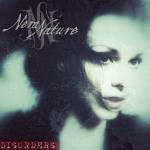
In an exclusive interview to the Headbanging Moose, Polish singer and songwriter Agnieszka “Nera” Górecka talks about NeraNature’s latest album Disorders, as well as her inspirations for singing and composing, her favourite bands and artists, the music industry and more. And there is also some very good news for the fans of Darzamat!
The Headbanging Moose: Let’s start by talking about your new album, the excellent Disorders. After three long years, your fans are finally able to enjoy more of that Gothic and alternative music found in Foresting Wounds plus some new elements, without losing the band’s essence. How was the creative process of the album, what inspired you the most for composing it, and what in your opinion are the main differences to your first album? What influence did the fact that you’re sharing your time between Poland and the UK have in the musicality of Disorders?
Agnieszka “Nera” Górecka: We started making new songs over a year ago. The good thing was we felt we had all the time in the world, as we didn’t have time limit and didn’t have to rush. We got down to work separately and having a base ready forwarded it to each other for further ideas. For the first time in my life a few songs started with my vocal lines and music was created after. It’s a pretty nice experience I might take advantage of in the future.
In terms of the lyrics my greatest inspiration is life itself. I keep observing people around me and I try being in somebody’s shoes, to understand what’s in their heads and why they act this or that way. I am a very empathetic person, so it’s quite a natural thing for me to see through someone’s eyes. Then I choose a common denominator for and I write.
When me and Marcus started the band we promised ourselves to push the boundaries of our own limitations and habits and no matter the music trend, do what we feel like doing, search different styles and keep developing. I would say that the main difference between ‘Foresting Wounds’ and ‘Disorders’ is that the latter is softer and more electronic.
Living in a new place gave me plenty of new impulses. I found out new things about the world, other cultures and myself. It got me out of my comfort zone and made me even more melancholic and pensive which you can hear on the new album (laugh).
THM: Do you have any extra material left (a cover version, a brand new composition, a totally different version of an existing song etc.) you didn’t feel like adding to the album for a given reason, just like what happens with many different bands and artists when releasing a new album? If so, are you planning on releasing that anytime in the future as a single or bonus track, or is it something you’re going to keep just for yourself?
Nera: There is always some extra stuff left which is not a part of the album for a certain reason. If I feel something kind of doesn’t belong in what we’re doing at the moment, I just drop it, and to be honest, never come back to it. I just know that working on the next album my heart and my mind will be in some other place, telling updated stories.
THM: Although the whole album sounds very personal I consider Twisted, one of the top moments of Disorders for me, even more personal, especially in regards to the lyrics. Not only that, it also feels very organic and you look very, very joyful in the music video. Can you tell us more about this specific song as to how it connects to your persona, in other words, what does Twisted truly represent in your career and in your life?
Nera: I agree, ‘Twisted’ is one of my favorites on the album. The song and the video is a portrait of a woman who cannot find happiness in the real life, so she begins to live in a self made world with her imaginary friend and lover. No matter how unreal it seems, it’s a thing that keeps her alive. As Albert Einstein said “A person starts to live when he can live outside himself.” Some people can treat it as a mental affliction but for me it is just a parallel world, which makes your life bearable and more exciting. Is it a personal song for me? Yes, it is (laugh).
THM: The beautiful ballad I Play, another one of my favorite songs in Disorders, also seems very introspective and emotive. I’m not sure if I can ask you that, but was it inspired by a special moment or event in your life and, if so, can you share more details about it with your fans? It’s always nice to know how an artist generates such honest and heartwarming music.
Nera: This song is about people too sensitive to accept callousness and cruelty in this planet. In other words it is about discovering misanthropy in yourself after what you have experienced. It is about a will to reject the system created by man to enslave another man. It is also about my losing faith in man as such because of his chasing after money and his own comfort and his unthinking, consumerist attitude towards our planet, the only one we have.
The whole album is set in the boundary points between what for some is still the norm, and for others is madness. I’m trying to describe the emotions of people glowing with reluctance to this world. The reasons for their inadequacy may be different, but their fears and feelings are very similar. Hence the title “Disorders”.
THM: I guess most people, including yourself, probably consider Mistaken the most alternative song ever composed by NeraNature. Is that a sign of how your music might sound in the future, and how has the reaction of your fans been to this song so far?
Nera: We like the idea of finishing the album with some odd song, as the end is the beginning of something new. We did it on the previous album with the song ‘Someone’ and now with ‘Mistaken’. We can’t predict the direction the band will follow in the future though, because it depends on what will catch our attention, what will inspire us and what stories will be ready for us to tell. The fact is that ‘Mistaken’ was composed by Marcus and me only and I can’t say we won’t make some more composition like that one, because be both like playing with electro flavour and austere texture. Time will tell.
So far I heard opinions that the song is intriguing. Still, most people prefer the ‘regular’ songs like ‘Twisted’ and ‘Drifting’. De gustibus non disputandum est.
Album Review – NeraNature / Disorders (2014)
THM: It seems that you have embraced the new way the music industry is doing business nowadays, which means making available to the market only the digital version of your album, with no physical copies to be purchased anywhere. What are the main factors that made you opt to market the album only that way, and is there a chance your diehard fans will be able to buy a Disorders CD anytime soon?
Nera: With this album we decided to try to deal with the modern way of publishing, which omits people not involved in what we do. I personally needed some fresh and organic connection with myself, so I recorded my vocals all by myself in strange places like my car, for example. All that work on the album was one big experiment that ended up with no deal, no label, no strings attached – there is just us and the listeners. We made the music, the cover and the video with our own hands, using the tools we had. As simple as that. I think it was a one-time thing and I am sure we will cooperate with wiser and more experienced people in the future. Also, some limited physical copies might appear one day, but at the moment we’re good being out of business.
THM: You might have already answered this question a billion times, but what is the probability of you, Nera, being in a Symphonic Black Metal band again, being it Darzamat or any other band or project, even if it’s only as a guest musician for one single song? Is that type of music still present in your life? If so, which Symphonic Black Metal groups do you usually listen to and recommend to your fans?
Nera: I surely need some space for my alter ego (laugh), so I won’t leave Darzamat that easily. We are getting some stuff ready and the very first sounds are being made, so stay tuned for further info.
When it comes to music I’m not into one genre only. Let me just name some metal bands that were and are important for me: Tiamat, Emperor, The Gathering, Samael, Arcturus, Green Carnation, Opeth, Watain, Burzum, Limbonic Art, Ulver, System of a Down, Antimatter, Porcupine Tree, Bathory, Amorphis, Anathema and my latest discovery- Devil’s Blood.
THM: How about other bands, artists and music genres? What’s currently in your playlist for your day-to-day activities? I’m pretty sure you listen to a lot of Gothic, alternative and atmospheric music from the UK, right?
Nera: Actually, I don’t listen too much to Gothic music. I try not to limit myself and I reach for different stuff according to my mood. Lately, for instant, I listen to classical music and some jazz. If you checked my playlist now you would also find things like Kings of Leon, Riverside, Peccatum, Solstafir, Agnes Obel, Leszek Możdżer, Depeche Mode, Pink Floyd, Cocorosie, Ihsahn and Dead Can Dance. As you can see, I like a bit of this and that.
THM: You probably know how huge the Polish community is in Canada (over a million Canadians claim full or partial Polish ancestry) and especially in Toronto, where over 4% of Torontonians are from Polish descent. However, besides the Blackened Death Metal by Behemoth, it’s really hard to find any material or to have any live concerts from Polish bands here in Canada. Why do you think this happens, and how likely is it to have NeraNature playing live in Canada and the US in the future?
Nera: That is a very good question, but to the Canadian agencies and promoters (laugh). I can assure you I would love to come and play with NeraNature and Darzamat, so I’m waiting for your invitation 😉
THM: Thank you very much for your time and for sharing with us all those details about your music and your life, and please feel free to send a final message to all your Canadian fans and to everyone else in the world that enjoys the music from NeraNature.
Nera: Thank you very much for your time, attention and support.
Remember to think for yourself and keep in touch with your soul! Wish you all the best! Nera
An Avant-garde Black Metal album full of dark and complex compositions, highly recommended for all fans of heavy music.
If Black Metal itself is a genre that depends a lot on a strong atmosphere to succeed, that’s even more important for Symphonic Black Metal bands such as the very professional and technical independent band Diablery, who seem to master the art of creating dense atmospheric songs based on what you will find on their excellent debut album, entitled Architect. Are you a fan of heavy synths, desperate vocals and totally evil lyrics? If the answer is yes, this album is definitely what you’re seeking to feed your dark soul.
The music by this obscure band from Athens, Greece, which by the way is the country of many awesome bands like Rotting Christ, Firewind and Septicflesh, doesn’t have a single moment of simplicity or nonsense noises: all elements found in Architect, which was mixed and mastered at Toproom Studio in Norway by Børge Finstad (who has already worked with Mayhem, Enslaved, Borknagar, Theatre of Tragedy, among others), are perfectly connected by pleasant and deep melodies, and of course, an incredible somber feeling that is present throughout the whole album. Furthermore, nothing would have been possible without the above average skills of all band members, with highlights to the amazing synths and drums by Nazfell and Beleth, respectively.
Architect kicks off with Mysteria Aeterna, an eerie piano intro which prepares the listener for all the darkness to come, which indeed happens as soon as Architect of Manifestations starts: this is a very symphonic and melodic song, but at the same time 100% brutal, that I’m pretty sure most fans of Norwegian Symphonic Black Metal band Dimmu Borgir will enjoy. The same can be said about Embraced by the Theurgist, where you can feel the intensity in Diablery’s music and appreciate the excellent job done by Nazfell on synths, who adds many different layers to the song. Pay attention to it and you’ll notice this song presents so many variations it sounds like three or more songs in one.
Vanity of Darkness, one of the best songs of the whole album, has an intro that could easily be used as a movie score, followed by a powerful sonority and the awesome vocals full of despair by the talented singer and guitarist Setesh, while Magistris Inferiores is a shorter and more boisterous track that sounds a lot like some of the old songs by Dimmu Borgir. In addition, I must say Beleth is a beast on drums, and the keyboards at the end are very interesting and a good bridge for the next song, the superb Thus Made Perfect. The longest track of the album is a violent Black Metal tempest so professionally and beautifully done you won’t even remember we’re talking about an independent band, and when it’s over I’m sure you’ll play it again and again. One might ask if this song is part of a movie soundtrack, so mighty and complex it is.
The last part of the album begins with another good song called Seal Thy Mouths with Pillars of Azurite (I truly love how Black Metal bands name most of their songs), with its melancholic intro and an intense atmosphere, followed by the excellent mix of heavy riffs, strong synths and pounding drums found in Ichor Shrine Synagogue, and the more direct Black Metal from Blackness Enshrouds This Congregation, a very interesting song full of violent vocals and energetic drums. And finally, close your eyes and enjoy the “journey” through darkness offered by the band with the outro Horn of Amentet, one of the most interesting I’ve ever listened to. And I’m not even going to say much about the excellent album art: it emanates obscurity and malignancy, exactly like the music by Diablery does.
To sum up, Architect is not just one more Black Metal album, but a truly avant-garde collection of dark compositions where the main goal is to provide all fans of Heavy Metal, especially the more contemporary black metallers, a very creative and evil experience in heavy music. And if you really enjoyed the music by Diablery, you can support the band by purchasing Architect in digital format at their BandCamp official page, or a physical CD copy at their CreateSpace online merchstore.
Best moments of the album:Architect of Manifestations, Vanity of Darkness and Thus Made Perfect.
Worst moments of the album:Seal Thy Mouths with Pillars of Azurite.
Released in 2014 Independent
Track listing 1. Mysteria Aeterna (Intro) 1:47
2. Architect of Manifestations 6:05
3. Embraced by the Theurgist 6:28
4. Vanity of Darkness 6:37
5. Magistris Inferiores 4:17
6. Thus Made Perfect 9:31
7. Seal Thy Mouths with Pillars of Azurite 6:08
8. Ichor Shrine Synagogue 5:08
9. Blackness Enshrouds This Congregation 4:59
10. Horn of Amentet (Outro) 7:25
Band members Setesh – vocals, guitar
Nimerius – guitar
Nazfell – synths
Desaster – bass
Beleth – drums
This new Symphonic Black Metal band from Russia has what it takes to conquer the world of heavy music.
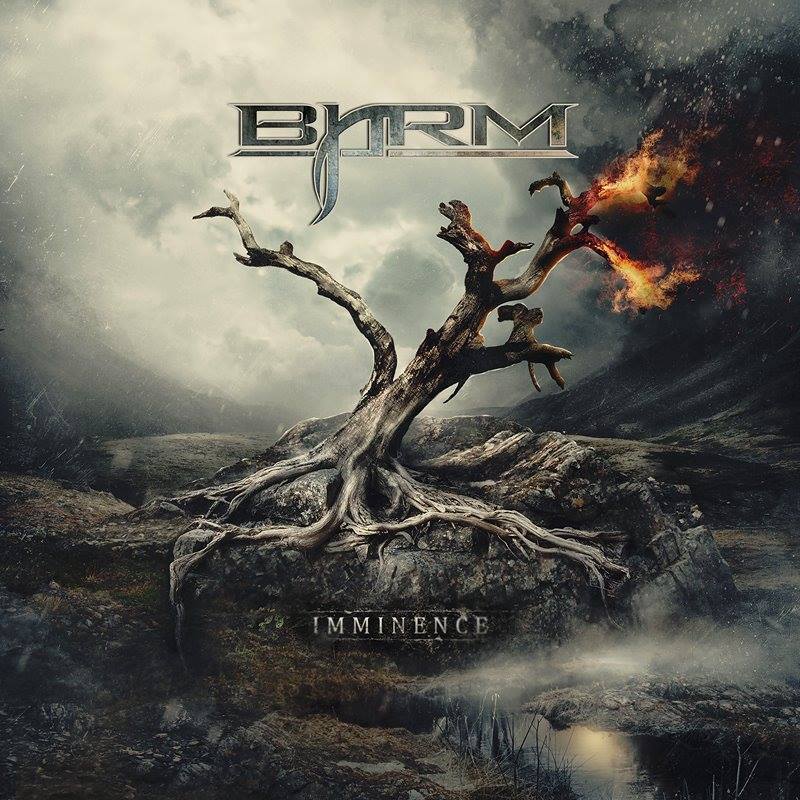
Although the Winter Olympics 2014 are over, let’s stay in Russia and enjoy the obscure Imminence, the debut album from Symphonic Black Metal band Bjarm. Formed in 2009 and based in the city of Severodvinsk, in the north of Arkhangelsk Oblast, the name of the band was not chosen in vain: Bjarmaland (also spelled Bjarmland or Bjarmia) was a territory mentioned in Norse sagas up to the Viking Age, and it usually referred to the southern shores of the White Sea and the basin of the Northern Dvina River, which today comprise a part of the Arkhangelsk Oblast of Russia. In other words, the band has a very creative and strong name, but what about their music?
Honestly, it’s very difficult to find anything from Russian Heavy Metal bands on the web and even harder at any music store (at least here in Canada), so I didn’t know what to expect from Bjarm. I personally don’t remember listening to or reading about any bands from Russia except for Symphonic Power Metal band Арктида (Arktida) and Epic Pagan Metal band Аркона (Arkona), and even in those two cases the information is usually very scarce. However, I went to a Helloween concert during my vacation last year in Saint Petersburg and was able to see how passionate Russian fans are for heavy music, so in my mind I started to imagine their music as something at least full of passion and feeling.
And for my total happiness, I was not wrong: the final result in Imminence outdid all my expectations in terms of creativity, intensity and professionalism. Bjarm might be essentially a Black Metal band, but by adding many elements from Symphonic Metal and Death Metal in their music they were able to create a more complex musicality than just some raw generic Black Metal. Not only that, the fact that Imminence was mixed at a good studio such as Stone Oil Studio and mastered by Tony Lindgren (who has already worked with great bands like Paradise Lost and Kreator) at Fascination Street Studios, provided the album a very good and professional sound quality too.
The imposing intro Approaching Of The Close opens the album in a way that would make the guys from Cradle of Filth very proud, as it reminds me of their famous intros from the albums Dusk and Her Embrace and Cruelty and the Beast, followed by the dark and heavy Knowledge Of Doom, a pure Black Metal song with amazing female vocals and atmospheric keyboards, and without any doubt one of the best tracks in Imminence. The obscurity goes on with Ominous Dreams, with highlights to the deep growling by Andrey and the extremely heavy riffs mixed with some more strong keyboard notes.
The next track, The Nine Worlds, is one of the fastest of all (if not the fastest) especially due to the Death Metal elements found in it; it’s not less symphonic, though, as the keyboards are always there to give it that Black Metal touch. Fire Lord’s Torment sounds like if it was extracted from a horror movie soundtrack, with a beautiful piano in the beginning that works as an intro to a very heavy and dense sequence, while the title-track, Imminence, is an instrumental song very well-executed by all band members, especially the keyboards by the gorgeous Anastasiya. By the way, what’s the secret with the girls in Russia? I’ve never seen a single Russian girl that is not pretty!
Getting back to the music in Imminence, the next track, Oracle, is very melancholic and evil, and has lots of elements from Cradle of Filth and Dimmu Borgir in it, especially the diabolic vocals by Andrey that seem to be really inspired by Shagrath, while Secret Of The Immortals gets back to a more symphonic sonority with total focus on the sound of the keyboards together with the rhythmic drums.
The last part of Imminence is composed by the song The Highest Hall, another evil track that sounds a lot like some old Dimmu Borgir songs with a pretty decent job done by drummer Vitaliy, and Tree On The Bones, a truly grim track that, although not as creative as the rest of the album, ends it in a way that will let all listeners with a very good impression of the work done by the band, eager for more of Bjarm’s Symphonic Black Metal and to see them recreating all that dark atmosphere in a live concert.
The album art, designed by artist Al.Ex, from the Mayhem Project, is also very professional, and of course, dense and obscure as expected, increasing the overall quality of Imminence even more. I’m pretty sure all band members are extremely proud of their “child”, and let’s hope new good bands like Bjarm keep coming from Russia or any other countries to provide us metalheads more unique and interesting music like what’s found in Imminence.
Best moments of the album:Knowledge Of Doom, Ominous Dreams and Oracle.
Worst moments of the album:Fire Lord’s Torment and Tree On The Bones.
Released in 2014 Fono Ltd.
Track listing 1. Approaching Of The Close 3:32
2. Knowledge Of Doom 6:33
3. Ominous Dreams 6:23
4. The Nine Worlds 5:55
5. Fire Lord’s Torment 6:04
6. Imminence 3:46
7. Oracle 3:47
8. Secret Of The Immortals 4:33
9. The Highest Hall 4:13
10. Tree On The Bones 5:30
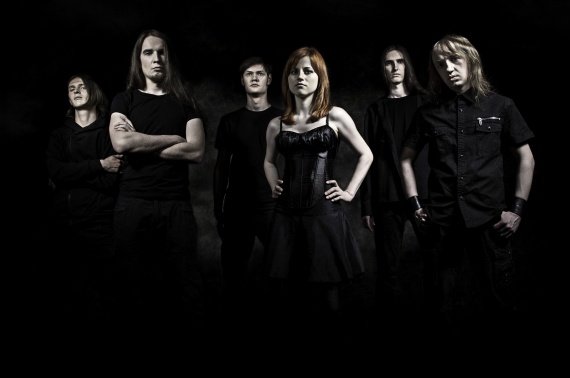
Band members Andrey – Vocal
Egor – Guitar
Anastasiya – Keyboards
Aleksey – Guitar
Mikhail – Bass
Vitaliy – Drums
Our Heavy Metal goddess this month is the perfect representation of all the beauty and finesse of her home country: Agnieszka “Nera” Górecka, or simply Nera, is a gorgeous Polish singer and songwriter from the city of Katowice (Silesia), known for her potent vocals in the Polish Symphonic Black Metal band Darzamat, and more recently for her own solo project called NeraNature.
Nera started her career in 1997 with the Gothic Metal band MidnightDate, from the city of Gliwice, about 30 minutes from Katowice. Then after a few years she finally joined Darzamat, in 2003, with whom she has recorded so far three studio albums: Semidevilish (2004), Transkarpatia (2005), and their latest one Solfernus’ Path (2009), as well as a live DVD called Live Profanity (Visiting the Graves of Heretics). In one of her interviews, she explained the meaning of the band’s name, saying it comes from the Latvian mythology and it denotes garden goddess ( dārzs = garden and māte = mother, in Latvian). In her own words, “I really like it as it seems to me very “organic”, close to the nature and paganism”, showing her passion for everything related to Mother Nature.
Due to Nera’s powerful voice, astonishing looks and sexy onstage moves (and of course, the overall quality of their music), Darzamat reached then some status, gaining respect from Heavy Metal fans all over the world, being invited to play in festivals with exceptional bands such as Arch Enemy, Carcass and Stratovarius, and even in a special Heavy Metal festival in India, which is something rare to see in heavy music today. Besides that, the band also featured in the 2009 edition of the amazing Metal Female Voices Fest. Nera’s mesmerizing performance with Darzamat can be seen in the videos In Red Iris, from the album Semidevilish, and The Burning Times, from the album Transkarpatia.
In 2009, Nera founded her own solo project called NeraNature, completely different from Darzamat. The music is more like some Gothic Rock, with Nera using her voice in a smooth and charming way, and according to Nera herself, “this project is more intimate, private and sometimes bizarre and freakish.” The name of the band is a combination of her own nickname and the word “Nature”, as a reflection of her deep connection with the environment. This connection can be easily seen in the lyrics, which are all about Nature itself, life, and a more feminist outlook of the world. She released a full-length album in 2011 called Foresting Wounds, which includes a pretty cool cover version of Garbage’s The World Is Not Enough, and has recently released a new single entitled Drifting (available on iTunes and Amazon.co.uk), which probably means there will be a new NeraNature album pretty soon.
This slideshow requires JavaScript.
Apart from her career with Darzamat and NeraNature, she appeared as a guest singer in the albums Arcane (2010), by the Portuguese Gothic Metal band Dark Wings Syndrome, and Ordo Bellictum Satanas (2010), by the Ukrainian ex-Black Metal band Semargl.
Regarding her musical influences, Nera said the most important bands and artists in her life, which helped define her singing style, were The Gathering, Tiamat, Samael, Ulver, Bathory, Arcturus and Opeth. Furthermore, it seems she has a very eclectic taste for music, as she usually listens not only to Heavy Metal, but also to several kinds of rock, ambient, smooth jazz and some classical music. In her free time, Nera enjoys listening to music from the bands Peccatum, Emperor, Ulver, Opeth, Pink Floyd, Leszek Mozdzer, Satyricon and some soundtracks such as Twin Peaks, Requiem for a Dream, and Dracula. She also mentioned she has a special admiration for the music of the Norwegian Black Metal band Emperor, and that she would love to perform live one day with them.
And finally, when talking about her voice and technique, Nera said that your emotions, experiences and own interpretations are much more important than any singing classes you might take in your life (by the way, she has never taken any), and that the most exciting thing for her is that your voice is unique, it’s like your fingerprint, and it helps define each person in the world, not only singers. We have to agree with her, but let’s be honest and also admit that the voice of this gothic polska księżniczka, as well as her beauty and charm, are way above the average.

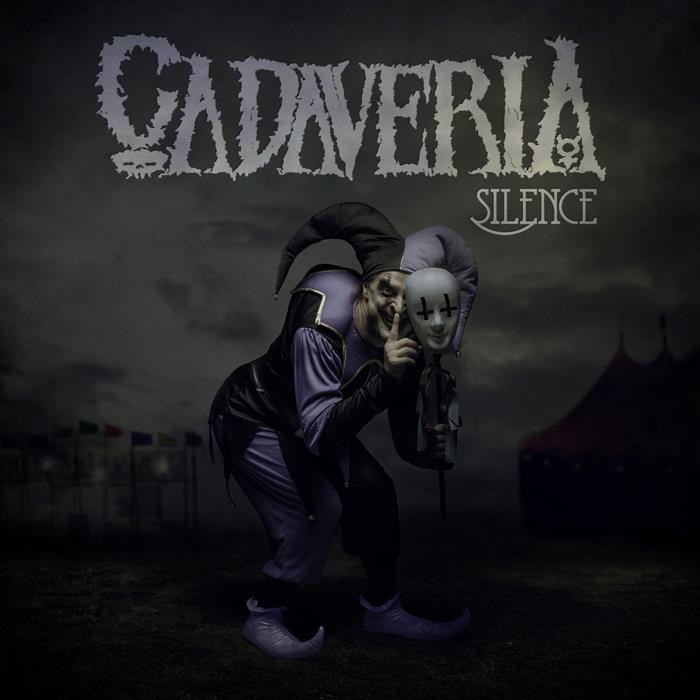 I got to know Black/Gothic Metal band Cadaveria a couple of months ago while listening to The Metal Moose Show, and basically after that I had to go after more of their excellent obscure music. The band is led by the diabolical Italian beauty Cadaveria (aka Raffaella Rivarolo), known for being the former singer of Symphonic Black Metal band Opera IX. Now, after over ten years in action, the band releases their fifth full-length album, Silence, a sinister parade of Black and Doom Metal, with Gothic influences from the 80’s and the unique feminine touch by Cadaveria.
 The Soul That Doesn’t Sleep emanates despair and darkness, with Cadaveria beautifully switching between harsh and clean vocals while the rest of the band maintains a morbid rhythm, solidifying the overall result, followed by Existence, which gets closer to apocalyptic Black Metal with drummer Marçelo Santos conducting the rhythm. In the modern and amazing Out Loud, the band offers us a heavy and furious tune with hints of Thrash and Death Metal, sounding like an even more wicked version of Arch Enemy and making it a perfect choice for circle pits, while Death, Again, which begins in the darkest and most melancholic way possible, has that type of hypnotizing melody, with Cadaveria making it even more enjoyable.







 THE HEADBANGING MOOSE