
Let the devil sing inside your dark and evil heart to the sound of the sophomore album by this up-and-coming Swedish Black Metal horde.

 “You may claim to not know or believe in the Devil, but rest assured that the Devil knows you…”
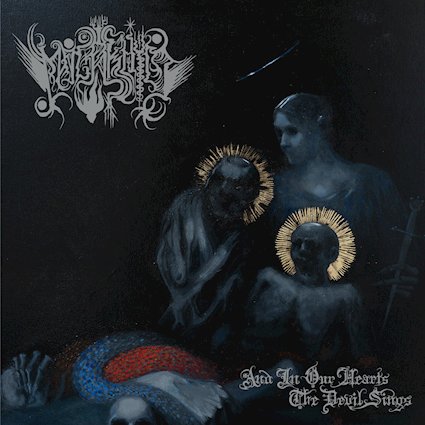
From their formation in 2016 onward, the ascent of Umeå, Sweden’s own Black Metal horde Malakhim has been both steady and swift, from their first demo Demo I, to their first EP II, to their first full-length album Theion, culminating now in 2025 with the release of their sophomore opus, beautifully and poetically entitled And in Our Hearts the Devil Sings. Once again engineered by the band’s longtime friend and co-conspirator Marcus E. Norman (aka Vargher of Naglfar, Bewitched, Ancient Wisdom), with an ominous artwork by Kristina Pavleska of Mors Ultima Ratio Art (and additional booklet artwork by longtime friend Karmazid), the new offering by vocalist E, guitarists AK and AN, bassist TK and drummer VT isn’t strictly a concept album per se, as its lyrical themes are nevertheless deep, loosely based on the ideas of Yetzer Hara (Hebrew for “evil inclination”), a concept in Jewish thought that represents the innate human tendency to do evil, commit sins, or act against moral principles.
The album kicks off with the seven-minute black mass entitled And In Our Hearts the Devil Sings, exploding into sheer madness to the crushing drums by VT and the demonic vociferations by E, while Solar Crucifixion also starts in a Stygian, cryptic manner before all hell breaks loose to the scathing riffage by AK and AN, not to mention how piercing E’s vocals sound. Then investing in a more straightforward Black Metal sonority we face A New Temple, simply reeking of all elements that make the genre so compelling; and E’s demonic roar sets the tone in the electrifying, venomous Into Darkness We Depart, with TK and VT shaking the foundations of our rotten planet with their infernal kitchen. The pounding drums by VT will smash your cranial skull in Angel of the Bottomless Pit, again presenting the band’s trademark devilish riffs and otherworldly vocals, while Hearts Ablaze presents a classic Black Metal vibe, albeit it sounds a bit convoluted or too chaotic at times. Lastly, they get back on track with eight minutes of total darkness in the form of The Firmament Submits, where AK and AN sound ruthless with their striking riffs and solos before the song reaches its climatic, atmospheric ending.
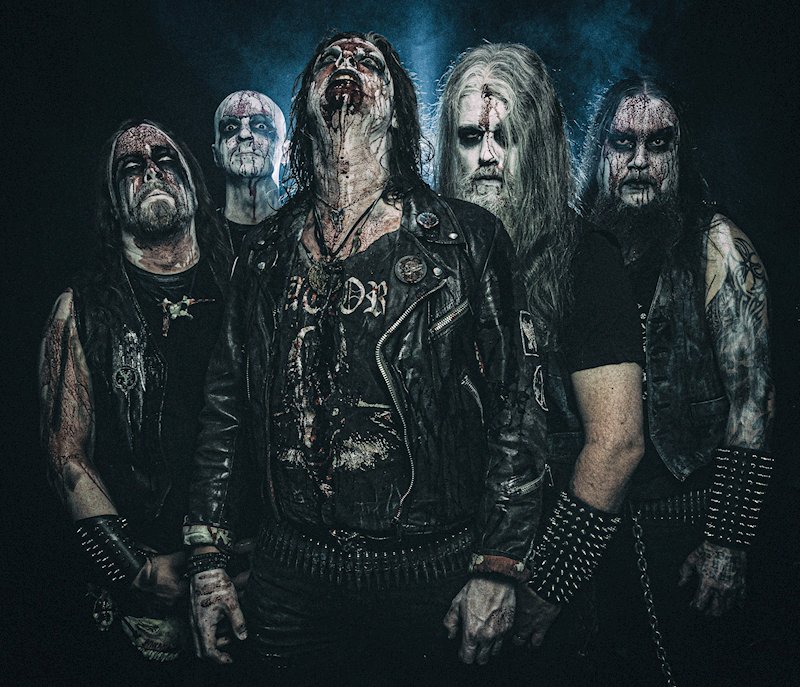 Showcasing a concertedly more melodic and majestic Malakhim, offering the band’s trademark orthodox Black Metal with a death and doom vein, And In Our Hearts the Devil Sings is undoubtedly the band’s strongest effort to date, and you can join their sinister cult by purchasing a copy of the album from their own BandCamp, or from the Iron Bonehead Productions’ BandCamp or webstore. You can also find more information about such a talented horde on Facebook and on Instagram, stream their discography on any available platform like Spotify, or simply click HERE for all things Malakhim. Because if the devil truly sings deep inside our blackened hearts, we can all rest assured he’s singing the songs found in the new album by Malakhim.
Best moments of the album: And In Our Hearts the Devil Sings, Into Darkness We Depart and Angel of the Bottomless Pit.
Worst moments of the album: Hearts Ablaze.
Released in 2025 Iron Bonehead
Track listing
1. And In Our Hearts the Devil Sings 7:44
2. Solar Crucifixion 6:12
3. A New Temple 5:27
4. Into Darkness We Depart 5:50
5. Angel of the Bottomless Pit 5:32
6. Hearts Ablaze 4:30
7. The Firmament Submits 8:20
Band members
E – vocals
AK – guitars
AN – guitars
TK – bass
VT – drums


 THE HEADBANGING MOOSE