Album Review – Hades Descent / The Monolith (2025)

Let’s embark on a cinematic metal journey to the sophomore opus by this UK blackened entity, set centuries into a dystopian future on a dying earth.
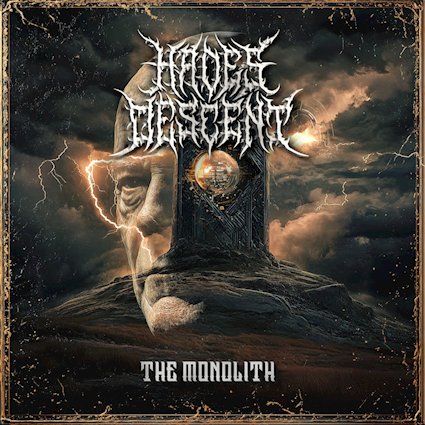
Forging Symphonic and Melodic Death and Black metal with a strong cinematic scope, Berkshire, UK-based entity Hades Descent is back from the underworld with its sophomore opus, entitled The Monolith, a dystopian concept album offering a dark fusion of symphonic atmosphere, blackened aggression, and melodic precision, marking the project’s most ambitious work to date. Fully composed, orchestrated, recorded, mixed, and mastered by the band’s mastermind Hades at Titan Studios, underscoring the project’s uncompromising DIY spirit and singular vision, anchored by the beyond versatile vocals by D.M., and featuring the more-than-special guests Karl Sanders (Nile), Brian Kingsland (Nile, Imperishable), Björn “Speed” Strid (Soilwork, The Night Flight Orchestra), and Tim Goodson, The Monolith is set centuries into a dystopian future, on a dying earth, where mankind has embraced cybernetics in pursuit of perpetual enhancement, until humans no longer know where they end and the machine begins. “This is a concept album, based on an idea I had about 5 years ago,” explains Hades. “It’s taken that long to come to fruition! I hired an author, Tony Martucci, to turn the concept into a proper short story, which helped me flesh out the idea fully and turn it into the beautiful album you see here.”

The album kicks off with six minutes of Symphonic Black Metal madness in the form of Tomorrow Is Dead!, featuring guests Brian Kingsland, Karl Sanders and Tim Goodson, all on the guitars, with Hades’ and his henchmen’s striking, melodic riffs and solos walking hand in hand with the demented roars by D.M., whereas in Through Savage Seas they bring forward elements of Progressive Black and Death Metal, with all beats and fills adding endless heaviness to the song. Then the poetically titled Forged In Darkness (And Fire) starts in a cinematic manner before evolving into a symphonic and headbanging feast of vicious riffs and whimsical keys; and we face another round of phantasmagorical keys in Path of The Seeker, providing D.M. with all he needs to deliver his trademark harsh gnarls. Hades continues to bring forth sheer adrenaline in The Oncoming Storm, where his riffs and keys will yet again pierce your mind like an arrow in flames.

Veiled Ambitions is not as exciting as the rest of the album, although it still presents the characteristic fusion of symphonic and extreme sounds blasted by Hades. Then back on track, Hades and his Hades Descent continue their descent (and sorry for all repetition in this case) to the underworld in Sentinels of Time (Illium’s Demise), with the song’s hammering drums complementing D.M.’s desperate screams flawlessly. The Sea of Silent Warriors sounds very intricate and complex throughout its almost five minutes, in special its Dream Theater-like keys and drums, all embraced by the devilish growls by D.M., and finally,  we face the seven-minute beast of darkness titled The Monolith, where guest Björn “Speed” Strid proves why he’s one of the best vocalists to ever arise from Sweden, clashing majestically with the Black Metal gnarls by D.M. in an explosion of first-class extreme music.
A cinematic concept album bringing to us all a dystopian cybernetic future, time travel, destiny, and downfall, The Monolith represents the band’s most complete artistic statement yet, set to establish Hades Descent as one of UK’s most ambitious forces in modern extreme music, being therefore highly recommended for fans of Septicflesh, Fleshgod Apocalypse, Dimmu Borgir, Ex Deo, and Nile, just to name a few. Hence, you can get to know more about this excellent project and its mysterious master, and obviously show him your total support, by checking what Hades is up to on Instagram, by streaming his music on Spotify, and by purchasing The Monolith from BandCamp. It’s time to embark on a metal journey to the dystopian future from The Monolith, and I’m sure you’ll have a great time with the multi-talented Hades as your devilish guide.

Best moments of the album: Tomorrow Is Dead!, Path of The Seeker and The Monolith.

Worst moments of the album: Veiled Ambitions.

Released in 2025 Independent

Track listing
1. Tomorrow Is Dead! 6:52
2. Through Savage Seas 5:46
3. Forged In Darkness (And Fire) 5:56
4. Path of The Seeker 4:30
5. The Oncoming Storm 4:57
6. Veiled Ambitions 5:38
7. Sentinels of Time (Illium’s Demise) 5:02
8. The Sea of Silent Warriors 4:48
9. The Monolith 7:41

Band members
D.M. – vocals
Hades – guitars, bass, drums

Guest musicians
Brian Kingsland – chorus vocals and guitar solo on “Tomorrow Is Dead!”
Karl Sanders – guitar solo on “Tomorrow Is Dead!”
Björn Strid – vocals on “The Monolith”
Tim Goodson – rhythm guitar on “Tomorrow Is Dead!”

Interview – Moloch (ZØRORMR)

Enter the Stygian realm of Moloch and his ZØRORMR in this exclusive interview where we talk about his latest offer The Monolith and a lot more.

Moloch (ZØRORMR)

The Headbanging Moose: Thanks a lot for taking time to answer some of our questions, Moloch. Could you please start by introducing yourself and ZØRORMR to our readers?

Moloch: As Fernando Pessoa would put it: “I am nothing. I’ll never be anything. I couldn’t want to be something. Apart from that, I have in me all the dreams in the world.”

THM: I read in another one of your interviews that ZØRORMR means “The Serpent of the South”, a play on the Old Norse words sør (south) and ormr (serpent). How relevant do you think the name ZØRORMR still is compared to when you started the band back in 2010?

M:  That’s a good question. A lot has changed since I started Zorormr around 2010, and I think the “Norwegian vibes” are not so much present on the new record. Zorormr has outgrown its initial influences and is an abomination in its own right. I would have thought of a different name for the project now, but I don’t know if it would make a difference to the music.

THM: Now let’s talk about your awesome new album The Monolith. What are the main differences you see in your new album versus your previous releases, and do you think the album is exactly how you were expecting it to be, or is there something that still bothers you in it? I personally think the sound in it is a step forward from The Aftermath.

M: I think that “The Monolith” sounds the way it should. It’s a different album than “Corpus Hermeticum“. It has more darkness in it, and the sound design reflects that. Arek Jablonski (the sound engineer) has done a terrific job on the record. His mixing corresponds with my older recording and “Corpus…” so the result is very aggressive but still has all the qualities of contemporary production. Everything is in place, and in a way, it’s like a monolith.

THM: Although ZØRORMR is considered a one-man project, you’ve been working with guest or session musicians since your 2010 debut album Kval, more specifically with guitarist Quazarre and drummer Icanraz. What’s your relationship or connection with those two musicians, and why have you selected them to be a regular part of ZØRORMR?

M: We’ve known each other for twenty years. We’ve collaborated artistically on so many levels that it’s hard to mention here all our ventures. We’re also good friends. Quazarre has been helping me out with every Zorormr record. He is a skilled guitarist and vocalist. You could say that he helped me become a better artist myself. As for Icanraz, he’s an excellent drummer whose style fits perfectly into what you can hear in Zorormr. So far, every time we’ve worked together, we had something special going on. They’re both “regular members” of Zorormr, even if they don’t admit it. (laugh)

Album Review – ZØRORMR / The Monolith (2023)

THM: How were the recordings of The Monolith? Did everything occur as planned, or did you have to change the way you were doing things due to an unforeseen situation?

M: Frankly, it was a long and painful process. I had the music written back in 2016. I started recording in 2017 and finished it at the end of 2021. Meanwhile, I had many “tough times” along the way, so I couldn’t focus on recording “The Monolith”. I thought about ending Zororormr, and not only that… But I fought for myself. I started making darksynth, performing live, and slowly wanting to return to the latest Zorormr album. I owed that to myself, my friends, and those few fans that follow my musical journey. I’m glad I went through with it because the end result is something I can be proud of. Maybe one of the most important records of my life…

THM: Now that The Monolith has already seen the light of day, what’s next for ZØRORMR? Are you going to take the music from The Monolith to the stages anywhere, or will the focus be on creating more music in the coming months or years?

M: After “Corpus Hermeticum” I was ready to hit the road. I even looked for musicians to accompany me. But I couldn’t find the right people whose commitment to the band would allow us to perform Zorormr’s music. In 2016 I was on a downward spiral, and I stopped looking for musicians for Zorormr. Two years later, I was already performing with my darksynth project. I could have used some hired musicians, but it didn’t feel right. Nowadays, I’m focusing on different things. But I think that “The Monolith” is not the last thing you’ve heard from Zorormr…

THM: Who are your biggest idols and influences in music and in life in general? Although the music by ZØRORMR is Black Metal, do you draw inspiration from any non-metal artists to compose your music?

M: This a tricky question to answer since, in postmodernity, the influences create an endless whirlpool from which we can choose. It would be easier to answer this question when I was younger. Nowadays, I think it’s better to leave it to the listener to try and find the sources of inspiration for Zorormr. If you listen carefully, you will find some of them. And there are some hints in the lyrics too!

Album Review – ZØRORMR / The Aftermath EP (2016)

THM: I’m a huge fan of the Polish underground. There are so many amazing bands there from different styles including Sarmat, Hellfuck, Hyl, Chimera, Chainsword and Odraza, just to name a few, but all amazing. Are you proud of the current metal scene in Poland, or do you think it could be even better?

M: I wouldn’t consider myself an expert on the scene. Nor do I find pleasure in reviewing other bands’ work. But objectively, Polish extreme metal bands have a lot to offer, and I’m glad that we have so many great bands around here.

THM: Do you have any hobbies you would like to share with us, like collecting anything specific, playing a sport, anything that’s outside of music but that helps you relax and focus on your work as a musician?

M: There is never enough time to do what I want to do. I try to focus on making music as my main activity. But I do read, for example, Bukowski or Ellis, or some fantasy novels. I have a passion for B-movies. I bought a bunch of VHS tapes recently, so I suppose I’m starting to collect these. I’m an escapist. So whatever allows me to escape from the problems of this dreadful world is good enough for me. Sometimes it’s just a hike in the mountains or sitting by the seaside. Watching Star Trek TNG is also a comforting experience… I also like going to the forest. It always makes my demons go away (laugh).

THM: Once again, thank you very much for your time! Please feel free to send your final message to our readers, and any other comments you would like to make!

M: Thanks for having me! Stay heavy my friends!

Links
ZØRORMR Official Website | Facebook | Instagram | YouTube | Spotify | BandCamp

Album Review – ZØRORMR / The Monolith (2023)

The unstoppable Polish vocalist and multi-instrumentalist Moloch returns with an incendiary new album, offering us all 46 minutes of raw intensity, embodying nihilism, misanthropy and disdain for an indifferent world.

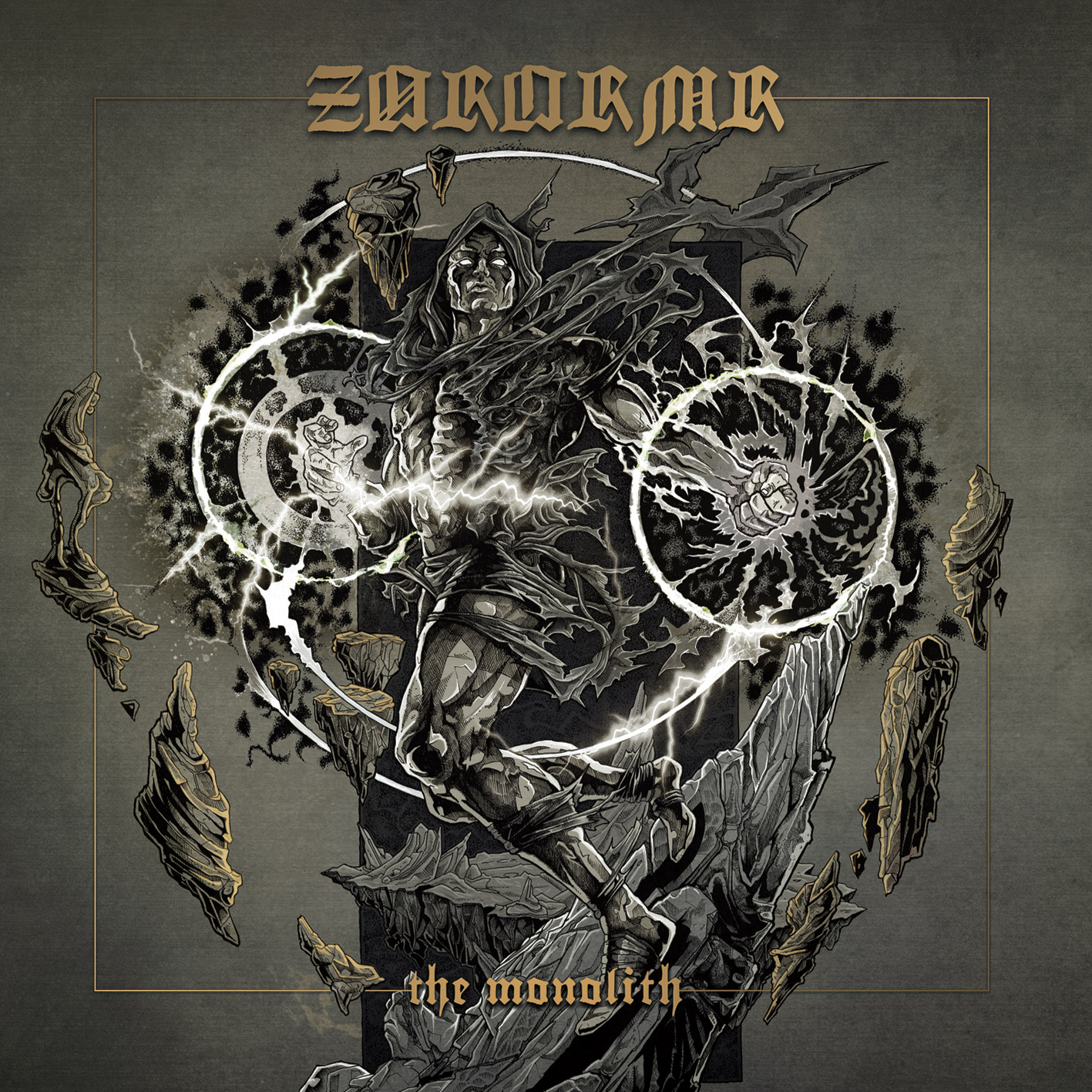
Prepare to be embraced by absolute darkness, as Opole, Poland’s own Black Metal/Dark Ambient institution ZØRORMR is back from the underworld with its latest offering, entitled The Monolith, following up on its highly acclaimed 2016 EP The Aftermath. Recorded at Red Dragon Studio, Dobra 12 Studio and Via Nocturna Studio, produced by Arkadiusz “Aro” Jabłoński at Monroe Sound Studio, and displaying a wicked cover art by Paweł Kuranda, The Monolith spans over 46 minutes of raw intensity, embodying nihilism, misanthropy and disdain for an indifferent world, all masterfully brought into being by vocalist and multi-insturmentalist Moloch (with the support of guests Quazarre on lead guitars and Icanraz on drums), making it the most personal and formidable ZØRORMR release to date.

Kicking things off in style, the title-track The Monolith is eerie and sinister from the very first second, growing in intensity and obscurity to the Doom Metal beats by Icanraz while Moloch extracts sheer evil form his guitar and bass, exploding into a massive, visceral Black Metal feast with Moloch gnarling majestically. Downward Spiral is another devilish, multi-layered Black Metal aria crafted by Moloch showcasing beautiful guitar solos by Quazarre while Moloch makes sure the atmosphere remains as Stygian as it can be; whereas the sharp, piercing guitars by Moloch supported by the fulminating blast beats by Icanraz will darken the skies in Hollow, the perfect depiction of how brutal yet melodic and mesmerizing the music by ZØRORMR can be, followed by I Have No Mouth, and I Must Scream, showcasing a very peculiar name to a breathtaking, demonic creation by Moloch that lives up to the legacy of Melodic Black Metal, feeling simply infernal from start to finish with Moloch’s growls sounding truly haunting.

The second half of the album begins with the sulfurous The Pentagram, with Moloch being on fire with his enraged vocals, flammable riffs and thunderous bass accompanied by the always vicious drums by Icanraz in a tribute to pure evil; and slowing thing down a bit and beginning in a serene manner we have Return to Nothingness, while of course always sounding macabre. It’s not a bad song, but far from being as strong as the rest of the album, though. Then back to his more demonic mode, Moloch will hammer our heads mercilessly in Per aspera, ad astra (“through difficulties, to the stars” from Latin), where his diabolical vocals sound awesome until the very end while he also fires ass-kicking riffs supported by more of Quazarre’s classy solos; and the album’s last onrush of obscurity, entitled Enter the Void, begins in a somber way to the dirty riffage by Moloch, alternating between doom-ish moments and absolute heaviness, therefore putting a vile and dark ending to an opus not recommended for the lighthearted.

The new installment in the career of Moloch and his ZØRORMR is available for a full listen on YouTube and on Spotify, but of course if you’re a true servant of the dark arts of heavy music you can purchase a copy of the album by clicking HERE (CD) or HERE (digital), and don’t forget to also start following ZØRORMR on Facebook and on Instagram. As aforementioned, The Monolith is Moloch’s most personal album since he started ZØRORMR over a decade ago, bringing forward his past and present sounds while always thinking forward, opening countless roads for him to keep growing as a musician while remaining loyal to the foundations of Black Metal with all of his upcoming releases.

Best moments of the album: The Monolith, I Have No Mouth, and I Must Scream and Per aspera, ad astra.

Worst moments of the album: Return to Nothingness.

Released in 2023 Via Nocturna

Track listing
1. The Monolith 7:39
2. Downward Spiral 5:52
3. Hollow 6:26
4. I Have No Mouth, and I Must Scream 5:03
5. The Pentagram 3:55
6. Return to Nothingness 6:29
7. Per aspera, ad astra 5:32
8. Enter the Void 5:24

Band members
Moloch – vocals, guitar, bass

Guest musicians
Quazarre – lead guitars
Icanraz – drums