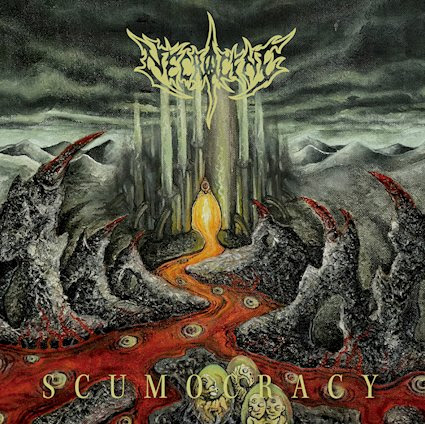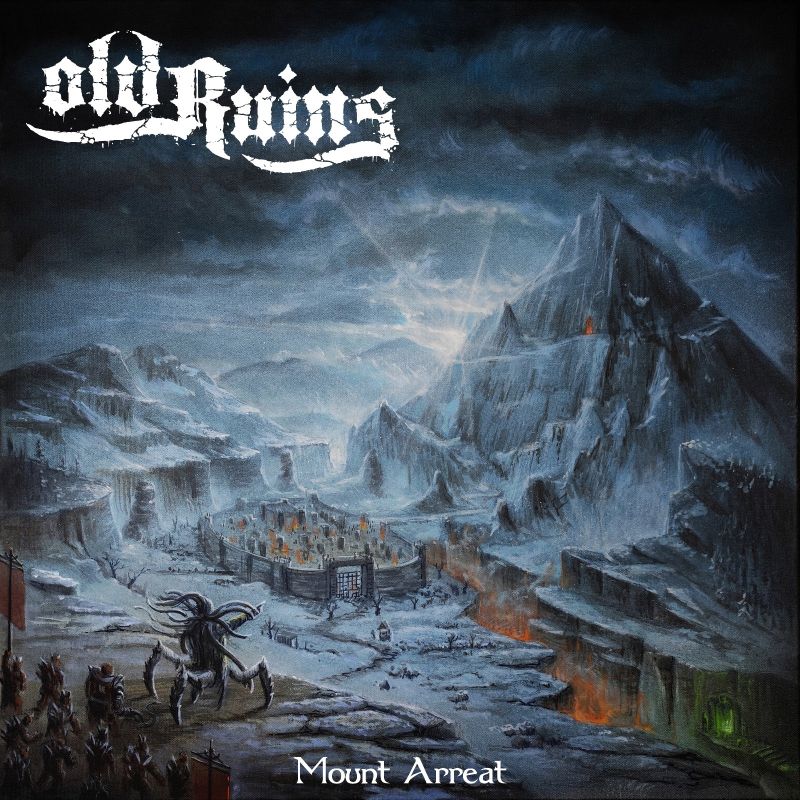
Album Review – Saħħar / Migja ta Mohh Mignun (2026)

Behold the scorching new offering by this Maltese one-man Black Metal project, chronicling the descent and transformation of a man consumed by insatiable thirst for forbidden knowledge.

A concept prose based on a Maltese legend formally penned by Agostino Levanzin (which in turn is rooted in actual events from the 16th century), chronicling the descent and transformation of a man consumed by insatiable thirst for forbidden knowledge, Miġja ta Moħħ Miġnun (or “Journey of a Mad Mind”) is the seventh studio opus by Pieta, Malta-based one-man Black Metal institution Saħħar. Presenting elements from an amalgamation of styles added to its Raw Black Metal essence, the new album by the lone wolf Marton Saliba marks a significant step forward in his artistic evolution, further refining a sound rooted in isolation, heritage and a deeply personal vision. Emerging from a scene far removed from the genre’s traditional strongholds, Saħħar continues to carve out a distinct identity within the contemporary Black Metal landscape.

L-Għatxan, or “thirst” in Maltese, starts in a ritualistic way before Marton consumes our souls with his Black Metal riffage and stone crushing drums, whereas Għerf Minsi, or “forgotten wisdom,” is even more infuriated and grim, with Marton barking and screaming with tons of anger and hatred in his blackened heart. It-Tarf tal-Kożmu u ta’ Ruħi, or “the edge of the cosmos and of my soul,” carries a beautiful name for a doom-laden Black Metal extravaganza by our Maltese warrior, with his roars piercing our minds mercilessly; and  he puts the pedal to the metal armed with his unstoppable blast beats in Fil-Palazz Sejjaħtilhom (“to the palace I called them”), a lecture in extreme music. His Doom Metal vein arises in Il-Miġja sa Sqallija (“the coming to Sicily”), as dark and sinister as it can be, while Ftakar fija!, or “remember me!,” continues with the same vibe as its predecessor, albeit a bit too sluggish and repetitive at times. L-Antikrist il-Ġdid (“the new antichrist”) alternates between cryptic, spine chilling moments and absolute darkness and chaos, putting a grim ending to the album, but if you go for the physical release you’ll get the scorching bonus tracks Id-Dinja Taħt Pajjżi (“the world under countries”) and L-Imlejka (“the angel”), both visceral and dense, therefore absolutely worth the investment in the CD version.

In a nuthsell, Migja ta Mohh Mignun expands on the project’s established sonic framework, blending harsh intensity with subtle melodic layers and a pervasive sense of decay. The result is a work that feels both immersive and unsettling, enveloping the listener in a bleak, almost otherworldly atmosphere, being therefore highly recommended for fans of renowned acts the likes of Dark Funeral, Gorgoroth, Mortuary Drape, and Dimmu Borgir. You can get more information about Marton and his Saħħar on Facebook and on Instagram, stream his discography on Spotify, and of course purchase Migja ta Mohh Mignun from BandCamp, from Time To Kill Records, or by clicking HERE. Marton and his Saħħar will certainly take you on a one-way descent into the deepest corners of an insane mind in their new album, and you better be prepared because once that descent starts, there’s no return.

Best moments of the album: Għerf Minsi, Fil-Palazz Sejjaħtilhom and L-Antikrist il-Ġdid.

Worst moments of the album: Ftakar fija!.

Released in 2026 Time To Kill Records

Track listing
1. L-Għatxan 2:47
2. Għerf Minsi 5:19
3. It-Tarf tal-Kożmu u ta’ Ruħi 5:44
4. Fil-Palazz Sejjaħtilhom 6:58
5. Il-Miġja sa Sqallija 6:40
6. Ftakar fija! 6:24
7. L-Antikrist il-Ġdid 6:52

CD bonus tracks
8. Id-Dinja Taħt Pajjżi 5:01
9. L-Imlejka 6:21

Band members
Marton Saliba – vocals, all instruments

Guest musicians
David Cutajar – guitars (live)
Kyle Anthony Cortis – guitars (live)
Gordon O’Reilly – bass (live)

Album Review – Rotten Tomb / Vestiges of Tortured Souls (2026)

One of the most compelling acts within the South American Extreme Metal scene returns with their deadly third full-length album, refining their sonic identity without sacrificing intensity or authenticity.

Formed in 2016 in Iquique, a coastal city in northern Chile, to the west of the Atacama Desert, the unrelenting Rotten Tomb have steadily risen as one of the most compelling acts within the South American Extreme Metal scene, blending Death Metal with doom-laden atmospheres and occult undertones. Following the strong impact of their 2022 debut Visions of a Dismal Fate and the equally praised 2024 sophomore The Relief of Death, the band formed of Deathbringer on vocals and guitar, C. also on the guitar, Utukku on bass, and A. Prophaner on drums returns with their most ambitious and fully realized work to date, titled Vestiges of Tortured Souls. Recorded and mixed by Pablo Clares at DM6 Recording Studio, the album sees the band refine their sonic identity without sacrificing intensity or authenticity. The riffs are sharper and more cohesive, while the melodies take on a more prominent role, painting soundscapes that feel more sorrowful and evocative than ever before, being therefore highly recommended for fans of Incantation, Paradise Lost, Krypts, and Sonne Adam.

The quartet wastes no time and begin their lecture in violence and hatred in Horror Manifestations, with the demented roars by Deathbringer walking hand in hand with the crushing drums by A. Prophaner, followed by Condemned Reality, as brutal and visceral as the opening track, with the guitars by Deathbringer and C. exhaling sulfur. Then investing an even more infuriated sonority we have Lost Memories, where the pulverizing beats and fills by A. Prophaner are nicely supported by Utukku’s evil bass, while Waiting, Dying is a lecture in 90’s Death Metal with a doomed twist, perfect for some vigorous headbanging in the name of absolute darkness. And A. Prophaner’s crushing drums kick off the infernal Mortified, living up to the legacy of classic Death Metal.

Mind of Chaos blends the obscurity and vileness of Doom Metal with their core deadly sonority, with Deathbringer making sure he doesn’t use that moniker in vain, spreading death and violence through his devilish gnarls and riffs. Here Lies Death is another song highly recommended for admirers of ultimate heaviness without forgetting the much needed melody and intricacy, with the bass by Utukku reverberating like the bellow of a creature from the abyss. They still have a lot of fuel to burn in Vestiges of Tortured Souls, and the venomous sounds from Ancestral Preservation are the perfect depiction of the band’s devotion to doom-laden Death Metal; and last but certainly not last, get ready for the mot obscure and infernal of all songs, entitled Human Pyre, putting a demonic ending to the album with the striking riffs by Deathbringer and C. cutting our flesh mercilessly.

Channeling the oppressive weight of the genre’s darkest pioneers alongside a deeply mournful and introspective atmosphere, while still maintaining a distinct and personal voice, Vestiges of Tortured Souls represents a major step forward for Rotten Tomb, solidifying their position at the forefront of Chile’s increasingly renowned Extreme Metal scene and extending their reach far beyond national borders. Those Chilean death dealers are waiting for you on Facebook and on Spotify, and don’t forget to show them your utmost support by purchasing their new album from their own BandCamp or from the Nuclear Winter Records’ BandCamp or webstore. In other words, Vestiges of Tortured Souls is not just dark and heavy. It’s a statement of the power of Chilean extreme music worldwide, further cementing Rotten Tomb’s commitment to the underground tradition.

Best moments of the album: Horror Manifestations, Waiting, Dying and Human Pyre.

Worst moments of the album: None.

Released in 2026 Nuclear Winter Records

Track listing
1. Horror Manifestations 3:43
2. Condemned Reality 4:32
3. Lost Memories 4:46
4. Waiting, Dying 4:25
5. Mortified 3:43
6. Mind of Chaos 3:52
7. Here Lies Death 4:27
8. Ancestral Preservation 4:19
9. Human Pyre 5:04

Band members
Deathbringer – vocals, guitar
C. – guitar
Utukku – bass
A. Prophaner – drums

Album Review – Godless / Adversus Parousia (2026)

Following a nine-year silence, witness the return of pure hostility with the new opus by this unrelenting Chilean Death Metal institution.

Formed in the distant year of 1997 in Talca, a city in central Chile’s Maule region, the iconic Death Metal outfit Godless is unleashing hell upon humanity with their sophomore full-length opus Adversus Parousia, following a nine-year silence since their last EP Omega Omnipotens, marking the return of a band whose legacy in the underground has been quietly monumental since their formation. Produced by the band itself, and mastered by Eric Brisso at Equinox Studio, the new offering by V.D.A. Irrenemidis on vocals, Gioser Nasare on the guitars and bass, and Rob A. on drums demonstrates a rigorous adherence to traditional Death Metal principles, yet its execution is anything but predictable. It’s a work that challenges both themselves and their listeners, embodying fidelity to the ethos of the genre, while also eschewing pretension for a direct confrontation with darkness and dissolution.

The trio kicks off their ruthless feast of Death Metal with Ingenitus-Ekstasis, where Rob already hammers his drums with tons of fury and dexterity while the riffs by Gioser exhale sulfur and hatred. Then the cadaverous guttural by V.D.A. Irrenemidis sets the tone in Omega Omnipotens: Hosanna in Nullificatio, an ode to the most obscure form of Death Metal, again presenting a wicked guitar work by Gioser; and they show absolute zero mercy for our putrid souls in Plaga Vobiscum (Et Cum Spiritu Tuo), with the demented beats and fills by Rob inviting us all to slam into the pit manically. And venturing through the lands of morbid, vile Doom Metal we face Pneuma-Khaos, with V.D.A. Irrenemidis once again vociferating like a demonic entity for our total delight.

After such a dark and devilish tune it’s time for the trio to crush our souls with Ekstasis-Cosmogravis, starting in a doomed way before exploding into primeval Death Metal madness; whereas Gioser sounds even more infuriated and demented armed with his axe in Numenlagneia, perfect for some wild headbanging to their scorching fusion of Death and Doom Metal. V.D.A. Irrenemidis continues to summon the dark forces of the underworld in Ultraticum Infinita Omnium in Nihilum, supported by the hammering beats and fills by Rob in another bestial creation by the trio; and the closing song of the album, titled Et Verbum Nihil Factum Est, might be the weakest of all, but that doesn’t mean it’s not grim and sulfurous, with V.D.A. Irrenemidis’ growls sounding as harsh as they can be.

Godless have always approached their work with meticulous care, and Adversus Parousia is the culmination of years of patient refinement. For those attuned to the gravest depths of the genre, the album offers a profound, immersive encounter with the essence of Death Metal at its most solemn and potent, being highly recommended for fans of Immolation, Morbid Angel, Dead Congregation, and Drawn And Quartered. You can find more information about those deadly veterans on Facebook and on Instagram, and of course show them your love for absolute Death Metal by purchasing their new album from their own BandCamp, as well as from the Nuclear Winter Records’ BandCamp or webstore. Witness the return of pure hostility with the newborn spawn by one of the most important bands in the history of Chilean metal, but you better be warned as once they have you under their deadly black wings, there’s no way out.

Best moments of the album: Omega Omnipotens: Hosanna in Nullificatio, Plaga Vobiscum (Et Cum Spiritu Tuo) and Numenlagneia.

Worst moments of the album: Et Verbum Nihil Factum Est.

Released in 2026 Nuclear Winter Records

Track listing
1. Ingenitus-Ekstasis 7:06
2. Omega Omnipotens: Hosanna in Nullificatio 4:54
3. Plaga Vobiscum (Et Cum Spiritu Tuo) 3:55
4. Pneuma-Khaos 5:51
5. Ekstasis-Cosmogravis 4:51
6. Numenlagneia 4:55
7. Ultraticum Infinita Omnium in Nihilum 5:02
8. Et Verbum Nihil Factum Est 3:53

Band members
V.D.A. Irrenemidis – vocals
Gioser Nasare – guitars, bass
Rob A. – drums

Album Review – Ater Era / Sinistria (2026)

Prepare for a descent into blackened decay through the down-tuned, crushing Black Metal offered by this ruthless Slovenian horde in their incendiary new opus.

Bastard-born in a land of fractured identities, the venomous Slovenian Black Metal horde Ater Era channels the red soil of their homeland Istria as it rots, darkens, and transforms into something else entirely in their newborn spawn, titled Sinistria, the combination of the words “sinister” and “Istria.” Showcasing a blackened, oppressive, mid-tempo, riff-driven sound with weight and atmosphere, with lyrics in English, Istrian dialect and Slovenian, the follow-up to their 2017 album Clades represents a descent into blackened decay through down-tuned, crushing Black Metal with elements of Doom and Death Metal, embodying a sound that is oppressive and uncompromising, all masterfully brought into being by S.S. (aka Samuel Simonovič) on vocals and guitars, Eva Hreščak on bass, and J.G. (aka Jure Svarog Gams) on drums.

Grim, minimalist guitar and bass sounds permeate the air in Gorging On Devilries, being gradually joined by the pounding drums by J.G. and, therefore, crafting a dense and heavy atmosphere not recommended for the lighthearted; and the band ventures through the lands of Avantgarde and Experimental Black Metal in Terra Rossa, featuring guest musician Igor Pavletič on the trombone, with the riffs by S.S. and the rumbling bass by Eva making the earth tremble. The trio goes full Black Metal in Tema Trma, with the harsh vociferations by S.S. matching perfectly with the nonstop beats and fills by J.G., inviting us to join them in absolute chaos and darkness; while S.S.’s strident riffs ignite the band’s blackened engine in Bastard Born, filling every single space in the air with their Stygian sounds, not to mention his vociferations are also truly demonic, also presenting haunting, atmospheric passages to give it an extra taste. Lastly, we face the ten-minute aria of darkness titled Um Na Dnu, a phrase that translates directly to “mind at the bottom,” often used metaphorically in psychological or meditative contexts referring to exploring the deepest, subconscious, or foundational levels of one’s mind. Musically speaking, it’s a multi-layered display of contemporary Black Metal, ending the album on a vile and pensive mode.

Much like the land that inspired it, Sinistria exists in a state of tension between multiplicity and negation, origin and dissolution without seeking to reconcile these oppositions, but to inhabit them. Furthermore, while the core of Ater Era remains rooted in a primal Black Metal approach, their sound continues to expand into slower, more oppressive territories, adding multiple layers to their already dark and deep sonority. If you want to let their darkness embrace you, you can find Ater Era on Facebook and on Instagram, stream their Stygian music on YouTube and on Spotify, and of course grab a copy of their killer new opus from BandCamp or from On Parole Records. But you better be prepared as once you start your descent into total darkness together with Ater Era, there’s no turning back.

Best moments of the album: Gorging On Devilries and Um Na Dnu.

Worst moments of the album: None.

Released in 2026 On Parole Productions

Track listing
1. Gorging On Devilries 8:15
2. Terra Rossa 7:01
3. Tema Trma 7:41
4. Bastard Born 9:25
5. Um Na Dnu 10:08

Band members
S.S. – vocals, guitars, production
Eva Hreščak – bass
J.G. – drums

Guest musicians
Igor Pavletič trombone on “Terra Rossa”
Eva Brajkovič – backing vocals on “Gorging on Devilries,” “Bastard Born,” and “Um Na Dnu”

Steve Broy – backing vocals on “Bastard Born”
Mitja Rupel – backing vocals on “Bastard Born”
Kariti – backing vocals on “Terra Rossa”

Album Review – Funebrarum / Beckoning The Void of Eternal Silence (2026)

Renowned worldwide for blending traditional American Death Metal with European and Scandinavian Death Metal, this deadly ensemble will attack armed with their ruthless third album.

Formed in 1999 in Clifton, New Jersey, the unrelenting Death Metal horde Funebrarum is renowned worldwide for a dark and heavy sound that blends traditional American Death Metal with influences from the European and Scandinavian Death Metal scenes of late 80’s and early 90’s such as Bolt Thrower, Demigod, and Abhorrence. After a long (but temporary) five-year hiatus due to the pandemic, career and familial responsibilities, the band formed of vocalist Daryl Kahan, guitarists Sam Osborne and Phil Tougas, bassist Kyle Winslow, and drummer Charlie Koryn is finally back into the battlefield with their third studio album, titled Beckoning The Void of Eternal Silence, following up on their 2001 debut Beneath the Columns of Abandoned Gods, their 2009 sophomore The Sleep of Morbid Dreams, and their 2016 EP Exhumation of the Ancient. Recorded by Charles Koryn at Elektric City Recording, and mixed by Steven Di Acutis at Sound Spa Productions, the album is perfect for fans of Incantation, Tomb Mold, and Autopsy, among others, keeping the fires of classic Death Metal burning majestically.

As if it was taken from a Sci-Fi horror movie, the intro The Arrival opens the gates of the underworld for Funebrarum  to kill us all in Beckoning the Void of Eternal Silence, a lecture in Black, Death and Doom Metal showcasing an overdose of sluggish beats by Charlie while Daryl delivers deep, inhumane roars nonstop. Ša Nagba Amāru, the opening line of the standard Babylonian version of the Epic of Gilgamesh, translating from Akkadian to “he who witnessed the abyss”, is an absolute Death and Doom Metal feast blasted by the guys, whereas Through the Barren Halls of Grieving Emptiness continues their path of devastation and chaos, with Sam and Phil breathing fire through their riffs and solos. And Into Dark Domains is one of the heaviest and most doomed songs of the album, with the vocals by Andreas sounding utterly demonic.

It looks like their plan was to split the album in two acts, as we face the atmospheric interlude Ancestral Manor before all hell breaks loose in the incredibly heavy Anhela Odor Mortoruom (The Adepts), led by the massive bass and drums by Kyle and Charlie. Put differently, it can’t get any heavier than this. Then presenting a wild fusion of Death and Doom Metal we have From Rotting Burial Shrouds, with their vocals and riffs sounding primeval and intoxicating; and Kyle keeps blasting his bass without a single drop of mercy in Turning the Stones of Torment, keeping the album as incandescent as it is obscure. Last but certainly not least, they bring forward their most detailed, multi-layered and demonic composition to date, entitled The Whispering Cathedral – Epilogue, with the riffage by Sam and Phil darkening the skies in the name of extreme music until all fades into a climatic, vile finale.

After all is said and done, you’ll feel absolutely disoriented when the last notes in Beckoning The Void of Eternal Silence penetrate deep inside your rotten soul, proving how demolishing yet intricate and detailed the music by Funebrarum can be. If you want to know more about those guys, their tour dates, plans for the future and so on, you can find them on Facebook and on Instagram, and don’t forget to also stream their ruthless music on Spotify and on Apple Music. Beckoning The Void of Eternal Silence can be purchased directly from their own Bandcamp, or you can also get it from the Pulverised Records’ BandCamp or webstore. But be warned Funebrarum do not fool around when it comes to crafting Death Metal. Their music is deadly, and once it hits you, get ready to be crushed into tiny pieces.

Best moments of the album: Beckoning the Void of Eternal Silence, Anhela Odor Mortoruom (The Adepts) and The Whispering Cathedral – Epilogue.

Worst moments of the album: Ancestral Manor.

Released in 2026 Pulverised Records

Track listing
1. The Arrival 1:53
2. Beckoning the Void of Eternal Silence 5:30
3. Ša Nagba Amāru 6:56
4. Through the Barren Halls of Grieving Emptiness 4:26
5. Into Dark Domains 5:48
6. Ancestral Manor 1:32
7. Anhela Odor Mortoruom (The Adepts) 5:03
8. From Rotting Burial Shrouds 3:50
9. Turning the Stones of Torment 5:28
10. The Whispering Cathedral – Epilogue 8:44

Band members
Daryl Kahan – vocals
Sam Osborne – guitars
Phil Tougas – guitars
Kyle Winslow – bass
Charlie Koryn – drums

Guest musician
Patrik Fernlund – lead guitars

Album Review – Deus Sabaoth / Distortion of Lies (2026)

This Ukrainian Black Metal horde returns in full force with their sophomore offering, tracing the quiet seduction of belief and exposing how easily comfort becomes deception.

“In this cold-lit sermon where redemption and obedience blur, and devotion feels less demanded than desired, the thrill lies not in force, but in the willing surrender to something feared, and thus revered.” – Deus Sabaoth

After the successful release of their 2025 debut Cycle of Death, the unrelenting Ukrainian Melodic Black Metal horde Deus Sabaoth wasted no time and continues to spread their dark music across the four corners of the earth with their sophomore opus, entitled Distortion of Lies. Exploring controversial themes such as religious criticism, existentialism, nihilism, and solitude, the new album by N-Exul on vocals, Alyona Neith on bass, piano, music composition and lyrics, and Ercld  on drums, with the support of session musicians Anton Vorozhtsov on the guitars and Sofia Konstantynova on the violin, plus drum recording and partial composition by Dmytro Kim, drifts through the fragile architectures we build to protect ourselves from reality. It traces the quiet seduction of belief – whether wrapped in sacred language or stitched together from desperate hope – and exposes how easily comfort becomes deception.

The pulverizing opening track Worship starts in an epic manner before exploding into absolute Black Metal chaos where Ercld’s drums boost N-Exul’s vocals to a whole new level, kicking off the album on a sulfurous and demented note for the delight of all admirers of the darkest of arts. Then Alyona’s melancholic piano kicks off the title-track Distortion of Lies, a grim composition where the guitar by Anton exhales obscurity, proving why he was chosen by the band to be responsible for the album’s riffs and solos. After that, Alyona and guest Sofia Konstantynova embellish the airwaves with their respective piano and violin in Last Gleam, where Black Metal clashes in absolute darkness with the Stygian sounds of Doom Metal.

The scorching Imperishable Script is another song where Alyone steals the spotlight with her devilish piano, with all caustic Black Metal riffs and bass blasted by the band crushing our damned souls mercilessly. And in Tree of Knowledge the vile N-Exul declaims the song’s scathing words like a demonic entity, accompanied by the demented drumming by Ercld. For There Will Be Dawn offers us all a good display of Epic Black Metal, albeit not as dynamic nor detailed as the rest of the album, whereas their black mass comes to an end with Anton, Alyona and Ercld crafting a visceral and piercing sonority in Wooden Box, while N-Exul growls nonstop with tons of anguish and hatred in his heart.

“And beyond the longest night, there will be a dawn, when every distortion fades, leaving nothing but what was real all along,” cryptically commented the band about their newborn beast, and if you want to follow those Ukranian black metallers into oblivion you can find them on Facebook and Instagram, stream their previous album and very soon their new one on Spotify or any other platform, and above all that, grab a copy of Distortion of Lies from their own BandCamp, or from Paragon Records. Cold, blasphemous and grim, Distortion of Lies will keep the fires of Ukranian metal burning bright, inspiring Deus Sabaoth to keep delivering their blend of blasphemy and darkness for the delight of us all, mere mortals, for many years to come.

Best moments of the album: Worship, Imperishable Script and Tree of Knowledge.

Worst moments of the album: For There Will Be Dawn.

Released in 2026 Paragon Records

Track listing
1. Worship 5:13
2. Distortion of Lies 4:24
3. Last Gleam 4:33
4. Imperishable Script 6:12
5. Tree of Knowledge 5:25
6. For There Will Be Dawn 4:34
7. Wooden Box 4:40

Band members
N-Exul – vocals
Alyona Neith – bass, piano
Ercld  – drums

Guest musicians
Anton Vorozhtsov – guitars (session)
Sofia Konstantynova – violin (session)

Album Review – Hecate Enthroned / The Corpse of a Titan, a Lament Long Buried (2026)

UK’s own leaders and titans of Symphonic and Melodic Black Metal are back from the underworld stronger than ever with their vicious, breathtaking seventh studio offering.

Leaders and titans of Symphonic and Melodic Black Metal, England’s own Hecate Enthroned are finally back from the underworld with their vicious seventh studio album, beautifully entitled The Corpse of a Titan, a Lament Long Buried, following up on their 2019 beast Embrace of the Godless Aeon. Once again produced by the band itself alongside Dan Abela (Akercocke, Bleed From Within, Annal Nathrakh), who also mixed and mastered the album, and showcasing a stunning cover art created by Erskine Designs (Inanimate Existence, Bleed The Sky), the new offering by Joe Stamps on vocals, Nige Dennan and Andy Milnes on the guitars, Dylan Hughes on bass, Pete White  on the piano and keyboards, and Matt Holmes on drums will pulverize us all with their signature fusion of Death Metal aggression with orchestral Black Metal atmosphere, once again cementing the band as one of the most important names in the history of extreme music.

The Stygian intro Adar Rhiannon (or “Birds of Rhiannon,” three magical, otherworldly birds from Welsh mythology associated with the horse goddess Rhiannon) sets the stage for the band’s undisputed Black Metal attack in Spirits Stir Within Our Ancestors Tombs, with Matt sounding simply demolishing behind his drums, adding endless rage and fury to their sound while the keys by Pete are utterly haunting. The devilish guitars by Nige and Andy will pierce your soul in The Arcane Golem, another lesson in Symphonic Black Metal by such a talented UK horde, whereas a beyond cryptic start gradually evolves into a massive Black Metal beast titled Steed of the Still Water, led by another pulverizing performance by Matt on drums. After that we have Pwca, a shape-shifting, mischievous, and often chaotic spirit or fairy from Celtic and Welsh folklore, with the music sounding maybe a bit too atmospheric and lengthy, but still very emotional.

The band gets back on track with the infuriated Black Metal beast titled Deathless in the Dryad Glade, also presenting elements from Death and Doom Metal to spice things up even more. A Gallery of Rotting Portraits, the first single released of the album, is utterly bestial, with the harsh vociferations by Joe walking hand in hand with the slashing riffs by Nige and Andy, and the always majestic keys by Pete. The Boreal Monastery sounds and feels massive, multi-layered and grim form start to finish, with the hammering drums by Matt sounding flawless, offering Joe everything he needs to scream like a demon, whereas lastly we face Into a Vale of Endless Snow, keeping their Symphonic Black Metal vein pulsing harder than ever, consequently ending the album on a demolishing note to the thunderous sounds blasted by Dylan, Pete and Matt.

“Our first release since 2019, these are huge, epic, hard-hitting songs carved in the traditional Hecate Enthroned way with a menacing veil delivered with a crisp punch. Lyrically based around ancient British myths and legends,” commented the band’s bassist Dylan Hughes, inviting us all to join the band in absolute darkness in the best British Extreme Metal style. Having said that, don’t forget to check what the band is up to on Facebook and on Instagram, to stream their undisputed discography on Spotify, and above all that, to purchase their venomous new opus from BandCamp or from M-Theory Audio. The corpse of a titan lies upon the shores of England, and Hecate Enthroned will make sure his demise reverberates to the four corners of the earth to the sound of their insane new album.

Best moments of the album: Spirits Stir Within Our Ancestors Tombs, Steed of the Still Water, A Gallery of Rotting Portraits and The Boreal Monastery.

Worst moments of the album: Pwca.

Released in 2026 M-Theory Audio

Track listing
1. Adar Rhiannon 0:43
2. Spirits Stir Within Our Ancestors Tombs 8:10
3. The Arcane Golem 6:14
4. Steed of the Still Water 7:09
5. Pwca 6:07
6. Deathless in the Dryad Glade 6:37
7. A Gallery of Rotting Portraits 4:40
8. The Boreal Monastery 7:03
9. Into a Vale of Endless Snow 7:10

Band members
Joe Stamps – vocals
Nige Dennan – guitar
Andy Milnes – guitar
Dylan Hughes – bass
Pete White – piano, keyboards
Matt Holmes – drums

Album Review – Malebeste / Monestherou (2026)

A new Black Metal entity arises from the pits of France with their scorching debut, deeply rooted in their land and history, exploring themes inspired by the legends of Charente, Vendée, and surrounding regions.

Formed in 2024 in the small town of Angoulême, located in Western France, Malebeste are a five-piece Black Metal band deeply rooted in their land and history, exploring themes inspired by the legends of Charente, Vendée, and surrounding regions, while drawing inspiration from both the French and Swedish Black Metal scenes. Recorded and mixed by Bastien Cabirol at Akroma Studio, and mastered by French musician Septev (of bands like Hrad, Outland Hill and Stellar Forest), Monestherou is the striking debut by such a promising horde, offering a blend of melodic and powerful Black Metal driven by sharp riffs and percussive drumming with galloping and varied patterns, while its lyrics, all in French, are carried by atmospheres that are by turns dark and luminous, blending medieval and modern sounds.

Crafted by guest musician Septev, Aigre Vinasse et Chaude Populace, or “sour wine and a hot-tempered populace,” is an eerie intro to the band’s venomous realm in Hautefaye 1870 (inspired by a criminal incident that took place on August 16, 1870, during a fair in the village of Hautefaye in the Dordogne region, France, when Alain de Monéys, a young local nobleman, was beaten, tortured and finally burned alive by the crowd), where their unstoppable riffs and Black Metal blast beats will crush your skull in a demented manner, sounding simply infernal from start to finish. Their Black Metal attack goes on in full force in Chasse Gallery, with their devilish vociferations matching perfectly with all background Stygian sounds; whereas Palefroi du Diable, or “the devil’s steed,” offers to our putrid ears six minutes of absolute darkness and doom, leaning towards pure Blackened Doom Metal without forgetting their core ferocity. And Milouziena (a female spirit of fresh water) is a more direct Black Metal extravaganza by those uncanny creatures from the depths of France, with their guitars transpiring sulfur and hatred.

Such an evil horde continues to pound our heads and consume our souls mercilessly in Le Puits d’Enfer, or “hell’s well,” with its rebellious Punk Rock-infused riffage sounding stunning. The title-track Monestherou might be slower than its predecessors due to its Doom Metal vibe, but it’s still venomous and obscure, spearheaded by the demonic vocals by their devilish frontman, followed by Flamme Noir de l’Espoir, or “black flame of hope”, and such a poetic name would certainly offer us all a vicious Black Metal attack by the band, resulting in one of the most detailed songs of the album with its hammering drums sounding phenomenal. Finally, Nocturne (Medley Acoustique) could have been positioned before the previous song as an intro to it, as there’s not too much to say about this acoustic and instrumental tune.

In the end, Malebeste prove they’re among us to stay based no the high quality of the Black Metal found in their killer debut Monestherou, leaving the gates of the underworld open for another slab of sheer Black Metal magic by those talented French musicians. If you’re curious to know more about this up-and-coming extreme music ensemble from France, you can find them on Facebook and on Instagram, and of course, you can show them your utmost support by purchasing a copy of their album from their own BandCamp, as well as from Antiq’s BandCamp or webstore (as a digipak or an LP). It’s always a true pleasure exploring the French Black Metal landscape, and Monestherou is an invitation for us all metalheads to dive deep into the Stygian world ruled by Malebeste within such an exciting genre.

Best moments of the album: Hautefaye 1870, Milouziena and Flamme Noir de l’Espoir.

Worst moments of the album: Nocturne (Medley Acoustique).

Released in 2026 Antiq

Track listing
1. Aigre Vinasse et Chaude Populace 1:32
2. Hautefaye 1870 5:27
3. Chasse Gallery 5:10
4. Palefroi du Diable 6:07
5. Milouziena 5:01
6. Le Puits d’Enfer 4:38
7. Monestherou 4:59
8. Flamme Noir de l’Espoir 6:02
9. Nocturne (Medley Acoustique) 3:21

Band members
*Information not available*

Guest musician
Septev – everything on “Aigre Vinasse et Chaude Populace”