
These unrelenting Mexican metal warriors are back with their breathtaking fourth studio album based on Mayan ideology, worldview, mysticism, and the universe.

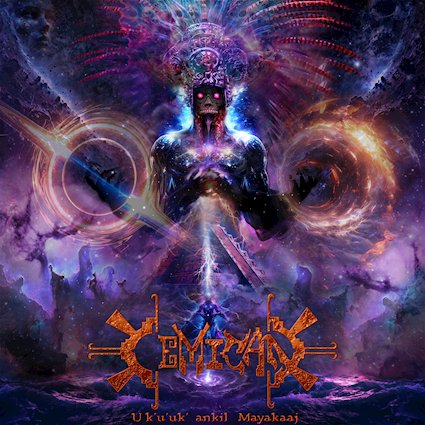 Incorporating elements of the legends, mysticism and ideologies of ancient Mexican culture, being compared by Revolver to “Slipknot scoring Mel Gibson’s Apocalypto” by combining the modern instrumentation of a metal band with traditional pre-Hispanic instruments, Guadalajara, Mexico’s own Progressive Power/Thrash/Folk Metal tribe Cemican (or “The Duality of Life and Death” in the Mexican language Nahuatl) brings forth more of their unique music in their fourth studio opus entitled U k’u’uk’ankil Mayakaaj, translated as “the Mayan Resistance”, following up on their 2019 critically acclaimed album In Ohtli Teoyohtica In Miquiztli. Showcasing a stunning artwork by the band’s own Tlipoca (aka Alejandro Guzmán), depicting the great creation of the Mayan universe and the elements of life – water, fire, wind, and earth – by the great supreme Itzamnaaj, raising the great Temple of Kukulkan for the worship of the Mayan people, the new album by vocalist and guitarist Tecuhtli, bassist Ocelotl, drummer Tlipoca, and the tribalistic ensemble of Xaman Ek, Yei Tochtli, Mazatecpatl, and Itzcoatl is based on Mayan ideology, worldview, mysticism, and the universe. It contains various legends and stories of ancestral gods, the duality of life and death, as well as stories based on the band members, transformed with that touch that identifies us.
Kukulkán Wakah Chan (likely combining the Maya deity name Kukulkán, meaning “Plumed Serpent”, with the Nahuatl phrase Wakah Chan, meaning “Sacred Tree” or “Milky Way”) sounds utterly ritualistic and folk from its very first moments, with their wind instruments echoing through the air before exploding into an amalgamation of Thrash, Death and Groove Metal led by Tlipoca’s crushing beats and fills; whereas Tán tí le Xibalba, the second single of the album, speaks of the god of dead in the Mayan culture while keeping their heaviness clashing with the culture of their ancestors in a majestic way, being therefore an excellent choice for their live concerts. In El Niño Que Contemplaba A Las Estrellas (“the boy who gazed at the stars” from Spanish), the guitars by Tecuhtli lean towards classic Heavy Metal, as well as his vocals, followed by Viaje Astral Del Quetzal De Fuego (“astral journey of the fire quetzal”), sounding atmospheric and embracing from start to finish, with the bass by Ocelotl and the drums by Tlipoca being absolutely thunderous. Xaman Ek, Yei Tochtli and Mazatecpatl bring the glory of the past through their wind instruments in the tribal dance Horizonte De Almas (“horizon of souls”), exploding into an epic song that will inspire you to raise your horns for those beyond talented Mexicans, while El Castigo De Los Dioses (“the punishment of the gods”) is another song where the modern, electrified vibe of metal music makes a killer paradox with their cultural and folk sounds.
The howling wind invites us to another journey through Mayan lands in Tak Ti Ulaák Íin, one of the most ritualistic of all songs, where the band delivers their most primeval sounds of the album. Then the massive riffs by Tecuhtli ignite the imposing, multi-layered Los Guardianes De La Tierra (“guardians of the earth”), a lecture in Symphonic and Melodic Death and Black Metal that feels like it was taken from the most climatic moment of a period drama; and the band offers another blast of harsh and pounding sounds in Hun-Came, meaning “One Death”, the name of the senior of the two principal death gods in the Maya underworld Xibalba, with all vocals and backing vocals giving it an extra kick while Tlipoca hammers his drums mercilessly. ¿Donde Estas? (“where are you?) is some sort of power ballad entirely sung in Spanish by a mysterious guest female musician, a bit too generic compared to the other songs; while back to their trademark tribal sonority infused with the power of Heavy Metal we have Yóok’ ol Kaáb Maya, sounding and feeling epic and vibrant until the very end. Lastly, closing the album we’re invited to one final ritual by Cemican entitled Bolom Octé, a stunning sonic voyage back to the glory yet somber days of their ancestors.
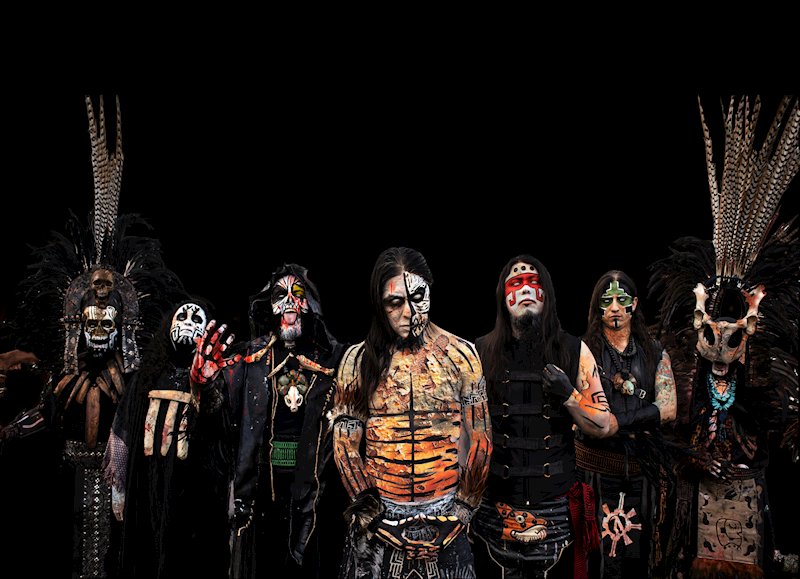 Offering a sound that embodies that language of music with ancestral instruments that Cemican have achieved as its own unique and hallucinatory sound, fused with lyrics that blend Spanish with Yucatecan Mayan, U k’u’uk’ankil Mayakaaj is a tribute to their ancestral people, their stories and their customs, giving a valuable message of their language and their ancestral glory. Hence, you can enjoy the dark and aggressive atmosphere found in U k’u’uk’ankil Mayakaaj by purchasing the album from their own BandCamp, from the M-Theory Audio webstore, or by clicking HERE, and don’t forget to also follow the band on Facebook and on Instagram, subscribe to their YouTube channel, and stream their amazing albums on Spotify. Because U k’u’uk’ankil Mayakaaj is a way to revive what their warriors and their Mayan people were, honoring the great Mayan culture and representing the worldview and mysticism of their great ancestral empire.
Best moments of the album: Tán tí le Xibalba, Horizonte De Almas, Los Guardianes De La Tierra and Hun-Came.
Worst moments of the album: ¿Donde Estas?.
Released in 2025 M-Theory Audio
Track listing
1. Kukulkán Wakah Chan 5:45
2. Tán tí le Xibalba 4:01
3. El Niño Que Contemplaba A Las Estrellas 6:44
4. Viaje Astral Del Quetzal De Fuego 8:31
5. Horizonte De Almas 6:31
6. El Castigo De Los Dioses 5:26
7. Tak Ti Ulaák Íin 4:39
8. Los Guardianes De La Tierra 5:13
9. Hun-Came 5:29
10. ¿Donde Estas? 4:23
11. Yóok_ ol Kaáb Maya 5:45
12. Bolom Octé 4:30
Band members
Tecuhtli – vocals, guitars, wind instruments
Ocelotl – bass
Tlipoca – drums, percussion, wind instruments, backing vocals
Xaman Ek – wind instruments, backing vocals
Yei Tochtli – wind instruments, backing vocals
Mazatecpatl – wind instruments
Itzcoatl – choir vocals


 THE HEADBANGING MOOSE