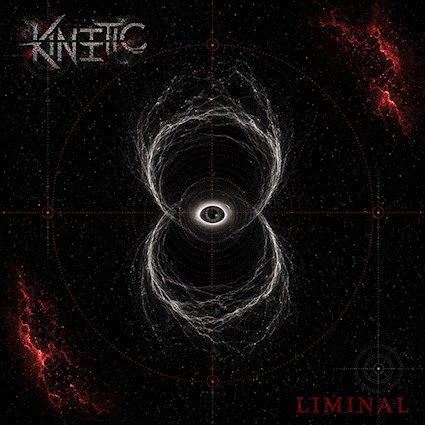
Behold the rise, fall, and infinite loop of human civilization across the cosmos in the form of an exclusive interview with this up-and-coming Progressive Metal force from Denmark.
Kinetic
The Headbanging Moose: Welcome to The Headbanging Moose! To kick things off, could you introduce the members of Kinetic to our readers and share how the five of you came together in Kolding to form the band?
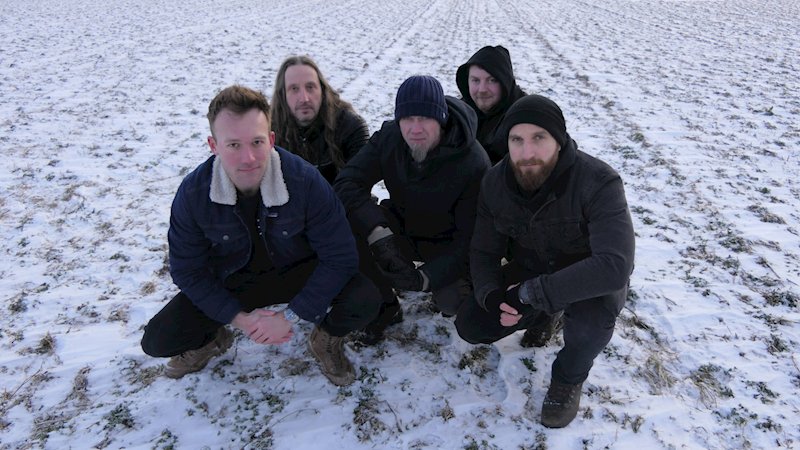
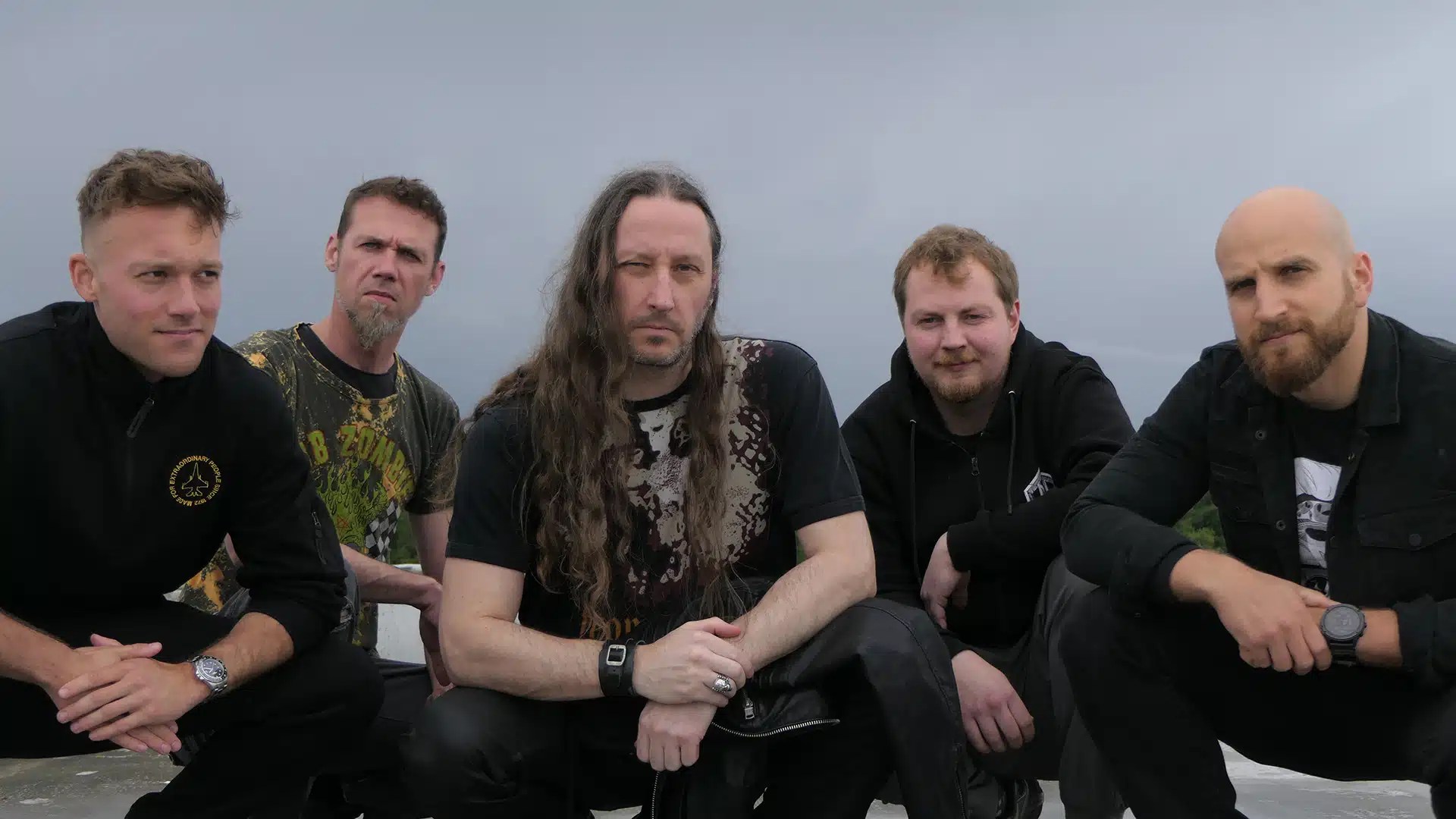
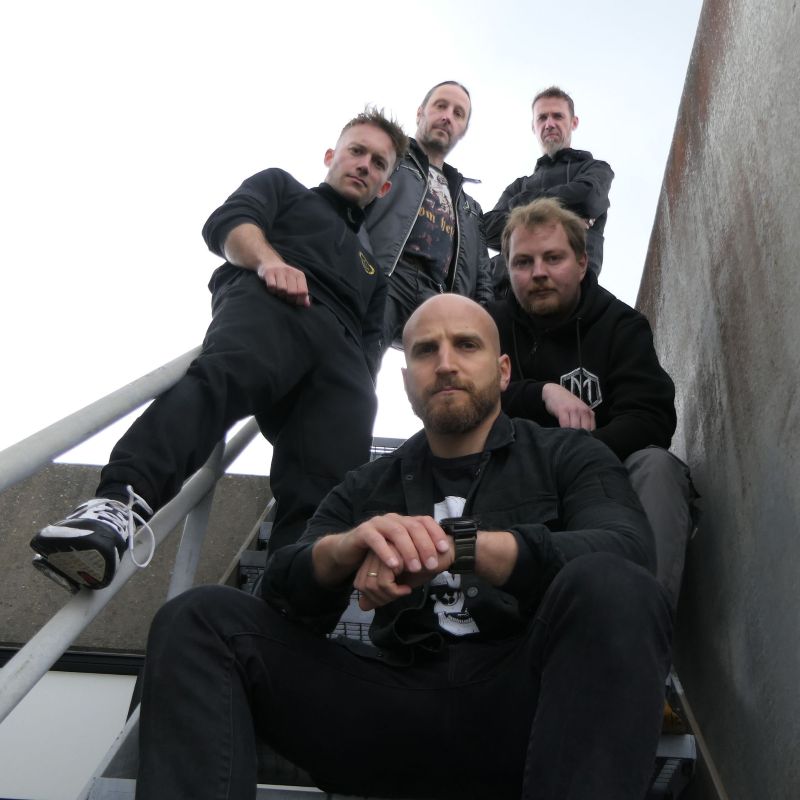
Kinetic: Thank you for having us! KINETIC is René Hougaard on vocals, David Thing on guitar, Christian Heitmann on bass, Marcus Levin on synths, and Rune Görlitz on drums. The whole thing started with David and Christian meeting during COVID. David was wearing a Haken face mask, which turned out to be a surprisingly effective way of finding someone to play progressive metal with! That shared enthusiasm became the starting point, and the band took shape in 2022. Marcus joined that year, René came aboard in 2023, and Rune completed the current lineup in 2025. We came together around Kolding, but the sound has grown with each person who has joined. There is a common love of ambitious music, alongside enough different tastes to keep things interesting.
THM: You released your debut EP Sentience in 2025 before diving straight into the massive, 106-minute full-length album Liminal. How did the songwriting process evolve between those two releases?
Kinetic: Sentience was an early introduction to what KINETIC could be. With Liminal, those ideas became part of a much larger journey. The biggest development was thinking about how a song contributes to the album as a whole: where it takes you emotionally, how much space it needs, and what should come next.
We became more comfortable letting the atmospheric passages breathe and allowing ideas to develop over longer stretches. At the same time, length alone does not make a song interesting. A complicated passage still needs a reason to be there, just as a quiet passage does. The aim was to make an album you could disappear into, while still giving each song its own character.
THM: Liminal is built around the Kardashev Scale and tracks the rise, fall, and infinite loop of human civilization across the cosmos. What sparked your fascination with this astrophysical concept, and how did you translate it into music?
Kinetic: The Kardashev Scale offers an extraordinary sense of perspective. You start with humanity as we know it and imagine what might happen if a civilization could harness the energy of a planet, a star, and eventually an entire galaxy. That opens up enormous musical possibilities, but what interests us just as much is the human question underneath: what happens to our minds, our relationships, and our sense of purpose along the way?
Liminal moves from beginnings and evolution into technology, space exploration, and consciousness. The scale gives that journey a framework, while the music explores what it might feel like to live through it. There is wonder in it, but also uncertainty. Having the ability to reach further into the universe does not automatically mean we understand ourselves any better. That tension is a big part of the album.
THM: You worked with producer Frederik Uglebjerg (known for his work with MØL and Galge) on this record. What did he bring to the table in helping you balance your heaviest, most chaotic moments with your softer, ambient passages?
Kinetic: With music this layered, the challenge is making sure the listener can still feel the song. There can be a lot happening between the guitars, bass, drums, vocals, and synths, and simply making everything louder would flatten the whole experience.
Frederik helped give those elements room while keeping the weight and intensity intact. The quieter passages are essential to how the heavy sections land, so preserving that sense of contrast mattered a lot. We wanted the record to feel powerful without losing its atmosphere, and detailed without becoming sterile. That balance is especially important on an album where you are asking people to stay with you for such a long journey.
THM: Closing an album with a 20-minute epic like Omega is a bold artistic statement. How did you approach structuring such a massive piece so that it holds the listener’s attention from its serene opening to its climactic finale?
Kinetic: For us, Omega has to feel like the destination of the album. After travelling through all these stages of existence, the ending needs enough space to carry that weight. The question is how to make the listener want to follow it, minute by minute.
We think about a long piece in terms of tension, release, and direction. A serene opening gives you somewhere to begin, and it gives the later intensity something to grow out of. You also need moments where the listener can settle into an idea instead of constantly being presented with another new section. The finale matters because of everything that leads to it. Ideally, by the time you reach it, you are emotionally invested enough that you have stopped thinking about the running time.
Album Review – Kinetic / Liminal (2026)
THM: While New Frontiers leans heavily into technical, Dream Theater-style intensity, Journey to the Stars introduces cool 80’s Gothic Rock and Metal vibes. Was bringing in that retro gothic atmosphere a planned contrast, or did it happen organically in the studio?
Kinetic: That is an interesting way of hearing it! We like that listeners can find a reference in a song that might not be the first thing we would use to describe it ourselves. Journey to the Stars occupies a different emotional space from New Frontiers, and that variety is important across the album.
There is room in our sound for both very intense, intricate playing and something more spacious and melodic. Synth textures can also bring a sense of nostalgia, which is an interesting feeling to have in music about the future. We would rather let a song have that personality than make every track fit exactly the same sonic mould. Your gothic comparison gives us another way to listen back to it.
THM: Your sound bridges technical precision, Djent-like cadences (like on Type 0.75), and cinematic synth work. Which bands, film composers, or non-musical artists have had the biggest impact on Kinetic’s sonic identity?
Kinetic: Haken is an obvious part of our shared DNA, right down to the story of how the band began. Dream Theater is another reference for the scope and musicianship, while Pink Floyd is important for atmosphere and the feeling of being taken somewhere over the course of an album. Tool, Karnivool, and Gojira are also part of the wider musical territory we connect with.
What matters is how those influences feed into our own writing. We enjoy technical playing, but a simple part with the right feel can carry just as much weight. The synths are a major part of that: they can change the emotional meaning of what the rest of the band is doing. Beyond music, ideas about evolution, the universe, and the human mind give us a lot to explore. They shape the mood and scale of the songs as much as any particular musical reference.
THM: Denmark has a thriving heavy music underground right now, spanning everything from Blackgaze to Progressive Metal. What is it like being a prog metal band in the Danish scene today, and are there any local acts we should keep on our radar?
Kinetic: For a band like ours, the challenge is finding the people who enjoy taking their time with music. Progressive metal can be quite a specific corner of an already specialized scene, but there is also freedom in that. We can build something around the music we want to make and gradually find the audience for it.
Kolding is where we come from, and that local connection matters to us. At the same time, it has been remarkable to see the music connect with people much further away, including in Mexico, the United States, and Brazil. It makes the distance between a Danish rehearsal room and someone listening on the other side of the world feel surprisingly small. As for the Danish underground, we would encourage people to look beyond the biggest names and explore the smaller venues and festival bills. There is a lot to discover when you give unfamiliar bands a chance.
Kinetic
THM: Performing a continuous, conceptual album of this length live must be quite a challenge. How are you planning to bring the cosmic journey of Liminal to the stage over the coming months? And are you planning to play it in full in front of your fans?
Kinetic: The next step is getting the music in front of more people, and we are working towards opportunities in 2027, both in Denmark and elsewhere in Europe. Bringing this material to the stage is about preserving the journey and the dynamics while making it work as a live experience.
A shorter set can still have its own arc. We want the atmospheric sections and the heavier moments to support each other, so that the audience gets a sense of the world of Liminal even if we cannot play every part of it. A full-album performance is an exciting idea, but it would need the right setting and enough room to do the music justice. We do not have a full performance to announce at this point.
THM: Thank you so much for your time! Please feel free to leave some final words for our readers and let them know where they can grab a copy of Liminal and follow your journey.
Kinetic: Thank you for taking the time to dig into the album, and thanks to everyone reading! We know that a long debut album asks a lot of a listener’s time. It means a great deal when someone gives it that attention and finds something in it that stays with them.
You can find Liminal on the streaming platforms, and kineticband.dk is the place to start for our music, social links, and updates on releases and shows. If you are new to KINETIC, Dyson is a good entry point. And if it draws you in, we hope you will take the full journey with us.
Links
Kinetic Official Website | Facebook| Instagram | YouTube | Spotify | Ffm.to