Balancing tradition and progression, this German Black Metal horde returns with their fourth studio offering, bringing the light from hell into our blackened hearts.
Balancing tradition and progression, German Black Metal horde Servant delivers a sound that feels both familiar and forward-thinking, uncompromising, powerful, and darkly captivating. Two years after their critically acclaimed third album Death Devil Magick, the band formed of vocalist and guitarist Farago, guitarist Samael, bassist Thanatos, and drummer Apophis returns with Lux Ex Inferis (a Latin phrase that means “light from the netherworld” or “light from hell”) offering more of their authentic-yet-modern approach to Melodic Black Metal. Recorded at Katzbach Studio, produced and Mixed by Farago, mastered by Dennis Poschwatta at Katzbach Studio, and showcasing a stunning artwork by Misanthropic-Art, Lux Ex Inferis sees the band once again combine intensity, atmosphere, and passion into a distinctive sound, turning it into a must-listen for admirers of the darkest side of music.
The whimsical, ethereal intro In Noctem will captivate our souls before we’re crushed into pieces to the sound of Tabula Rasa, a beautiful Melodic Black Metal aria by the quartet with the anguish and pain flowing from Farago’s scorching vocals sounding stunning, also featuring guest vocals by the one and only P.G. of Groza, followed by Glorification, spearheaded by the demonic drums by Apophis while Thanatos keeps hammering his bass in the name of absolute darkness. Thanatos, Embrace of the Night again presents the band’s trademark fusion of aggression, obscurity and harmony, leaning towards the Blackened Death Metal played by Behemoth, whereas De Profundis, or “from the depths” from Latin (a letter written by Oscar Wilde during his imprisonment in Reading Gaol, to his friend and lover Lord Alfred “Bosie” Douglas) showcases a phenomenal guitar work by Farago and Samael from start to finish, featuring guest vocals by Lethian.
Lux Fulget, which translates from Latin to English as “the light shines,” already starts in full force to the pounding drums by Apophis while Farago continues to vociferate like a creature from the abyss; and the strident guitars by Farago and Samael ignite another bestial Black Metal feast titled Of Stones, Sleep and Death, sounding enfolding, grim and vile, all at the same time. Then we face The Accuser, blending the obscurity of classic Black Metal with the depth and ferocity of modern-day Melodic Black Metal, with Thanatos and Apophis once again sounding thunderous armed with their respective bass and drums; while their last breathe of Black Metal magic comes in the form of Hypnos I See You, carrying a poetic name for an overdose of Stygian, sharp riffs and devilish roars, putting a beyond climatic and devilish ending to their black mass.
Expanding on the band’s established style, Lux Ex Inferis merges epic structures and haunting melodies, creating a multi-layered sonic landscape where passion meets grandeur, pointing to an even brighter (or maybe I should say darker) future ahead of those servants of the dark arts. You can get in touch with the band and stay up to date with their news and tour dates via Facebook and Instagram, stream their caustic music on any platform like Spotify, and of course, put your damned, dirty hands on their scorching new opus by purchasing it from the AOP Records’ BandCamp or webstore (or click HERE for all things Servant). After all is said and done, these German black metallers are among us to spread absolute darkness armed with Lux Ex Inferis, bringing the light from hell into our blackened hearts.
Best moments of the album:Tabula Rasa, De Profundis, Lux Fulget and Hypnos I See You.
Worst moments of the album: None.
Released in 2026 AOP Records
Track listing 1. In Noctem 2:14
2. Tabula Rasa 5:30
3. Glorification 4:38
4. Thanatos, Embrace of the Night 5:06
5. De Profundis 4:35
6. Lux Fulget 4:51
7. Of Stones, Sleep and Death 4:52
8. The Accuser 4:06
9. Hypnos I See You 5:47
Band members Farago – vocals, guitars
Samael – guitars
Thanatos – bass
Apophis – drums
Guest musicians
Lethian – vocals on “De Profundis”
P.G. – vocals on “Tabula Rasa”
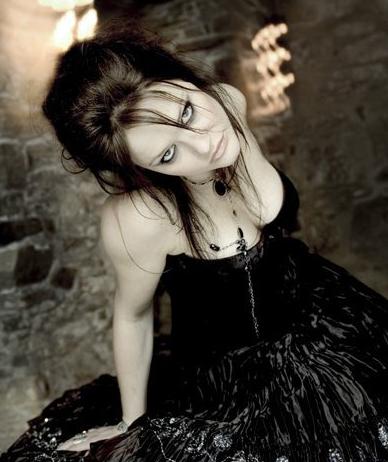
I guess I don’t need to say that lots and lots of Gothic/Doom Metal fans got extremely excited back in June 2013, when our metal chick this month announced through her official Facebook page that she was finally coming out of her retirement to reignite her brilliant music career in Heavy Metal. I’m talking about one of the most beloved female singers of all time in heavy music, Norwegian soprano Vibeke Stene, known for her unparalleled contribution to making Norwegian Symphonic Gothic Metal band Tristania a true reference in Gothic Metal history.
Daughter of Steinar Stene and Sissel Bø Stene, Vibeke was born on August 17, 1978, in the municipality of Sokndal in Rogaland county, Norway, about 450km from the capital Oslo. Her personal life and her career seem to walk hand in hand, becoming even the same entity sometimes, as she’s been fully involved with music and singing since she was a little girl. For instance, at the age of three, our diva already performed for people that were not part of her family, evidencing how much she loved music and starting to build her successful career as a singer.
It was at the age of thirteen, when she started taking singing lessons after she moved to Stavanger (about 100km from Sokndal), that she got interested in classical singing, taking lessons until the age of 23 in order to become her own teacher. By the way, not only Vibeke is the owner of a unique vocal range and an incredible charisma when she’s performing live, but she also became a teacher, studying music and giving singing lessons in Stavanger, Kristiansand and Oslo.
In regards to her professional career as a singer, it’s more than obvious that she left her deepest mark and became a huge heavy music idol during her years with Tristania, which was actually the very first band she joined in her life. Speaking of which, when she was 18 years old Vibeke was invited to join Tristania after attending a live concert of the band, and although she was initially supposed to be only a guest musician in their first demo, she ended up becoming a permanent member due to her incredible performance. The other members of Tristania mentioned in some interviews that Vibeke wasn’t into Gothic Metal before joining the band, but a lot more into Classic Rock and Heavy Metal, which of course didn’t prevent her at all from perfectly blending her voice with the band’s musicality. Furthermore, her performances with Tristania were so good and so powerful it’s quite impossible not to associate the band with her name even today, and it’s hard to imagine Vibeke singing in a band that’s not Gothic or Doom Metal.
Her awesome career as Tristania’s female singer includes the demo Tristania (1997), the full-length albums Widow’s Weeds (1998), Beyond the Veil (1999), World of Glass (2001), Ashes (2005) and Illumination (2007), as well as the singles Angina (1999) and Sanguine Sky (2007), two live albums, two compilations and three music videos, including the eerie official video for the excellent song Libre and the more than pleasant Equilibrium (which can be seen at the end of this text). All those albums are really good and sound very professional, but in my humble opinion the best one by far is Widow’s Weeds, where Vibeke’s smooth voice and Morten Veland’s harsh vocals, together with a very melancholic and obscure sonority, make this album a must-have in the collection of any fan of high-quality music. Songs like Evenfall, Pale Enchantress and My Lost Lenore are those things that deserve to be included in the “never before, never again” music category.
Vibeke and Tristania always had an outstanding live performance together. For instance, they were the headliners of the 4th edition of the Metal Female Voices Fest, which happened in Wieze, Belgium, in 2006, where they shared the stage with other great bands such as Theatre of Tragedy, Delain and Xandria. I had the pleasure to see them live twice with the goddess Vibeke on vocals during their World of Glass tour in January 2002, and in March 2005 during their Ashes tour, and in both occasions it was impossible not to be impressed by her voice and moves during the entire concert.
Unfortunately for all the fans of Tristania, Vibeke left the band in February 2007 first to finish her university degree, and also because she didn’t like the music direction the band was taking. And despite all the rumors about her replacing the one and only Tarja Turunen when she left Symphonic Power Metal band Nightwish, as both left their former bands almost at the same time, Vibeke was the first one to publicly confirm she was not going to be the new singer for Nightwish nor would ever be. However, we can say Tristania was not the only band in Vibeke’s life: she was also a guest vocalist in three tracks (In the Realm of the Midnight Sun, My Dark Reflections of Life and Death and Under Eternal Stars) from the 2000 album Journey to the End of the Night, by Norwegian Gothic Metal band Green Carnation; guest vocalist in the interesting song Suspended Time, from the 2007 album Solar Soul by Swiss Industrial Metal band Samael; and more recently, Norwegian Electronic band Plutho released the song Queen of Broken Hearts, from their 2011 album Bob, You Don’t Wanna Go There!, which features Vibeke’s guest vocals. However, according to the group, this was recorded back in 1999, which means Vibeke was still officially “retired” when the song was released.
This slideshow requires JavaScript.
Although Vibeke still owes all her loyal and passionate fans her once promised solo album, at least we’re glad she’s back to the world of heavy music with her unique voice in the Extreme Metal project God of Atheists, by Norwegian musician Asgeir Mickelson, including musicians from Dimmu Borgir, Emperor, Zyklon, among others. This project is still in the making, but should be available sometime in the second half of 2015. In addition, we’ll also be able to see her acting really soon, as she’s making her theatre debut on stage at Kilden in Kristiansand in October, playing the title role in a play entitled “Skammens Gissel” (or “Hostage of Shame” in English).
Vibeke has mentioned more than once that her biggest influences in music do not only come from the bands and artists she enjoys listening to, but also from all the people she’s been doing music together with since the beginning of her career. Besides that, among some of the greatest voices in her own opinion, we have many exceptional artists such as American diva Tori Amos, Icelandic singer and actress Björk, the unparalleled English “chameleon” David Bowie, American singer Tom Waits and American avant-garde artist Diamanda Galás. Our Gothic Metal countess also said in her interviews that she’s extremely critical to whatever she’s doing and she’s never satisfied if the final result is not the best she can provide, and I believe this is something we can always expect from Vibeke due to her strong character and all the perfectionism that emanates from her it doesn’t matter which band or project she’s involved with.
Talking about her personal life, our beautiful soprano loves doing what pretty much every normal person does too, which includes reading a book, travelling, spending time with her family and friends, and enjoying a good beer. Nonetheless, despite loving doing opera, mainly because she can sing and act at the same time, she said she just hates listening to it in her free time. Maybe that’s because while she’s listening to opera that means she’s not singing. Add to that her perfectionism, and it ends up making total sense: who can offer us a better operatic performance onstage than Vibeke, right?
If you’re one of those people who have always thought Vibeke had dark brown or black hair, you might be surprised to know that she’s actually a natural blond. She has however dyed her hair throughout the years, probably because dark hair has more to do with Gothic and Extreme Metal, and also because it looks like almost all blond Scandinavian girls simply love to have black hair. Finally, just as a complement to her personal profile, Vibeke is already a mother of two: she had a son in the summer of 2007, and a daughter a few years later. It’s still too early to know if both kids will follow their mother’s steps in life, but if they inherit at least 1% of her talent and charisma we can rest assured Norway will keep providing the world some dark and melancholic high-end heavy music.
“To sing is to be able to use and take control of your whole body to make the right sound, and not only one kind of sound, to dare to use all your weird thoughts and be able to tell something while you are singing. It’s art.” – Vibeke Stene

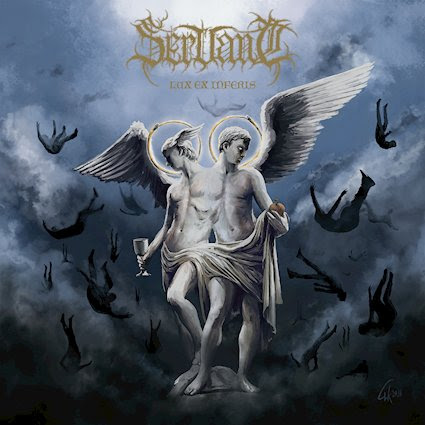 Balancing tradition and progression, German Black Metal horde Servant delivers a sound that feels both familiar and forward-thinking, uncompromising, powerful, and darkly captivating. Two years after their critically acclaimed third album Death Devil Magick, the band formed of vocalist and guitarist Farago, guitarist Samael, bassist Thanatos, and drummer Apophis returns with Lux Ex Inferis (a Latin phrase that means “light from the netherworld” or “light from hell”) offering more of their authentic-yet-modern approach to Melodic Black Metal. Recorded at Katzbach Studio, produced and Mixed by Farago, mastered by Dennis Poschwatta at Katzbach Studio, and showcasing a stunning artwork by Misanthropic-Art, Lux Ex Inferis sees the band once again combine intensity, atmosphere, and passion into a distinctive sound, turning it into a must-listen for admirers of the darkest side of music.
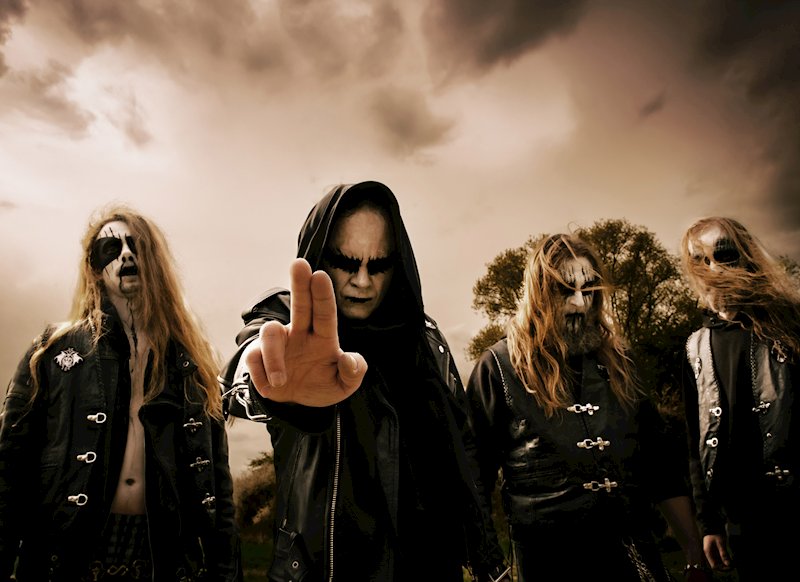 Expanding on the band’s established style, Lux Ex Inferis merges epic structures and haunting melodies, creating a multi-layered sonic landscape where passion meets grandeur, pointing to an even brighter (or maybe I should say darker) future ahead of those servants of the dark arts. You can get in touch with the band and stay up to date with their news and tour dates via Facebook and Instagram, stream their caustic music on any platform like Spotify, and of course, put your damned, dirty hands on their scorching new opus by purchasing it from the AOP Records’ BandCamp or webstore (or click HERE for all things Servant). After all is said and done, these German black metallers are among us to spread absolute darkness armed with Lux Ex Inferis, bringing the light from hell into our blackened hearts.