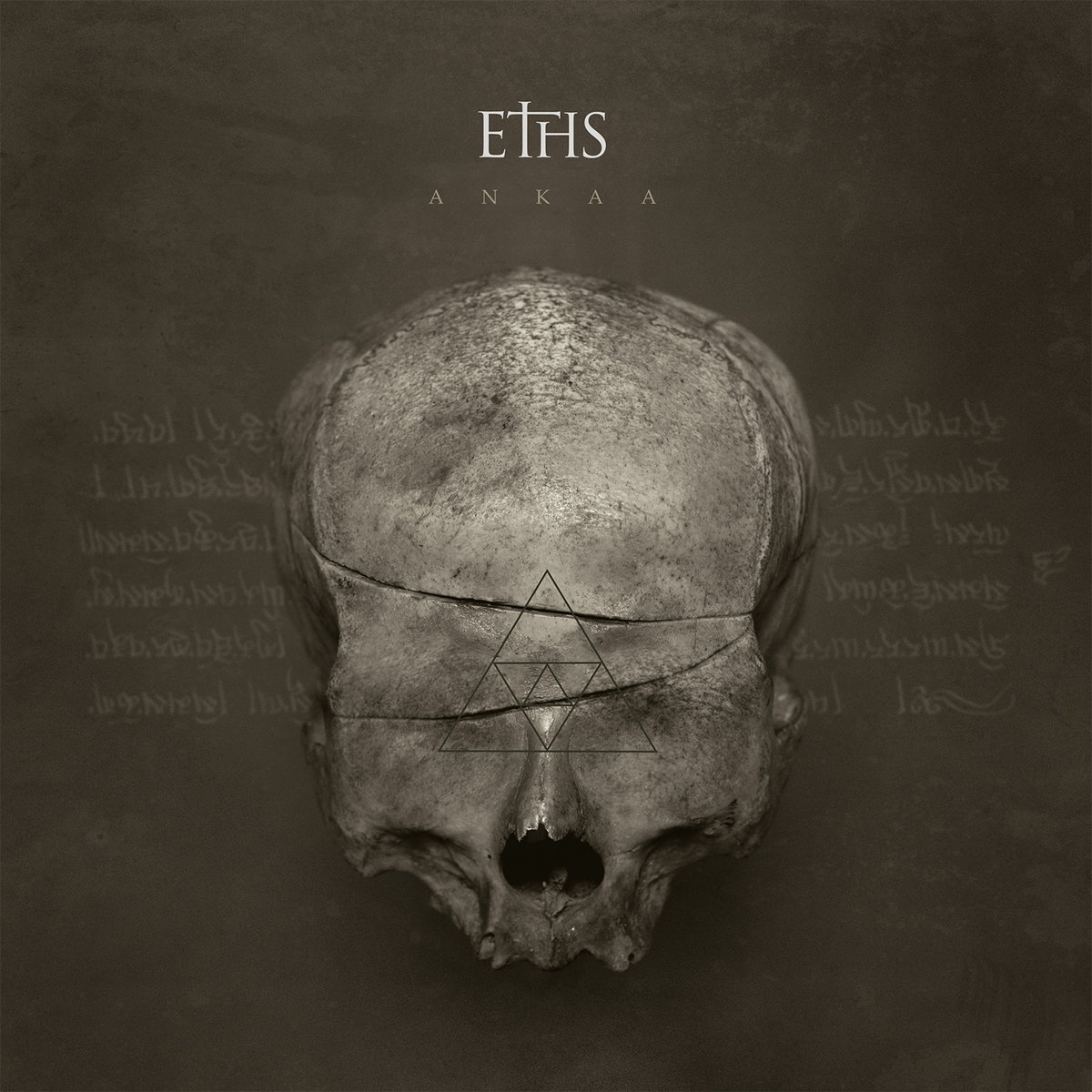
Album Review – Eths / Ankaa (2016)

One of the most prominent and innovative French bands of all time returns with a true masterpiece of complexity, darkness and heaviness, shining brighter than the main star of the Phoenix constellation.

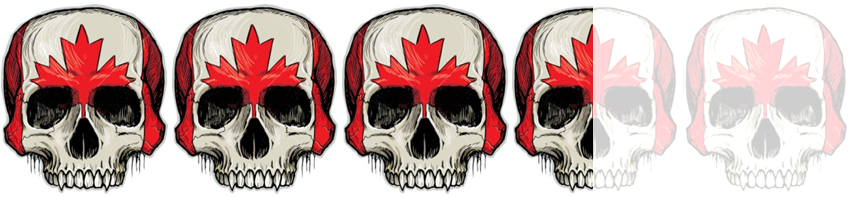
Rating2

CoverThere’s a thin line between change and evolution several bands worldwide can’t or simply just don’t know how to walk without losing their balance and, consequently, damaging their core essence. Fortunately, this is not the case with French Neo-Metal adventurers Eths, who in my humble opinion have just released their boldest and most innovative album to date, the splendid Ankaa, but still being the Eths we all learned to love. Although I had been preparing myself for quite a while for another blast of creativity by Mr. Staif Bihl and his bandmates, I must say I was blown away by the level of intricacy, darkness and heaviness found throughout the entire album. This beautiful work-of-art crafted by this distinguished group hailing from the city of Marseille, France is the perfect depiction of what evolution in music is all about, and it will surely help spread the electricity and emotions flowing from the music by Eths to the entire world.

Ankaa, which features a unique selection of guest musicians such as Björn “Speed” Strid (Soilwork), Sarah Layssac (Arkan), Jon Howard (Threat Signal), Faustine Berardo and session drummer Dirk Verbeuren (Soilwork), not to mention it is also Eths’ first full-length album with the stunning Rachel Aspe on vocals, shines brighter than the main star of the Phoenix constellation, which by the way was the inspiration for the album name. “This album is linked to the cosmos and the concept of rebirth for the band as well as personally”, said Staif, and that’s indeed what you’ll experience while listening to each one of its twelve jaw-dropping multi-layered songs, all beautifully and meticulously connected to tell a bigger story to the listener. Again, Eths might have changed their musicality in Ankaa considerably, but it was a change towards evolution that no one in their right mind should ever complain about.

One of the best compositions in the history of Eths, entitled Nefas (the Latin word for “atrocity” or “wrong”), kicks off Ankaa in a very impactful way, being insanely heavier, faster and darker than anything the band has ever done before. It’s a feast of Metalcore, Melodic Death Metal, Alternative Metal and many other subgenres of heavy music perfectly put together, and pay good attention to what our screaming diva Rachel does with her “voix incroyable”, it sounds beyond astonishing. Nihil Sine Causa (or “nothing happens without a cause”, from Latin), featuring Sarah Layssac and Jon Howard, is yet another obscure and thunderous composition where the band’s mastermind Staif showcases his always solid guitar lines, with the addition of the Arabic words by Sarah as well as the electronic effects during the song’s second half bringing a fresh taste to the music. And in Amaterasu, part of the Japanese myth cycle seen as the goddess of the Sun and the Universe, Dirk (who sounds like a beast behind his drums) makes a great duo with newcomer Damien Rivoal and his low-tuned and heavy as hell bass lines. Moreover, it’s impossible not to love this brutal Groove Metal aria, and I don’t recall coming across such a powerful triumvirate of songs like these starting an album in recent years.
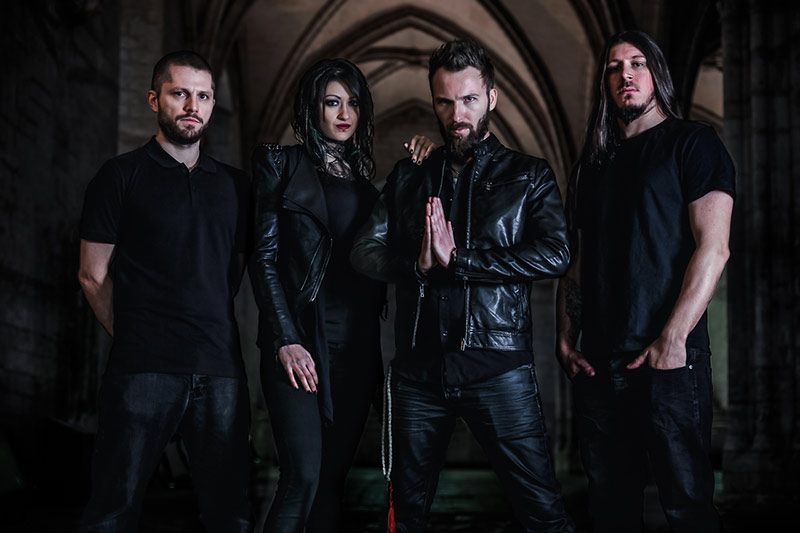
eths 2016All the craziness, occultism and darkness found in Ankaa keep growing with each and every song, and in Seditio (or “rebellion”, from Latin) that couldn’t be any different. It amuses me how Rachel can sound like a beauty and a beast at the same time, showcasing all her vocal skills and contributing to the song being heavier than usual but still innovative and progressive, just like we expect from such a talented group of musicians. Then we have the startling Nixi Dii, a general term applied by the Romans to those divinities who were believed to assist women at the time when they were giving birth to a child, where its eerie background effects, demonic drumming, choir-like backing vocals and lots of breaks and variations, together with Rachel growling like an evil queen, are all the ingredients you need for awesomeness. In other words, it offers you eight minutes of the best modern metal music you can find in the entire world. And just when you think things couldn’t get more alternative we’re treated to Vae Victis (Latin for “woe to the vanquished”), with Staif providing an amazing piano base for Rachel to shine once again, this time with a mix of clean vocals and visceral growls. As a side note, the production of the album is so brilliant you can clearly hear every single note coming out of each instrument, enhancing the overall experience even more.

The next song, named HAR1 (the acronym for human accelerated region 1, a short DNA region identified recently to have evolved the most rapidly among highly constrained regions since the divergence from our common ancestor with chimpanzee) and featuring Björn “Speed” Strid, gets closer to traditional Melodic Death Metal thanks to the contribution of Björn, but of course with Eths’ own touch added to it; while in Sekhet Aaru, the Egyptian reed fields considered the heavenly paradise where Osiris rules in ancient Egyptian mythology, your soul will be transported to those fields in a flawless fusion of alternative and occult music. Sarah is back with her gorgeous voice as a guest vocalist in Kumari Kandam, which refers to a hypothetical lost continent with an ancient Tamil civilization (located south of present-day India, in the Indian Ocean), perhaps the closest song to Eths’ old musicality with Damien and Dirk providing all the uproar while Rachel takes care of the song’s tranquility, sorrow and anguish.
eths-ankaa-digibox

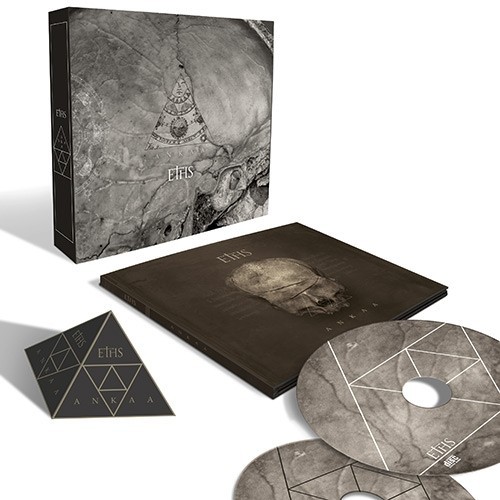
Ankaa Deluxe Digibox

Last but not least, Eths bring forward a spine-tingling trilogy inspired by the Orion constellation, accurately representing the idea of rebirth. The first piece of this trilogy is named Alnitak, a multiple star (also known as “Zeta Orionis”) that’s part of the famous Orion’s Belt, which Staif effectively translated into an epic and vibrant chant overflowing his deepest emotions. The second piece, entitled Alnilam, a large blue supergiant star also known as “Epsilon Orionis” estimated to be 275,000 to 537,000 times as luminous as the Sun and around 34 times as massive, is an extremely powerful and aggressive tune led by a relentless Rachel, with Dirk yet again pounding his drums mercilessly. And finally, the climatic end to this trilogy comes in the form of another violent chant with esoteric passages and a pleasant ambience named Mintaka, from منطقة (“manṭaqa”), which means “the belt” in Arabic.

As aforementioned, calling Ankaa simply as a “change” in the music direction by Eths is an understatement of the actual evolution Staif, Rachel and the others reached with their musicality, as well as of the brilliant destiny that lies ahead for them. Ankaa is not just another regular metal album, and I’m sure it will shortly become a reference in contemporary heavy music. Thus, if you want to join Eths in this exciting path they are taking towards the future of Heavy Metal, I suggest you go grab your copy of Ankaa (which can be listened to in its entirety HERE), in special its top-notch deluxe digibox including a CD and an exclusive DVD “Live at Hellfest 2015” in digisleeve with a 24 page booklet, an Eths metal key ring and a pyramid folding card, at the Season Of Mist webshop or at the Napalm Records webshop. After listening to such a masterpiece like Ankaa, you will quickly realize it is no wonder Eths are considered by many the most prominent and innovative French band of all time.

Best moments of the album: Nefas, Nihil Sine Causa, Amaterasu, Nixi Dii and, from the Orion-inspired trilogy, I would say Alnilam is the most entertaining composition.

Worst moments of the album: None.

Released in 2016 Season Of Mist

Track listing
1. Nefas 3:50
2. Nihil Sine Causa (feat. Sarah Layssac and Jon Howard) 4:53
3. Amaterasu 3:57
4. Seditio 6:36
5. Nixi Dii 7:58
6. Vae Victis 5:05
7. HAR1 (feat. Björn “Speed” Strid) 4:04
8. Sekhet Aaru 4:09
9. Kumari Kandam (feat. Sarah Layssac and Faustine Berardo) 4:15
10. Alnitak 4:04
11. Alnilam 3:40
12. Mintaka 5:07

Band members
Rachel Aspe – lead vocals
Staif Bihl – guitars, keyboards, programming, vocals
Damien Rivoal – bass
R.U.L. – drums (live)

Guest musicians
Dirk Verbeuren – drums (studio recording)
Sarah Layssac – additional vocals on “Nihil Sine Causa” and “Kumari Kandam”
Jon Howard – additional vocals on “Nihil Sine Causa”
Björn “Speed” Strid – additional vocals on “HAR1”
Faustine Berardo – additional vocals on “Kumari Kandam”
Album Review – Sirenia / The Seventh Life Path (2015)

If dark and symphonic music is what you want, Mr. Morten Veland and his crew are always there to help satisfy your craving.

Rating4

sirenia_the seventh life pathDeliberately entitled The Seventh Life Path, the seventh (got it?) full-length album by Norwegian Gothic/Symphonic Metal band Sirenia has everything it takes to please diehard fans of the band and newcomers to the world of symphonic music: melodic instrumentals, wicked synthesizers, a powerful choir, the charming female vocals by Spanish diva Ailyn Giménez and, of course, the iconic Morten Veland.

Perhaps one of the most interesting components in The Seventh Life Path is its artwork, designed by renowned artist Gyula Havancsák of Hjules Illustration and Design, whose latest works can be seen in the new albums by Ensiferum and Grave Digger, for example. It’s a very detailed illustration, where the artist and the band clearly wanted to augment the importance and meaning of the number seven to the album. “The 7 number appears as 7 ravens, 7 snakes, 7 roses on the dried out wreath…”, said Gyula about this peculiarity in an interview.

However, it’s not just the artwork that makes The Seventh Life Path a good album, but the music itself. As soon as the symphonic and imposing intro Seti begins, it already embraces the listener and sets the tone for the next track, the (at the same time) creepy and captivating Serpent.  Ailyn and Morten provide a beautiful balance of clean female vocals and harsh growls, and even with the presence of some Gothic passages the song ends up sounding truly metallic and symphonic. Once My Light is a lot more “commercial” due to the focus on the smooth vocal lines by Ailyn and the less imposing instrumental, also providing us all a lovely atmosphere and eerie passages with a Gothic touch that only Morten is capable of crafting.

In Elixir, featuring Joakim Næss on clean vocals (who by the way already worked with the band in Perils of the Deep Blue), modernity and tradition are put together, while just the intro in Sons Of The North already kicks ass by itself even before the main portion of the music takes shape. It’s a motherfuckin’ epic ode to Scandinavia, almost a Norse hymn, where the deep growls by Morten, all the orchestrations and especially the choir are flawless. Besides, the lyrics are far from being original (“Here the thunder and lightning / Are both enforced by the mighty Thor / We are the sons of legends / We are sons of myths and lore / Our legacy is forever / Behold its radiance forevermore”), but they didn’t really need to be to sound amazing. They kept it simple, and it worked pretty well. However, once again embraced by symphonic elements, Earendel (or Aurvandil) doesn’t live up to its predecessor, getting too generic after a while even with all the breaks and variations.

sireniaWith a denser sonority and a faster pace, where drummer Jonathan A. Perez showcases his more ferocious skills, Concealed Disdain has one significant issue in my opinion: I find Ailyn’s voice too low during the whole song, preventing it from being a lot more pleasant. On the other hand, sounding like old school Tristania enhanced by the more contemporary musicality by Sirenia, the excellent Insania shows beyond doubt that Morten is a terrific musician, with highlights to its synths and drums for adding so much power to the final result. I also love when Morten goes back in time and revives his darkest side in lyrics like the ones found in Contemptuous Quitus (“You’re the torn in my heart / You will tear me apart / You’re a plague and a curse / Contemptuous quietus”), and besides, I must say I was eager for some heavier riffs, which are finally delivered in this song.

The last two tracks of the regular version of The Seventh Life Path are also well-engendered and contribute to the overall quality of the album. Firstly, The Silver Eye, which could have been just a little shorter, sounds like Symphonic Black Metal in many of its moments, with Ailyn and Morten making a good vocal duo once again. And secondly, we have the Gothic ballad Tragedienne, with Ailyn’s voice and the piano notes being its centre pieces. Of course what I’m going to say is not a universal truth, but I believe fans of Tristania will enjoy it more than fans of Sirenia. In addition, there’s also a Spanish version for this song as a bonus track depending on the version of the album you acquire.

In short, if what Sirenia wanted to achieve with The Seventh Life Path was a well-balanced and energizing continuation to their entertaining career, keeping the names of Morten and Ailyn alive in the minds of Gothic and Symphonic Metal partisans, they more than succeeded in their quest. And if you are one of those dark music supporters, you should thank Morten and his crew for always bringing forth your favorite type of music, just like what is presented in The Seventh Life Path.

Best moments of the album: Serpent, Sons Of The North and Insania.

Worst moments of the album: Earendel and Concealed Disdain.

Released in 2015 Napalm Records

Track listing
1. Seti 2:05
2. Serpent 6:31
3. Once My Light 7:21
4. Elixir (featuring Joakim Næss) 5:45
5. Sons Of The North 8:16
6. Earendel 6:14
7. Concealed Disdain 6:11
8. Insania 6:39
9. Contemptuous Quitus 6:29
10. The Silver Eye 7:29
11. Tragedienne 4:54

Bonus track
12. Tragica (Spanish version of Tragedienne) 4:55

Band members
Morten Veland – guitars, vocals, bass, piano, synth, mandolin, programming
Ailyn – female vocals
Jan Erik Soltvedt – guitars
Jonathan A. Perez – drums

Guest musicians
Joakim Næss – clean male vocals on “Elixir”
Damien Surian – choir
Emilie Bernou – choir
Emmanuelle Zoldan – choir
Mathieu Landry – choir

Album Review – Moonspell / Extinct (2015)

While this distinguished Portuguese Dark Metal band is among us, we can rest assured good and meaningful music is far from being extinct.

Rating1

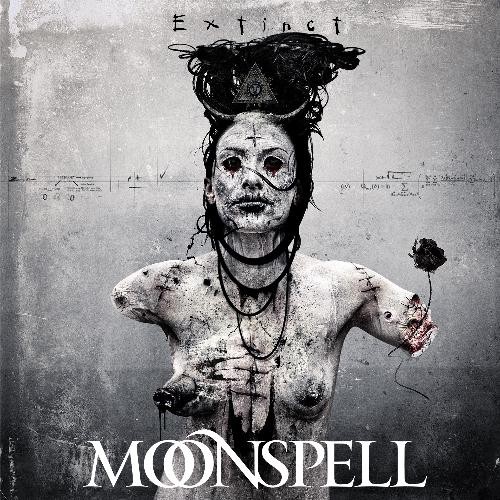
moonspell_extinctIt’s definitely not an overstatement to say Portuguese Dark Metal pioneers Moonspell are the best music group in the history of Portugal, and of course, the best Dark/Gothic Metal band of all times. They’re not just a Heavy Metal band exploring the darkest and deepest emotions with their matchless music, but over the course of their more than 20 years of career they reshaped and redefined Gothic Rock/Metal worldwide, taking it to a whole new level. And even after so many years on the road they still have a lot of creativity and electricity flowing through their veins, culminating in the Goth masterpiece Extinct, their eleventh full-length album and undoubtedly one of their best to date.

With beautifully disturbing cover artworks designed by Greek artist Seth Siro Anton (also known as Spiros Antoniou, leader of Greek Symphonic Death Metal band Septicflesh), a different one per album version by the way, Extinct has an impeccable overall production that only increases its magnitude. Furthermore, the album feels like it’s purposely split in two distinct parts, the first leaning to a more Heavy Metal sounding whilst the second pays homage to pure Gothic Rock. And it doesn’t matter which “part” you prefer, it’s impossible not to enjoy Extinct in its entirety.

moonspellWhen Breathe (Until We Are No More) starts, you can already feel Extinct is going to be a great album. With the keyboard notes by Pedro Paixão providing that ominous atmosphere we love in Gothic music and its progressive riffs blended with a very ferocious chorus due to the harsh vocals by lead singer Fernando Ribeiro, you’ll feel embraced by the band’s unique musicality for sure. The title-track, Extinct, is a work of art of darkness and passion, offering the listener powerful headbanging riffs, beautiful guitar solos and keyboard passages, an incredible job done by Fernando on vocals, as well as a chorus that is beyond phenomenal  (“Before the lights go out / Before our time is gone / A taste of your lips / Before we go extinct”). In addition, the official video to the song, which you can see below, perfectly depicts its musicality, and if it doesn’t give you a thrill maybe you should go listen to Justin Bieber or One Direction, because you’re not worthy.

Medusalem is not only the fastest and the most metallic of all songs, but the addition of Middle-Eastern elements electrified it even more. I would love to listen to this more-than-perfect epitome of Gothic Metal live, with highlights to Fernando kicking ass on vocals once again. Following that amazing dark attack we have the touching rock/metal ballad Domina, with its thoughtful lyrics enhanced by a mesmerizing atmosphere and more soulful guitar solos, and a brilliant song entitled The Last of Us: with lyrics tailored to drive any girl crazy (“Let me touch you where’s forbidden / And test the limits of your sanctity”), this song kind of kicks of the Gothic Rock extravaganza in the album, focusing on the same musicality that elevated bands like H.I.M. to stardom.

moonspell_extinct02

Extinct Limited Mediabook Edition

The next track, the beautiful Malignia, is even darker than all previous songs, with its name, keyboards, background effects, the depth of the vocal lines and everything else in this Goth anthem being as somber as possible, while Funeral Bloom is a song that could easily be played on any radio station so catchy it is. Besides, the way drummer Miguel Gaspar, bassist Aires Pereira and keyboardist Pedro Paixão are in sync is remarkable. A Dying Breed is another exciting Gothic Rock song where Fernando varies between his clean vocals and deep growls perfectly, with the rhythm flawlessly following his vocal lines from smoother passages to heavier moments thanks to the excellent job done by Ricardo Amorim and Pedro Paixão on guitars.

moonspell_extinct03

Extinct 2-LP Gatefold

There’s so much beauty found in The Future Is Dark it’s hard to explain it in just a few words: it has another very passionate and melancholic chorus that will get stuck in your head for days (“Gotta breathe in, gotta breathe out / Up on your feet, gotta think twice / The future is dark, the future is vile / Without you there’s no tomorrow”), and what can I say about the blackened ambience the band brings forth in this song, mainly due to its guitar lines and solos? That’s simply amazing. And lastly we have the weird French song La Baphomette, which despite not being a disaster it doesn’t keep up with the awesomeness of the rest of the album. It’s important to say the deluxe edition of Extinct also brings four high-quality bonus tracks, and unless you’ve just waken up from a coma you might not have noticed yet they’re alternate versions for four of the songs of the regular album. In my opinion, the best of those tracks is the passionate semi-acoustic Doomina, which is a word play of “Doom” and the original song “Domina”, got it?

To sum up, calling Extinct the best album of 2015 even if we’re still in March, with many months to go until the year is over, is not an overstatement either. An awe-inspiring album like this one truly deserves to be appreciated by all music lovers, it doesn’t matter if you’re a metalhead or not. In other words, go listen to Extinct with the person you love the most, or simply close your eyes and savor it by yourself, resting assured that while Moonspell are among us dark and meaningful music will never be extinct.

Best moments of the album: Extinct, Medusalem, Malignia, The Future Is Dark and the bonus track Doomina.

Worst moments of the album: La Baphomette.

Released in 2015 Napalm Records

Track listing
1.Breathe (Until We Are No More) 5:33
2.Extinct 4:42
3.Medusalem 5:06
4.Domina 5:09
5.The Last of Us 3:26
6.Malignia 5:06
7.Funeral Bloom 4:10
8.A Dying Breed 4:29
9.The Future Is Dark 5:09
10.La Baphomette 2:48

Deluxe Edition bonus tracks
11.Until We Are No Less 7:02
12.Doomina 4:49
13.Last of Them 5:24
14.The Past Is Darker 5:43

Band members
Fernando Ribeiro – vocals
Ricardo Amorim – guitars
Pedro Paixão – keyboards, guitars
Aires Pereira – bass
Miguel Gaspar – drums

Album Review – Tristania / Widow’s Weeds (1998)

It’s from Norway the most remarkable Gothic Metal album of all time.

Rating3

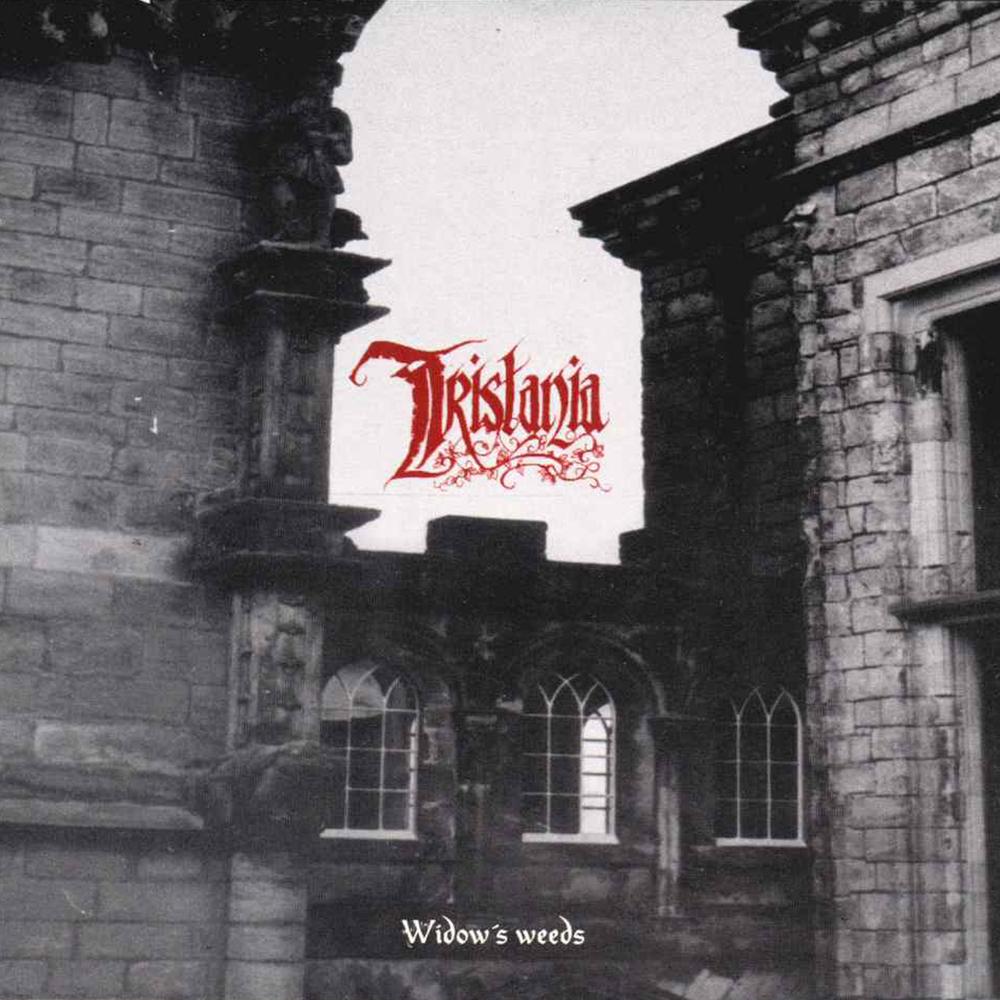
WidowsWeedsGothic Metal has always been and will ever be a very tricky subgenre of Heavy Metal, especially in terms of originality, because it can bore you at the blink of an eye. I, for instance, do not consider myself a true Gothic Metal fan, as I prefer a lot more heavier and faster material like traditional Heavy Metal, Thrash Metal, Death Metal, and even Hard Rock rather than any Gothic music. However, once in a while there’s a band like Tristania that breaks this barrier and gains my respect in the world of heavy music.

After their self-titled EP Tristania (1997), it was time for this Norwegian Gothic Metal band to release in 1998 their first full-length album called Widow’s Weeds, which in my opinion is the best Gothic Metal album of all time. In fact, Widow’s Weeds cannot be considered only Gothic Metal, as it contains elements of many other subgenres of heavy music such as Symphonic, Death and Doom Metal, which explains why this album is so difficult to understand, and consequently so delightful.

Widow’s Weeds is a tsunami of obscure themes and dark lyrics, all full of the most uncomfortable emotions such as depression, sadness and madness, and of course everything is wrapped up by a very precise and dense musicality. Do not expect to hear crazy riffs and solos, or even fast drums with lots of double bass, but lengthy and slow songs where all instruments together form a complex sonority, in parallel with Vibeke Stene’s angelic voice and Morten Veland’s roars.

Right after the intro Preludium…, the band shows all its powerful musical range with the beautiful Evenfall, by far the most amazing composition of their entire career. Vibeke’s performance in this song is awesome, as well as the drums by Kenneth Olsson, and the final result portrays perfectly how pleasant sadness can be when transformed into music. The following track keeps the bar extremely high: Pale Enchantress can be considered another of the band’s classics, a lot faster than the previous one with great melancholic lyrics (“Enchanting all my dreams / A beauty and her flood of tears / Nightfall embrace my heart / Mesmerized and ravendark”).

December Elegy and Midwintertears are examples of what I previously said about the trickiness of Gothic Metal, as both can easily make you feel bored due to their length and lack of speed or changes in rhythm. However, they’re pretty good songs, it’s just that they’re not tailored for MTV or radio. On the other hand, even the more skeptical heavy music lovers will enjoy the next two tracks: Angellore has many interesting goth elements from the 80’s that match perfectly with the band’s style, with the addition of Østen Bergøy doing the clean vocals, and the final result was so good that it was probably the reason why he joined the band full-time from 2001 until 2010; while My Lost Lenore is considered by many Tristania’s biggest masterpiece. Here we have not only Vibeke and Morten doing a superb job, but above all the talented Einar Moen on his synth and piano giving a huge boost to the song.

tristania7The (almost) last track, Wasteland’s Caress, is for me the weakest of all tracks, and the outro …Postludium ends this amazing album, unless you have the special edition which contains two excellent bonus tracks called Sirene and Cease to Exist. The front cover of the album simply summarizes how dark and mysterious the music by Tristania is, fully complemented by the band’s sinister outfits.

Unfortunately, there have been way too many changes in the band’s lineup and musicality until today, provoking an immense drop in the quality of their material. Maybe if Vibeke Stene and of course Morten Veland, the mastermind behind Tristania’s eerie and mesmerizing music and currently with Sirenia, were still with Tristania, the whole story would have been a lot different. Nevertheless, based on Tristania’s most recent albums, I don’t believe we’ll see anything close to Widow’s Weeds again.

At least there are some good news about Vibeke returning to the world of heavy music after years of privation, and when she actually returns she deserves a special “Metal Chick of the Month” post for her and one or more reviews of the music projects and/or bands she joins in a near future. She’s a truly underrated musician, and I hope she comes back kickin’ ass as she used to do in her years with Tristania.

Best moments of the album: Evenfall, Pale Enchantress, Angellore and My Lost Lenore.

Worst moments of the album: December Elegy and Wasteland’s Caress.

Released in 1998  Napalm Records

Track listing

1. Preludium… 1:09
2. Evenfall 6:51
3. Pale Enchantress 6:31
4. December Elegy 7:31
5. Midwintertears 8:32
6. Angellore 7:16
7. My Lost Lenore 6:23
8. Wasteland’s Caress 7:40
9. …Postludium 1:12

Limited edition bonus tracks
10. Sirene 3:22
11. Cease to Exist 9:17

Band members
Vibeke Stene – vocals, choir
Morten Veland – harsh vocals, guitars, choir
Anders H. Hidle – guitars, choir
Rune Østerhus – bass
Einar Moen – synths, programming
Kenneth Olsson – drums, choir

Guest musicians
Østen Bergøy – clean vocals on “Angellore”, choir
Pete Johansen – violin
Hilde Egeland, Marita Herikstad, Hilde T. Bommen – choir

Album Review – Grave Digger / Return of the Reaper (2014)

One of the most traditional and respected Power Metal titans from Germany return with another good album, although not as memorable or inspired as it could have been.

Rating5

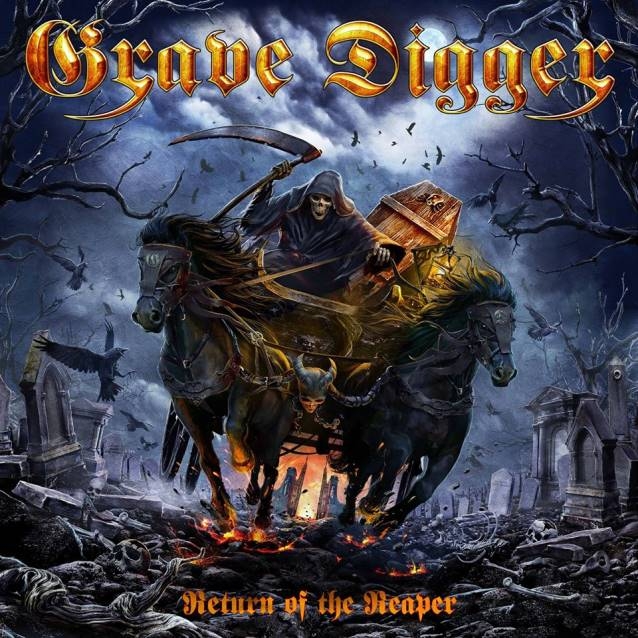
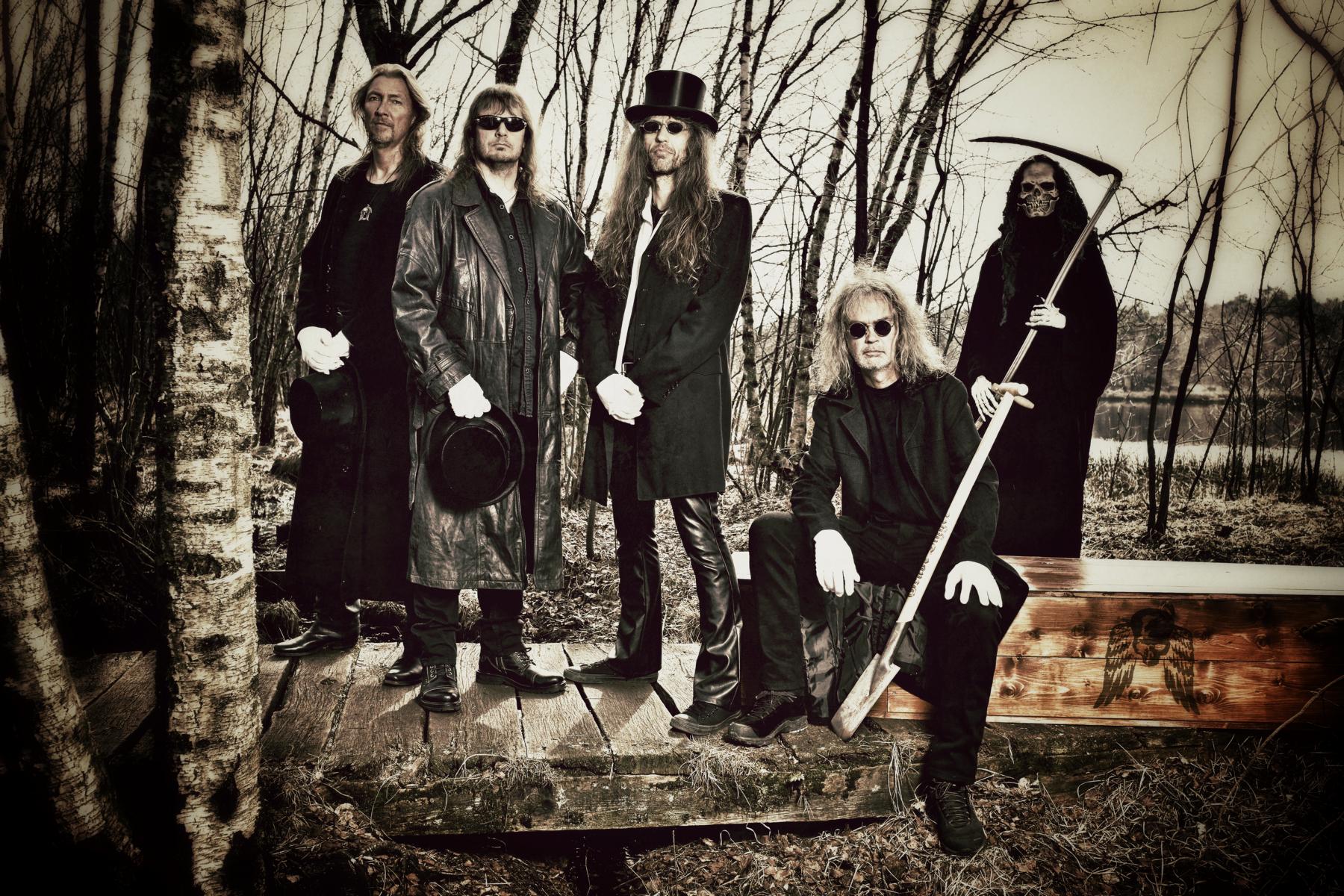
coverAs a tribute to the newly crowned World Cup champions Germany, who won the final match yesterday against Argentina, a team that truly put their hearts and souls into the match and deserve our most pure respect for almost beating an unbeatable machine such as the Teutonic squad, here’s the review for the new album by one of the most influential German bands of all time. I remember back in the 90’s when German Power Metal icons Grave Digger redefined their style to a more epic and powerful musicality, releasing some high-end classic albums such as Heart of Darkness (1995), Excalibur (1999), and especially the masterpiece Tunes of War (1996), increasing their legion of fans significantly, reaching a main-eventer status and headlining important tours and festivals worldwide. That was exactly when I became a huge fan of their unique Power Metal, and until today I feel really excited whenever Chris Boltendahl and his clan announce that a new Grave Digger album is about to rock the world.

Unfortunately, this time I’m a little sad to say that their new album, Return of the Reaper, is not as good as I was expecting. Despite having some very traditional and powerful moments with those characteristic elements we learned to love in the music by Grave Digger, most songs of the album sound way too generic and uninspired. They seem to be suffering from the same “sickness” as Arch Enemy with their latest release: the album is far from being a disaster, but we all know they’re capable of delivering something a lot more creative and thrilling than that. Where are those Heavy Metal anthems such as “The Grave Dancer”, “Rebellion (The Clans Are Marching)” or “Excalibur”?

However, there’s no need to panic: Return of the Reaper might not be a memorable album, but it is quite enjoyable and sufficient enough to keep Grave Digger relevant in the world of heavy music. The intro Return Of The Reaper, which is a heavy version of Frederic Chopin’s Funeral March enhanced by some desperate screams, followed by the most traditional Grave Digger musicality you can find in this album (and by far the best song of all), the violent Hell Funeral, are together an excellent way to kick things off with lots of  Power Metal riffs, a catchy chorus and Chris Boltendahl’s voice sounding as awesome as usual even after so many years on the road. War God is another fast tune most fans will enjoy, with Stefan Arnold always precise on drums, but the chorus could have been a little more powerful and less repetitive (which by the way is a constant during the rest of the album); while Tattooed Rider has a name that simply asked for a more Hard Rock sonority, and albeit being a good song it’s kind of generic, especially in regards to the lyrics.

Grave-DiggerThen we have two of the worst tracks of the album: Resurrection Day, despite some good riffs and drumming, has horrible lyrics that don’t mean anything and a really bad chorus; while Season Of The Witch sounds like a rip-off of “The Last Supper” (especially the riff), getting really tiring after a while. At least the following track, the boisterous Road Rage Killer, speed things up with its really awesome heavy riffs, sounding similar to some of their old classics and, consequently, becoming one of the top moments of the album.

The following tracks will probably create mixed feelings among all fans of the band, alternating really good moments with lots of cheesiness and lack of creativity. Although Grave Desecrator offers us a good mix of Hard Rock and Power Metal, its horrible lyrics hamper it from becoming an excellent song; on the other hand, Satan’s Host is another good song with a very traditional approach and direct lyrics, and I’m pretty sure it will be one of the chosen songs by the band to be played live due to its intensity. Dia De Los Muertos slows things down a little with its simple but effective 80’s Hard Rock, even with its “creative” Spanish name that doesn’t add anything to the song (“Day Of The Dead” would have been a much better choice); while Death Smiles At All Of Us has an interesting keyboard intro that turns into a nice Power Metal tune, complemented by the best guitar solo of the whole album. And finally, for a band with so many outstanding ballads such as “Dolphin’s Cry”, “The Ballad Of Mary (Queen Of Scots)” and “Emerald Eyes”, closing the album we have the boring Nothing To Believe, which sounds truly uninspired and too generic compared to what Grave Digger are capable of doing.

At least the album art, once again created by Gyula Havancsák of Hjules Illustration and Design, who has been responsible for all of the band’s artworks since The Last Supper (2005), lives up to Grave Digger’s name, even if it’s not as majestic as The Last Supper or Heart of Darkness. In conclusion, if you’re a long-time fan of Grave Digger you can go ahead and buy their new album, you’re probably going to enjoy it. But if you are not fond of their most recent releases, Return of the Reaper will just be another reason for you to keep complaining about what the band is currently doing and keep going back to their old classics for some truly inspired Power Metal music.

Best moments of the album: Hell Funeral, Road Rage Killer and Satan’s Host.

Worst moments of the album: Resurrection Day, Season Of The Witch and Nothing To Believe.

Released in 2014 Napalm Records

Track listing
1. Return Of The Reaper (Intro) 1:16
2. Hell Funeral 3:02
3. War God 3:47
4. Tattooed Rider 4:04
5. Resurrection Day 2:59
6. Season Of The Witch 5:05
7. Road Rage Killer 3:19
8. Grave Desecrator 4:23
9. Satan’s Host 2:56
10. Dia De Los Muertos 4:16
11. Death Smiles At All Of Us 3:52
12. Nothing To Believe 4:34

Band members
Chris Boltendahl – vocals
Axel Ritt – guitars
Jens Becker – bass
Stefan Arnold – drums
H.P. Katzenburg – keyboards

Album Review – Xandria / Sacrificium (2014)

Listening to this album is far from being a sacrifice. Quite the opposite, it’s a true pleasure.

Rating4

CoverChanging the lead singer of any band has always been considered a very a bold move, and when the music genre in question is Heavy Metal the impact of that change is even more significant due to the loyalty and connection all diehard fans usually have with the most “traditional” members of the band. In other words, this change can be a very welcome breath of fresh air to the band’s musicality in some cases, or a complete disaster in others depending on how much the voice influences their music direction. Fortunately for German Symphonic Metal band Xandria their choice for the band’s new lead singer, the very talented Dutch soprano Dianne van Giersbergen, ended up being better than anyone could have imagined, which can be verified in their excellent brand new album Sacrificium, the sixth in their career.

Dianne, who is also the frontwoman for Dutch Smyphonic Metal band Ex Libris,  replaced German singer Manuela Kraller (who was with the band from 2010 to 2013) just before the recording of Sacrificium began, which made fans really apprehensive of what would happen with the band then. It’s also the first with bassist Steven Wussow, and add to that “the choir of the sacrificed” by the PA’dam choir (from the Netherlands) and some narration by American singer Amanda Somerville and Mark Burnash, and the amount of changes and new elements compared to their previous records is even higher. However, as aforementioned, it’s all for a very good purpose.

To begin with, if Sacrificium, the 10-minute epic track that opens the album, is not the most awesome “business card” Dianne could offer us, then I have no idea what could be. Xandria seems to be in very good hands (or voice) now based on what we can see in this song: after a symphonic intro, it turns into great and fast Power Metal, with Dianne’s voice sounding gorgeous when blended with more modern riffs. Moreover, the good rhythm variations and breaks, the “movie soundtrack” chorus halfway through the song and all solos make it easy to follow the “story” being told, turning it into an instant fan favorite. Nightfall, the second track of the album, keeps the energy level up. It is definitely another top moment of the album with its choir intro, heavy riffs, beautiful vocals and chorus giving the song an epic touch, and it will sound amazing live without any doubt.

Then we have the semi-ballad Dreamkeeper, which despite its more melodic riffs and delicate lyrics (“I will send a dying rose / For you all to be close / To its scent that has never been”) is not really an exciting song, and Stardust, where Dianne’s voice is nicely complemented by some Progressive Metal elements; but it’s the next song, The Undiscovered Land, which really helps elevate the overall quality of the album: this “medieval” ballad has some sort of “Lord of the Rings” intro that works pretty well, an awesome instrumental, and of course another brilliant vocal performance by Dianne. Sacrificium goes on with the pure Symphonic Power Metal song Betrayer, which takes the album back to a stronger and faster sonority, and Until the End, a “video-game” track that albeit not bad, sounds too generic compared to the rest of the album.

xandriaThe last part of Sacrificium is composed by a sequence of shorter songs with a very traditional approach, where the goal seems to be showcasing Dianne’s skills as a soprano. Come With Me is a very rhythmic Symphonic Metal tune with a chorus full of emotion, which can also be said about the next song, Little Red Relish, and Our Neverworld, a smooth ballad with heavier passages. Finally, we have the totally boring Temple of Hate, the worst song of all, and closing the album we have one last ballad, the melancholic and captivating Sweet Atonement, another lesson in singing by Dianne, who puts so much passion in her voice it’s hard not to get thrilled with her performance.

In summary, Sacrificium is a highly recommended album for all types of female singers (not only Heavy Metal), or for lovers of bands with female vocals, but it might be too much sometimes for more traditional metal fans. I myself was going to give it a 3.0 mainly because it’s not the most creative album in the world, but the choir, all the narrative, and especially the addition of the stunning Dianne to the band were so amazing it actually deserved a 3.5 in the end. Only time will tell if Dianne will be able to balance her career between Ex Libris and Xandria, but for now I’m impressed with her abilities as a musician. And what can I say about the album art? It’s not only beautiful, but would it also be a message to their oldest fans saying the band’s music has been reborn like a phoenix from the ashes? At least one thing we know for sure: listening to Sacrificium is not a sacrifice at all, but a very delightful experience.

Best moments of the album: Sacrificium, Nightfall, The Undiscovered Land and Sweet Atonement.

Worst moments of the album: Dreamkeeper, Until the End and Temple of Hate.

Released in 2014 Napalm Records

Track listing
1. Sacrificium 10:21
2. Nightfall 4:02
3. Dreamkeeper 4:36
4. Stardust 4:00
5. The Undiscovered Land 7:34
6. Betrayer 6:15
7. Until the End 5:47
8. Come With Me 3:46
9. Little Red Relish 4:39
10. Our Neverworld 3:51
11. Temple of Hate 5:59
12. Sweet Atonement 4:20

Band members
Dianne van Giersbergen – vocals
Marco Heubaum – vocals, guitar, keyboard
Philip Restemeier – guitar
Steven Wussow – bass
Gerit Lamm – drums