Album Review – Absconditus / Kατάβασις (2015)

An obscure descent to the underworld in the form of extreme music by a talented Occult Black Metal act from France.

Rating5

IVR041 Absconditus_Katabasis_1600pxIn Greek mythology, Kατάβασις (pronounced “katabasis”) means a descent to the underworld, and that is exactly what you will feel while listening to the debut full-length album by French Occult Black Metal band Absconditus. By the way, the name of the band comes from Latin, meaning “occult” or “hidden”, which perfectly represents their musicality, lyrics and everything else. In other words, if you have the nerve to face such a cryptic band piercing your mind with their dark and deranged music, you may ultimately relish a distinct experience in Extreme Metal.

Founded in 2010 by guitarist/songwriter Loxias upon the ashes of French Cult Black/Death Metal band Borgia, Absconditus offer solid and dissonant melodies enhanced by hints of melancholy, drama and introspective tension, with Kατάβασις being the the initiatic path that one has to walk in order to gain freedom and mastery over existence in a demiurgic world, according to the band. Not only that, the whole album is sung entirely in French. Do you think this is already too much information to absorb? Well, wait until you read the rest of this review and, of course, listen to the entire album, and you’ll see this is just the beginning.

An intro that goes on for over three minutes like Prologue à l’Agonie (or “prologue to agony”, in English) gives you an idea of the obscure voyage that’s about to start. What begins in a slow and dark way suddenly becomes a massacre full of melancholy, setting the stage for the macabre Mystagogie des Limbes (“limbo mystagogy”), or the principles, doctrines, and practices of mysticism, powered by its beautiful lyrics (“L’effroi illumine ma voie, je perçois la ruine en eminence / Un oremus cristallin s’élève vers les cieux / La dualité de ma noblesse fait écho à la décadence des ages / Dans l’ascension vertigineuse de mon âme captive”) amidst an atmosphere generated by Blackened Doom. Is there a way vocalist Aliexagore could have sounded more desperate than this? Moreover, in my opinion its riffs somehow transport the listener to Norway due to their strong Black Metal-ish feeling.

3540396969_logoElegeía (Confession au Cénotaphe), or “elegy (confession at the cenotaph)”, which means an “empty tomb” or a monument erected in honour of a person or group of people whose remains are elsewhere, brings forth a huge amount of darkness and disgrace, including a draconian invocation performed by Aliexagore, Loxias and Guillaume Pingard. Drummer Anderswo shows he’s an extremely technical musician whose skills contribute to add extra layers of violence and intricacy to the musicality, while Loxias seems to be hypnotized by the dark side, delivering truly demonic lines. And get ready for the ending climax of the song, it is outstanding. Darkening their sonority a bit more we have Exultet – L’Aurore Schismatique (“exultet – schismatic dawn”), the hymn of praise sung, ideally by a deacon, before the paschal candle during the Easter Vigil in the Roman Rite of Mass. It varies from atmospheric Doom Metal to pure Black Metal, with Aliexagore sounding even more satanic than in the previous tracks and with the addition of considerable dosages of progressiveness thanks to the talent of the musicians involved, as if Mastodon became a Black Metal act.

Hybris au Bord du Précipice (“hybris at the border of the precipice”), with the word “hybris” meaning extreme pride or self-confidence, is yet another exhibit of despair and chaos, and even if you don’t speak French you will love those lyrics (“Je partage le destin du fils de Prométhée / Sans assumer la puissance de l’affront / La semeuse d’étoiles attend mon retour / Nourrissant les espoirs de la vermine affamée”). The music itself is comprised of Occult and Progressive Black Metal professionally put together, where Loxias tries some new techniques that elevate the magnitude of the music, with highlights to the last part of the song being some kind of downward spiral to the depths of hell. And lastly, Le Nouvel Astre (“the new star”) is an instrumental outro as sinister as the intro, a dark but beautiful ending where the amazing guitar lines by Loxias are perfectly complemented by the complex beats by Anderswo.

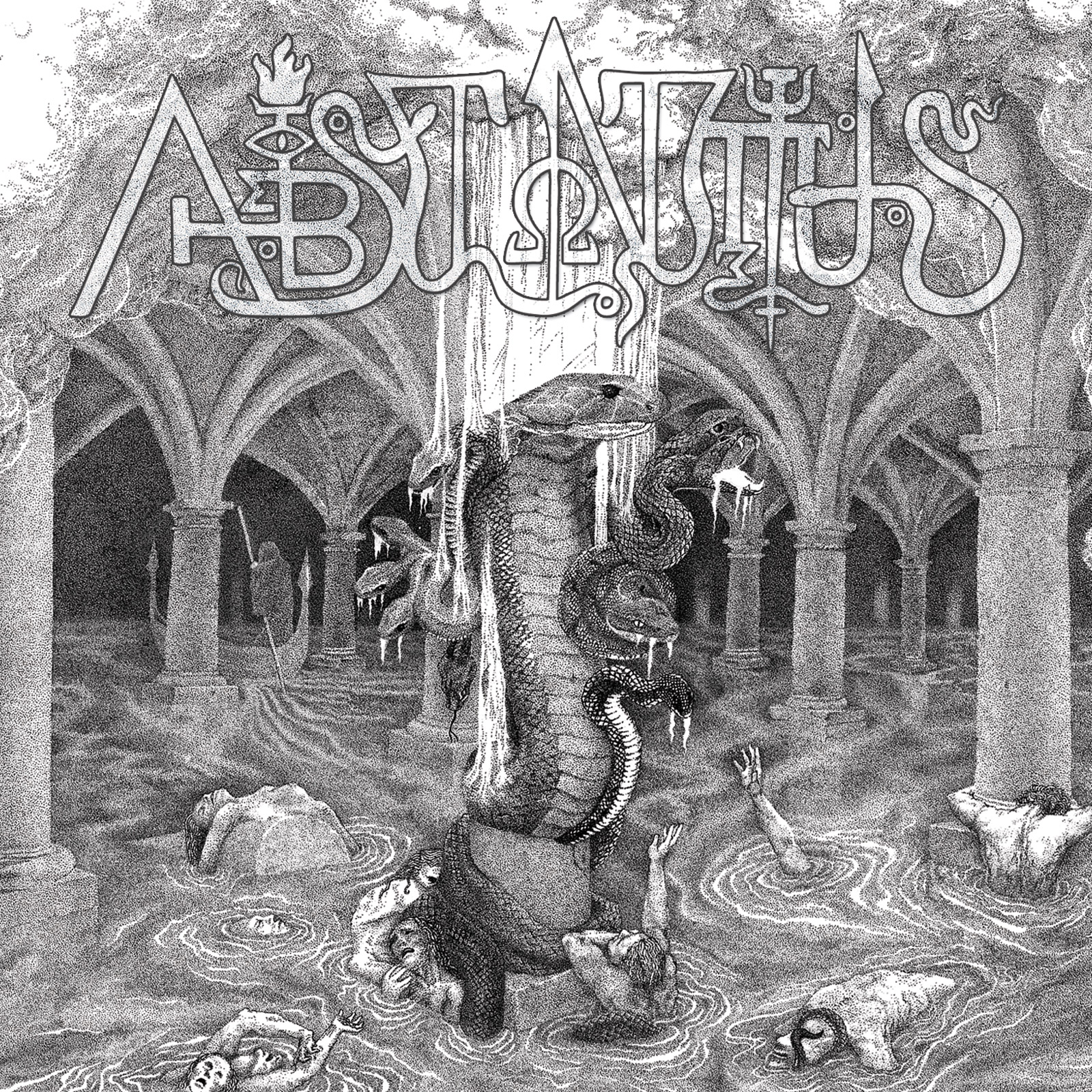
Featuring an at the same time beautiful but eerie artwork by British artist Bethany White, Kατάβασις, which can be purchased at the I, Voidhanger Records BandCamp page, exhales darkness and complexity, making it a recommended choice for your extreme music collection. If a downward journey to the underworld is part of your plans, let this occult French act help you with the soundtrack.

Best moments of the album: Elegeía (Confession au Cénotaphe) and Hybris au Bord du Précipice.

Worst moments of the album: None.

Released in 2015 I, Voidhanger Records

Track listing
1.Prologue à l’Agonie 3:30
2.Mystagogie des Limbes 8:46
3.Elegeía (Confession au Cénotaphe) 9:24
4.Exultet – L’Aurore Schismatique 8:39
5.Hybris au Bord du Précipice 7:56
6.Le Nouvel Astre 3:09

Band members
Aliexagore – session vocals
Loxias – guitars, bass
Anderswo – drums

Album Review – Dys Inbunden / One With Morbidity, The Opus Misanthropy (2015)

Come worship the Other Side to the sound of the new demonic opus by this extremely talented and sinful Swedish cult.

Rating3

One-with-morbidity-the-opus-misanthrop_OmslagCall it “Deaosophic Metal”, Progressive Black Metal or simply Black Metal. The music disseminated by Dys Inbunden, one of the most nihilistic death obsessed bands in the world, in their masterfully chaotic new album One With Morbidity, The Opus Misanthropy, is going to hit you with an avalanche of depression, suicide, darkness and death beyond dispute. Even if you’re not a huge fan of extreme music, I strongly recommend you take a shot at this amazing album so intense it is.

Forged in the fires of Stockholm, Sweden in 2012 and after releasing their debut album (or their “first opus”, as the band refers to it) entitled Pandemonium Unchained in 2013, Dys Inbunden spent a dark period in 2014 recording their new opus with Honza Kapák at Hellsound Studio, in the Czech Republic. The result, as aforementioned, is awesomely professional and instigating, carving the band’s trademark on the global map of Extreme Metal. And now, after reading this quick intro about the hostile Dys Inbunden and their blasphemous creation One With Morbidity, The Opus Misanthropy, I dare you to hit play if you have the guts.

Well, if you were tough enough to do it, you’ll already face One With Morbidity, one half of the album title, which starts as the intro to some sort of occult ceremony that goes on for a while before a sonic apocalypse begins. What an outstanding production, where you can clearly listen to each instrument while at the same time it’s fuckin’ dark and heavy as hell. Not only that, Mr. Gefandi Ör Andlät knows how to desecrate our minds with his blustering screams. The second half of the album title, Opus Misanthropy, presents hints of Symphonic Black Metal in a poignant atmosphere, where even the clean cultic vocals sound intimidating, not to mention the spot-on orchestrations by Magister Nocturnal, which are not too portentous but adequate to the band’s purpose.

If you’re still alive and sane, the symphonic and devilish track Odious Worship Of Annihilation will mercilessly invade your soul, with Gefandi Ör Andlät sharpening his vocals to an even deeper satanic level while the instrumental keeps dense and extremely well-crafted. There’s not a single second of hope for over seven minutes of music in this tune, one of my favorites of the entire album hands down. Mischievous Paths Of Nocturnal Lust, the longest track of the album, doesn’t disappoint, with the duo of darkness offering us another Black Metal raid with extra layers of insanity, rhythmic variations and progressive passages. Its vocals and riffs are of course fiendish, and I’m sure you’ll feel your brain detaching from your skull to the sound of this evil feast. Then we have Through Demise and Decay, with its powerful riffs and harsh screams being its main ingredients, as well as those sick blast beats the way we love in Black Metal and a “chorus” that seems to incite a demonic worship; and The Illuminating Gaze Of Lucifer, where its Doom Metal vibe blended with the battering ram from Black Metal generate an interesting outcome. Moreover, as the name of the song contains the word “Lucifer”, it’s quite obvious the prince of darkness must be honored to be the inspiration for it.

dys inbundenDraconigena, a word that means “dragon-born” or “someone or something born of a dragon”, showcases Dys Inbunden spitting fire through their music. This is a very progressive and extreme tune, with highlights to the superb guitar lines by Gefandi Ör Andlät and its venomous ambience, sounding like three or four different songs in a combination of complexity and bestiality, and I guess I don’t need to say how solid the final result is. And continuing with the innovative names, Larva Pazuzu is the union of the words “larvae”, which in Roman mythology means a malevolent spirit of the dead or “a terrifying mask”, and “Pazuzu”, which in Assyrian and Babylonian mythology was the king of the demons of the wind and son of the god Hanbi, also representing the southwestern wind, the bearer of storms and drought. The music itself couldn’t be more direct, an awesome massacre where both Gefandi Ör Andlät and Magister Nocturnal sound deeply infuriated (and whoever is playing the drums is a beast).

Just when you think they’re going to take a break amidst so many wicked tunes, they continue their path of destruction with Nihilist Pariah, a raw old school Black Metal tune tailored for diehard black metallers, boosted by the deluxe production of the album, followed by Crown Of Carcosa, another masterful display of extreme music where the nuances of darkness brought forth by its symphonic elements sound really interesting. And what starts as a song by Opeth or Dream Theather evolves to a deranged but very melodic carnage in He Who Worships Death, with highlights to its high-end drumming and the uproar caused by the demonic voice of Gefandi Ör Andlät. Lastly, we have the frenetic Dimension Of Nihility, as vile as it can be, with the flawless support provided by Magister Nocturnal allowing Gefandi Ör Andlät to add more experimentations and a stronger taste to the music, and nothing is more suitable to end this Black Metal rite than a melancholic piano outro, named Without Life And Movement.

To be fair, it’s extremely difficult to summarize this Stygian masterpiece in just a few lines, so I deeply recommend you go like their Facebook page and check their music on YouTube, as well as buy One With Morbidity, The Opus Misanthropy at their official webstore, at the Liflätinn Productions webstore, on Amazon or at many other locations to really feel their music in your flesh. In other words, it’s time for us all to worship the Other Side to the sound of the new amazing opus by this talented and sinful Swedish cult.

Best moments of the album: Odious Worship Of Annihilation, Through Demise and Decay, Draconigena and Larva Pazuzu.

Worst moments of the album: Opus Misanthropy.

Released in 2015 Liflätinn Productions

Track listing
1. One With Morbidity 6:47
2. Opus Misanthropy 6:56
3. Odious Worship Of Annihilation 7:47
4. Mischievous Paths Of Nocturnal Lust 9:04
5. Through Demise and Decay 8:07
6. The Illuminating Gaze Of Lucifer 8:59
7. Draconigena 6:25
8. Larva Pazuzu 3:38
9. Nihilist Pariah 7:54
10. Crown Of Carcosa 5:35
11. He Who Worships Death 6:49
12. Dimension Of Nihility 6:07
13. Without Life And Movement 2:31

Band members
Gefandi Ör Andlät – vocals, lead guitar
Magister Nocturnal – bass, piano, orchestrations

Album Review – id. / Sagittarius A EP (2015)

Progressive, aggressive and intricate metal music created to flow directly into your body and mind.

Rating5

EP cover - id - Sagitarrius AInspired by Sigmund Freud’s theory on the levels of the human psyche (id, ego and super-ego), comes Canadian Progressive Metal band id. and their brand new EP, entitled Sagittarius A, which will take you on a relatively short but very interesting expedition through several music genres, from World Music to Death Metal. Longtime fans of Opeth, Gojira and Mastodon will quickly fall in love with id., while others might be positively surprised with the depth offered in the music by this Vancouver-based group.

The story behind the EP title is very entertaining and shows how much attention the band members paid to every detail while composing it. Sagittarius A, which touches on topics such as inner struggle and self-awareness, is the name of the black hole in the center of our galaxy (as represented by the album art). The central idea comes from a fundamental belief in a scientific world view, free of religious influence and tyranny, outlining how people are susceptible to believe things without evidence if it appeals to their vanity, as opposed to being presented with evidence and being able to accept something that is inherently contradictory to their intuition. But don’t worry if you didn’t really get it: just sit down, relax and enjoy the heavy music spectacle presented in this four-track EP.

idphotoshoot-5920-3611476671-PM-HAnd the psychedelic heavy music journey begins with The Greatest Secret Never Told, where huge influences from French Groove/Progressive Metal band Gojira can be easily noticed in all instruments, especially in its drums and riffs. Not only that, the high-end sounding is above average for any indie band like id., something that must be acknowledged for sure. Very technical and progressive instrumental passages are also found in Humanity’s Cry, an introspective and melancholic track (not only the music itself, but also the lyrics), with highlights to the theatrical clean vocals by lead singer Jason Pennington and the amazing beats by drummer Kris DeBoer.

id.entity is a lot angrier and more complex than the previous songs, sounding almost like Progressive Black Metal before turning into rawer Death Metal, which just confirms how creative this band can be. It’s a progressive feast where all band members have a very professional and solid performance, especially guitarists Alex Dubreuil and Tyson Araszewski, all guided by the excellent desperate vocals by Jason. Lastly, we have the title-track, Sagittarius A, which despite beginning in a very smooth way, suddenly becomes a violent but harmonic flow of blast beats and harsh screams. It’s in my opinion the best of all four tracks, mainly due to its high-energy rhythm and intricacy.

You can visit the band’s official Facebook page and/or BandCamp to obtain more details and stream the music by this band that’s helping put the awesome province of British Columbia, Canada in the map of Progressive Metal. In the end, it doesn’t really matter if you’re a profound connoisseur of the life and work of the father of psychoanalysis or not: if you’re a metalhead with a strong inclination to progressiveness, your body and mind will demand more of the elaborate musicality generated by these Canadian metallers.

Best moments of the album: As already mentioned, Sagittarius A.

Worst moments of the album: None, of course.

Released in 2015 Independent

Track listing
1. The Greatest Secret Never Told 3:58
2. Humanity’s Cry 5:36
3. id.entity 6:01
4. Sagittarius A 5:57

Band members
Jason Pennington – lead vocals
Alex Dubreuil – lead guitars, bass, backing vocals
Tyson Araszewski – rhythm guitar
Kris DeBoer – drums