One of the most ruthless beasts of Occult Black Metal returns with their twelfth opus, emerging as both an autopsy and a resurrection, a descent into spiritual death followed by the sublimation of rebirth.
With the release of their twelfth full-length album, entitled Ashspawn, the iconic beast Enthroned marks a new chapter in their three-decade reign of ritualistic and occult Black Metal. Conceived across six years of deliberate creation, the album emerges as both an autopsy and a resurrection, a descent into spiritual death followed by the sublimation of rebirth. Recorded at Ophiussa Studio, produced by the band’s own drummer Menthor, mixed by Stefano Santi at SPVN Studio, mastered by Phil Bashford at The Hive Rooms, displaying a beyond devilish artwork by Jose Gabriel Alegria Sambogal, and written in close collaboration with Gilles de Laval (an occult author known for his works on ceremonial magic and grimoires, such as Sacerdotium Umbrae Mortis and Black Magic Evocation of the Shem ha Mephorash), the new opus by Nornagest on vocals and samplers, T. Kaos on the guitars and bass, and Menthor on drums and percussion channels arcane praxis, metaphysical calculus, and esoteric mapping into a work that is as much ritual invocation as it is music. In other words, it is the culmination of Enthroned’s uncompromising vision, a weapon of transformation forged in fire and darkness.
The gates of the underworld are wide open, and Enthroned are ready to arise from the burning fires of hell and consume our souls in Crawling Temples, with the demented vociferations by Nornagest exhaling pure Black Metal magic. Menthor continues to hammer his drums with endless fury and hatred in Basilisk Triumphant, offering an overdose of the band’s trademark fusion of violence and darkness; whereas T. Kaos fires sheer aggressiveness and sulfur from his axe in Stillborn Litany, another ruthless, old school Black Metal extravaganza that lives up to the band’s own legacy, followed by the title-track Ashspawn, a lecture in classic Black Metal with the inhumane roars by Nornagest walking hand in hand with the infernal drums by Menthor.
T. Kaos will cut our skin deep with his scathing riffage in Raviasamin, while the song’s ritualistic, occult background elements give it an even more Stygian vibe and feel in the name of absolute obscurity. Then the scathing guitar lines by T. Kaos continue to reverberate in the netherworld in Sightless, as evil and visceral as Black Metal can be; and a vile, gruesome scream by Nornagest sets the tone in the just as malignant Chysalid, flowing like a devilish entity running in the dark until its somber ending. That grim atmosphere continues in Ashen Advocacy, presenting almost eight minutes of the blackest of Black Metal by bringing forward the most bludgeoning elements from Doom Metal to spice things up considerably. And last but not least, get ready to be dragged to pitch-black darkness to the sound of Assertion, with the despair and wrath flowing from Nornagest’s roaring sending shivers down our spines.
A true giant of European Occult Black Metal alongside Marduk, Dark Funeral, Gorgoroth and 1349, among others, Enthroned offer their most ambitious and personal statement to date with Ashspawn, embodying a total unity of vision where ferocious blast beats, oppressive mid-tempos, and progressive structures collapse into one another. You can feel the fire blasted by such an infernal horde by following them on Facebook and on Instagram, by subscribing to their YouTube channel, by streaming their caustic black masses on Spotify, and of course, by purchasing Ashspawn from BandCamp or by clicking HERE. In the end, Ashspawn is the testimony of the band’s obscure alignment, a ritual weapon that rejects nostalgia and compromise. It is a resurrection of spirit through suffering, and a reaffirmation of Enthroned’s place among Black Metal’s most visionary entities.
Best moments of the album:Basilisk Triumphant, Ashspawn, Raviasamin and Ashen Advocacy.
Drawing upon the oppressive weight of soul crushing Death and Doom Metal and the violent fervor of Black Metal, this UK beast returns with their most enthralling and disturbing work to date.
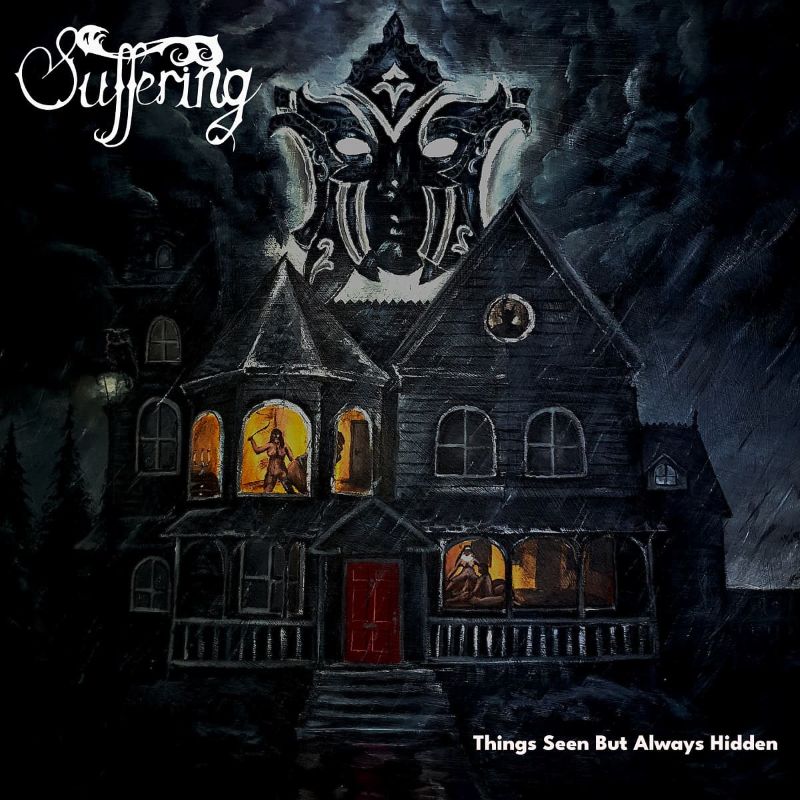
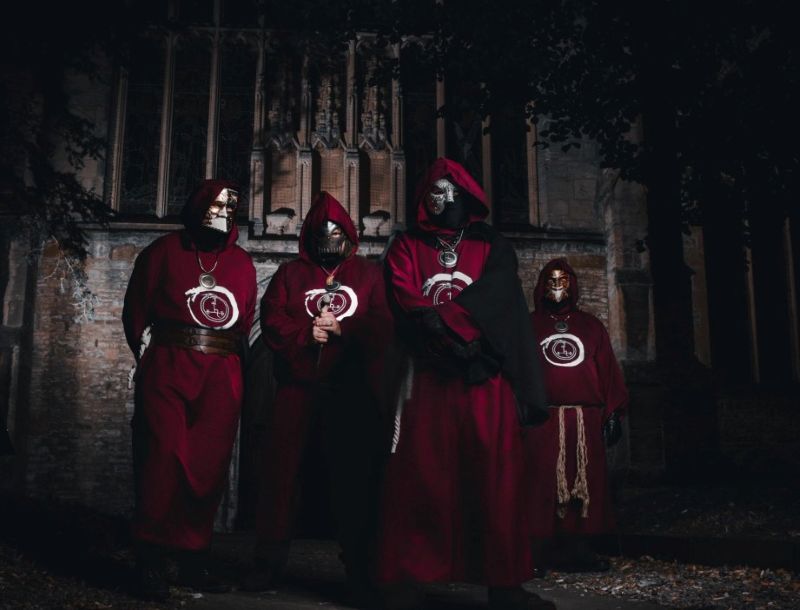
Formed in 2012 in the West Midlands in the UK, Suffering are exponents of Occult Black Metal, conjurers of fevered nightmares, and invokers of darkness and madness. Drawing upon the oppressive weight of soul crushing Death and Doom Metal and the violent fervor of the blackest metal music, bringing them together in an elixir of spirit staining, mind warping venom, the band formed of Sturmgeist Fornicator Insultus on vocals, Aýdlig on the guitars, Inquinatus on bass, and Malleus on drums returns with their second full-length album, their most enthralling and disturbing work to date, Things Seen But Always Hidden, following up on their 2024 EP Symphonies: Diabolis, and a must-listen for fans of bands the likes of Akercocke, Shining, Acherontas, and Forgotten Tomb, among other servants of the darkest arts.
Such a ruthless UK horde begins their black mass in style with the Doom Metal-infused aria The House with the Red Door, starting in a lugubrious way before exploding into an overdose of Black Metal spearheaded by the inhumane drums by Malleus; whereas Enthralled follows the same darkened path as the opening track, with Aýdlig’s riffs reeking of malignancy while Sturmgeist vociferates the song’s austere words like a creature from the abyss. Then another cryptic intro will drag our souls into the unknown in The Chamber of Breathtaking Delights, offering a blasphemous blend of Blackened Doom and Black Metal as sluggish and cadaverous as it can be; and again adding an endless dosage of heaviness and fury to their core sound we face Consorting with the Devil, where Aýdlig and Inquinatus sound absolutely phantasmagorical armed with their axes.
The poetically titled What Once Was Shall Be Again and What Is Shall Be No More demanded a truly haunting sound and vibe to match with its name, which is exactly what the band offers to our putrid ears, followed by Apocrypha Through the Keyhole, another lesson in carnivorous Blackened Doom, with Sturmgeist taking the lead with his devilish gnarls. In addition, it couldn’t have sounded heavier nor more obscure. Then back to a more straightforward Black Metal sonority the band presents Hell on Earth New Eden, with Malleus crushing his drums manically while his bandmates blast an overdose of hatred through their vocals, riffs and bass lines. Lastly, the conclusion to Things Seen But Always Hidden comes in the form of the hellish Behind the Green Door, with the band dragging our impious souls to their venomous lair in the name of sheer doom.
“The darkness and truth that lies within is far beyond what we had imagined possible. But remember, things are not always what they seem and some things are right in front of your face,” commented the band about their new beast, and you can join them in total darkness by following the quartet on Facebook and on Instagram, including their unrelenting live performances, stream their Stygian, spine-chilling Black Metal hymns on any platform such as Spotify, and above all that, put your damned hands on Things Seen But Always Hidden from their own BandCamp or from Apocalyptic Witchcraft Recordings, or click HERE for all things Suffering. However, you must always remember that once you have set foot on this path, there is no way back.
Best moments of the album:Enthralled, Apocrypha Through the Keyhole and Hell on Earth New Eden.
Worst moments of the album: None.
Released in 2025 Apocalyptic Witchcraft Recordings
Track listing 1. The House with the Red Door 7:17
2. Enthralled 4:30
3. The Chamber of Breathtaking Delights 7:00
4. Consorting with the Devil 4:38
5. What Once Was Shall Be Again and What Is Shall Be No More 3:12
6. Apocrypha Through the Keyhole 3:27
7. Hell on Earth New Eden 4:55
8. Behind the Green Door 9:42
Band members
Sturmgeist Fornicator Insultus – vocals
Aýdlig – guitars
Inquinatus – bass
Malleus – drums
Eternal darkness is covering my eyes and penetrating me…
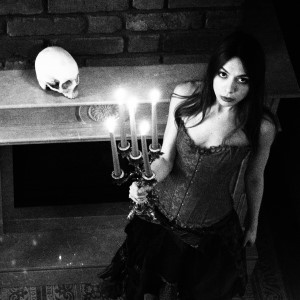
Dark skies are over us all once again here on The Headbanging Moose thanks to the raw and visceral Black Metal crafted by a multi-talented woman who will undoubtedly blacken our hearts even more. Hailing from Rivne, a historic city in western Ukraine located over 300 kilometers to the west of the country’s capital Kiev, she’s not only an amazing Extreme Metal vocalist, but she also plays all instruments including lead, rhythm and acoustic guitars, bass and drums for her stunning one-woman Occult and Depressive Black Metal project entitled Ieschure. Her poetic name, Lilita Arndt, adds an extra touch of beauty to her unique creations, and you’ll be more than pleased with her music, her view of Black Metal and how she incorporates all her influences into each one of her songs.
Lilita’s interest in writing and playing music began at a very early stage of her childhood, when she started to write lyrics and later tried to create simple melodies for them on her acoustic guitar, which by the way was her very first instrument, then learning how to play keyboards (followed by all other instruments she currently knows), all self-taught and never having any sort of formal or structured music lessons with anyone. After taking part in different projects as a singer, including an old acoustic project called Embrace of Hedera from 2007 until 2015 which played melancholic, dark and romantic music with acoustic guitars and clean female vocals (and with whom she recorded the album The Castle On The Rolling Hills in 2015), Lilita wanted to explore new territories by creating her own music with her own melodies, lyrics, singing and atmosphere, being the mastermind of her own project and experimenting with melodies and vocals, the main reason why she decided to found her own solo project Ieschure back in 2015.
A word chosen by Lilita after the whole album The Shadow was finished in 2017, Ieschure has the project’s name related to occult things and the meaning of this word is really important for her, although our multi-talented musician prefers it to be known only by herself. Dealing with classic Black Metal lyrical themes such as occultism, witchcraft and death, and using a serpent as her symbol (more specifically as a primitive symbol of power and wisdom but at the same time representing death and damnation), this one-woman Black Metal force has already released an array of bold, captivating albums since the project’s inception in 2015, those being the aforementioned full-length opus The Shadow, in 2017, the EP’s Cold Stars of Eternity and Phantoms of God, in 2020, and more recently the split album Witch’s Consecration, now in 2021, with Brazilian Black Metal horde Promethean Gate. If you want to have a very good taste of how breathtaking the music by Ieschure is, you can enjoy some awesome songs online such as Eternal Agony, Mystic Schizophrenia and Phantoms Of God, or simply go to BandCamp, to Big Cartel and to Spotify (or click HERE) to stream and purchase all of her wicked creations.
Not only the woman responsible for all vocals and instruments in all of Ieschure releases, Lilita also handles all recording, mixing, mastering, lyrics and layout of the albums, which is absolutely in line with her initial dream of having a project of her own. In addition, Lilita has also collaborated in several albums from other bands, with the most memorable for her to date being singing with the bands Detention and Restless. For instance, she recorded vocals for the songs Nidhogg(from the album Lost Souls in a Godless World) and Wolf’s Head (from the album The Battle of Tara) by American Doom/Stoner/Southern Metal band Black Mountain Thunder, both in 2015; vocals for the song The Face of God, from the 2015 self-titled album by American Stoner/Doom Metal band Clawhammer; vocals on the 2014 album Marginal, by Kazakh Depressive Metal band Detention; vocals on the song Rurel, from the 2018 self-titled EP by Italian Black/Folk Metal band Dovrefjell; backing vocals on the songs Spiritueller Selbstmord, from the 2014 album Verwüstung, and Wenn Die Sterne Nicht Mehr Scheinen, from the 2014 EP Horizont, by Ukrainian Black Metal/Ambient band Moloch; vocals on the 2017 album Funeral Impressions, by Italian Funeral Doom Metal band Restless; and vocals on the song Bride of Winter, from the 2016 album Forgotten Tales, by Italian Black Metal band Waldweg; not to mention the cover art for the 2019 EP The Wanderer, by Tuskish Atmospheric Black Metal band Akrunant.
This slideshow requires JavaScript.
Regarding her first experiences with Heavy and Black Metal, Lilita mentioned in one of her interviews that she began listening to popular metal bands when she was a teenager, becoming more and more interested in the underground and, consequently, getting attracted to the world of Black Metal. In her opinion, Black Metal is not just a music style, but a dark side of art, an irrational fusion of music, theatre and philosophy, full of paradoxes and concentrating the strongest emotions, hatred and some perverted love to life, which is the main reason why she considers it perfect. She complemented by saying that she has felt the presence of hidden forces in the world since she was a little child, gradually getting more interested in those and in occultism, also saying that realizing that she will die some day was what truly attracted her to that. Apart from drawing inspiration from the works of renowned occultists the likes of Aleister Crowley, Eliphas Levi, Stanislas de Guaita and George Gurdjieff, she also enjoys reading and studying about her work as a designer, all forms of art, mythology, psychology, history, travelling and everything that can give her new knowledge about the world. And in terms of what inspires the music by Ieschure the most, she mentioned Black Metal behemoths such as early Urfaust, Behexen, Rotting Christ, My Dying Bride, Opeth and, above all, Burzum, as his music embodies the ideas of misanthropy and loneliness in the best way imaginable according to our sinister diva.
When asked about her vocal style and technique, Lilita said that her screaming vocals were influenced by classic Black Metal bands, whereas for clean vocals she gets her inspiration from non-Black Metal music, as for example Julie Christmas, her favorite female singer of bands like Battle Of Mice and Made Out of Babies, and Free Dominguez, of Kidneythieves. In addition, regarding her songwriting process, Lilita said the first thing she does is many improvisations on the guitar at her home studio, recording various ideas, listening to them again at a later stage, and if she finds any of those ideas interesting enough she rerecords them to include all other instruments. Also, she complemented by saying most of her time in that process is taken by the lyrics writing process, as she can rewrite those many times and do various vocal improvisations to find the best version, finally rerecording everything.
As a true admirer of the underground, in special the first wave of Black Metal bands, their sound and atmosphere, as well as old Doom Metal, Lilita also said that although she doesn’t listen to a lot of bands from the Black Metal scene in her homeland Ukraine she knows there are several bands and projects in the country who create true underground music, always prioritizing the music instead of fame or money. However, she said she cannot compare herself to any of those bands, as she tries to go her own way with her own opinion about music. In addition, she also mentioned in one of her interviews that she doesn’t usually attend concerts, as for her personally the best way to listen to music is to listen to it in her headphones.
Lastly, when questioned if one day Ieschure will become a full-bodied group with other members joining her, Lilita said that, although she’s always open to change, she doesn’t think that’s a possibility for now. Furthermore, she mentioned that if one day she finds that a good alternative for embodying her ideas she will definitely try working with other musicians, as long as of course they’re sincerely interested in music and follow similar or the same ideas as hers. In the end, it doesn’t matter if she continues to create music as a lone she-wolf or if she finds the perfect lineup for Ieschure, our beloved metal witch will keep experimenting with melodies and vocal styles while always keeping an evil Black Metal atmosphere in the background, playing raw and devilish sounds for our total delectation in the name of darkness, death and the occult.
“For me black metal is really a dark side of Art. It’s not just a music style. Mixture of music, theatre and philosophy, more irrational than other music styles, full of paradoxes, concentrating the strongest emotions, hatred and some perverted love to life. That is why it is perfect.” – Lilita Arndt
Dark, diabolical, and majestic while taking a fresh look into 90’s Greek Black Metal with a nostalgia of the past and a twist into the future. That’s what these infernal veterans have to offer in their newborn spawn.
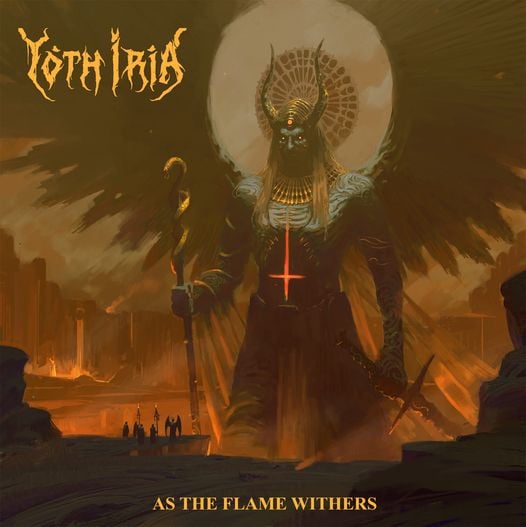
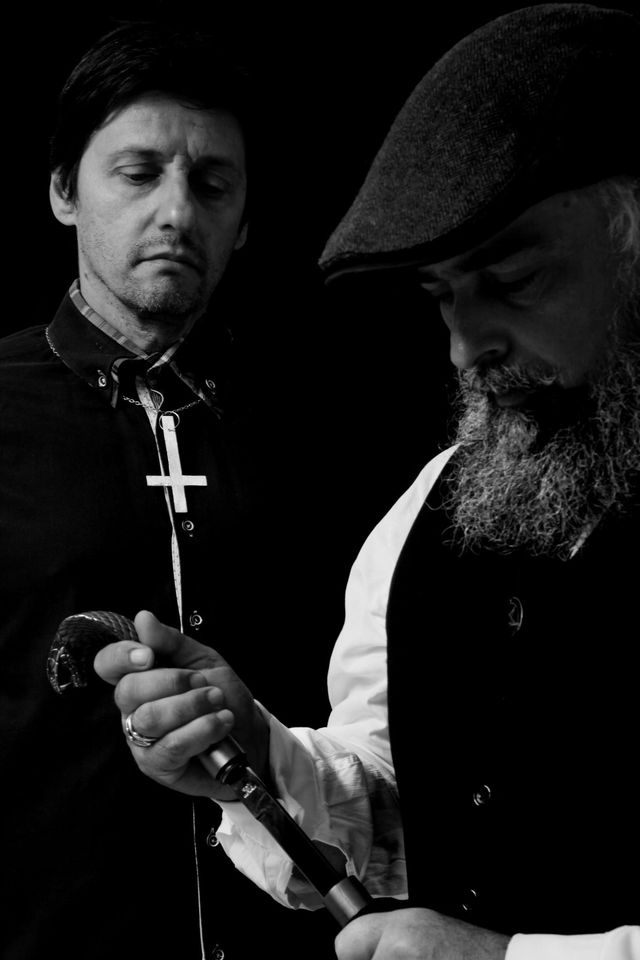
Forged in the fires of Athens, Greece in 2019 by bassist Jim Mutilator, a founding member of legendary Greek Black Metal band Rotting Christ, and vocalist The Magus, who formed Necromantia in 1989 together with Baron Blood (R.I.P.), one of the most influential and avantgarde bands of the scene, Hellenic Black Metal outfit Yoth Iria is an amalgam of the influences and visions of its creators, sounding dark, diabolical, emotional, powerful and majestic while taking a fresh look into 90’s Greek Occult Black Metal with a nostalgia of the past and a twist into the future. Now in 2021, the duet which developed and pioneered the underground scene back in the day is ready to crush our souls with their first full-length album, titled As The Flame Withers. Recorded, mixed and mastered at Pentagram Studio by Yoth Iria and George Emmanuel (Rotting Christ, Septicflesh, Lucifer’s Child), and displaying a Stygian artwork by Indian artist Harshanand Singh, As The Flame Withers represents everything this primeval entity stands for, supported by guest musicians George Emmanuel on the guitars, John Patsouris on keys and J.V. Maelstrom (Dephosphorus, Nigredo) on drums, dragging the listeners into the pits of the underworld and keeping them there forever in pitch black darkness.
The Children of Bodom-inspired riffage by George kicks of the melodic and infernal The Great Hunter, bringing to our ears old school Norwegian Black Metal blended with the epicness of Behemoth and Rotting Christ, whereas mesmerizing, imposing sounds permeate the air in the insane title-track Yoth Iria, showcasing beyond obscure lyrics growled by The Magus (“For aeons he laid dormant / speaking through dreams / conspiring in visions / watching from his Throne / Arch-Priest and King / of the Seven Hells / The Highest of Angels / the Brightest of them all”) while his bandmates keep the atmosphere as heavy and somber as possible. Then it’s time for George and Jim to slash their respective guitar and bass in the very melodious but of course heavy-as-hell Hermetic Code, a very atmospheric creation by the band offering our ears a good dosage of Doom Metal added to their core ferocity; and arising from the pits of the underworld like a demonic entity, The Magus and Jim bring forward Demonaz-inspired vocalizations and dirty, rumbling bass lines in The Mantis, with the background keys by John Patsouris sounding insanely epic while J.V. Maelstrom hammers his drums mercilessly.
In the excellent The Red Crown Turns Black we face more of their blasphemous lyrics (“From the deserts of Saturn / and the depths of the Abyss / the General of Chaos / the Devourerof Souls”) while the music sounds like a demonic fusion of Behemoth, Immortal and Children of Bodom, with George being once again sensational with his wicked riffs and solos, and rocking guitars and classic beats ignite the Stygian extravaganza titled Unborn, Undead, Eternal, reminding me of some of the most recent creations by Rotting Christ, with The Magus gnarling like a creature from the netherworld nonstop. The second to last explosion of their Ritualistic Black Metal comes in the form of Tyrants, where The Magus’ roars are effectively supported by the hellish kitchen by Jim and Maelstrom, resulting in another doomed, thunderous aria blasted by this talented Greek horde, while Jim continues to smash his bass in the closing tune The Luciferian, accompanied by the grim guitars by George. Once again blending old school Black Metal with Doom Metal and more contemporary styles, the song unfortunately loses its grip after a while, albeit nothing that could do any harm to such powerful album.
In the end, As The Flame Withers, which is by the way available for a full listen on YouTube, is exactly what such prominent duo from the Greek Black Metal scene is saying the album is, an ode to the early days of the genre without sounding outdated, tiresome nor bland at all. Hence, if you want to explore their obscure realm in more detail and stay updated with all things Yoth Iria, you can start following the band on Facebook and on Instagram, and of course purchase your copy of As The Flame Withers from the Pagan Records’ BandCamp page or webstore (including the CD and black LP versions of the album), as well as from Record Shop X. It’s indeed a true pleasure witnessing two trailblazers of the Greek Black Metal scene generating such infernally dark music with so much punch and potency even after all these decades on the road, proving once again extreme music can be a true fountain of youth for many, while the flames of Black Metal keep burning the souls of the unbelievers for all eternity.
Best moments of the album: Yoth Iria, The Mantis and The Red Crown Turns Black.
Worst moments of the album:The Luciferian.
Released in 2021 Pagan Records
Track listing 1. The Great Hunter 4:24
2. Yoth Iria 5:41
3. Hermetic Code 6:34
4. The Mantis 7:19
5. The Red Crown Turns Black 6:26
6. Unborn, Undead, Eternal 5:14
7. Tyrants 4:51
8. The Luciferian 6:32
Band members The Magus – vocals
Jim Mutilator – bass
Guest musicians George Emmanuel – guitars (session)
John Patsouris – keys (session)
J.V. Maelstrom – drums (session)
An obscure descent to the underworld in the form of extreme music by a talented Occult Black Metal act from France.
In Greek mythology, Kατάβασις (pronounced “katabasis”) means a descent to the underworld, and that is exactly what you will feel while listening to the debut full-length album by French Occult Black Metal band Absconditus. By the way, the name of the band comes from Latin, meaning “occult” or “hidden”, which perfectly represents their musicality, lyrics and everything else. In other words, if you have the nerve to face such a cryptic band piercing your mind with their dark and deranged music, you may ultimately relish a distinct experience in Extreme Metal.
Founded in 2010 by guitarist/songwriter Loxias upon the ashes of French Cult Black/Death Metal band Borgia, Absconditus offer solid and dissonant melodies enhanced by hints of melancholy, drama and introspective tension, with Kατάβασις being the the initiatic path that one has to walk in order to gain freedom and mastery over existence in a demiurgic world, according to the band. Not only that, the whole album is sung entirely in French. Do you think this is already too much information to absorb? Well, wait until you read the rest of this review and, of course, listen to the entire album, and you’ll see this is just the beginning.
An intro that goes on for over three minutes like Prologue à l’Agonie (or “prologue to agony”, in English) gives you an idea of the obscure voyage that’s about to start. What begins in a slow and dark way suddenly becomes a massacre full of melancholy, setting the stage for the macabre Mystagogie des Limbes (“limbo mystagogy”), or the principles, doctrines, and practices of mysticism, powered by its beautiful lyrics (“L’effroi illumine ma voie, je perçois la ruine en eminence / Un oremus cristallin s’élève vers les cieux / La dualité de ma noblesse fait écho à la décadence des ages / Dans l’ascension vertigineuse de mon âme captive”) amidst an atmosphere generated by Blackened Doom. Is there a way vocalist Aliexagore could have sounded more desperate than this? Moreover, in my opinion its riffs somehow transport the listener to Norway due to their strong Black Metal-ish feeling.
Elegeía (Confession au Cénotaphe), or “elegy (confession at the cenotaph)”, which means an “empty tomb” or a monument erected in honour of a person or group of people whose remains are elsewhere, brings forth a huge amount of darkness and disgrace, including a draconian invocation performed by Aliexagore, Loxias and Guillaume Pingard. Drummer Anderswo shows he’s an extremely technical musician whose skills contribute to add extra layers of violence and intricacy to the musicality, while Loxias seems to be hypnotized by the dark side, delivering truly demonic lines. And get ready for the ending climax of the song, it is outstanding. Darkening their sonority a bit more we have Exultet – L’Aurore Schismatique (“exultet – schismatic dawn”), the hymn of praise sung, ideally by a deacon, before the paschal candle during the Easter Vigil in the Roman Rite of Mass. It varies from atmospheric Doom Metal to pure Black Metal, with Aliexagore sounding even more satanic than in the previous tracks and with the addition of considerable dosages of progressiveness thanks to the talent of the musicians involved, as if Mastodon became a Black Metal act.
Hybris au Bord du Précipice (“hybris at the border of the precipice”), with the word “hybris” meaning extreme pride or self-confidence, is yet another exhibit of despair and chaos, and even if you don’t speak French you will love those lyrics (“Je partage le destin du fils de Prométhée / Sans assumer la puissance de l’affront / La semeuse d’étoiles attend mon retour / Nourrissant les espoirs de la vermine affamée”). The music itself is comprised of Occult and Progressive Black Metal professionally put together, where Loxias tries some new techniques that elevate the magnitude of the music, with highlights to the last part of the song being some kind of downward spiral to the depths of hell. And lastly, Le Nouvel Astre (“the new star”) is an instrumental outro as sinister as the intro, a dark but beautiful ending where the amazing guitar lines by Loxias are perfectly complemented by the complex beats by Anderswo.
Featuring an at the same time beautiful but eerie artwork by British artist Bethany White, Kατάβασις, which can be purchased at the I, Voidhanger Records BandCamp page, exhales darkness and complexity, making it a recommended choice for your extreme music collection. If a downward journey to the underworld is part of your plans, let this occult French act help you with the soundtrack.
Best moments of the album:Elegeía (Confession au Cénotaphe) and Hybris au Bord du Précipice.
Worst moments of the album: None.
Released in 2015 I, Voidhanger Records
Track listing 1.Prologue à l’Agonie 3:30
2.Mystagogie des Limbes 8:46
3.Elegeía (Confession au Cénotaphe) 9:24
4.Exultet – L’Aurore Schismatique 8:39
5.Hybris au Bord du Précipice 7:56
6.Le Nouvel Astre 3:09
Band members Aliexagore – session vocals
Loxias – guitars, bass
Anderswo – drums
This very talented band from the UK is offering us what they call “Saturnian Black Magic”. Are you going to accept the darkness inside you, eager for this type of music?
Some people will call it Occult Black Metal, others will prefer referring to it as Blackened Heavy Metal, but according to British band Inconcessus Lux Lucis themselves, the music they play is a mix of Black Metal with the aggressiveness of 80’s Heavy Metal and the grooves of 70’s Hard Rock, resulting in what the band beautifully named as “Saturnian Black Magic”. Thus, if you’re curious to actually know what Saturnian Black Magic sounds like, you must take a shot at the new EP by this Manchester-based band, entitled Crux Lupus Corona.
After releasing their debut album Disintegration: Psalms Of Veneration For The Nefarious Elite earlier this year, Inconcessus Lux Lucis (which I’m almost sure means something like “forbidden light”) is releasing this new EP inspired by the constellations Crux, Lupus and Corona (the Cross, the Wolf and the Crown, as per the 88 Modern Constellations) and all their occult significances. If that’s not weird or complex enough for you, well, just listen to their music and you will fulfill your inner desire for all things mystical.
Crux Lupus Corona kicks off with a 2-minute intro called Via Dolorosa, which already inspires the listener for more of the band’s modern music with a 70’s vibe, followed then by the first “constellation”, Crux, with its mesmerizing riffs, harsh vocals and very rhythmic drumming highly influenced by old school Heavy and Thrash Metal. It’s an amazing track, enhanced by its excellent eerie lyrics (“Now slowly undress / Sweet seed of life which you possess / And softly caress / The fruit from which I ate / A sword spins counter-deosil / Its hilt marked 358”).
The second “constellation”, Lupus, sounds like the dark side of Hard Rock clashing with demonic Black Metal, alternating slower and somber passages with faster 70’s Rock N’ Roll. Not only that, the excellent guitar solo at the end actually makes the whole song even more solid. And last but not least, we have Corona: the third “constellation” is a more melancholic tune with some outstanding instrumental, with its lyrics (“O hollow temptress, I call to thee – Fuck me! / Come, join the slow dance, with maggots, shit and entropy!”) making it easy to understand what the band wants to say with “Black Magic”, just like if they were a distant cousin of Black Sabbath with an even more bizarre attitude.
The freakish album art, created by English artist Bethany White, follows the same distinctive pattern established by the band’s music, complementing the EP in a very cohesive and interesting way. You can listen to the entire Crux Lupus Corona HERE, purchase the unique music by this very talented band from the UK, and accept the darkness inside you, eager for more devilish music.
Best moments of the album:Crux is my favorite song of the EP, although all others are pretty interesting and consistent as well.

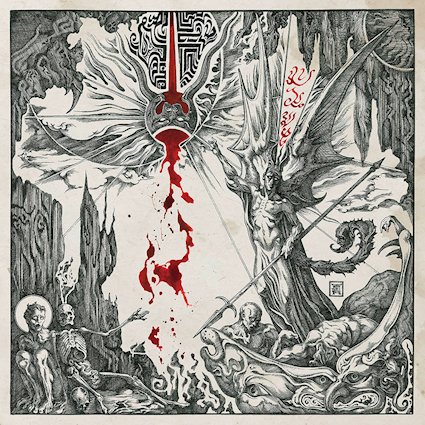 With the release of their twelfth full-length album, entitled Ashspawn, the iconic beast Enthroned marks a new chapter in their three-decade reign of ritualistic and occult Black Metal. Conceived across six years of deliberate creation, the album emerges as both an autopsy and a resurrection, a descent into spiritual death followed by the sublimation of rebirth. Recorded at Ophiussa Studio, produced by the band’s own drummer Menthor, mixed by Stefano Santi at SPVN Studio, mastered by Phil Bashford at The Hive Rooms, displaying a beyond devilish artwork by Jose Gabriel Alegria Sambogal, and written in close collaboration with Gilles de Laval (an occult author known for his works on ceremonial magic and grimoires, such as Sacerdotium Umbrae Mortis and Black Magic Evocation of the Shem ha Mephorash), the new opus by Nornagest on vocals and samplers, T. Kaos on the guitars and bass, and Menthor on drums and percussion channels arcane praxis, metaphysical calculus, and esoteric mapping into a work that is as much ritual invocation as it is music. In other words, it is the culmination of Enthroned’s uncompromising vision, a weapon of transformation forged in fire and darkness.
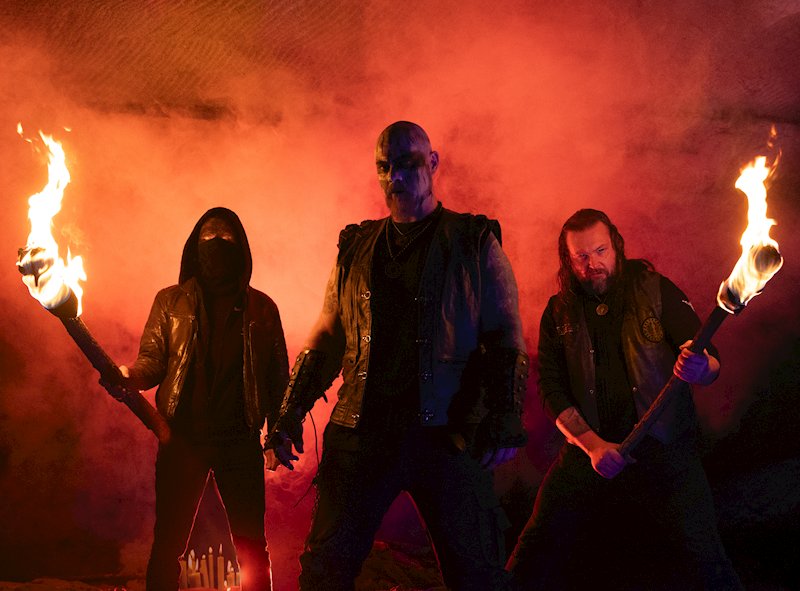 A true giant of European Occult Black Metal alongside Marduk, Dark Funeral, Gorgoroth and 1349, among others, Enthroned offer their most ambitious and personal statement to date with Ashspawn, embodying a total unity of vision where ferocious blast beats, oppressive mid-tempos, and progressive structures collapse into one another. You can feel the fire blasted by such an infernal horde by following them on Facebook and on Instagram, by subscribing to their YouTube channel, by streaming their caustic black masses on Spotify, and of course, by purchasing Ashspawn from BandCamp or by clicking HERE. In the end, Ashspawn is the testimony of the band’s obscure alignment, a ritual weapon that rejects nostalgia and compromise. It is a resurrection of spirit through suffering, and a reaffirmation of Enthroned’s place among Black Metal’s most visionary entities.



 THE HEADBANGING MOOSE