The world of the dead is calling us all to the sound of the newborn spawn by this mysterious Portuguese horde, opening our ears and hearts to the underworld of nihilism and despair.
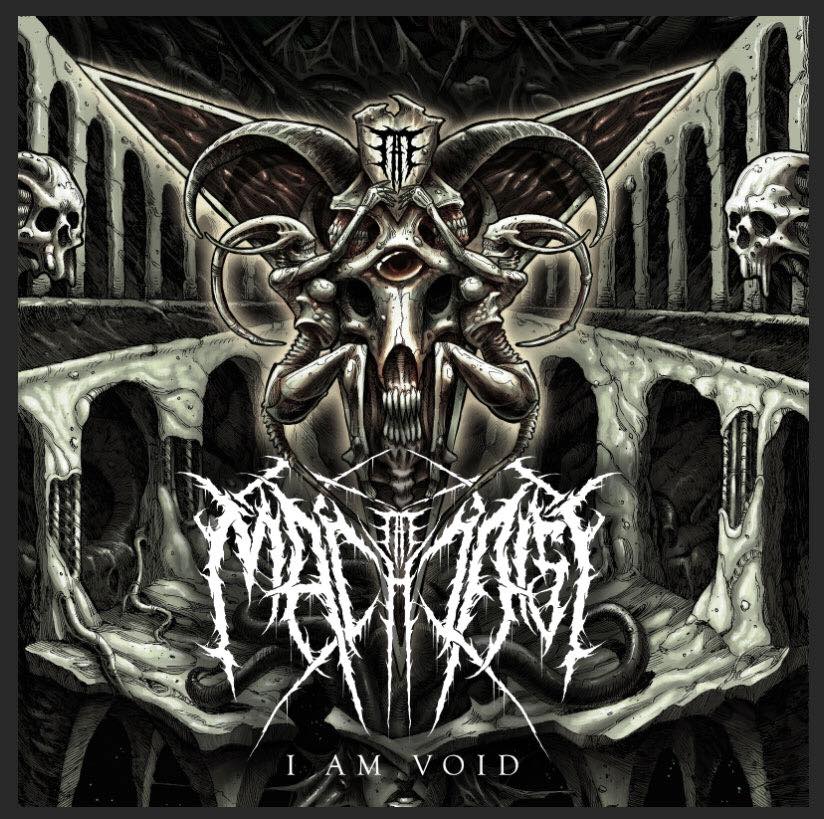
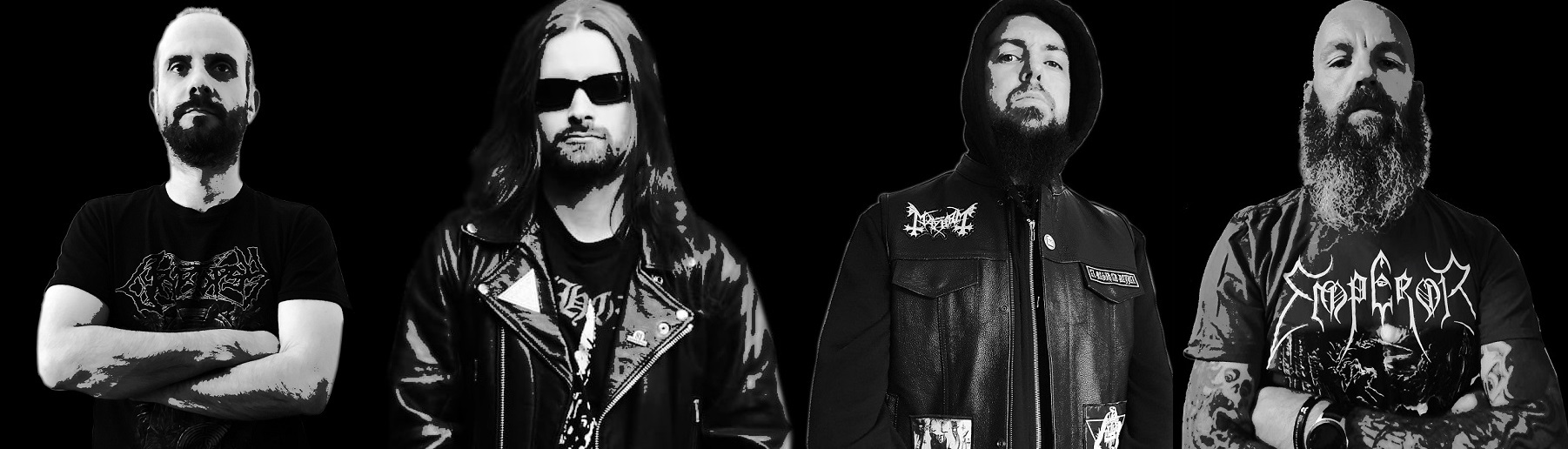
 Taking their name from the Mesopotamian monster figure Anzû, described as a divine storm bird who could breathe fire and water or in some descriptions as a lion-headed eagle, while also considered as the personification of the southern wind and the thunder clouds, Porto, Portugal-based Death/Black Metal beast Anzv is challenging the spiritual possibilities of seeing beyond the void and into the nothingness of nothing in their sophomore opus, entitled Kur, opening your ears and hearts to the underworld of nihilism and despair. Written, produced, and conceptualized by the band’s own guitarist M., mastered by M. and Bruno Silva, and displaying an ominous artwork by vocalist A. (of Dantas Inferno), the follow-up to their 2022 album Gallas continues to blend Portugal’s dark musical side with the Sumerian underworld, resulting in extra creepy, hostile and mysterious soundscapes masterfully crafted by the aforementioned A. and M. alongside guitarist N., bassist T., and drummer E.
In Sumerian, Ekur means “mountain house” and refers to the sacred temple of the god Enlil in the city of Nippur, while musically speaking it’s a devilish and harsh display of Black Metal, with the guitars by M. and N. exhaling sulfur. Then we have Imdugud, which in ancient Mesopotamian religion refers to a monstrous bird, often depicted as a lion-headed eagle or griffin, with A. continuing to vociferate like a demonic entity supported by the rumbling kitchen by T. and E.; followed by Alû, a vengeful, nocturnal spirit in Akkadian and Sumerian mythology, often described as a shadow demon or evil spirit that terrifies people in their sleep and can cause nightmares, with the band showcasing their trademark fusion of Black and Death Metal with Sumerian mythology. Sahar, of Arabic origin, meaning “dawn” or “the time before dawn”, is a two-minute aria of darkness with their riffage penetrating deep inside our skin; and Shamash, a Hebrew word (שמש) that means “servant” or “helper”, is a lecture in Melodic Black Metal where the vocals by A. will send shivers down your putrid spine.
An Edimmu in Mesopotamian mythology refers to a type of spirit often associated with the ghosts of those who died and did not receive a proper burial, with the music sounding devilish and grim from the very first second while M. and N. fire pure darkness form their axes, followed by Etemenanki, meaning “House of the Foundation of Heaven and Earth” in Sumerian, the name of a ziggurat (stepped temple) dedicated to the god Marduk in ancient Babylon, sounding as venomous as its predecessors, all boosted by another visceral vocal performance by A. Then in Ancient Mesopotamian religion, Namtaru is a deity who personifies death and destiny, and that’s exactly the feeling in this vile aria, offering an overdose of caustic Black Metal to our avid ears. Lamashtu is the most terrible of all female demons in Mesopotamian religion, the daughter of the sky god Anu, and the band needs less than two minutes to pulverize our souls with their hellish sounds, before all comes to an end with Anzû, a monster in several Mesopotamian religions, where A. keeps roaring darkly while E. hammers his drums nonstop.
 In the context of Sumerian mythology, “kur” refers to the underworld or the world of the dead, and each song in Kur is deeply rooted in that thematic, either representing a lion-headed, winged eagle monster, a class of spirits, or a demonic deity depicted as a hybrid creature with lion, bird, and human features, among others, and it’s that additional touch of obscurity and mystery that truly elevates the album’s power and energy to a whole new level. You can find more information about such a brilliant Portuguese horde on Facebook and on Instagram, stream their Stygian creations on Spotify, and put your damned hands on Kur by clicking HERE or HERE. In the end, the world of the dead is calling us all to the sound of Anzv’s newborn spawn, dragging us all into eternal darkness in the name of our beloved Black Metal.
Best moments of the album: Imdugud, Shamash and Namtaru.
Worst moments of the album: None.
Released in 2025 Edged Circle Productions
Track listing
1. Ekur 5:21
2. Imdugud 5:03
3. Alû 4:05
4. Sahar 3:55
5. Shamash 4:56
6. Edimmu 6:25
7. Etemenanki 5:09
8. Namtaru 4:02
9. Lamashtu 3:15
10. Anzû 2:57
Band members
A. – vocals
M. – guitars
N. – guitars
T. – bass
E. – drums


 THE HEADBANGING MOOSE