Album Review – Vingulmork / Chiaroscuro (2015)

Surrender to the dark side of Thrash Metal, offered to you by one of the most promising Scandinavian bands of the past few years.

Rating3

VINGULMORK - Chiaroscuro cover artAlthough the year of 2015 is almost coming to its end, it seems there are still tons of awesome metal bands with considerable amounts of fuel to burn, providing us fans unbounded reasons to keep banging our heads nonstop like maniacs. This is precisely the case with Norwegian Blackened Thrash Metal desecrators Vingulmork, who before the curtains of this chaotic year close are releasing their cataclysmic debut full-length album entitled Chiaroscuro. The name of the album might be the junction of the Italian words “chiaro” (clear or bright) and “oscuro” (dark), but don’t expect to find any light in their music. It’s sheer darkness, architected in such a thrilling and virulent way you’ll be mercilessly knocked out like Ronda Rousey before the album is over.

Forged in 2012 at the very depths of Oslo, Norway, Vingulmork released their debut EP named The Long March at the beginning of 2014, but it’s now with Chiaroscuro that this talented quartet aims at conquering the world of heavy music with their inhumane combination of the unquestioned verve from Thrash Metal with the evildoing and perversity of Black Metal. If you hold true passion for the music by bands such as Skeletonwitch, Old Man’s Child and Dissection, the music by Vingulmork (which translated from Old Norse means “the forest of fescues”) brings forward all the elements needed to foster that darkest side of yours.

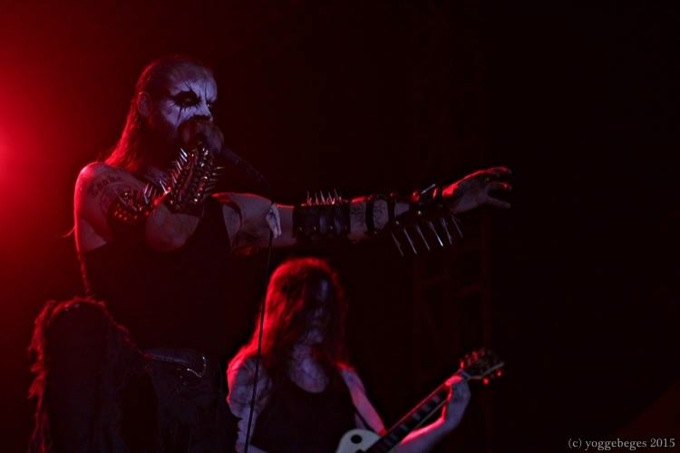
And Vingulmork don’t give you a single second to breathe before their sonic devastation begins in the magnificent Collapse and Rebuild, a brutal composition that summarizes their music style by blending the riveting riffs from Thrash Metal with the obscure growls from Black Metal. In addition, Frontman Jostein Stensrud Køhn sounds like he’s possessed by an evil entity so aggressive his vocals are, while drummer Simen Kandola delivers beats inspired by the greatest drummers from the Bay Area Thrash. As destructive as the opening track, Hold Your Ground provides an accelerated feeling as if a heart attack is about to come, with guitarist Martin Kandola offering the listener his evil-inspired riffs amidst pure Thrash Metal music. And that’s just the beginning of Chiaroscuro, my friends.

Don’t get deceived by the calm acoustic intro from the chant beautifully entitled (I Am) The Darkness You Can Touch, as it quickly morphs into a dark sounding with elements of Death Metal that will violently kick you in the head. Jostein growling like a demon, together with some interesting breaks leading into some pure Black Metal moments and its lugubrious lyrics (“I will lay waste to your sense of belief / Replace all pleasure with anguish and grief / I will demolish all ways to control / I will take hold of and bury you”), turn this ode to obscurity into one of the top moments of the album without a shadow of a doubt. In The Haunting, the band delivers a melodic and ferocious onslaught of metallic music in less than 3 minutes, reminding me of the high-octane Thrash/Death Metal by Skeletonwitch, while Old Hate flirts with Melodic Death Metal but with extra dosages of wickedness added to the sounding, not to mention the great job done by Martin with his sick guitar riffs accompanied by the intricate bass lines by Steffen Grønneberg.

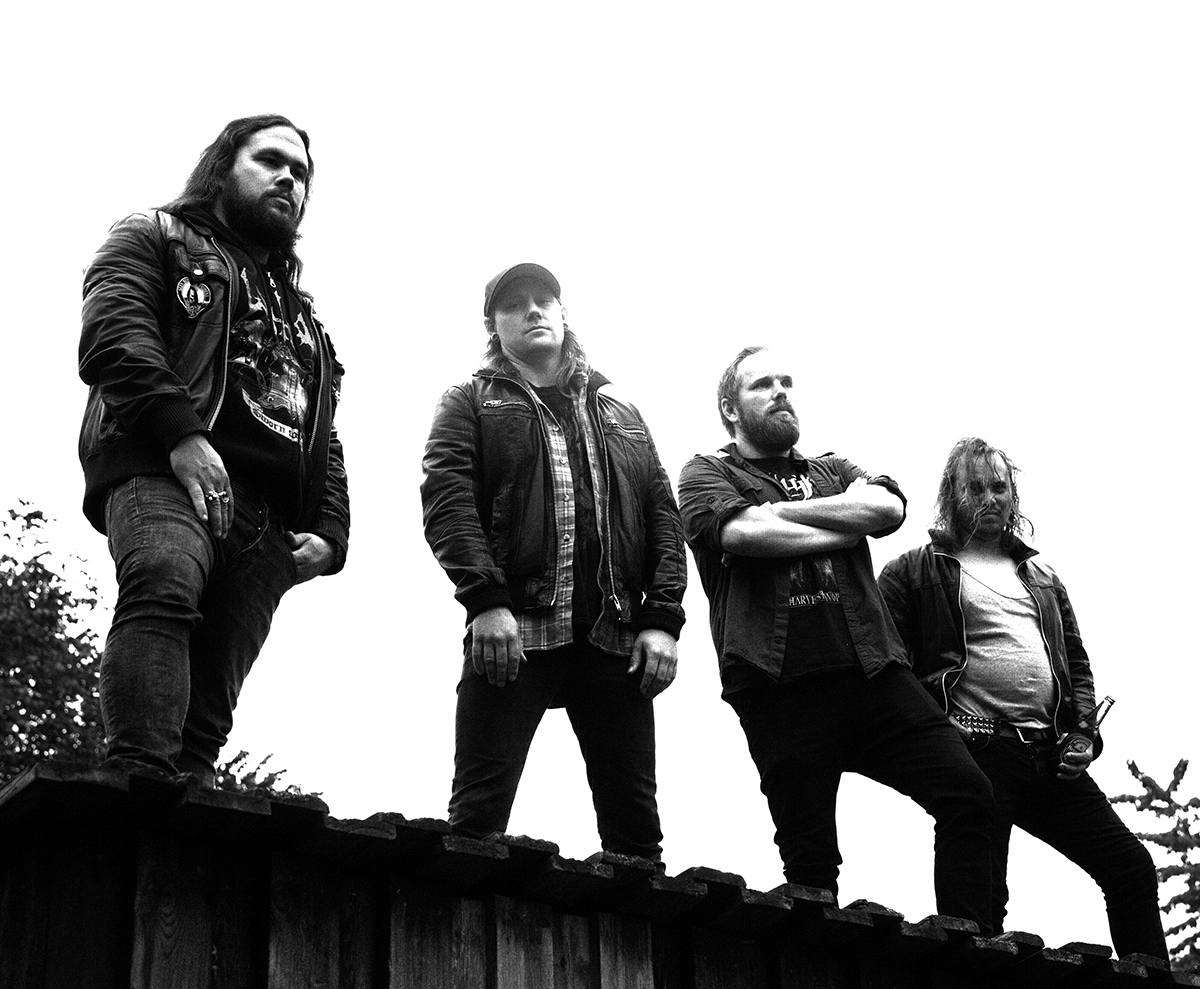
VINGULMORK band photo (3)With an enraged Simen on drums, their dark metal machine keeps rolling and smashing everyone and everything in From Promise, a straightforward tune that will ignite some serious mosh pits during their live performances, with highlights to the beyond bestial vocals by Jostein, and don’t stop banging your head or slamming into the pit because Vingulmork offer us all Painting Lives, another insane track where there’s even time for a catchy chorus that will stick into your mind for a long period of time (“Every moment counts / And everything amounts / To pull apart is not an art / And so we count all that amounts”).

The two last arias in Chiaroscuro are just as nefarious as the rest of the album, starting with the striking White Dress, Black Heart, with yet another demented performance by the entire band, in special by Jostein and Simen. This is at the same time the most Thrash Metal and the most Death Metal of all tracks, which obviously elevates its quality to a whole new level of carnage, also presenting thoughtful lyrics that make total sense if you know how harsh the winter can be (“The winter is grinding knives / It will take another life / Cutting through frozen flesh / Claims a mark in every bone”). And closing this top-notch album we have their most obscure and disturbed tune, It Will Suffice, where the band definitely embraces darkness by showcasing their strongest Black/Doom Metal vein. A lesson in extreme music by this incredible Norwegian act, where the music cuts like a sharp razor until it fades away into a melancholic and demonic finale.

To get a taste of what Vingulmork have to offer in Chiaroscuro, you can visit their Facebook page or take a listen at the official album preview by Crime Records, but I’m pretty sure you’ll almost instantly go grab your copy of the album at the Crime Records webstore or at CD Baby. Forget about the never-ending war between darkness and light, simply surrender to the dark side of Thrash Metal offered to you by one of the most promising Scandinavian bands of the past few years. You will not repent that.

Best moments of the album: Collapse and Rebuild, (I Am) The Darkness You Can Touch and White Dress, Black Heart.

Worst moments of the album: None.

Released in 2015 Crime Records

Track listing
1. Collapse and Rebuild 3:38
2. Hold Your Ground 3:17
3. (I Am) The Darkness You Can Touch 5:24
4. The Haunting 2:36
5. Old Hate 2:59
6. From Promise 3:29
7. Painting Lives 3:34
8. White Dress, Black Heart 2:23
9. It Will Suffice 5:45

Band members
Jostein Stensrud Køhn – vocals
Martin Kandola – guitar
Steffen Grønneberg – bass
Simen Kandola – drums

Album Review – Gorgoroth / Instinctus Bestialis (2015)

One of the most controversial Black Metal bands in the world delivers some truly bestial instincts in the form of gruesome and elaborate extreme music.

Rating4

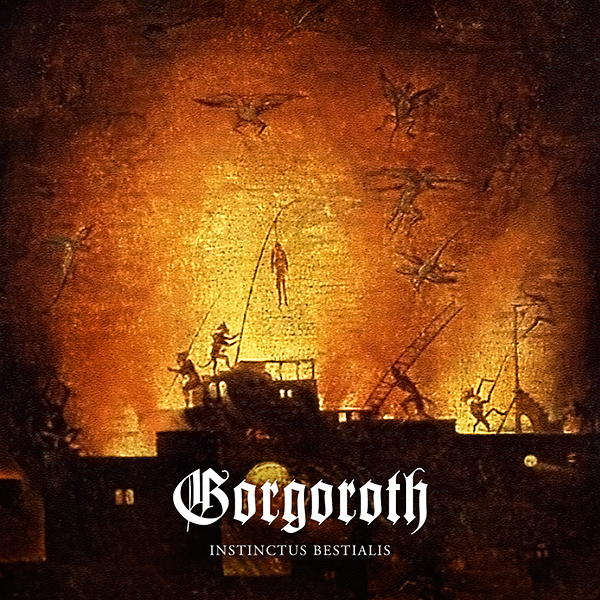
instinctus bestialisNorwegian Black Metal is more than just a subgenre of Heavy Metal: it’s a renowned and very respectable movement that has been helping redefine the scope of extreme music, expanding its boundaries to a whole new level that’s not comprised of just the music itself, but of a wide variety of contentious topics such as religion, murder and ideology. If you don’t know much about it, I strongly recommend you watch the amazing documentary entitled Until the Light Takes Us (2008) to better understand the importance of this infamous musical subculture to society. And it doesn’t matter if you’re a fan of Black Metal or not, you must listen to Norwegian black metallers Gorgoroth to understand how all that controversy and darkness translates into music.

Formed in 1992 by the only original member remaining, Infernus, and named after the dead plateau of evil and darkness in the land of Mordor, from J. R. R. Tolkien’s fantasy novel The Lord of the Rings, Gorgoroth are releasing now in 2015 their ninth full-length studio album, the venomous Instinctus Bestialis. It’s important to say this is their first album to feature vocalist Atterigner and, more important than that, it’s indeed a solid addition to their polemic career, corroborating their status as one of the most influential Black Metal bands in history.

It’s simply amazing how violently the album starts with the opening track Radix Malorum, with its blast beats crushing our heads from the very first second while Atterigner shows why he was chosen by Infernus to be the new devilish voice of Gorgoroth. Following that ravage we have more infernal Black Metal in Dionysian Rite, with highlights to the great work on guitars by Infernus and to the demonic performances by Atterigner and Asklund with their vocals and drums, respectively. Moreover, I’m pretty sure most of the fans of the music by Gorgoroth will love the ominous Blackened Doom vibe present in the last part of the song.

gorgorothThe blasphemous and devastating Ad Omnipotens Aeterne Diabolus can be considered the most complete song of the album, showcasing a touch of melancholy, a beautiful melody, and of course that expected (but always awesome) visceral explosion of Black Metal. Asklund is kicking ass on drums once again, whilst Infernus keeps mastering the art of dark riffs and solos. And when the lyrics include screams such as “Hail Satan!”, you know you’re facing some good deranged music, right? Anyway, the short and direct Come Night is yet another melodic tune that doesn’t forget to be as satanic as Black Metal usually is, and despite not being the most creative song in the world it’s still very enjoyable; followed by Burn in His Light, where hints of Blackened Death Metal and even some progressiveness add a fresh taste to it. Besides, the robust background foundation by Bøddel and Asklund leave plenty of room for infernus to deliver more awesome riffs, increasing the song’s quality.

In one of the top moments of the album, Rage, its heavy guitar lines bring forth a wrathful Blackened Death Metal vibe, reminding me of the superb musicality found in The Satanist, the lasts masterpiece by Behemoth. This is a great addition to Gorgoroth’s weaponry and something they should be doing more in future releases, in my humble opinion. Kala Brahman, which has different meanings in Mithology depending on the culture but it’s usually a sea monster, an evil spirit or the supreme god to bring death and disease to mankind, presents a dense and obscure sonority enhanced by an atmosphere that couldn’t be more perverse and by an avalanche of traditional blast beats by Asklund. And the last track of the album, Awakening, doesn’t slow down at all, once again flirting with Blackened Death Metal and therefore resulting in a very rhythmic and imposing composition.

In summary, after all these years of controversy, depravity and radicalism, Gorgoroth prove they still got it, delivering a consistent work that sounds much more cohesive than many of their previous releases. To be fair, the addition of elements from genres such as Blackened Doom and Blackened Death Metal, rather than just sticking to raw old school Black Metal, was undoubtedly the right decision by Infernus and his horde in this album, truly expressing the most bestial instincts deeply entrenched inside the human being in the form of gruesome and elaborate Extreme Metal.

Best moments of the album: Dionysian Rite, Ad Omnipotens Aeterne Diabolus and Rage.

Worst moments of the album: Come Night.

Released in 2015 Soulseller Records

Track listing
1. Radix Malorum 3:14
2. Dionysian Rite 4:05
3. Ad Omnipotens Aeterne Diabolus 5:45
4. Come Night 2:41
5. Burn in His Light 4:02
6. Rage 4:03
7. Kala Brahman 5:23
8. Awakening 2:07

Band members
Atterigner – vocals
Infernus – guitars
Bøddel – bass
Asklund – drums

https://youtu.be/k8rrfa7uMfw

Album Review – Sirenia / The Seventh Life Path (2015)

If dark and symphonic music is what you want, Mr. Morten Veland and his crew are always there to help satisfy your craving.

Rating4

sirenia_the seventh life pathDeliberately entitled The Seventh Life Path, the seventh (got it?) full-length album by Norwegian Gothic/Symphonic Metal band Sirenia has everything it takes to please diehard fans of the band and newcomers to the world of symphonic music: melodic instrumentals, wicked synthesizers, a powerful choir, the charming female vocals by Spanish diva Ailyn Giménez and, of course, the iconic Morten Veland.

Perhaps one of the most interesting components in The Seventh Life Path is its artwork, designed by renowned artist Gyula Havancsák of Hjules Illustration and Design, whose latest works can be seen in the new albums by Ensiferum and Grave Digger, for example. It’s a very detailed illustration, where the artist and the band clearly wanted to augment the importance and meaning of the number seven to the album. “The 7 number appears as 7 ravens, 7 snakes, 7 roses on the dried out wreath…”, said Gyula about this peculiarity in an interview.

However, it’s not just the artwork that makes The Seventh Life Path a good album, but the music itself. As soon as the symphonic and imposing intro Seti begins, it already embraces the listener and sets the tone for the next track, the (at the same time) creepy and captivating Serpent.  Ailyn and Morten provide a beautiful balance of clean female vocals and harsh growls, and even with the presence of some Gothic passages the song ends up sounding truly metallic and symphonic. Once My Light is a lot more “commercial” due to the focus on the smooth vocal lines by Ailyn and the less imposing instrumental, also providing us all a lovely atmosphere and eerie passages with a Gothic touch that only Morten is capable of crafting.

In Elixir, featuring Joakim Næss on clean vocals (who by the way already worked with the band in Perils of the Deep Blue), modernity and tradition are put together, while just the intro in Sons Of The North already kicks ass by itself even before the main portion of the music takes shape. It’s a motherfuckin’ epic ode to Scandinavia, almost a Norse hymn, where the deep growls by Morten, all the orchestrations and especially the choir are flawless. Besides, the lyrics are far from being original (“Here the thunder and lightning / Are both enforced by the mighty Thor / We are the sons of legends / We are sons of myths and lore / Our legacy is forever / Behold its radiance forevermore”), but they didn’t really need to be to sound amazing. They kept it simple, and it worked pretty well. However, once again embraced by symphonic elements, Earendel (or Aurvandil) doesn’t live up to its predecessor, getting too generic after a while even with all the breaks and variations.

sireniaWith a denser sonority and a faster pace, where drummer Jonathan A. Perez showcases his more ferocious skills, Concealed Disdain has one significant issue in my opinion: I find Ailyn’s voice too low during the whole song, preventing it from being a lot more pleasant. On the other hand, sounding like old school Tristania enhanced by the more contemporary musicality by Sirenia, the excellent Insania shows beyond doubt that Morten is a terrific musician, with highlights to its synths and drums for adding so much power to the final result. I also love when Morten goes back in time and revives his darkest side in lyrics like the ones found in Contemptuous Quitus (“You’re the torn in my heart / You will tear me apart / You’re a plague and a curse / Contemptuous quietus”), and besides, I must say I was eager for some heavier riffs, which are finally delivered in this song.

The last two tracks of the regular version of The Seventh Life Path are also well-engendered and contribute to the overall quality of the album. Firstly, The Silver Eye, which could have been just a little shorter, sounds like Symphonic Black Metal in many of its moments, with Ailyn and Morten making a good vocal duo once again. And secondly, we have the Gothic ballad Tragedienne, with Ailyn’s voice and the piano notes being its centre pieces. Of course what I’m going to say is not a universal truth, but I believe fans of Tristania will enjoy it more than fans of Sirenia. In addition, there’s also a Spanish version for this song as a bonus track depending on the version of the album you acquire.

In short, if what Sirenia wanted to achieve with The Seventh Life Path was a well-balanced and energizing continuation to their entertaining career, keeping the names of Morten and Ailyn alive in the minds of Gothic and Symphonic Metal partisans, they more than succeeded in their quest. And if you are one of those dark music supporters, you should thank Morten and his crew for always bringing forth your favorite type of music, just like what is presented in The Seventh Life Path.

Best moments of the album: Serpent, Sons Of The North and Insania.

Worst moments of the album: Earendel and Concealed Disdain.

Released in 2015 Napalm Records

Track listing
1. Seti 2:05
2. Serpent 6:31
3. Once My Light 7:21
4. Elixir (featuring Joakim Næss) 5:45
5. Sons Of The North 8:16
6. Earendel 6:14
7. Concealed Disdain 6:11
8. Insania 6:39
9. Contemptuous Quitus 6:29
10. The Silver Eye 7:29
11. Tragedienne 4:54

Bonus track
12. Tragica (Spanish version of Tragedienne) 4:55

Band members
Morten Veland – guitars, vocals, bass, piano, synth, mandolin, programming
Ailyn – female vocals
Jan Erik Soltvedt – guitars
Jonathan A. Perez – drums

Guest musicians
Joakim Næss – clean male vocals on “Elixir”
Damien Surian – choir
Emilie Bernou – choir
Emmanuelle Zoldan – choir
Mathieu Landry – choir

Metal Chick of the Month – Vibeke Stene

vibeke01

You make my tired heart sing, Vibeke…

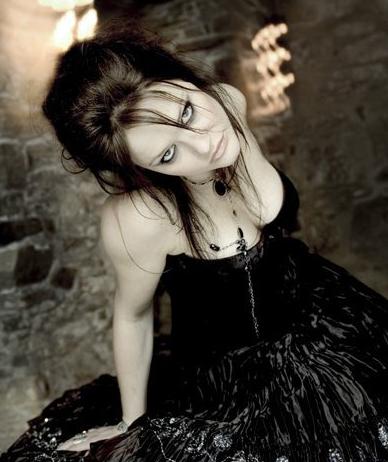
I guess I don’t need to say that lots and lots of Gothic/Doom Metal fans got extremely excited back in June 2013, when our metal chick this month announced through her official Facebook page that she was finally coming out of her retirement to reignite her brilliant music career in Heavy Metal. I’m talking about one of the most beloved female singers of all time in heavy music, Norwegian soprano Vibeke Stene, known for her unparalleled contribution to making Norwegian Symphonic Gothic Metal band Tristania a true reference in Gothic Metal history.

Daughter of Steinar Stene and Sissel Bø Stene, Vibeke was born on August 17, 1978, in the municipality of Sokndal in Rogaland county, Norway, about 450km from the capital Oslo. Her personal life and her career seem to walk hand in hand, becoming even the same entity sometimes, as she’s been fully involved with music and singing since she was a little girl. For instance, at the age of three, our diva already performed for people that were not part of her family, evidencing how much she loved music and starting to build her successful career as a singer.

It was at the age of thirteen, when she started taking singing lessons after she moved to Stavanger (about 100km from Sokndal), that she got interested in classical singing, taking lessons until the age of 23 in order to become her own teacher. By the way, not only Vibeke is the owner of a unique vocal range and an incredible charisma when she’s performing live, but she also became a teacher, studying music and giving singing lessons in Stavanger, Kristiansand and Oslo.

In regards to her professional career as a singer, it’s more than obvious that she left her deepest mark and became a huge heavy music idol during her years with Tristania, which was actually the very first band she joined in her life. Speaking of which, when she was 18 years old Vibeke was invited to join Tristania after attending a live concert of the band, and although she was initially supposed to be only a guest musician in their first demo, she ended up becoming a permanent member due to her incredible performance. The other members of Tristania mentioned in some interviews that Vibeke wasn’t into Gothic Metal before joining the band, but a lot more into Classic Rock and Heavy Metal, which of course didn’t prevent her at all from perfectly blending her voice with the band’s musicality. Furthermore, her performances with Tristania were so good and so powerful it’s quite impossible not to associate the band with her name even today, and it’s hard to imagine Vibeke singing in a band that’s not Gothic or Doom Metal.

Her awesome career as Tristania’s female singer includes the demo Tristania (1997), the full-length albums Widow’s Weeds (1998), Beyond the Veil (1999), World of Glass (2001), Ashes (2005) and Illumination (2007), as well as the singles Angina (1999) and Sanguine Sky (2007), two live albums, two compilations and three music videos, including the eerie official video for the excellent song Libre and the more than pleasant Equilibrium (which can be seen at the end of this text). All those albums are really good and sound very professional, but in my humble opinion the best one by far is Widow’s Weeds, where Vibeke’s smooth voice and Morten Veland’s harsh vocals, together with a very melancholic and obscure sonority, make this album a must-have in the collection of any fan of high-quality music. Songs like Evenfall, Pale Enchantress and My Lost Lenore are those things that deserve to be included in the “never before, never again” music category.

Vibeke and Tristania always had an outstanding live performance together. For instance, they were the headliners of the 4th edition of the Metal Female Voices Fest, which happened in Wieze, Belgium, in 2006, where they shared the stage with other great bands such as Theatre of Tragedy, Delain and Xandria. I had the pleasure to see them live twice with the goddess Vibeke on vocals during their World of Glass tour in January 2002, and in March 2005 during their Ashes tour, and in both occasions it was impossible not to be impressed by her voice and moves during the entire concert.

Unfortunately for all the fans of Tristania, Vibeke left the band in February 2007 first to finish her university degree, and also because she didn’t like the music direction the band was taking. And despite all the rumors about her replacing the one and only Tarja Turunen when she left Symphonic Power Metal band Nightwish, as both left their former bands almost at the same time, Vibeke was the first one to publicly confirm she was not going to be the new singer for Nightwish nor would ever be. However, we can say Tristania was not the only band in Vibeke’s life: she was also a guest vocalist in three tracks (In the Realm of the Midnight Sun, My Dark Reflections of Life and Death and Under Eternal Stars) from the 2000 album Journey to the End of the Night,  by Norwegian Gothic Metal band Green Carnation; guest vocalist in the interesting song Suspended Time, from the 2007 album Solar Soul by Swiss Industrial Metal band Samael; and more recently, Norwegian Electronic band Plutho released the song Queen of Broken Hearts, from their 2011 album Bob, You Don’t Wanna Go There!, which features Vibeke’s guest vocals. However, according to the group, this was recorded back in 1999, which means Vibeke was still officially “retired” when the song was released.

This slideshow requires JavaScript.

Although Vibeke still owes all her loyal and passionate fans her once promised solo album, at least we’re glad she’s back to the world of heavy music with her unique voice in the Extreme Metal project God of Atheists, by Norwegian musician Asgeir Mickelson, including musicians from Dimmu Borgir, Emperor, Zyklon, among others. This project is still in the making, but should be available sometime in the second half of 2015. In addition, we’ll also be able to see her acting really soon, as she’s making her theatre debut on stage at Kilden in Kristiansand in October, playing the title role in a play entitled “Skammens Gissel” (or “Hostage of Shame” in English).

Vibeke has mentioned more than once that her biggest influences in music do not only come from the bands and artists she enjoys listening to, but also from all the people she’s been doing music together with since the beginning of her career. Besides that, among some of the greatest voices in her own opinion, we have many exceptional artists such as American diva Tori Amos, Icelandic singer and actress Björk, the unparalleled English “chameleon” David Bowie, American singer Tom Waits and American avant-garde artist Diamanda Galás. Our Gothic Metal countess also said in her interviews that she’s extremely critical to whatever she’s doing and she’s never satisfied if the final result is not the best she can provide, and I believe this is something we can always expect from Vibeke due to her strong character and all the perfectionism that emanates from her it doesn’t matter which band or project she’s involved with.

Talking about her personal life, our beautiful soprano loves doing what pretty much every normal person does too, which includes reading a book, travelling, spending time with her family and friends, and enjoying a good beer. Nonetheless, despite loving doing opera, mainly because she can sing and act at the same time, she said she just hates listening to it in her free time. Maybe that’s because while she’s listening to opera that means she’s not singing. Add to that her perfectionism, and it ends up making total sense: who can offer us a better operatic performance onstage than Vibeke, right?

If you’re one of those people who have always thought Vibeke had dark brown or black hair, you might be surprised to know that she’s actually a natural blond. She has however dyed her hair throughout the years, probably because dark hair has more to do with Gothic and Extreme Metal, and also because it looks like almost all blond Scandinavian girls simply love to have black hair. Finally, just as a complement to her personal profile, Vibeke is already a mother of two: she had a son in the summer of 2007, and a daughter a few years later. It’s still too early to know if both kids will follow their mother’s steps in life, but if they inherit at least 1% of her talent and charisma we can rest assured Norway will keep providing the world some dark and melancholic high-end heavy music.

Vibeke Stene’s Official Facebook page
God of Atheists’ Official Facebook page

“To sing is to be able to use and take control of your whole body to make the right sound, and not only one kind of sound, to dare to use all your weird thoughts and be able to tell something while you are singing. It’s art.” – Vibeke Stene

Album Review – Sarpedon / Anomic Nation (2014)

Get ready for this Progressive Doom Metal band with a strong theatrical vein directly from the beautiful Norway.

Rating4

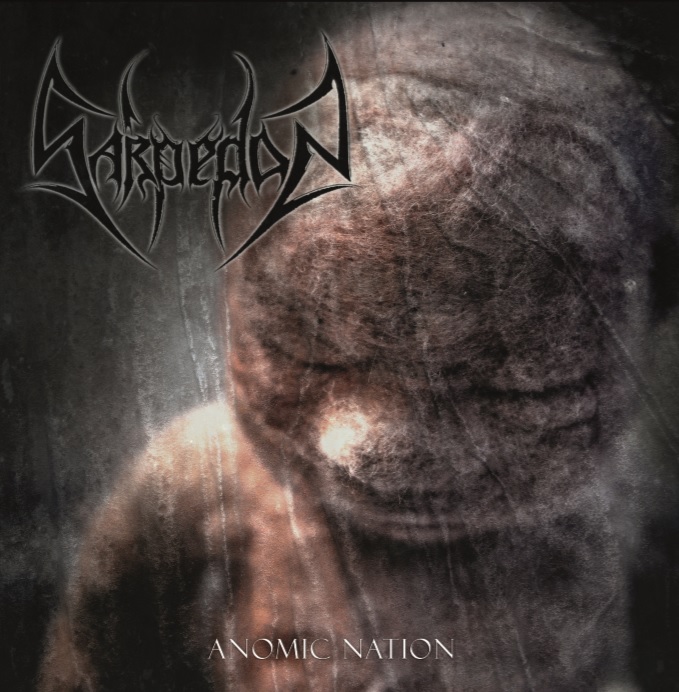
Sarpedon-coverAfters years in the making, the music journey named Anomic Nation, the debut album by Norwegian Progressive Doom Metal band Sarpedon, is finally among us. For those of you who don’t know Sarpedon, this very technical band is led by brothers Torgeir and Eirik P. Krokfjord, who have been working together on this project for several years, influenced by distinctive bands such as Savatage, Emperor and Queen, and adding their own experiences and emotions into their music to give it a fresh taste.

Despite its Black Metal-ish album art, Anomic Nation is a lot more melodic and less violent than pretty much all Black Metal bands you might think of, thanks a lot to the “theatrical” vocals by Eirik P. Krokfjord. The guy, who has two singing degrees from the Norwegian Academy of Music, doesn’t limit himself by only singing the songs, he basically declaims the lyrics in all of them, as if the the Phantom of the Opera decided to form a heavy music group. That might be one of the greatest strengths of Sarpedon, and definitely what will hold your attention throughout the entire album.

When the music kicks off with the very atmospheric and eerie title-track Anomic Nation, it’s impossible not to think of bands like Swedish Epic Doom Metal Candlemass or Danish Heavy Metal icons Merciful Fate, as all of their characteristic elements are present in Sarpedon’s music boosted by some traditional Black Metal blast beats. If you don’t understand what I’m saying, take a listen at this powerful song by Candlemass and everything will make sense. This great Doom Metal track is followed by The Lusk Letter, where the band showcases an even more progressive musicality, guiding the listener through a theatre of virtuosity and darkness, and The Claustrophober, which gets even more obscure thanks to its church organ keyboard notes, moving towards more traditional Doom Metal. And pay close attention to the beautiful lyrics in this song, it’s totally worth it.

MONSENSarpedon speed things up a little in Dead Birds, with its lyrics being even more freakish and drummer Carl Engstrøm kicking fuckin’ ass: it’s impressive how he can go from raw Black Metal to smooth progressive music in a matter of seconds, without sounding robotic or generic. Then we have the beautiful A Seed of Evil, an inspiring work of art that could be summarized like a “forbidden tenderness” (if that expression even exists), and The Carnival, where what seemed to be a melancholic tune suddenly turns into fast and raw metal, getting back later in the song to pure progressiveness with some interesting rhythmic breaks, somber guitar riffs and a nice theatrical chorus (“Look behind the mask / Before it is too late”).

The band saved for last the duo comprised of My Mysteries Unwind, Part I, a smooth but sinister “intro” to its second part, focusing heavily on its intense keyboard notes, and My Mysteries Unwind, Part II, the boldest and most symphonic of all tracks. It’s indeed a mysterious journey that transpires Doom Metal, varying between heavier riffs and more melancholic passages, with its precise drumming keeping it energized and all elements of the last part of it showcasing how crazy and progressive Sarpedon can be.

If you’re a fan of Candlemass, Mercyful Fate, Queen and all other rock and metal bands with a ravishing theatrical side, don’t wait any longer and go grab your copy of Anomic Nation at the official Inverse Store. It’s good music that will satisfy your craving for a good story while you bang your head, do some air guitar or keep tapping on your desk, and if you let yourself go with each song you will probably find yourself doing that for hours, completely enthralled by Sarpedon’s full-bodied music.

Best moments of the album: Anomic Nation and A Seed of Evil.

Worst moments of the album: The Carnival.

Released in 2014 Inverse Records

Track listing
1. Anomic Nation 6:02
2. The Lusk Letter 5:08
3. The Claustrophober 6:19
4. Dead Birds 4:23
5. A Seed of Evil 5:01
6. The Carnival 6:43
7. My Mysteries Unwind, Part I 3:14
8. My Mysteries Unwind, Part II 9:45

Band members
Eirik P. Krokfjord – lead & backing vocals, keys
Torgeir P. Krokfjord – all guitars & bass
Andreas Wærholm – keys
Carl Engstrøm – drums

Album Review – Maahlas / Nightmare Years (2014)

A grim mix of Black, Death and Progressive Metal, tailored for people who enjoy complex and intense music.

Rating4

MAAHLAS - Nightmare Years cover artWhen you tell someone there’s a band that plays Progressive Melodic Death Black Metal, you’ll probably have to spend a lot of time explaining exactly what you mean by putting together so many different subgenres of heavy music, unless of course you’re talking to a fan of Gojira, Death, Meshuggah, Dimmu Borgir and many other “complex” dark bands. That’s how Norwegian band Maahlas can be categorized based on their debut release, the heavy and eccentric concept album Nightmare Years.

Formed in 2013 in the beautiful city of Oslo, Norway by multi-instrumentalist Cuneyt Caglayan, also known as Cuno, Mahhlas seem to be one of those bands that enjoy surfing through different music styles (most of the time during the same song), relying heavily on their refined techniques to create a unique atmosphere and conduct the storyline behind Nightmare Years without being boring or arrogant. Quite the contrary, the way the band is capable of telling a story changing from smoother progressive music to violent Black Metal is really outstanding and one of the biggest strengths of this album.

And what a violent way to start with the very atmospheric and dark Sun of the Summerian, a Symphonic Black Metal tune similar to what’s played by bands such as Dimmu Borgir, but with more hardcore vocals and a very interesting progressive part right before reigniting the sonic massacre. Besides, despite being only a session musician working for Maahlas, drummer Łukasz Krzesiewicz is a fuckin’ beast and delivers an incredible performance with his set. A False World, a more obscure track with great vocals by Levent Ultanur, progressive synths and philosophical lyrics (“Doubt in your eyes, in your stances and your reasoning. / Weak in your seminal thoughts primed to misuse trust.”), and Morning Light, more progressive and melodic than the previous tracks, remind me of the Blackened Death Metal currently played by Behemoth plus all the progressiveness from Dream Theater; while An Ancestral Memory focus on dark Black Metal riffs, synths and drums to provide it a very symphonic atmosphere. Moreover, those guys truly enjoy adding some interesting breaks to the rhythm to freshen up their music, as you’ll notice not only in this song but in the entire album.

maahlasThen we have the excellent At the Edge of Life: this is dark progressive music at its finest, and although slower than most of the other songs, it’s a lot heavier thanks to some awesome guitar lines. After the acoustic eerie track Gliese 667 / Æra, Maahlas offer us the title-track Nightmare Years, which summarizes everything the band is, with vocals getting a little bit more demonic and huge doses of contemporary Black Metal, and The Great Divide, where Łukasz smashes his drums while Cuno delivers some great guitar riffs.  I remember a few songs named “The Great Divide” that were all ballads and I was even ready for a smooth track, but this is not the case here, as the band once again promotes an infernal music feast.

The last part of Nightmare Years does not disappoint at all, maintaining the excellent level of the whole album: Birth of Sentience is another brutal assault focused on modern Black Metal, with its last part being more direct and traditional; while Of Hypocrisy, Hate and Fall, the longest track of all, starts with a beautiful intro before turning into a dark music extravaganza, with highlights to its very interesting lyrics (“Prowling agony, blinding day. I meditate yet have a terror attack. / I see Gliese, God! So alike. / I’m alone to act, a straw man, I’ve got to let go. / I´m controlled by time.”). It’s perhaps the most progressive of all tracks, with lots of elements from bands such as Tool and Insomnium, and if you’re a drummer I suggest you watch the drum tracking for this song. And finally, Simulacrum of Reality, another technical and detailed track, closes the album in a very complex and obscure way.

The album art by Turkish / German artist Aybars Altay, representing at once the fall of Home Sapiens and the evolution of the Homo Sentient, is a great complement to this mysterious music journey, which you can purchase on iTunes and many other locations. If you’re a fan of grim music with a strong technical and meaningful background, simply embrace Nightmare Years. You will love it.

Best moments of the album: Sun of the Summerian, At the Edge of Life and Nightmare Years.

Worst moments of the album: Morning Light and Birth of Sentience.

Released in 2014 Independent

Track listing
1. Sun of the Summerian 4:31
2. A False World 5:10
3. Morning Light 4:11
4. An Ancestral Memory 5:01
5. At the Edge of Life 4:30
6. Gliese 667 / Æra 1:44
7. Nightmare Years 4:03
8. The Great Divide 3:41
9. Birth of Sentience 4:39
10. Of Hypocrisy, Hate and Fall 7:08
11. Simulacrum of Reality 4:23

Band members*
Levent Ultanur – story, lyrics and vocals
Cuneyt Caglayan – music, guitars, bass, synth and all production
Robin Berg Pettersen – guitar
Christian Svendsen – drums

Guest musicians
Łukasz Krzesiewicz – drums (session musician)
Atle Johansen – vocals on “An Ancestral Memory”

Interview – Dimenzion:Psychosphere

Enjoy this “cold apocalyptic interview” with Norwegian Industrial Metallers Dimenzion:Psychosphere, where they talk about their career, the importance of the message in their music, the Industrial Metal scene in Norway, among other cool stuff.

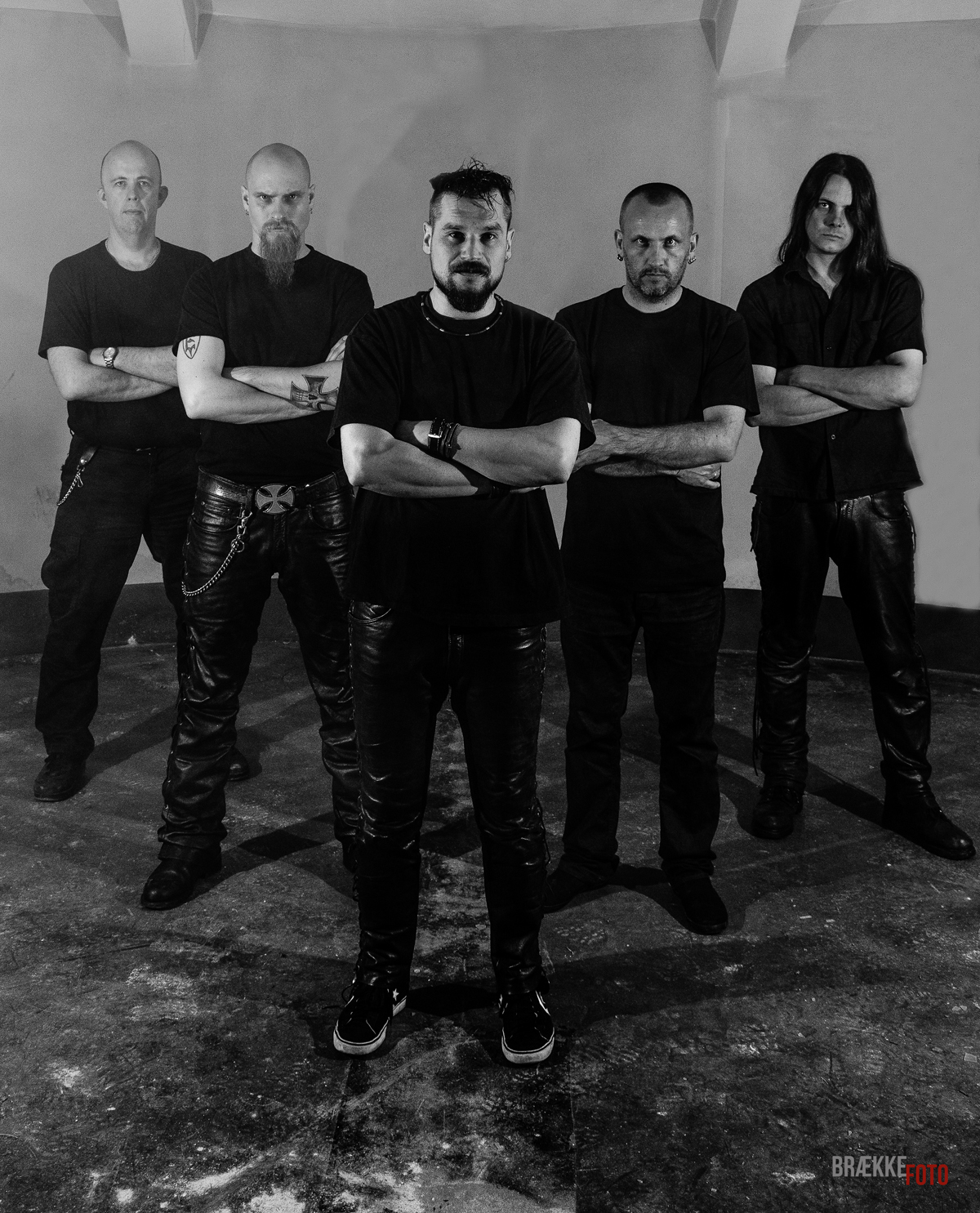
DIMENZION PSYCHOSPHERE band photo 3The Headbanging Moose: Let’s start by talking about the band and your brand new album, the excellent Collapse. Can you tell us who Dimenzion:Psychosphere are, your history, goals and plans for the future? Also, how was the creative process for the new album and how did it differ from your previous releases?

Dimenzion:Psychosphere: About us first. We are five guys who’ve been playing together for quite a while, and for many years it was kind of a side project, since most of us had other bands with higher priority. But around 2010 we decided to put more time and effort into Dimenzion, first of all because we all felt this was the band closest to our hearts, and second, because we had more time. So we started working on our first full-length album DNA Phantom Effect, which was finished and released early 2012. Unfortunately we are not very good at promotion, so the album didn’t get the attention we hoped for, and we didn’t get very far. Hopefully will those who like Collapse check out DNA too, cos we still think it’s a great album. As far as the creative process goes, it has always been the same, but this time we had way more material to choose from, which made it easier to shape the concept and feeling of Collapse.

THM: As mentioned in the review of the album, songs like The Machine and Slaves deal with important issues our society is facing nowadays which can lead to some serious consequences in a not-so-distant future, maybe even to the apocalypse. However, despite all that negativity emanating from the lyrics, your music is very melodic and pleasant to listen to. How do you guys work on that balance between “good” and “evil” in your music?

D:P: It all comes naturally really. We like to work with different moods and styles. Though I think when it comes to the important issues you mention, they’re all pretty provoking. So the feelings about it ranges from anger, to sadness and to plain apathy sometimes, and the music is shaped thereafter. We are still angry even if we’re not screaming or growling all the time, and there are enough bands out there who do that already. Harmonies make everything more powerful if not overdone I believe.

afterlight (14)THM: Your “cold apocalyptic metal” sounds perfect for being part of the soundtrack of futuristic movies such as The Terminator, Blade Runner or The Matrix. I’m pretty sure you’re all huge fans of that type of movie and you probably get inspired by those (and many others) when composing new material. What else, besides futuristic movies, inspires the band to create music? Are there any specific books, movie genres or any other sources of information the band likes to go to for having some insights and fomenting your creativity?

D:P: The sound effects, the music and the dystopic feeling of those movies and others like them inspire us, yes. But lots come from documentaries, history, books and of course by watching/reading the news. The world is becoming a police state, with surveillance and new laws made to make us “safer”, which when you think about it, is just a way of limiting our rights and freedom. And it all makes you wanna fuck some shit up, which comes out musically instead of physically in our case.

THM: What about your code names and apparel, which seem to be inspired by bands such as Slipknot and video games like Call of Duty? Could you tell us something about how Dimenzion:Psychosphere decided to add those elements to the band, the original inspiration for that, and what they represent today to all of you?

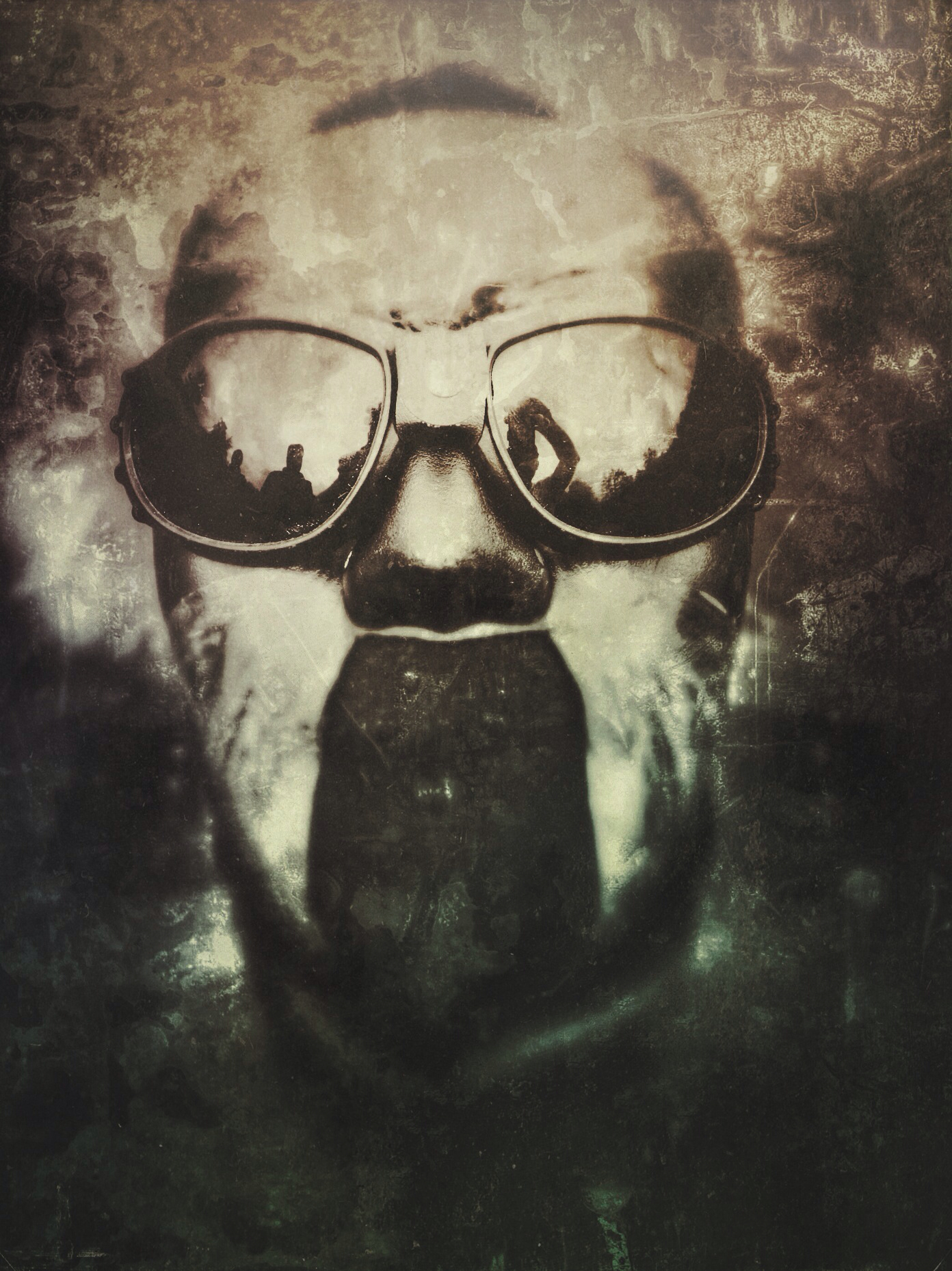
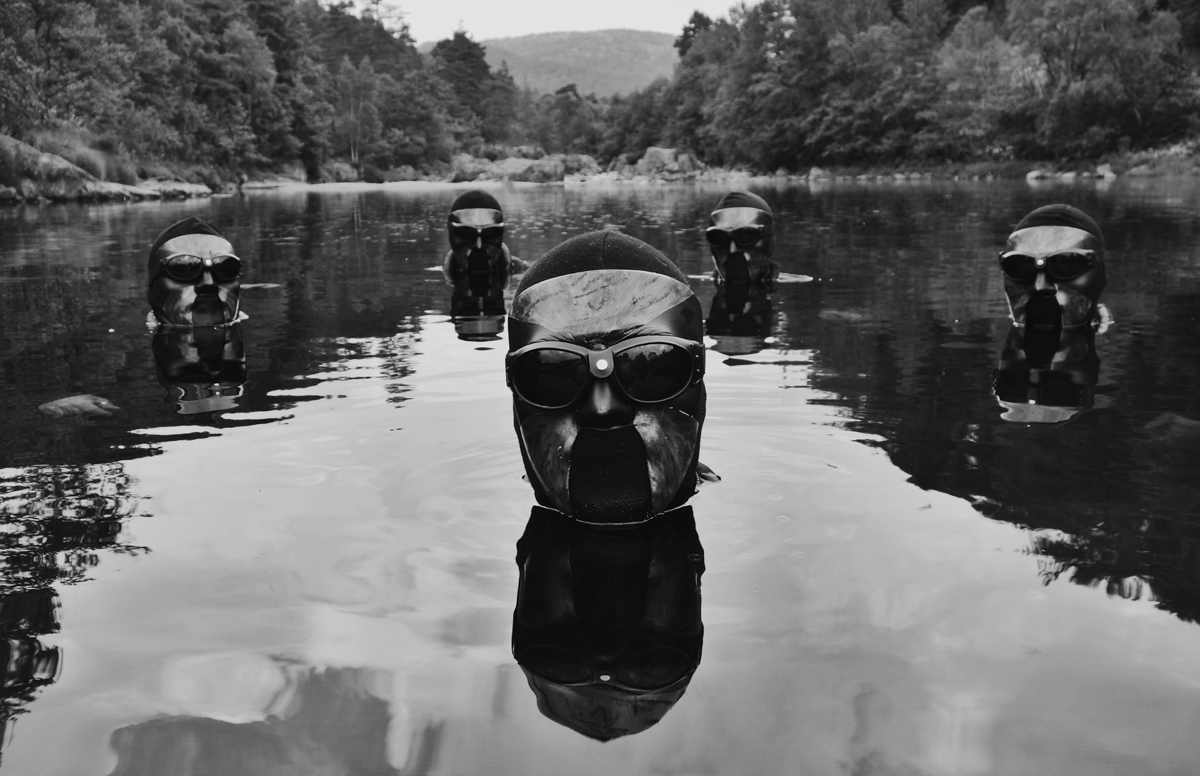
D:P:  We have always tried to add something extra to our shows, and the all over black uniforms remove the focus on us as individuals, just leaving it to be this unit that is the show. The names came recently to fit the whole concept, by not drawing attention to who we are, but to the whole concept. Not inspired by anything particular, it just felt right to do.

THM: Collapse is your first release signed to a record label. How is it to be working with a record label for the first time in your career, and what can you tell us about your relationship with Crime Records?

D:P: It’s great to have someone to back us up with the promotion and stuff, since as we mentioned, we’re not so good at that. Our relationship with Crime started over a year ago when they heard the DNA album. And they pretty much followed the entire process up to the finishing of Collapse, and signed us even before the final mix. We liked their attitude, so we didn’t even bother to send anything to other labels either.

DIMENZION PSYCHOSPHERE - Collapse cover art

Album Review – Dimenzion:Psychosphere / Collapse (2014)

THM: How is the Industrial Metal scene in Norway, a country known for being the cradle of Black Metal? Do you face any issues sharing your space with Black Metal bands and/or bands from any other music genres there, or is it a very peaceful and even productive coexistence?

D:P: The industrial metal scene in Norway is very small, especially compared to black metal.

We haven’t had any issues sharing stage with black metal bands or any other bands, so I guess you could say it’s a pretty peaceful coexistence. We know several people who play black metal, and all of them have a pretty open mind when it comes to music.

THM: Who are your main influences in music? Which bands and artists helped define what Dimenzion:Psychosphere are today, and which bands would you love to have a “dream tour” together?

D:P: It might be a cliché, but we get our influences from nearly all styles of music (with some exceptions). From all eras too. So naming bands is maybe not so “us” I think. It would have to be a very long list then. A dream tour… Meshuggah perhaps. Devin Townsend, Entombed. Someone not so far from us musically.

THM: What bands and artists are part of your playlist in your free time, when you’re not with Dimenzion: Psychosphere? Do you have any new or underground bands you would like to recommend us?

DIMENZION PSYCHOSPHERE band photo 1D:P: I guess we have our different favourites within the band, so like the previous answer, all kinds of music. We can recommend some bands we work with now and then. Deafmazjiin, Ground Zero System and Among Gods. All from Southern Norway.

THM: How about your current tour plans, especially now that Collapse is fresh out in the market? Which countries are you planning on visiting, how do you choose your setlist, and can your fans expect from your live performances? And are you going to play any dates in North America in 2014, especially in Canada, or is the focus going to be solely in Europe this year?

D:P: We have no tour plans at the moment, but that is something we’re going to start working on as soon as collapse is out. Unfortunately we don’t have a management/ booking agency yet, so that’s probably going to be our next goal. We love doing live shows, so if someone invites us to come to Canada (or any other country) we’d be more than happy to come. I think if you like our albums you’re going to love what we do live.

The setlist we pretty much make before every show, depending on how much time we have. We do try to mix old stuff with new stuff, but I guess lately the majority of songs come from the Collapse and DNA Phantom Effect albums.

THM: Thank you for the interview, or I should say “takk for intervjuet”. Do you have any final words for your fans in Norway, Canada and all over the world?

D:P: First of all thank you for giving D:P some attention and we hope that the readers will check out our music. If you want to get the latest news from Dimenzion:Psychosphere you can join us on Facebook or check us out at dimenzionpsychosphere.com.

Links
Dimenzion: Psychosphere Official Website | Facebook

Album Review – Escapetor / Fear (2014)

A serious contender for “Thrash Metal Album of the Year”, as heavy, invigorating and awesome as it can be.

Rating3

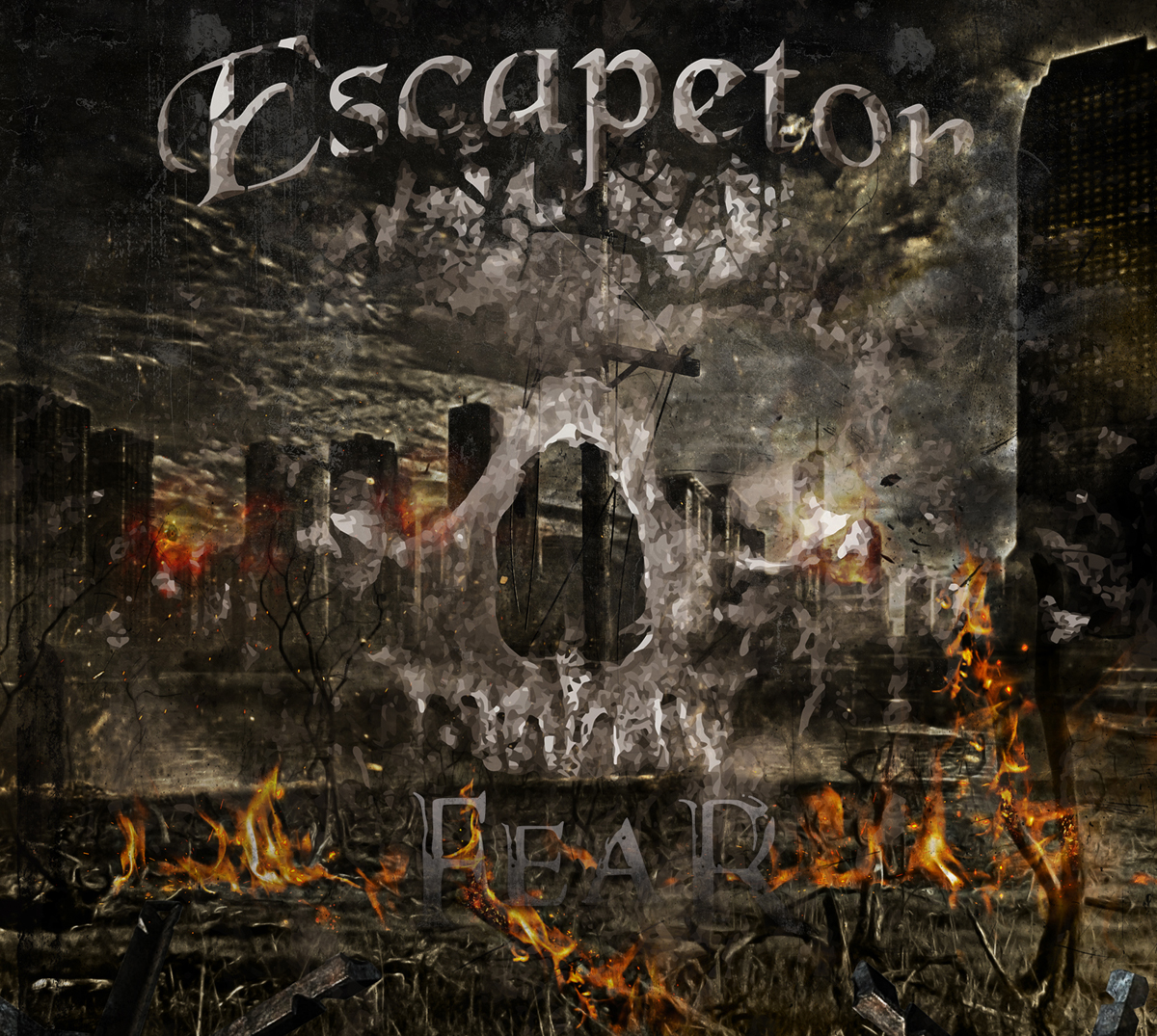
ESCAPETOR - Fear cover artWhen you think of that insane Thrash Metal from the 80’s, your head automatically turns to North America, more specifically to the San Francisco Bay Area and to South Florida, where monsters such as Slayer, Megadeth, Metallica, Anthrax, Exodus, Testament and many other great bands simply made history with their never-before-seen heavy music. But what if I tell you there’s also excellent Thrash Metal music in the “Land of the Midnight Sun”, the stunning Kingdom of Norway? And what if I tell you it’s the most awesome Thrash Metal music you can find anywhere today?

That’s exactly the case with Norwegian Thrash Metal band Escapetor, who after a few demos, EP’s and a debut album, are about to release their second full-length album, entitled Fear. Not only that, this Rogaland-based group also adds lots of elements from more contemporary bands like Pantera and Slipknot to their songs, which ends up elevating the overall fierceness of their musicality to a level all Thrash Metallers from anywhere in the world will love from the bottom of their hearts. In other words, if you do not like the Thrash Metal by Escapetor, you’re not a good person.

The initial riffs and fast drums of the opening track, The Queen, say it all: it’s fuckin’ brilliant Thrash Metal, so good I bet no one can stand still while tis song is played. In addition to the flawless instrumental, with highlights to the aforementioned powerful guitar riffs, the performance by German singer Claudius Bormuth is beyond superb, turning this song into a unique heavy music delight. What a great voice, perfect for Escapetor’s musicality! If only Metallica were doing something as enjoyable as this. Anyway, that was just the beginning of Fear: the melodic mid-tempo song Dark Past, with its more modern sonority perfect for headbanging and for some crazy air guitar, has some excellent guitar solos accompanied by a strong and catchy chorus (“Can you feel it, burning inside / I can’t take it anymore. / All these feelings tearing me apart, / Cause I know it is my dark past.”); while Unknown Thoughts, a pretty decent song with an interesting job done by drummer Leif-Ove Haugstad, reminds me of a more contemporary Metallica.

Dealing with Fate is pure riffs and heaviness where you can sense the influence from the band’s biggest idols in terms of harmony and rhythmic breaks. Besides that, its backing vocals are an amazing addition to the already great vocals by Claudius, and everything gets even better due to an outstanding guitar solo at the end. The following track, Mr. Hyde, showcases a refined mix of Thrash Metal and Southern Rock, something I’ve seen only Testament doing properly. It’s direct and powerful, straight to your face, with its lyrics inspired by the “Strange Case of Dr Jekyll and Mr Hyde” being an extra ingredient to this great recipe (“Last night, I woke up, I had the same old nightmare / What have I done, Mr. Hyde has taken over”).

ESCAPETOR band photoThe title-track, Fear, is truly kick-ass, with its deeper growls in the chorus and all variations from a faster rhythm (perfect for mosh pits) to a heavier and slower tune (tailored for intense headbanging) perfectly exemplifying the total synergy among all band members. The mighty bass lines by Dan Gundersen set the tone for another badass ferocious track, Shadow, where guitarists Ragnar Nord-Varhaug and Axel Feller keep up with the tradition of dynamic and technical guitar duos in Thrash Metal, followed by Escapetor, with its epic intro and an astonishing atmosphere created by the guitar riffs. Not only this is one of the best songs of the album without a shadow of a doubt, but its pure old school musicality and lyrics (“We are Escapetor, here in your town / Delivering metal to you our crows / We travel the wastelands, we sail over seas / To bring you our music, to make you feel free”) make me feel like I’m listening to a classic band from the 80’s.

Then it’s time to bang our fuckin’ heads with Suicide, an evil version of A7X (which is indeed something very positive), with highlights to its great vocals and to drummer Leif-Ove Haugstad simply smashing his drum set. It can’t get any heavier than this! The next track, Time, reminds me a little of Iced Earth and although it might not be as brilliant as the rest of the album, it’s a pretty decent song anyway; while the Testament-ish tune Creatures of the Night offers us some very dark and solid guitar lines, with the final part of the song being so damn heavy it’s impossible not to love it. And finally, Escapetor offer all fans of good music an incredible gift, with their impeccable cover version of Johnny Cash’s Folsom Prison Blues. I have to say this is more than just a cover version, it’s a superb tribute to one of the biggest music icons of all time, and seriously, this song made my day a lot better.

Call it the “New Wave of Norwegian Thrash Metal”, “Boknafjord Area Thrash Metal” (the largest bay in the county of Rogaland), or create your own definition of it, but one thing is certain: Fear is surely the “Thrash Metal Album of the Year” so far, and there’s a huge chance it will remain in the top spot when 2014 is over. If you cannot wait to listen to more of Escapetor’s crazy Thrash Metal, a preview of the entire Fear is available HERE, and you can already pre-order it at the official Crime Records webshop. Let’s say that only Thrash Metal behemoths Exodus can beat them, but it would be an honour anyway to be second place just behind Gary Holt, Zetro & Co., right?

Best moments of the album: The Queen, Fear, Escapetor, Suicide and Folsom Prison Blues.

Worst moments of the album: Unknown Thoughts and Time.

Released in 2014 Crime Records

Track listing
1. The Queen 5:52
2. Dark Past 5:05
3. Unknown Thoughts 4:33
4. Dealing with Fate 6:42
5. Mr. Hyde 5:03
6. Fear 3:56
7. Shadow 3:45
8. Escapetor 4:52
9. Suicide 4:24
10. Time 5:46
11. Creatures of the Night 5:53
12. Folsom Prison Blues (Johnny Cash cover) 2:30

Band members
Claudius Bormuth – vocals
Ragnar Nord-Varhaug – guitar
Axel Feller – guitar
Dan Gundersen – bass
Leif-Ove Haugstad – drums

Album Review – Dimenzion:Psychosphere / Collapse (2014)

These Norwegian “industrialists” are spot on with their cold and futuristic apocalyptic metal.

Rating4

DIMENZION PSYCHOSPHERE - Collapse cover artIf you’re a fan of Industrial Metal bands that are a lot more “metal” than “industrial”, but that still have that cool electronic touch and a unique futuristic concept in each of their albums, such as the incomparable Rammstein, Ministry and Fear Factory, you should take a shot at Collapse, the new album by Norwegian Industrial Metal band Dimenzion:Psychosphere. After a few self-released EP’s and their debut album entitled DNA Phantom Effect (2012), Collapse is their first full-length album signed to a record label (Crime Records), and by far the best in terms of recording and production quality.

Based in the town of Mandal, Norway, this band does not play your average Industrial Metal, but a fresh and creative mix of industrial and heavy music elements, or as Dimenzion:Psychosphere themselves prefer to say, they play “cold apocalyptic metal from the north”. That crazy definition is corroborated by the band members’ monikers (The President, The Architect, The Trooper, The Scientist and The Engineer) and by their apparel, which can be described as a hybrid between Slipknot and Call Of Duty: Black Ops. You have to agree it can’t get any more bizarre than that.

And when all that visual and concept bizarreness translates into music as soon as the excellent opening track The Machine starts, everything makes a lot more sense: Dimenzion:Psychosphere breed a heavy and embodied mix of Industrial and Nu Metal, a kind of musicality only German Industrial Metal giants Rammstein would be able to produce, with highlights to its very entertaining and intelligent lyrics (“The walking machine’s still singing / The time has come to seize control / To which values are you clinging / To whom do you owe your soul?”). The following track, the groovy Fury, keeps up with the futuristic theme by offering us a truly mechanical atmosphere, which together with the “march” halfway through the song and its extremely heavy drums and bass make the whole song even more effective.

DIMENZION PSYCHOSPHERE band photo 2With its Fear Factory-ish intro and its dense and slow riffs enhanced by a dark “assembly line” rhythm, the song Void can be considered the representation of the band’s Industrial Doom Metal side, while the superb Epistemophobia should be used as part of the soundtrack to a futuristic suspense movie, especially due to the symphonic elements added by The Scientist with his insane synths. Moreover, if you don’t know what the name of this song means, Epistemophobia is the fear of knowledge, which ends up being the principle of the lyrics. In my opinion, I wouldn’t consider this lyric theme too futuristic, but extremely realistic (and painful) based on all the shit we see people doing all over the world. Does anyone still think the human being is actually evolving?

Anyway, the next track, Slaves, focus on more melodic lines, with its direct lyrics (“WE’RE ALL A BUNCH OF FUCKIN SLAVES”) and synths being responsible for generating a strong atmosphere once again, followed by the longest track of all, Psychodorm, full of modern American Metal elements the likes of Slipknot. Moreover, the “machinery” sonority created by all instruments is outstanding, boosted by a very cohesive melancholic tune after four minutes, which goes on until the end of the song. And last but not least, the title-track Collapse sort of kicks off from where the previous song ended, maintaining the same eerie sonority, with an amazing vocal performance by lead singer The President. The ending of this song (and the entire album) is very obscure, predicting there’s no sign of a “happy ending” for our society, which I totally agree.

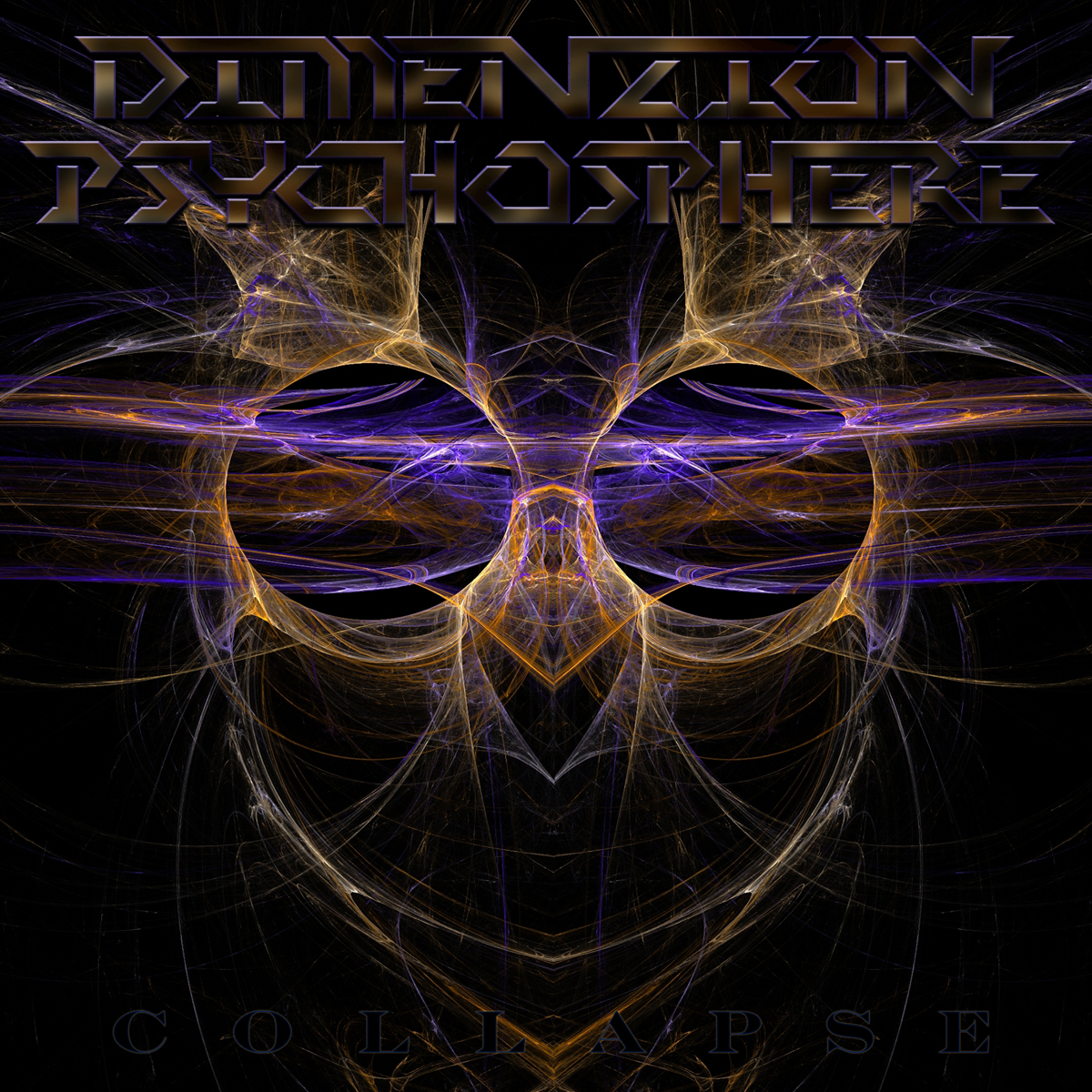
The album art designed by TrippleOneVision is a terrific complement to the album concept, reminding us of the futuristic mechanical artwork found in many (if not all) albums by Fear Factory, and another sign of how professional and committed Dimenzion:Psychosphere are to their work. In short, Collapse, which will soon be available at the official Crime Records Webshop, doesn’t bring any optimistic message to humanity, but it surely provides fans of heavy music an exceptionally good soundtrack to apocalypse, so turn the volume up, relax and enjoy this awkward music journey until the world completely falls apart.

Best moments of the album: The Machine and Epistemophobia.

Worst moments of the album: Void.

Released in 2014 Crime Records

Track listing
1. The Machine 5:02
2. Fury 4:15
3. Void 6:26
4. Epistemophobia 5:18
5. Slaves 4:29
6. Psychodorm 8:49
7. Collapse 7:19

 Band members
The President – vocals
The Architect – guitar, vocals
The Trooper – bass
The Scientist – synth
The Engineer – drums

Album Review – Tristania / Widow’s Weeds (1998)

It’s from Norway the most remarkable Gothic Metal album of all time.

Rating3

WidowsWeedsGothic Metal has always been and will ever be a very tricky subgenre of Heavy Metal, especially in terms of originality, because it can bore you at the blink of an eye. I, for instance, do not consider myself a true Gothic Metal fan, as I prefer a lot more heavier and faster material like traditional Heavy Metal, Thrash Metal, Death Metal, and even Hard Rock rather than any Gothic music. However, once in a while there’s a band like Tristania that breaks this barrier and gains my respect in the world of heavy music.

After their self-titled EP Tristania (1997), it was time for this Norwegian Gothic Metal band to release in 1998 their first full-length album called Widow’s Weeds, which in my opinion is the best Gothic Metal album of all time. In fact, Widow’s Weeds cannot be considered only Gothic Metal, as it contains elements of many other subgenres of heavy music such as Symphonic, Death and Doom Metal, which explains why this album is so difficult to understand, and consequently so delightful.

Widow’s Weeds is a tsunami of obscure themes and dark lyrics, all full of the most uncomfortable emotions such as depression, sadness and madness, and of course everything is wrapped up by a very precise and dense musicality. Do not expect to hear crazy riffs and solos, or even fast drums with lots of double bass, but lengthy and slow songs where all instruments together form a complex sonority, in parallel with Vibeke Stene’s angelic voice and Morten Veland’s roars.

Right after the intro Preludium…, the band shows all its powerful musical range with the beautiful Evenfall, by far the most amazing composition of their entire career. Vibeke’s performance in this song is awesome, as well as the drums by Kenneth Olsson, and the final result portrays perfectly how pleasant sadness can be when transformed into music. The following track keeps the bar extremely high: Pale Enchantress can be considered another of the band’s classics, a lot faster than the previous one with great melancholic lyrics (“Enchanting all my dreams / A beauty and her flood of tears / Nightfall embrace my heart / Mesmerized and ravendark”).

December Elegy and Midwintertears are examples of what I previously said about the trickiness of Gothic Metal, as both can easily make you feel bored due to their length and lack of speed or changes in rhythm. However, they’re pretty good songs, it’s just that they’re not tailored for MTV or radio. On the other hand, even the more skeptical heavy music lovers will enjoy the next two tracks: Angellore has many interesting goth elements from the 80’s that match perfectly with the band’s style, with the addition of Østen Bergøy doing the clean vocals, and the final result was so good that it was probably the reason why he joined the band full-time from 2001 until 2010; while My Lost Lenore is considered by many Tristania’s biggest masterpiece. Here we have not only Vibeke and Morten doing a superb job, but above all the talented Einar Moen on his synth and piano giving a huge boost to the song.

tristania7The (almost) last track, Wasteland’s Caress, is for me the weakest of all tracks, and the outro …Postludium ends this amazing album, unless you have the special edition which contains two excellent bonus tracks called Sirene and Cease to Exist. The front cover of the album simply summarizes how dark and mysterious the music by Tristania is, fully complemented by the band’s sinister outfits.

Unfortunately, there have been way too many changes in the band’s lineup and musicality until today, provoking an immense drop in the quality of their material. Maybe if Vibeke Stene and of course Morten Veland, the mastermind behind Tristania’s eerie and mesmerizing music and currently with Sirenia, were still with Tristania, the whole story would have been a lot different. Nevertheless, based on Tristania’s most recent albums, I don’t believe we’ll see anything close to Widow’s Weeds again.

At least there are some good news about Vibeke returning to the world of heavy music after years of privation, and when she actually returns she deserves a special “Metal Chick of the Month” post for her and one or more reviews of the music projects and/or bands she joins in a near future. She’s a truly underrated musician, and I hope she comes back kickin’ ass as she used to do in her years with Tristania.

Best moments of the album: Evenfall, Pale Enchantress, Angellore and My Lost Lenore.

Worst moments of the album: December Elegy and Wasteland’s Caress.

Released in 1998  Napalm Records

Track listing

1. Preludium… 1:09
2. Evenfall 6:51
3. Pale Enchantress 6:31
4. December Elegy 7:31
5. Midwintertears 8:32
6. Angellore 7:16
7. My Lost Lenore 6:23
8. Wasteland’s Caress 7:40
9. …Postludium 1:12

Limited edition bonus tracks
10. Sirene 3:22
11. Cease to Exist 9:17

Band members
Vibeke Stene – vocals, choir
Morten Veland – harsh vocals, guitars, choir
Anders H. Hidle – guitars, choir
Rune Østerhus – bass
Einar Moen – synths, programming
Kenneth Olsson – drums, choir

Guest musicians
Østen Bergøy – clean vocals on “Angellore”, choir
Pete Johansen – violin
Hilde Egeland, Marita Herikstad, Hilde T. Bommen – choir