Album Review – Hyperion / Elysia (2026)

After a decade since the release of their critically acclaimed debut album, this Swedish Melodic Death and Black Metal horde returns with their incendiary sophomore opus.

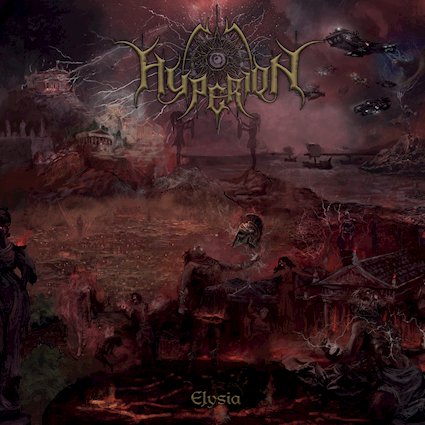
After a decade since the release of their critically acclaimed debut album Seraphical Euphony, Stockholm, Sweden-based Melodic Black/Death Metal band Hyperion is back in action with their sophomore opus, titled Elysia. Recorded between 2020  and 2023 at Wing Studios, Studio Forlorn Halls and in various private locations, mixed and mastered by Sverker Widgren between 2023 and 2024 at Wing Studios, and showcasing a sinister artwork by the always great Khaos Diktator Design, the new album by Erik Molnar on the guitars, synthesizer programming and spoken words, Joel Hagroth on the guitars and spoken words, Mikael Malm on the guitars, Raul Vicente on bass, and Mauritz Flodin on drums and orchestrations offers a barrage of guitars and symphonies of a kind that is rarely seen, but great care has been taken to make them complement each other and draw you in to discover more the deeper you get.

The beyond atmospheric and cinematic intro Rapturous Overture sets the stage for Hyperion to crush our souls in Nefarious Sacrament of the Immorals, featuring guest Johan Nephente on vocals, kicking things off with endless fury to the blast beats by Mauritz and the scathing riffage by Erik, Joel and Mikael. Fides Novem, featuring guest vocalist Elias Lyxell, keeps their Black Metal magic burning to the killer riffs and solos by the band’s guitar triumvirate, followed by Iliou Persis, with the one and only Atterigner on vocals, not to mention the battle choir brings an overdose of epicness to the music, as well as Mauritz’s infernal drums. And Paraphrosynia, featuring Karin Eriksson on vocals, brings forward 12 minutes of absolute chaos and insanity, with Karin’s vocals reminding me of old school creations by Cradle of Filth, with all guitars, bass, keys and drums sounding stunning until the very end.

Then investing in an even more demented sonority we have Perennial Transcendence, with all grim vociferations matching perfectly with the thunderous kitchen by Raul and Mauritz; and after the acoustic interlude Vigil of Longing we face the second longest song of the album, titled Epic of Tribulation, starting in a phantasmagorical manner before morphing into a grandiose Symphonic Black Metal aria led by Mauritz’s crushing drums. Furthermore, the despair and obscurity flowing from all vocals is stunning. Epoch’s Eventide also alternates between darker, doom-ish moments and the sheer aggression of Black Metal, with the synths by Erik bringing an extra kick to the overall result, before we face The Primordial Wellspring, where despite its climatic vibe, it doesn’t know if it’s a ballad, an acoustic song or a classic Symphonic Black Metal tune.
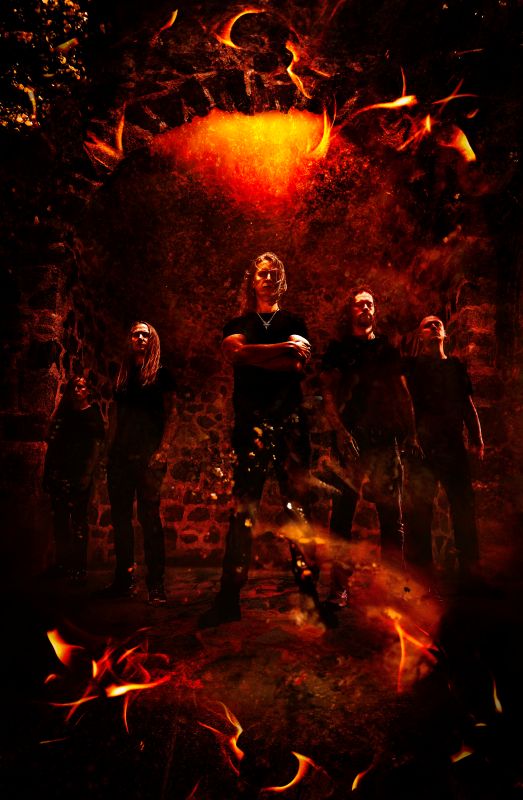
“Elysia is an explosion of intensity in all kinds of directions. To call it an ambitious album would be an understatement. Hyperion never creates music with half measures and this is the ultimate statement of that. It is different from Seraphical Euphony, but still contains the vital elements that make us what we are. To make this album a reality has been a titanic effort and we are beyond excited to finally have it released to the world,” commented the band about their incendiary newborn spawn, and if you want to know more about such a talented horde hailing from Sweden you can find those guys on Facebook and on Instagram, stream their caustic music on any platform such as Spotify, and of course, above all that, show them your total support and admiration by purchasing their new album from their own BandCamp, as well as from the Willowtip Records’ BandCamp. This is Swedish Melodic Death and Black Metal at its finest, and let’s hope it doesn’t take another ten years for Hyperion to kick our asses once again with a new album just as great as Elysia.

Best moments of the album: Nefarious Sacrament of the Immorals, Paraphrosynia and Epic of Tribulation.

Worst moments of the album: The Primordial Wellspring.

Released in 2026 Willowtip Records

Track listing
1. Rapturous Overture 2:41
2. Nefarious Sacrament of the Immorals 6:52
3. Fides Novem 8:52
4. Iliou Persis 6:39
5. Paraphrosynia 12:41
6. Perennial Transcendence 6:52
7. Vigil of Longing 1:20
8. Epic of Tribulation 10:58
9. Epoch’s Eventide 9:18
10. The Primordial Wellspring 7:22

Band members
Erik Molnar – guitars, synthesizer programming, spoken words
Joel Hagroth – guitars, spoken words
Mikael Malm – guitars
Raul Vicente – bass
Mauritz Flodin – drums, orchestrations

Guest musicians
Johan Nephente – vocals on “Nefarious Sacrament of the Immorals”
Elias Lyxell – vocals on “Fides Novem”
Atterigner – vocals on “Iliou Persis”
Karin Eriksson – vocals on “Paraphrosynia”
Erik Molnar, Joel Hagroth, Mikael Malm, Mortuz Denatus, Johan Camling & Henrik Edman – battle choir on “Iliou Persis”
Album Review – Gorgoroth / Instinctus Bestialis (2015)

One of the most controversial Black Metal bands in the world delivers some truly bestial instincts in the form of gruesome and elaborate extreme music.

Rating4

instinctus bestialisNorwegian Black Metal is more than just a subgenre of Heavy Metal: it’s a renowned and very respectable movement that has been helping redefine the scope of extreme music, expanding its boundaries to a whole new level that’s not comprised of just the music itself, but of a wide variety of contentious topics such as religion, murder and ideology. If you don’t know much about it, I strongly recommend you watch the amazing documentary entitled Until the Light Takes Us (2008) to better understand the importance of this infamous musical subculture to society. And it doesn’t matter if you’re a fan of Black Metal or not, you must listen to Norwegian black metallers Gorgoroth to understand how all that controversy and darkness translates into music.

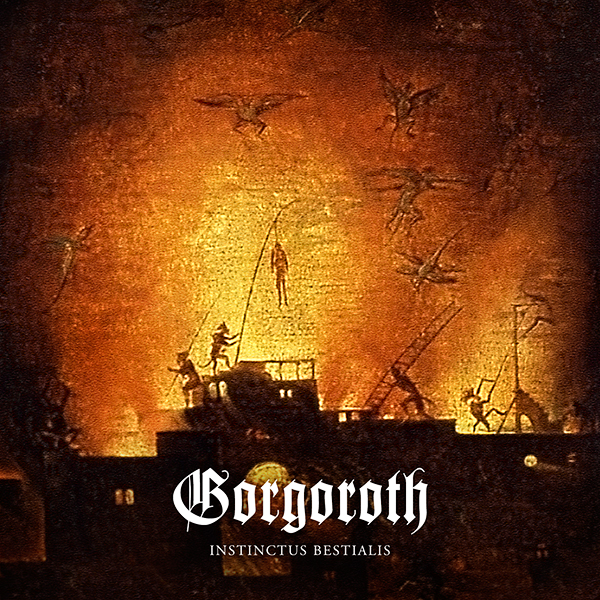
Formed in 1992 by the only original member remaining, Infernus, and named after the dead plateau of evil and darkness in the land of Mordor, from J. R. R. Tolkien’s fantasy novel The Lord of the Rings, Gorgoroth are releasing now in 2015 their ninth full-length studio album, the venomous Instinctus Bestialis. It’s important to say this is their first album to feature vocalist Atterigner and, more important than that, it’s indeed a solid addition to their polemic career, corroborating their status as one of the most influential Black Metal bands in history.

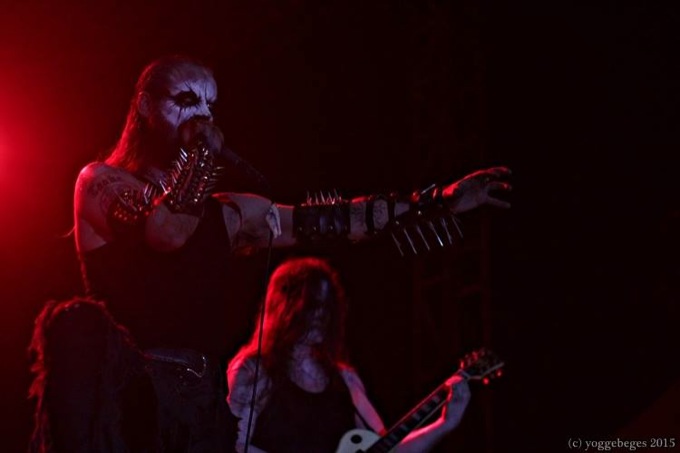
It’s simply amazing how violently the album starts with the opening track Radix Malorum, with its blast beats crushing our heads from the very first second while Atterigner shows why he was chosen by Infernus to be the new devilish voice of Gorgoroth. Following that ravage we have more infernal Black Metal in Dionysian Rite, with highlights to the great work on guitars by Infernus and to the demonic performances by Atterigner and Asklund with their vocals and drums, respectively. Moreover, I’m pretty sure most of the fans of the music by Gorgoroth will love the ominous Blackened Doom vibe present in the last part of the song.

gorgorothThe blasphemous and devastating Ad Omnipotens Aeterne Diabolus can be considered the most complete song of the album, showcasing a touch of melancholy, a beautiful melody, and of course that expected (but always awesome) visceral explosion of Black Metal. Asklund is kicking ass on drums once again, whilst Infernus keeps mastering the art of dark riffs and solos. And when the lyrics include screams such as “Hail Satan!”, you know you’re facing some good deranged music, right? Anyway, the short and direct Come Night is yet another melodic tune that doesn’t forget to be as satanic as Black Metal usually is, and despite not being the most creative song in the world it’s still very enjoyable; followed by Burn in His Light, where hints of Blackened Death Metal and even some progressiveness add a fresh taste to it. Besides, the robust background foundation by Bøddel and Asklund leave plenty of room for infernus to deliver more awesome riffs, increasing the song’s quality.

In one of the top moments of the album, Rage, its heavy guitar lines bring forth a wrathful Blackened Death Metal vibe, reminding me of the superb musicality found in The Satanist, the lasts masterpiece by Behemoth. This is a great addition to Gorgoroth’s weaponry and something they should be doing more in future releases, in my humble opinion. Kala Brahman, which has different meanings in Mithology depending on the culture but it’s usually a sea monster, an evil spirit or the supreme god to bring death and disease to mankind, presents a dense and obscure sonority enhanced by an atmosphere that couldn’t be more perverse and by an avalanche of traditional blast beats by Asklund. And the last track of the album, Awakening, doesn’t slow down at all, once again flirting with Blackened Death Metal and therefore resulting in a very rhythmic and imposing composition.

In summary, after all these years of controversy, depravity and radicalism, Gorgoroth prove they still got it, delivering a consistent work that sounds much more cohesive than many of their previous releases. To be fair, the addition of elements from genres such as Blackened Doom and Blackened Death Metal, rather than just sticking to raw old school Black Metal, was undoubtedly the right decision by Infernus and his horde in this album, truly expressing the most bestial instincts deeply entrenched inside the human being in the form of gruesome and elaborate Extreme Metal.

Best moments of the album: Dionysian Rite, Ad Omnipotens Aeterne Diabolus and Rage.

Worst moments of the album: Come Night.

Released in 2015 Soulseller Records

Track listing
1. Radix Malorum 3:14
2. Dionysian Rite 4:05
3. Ad Omnipotens Aeterne Diabolus 5:45
4. Come Night 2:41
5. Burn in His Light 4:02
6. Rage 4:03
7. Kala Brahman 5:23
8. Awakening 2:07

Band members
Atterigner – vocals
Infernus – guitars
Bøddel – bass
Asklund – drums