Album Review – Ildaruni / Divinum Sanguinem (2025)

This Armenian Black Metal beast is back with its sophomore opus, a conceptual work centered on Mithraism, guiding the listener through nine ominous rites meant to transform one into the storm of nomos and burning gnosis.

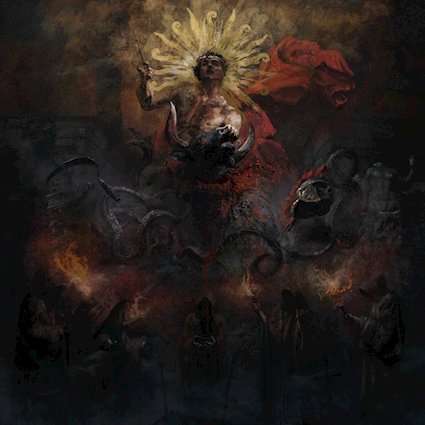
Blending Epic Black Metal and ancient folk melodies forgotten from times immemorial, Beyond Unseen Gateways, the 2021 debut by Yerevan, Armenia-based Pagan/Atmospheric Black Metal horde Ildaruni explored the Urartian domain’s height and the esoteric knowledge of pagan mysticism. Now on their sophomore opus, titled Divinum Sanguinem, or “divine blood” from Latin, the band enclasps Black Metal’s aggressive and arcane form, steeped in the immersive, murky atmosphere of a desolate, ancient shrine. Recorded by Avet Ghlijyan at Massive Studios (vocals), by Mark Erskine (guitars and bass), by Armen Shaverdian at Guitar Clinic Studio (drums), and by Maria Harutyunyan at Alpha Sound (acoustic instruments and choirs), mixed and mastered by Christoph Brandes at Iguana Studios, showcasing a grim artwork by Khaos Diktator Design, and featuring an array of very special guest musicians, the new album by Narek Avedyan on vocals, Robert Meliksetyan and Mark Erskine on the guitars, Artak Karapetyan on bass, and Arthur Poghosyan on drums and dap is a conceptual work centered on Mithraism, its occult initiations and lesser-known mysteries, guiding the listener through nine ominous rites meant to transform one into the storm of nomos and burning gnosis. A work of mystical upheaval and a sermon to the bestower of creed, it leads through ghastly pathways toward the ladders of Apothanaitismos.

The album begins with the cinematic, ethereal intro Mithras Alone Is My Wreath, featuring the cello by guest Andranik Aghajanyan, setting the stage for Ildaruni to consume our blackened hearts to the sound of The Ascension of Kosmokrator, a no shenanigans, ruthless Black Metal attack spearheaded by the venomous gnarls by Narek and the blast beats by Arthur. Then arising from the pits of the underworld we face Of Nomos and Flaming Flint Stone, featuring the Khazer Choir from Armenia to give it a truly haunting vibe, while Robert and Mark’s riffs transpiring pure darkness; and the bagpipes by Arthur Atayan and the narration by Artak Karapetyan bring sheer epicness to Forged With Glaive and Blood, while the band’s riffs and beats keep the atmosphere as caustic as it can be. And the clean vocals by guest Armen Shahbegian clash with the devilish vociferations by Narek in Zurvan Akrane, another explosion of Melodic Black Metal by Ildaruni.

The Khazer Choir returns in Arcane Sermon, also presenting a heavy-as-hell kitchen by Artak and Arthur, overflowing classic Black Metal while at the same time presenting the band’s epic approach; whereas it’s time for six minutes of Doom Metal-infused obscurity in Immersion Into Empyrean, with Narek roaring nonstop accompanied by the sluggish yet hammering drums by Arthur. The qanun by Mar Margaryan, alongside another phenomenal contribution by the Khazer Choir, make the band’s infernal sounds feel even more imposing in Scorching Pathways to Samachi, the most detailed song of the album, presenting multiple layers that in the end converge into absolute darkness, while closing the album we’re treated to the title-track Divinum Sanguinem, with guest Tamara Mkhitaryan making a “Beauty and the Beast” vocal duet with Narek, a lesson in Melodic Black Metal where the riffage by Robert and Mark will darken the skies for all eternity.
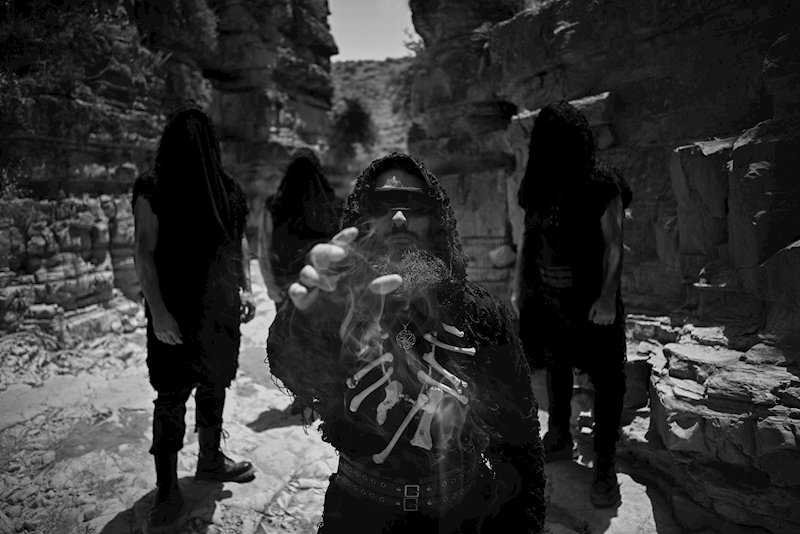
While the Armenian horde has left their earlier folk-driven melodies and riffs behind, grandiose and wickedly melodic passages still lurk amid the oppressive, grim elements found in Divinum Sanguinem, sporadically erupting with blazing fury. Real choir arrangements summon and channel the album’s lyrical mysteries, uniting its thematically entwined tracks into a single, esoteric rite, and you can explore and feel all those details and elements by purchasing a copy of the album from BandCamp or by clicking HERE. Don’t forget to also follow the band on Facebook and on Instagram, and to stream their harsh, embracing Black Metal creations on Spotify. In a nutshell, Divinum Sanguinem marks a new era in the career of Ildaruni, solidifying their name in the current Extreme Metal scene worldwide, and pointing to an even brighter future ahead of one of the best (if not the best) metal bands to ever arise from the beautiful Hayastan.

Best moments of the album: Forged With Glaive and Blood,Scorching Pathways to Samachi and Divinum Sanguinem.

Worst moments of the album: Immersion Into Empyrean.

Released in 2025 Black Lion Records

Track listing
1. Mithras Alone Is My Wreath 2:27
2. The Ascension of Kosmokrator 5:42
3. Of Nomos and Flaming Flint Stone 5:30
4. Forged With Glaive and Blood 5:46
5. Zurvan Akrane 6:33
6. Arcane Sermon 5:50
7. Immersion Into Empyrean 6:00
8. Scorching Pathways to Samachi 6:49
9. Divinum Sanguinem 8:04

Band members
Narek Avedyan – vocals
Robert Meliksetyan – guitars, acoustic guitars, ambience, samples
Mark Erskine – guitars
Artak Karapetyan – bass
Arthur Poghosyan – drums, dap

Guest musicians
Khazer Choir – choirs on “Of Nomos and Flaming Flint Stone”, “Arcane Sermon” and “Scorching Pathways to Samachi”
Arthur Atayan – bagpipes on “Forged with Glaive and Blood”
Mar Margaryan – qanun on “Scorching Pathways to Samachi”
Andranik Aghajanyan – cello on “Mithras Alone is My Wreath”
Tamara Mkhitaryan – female vocals on “Divinum Sanguinem”
Armen Shahbegian – clean vocals on “Arcane Sermon”, “Scorching Pathways to Samachi” and “Zurvan Akrane”
Artak Karapetyan – narrations on “Forged with Glaive and Blood”
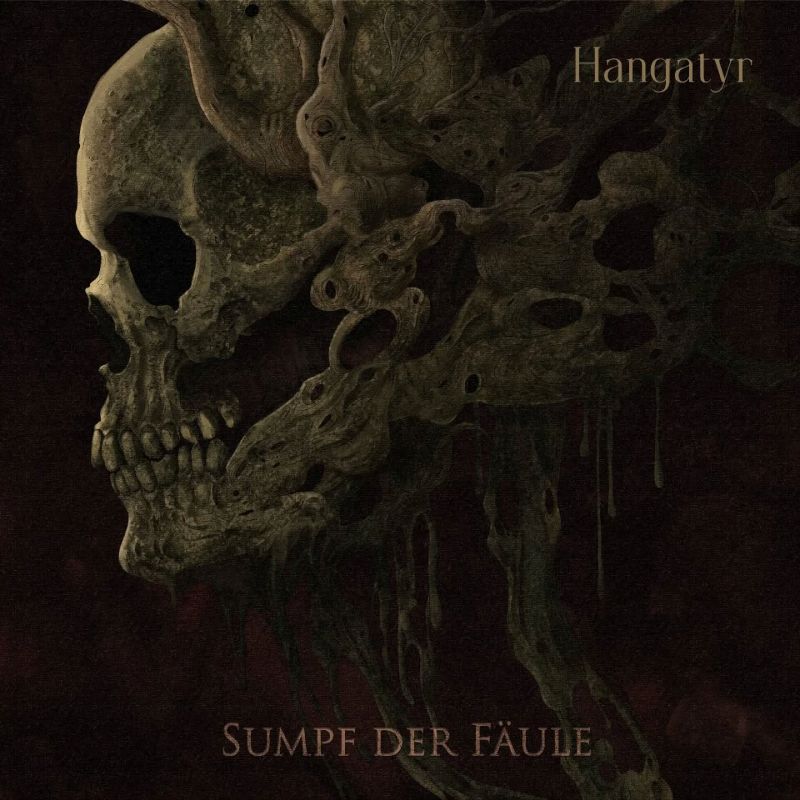
Album Review – Hangatyr / Sumpf der Fäule (2025)

Enter the swamp of rot found in the fourth studio opus by this devilish Heathen and Nordic Black Metal horde hailing from Germany.

In Norse mythology, Hangatyr was one of many names for Odin, translated as the “Hanged God”, a reference to his ordeal upon the World Tree. In extreme music, Hangatyr are a Heathen/Nordic Black Metal horde hailing from Bad Sulza, a town in the Weimarer Land district, in Thuringia, Germany, inspired by German icons of the genre with nuances from 90’s Norwegian Black Metal. Now in 2025 the band currently formed of Silvio on vocals, Ali and Basti on the guitars, and Falk on bass is ready to unleash upon humanity their fourth opus, entitled Sumpf der Fäule, or “swamp of rot” from German, the follow-up to their 2020 album Kalt. Produced by Alexander Dietz (Heaven Shall Burn) at Chemical Burn Studios, and showcasing a grim artwork by Ute Ruhmann, Sumpf der Fäule sees the quartet conjure up an unmistakably unique atmosphere throughout the entire album, positioning it as a must-listen for admirers of the black arts.

After a Stygian intro the music explodes into grandiose Black Metal in Sumpf der Fäule, where you can sense their Pagan and Nordic Black Metal influences in the riffage by Ali and Basti; whereas Eine Wahrheit (“one truth”) already starts in full force to its crisp, scorching riffs and blast beats, while Silvio roars and gnarls nonstop in the name of extreme music, exhaling 90’s Black Metal for our vulgar delectation. Leichenmahl (“funeral feast”) is a bit slower yet still venomous and harsh, darkening the skies to the devilish screams by Silvio while all instruments sound as heavy and grim as possible, followed by Es webe Nacht (“let the night weave”), another song that transpires Heathen Black Metal, inspiring us to raise our horns to the band spearheaded by the striking guitars by Ali and Basti. Then leaning towards classic Norwegian Black Metal we have Fatales Gedeih (“fatal prosperity”), showcasing how versatile the band can be inside the broader genre, with Falk making the earth tremble with his bass; and ending the album the quartet offers another bold and dense Black Metal aria titled Dämmerung (“twilight”), spreading absolute darkness until all fades into a melancholic grand finale.

Overflowing heaviness and sheer intensity in all of its six biting songs with abysmal atmospheres, Sumpf der Fäule is highly recommended for fans of early Enslaved, Helheim, and Helrunar, among several other Heathen and Nordic Black Metal hordes out there, and if you want to get in touch with those talented and hardworking Teutonic black metallers you can find them on Facebook and on Instagram, stream their music on Spotify (only the album Kalt at the moment, by the way) or on BandCamp (all of their already released albums), and soon grab your copy of their newborn spawn from the same BandCamp. In other words, it’s time to enter the swamp of rot offered by Hangatyr in their new album, letting their festering, devilish sounds penetrate deep inside your putrid skin in the name of our beloved Black Metal.

Best moments of the album: Sumpf der Fäule and Es webe Nacht.

Worst moments of the album: None.

Released in 2025 Independent

Track listing
1. Sumpf der Fäule 7:46
2. Eine Wahrheit 5:35
3. Leichenmahl 6:51
4. Es webe Nacht 6:29
5. Fatales Gedeih 6:38
6. Dämmerung 10:00

Band members
Silvio – vocals
Ali – guitar
Basti – guitar
Falk – bass

Album Review – Vermilia / Karsikko (2025)

Let your soul wander through the forest to the sound of the stunning third full-length offering by this one-woman Atmospheric and Pagan Black Metal entity from Finland.

In the Finnic religion, a “karsikko” was a set of markings made on a tree somewhere between a deceased person’s home and the burial site, which was believed to prevent the individual’s spirit from coming back. In heavy music, Karsikko is the stunning third full-length offering by one-woman Atmospheric Pagan/Black Metal entity Vermilia, following up on her 2018 critically acclaimed debut Kätkyt and her also amazing 2022 opus Ruska. Since 2017, vocalist and multi-instrumentalist Vermilia has been playing a beautiful hybrid of Epic Pagan Metal and sweet, raw and melancholic vocal harmonies with lyrics in her native language, and in Karsikko she has outdone herself with her strongest effort to date, a charming yet visceral album that lives up to the legacy of extreme music while at the same time it pays homage to her beautiful culture and roots.

The charming piano by Vermilia kicks off the dancing Pagan Black Metal title-track Karsikko, with her powerful, penetrating vocals matching perfectly with the song’s stunning wall of sounds. Vakat is the name of a traditional Finnish pagan festival, and that’s exactly what we get from Vermilia in this excellent song, perfect for dancing around the fire and raising our horns high in the sky. Then we have Kivutar, a Finnish goddess of pain and suffering whose name translates to “Lady of Pain”; musically speaking, Vermilia once again delivers an overdose of blast beats, scorching Black Metal riffs, and her fusion of clean vocals and harsh roars. And her classic drums and whimsical keys set the tone in Suruhymni, or “an anthem of mourning” from Finnish, embracing us in pitch black darkness in the middle of the forests of Finland.

Then the atmospheric, enfolding sounds crafted by Vermilia will penetrate deep inside your soul in Koti, or “home”, offering us all a well-balanced fusion of Black and Pagan Metal while again presenting her hypnotizing vocalizations; and in Veresi, or “your blood”, the name of the song says it all, demanding a heavier, more visceral sonority, and our lone she-wolf brings it while also sounding haunting thanks to her Doom Metal-inspired riffs and beats, presenting a fantastic rhythm, crisp instrumental and spot-on vocal lines. In Talven Jälkeen, or “after the winter”, we’re treated to more of her hybrid of harsh sounds and whimsical, embracing passages, with her work on the guitars and drums sounding utterly vibrant. Lastly, Vermilia ends the album on a high note with the dark and heavy Kansojen Kaipuu, or “the longing of nations”, where she gnarls like a creature of the forest for our total delight amidst sounds of pure Atmospheric Black Metal magic.

You can experience Karsikko in all of its glory on YouTube, on Spotify, or on any other streaming service, but of course in order to support the beyond talented Vermilia you can purchase her newborn beast from her own BandCamp or webstore, or by clicking HERE. Also, don’t forget to join her pagan festivities by following her on Facebook and on Instagram (including her unique, mesmerizing live performances), and by subscribing to her official YouTube channel, letting her fascinating music penetrate deep inside your mind, as your soul wanders freely through the darkly peaceful forests of her homeland. Karsikko is one of those albums that gradually takes over your spirit with each and every listen, a precious gem of the underground that will surely feature among the best albums of the year, inspiring Vermilia to continue her amazing path of Atmospheric and Pagan Black Metal for many years to come, as her connection with her pagan roots get stronger and stronger with each album released.

Best moments of the album: Karsikko, Suruhymni, Veresi and Kansojen Kaipuu.

Worst moments of the album: None.

Released in 2025 Independent

Track listing
1. Karsikko 4:44
2. Vakat 7:07
3. Kivutar 4:32
4. Suruhymni 5:08
5. Koti 3:28
6. Veresi 6:39
7. Talven Jälkeen 3:46
8. Kansojen Kaipuu 6:01

Band members
Vermilia – vocals, all instruments

Metal Chick of the Month – Vermilia

Vastaan kulkee kuu kasvot kutsuen…

Miten teillä menee, rakkaat metallipäät? If you have no idea what this means, maybe we could ask our metal lady of the month of April here on The Headbanging Moose to help us with the translation, as not only it’s in her mother tongue, but she also uses this language in one hundred percent of her lyrics. Not only that, she’s more than just a singer, being responsible for all instruments in her one-woman Black Metal project. Owner of a mesmerizing voice, she will stun us all with her undisputed fusion of Pagan Black Metal with Nordic and Scandinavian melodies, offering us all beautiful lyrics in the form of poems about life, death and nature in her native language. Her name is Julia Mattila, usually referred to as her alter-ego Vermilia, a very creative woman and a free soul from the land of ice and snow who has a vision and a deep passion for music inside her head, always ready to let everything out in the form of her unique sounds.

Born and raised in Hämeenlinna, a city in Finland and the regional capital of Kanta-Häme, located in the southern interior of the country and on the shores of Lake Vanajavesi, Vermilia has been crafting music basically since she was born, having done everything from classical music to folk singing to metal and everything between that. She grew up in a very musical family, which means making music has always been very natural to her. Moreover, she is also an audio engineer, always listening to different genres to find new ideas for her own sound and production, therefore keeping her music as fresh and unique as possible with each album released.

Her one-woman project Vermilia was founded back in 2017, blending Pagan Black Metal with Scandinavian and Nordic melodies, clean, harsh and melancholic vocal harmonies, and lyrics in the form of poems about life, death and nature, always singing in her mother tongue Finnish, and always responsible for not only all vocal duties (including some amazing harsh growls), but also for all instruments (including even shaman drums), graphics and videos, recording, producing, mixing and mastering of all of her albums, plus all the artworks and photography. Shortly after forming Vermilia, she released her debut album Kätkyt (which means “cradle” in English), in 2018, which ended up being one of the most best selling metal albums on BandCamp during the weekend of its pre-release announcement, receiving a huge amount of praise from a variety of critics, magazines and webzines, and of course from fans from all over the world.

Right after the enormous success of Kätkyt, she released on March 1, 2019 her cover version for a Finnish classic song called Täällä Pohjantähden Alla, originally released by Petri Laaksonen in 1994 (and you can check the original version HERE). Vermilia’s atmospheric version became a huge success on Spotify, jumping straight to number #1 of the most viral songs in Finland on the official Spotify charts. After such a wild feedback from music lovers from all four corners of the earth, it was more than natural for Vermilia to keep her momentum going with the 2020 four-track EP Keskeneräisiä Tarinoita, which translates as “unfinished stories”, also getting tons of positive feedback from all types of metal and non-metal fans.

Then after reaching almost two million streams on Spotify, it was time for Vermilia to unleash upon humanity her highly anticipated sophomore opus, entitled Ruska, or “autumn foliage”, the process of leaves turning to various shades of yellow, orange, red and brown as the trees get ready for winter. The evolution in her music was beyond clear in Ruska, with her always evolving blend of Atmospheric, Pagan and Black Metal getting more personal, tighter and more compelling, culminating now in 2025 with the release of her strongest album to date, the breathtaking Karsikko, an expression that represents a set of markings made on a tree somewhere between a deceased person’s home and the burial site in the Finnic religion, which was believed to prevent the individual’s spirit from coming back. Her visuals are also a crucial part of her music, and you can savor that in all of her official videos on YouTube, including Veresi, Kansojen Kaipuu, Marras, Tuonen Joki, Hautavajo, Ruska, Hauras, Kuollut, Kaunis, and Äiti Maa. All of them are definitely worth a watch, and all of her albums are certainly worth purchasing from BandCamp, and you can also click HERE for all things Vermilia, including her mesmerizing live performances.

Apart from Vermilia, you can find our she-wolf (under her name Julia Mattila) as part of the bands Duo Julia Mattila & Samuli T. Mäkelä and Seele, and as the vocalist for a now defunct project named The Passion of Our Souls. As a matter of fact, Duo Julia Mattila & Samuli T. Mäkelä and The Passion of Our Souls are basically the same band, with the main difference being the type of music they play. In Duo Julia Mattila & Samuli T. Mäkelä, it looks like Julia and Samuli play (or used to play, who knows) cover songs in a sort of folk style, while in The Passion of Our Souls the style was a fusion of Melodic Death Metal with Metalcore with nuances of symphonic and gothic music, having released back in 2015 their first and only record, the EP Soulmates, as you can see in the song Give Me Your Soul.

This slideshow requires JavaScript.

Her other band, named Seele, is an Alternative Rock/Electronic Pop band from Finland with whom Vermilia released the album Jos Vain Kaiken Jättäisin (which means “If Only I Left Everything” in English), in 2016, but that was it. Furthermore, you can also find her doing backing vocals on the song Peikonmieli, from the 2017 album Saatto, and vocals on the song Ikarus, from the 2019 album Valo, both released by the now defunct Finnish Melodic Black/Gothic Metal band Mustan Kuun Lapset, another band from Finland that always used their mother tongue to keep their connection to their roots intact and always present in their music.

In regards to Vermilia’s idols and influences, she always mentions in her interviews that her biggest inspirations are nature, sadness, darkness, autumn rain and mythology. “Everything I compose or write happens without bigger plans. I just let the creativity fly and move forward with the feelings I have in that moment,” she commented, complementing by saying that musically speaking she’s influenced by Atmospheric and Pagan Black Metal, as well as by folk music, which in her opinion represents freedom of art and freedom of mind. Furthermore, although her music is sometimes compared to Myrkur, Ulver and Moonsorrow, all bands she respects and admires, she mentioned she still thinks that their music is different from Vermilia, saying that any similarities might come from her subconscious or something like that.

As mentioned before, Vermilia is a skilled singer who can do both clean and harsh vocals, and she commented already in an interview how much her vocals have evolved with time. “I have studied different vocal techniques, which has helped me find all my voices. I love using my voice in many ways, and it’s my favourite instrument.” On a side note, when playing live of course she ends up needing support from other musicians to be able to bring her creations to life. “I do every single vocal by myself. There is no other vocalists on the album. But for example in the live shows I can’t do all at the same time, so there needs to be some compromises, like someone to double the growls in some parts of the songs when I do the clean vocals.” Furthermore, she also has a very good explanation for singing pretty much all the time in Finnish. “The Finnish language is very rich and there are so many metaphors in my lyrics that it’s kind of hard to translate these songs. I have done some lyrics in English in the past before Vermilia, but I am a so much better writer in Finnish so at this point I will keep doing this in Finnish because it fits perfectly to this, but you know, never say never.”

Vermilia also has a strong opinion about all the discrimination and disrespect towards women, both in the music industry and in everyday life. “I think we are going in a better direction, but we are still very far away from a solution for this.” In addition, she also thinks the new wave of women in Black Metal and other styles of extreme music is awesome, showing a lot of respect for bands like Myrkur and Sylvaine. “I think it is awesome that women are rising and doing their own music in their own way.” And of course, as she was born in Finland, a country considered by many as the epicenter of the best heavy music on the planet, she had some nice words to say about her homeland. “I love Finnish music in many genres, not just metal. I guess it’s so cold and dark here that we have to be creative and keep our brains warm by doing metal. For me Finland is a calming place where my mind is clear and my soul is resting. We have so many forests and lakes that you really don’t have to see other people if you don’t want to. Peace of nature is inspirational. I love to write and compose here.”

There are also countless interviews and videos online with Vermilia, like this nice one for a podcast from Latvia named Metālkāsts LV, where she talks about why she decided to fly solo in her career, her songwriting ritual, the importance of writing and singing in her native Finnish language, her favorite season of the year, and more, showing she’s not just a very talented musician, but also a very down to earth woman who will keep working hard and releasing new albums for our total delight, always following her passion for music, always inspired by nature, and always remaining true to her Finnish roots. And do you know her motto? Well, that’s a very simple yet powerful one that all of us should carry inside our hearts. “Be thankful for what you have right now, and don’t take anything for granted.”

Vermilia’s Official Facebook page
Vermilia’s Official Instagram
Vermilia’s Official YouTube channel

“I love Finnish music in many genres, not just metal. I guess it’s so cold and dark here that we have to be creative and keep our brains warm by doing metal. For me Finland is a calming place where my mind is clear and my soul is resting. We have so many forests and lakes that you really don’t have to see other people if you don’t want to. Peace of nature is inspirational. I love to write and compose here.” – Vermilia

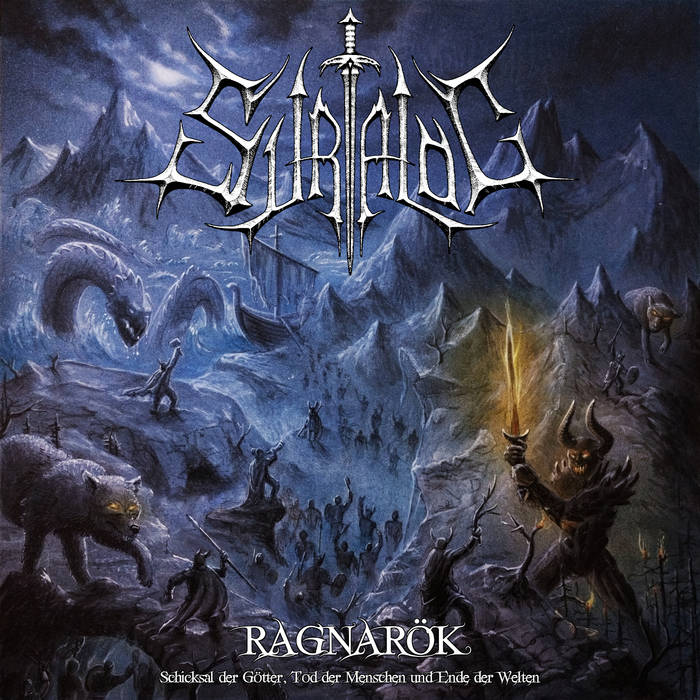
Album Review – Surtalog / Ragnarök – Schicksal der Götter, Tod der Menschen und Ende der Welten (2024)

Ragnarök is upon us all, and there’s nothing better than enjoying it to the sound of some first-class Progressive and Pagan Black Metal made in Germany.

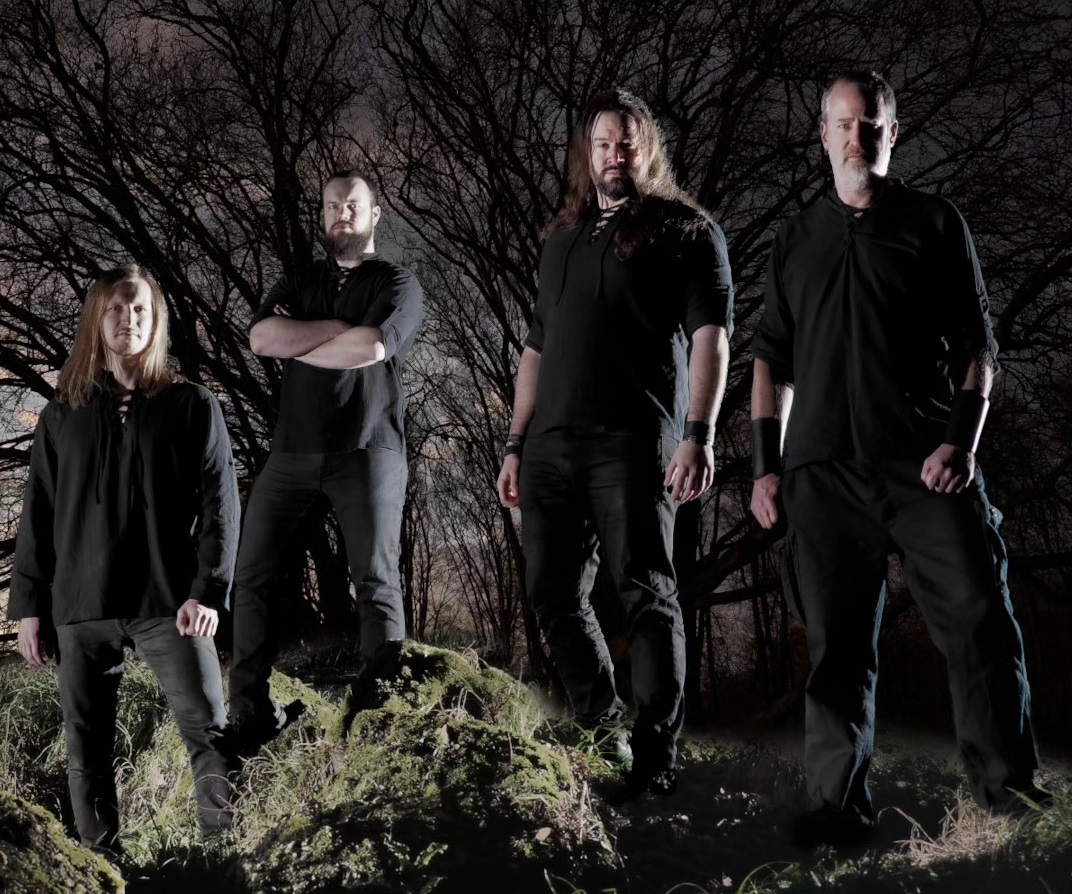
Combining storming Black Metal with progressive influences in order to create their unique sound, Cologne, North Rhine-Westphalia, Germany’s own Progressive/Pagan Black Metal horde Surtalog is unleashing upon us their new beast titled Ragnarök – Schicksal der Götter, Tod der Menschen und Ende der Welten (or “Ragnarök – Fate of Gods, Death of Men and End of Worlds” in English), a concept album about the end of the world in Norse Mythology. Recorded, mixed and mastered by Florian Dammasch at Nightside Audio, and with logo and artwork by Timon Kokott, the album is a must-listen 75-minute sonic journey for fans of bands such as Helrunar, Windir, ​Kampfar, Fimbulvet, Graveland, and Falkenbach, all masterfully crafted by Lukas “Surtuz” S. on vocals, guitars and orchestrations, Alex W. on lead guitars, Kolja “Centrox” B. on bass, and Nils “Phobos” S. on drums.

Prolog – Weissagung (“Prologue – Prophecy”) is an epic, cinematic start to the album, offering nine minutes of atmospheric passages and imposing sounds, with the guitars by Lukas and Alex exhaling heaviness and harmony while also overflowing progressiveness and intricacy, flowing into the instrumental interlude Praeludium ad Fortunam Deorum (“Prelude to the Fate of Gods”), before  exploding into I. Akt – Hass und Missgunst (“I. Act – Hate and Resentment”), with the harsh vociferations by Lukas matching perfectly with all background sounds and tones, all spearheaded by the classic drumming by Nils. Then venturing through the realms of Doom Metal, it’s time for II. Akt – Fimbulwinter (“II. Act – Awful, Mighty Winter”), offering us all 11 minutes of progressiveness, heaviness and epic passages, with the sound of their drums and riffs penetrating deep inside our minds.

After that, we have the epic interlude Heimdalls Horn Ruft Uns Nun (“Heimdall´s Horn Calls Us Now”), inviting us all to join the band into the battlefield to the sound of III. Akt – Die Letzte Schlacht (“III. Act – The Last Battle”), bringing forward 13 minutes of sheer devastation and power, with the piercing riffs by Lukas and Alex exhaling Black Metal magic supported by the rumbling bass by Kolja, with its second half being a lecture in progressiveness and experimentations. We then face the Progressive Death Metal attack titled IV. Akt – Weltenbrand (“IV. Act – Burning of Worlds”), where Nils once again sounds ruthless behind his drums; followed by Die Leere der Welten (“The Emptiness of Worlds”), offering us all four minutes of serene, melancholic sounds, albeit it could have been slightly shorter, but it does its job of prepping us for V. Akt – Untergang (“V. Act – Downfall”), a 14-minute feast of harsh vociferations, strident riffs, rhythmic beats, and a strong sense of darkness and melancholy, before all morphs into an atmospheric passage and ends in an epic and climatic manner. Lastly, hope arises in the closing song Epilog – Neubeginn (“Epilogue – New Beginning”), where a mysterious female vocalist brings joy and peace to our blackened hearts while the band delivers delicate acoustic sounds until the very last second.

In summary, the bold and multi-layered Ragnarök – Schicksal der Götter, Tod der Menschen und Ende der Welten is the perfect soundtrack for the end of the world, it doesn’t matter if in Norse Mythology or in our present-day society, and you can show your support and admiration for those Teutonic bringers of doom by following them on Facebook and on Instagram, by subscribing to their YouTube channel, by streaming their music on Spotify (or any other platform), and obviously by purchasing their new album from their own BandCamp page or by clicking HERE. Because you know, if Ragnarök is truly upon us, let it be to the sound of some first-class Progressive and Pagan Black Metal.

Best moments of the album: I. Akt – Hass und Missgunst, III. Akt – Die Letzte Schlacht and V. Akt – Untergang.

Worst moments of the album: Die Leere der Welten.

Released in 2024 Independent

Track listing
1. Prolog – Weissagung 9:06
2. Praeludium ad Fortunam Deorum 4:04
3. I. Akt – Hass und Missgunst 5:46
4. II. Akt – Fimbulwinter 11:39
5. Heimdalls Horn Ruft Uns Nun 2:31
6. III. Akt – Die Letzte Schlacht 13:01
7. IV. Akt – Weltenbrand 5:38
8. Die Leere der Welten 4:00
9. V. Akt – Untergang 14:41
10 .Epilog – Neubeginn 4:34

Band members
Lukas “Surtuz” S. – vocals, rhythm & acoustic guitars, orchestrations
Alex W. – lead guitars
Kolja “Centrox” B. – bass, backing vocals
Nils “Phobos” S. – drums, backing vocals

Album Review – Ildaruni / Beyond Unseen Gateways (2021)

A spiritual journey to the mysteries untold in the form relentless, epic Black Metal infused with ancient folk melodies, masterfully brought forth by this emerging Armenian raging force.

3.5rating

ildaruni-beyond-unseen-gateways-2021Having emerged as a raging force from the depths of the Armenian underground metal scene in 2016, Yerevan-based Pagan Black Metal horde Ildaruni (which by the way is the ancient pagan name of the second largest river that flows through Armenia, currently known as Hrazdan River) represents a blend of relentless, epic Black Metal and ancient folk melodies, forgotten from times immemorial, exploring the height of the Urartian domain through the cognitive machinations of a bygone age and the esoteric apprehension of ancient pagan occultism. Recorded by Armen Shaverdian and Mark Erskine at Armen Shaverdian’s Guitar Clinic Studio, mixed and mastered by George Emmanuel (Lucifer’s Child, Rotting Chris) at Pentagram Studio, and displaying an ominous artwork by Mark Erskine (Erskine Designs), the band’s debut opus Beyond Unseen Gateways is a hymn to the blazing light that sank into shadowy shrines, to the wild darkness that covered the debris of Ardini, and to the bygone flame that enlightened the sanctum of Haldi, introducing an authentic sound and a spiritual journey to the mysteries untold masterfully brought forth by frontman Artak Karapetyan, guitarists Robert Meliksetyan and Mark Erskine, bassist Garbis Vizoian and drummer Arthur Poghosyan.
Atmospheric and epic from the very first second, the intro Haldinini Baushini, Imsheini Tariani will transport you to the fantastic realm ruled by Ildaruni, with the tin whistle by guest Arthur Atayan adding an extra touch of mystery to their music, before Robert and Mark begin slashing their guitars in the Epic Metal tune Treading the Path of Cryptic Wisdom, presenting beautiful hints of Folk and Pagan Metal while Artak roars and growls lie a true demonic entity; followed by the also imposing Perpetual Vigil, showcasing an obscure, sinister intro led by the tribal beats by Arthur and morphing into a headbanging beast crafted by this talented Armenian horde, living up to the legacy of Melodic and Pagan Black Metal. And get ready for over eight minutes of infernal blast beats, incendiary riffs and venomous growls in the Black Metal aria Boundless Numen: Gardens of Ardini, a lecture in extreme music spearheaded by the sulfurous vociferations by Artak that will haunt your soul for all eternity.

Once again blending the epicness of Pagan Metal with the heaviness and fury of Black Metal, the quintet fires the demolishing musical journey Towards Subterranean Realms, not to mention how thunderous the bass jabs by Garbis sound in paradox with all background orchestrations; and there’s no time to breathe as those Armenian metallers keep embellishing the airwaves with their bold and dense sound in Exalted Birth, another explosion of modern-day Melodic Black Metal with the band’s guitar duo stealing the spotlight with their wicked riffage supported by Arthur Atayan’s hypnotizing bagpipes. They still have fuel for another ass-kicking Black Metal onrush entitled Arakha, with Arthur setting the tone with his tribal, massive beats, accompanied by the strident sound of the guitars and the always vile roaring by Artak, and right after an imposing and stunning start Ildaruni come ripping in Whence Ravenstone Beckons, providing us fans eight minutes of impressive Black Metal where Arthur sounds more devilish than ever on drums while also featuring guest vocals by  Anna Hovhannesyan, with the music flowing darkly until the end.

ildaruni-2021I must say that listening to Beyond Unseen Gateways is indeed a unique sonic experience, or a “spiritual journey” as the band itself mentioned, and the hybrid of Black Metal with folk elements and paganism matched flawlessly with the stories told throughout the album’s impressive 52 minutes of first-class metal music. Having said that, let’s all show our total support and respect to the guys from Ildaruni by following them on Facebook and on Instagram for news, tour dates and other nice-to-know info about the band, by streaming their awesome creations on Spotify, and obviously by purchasing a copy of Beyond Unseen Gateways from their own BandCamp page (or simply click HERE for all locations where you can buy or stream the album in full). The ominous flame now burns stronger as Iladruni have just unleashed their long-waited cryptic incantations in the form of their incendiary debut effort, appealing to fans of renowned acts the like of Kawir, Rotting Christ and Windir. And may the gates of genesis reopen and herald forth an epoch of exaltation anew.
Best moments of the album: Treading the Path of Cryptic Wisdom, Boundless Numen: Gardens of Ardini and Exalted Birth.

Worst moments of the album: Perpetual Vigil.

Released in 2021 Black Lion Records

Track listing
1. Haldinini Baushini, Imsheini Tariani 3:38
2. Treading the Path of Cryptic Wisdom 6:23
3. Perpetual Vigil 6:02
4. Boundless Numen: Gardens of Ardini 8:10
5. Towards Subterranean Realms 7:50
6. Exalted Birth 6:05
7. Arakha 6:34
8. Whence Ravenstone Beckons 7:58

Band members
Artak Karapetyan – vocals
Robert Meliksetyan – guitars, keyboards
Mark Erskine – guitars, keyboards
Garbis Vizoian – bass
Arthur Poghosyan – drums

Guest musicians
Arthur Atayan – tin whistle on “Haldinini Baushini, Imsheini Tariani,” “Treading the Path of Cryptic Wisdom,” and “Towards Subterranean Realms”, bagpipes on “Exalted Birth”
Anna Hovhannesyan – vocals on “Whence Ravenstone Beckons”

Album Review – All My Sins / Pra Sila – Vukov Totem (2018)

Immerse yourself into a work of windswept mysticism and pure pagan fury dedicated to the most important and powerful totem in the culture of southern Slavs.

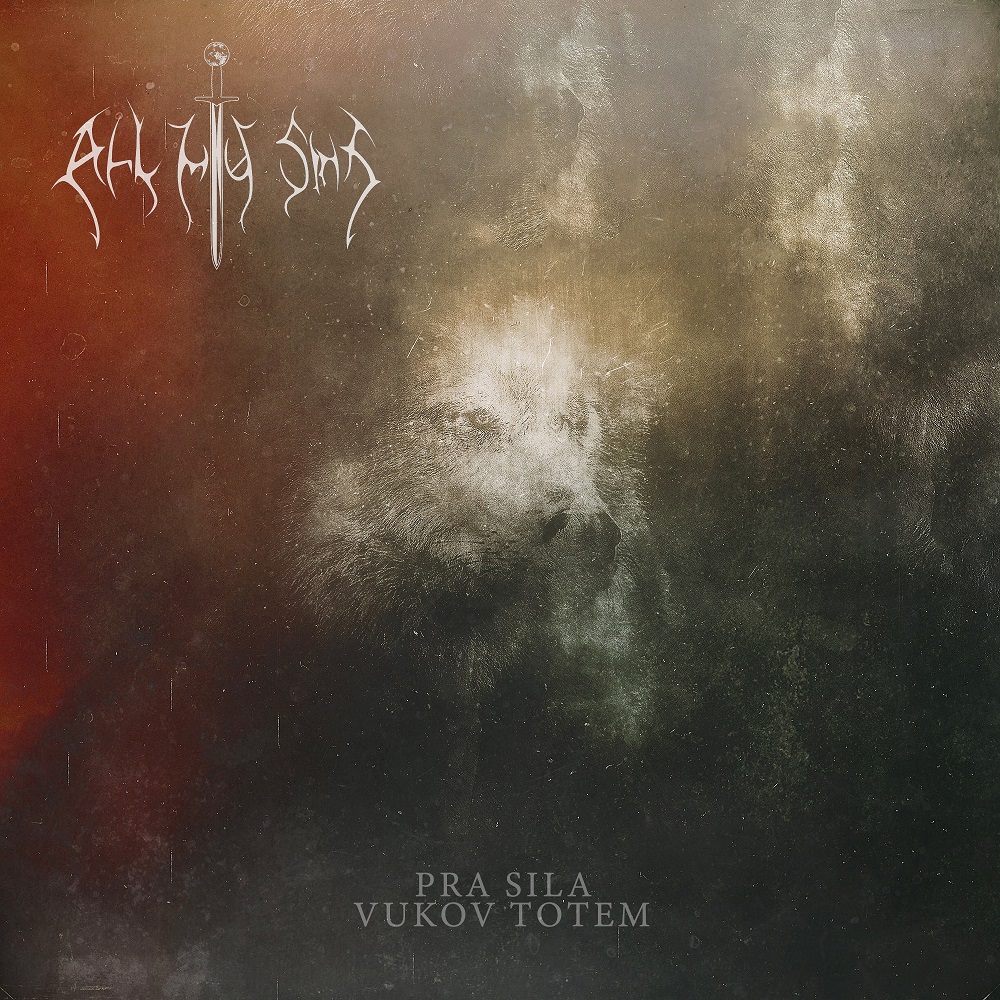
Originating from the southern regions of Europe, Serbian Black Metal duo All My Sins was officially formed by multi-instrumentalists Nav Cosmos and V in the year of 2000 in the city of Pančevo around the idea of claiming their own place among the already-established Second Wave of Black Metal. Inspired by the spiritual heritage of the land they come from, the band started making records, each of them conceptually placed around certain mythological symbols such as their brand new opus entitled Pra Sila – Vukov Totem, which would be roughly translated to English as “The Primordial Force of the Wolf’s Totem”, a work of windswept mysticism and pure pagan fury dedicated to the most important and powerful totem in the culture of southern Slavs, the wolf.

Featuring a somber cover art by Romanian musician and artist Daniel Dorobantu (Thy Veils) and guest musicians Nemir, Khargash and Jaguar (from underground Serbian bands like Obscured and Terrörhammer), All My Sins’ newborn eight-track album portrays the wolf as the ancient ancestor of Serbian people, a creature with unusual attributes that is believed to possess obscure divine powers, narrating a vast spiritual journey throughout the realms of southern Slavic mysticism. The meeting of man and wolf, mystically dangerous yet magnificent at the same time, depicts the encounter with a demonic being and concurrently the moment when a man meets his native forefather. In the world of wilderness abandoned by man, contradictory and strong, the wolf represents everything we are not, unknown and terrifying, or the perfection of a stranger.

In the opening track Vukov Totem, or “Totem of the Wolf”, a demented blast of visceral Black Metal invades our ears mercilessly, with V pulverizing his strings with his violent shredding while Nemir shakes the foundations of the earth with his blast beats before a cosmic break turns the sonic devastation into a more progressive and atmospheric extravaganza. Their incendiary feast of Slavic Black Metal goes on in Zov iz Magle, or “A Call from the Mist”, where Nav Cosmos roars and gnarls powerfully from the bottom of his blackened heart, with the entire song feeling very dense, enfolding and also bringing some deep, phantasmagorical clean vocals, while its instrumental parts remind me of old school Norwegian Black Metal; followed by Vetrovo Kolo, or “The Wheel of the Wind”, another brutal explosion of extreme sounds by All My Sins where Nemir sounds even more enraged and bestial on drums, while Nav Cosmos vociferates manically. Furthermore, the song’s razor-edged guitar riffs will violently pierce your mind and soul, leaving you completely disoriented after all is said and done. And U Mlazevima Krvi, or “In the Streams of Blood”, brings forward devastation, rage, madness and top-notch Pagan Black Metal to our ears. What else can you ask for, right? Moreover, Nav Cosmos’ deranged growls in his mother tongue end up adding an extra touch of lunacy to the overall musicality, just like what happens in the whole album.

Then it’s time to get smashed into the circle pit to the fulminating Opsena, or “The Phantasm”, showcasing almost eight minutes of crushing Black Metal with Atmospheric Black Metal nuances while V continues to brutalize his strings powerfully, with the music morphing into a completely new sonority after a cryptic, somber passage, feeling a lot more melodic and introspective. In the bridge Mesecu u Oko, or “Towards the Moon’s Eye”, wicked, Stygian noises are spiced up by Nav Cosmo’s anguished gnarls, flowing into over 10 minutes of a beyond atmospheric display of contemporary Black Metal named Konačna Ravnodnevica (Čin Prvi), or “The Final Equinox (Act I)”, sounding epic and bold from start to finish, with Nemir delivering sheer darkness through his crisp drumming, until melancholy permeates the air in Konačna Ravnodnevica (Čin Drugi), or “The Final Equinox (Act II)”, featuring guest Khargash on bass and backing vocals. This is a fantastic Atmospheric Black Metal chant infused with hints of Doom Metal, remaining as sluggish and grim as it can be and, therefore, putting a pensive ending to such demolishing album of Pagan Black Metal.

Brewing since the ancient days, Pra Sila – Vukov Totem (available for a full listen on YouTube) is now being released into the modern era with a timelessness that’s exciting to behold, and you can savor that first-class fusion of Black Metal and the Slavic culture by purchasing the album from the band’s own BandCamp page, from the Saturnal Records’ BandCamp page or webstore, from Amazon, or from Discogs. Also, don’t forget to follow the band on Facebook and on VKontakte, and immerse yourself into a sensational world of South Slavic Black Metal mysticism crafted by this talented and undisputed Serbian duo.

Best moments of the album: Vukov Totem, Vetrovo Kolo and U Mlazevima Krvi.

Worst moments of the album: Konačna Ravnodnevica (Čin Drugi).

Released in 2018 Saturnal Records

Track listing
1. Vukov Totem 9:43
2. Zov iz Magle 7:56
3. Vetrovo Kolo 6:25
4. U Mlazevima Krvi 3:52
5. Opsena 7:57
6. Mesecu u Oko 1:19
7. Konačna Ravnodnevica (Čin Prvi) 10:25
8. Konačna Ravnodnevica (Čin Drugi) 8:10

Band members
Nav Cosmos – vocals, recitals, bass
V – guitars, bass, clean and backing vocals, recitals, keys, vrg

Guest musicians
Nemir – drums (session)
Khargash – bass, backing vocals on “Konačna Ravnodnevica (Čin Drugi)”
Jaguar – backing vocals on “U Mlazevima Krvi”

Album Review – Eternal Sacrifice / Ad Tertium Librum Nigrum (2018)

Relive the glory of 90’s Black Metal by listening to “the third black book” diabolically brought into being by one of the most important names from the Brazilian extreme music scene.

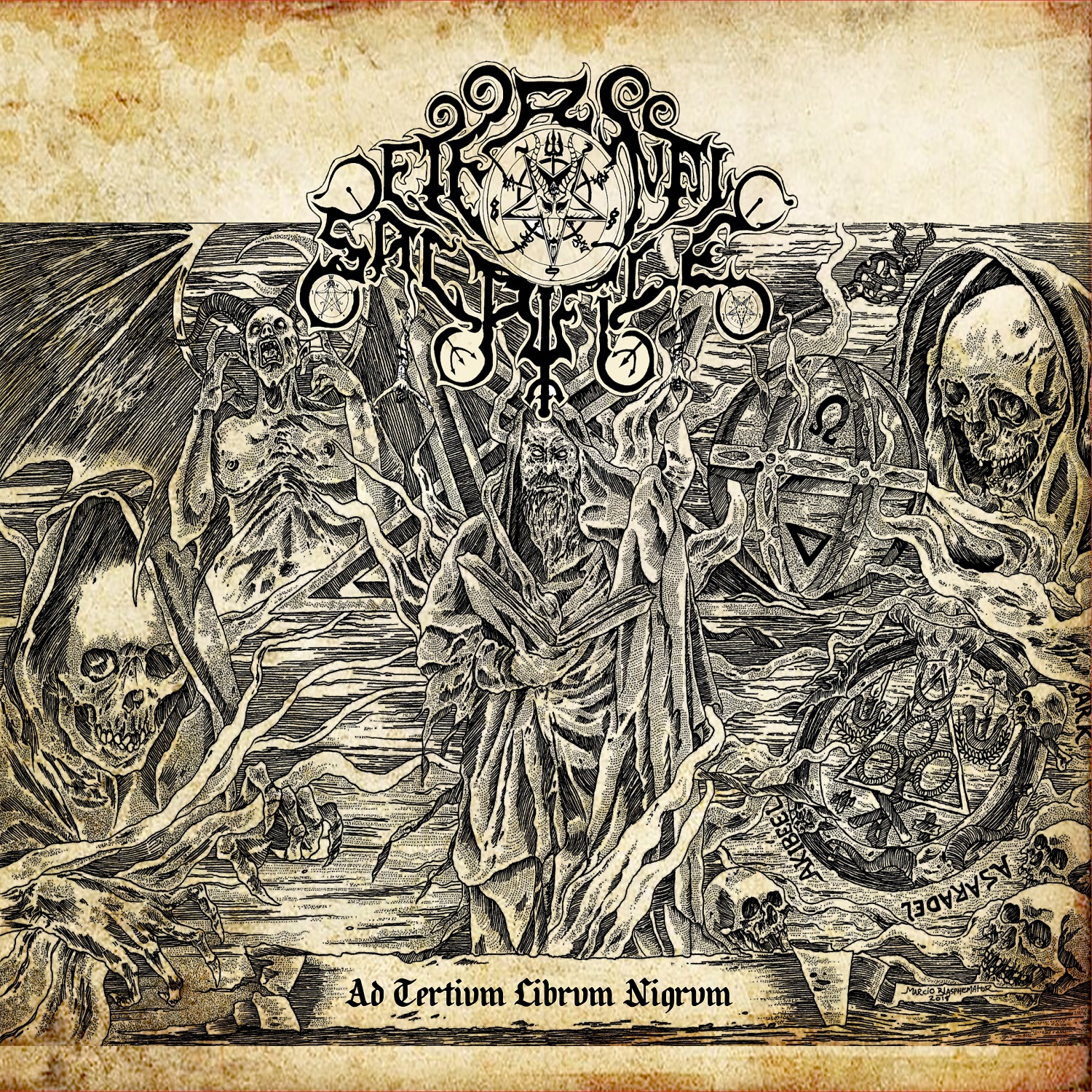
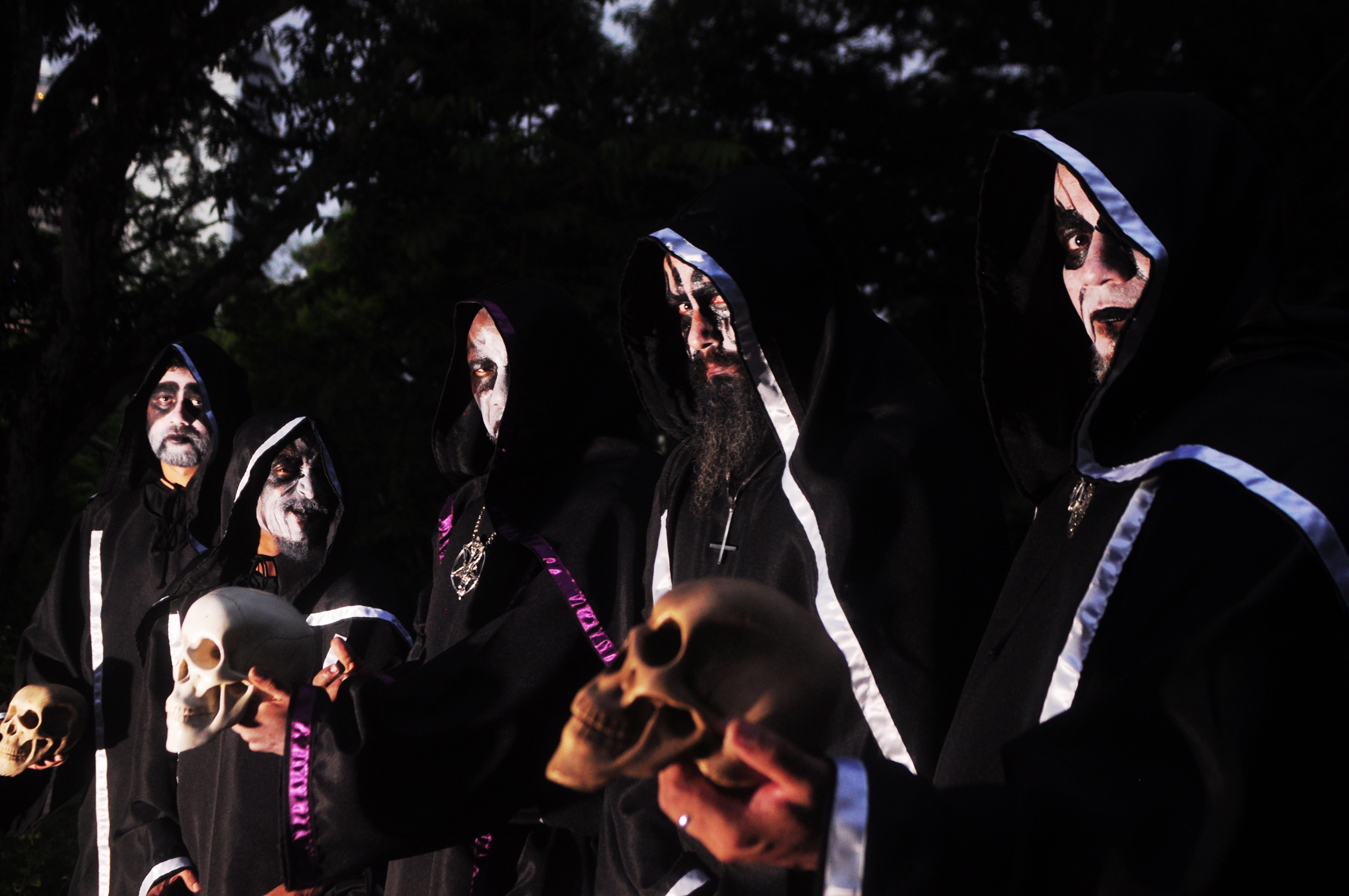
Forged in the already distant year of 1993 in the blazing fires of Salvador, the capital of Brazil’s northeastern state of Bahia, a malevolent Pagan/Black Metal unity that goes by the name of Eternal Sacrifice has been haunting our souls since their inception, aiming at delivering a detailed and obscure new concept inside the Pagan Black Metal genre and, therefore, creating their own unique sound from an amalgamation of influences and styles. Now in 2018 the horde comprised of M. T. L. H. Anton Naberius on vocals, Charles Lucxor Persponne on the guitar, Marquis Orias Snake also on the guitars and bass, Sado Baron Szandor Kastiphas on keyboards and Frater Deo Sóror Comite Ferro on drums is firing upon humanity their third concept album, entitled Ad Tertium Librum Nigrum, taking the Pagan Black Metal to a level never reached by another band in terms of sound and graphic production.

Featuring a Luciferian artwork by Brazilian designer Alan Luvarth and celebrating 25 years in the career of Eternal Sacrifice, Ad Tertivm Librvm Nigrvm, which by the way is Latin for “the third black book”, presents around one hour of malevolent sounds split into ten unrelenting new songs (all carrying fantastic names, by the way), consolidating the name of such distinct entity in the vanguard of the Brazilian Pagan Black Metal scene. “Ad Tertivm Librvm Nigrvm is the greatest proof that strength and perseverance always win; it is an album full of symbologies and spells, made exclusively for those who enjoy the songs of the left hand,” said the band’s frontman Naberius, positioning the album as an indispensable work for those who have experienced the glory of 90’s Black Metal, and for those who seek to know more about that golden age of extreme music.

Somber, smooth piano notes kick things off in the intro curiously titled Introiro, before the guitars by Charles and Orias generate an embracing atmosphere in The Three Mashu’s Seals – The Conquest of the Ganzir and Arzir Gates (Hazred Area), bringing the most melodic elements from modern-day Black Metal without losing their raw old school sonority, feeling like a hybrid of the early days of Dimmu Borgir, Cradle of Filth and Marduk, with the keys by Kastiphas adding an extra touch of malignancy to the musicality. And this Brazilian horde keeps invading our minds with their relentless and demonic music in the 8-minute Melodic Black Metal extravaganza The Vision of the Light of the Sculptures in the Monument of Mashu (The Black Book of Signs and Evil Spells), with Frater crushing his drums while Kastiphas keeps blasting ethereal sounds through his keys, all spearheaded by the Stygian and cryptic growls and vociferations by Naberius.

The Amulet, the Fire and the Seals of Wisdom in the Course of a Triple Life carries a stunning name for an Extreme Metal song, with the slashing riffs by Charles and Orias dictating its rhythm, while Naberius roars and gnarls like a true demonic entity throughout the entire song and Frater keeps the ambience as eerie and menacing as it can be with his drums. Then we have The Revelations of the First Sigil, Lucifer, After a Saga of Delusions and Battles, a mid-tempo tune where all band members fire blackened sounds and tones with highlights to the demented growls by Naberius, not to mention how in sync the band’s stringed duo is with Kastiphas’ phantasmagorical keys, and there’s no time to breathe as Eternal Sacrifice keep firing blasphemy in the form of Pagan Black Metal in When Angel of Light in Ur, in Invoking the Second Sign Agga, even more eccentric and devilish than its predecessors albeit not as gripping, despite getting back to a to a more violent and demolishing sonority in its final part.

Epic keys and guitars, unstoppable drums and a huge dosage of malignancy from Naberius’ otherworldly growls are the main ingredients in Nasha, Restitution of Double the Light (Luce) and Harmony (Fer) – Pagan’s Calls, a visceral fusion of Black and Pagan Metal setting fire to the atmosphere in a thrilling manner (not to mention how pulverizing Charles and Orias are with their infernal axes), followed by Interludium, an epic bridge that captivates our senses for their final blast of Epic and Pagan Black Metal titled The Emptiness, the Guard of the Sortileges and the Time in which the Dust Takes the Rites, starting with an acoustic guitar accompanied by the howling sound of the wind, and gradually morphing into some sort of obscure mass of old school Black Metal infused with Symphonic and Pagan Black Metal elements, with the music flowing like a frantic creature in the dark led by Naberius and his wicked vocalizations, until all fades into the Mephistophelian outro Prologum, an ode to Lucifer that puts a climatic, creepy and hellish end to such blasphemous album.

After all is said and done, Ad Tertium Librum Nigrum, available for a full listen on YouTube and on sale from the Hammer of Damnation’s BandCamp page or webstore, can indeed be considered a modern-day masterpiece in Pagan Black Metal, becoming even more important in the Brazilian scene due to the constant struggles every metal band has to face to survive in the country. Hence, don’t forget to show your support to Eternal Sacrifice by getting in touch with them through their Facebook page, by buying their new opus, and of course by enjoying reading (or I should say listening to) “the third black book” by this ruthless and demonic South American horde.

Best moments of the album: The Three Mashu’s Seals – The Conquest of the Ganzir and Arzir Gates (Hazred Area), The Amulet, the Fire and the Seals of Wisdom in the Course of a Triple Life and Nasha, Restitution of Double the Light (Luce) and Harmony (Fer) – Pagan’s Calls.

Worst moments of the album: When Angel of Light in Ur, in Invoking the Second Sign Agga.

Released in 2018 Hammer Of Damnation/Sangue Frio Records

Track listing    
1. Introiro 1:50
2. The Three Mashu’s Seals – The Conquest of the Ganzir and Arzir Gates (Hazred Area) 8:00
3. The Vision of the Light of the Sculptures in the Monument of Mashu (The Black Book of Signs and Evil Spells) 8:03
4. The Amulet, the Fire and the Seals of Wisdom in the Course of a Triple Life 6:27
5. The Revelations of the First Sigil, Lucifer, After a Saga of Delusions and Battles 5:12
6. When Angel of Light in Ur, in Invoking the Second Sign Agga 6:18
7. Nasha, Restitution of Double the Light (Luce) and Harmony (Fer) – Pagan’s Calls 7:59
8. Interludium 2:10
9. The Emptiness, the Guard of the Sortileges and the Time in which the Dust Takes the Rites 8:22
10. Prologum 3:08

Band members
M. T. L. H. Anton Naberius – vocals
Charles Lucxor Persponne – guitars
Marquis Orias Snake – guitars, bass
Sado Baron Szandor Kastiphas – keyboards
Frater Deo Sóror Comite Ferro – drums

Album Review – Isgalder / To The Hall Of The Stars EP (2018)

Enjoy the story about the journey of a man, wandering old forgotten paths in search of nature and solitude, told by a newcomer German Epic and Pagan Black Metal hailing from the Thuringian Forest.

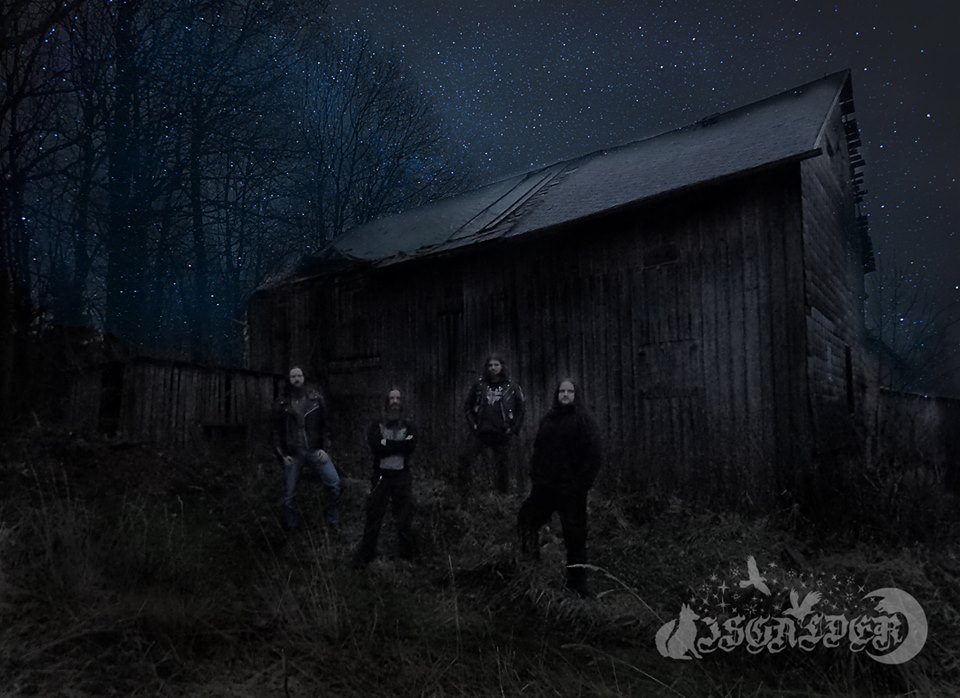
Founded in 2017 by vocalist and guitarist Grimwald (Dauþuz, Wintarnaht) and drummer, bassist and keyboardist Moppel to hail earth and iron, German horde Isgalder has just emerged from the Thuringian Forest with a splendid piece of Epic and Pagan Black Metal influenced by early Falkenbach and Bathory, titled To The Hall Of The Stars, their debut EP that tells a little story about the journey of a man (the journey to the hall of the stars), wandering old forgotten paths in search of nature and solitude. Comprised of three original songs taken from the band’s forthcoming album and alternate versions of those same songs, the EP will provide you a very good taste of what Isgalder, which by the way is Old-High-German/Germanic and means “cold incantation” or “icy chant”, are capable of. Furthermore, although Grimwald and Moppel played all instruments and vocal parts in the EP, Isgalder are now comprised of the aforementioned dynamic duo plus VRCHTR on rhythm guitar and Aussen Geist on bass, meaning we can definitely (and hopefully) expect to witness the extreme music by Isgalder be materialized in the form of one or more live concerts in the near future.

The keys by Moppel kick off the epic and imposing tune The Ravendale, bringing an interesting “duel” of clean vocals and harsh gnarls, also presenting piercing guitar lines and lyrics that exhale Folk and Pagan Metal (“On farthest shores, there rest my fate / Far from mankind, the morbid, the pale / Native is that soil; silent and primordial / Astute raven summon me, to the hidden vail / The Ravendale / Forgotten and forsaken / The Ravedale / In solitude awaken”), all topped off by a climatic finale. Elder Wisdom, a very detailed and melodic creation by the duo, already starts in full force, bringing elements from Atmospheric Black Metal to their core Pagan and Black Metal, with Grimwald growling and gnarling nonstop while Moppel delivers brutality through his beats and some sort of “peace” through his keys, all at once; and as atmospheric and dense as both previous songs, Soaring Mountains showcases an old school Black Metal base solidified by  the band’s blast beats and scorching riffs, but with a strong Pagan Metal vein present in Grimwald’s growls and Moppel’s keys. Moreover, you’ll certainly feel compelled to sing its lyrics along with Isgalder (“Great soaring Mountains / Grey stone mystic monument / Arise against the sky / Wilderness defend”).

As already mentioned, side B of To The Hall Of The Stars contains an alternative version of the EP, without keyboards, varied vocals and a different mix. For instance, The Ravendale sounds rawer and more piercing, closer to traditional Black Metal, while Elder Wisdom is even more devastating and epic and Soaring Mountains goes straight-to-the-point as well, displaying an enhanced Black Metal vibe and feeling slightly less Pagan Metal. You can compare the regular and alternate versions of each song by listening to the full EP on YouTube, and don’t forget to follow Isgalder on Facebook and on YouTube. In a nutshell, To The Hall Of The Stars (on sale at the band’s own BandCamp, at the Hellthrasher Productions’ BandCamp, at the Naturmacht Productions’ BandCamp and at the Narbentage Produktionen’s BandCamp, as well as at Discogs in CD or cassette version) is a fantastic “appetizer” to what we can expect from Isgalder when they release their first full-length opus, and as soon as that happens we will be able to happily and willingly succumb to their cold incantations.

Best moments of the album: Elder Wisdom (both regular and alternate versions).

Worst moments of the album: None.

Released in 2018 Hellthrasher Productions

Track listing
1. The Ravendale 7:06
2. Elder Wisdom 7:54
3. Soaring Mountains 5:33
4. The Ravendale (alternate version) 6:51
5. Elder Wisdom (alternate version) 7:44
6. Soaring Mountains (alternate version) 5:27

Band members
Grimwald – vocals, guitars
Moppel – bass, keyboards, drums