After a decade since the release of their critically acclaimed debut album, this Swedish Melodic Death and Black Metal horde returns with their incendiary sophomore opus.

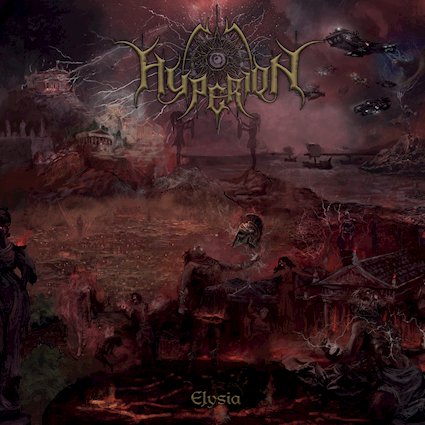 After a decade since the release of their critically acclaimed debut album Seraphical Euphony, Stockholm, Sweden-based Melodic Black/Death Metal band Hyperion is back in action with their sophomore opus, titled Elysia. Recorded between 2020 and 2023 at Wing Studios, Studio Forlorn Halls and in various private locations, mixed and mastered by Sverker Widgren between 2023 and 2024 at Wing Studios, and showcasing a sinister artwork by the always great Khaos Diktator Design, the new album by Erik Molnar on the guitars, synthesizer programming and spoken words, Joel Hagroth on the guitars and spoken words, Mikael Malm on the guitars, Raul Vicente on bass, and Mauritz Flodin on drums and orchestrations offers a barrage of guitars and symphonies of a kind that is rarely seen, but great care has been taken to make them complement each other and draw you in to discover more the deeper you get.
The beyond atmospheric and cinematic intro Rapturous Overture sets the stage for Hyperion to crush our souls in Nefarious Sacrament of the Immorals, featuring guest Johan Nephente on vocals, kicking things off with endless fury to the blast beats by Mauritz and the scathing riffage by Erik, Joel and Mikael. Fides Novem, featuring guest vocalist Elias Lyxell, keeps their Black Metal magic burning to the killer riffs and solos by the band’s guitar triumvirate, followed by Iliou Persis, with the one and only Atterigner on vocals, not to mention the battle choir brings an overdose of epicness to the music, as well as Mauritz’s infernal drums. And Paraphrosynia, featuring Karin Eriksson on vocals, brings forward 12 minutes of absolute chaos and insanity, with Karin’s vocals reminding me of old school creations by Cradle of Filth, with all guitars, bass, keys and drums sounding stunning until the very end.
Then investing in an even more demented sonority we have Perennial Transcendence, with all grim vociferations matching perfectly with the thunderous kitchen by Raul and Mauritz; and after the acoustic interlude Vigil of Longing we face the second longest song of the album, titled Epic of Tribulation, starting in a phantasmagorical manner before morphing into a grandiose Symphonic Black Metal aria led by Mauritz’s crushing drums. Furthermore, the despair and obscurity flowing from all vocals is stunning. Epoch’s Eventide also alternates between darker, doom-ish moments and the sheer aggression of Black Metal, with the synths by Erik bringing an extra kick to the overall result, before we face The Primordial Wellspring, where despite its climatic vibe, it doesn’t know if it’s a ballad, an acoustic song or a classic Symphonic Black Metal tune.
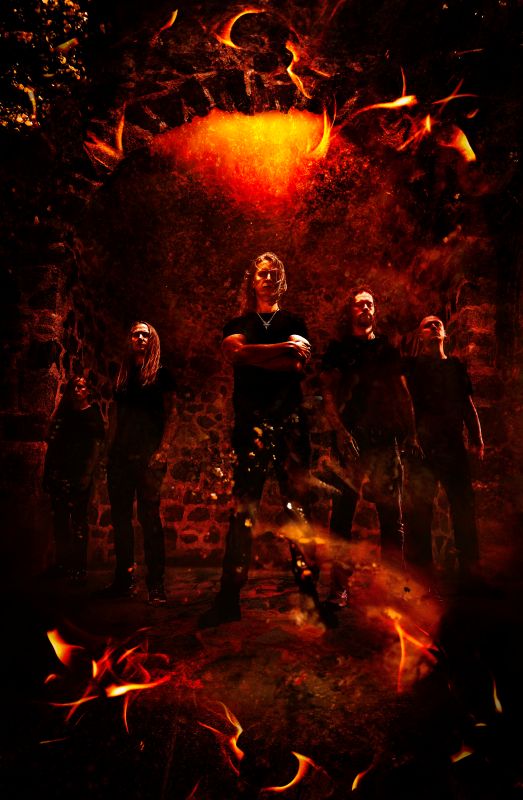
“Elysia is an explosion of intensity in all kinds of directions. To call it an ambitious album would be an understatement. Hyperion never creates music with half measures and this is the ultimate statement of that. It is different from Seraphical Euphony, but still contains the vital elements that make us what we are. To make this album a reality has been a titanic effort and we are beyond excited to finally have it released to the world,” commented the band about their incendiary newborn spawn, and if you want to know more about such a talented horde hailing from Sweden you can find those guys on Facebook and on Instagram, stream their caustic music on any platform such as Spotify, and of course, above all that, show them your total support and admiration by purchasing their new album from their own BandCamp, as well as from the Willowtip Records’ BandCamp. This is Swedish Melodic Death and Black Metal at its finest, and let’s hope it doesn’t take another ten years for Hyperion to kick our asses once again with a new album just as great as Elysia.
Best moments of the album: Nefarious Sacrament of the Immorals, Paraphrosynia and Epic of Tribulation.
Worst moments of the album: The Primordial Wellspring.
Released in 2026 Willowtip Records
Track listing
1. Rapturous Overture 2:41
2. Nefarious Sacrament of the Immorals 6:52
3. Fides Novem 8:52
4. Iliou Persis 6:39
5. Paraphrosynia 12:41
6. Perennial Transcendence 6:52
7. Vigil of Longing 1:20
8. Epic of Tribulation 10:58
9. Epoch’s Eventide 9:18
10. The Primordial Wellspring 7:22
Band members
Erik Molnar – guitars, synthesizer programming, spoken words
Joel Hagroth – guitars, spoken words
Mikael Malm – guitars
Raul Vicente – bass
Mauritz Flodin – drums, orchestrations
Guest musicians
Johan Nephente – vocals on “Nefarious Sacrament of the Immorals”
Elias Lyxell – vocals on “Fides Novem”
Atterigner – vocals on “Iliou Persis”
Karin Eriksson – vocals on “Paraphrosynia”
Erik Molnar, Joel Hagroth, Mikael Malm, Mortuz Denatus, Johan Camling & Henrik Edman – battle choir on “Iliou Persis”