With four decades of darkness behind them, these Black Metal groundbreakers return with their seventh offering, as obscure and ominous as a Norwegian forest.
With four decades of darkness behind them, Oslo, Norway’s own Black Metal groundbreakers Mayhem are celebrating an illustrious and undeniable career with their seventh studio offering, entitled Liturgy of Death. Displaying a sinister artwork by Daniel Valeriani, the follow-up to their 2019 opus Daemon sees the band formed of Attila Csihar on vocals, Teloch and Ghul on the guitars, Necrobutcher on bass, and Hellhammer on drums sounding as dark and ominous as a Norwegian forest. They’ve never been deadlier, offering their trademark hair-raising caterwauling and spectral snarls, twin guitar terrors, seventh-hell low end tunes, and ruthless drums, resulting in the band’s final and musically strongest form.
The gates to the underworld will open once again, allowing Mayhem to arise from the dead to the sound of Ephemeral Eternity, with the strident guitars by Teloch and Ghul transpiring Black Metal magic, whereas one of the singles released, titled Despair, continues the band’s Stygian path to absolute doom, with Attila’s grim vociferations matching perfectly with the band’s visceral sounds. Weep for Nothing is a lecture in classic Norwegian Black Metal, offering our putrid ears seven minutes of sonic blasphemy and hatred where Hellhammer’s massive beats are boosted by another blast of piercing riffs by Teloch and Ghul, followed by Aeon’s End, another in-your-face display of Black Metal savagery by the quintet where the demonic kitchen by Necrobutcher and Hellhammer sounds utterly thunderous.
And they keep delivering sheer hatred, despair and obscurity through their instruments in Funeral of Existence, a more cadenced but just as heavy and sulfurous tune where Hellhammer dictates the pace with his classic drumming. Realm of Endless Misery carries a poetic name for an overdose of Black Metal fury, with Attila barking and growling rabidly for our absolute delight, sounding very detailed, multi-layered, and doomed; and Mayhem show no mercy for our souls in the second to last black mass of the album, named Propitious Death, with their razor-edged riffage once again cutting our skin and making us bleed. Last but not least, get ready for one final ride to apocalypse entitled The Sentence of Absolution, starting in an obscure manner before becoming their trademark sonority, ending in a darkly tribal celebration.
Mayhem are a band dedicated to pushing the bounds of extremity itself, and Liturgy of Death is living (or maybe I should say dead) proof of that. “There’s been absolutely zero compromise,” sums up Ghul. “We really have never compromised and I never see that happening simply to try and sell records. The music is extreme. The people are extreme. Pleasing others has never been on the agenda and that’s quite apparent when you listen to our stuff or see us live. There is something there for people to grab onto and experience, but it’s not supposed to be a pleasant experience or an easy experience. It’s Mayhem.” If you also consider yourself a servant of the dark arts, you can find Mayhem and their undisputed Black Metal magic on Facebook and on Instagram, stream their music on Spotify, and of course grab a copy of their sulfurous new album from the Century Media Records’ BandCamp or webstore, or by clicking HERE or HERE. Mayhem are Black Metal, Black Metal is Mayhem, and Liturgy of Death is among us to keep that combined fire burning for centuries to come.
Best moments of the album:Despair, Weep for Nothing, Realm of Endless Misery and Propitious Death.
Worst moments of the album: None.
Released in 2026 Century Media Records
Track listing 1. Ephemeral Eternity 6:47
2. Despair 6:41
3. Weep for Nothing 7:04
4. Aeon’s End 4:56
5. Funeral of Existence 5:56
6. Realm of Endless Misery 4:57
7. Propitious Death 5:05
8. The Sentence of Absolution 7:28
Deluxe Box Limited Edition bonus tracks
9. Life Is a Corpse You Drag 5:22
10. Sancta Mendacia
Band members Attila Csihar – vocals
Teloch – guitars
Ghul – guitars
Necrobutcher – bass
Hellhammer – drums
Guest musician
Garm – vocals on “Ephemeral Eternity”
Enter the swamp of rot found in the fourth studio opus by this devilish Heathen and Nordic Black Metal horde hailing from Germany.
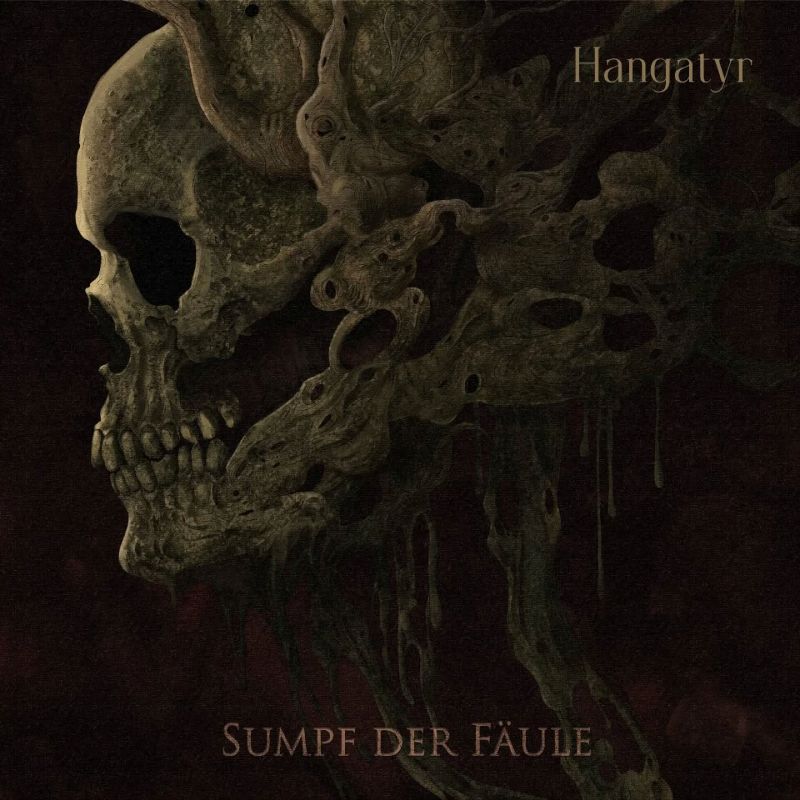
In Norse mythology, Hangatyr was one of many names for Odin, translated as the “Hanged God”, a reference to his ordeal upon the World Tree. In extreme music, Hangatyr are a Heathen/Nordic Black Metal horde hailing from Bad Sulza, a town in the Weimarer Land district, in Thuringia, Germany, inspired by German icons of the genre with nuances from 90’s Norwegian Black Metal. Now in 2025 the band currently formed of Silvio on vocals, Ali and Basti on the guitars, and Falk on bass is ready to unleash upon humanity their fourth opus, entitled Sumpf der Fäule, or “swamp of rot” from German, the follow-up to their 2020 album Kalt. Produced by Alexander Dietz (Heaven Shall Burn) at Chemical Burn Studios, and showcasing a grim artwork by Ute Ruhmann, Sumpf der Fäule sees the quartet conjure up an unmistakably unique atmosphere throughout the entire album, positioning it as a must-listen for admirers of the black arts.
After a Stygian intro the music explodes into grandiose Black Metal in Sumpf der Fäule, where you can sense their Pagan and Nordic Black Metal influences in the riffage by Ali and Basti; whereas Eine Wahrheit (“one truth”) already starts in full force to its crisp, scorching riffs and blast beats, while Silvio roars and gnarls nonstop in the name of extreme music, exhaling 90’s Black Metal for our vulgar delectation. Leichenmahl (“funeral feast”) is a bit slower yet still venomous and harsh, darkening the skies to the devilish screams by Silvio while all instruments sound as heavy and grim as possible, followed by Es webe Nacht (“let the night weave”), another song that transpires Heathen Black Metal, inspiring us to raise our horns to the band spearheaded by the striking guitars by Ali and Basti. Then leaning towards classic Norwegian Black Metal we have Fatales Gedeih (“fatal prosperity”), showcasing how versatile the band can be inside the broader genre, with Falk making the earth tremble with his bass; and ending the album the quartet offers another bold and dense Black Metal aria titled Dämmerung (“twilight”), spreading absolute darkness until all fades into a melancholic grand finale.
Overflowing heaviness and sheer intensity in all of its six biting songs with abysmal atmospheres, Sumpf der Fäule is highly recommended for fans of early Enslaved, Helheim, and Helrunar, among several other Heathen and Nordic Black Metal hordes out there, and if you want to get in touch with those talented and hardworking Teutonic black metallers you can find them on Facebook and on Instagram, stream their music on Spotify (only the album Kalt at the moment, by the way) or on BandCamp (all of their already released albums), and soon grab your copy of their newborn spawn from the same BandCamp. In other words, it’s time to enter the swamp of rot offered by Hangatyr in their new album, letting their festering, devilish sounds penetrate deep inside your putrid skin in the name of our beloved Black Metal.
Best moments of the album:Sumpf der Fäule and Es webe Nacht.
Worst moments of the album: None.
Released in 2025 Independent
Track listing 1. Sumpf der Fäule 7:46
2. Eine Wahrheit 5:35
3. Leichenmahl 6:51
4. Es webe Nacht 6:29
5. Fatales Gedeih 6:38
6. Dämmerung 10:00
Band members Silvio – vocals
Ali – guitar
Basti – guitar
Falk – bass
The debut album by this Norwegian Black Metal horde will attack your senses mercilessly, unveiling the inherent ‘evil’ embedded in organized religions.
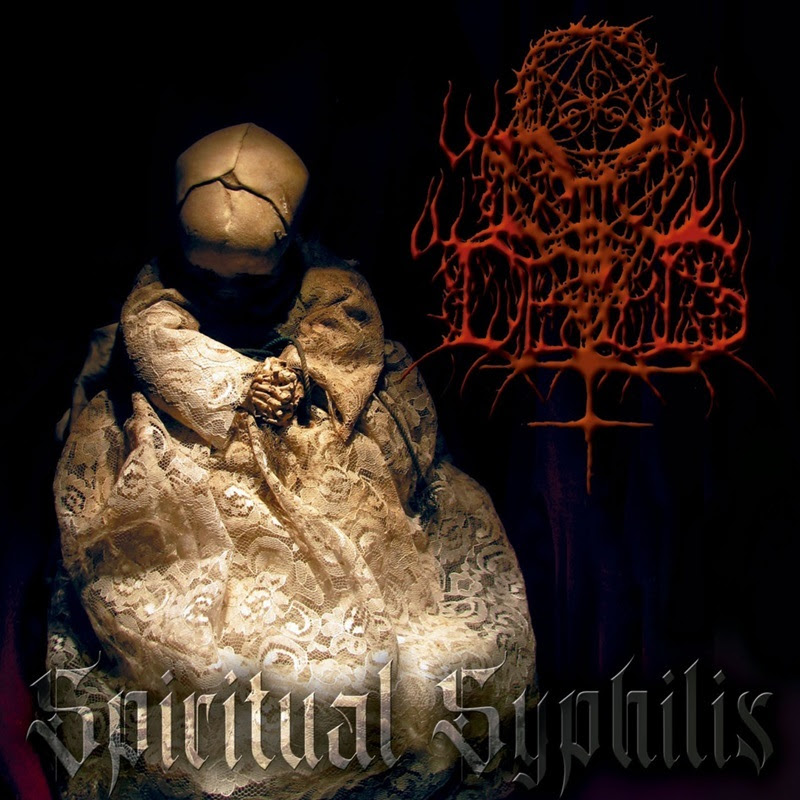
Meticulously crafted for approximately two years, evolving from a mere idea to a finished product, Spiritual Syphilis, the debut opus by Oslo, Norway-based Black Metal horde Odio Deus, unveils the inherent ‘evil’ embedded in organized religions, particularly those led by fanatical leaders. Presenting a fusion of traditional Norwegian and Swedish Black Metal heavily influenced by the American Death Metal scene, Spiritual Syphilis is a beast of an album brought into being by Braatebrann on vocals, guitars and bass, Winterheart on the guitars, and the band’s mastermind Telal on drums and bass, or in other words, a collaborative effort with all three members working in unison from inception to completion, being highly recommended for all fans of old school Black and Death Metal.
As soon as you hit play, an ominous start suddenly explodes into chaotic, fierce Black Metal led by the demented drumming by Telal in Curse of Jehovah, definitely not recommended for the lighthearted, setting fire to the atmosphere before the sulfurous The Con Man makes things even more scorching, with Braatebrann’s harsh, devilish vocals being an ode to classic Black Metal. After such an explosive song we have The Chosen People, a massive Black Metal onrush by Odio Deus in the vein of Behemoth where Braatebrann sounds inhumane on vocals, exhaling rage, darkness and evil, whereas the title-track Spiritual Syphilis will smash you like a putrid insect, with Telal crushing his drums mercilessly in an amazing display of both classic and modern-day Melodic Black Metal.
Then the slashing riffs by Braatebrann and Winterheart set the tone in Deceiver, another solid composition by the trio that should work really well if played live; and leaning towards a darker, doomed version of Black Metal, we’re treated to Lenkene er brutt, which means “the chains are broken” from Norwegian, keeping the album at a high level of obscurity thanks to all demonic sounds blasted by the band. Svik, the Norwegian word for “betrayal”, brings forward more of their caustic riffs and hammering drums, with Braatebrann once again leading his horde with his devilish, grim roars and gnarls, whereas Glossolalia is by far the heaviest of all songs thanks to the brutal bass lines by Braatebrann and the always pounding drums by Telal, switching gears to a venomous Black Metal sound halfway through it, therefore resulting in a complete aria. And lastly, Til evig tid, or “for eternity” in English, sounds haunting and multi-layered, albeit not as exciting as the other songs, also presenting a way too lengthy ending but still being very enjoyable.
In a nutshell, Odio Deus simply nailed it with Spiritual Syphilis, with everything related to the album, from its title to its artwork, from its lyrics to its violent and caustic music, perfectly representing all the evil that religion does to mankind. Hence, don’t forget to start following the band on Facebook if you also believe fanatic religion leaders will bring humanity to its downfall, and also to grab a copy of the album from Amazon (and soon from other sources). Odio Deus can be translated from Latin as something like “I hate God”, and that’s exactly what the band proposes with their music, staying true to Black Metal not only regarding its sound, but also its principles, all beautifully offered to us all in the form of Spiritual Syphilis.
Best moments of the album:The Con Man, Spiritual Syphilis and Glossolalia.
Worst moments of the album:Til evig tid.
Released in 2024 WormHoleDeath
Track listing 1. Curse of Jehovah 6:23
2. The Con Man 5:49
3. The Chosen People 4:22
4. Spiritual Syphilis 4:47
5. Deceiver 4:07
6. Lenkene er brutt 4:47
7. Svik 5:44
8. Glossolalia 4:36
9. Til evig tid 6:40
Band members Braatebrann – vocals, guitars, bass
Winterheart – guitars
Telal – drums, bass
This legendary horde is finally back with a new opus, a must-listen for admirers of old school Norwegian extreme music and a serious contender for Black Metal album of the year.
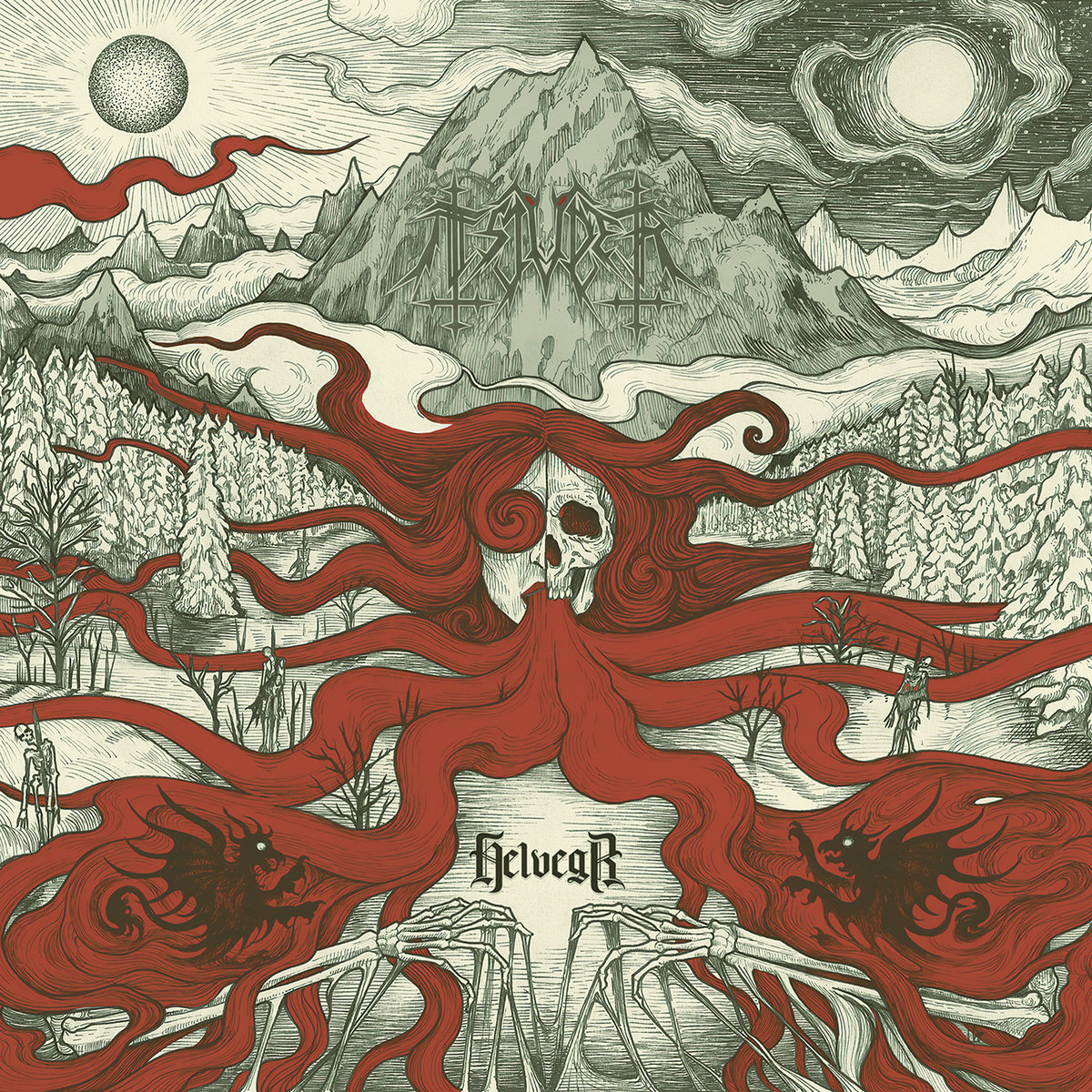
The path to the underworld is open once again as Oslo, Norway’s own Black Metal legends Tsjuder are back in action with a sulfurous new opus, titled Helvegr, which by the way means “Path to the Underworld” or “Road To Hel”, their sixth studio album and the perfect follow-up to their 2015 effort Antiliv. Known best for their relentless, aggressive approach to Black Metal, Tsjuder have been responsible for some of the most hate-filled ferocity perpetrated under the banner of True Norwegian Black Metal since their inception in 1993, with the iconic Nag on vocals and bass, and Draugluin on the guitars, supported by drummer Jon “The Charn” Rice, taking their darkness to a whole new level in Helvegr. Not only that, the mixing and mastering by Pål Emanuelsen at North Waves Studios, plus the wicked artwork by Jonas Svensson and Laura Nardelli, turn it into a must-listen for admirers of old school Norwegian extreme music, and into a serious contender for Black Metal album of the year.
The opener Iron Beast brings forward absolute madness and hatred from the very first second, while Nag screams the song’s infernal lyrics manically (“Black metal razor blades / Fifty cal hellraiser / Barbed wire wrapped / Diesel monster unleashed / Aw, come on! Raise Hell!”) in a lecture in Norwegian Black Metal; whereas the caustic riffage by Draugluin and the brutal drums by Jon will crush your damned body to pieces in Prestehammeren (or “the priest’s hammer” from Norwegian), a fast and demented display of Black Metal by Tsjuder that will please all fans of the genre. Then a melodic, sinister start evolves into another sonic beast entitled Surtr, with the blast beats by Jon bringing sheer aggressiveness to their sound while Nag continues to vociferate like a demonic entity. There isn’t a single second of peace in Gamle-Erik (or “Old Erik”), featuring a guest guitar solo by Pål Emanuelsen, with Nag once again sounding inhumane on vocals as well as armed with his thunderous bass lines while Draugluin slashes his guitar in the name of Black Metal; and Chaos Fiend is as chaotic as its name states, with Jon hammering your skull with his vile drumming, offering Nag everything he needs to darkly growl and snarl in another fantastic depiction of first-class Norwegian Black Metal.
Tsjuder Tribute to Bathory Scandinavian Black Metal Attack
Featuring guest vocals by Seidemann (of 1349 and Mortem), Gods of Black Blood offers another round of Tsjuder’s hellish words (“We stride triumphant, Hellspawned Demon Lords / Trampling the fallen, Violated agonized wailing / Worldgrinders, necrotic sovereigns”) while the music once again exhales Black Metal; and after such intense, darkened feast, it’s time for the grim and phantasmagorical title-track Helvegr, leaning towards Doom Metal and even Blackened Doom, sounding, sluggish, evil and melodic from start to finish. Then back to their more ferocious and satanic mode we have Faenskap og Død (“hell and death”), a hurricane of Black Metal masterfully crafted by Tsjuder where the razor-edged riffs by Draugluin will pierce your mind and soul mercilessly. Lastly, the doomed Hvit Død (“white death”) is not a bad outro, but it takes away some of the fire and electricity from the album. In other words, it could have been placed before the previous song as an intro to give it a stronger meaning. Furthermore, if you go for one of the special or deluxe editions of the album you’ll be treated to the bonus disc Tsjuder Tribute to Bathory Scandinavian Black Metal Attack, a killer EP that is definitely worth the extra money, beautifully representing Tsjuder’s respect and admiration for one of the pillars of Norwegian Black Metal, with their cover version for Satan my Master being absurdly awesome.
In case you want to give Helvegr a try before purchasing it, you can stream the album in full on YouTube and on Spotify, but I bet you’ll get addicted to their music and grab your favorite version of the album from the band’s own BandCamp page, from Season of Mist in Europe or in the US (and if I were you I would go for the LP box + digital or for the digibox + digital as both come with some fantastic items including the aforementioned EP), or by clicking HERE or HERE. Don’t forget to also follow such imposing Norwegian horde on Facebook and on Instagram for news, tour dates and so on, and to stream their entire catalogue on Spotify. We’ll undoubtedly see Helvegr as part of most “top metal albums of the year” lists this year, and of course in almost all “top Black Metal albums of the year” lists, reinforcing the power, impact and importance of Tsjuder to the entire metal scene, and leaving us all eager for their next blast of Black Metal magic in a not-so-distant future.
Best moments of the album:Iron Beast, Prestehammeren, Chaos Fiend and Gods of Black Blood.
Worst moments of the album:Hvit Død.
Released in 2023 Season of Mist
Track listing 1. Iron Beast 3:37
2. Prestehammeren 4:01
3. Surtr 6:59
4. Gamle-Erik 3:46
5. Chaos Fiend 4:02
6. Gods of Black Blood 5:19
7. Helvegr 7:36
8. Faenskap og Død 3:08
9. Hvit Død 2:52
Tsjuder Tribute to Bathory Scandinavian Black Metal Attack bonus disc 1. The Return of Darkness and Evil 4:53
2. Satan my Master 2:02
3. Born for Burning 5:11
4. Reaper 2:33
5. Raise the Dead 3:53
Band members Nag – vocals, bass
Draugluin – guitars, backing vocals
Jon “The Charn” Rice – drums
Guest musicians Pål Emanuelsen – guitars solo on “Gamle-Erik”
Seidemann – additional vocals on “Gods of Black Blood”
This Czechia-based duo will darken your hearts and souls to the sound of their debut effort, exhaling the rawest and most primeval form of Black Metal.
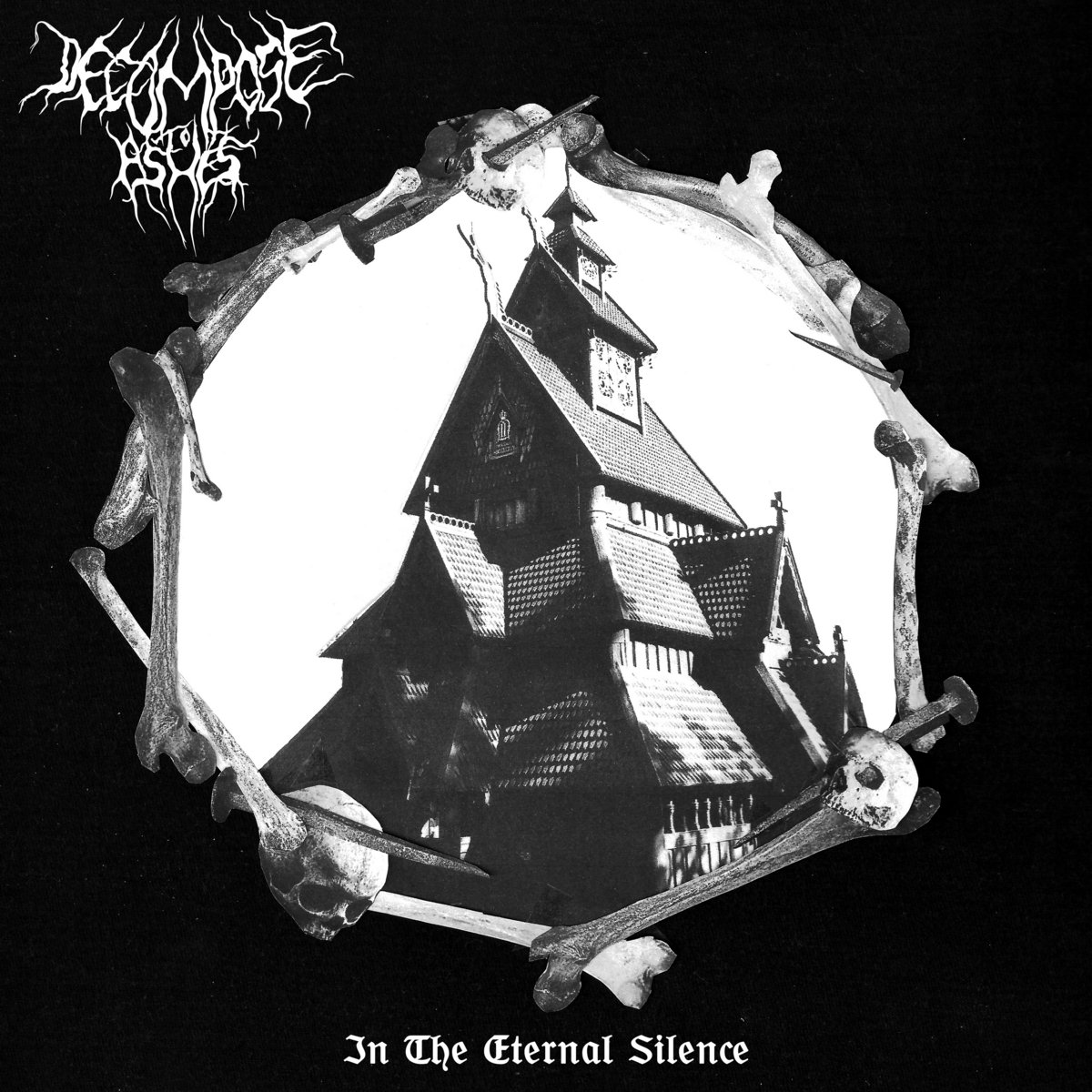
Formed in 2022 in Děčín, a city in the Ústí nad Labem Region of the Czech Republic (or Czechia if you prefer), and highly influenced by old school Black Metal bands from the 90’s such as Mayhem, Burzum, Immortal and Darkthrone, the ruthless Black Metal/Ambient duo Decompose To Ashes is unleashing upon humanity their debut EP, titled In The Eternal Silence, showcasing all the talent and hatred by vocalist and multi-instrumentalist Wlad and drummer Leviathan. Recorded in the summer of 2022 in Oslo, Norway and in Děčín, and mastered by Honza Kapák at Hellsound Studio, the album focuses on religion, nature, and even on the Helvete record store (currently named Neseblod Records), the record shop and unofficial metal museum in Norway’s capitol city that is also central in many regards to the early history of Black Metal, first opened in June 1991 by the late and now-infamous guitarist Euronymous (of Mayhem), showing how much 90’s Black Metal is essential in the lives of the band’s duo.
The opening track Dark Clouds is absolutely infernal form the very first second, living up to the legacy of the early days of Norwegian Black Metal with Leviathan hammering his drums mercilessly while Wlad gnarls the song’s lyrics in the name of evil (“The sun at the end of summer / It’s trying to defeat the clouds / Faint sun beams are falling on the rocks / And the sun loses to cold”), whereas Stavkirke is as demonic as the opening tune, with the duo dragging our souls into pitch black darkness with their insane riffage and blast beats. Then after the short and sweet instrumental interlude The Eternal Silence, it’s time for Wlad’s personal tribute to Euronymous titled Helvete, with his otherworldly riffs and vicious screeches adding an extra touch of obscurity to the overall result in a lecture in classic Black Metal. Black Blood showcases vile, sulfurous lyrics (“Angels who never loved you will leave / The wind from their wings will shut your eyes / White feather stained by your black blood”) while Leviathan makes the earth tremble with his devilish beats, flowing into the closing instrumental tune Water, Trees and Animals, an Ambient-infused composition that will bring some peace to your damned soul.
Such sulfurous Black Metal duo from Czechia doesn’t have Facebook, Instagram, nor any other type of social media, but that’s not a problem at all. For instance, you can find their demonic debut effort for purchase from BandCamp and, therefore, show all your support to the rawest and most primeval form of extreme music without having to worry about giving “likes” to anything. In The Eternal Silence is indeed a great homage to the early days of Black Metal, and the main reason for it is that Wlad and Leviathan put their (blackened) hearts and souls into the making of the album while always remaining loyal to the foundations of the genre and to their own principles. That’s exactly how first-class Black Metal is born.
Best moments of the album:Dark Clouds and Helvete.
Worst moments of the album: None.
Released in 2023 Independent
Track listing 1. Dark Clouds 4:17
2. Stavkirke 4:53
3. The Eternal Silence 0:56
4. Helvete 4:49
5. Black Blood 4:16
6. Water, Trees and Animals 3:49
Band members
Wlad – vocals, guitars, bass
Leviathan – drums
The new EP by this UK Atmospheric Black Metal entity depicts a time when the primeval forest swathed their homeland in arboreal splendor, enfolding the listener in layers of dream and memory.
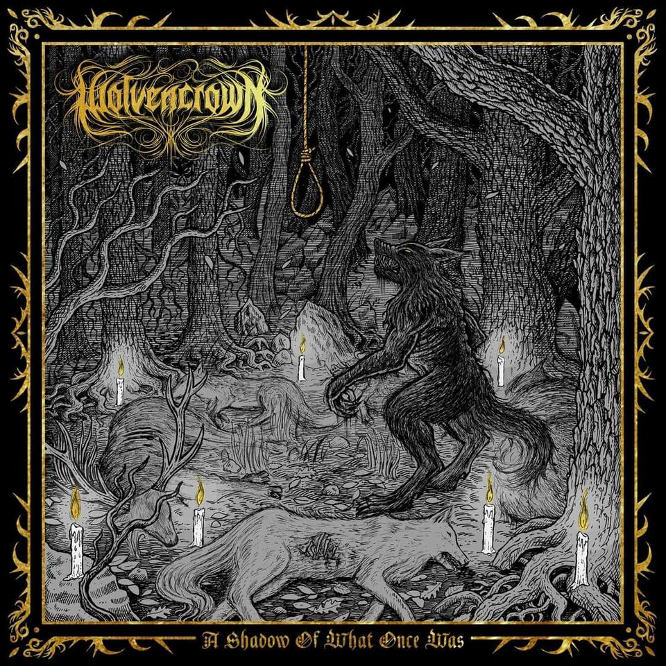
Following up on the success of their 2019 critically acclaimed album Of Bark And Ash, Nottingham, England-based Atmospheric Black Metal horde Wolvencrown returns with a three-track EP titled A Shadow Of What Once Was, building upon the dynamic melodies and rich atmosphere of their debut opus. Showcasing a stunning artwork by Spanish illustrator Joan Llopis Doménech (Lustre, Sojourner, Ruadh), A Shadow Of What Once Was enfolds the listener in layers of dream and memory, summoning the scent of fallen leaves, the touch of evening mists and the howl of the pack upon the cold night breeze, all accompanied by the enthralling sounds crafted by vocalist and guitarist Nick, guitarist Jack, bassist Reece, keyboardist Will and drummer Matt. In other words, this is a release to be cherished, a dark treasure to uncover, a chance meeting upon a midnight path with long dead kings whose shades are swift of foot and sharp of tooth.
And they don’t waste a single second and begin blasting unfiltered, no shenanigans Atmospheric Black Metal in A Shadow Of What Once Was pt.1, with Nick roaring and slashing his strings at the same time accompanied by the Doom Metal beats by Matt, not to mention the phantasmagorical keys by Will while also presenting elements from classic Norwegian Black Metal. Then we have A Shadow Of What Once Was pt.2, the second part of this multi-layered extravaganza that is just as imposing and grandiose as its first act, with Will and Matt darkening the skies with their wicked keys and beats while Nick, Jack and Reece make an infernal stringed triumvirate, resulting in a captivating fusion of obscurity and madness with beautiful and atmospheric passages. Last but not least, get ready for over seven minutes of ethereal instrumental Atmospheric Black Metal made in the UK in Coming To An End, bringing forward a sinister Cradle of Filth-inspired vibe led by Will’s classy keys and the minimalist, tribal beats by Matt, therefore feeling like the soundtrack to a creepy horror movie.
After listening to their debut self-titled EP, to Of Bark and Ash, and now to A Shadow of What Once Was, I must say it’s truly impressive what the guys from Wolvencrown are capable of offering us fans of extreme and atmospheric music without sounding outdated or cheesy; quite the contrary, those UK metallers are always reinventing themselves and surprising us with new sounds, elements and nuances added to their core Atmospheric Black Metal. Hence, don’t forget to give them a shout on Facebook, and to grab your copy of A Shadow of What Once Was from their own BandCamp page or from Clobber Records in CD or cassette format or as a special bundle that comes with their 2017 debut self-titled EP. For some bands an EP might represent a stop gap release, a time filler between the serious business of full-length albums, but for this skillful UK band A Shadow of What Once Was represents a doorway to new visions, a fresh opportunity to explore and create something vital, alive and utterly essential, depicting a time when the primeval forest swathed their homeland in arboreal splendor.
Best moments of the album: A Shadow Of What Once Was pt.2.
Worst moments of the album: None.
Released in 2021 Clobber Records
Track listing 1. A Shadow Of What Once Was pt.1 5:22
2. A Shadow Of What Once Was pt.2 5:44
3. Coming To An End 7:04
Band members Nick – vocals, guitars
Jack – guitars
Reece – bass
Will – keyboards
Matt – drums
Dark, diabolical, and majestic while taking a fresh look into 90’s Greek Black Metal with a nostalgia of the past and a twist into the future. That’s what these infernal veterans have to offer in their newborn spawn.
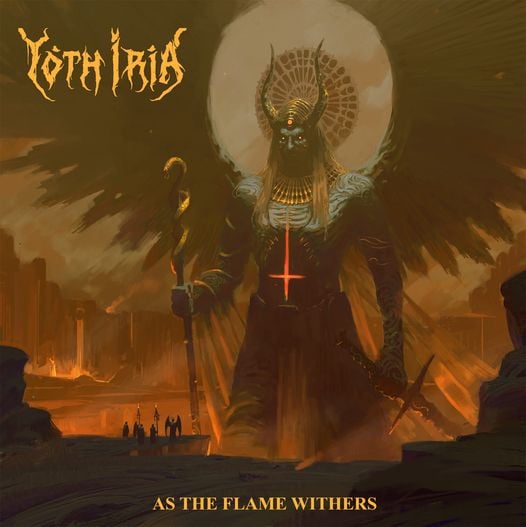
Forged in the fires of Athens, Greece in 2019 by bassist Jim Mutilator, a founding member of legendary Greek Black Metal band Rotting Christ, and vocalist The Magus, who formed Necromantia in 1989 together with Baron Blood (R.I.P.), one of the most influential and avantgarde bands of the scene, Hellenic Black Metal outfit Yoth Iria is an amalgam of the influences and visions of its creators, sounding dark, diabolical, emotional, powerful and majestic while taking a fresh look into 90’s Greek Occult Black Metal with a nostalgia of the past and a twist into the future. Now in 2021, the duet which developed and pioneered the underground scene back in the day is ready to crush our souls with their first full-length album, titled As The Flame Withers. Recorded, mixed and mastered at Pentagram Studio by Yoth Iria and George Emmanuel (Rotting Christ, Septicflesh, Lucifer’s Child), and displaying a Stygian artwork by Indian artist Harshanand Singh, As The Flame Withers represents everything this primeval entity stands for, supported by guest musicians George Emmanuel on the guitars, John Patsouris on keys and J.V. Maelstrom (Dephosphorus, Nigredo) on drums, dragging the listeners into the pits of the underworld and keeping them there forever in pitch black darkness.
The Children of Bodom-inspired riffage by George kicks of the melodic and infernal The Great Hunter, bringing to our ears old school Norwegian Black Metal blended with the epicness of Behemoth and Rotting Christ, whereas mesmerizing, imposing sounds permeate the air in the insane title-track Yoth Iria, showcasing beyond obscure lyrics growled by The Magus (“For aeons he laid dormant / speaking through dreams / conspiring in visions / watching from his Throne / Arch-Priest and King / of the Seven Hells / The Highest of Angels / the Brightest of them all”) while his bandmates keep the atmosphere as heavy and somber as possible. Then it’s time for George and Jim to slash their respective guitar and bass in the very melodious but of course heavy-as-hell Hermetic Code, a very atmospheric creation by the band offering our ears a good dosage of Doom Metal added to their core ferocity; and arising from the pits of the underworld like a demonic entity, The Magus and Jim bring forward Demonaz-inspired vocalizations and dirty, rumbling bass lines in The Mantis, with the background keys by John Patsouris sounding insanely epic while J.V. Maelstrom hammers his drums mercilessly.
In the excellent The Red Crown Turns Black we face more of their blasphemous lyrics (“From the deserts of Saturn / and the depths of the Abyss / the General of Chaos / the Devourerof Souls”) while the music sounds like a demonic fusion of Behemoth, Immortal and Children of Bodom, with George being once again sensational with his wicked riffs and solos, and rocking guitars and classic beats ignite the Stygian extravaganza titled Unborn, Undead, Eternal, reminding me of some of the most recent creations by Rotting Christ, with The Magus gnarling like a creature from the netherworld nonstop. The second to last explosion of their Ritualistic Black Metal comes in the form of Tyrants, where The Magus’ roars are effectively supported by the hellish kitchen by Jim and Maelstrom, resulting in another doomed, thunderous aria blasted by this talented Greek horde, while Jim continues to smash his bass in the closing tune The Luciferian, accompanied by the grim guitars by George. Once again blending old school Black Metal with Doom Metal and more contemporary styles, the song unfortunately loses its grip after a while, albeit nothing that could do any harm to such powerful album.
In the end, As The Flame Withers, which is by the way available for a full listen on YouTube, is exactly what such prominent duo from the Greek Black Metal scene is saying the album is, an ode to the early days of the genre without sounding outdated, tiresome nor bland at all. Hence, if you want to explore their obscure realm in more detail and stay updated with all things Yoth Iria, you can start following the band on Facebook and on Instagram, and of course purchase your copy of As The Flame Withers from the Pagan Records’ BandCamp page or webstore (including the CD and black LP versions of the album), as well as from Record Shop X. It’s indeed a true pleasure witnessing two trailblazers of the Greek Black Metal scene generating such infernally dark music with so much punch and potency even after all these decades on the road, proving once again extreme music can be a true fountain of youth for many, while the flames of Black Metal keep burning the souls of the unbelievers for all eternity.
Best moments of the album: Yoth Iria, The Mantis and The Red Crown Turns Black.
Worst moments of the album:The Luciferian.
Released in 2021 Pagan Records
Track listing 1. The Great Hunter 4:24
2. Yoth Iria 5:41
3. Hermetic Code 6:34
4. The Mantis 7:19
5. The Red Crown Turns Black 6:26
6. Unborn, Undead, Eternal 5:14
7. Tyrants 4:51
8. The Luciferian 6:32
Band members The Magus – vocals
Jim Mutilator – bass
Guest musicians George Emmanuel – guitars (session)
John Patsouris – keys (session)
J.V. Maelstrom – drums (session)
One of Sweden’s most infernal Black Metal hordes has finally returned from their respite, ferocious and hungry with their seventh full-length opus.
It has been eight long years between releases for Umeå, Sweden’s Black Metal nihilists Naglfar, but despite the wait the band hasn’t been resting on their laurels. Like any slumbering beast, Naglfar have returned from their respite, ferocious and hungry with their seventh full-length album Cerecloth, bringing their usual destruction to fans all around the world. Recorded and mixed by the band’s own guitarist Marcus E. Norman at Wolf’s Lair Studio, mastered by Dan Swanö at Unisound, and featuring a cadaverous artwork by Jan Kristian Wåhlin, the underlying musical and lyrical themes of Cerecloth were succinctly and confidently described by guitarist Andreas Nilsson as “the usual death and destruction”. Currently formed by the aforementioned guitarists Andreas Nilsson and Marcus E. Norman, as well as frontman Kristoffer W. Olivius and guests A. Impaler (aka Alex Friberg) from Firespawn on bass and Efraim Juntunen from Guillotine and Persuader on drums, Naglfar sound tighter and more Stygian than ever in Cerecloth, positioning the album as one of the best releases of the year in the world of extreme music.
Cryptic, eerie noises from the depths explode into Naglfar’s infernal Black Metal in the opening track Cerecloth, where Efraim proves why he was chosen to join the band in this album while Kristoffer vociferates from the bottom of his blackened heart nonstop. In other words, what a fantastic start to the album, and continuing to pave their path of obscurity and horror the band fires the classic Norwegian Black Metal hymn titled Horns, with both Andreas and Marcus sounding utterly hellish with their riffs and solos while A. Impaler’s bass punches darkly reverberate in the air. Then thunderous bass sounds and a phantasmagorical atmosphere kick off the heavy-as-hell Like Poison for the Soul, where the acid words growled by Kristoffer will burn your ears (“So my path is chosen / No more false affinity / The time has come to leave / Your worth are the equivalent of a dead insect to me / Indifference be my name”) in a lesson in old school Black Metal with melodic nuances.
Vortex of Negativity is another hurricane of darkened riffs, blast beats and endless violence led by the strident guitars by Andreas and Marcus, supported by the pulverizing drums by Efraim and, therefore, being tailored for fans of the genre, whereas in Cry of the Serafim the band blends the piercing sounds of the early days of Norwegian Black Metal with contemporary Melodic Black Metal, with Kristoffer sounding inhumane with his gnarls and roars, all boosted by the intricate beats by Efraim. After such demonic onrush of sounds we have The Dagger in Creation, a bestial tune offering us all pure, undisputed Black Metal that will pulverize your senses spearheaded by the razor-edged riffs by the band’s infernal guitar duo, while A. Impaler and Efraim generate a sonic earthquake with their respective weapons.
A Sanguine Tide Unleashed brings to our putrid ears one more round of infuriated lyrics (“Men of Isa / Your end is fucking nigh / Like a surging wave we come for you / With murder in our eyes / Vermin filth / Bastard sons of the virgin whore / You’re the plague that walk upon this earth / And we are the cure / A sanguine tide unleashed”) while the music follows that same austere and aggressive pattern, with the metallic riffs and bass punches blasted by the band providing Kristoffer all he needs to thrive with his visceral growling. Then doomed guitars and the anguished gnarls by Kristoffer are the main ingredients in the sluggish and obscure Necronaut, slightly below the rest of the album in terms of punch and creativity, followed by the closing chant Last Breath of Yggdrasil with its over six minutes of utterly demolishing and darkened sounds, with all band members putting their damned hearts and souls into this Black Metal extravaganza, resulting in a one-way voyage to the pits of the underworld and also ending in the most disturbing way possible.
It’s indeed a dark pleasure to see that veterans like Naglfar still have so much electricity, darkness and passion for Black Metal inside them, not selling out nor sounding weak or uninspired at all. Quite the contrary, what they accomplished in Cerecloth truly deserves our appreciation, turning the album into one of the best Black Metal releases of 2020 as already mentioned without a shadow of a doubt. Hence, don’t forget to follow such distinguished Swedish horde on Facebook and on Instagram, and to grab your desired copy of Cerecloth by clicking HERE. Andreas couldn’t have been more spot-on when he said the album would bring forward Naglfar’s usual death and destruction, exactly the way we all like it in extreme music, and may the absolute awesomeness of Cerecloth fuel this Swedish institution to keep burning our souls with their undisputed Black Metal sooner than we can imagine, as I don’t think fans of Black Metal have what it takes to wait for another eight excruciating years for a new Nagflar’s album.
Best moments of the album: Cerecloth, Like Poison for the Soul, A Sanguine Tide Unleashed and Last Breath of Yggdrasil.
Worst moments of the album:Necronaut.
Released in 2020 Century Media Records
Track listing 1. Cerecloth 4:05
2. Horns 4:38
3. Like Poison for the Soul 6:31
4. Vortex of Negativity 5:02
5. Cry of the Serafim 4:25
6. The Dagger in Creation 5:07
7. A Sanguine Tide Unleashed 3:54
8. Necronaut 3:29
9. Last Breath of Yggdrasil 6:30
Band members Kristoffer W. Olivius – vocals
Andreas Nilsson – guitar
Marcus E. Norman – guitar
If there’s a woman that loves heavy music from the bottom of her (darkened) heart, more specifically our always controversial and blasphemous Black Metal, as well as music in general, that lady has to be the unrelenting Italian-born bassist Mia Wallace, who you’ll also find in several bands and projects under the names Michelle Mia Wallace, Mia W. Wallace, White Wallace or even Winter Wallace. As a matter of fact, either being a coincidence or not, the name Mia Wallace was given to the fictional character portrayed by the stunning Uma Thurman in the 1994 Quentin Tarantino cult movie Pulp Fiction, just to give you an idea of how mysterious, sexy and provocative our metal chick of the month of May can be, exactly how we expect from any true Black Metal musician. Known for her work in distinguished metal projects such as The True Endless (under the controversial moniker Soulfucker), Abbath, Triumph of Death and Niryth, among several others, Mia will undoubtedly hypnotize you with her obscure looks and smash your senses with her thunderous bass, proving once and for all Black Metal is and will always be home for some of the most talented women in the history of music.
Born somewhere, sometime in the always gorgeous Italy, Mia Wallace started playing bass in the now distant year of 1994. She said in one of her interviews that her boyfriend at the time, Italian multi-instrumentalist Marco De Rosa (R.I.P.), also known as simply M., who would become her bandmate in distinct bands and projects and best friend for over 25 years, encouraged her to try his white Fender Squier Vintage bass. She mentioned it was extremely heavy, but she immediately became passionate about that amazing instrument. Her first bass was then a four-string Hoyer SG-type from 1970, helping Mia become most probably the first female bass player in the entire Italy to wear corpsepaint, to play Black Metal on stage, and to perform fire-breathing during her live concerts. Among her gear, you’ll find some amazing stuff such as the Epiphone Nikki Sixx Blackbird, the BC Rich Beast and the Clover BassTard bass guitars; the Boss ODB-3, Boss DD-3 and Marshall Reflector RF-1 effects; and the Warwick Profet 5.2 amps.
There are several bands and projects where you can enjoy Mia kicking some serious ass with her rumbling bass, and in order to tell you a little about each one of those let’s start with the most recent or active ones and then move on to her previous bands which have either disbanded or have been put on an indefinite hiatus. Right now, we can say Mia is involved in two main projects, those being an Italian Electronic/Industrial/Alien/Darkwave Pop/Rock project entitled Kirlian Camera, where not only she plays bass but also keyboards (also doing backing vocals), and a mysterious Swiss project that goes by the name of Niryth, where she’s a co-founder, songwriter and lead bassist. There might be a third project which could be called her solo band Mia Wallace, but as there’s nothing online anywhere about it let’s just say there’s no reason for extending the topic on it.
Anyway, her role with Kirlian Camera (which name was taken from what’s known as Kirlian photography, a collection of photographic techniques used to capture the phenomenon of electrical coronal discharges) obviously goes beyond her usual bass playing duties, providing a unique support to the band’s mastermind Angelo Bergamini and frontwoman Elena Alice Fossi during their live performances. The band was founded in the distant year of in 1979 in the city of Parma by Angelo Bergamini and was a pioneering act of the Italian synthpop scene, featuring musicians from four distinct locations (Piombino, Marciana, Parma and Novara, all in Italy), and after a few ups and downs the duo now shares the stage with obviously Mia and other renowned musicians form the Italian scene such as Alessandro Comerio, Davide Mazza and Falk Pitschk. Having released a good amount of albums since their inception, starting with their 1983 debut effort It Doesn’t Matter Now until their most recent installment Hellfire, released in 2019, the project has always pushed the boundaries of experimental and electronic music, winning several awards through the years, with Mia bringing her share of heaviness and creativity to the band on stage. You won’t be able to listen to Mia in any of their studio albums, of course, but you can certainly enjoy some awesome live footage on YouTube such as this soundcheck in 2018 at a festival in Switzerland, this live version of the song V2K in Leipzig, Germany in 2020, or this 30-minute footage of the band live in Torino, Italy in 2018 playing some of their songs such as Holograms, Black August and News.
Her other project is considerably unique and I can’t even say if it’s still going on or if it has been archived by its band members. I’m talking about Nyrith, a distinguished metal project founded by Mia together with the one and only Tom. G Warrior (Hellhammer, Celtic Fost, Trypticon) with tastes of heavy and obscure doom, blending different styles from the music by Sisters of Mercy to Pink Floyd, all performed by not only one, not two, but three bass players. In one of her interviews Mia mentioned that Nyrith were ready to release their debut album depicting their visions of life and death, their struggles and pains, but so far nothing has been made official yet. She also said the idea of Nyrith came from Tom after Mia was left without a band a few years ago (and we’ll talk more about that later), including the idea of having three bass players on the same band, as at that time nobody was comfortable giving a woman the control of a new or existing band. In this project, Mia mentioned she was working on all the music which was refused by her previous band, a very restricted and traditional Black Metal act by the way, with all of her ideas being pretty much outside the Black Metal world. As aforementioned, there’s nothing officially released up to now, but we should all keep an eye on Nyrith as this is a very promising metal project (if it truly happens one day, of course). In addition, as an accomplished bass player, Mia has been asked several times about her technique, about how she enjoys playing bass and other nice-to-know details. For instance, when questioned about the fact she would play a five-string bass with Nyrith, she said that “I’ve been playing four-string basses for 20 years, but with Niryth, it is absolutely essential to play five-string bass, as the music requires far more versatility. I always felt good vibes with BC Rich basses. Among my favorite basses is a BC Rich Beast, in fact.”
Now it’s time to talk about all of her previous bands, starting with the one that’s in my opinion her most interesting and powerful project to date, Italian Black Metal horde The True Endless, founded in 1997 by M. and Mia (under the moniker Pollon, and later under her most controversial moniker Soulfucker) with the main goal of crafting violent and trendkiller music. After a couple of rehearsal tapes and some shows, The True Endless recorded their first studio work in 1999 called The Trendkiller EP, followed by an array of EP’s, splits, compilations, livr albums and obviously some very interesting and heavy-as-hell full-length albums, those being Wings of Wrath (2003), A Climb to Eternity (2005), Buried by Time and Dust (2006), 1888 from Hell (2008), An Year in Black (2009), Legacy of Hate (2013), and last but not least, Blacklight Inferno (2017), all with Mia kicking ass on bass and even working in the mastering of their 2008 album 1888 from Hell. Featuring lyrics in English, Italian and Novaras, a dialect of the Piedmontese language (Piemontèis) that was used to give their sound a more ancestral feeling, the scorching Black Metal played by The True Endless led the band to share the stage with some of the most important names of the extreme music scene such as Marduk, Deicide, Vader, Helheim, Darkened Nocturn Slaughtercult, Besatt, Morrigan, Vesna, Mortuary Drape, Opera IX and many more, playing through countless countries across Europe. You’ll “only” be able to find their latest released Blacklight Inferno on their official BandCamp page, but you can enjoy several of their songs and live footage by visiting their official YouTube channel (as well as other channels), as for example their cover version for Hellhammer’s classic Massacra, the songs Pale Waves, Under The Horned Waning Moon, Black Swamp, I Drink The Devil’s Blood and Nightfall, and this live version of Freezing Moon in the Czech Republic in 2011.
Unfortunately, after months fighting against a deadly cancer, the multi-talented M. sadly passed away on November 16, 2017 at the age of 43, and due to such tragic loss Mia and the band’s drummer Algol decided to end the project after 20 years of intense activity. However, as Mia herself always says, “the flame will burn forever.” And the skillful M. was also the founder of many other amazing projects such as Darkness, Huggin, Skoll and Teuta, most of them featuring our dauntless Mia on bass and/or on keyboards, and usually under the moniker Pollon. For instance, she played bass on the 2013 album Anti Human Life, by Italian Black/Thrash Metal band Darkness, on the 1998 demo Tales (from the Ancient Times), by Italian Black Metal horde Huginn, and played keyboards on the 1999 album Through the Mist We Come Back and on the 2000 split Keep Alive Your Heathenfolk/La oss slakte Guds lam, both by Italian Pagan Black/Viking Metal band Skoll. After listening to such amazing bands, we must all agree with Mia that the flame of M. will always burn bright through his classy and dark music across the centuries, no doubt about that.
This slideshow requires JavaScript.
Another memorable moment in Mia’s undisputed career happened between 2019 and 2020 when she joined the iconic Norwegian Black Metal act Abbath, spearheaded by one of the co-founders of Immortal, one of the trailblazers of the infamous Norwegian Black Metal scene. When asked about how the invitation to join Abbath in 2019 happened, Mia said that she always been part of the Bergen family, and as Abbath needed a strong figure to replace his previous bassist he noticed her as an experienced musician who would fit perfectly into his lineup. Mia was the bass player in Abbath’s latest opus, his 2019 album Outstrider, and you can enjoy her thunderous and menacing bass lines in songs like Harvest Pyre and Calm in Ire of Hurricane. Mia mentioned Outstrider was pretty much written when she joined the band, with Abbath asking her to write the bass lines and then they decided together about some adjustments on them, also saying that she didn’t feel any real pressure as the replacement of one of the most recognizable bassist in Black Metal, the iconic King ov Hell (God Seed, Gorgoroth), as they’re two musicians with different skills that were not actually competing nor anything like that. However, on January 28, 2020, Mia revealed that she was no longer part of the band, being informed over the phone by the Abbath’s manager shortly before the beginning of the Outstrider 2020 European tour. No formal announcement was made by the band, but she was replaced on bass by touring member, Rusty Cornell. As you can check HERE, Mia was not happy about the way things happened. “I am disappointed that none of my former colleagues have contacted me in this process except for the five minute phone call from Abbath’s manager in which I was told I would no longer be needed. I was told not to contact anyone in the band. The explanation for this had no substance and just made more questions and confusion for me. Up until then I had been preparing for the European tour as I had been told to do. I had to cancel other plans, and get time off work for the tour which I spent much time preparing for,” said Mia, also citing her comments to the media after the disastrous Abbath two-song concert in Argentina in 2019 as one of the probable reasons for being fired from the band.
Another amazing project where we were all able to enjoy Mia’s crushing bass lines between 2018 and 2019 was Tom G. Warrior’s Triumph Of Death, a tribute to his former group Hellhammer, consisting of playing the legendary music by Hellhammer from their three demos (Death Fiend, Triumph of Death and Satanic Rites) and the EP Apocalyptic Raids onstage after 37 years, starting in the summer of 2019. According to Tom and Mia, Triumph of Death is a Zurich, Switzerland-based open-ended project playing only select concerts and festivals, basically choosing the songs from the band’s small but rich catalog depending on how they felt at that moment, always open to change from time to time. When asked about how she felt playing those songs together with Tom and therefore continuing the legacy of one of the pioneers of Black Metal, she said it was a true honor for her as she’s been highly influenced by Hellhammer throughout her entire career, and you can see how happy Mia truly was by watching her interviews together with Tom in 2019 at some of the best metal festivals in the world such as Hellfest, Wacken Open Air and Brutal Assault, always talking about how it feels to play with Triumph of Death, the legacy of Hellhammer and why the name Hellhammer wasn’t used, as well as performing at the same time with Tom and Abbath. In addition, if you want to experience the music by Triumph of Death live, you can check some awesome live footage on YouTube such as the song Vision of Mortality at Kilkim Žaibu (the biggest ancient traditions and Extreme Metal festival in the Baltic States), Blood Insanityat Hellfest, Triumph of Death in Essen, Germany, or this full concert at Psycho Fest in Las Vegas, Nevada, in the United States.
Lastly, there’s one more metal project that’s worth mentioning, which is Swiss Goregrind/Death Metal band Embalming Theatre, where Mia didn’t play bass or keyboards, but instead she was the one responsible for crafting the intros and outros to pretty much all of their releases from 2000 until 2006, such as the intro, intermezzo and outro to the 2003 album Sweet Chainsaw Melodies, and the intro to the 2004 split Death Metal Karaoke/My Flesh Creeps at Insects. One curious thing is that if you go to the band’s official BandCamp page you’ll notice most of the albums there do not contain the intros and outros by Mia, and I have absolutely no idea why those pieces are missing. Anyway, Embalming Theatre are a very entertaining Goregrind act, with all of their albums being worth a shot with or without Mia’s insane collaboration.
Regarding her main influences and idols in music and in life in general, as mentioned a couple of times already she sees the iconic Tom G. Warrior as her master and mentor, even saying that “he is the one who unleashed the dormant beast inside me.” Without him, Mia said she would not have been able to effectively express her music and her creativity, complementing by saying her writing and composing process is very similar to his due to the huge influence his music has always had on her since her childhood, even before knowing him in person. According to our badass bassist, there would be no Black Metal without Tom, with his classic bands Hellhammer and Celtic Frost being obviously among her favorite metal acts of all time. Mia also mentioned in some of her interviews the huge influence she also had from Abbath himself, whose real name is Olve Eikemo, always acknowledging the humongous importance his former band Immortal has always had on the birth and evolution of our beloved Norwegian Black Metal. I guess even after being fired from Abbath’s solo band the way it happened, Mia still sees him as a legend and as a true inspiration, and I’m sure she’ll always keep those moments onstage with him among her best memories in her musical career. Furthermore, in regards to bass players, Mia always mentions the enigmatic and multi-talented Peter Steele (R.I.P.), the lead singer, bassist and composer for Gothic Metal band Type O Negative, as her personal bass hero, but she also said she has always been fascinated by the onstage charisma of Martin Eric Ain (R.I.P.), the former bassist for Extreme Metal titans Celtic Frost, proving Mia definitely knows how to choose her music idols.
Finally, as much as we all see Mia as the talented and indestructible Black Metal bass player that she is, needless to say she’s also a human being like the rest of us, having to handle her own issues and struggles just like any regular person. As you can see in this article by Blabbermouth from the end of February, Mia mentioned in a special and very personal Facebook post that the past few months have been the been the darkest and most painful period of her life, with all recent events leaving her physically and emotionally destroyed. “I tried to face hell trying not to crack, always holding hard in front of events which, daily, were destroying my soul and my emotions, unfortunately, also physically, by pushing up that strong Mia everyone knows,” she wrote, complementing that by saying that “these terrible experiences are always destructive, but they also left a positive note: the ability to see who stayed, who, day after day, try to be close to me, without judging me or making me feel wrong, without making me feel the weight of my reactions dictated by despair, but simply making me feel that even though Mia is going through a negative phase, something good in her is still there, holding my hands and telling me that it will pass, listening to my pain, drying my tears and looking for the best way not to make me collapse.These people are the people who love me, my family, the people to whom my gratitude and love will remain as long as I am alive, and to whom I will give all of myself, with my strength and, unfortunately, flaws.” Those were the honest and austere words by “the imperfect” Mia, who we all wish a quick and healthy recovery and, of course, who we wish to see on stage smashing our skulls with her thunderous bass as soon as possible.
May 6, 2020 UPDATE: As you can see HERE, the unrelenting Mia Wallace has just been announced as the new bass player for Brazilian all-female Thrash Metal band Nervosa! The band’s mastermind Prika Amaral couldn’t have made a better choice to take care of their bass duties! Congratulations, Mia!
“As I have often been wont to do, I’ll quote Friedrich Nietzsche: ‘Without music, life would be a mistake.’ That has always been my modus vivendi.” – Mia Wallace
An infernal duo hailing from Turkey is ready to take the underworld of heavy music by storm with their debut EP of raw and undisputed Black Metal.
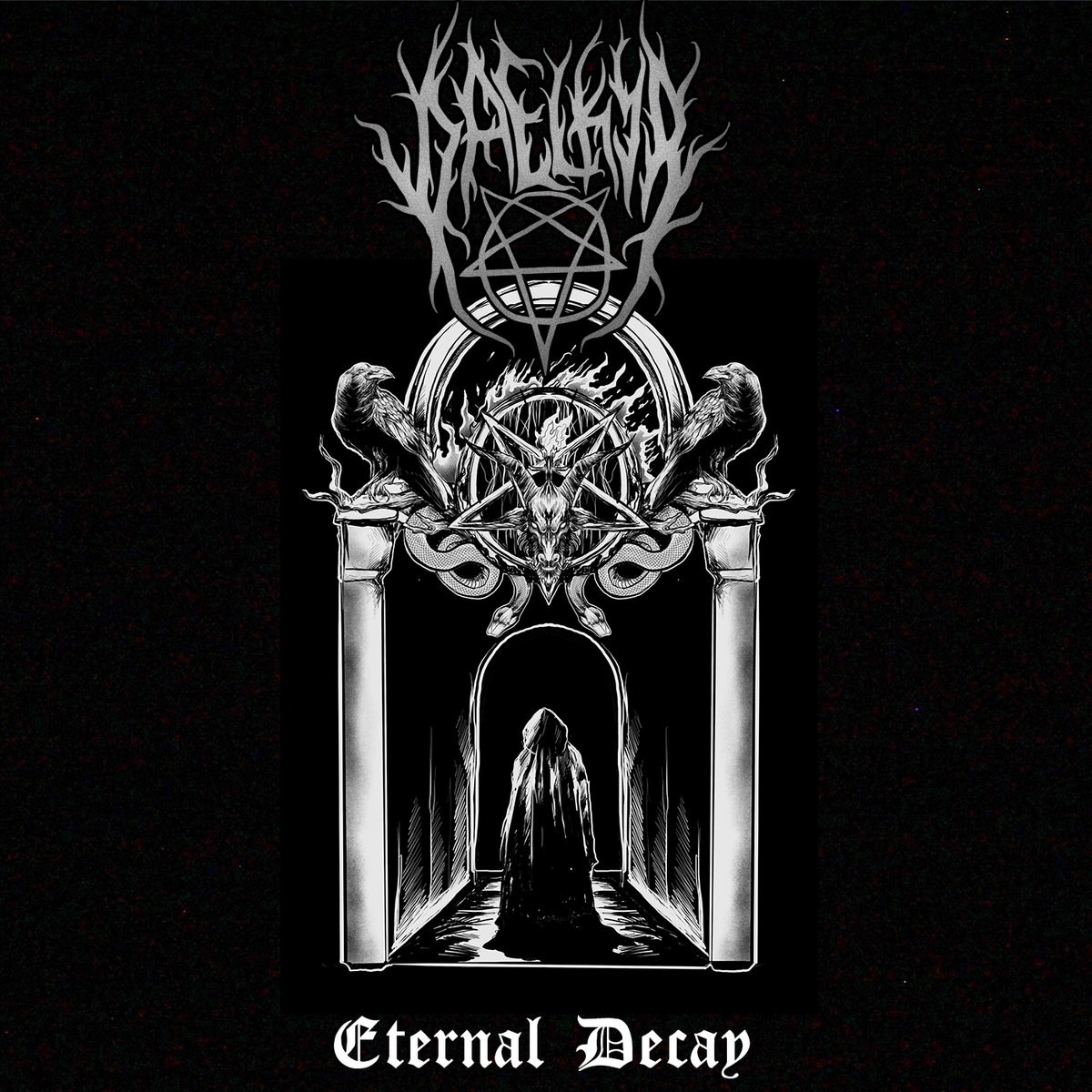
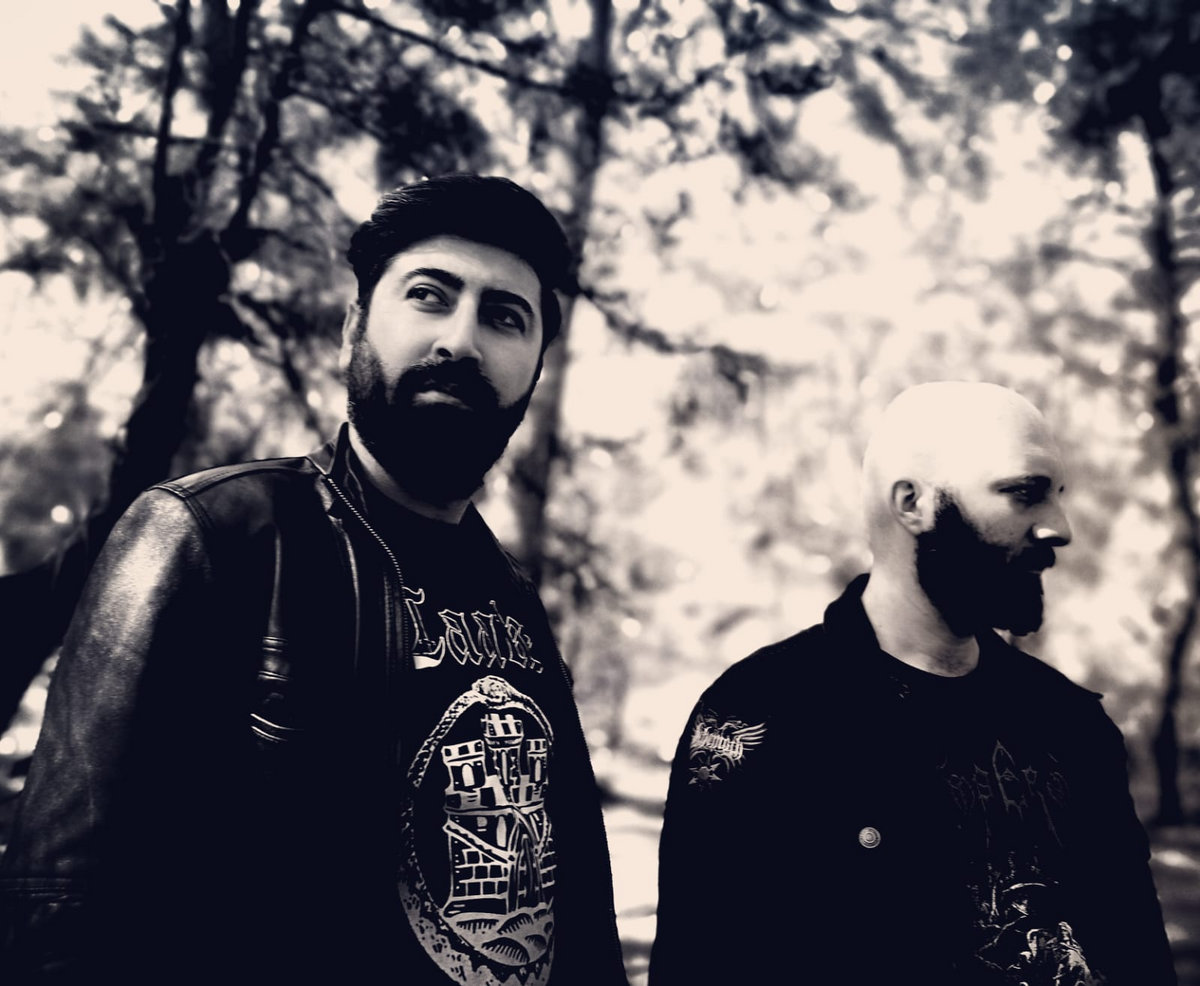
Forged in 2018 in the fires of Antalya, a gateway to Turkey’s southern Mediterranean region known as the Turquoise Coast for its blue waters, an infernal Black Metal duo that goes by the stylish name of Daelkyr is ready to take the underworld of heavy music by storm with their debut EP titled Eternal Decay, blasting our ears with their raw and undisputed Black Metal. By the way, the name of the band was taken from “The World of Eberron”, a number of features for the Eberron campaign setting for the Dungeons & Dragons fantasy role-playing game, meaning the evil embodiments of madness itself because they were Outsiders from Xoriat, the Plane of Madness, just to give you an idea of how dark and vile their music sounds. Featuring a devilish artwork by Turkish artist Reza Putra and a classic logo by Croatian artist Neon Cacti, Eternal Decay will certainly please all fans of the most primeval form of Black Metal, showcasing all the talent of vocalist and bassist Serpent (from Turkish Melodic Groove/Death Metal act Axxen Conners) and guitarist Kaulfel, supported by the unstoppable session drummer Krzysztof Klingbein (from bands like Aggressor, Akral Necrosis and Thunderwar).
The opening track As The Fog Rises exhales pure, unfiltered Black Metal from the very first second, demolishing everything and everyone that crosses Daelkyr’s path, with Krzysztof sounding utterly demented on drums while Kaulfel extracts sheer rage and obscurity form his guitar riffs, generating the perfect ambience for Serpent to vomit his demonic gnarls. And the band continues to smash our senses with their raw sounds in the more melodic and somber title-track Eternal Decay, where Kaulfel does a superb job with his crisp riffs living up to the legacy of classic Norwegian Black Metal, also sounding extremely sulfurous from start to finish; followed by Grey Inferno, another bestial and hellish creation by Daelkyr spearheaded by Serpet’s venomous Black Metal-growls, while Krzysztof puts the pedal to the metal with his blast beats, resulting in a full-bodied aria of underground extreme music. And closing the EP this talented Turkish horde offers the fulminating The Ritual of Existence, bringing to our ears a fusion of classic Black Metal with more harmonious and epic sounds, with the scorching riffs by Kaulfel walking hand in hand with the vicious beats and fills by Krzysztof.
If you want to dive deep into the obscure realm ruled by Daelkyr, you can take a full listen at Eternal Decay on YouTube and on Spotify, but of course in order to show your true support to this ruthless Turkish duo you can purchase the EP directly from their BandCamp page or from the Dark East Productions’ BandCamp page. Also, don’t forget to follow them on Facebook and on Instagram and to subscribe to their YouTube channel, staying updated of all things Daelkyr from now on. The dark and evil clouds of Turkish Black Metal are upon us all once again thanks to Daelkyr, with Eternal Decay being only the first step in their promising (and devilish) career.
Best moments of the album: Grey Inferno.
Worst moments of the album: None.
Released in 2020 Independent
Track listing
1. As The Fog Rises 4:57
2. Eternal Decay 4:49
3. Grey Inferno 4:16
4. The Ritual of Existence 4:40
Band members
Serpent – vocals, bass
Kaulfel – guitars
Guest musician Krzysztof Klingbein – drums (session)


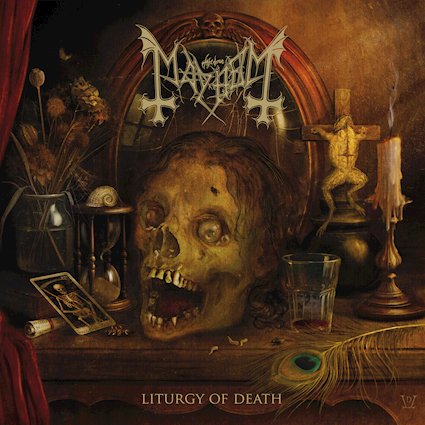 With four decades of darkness behind them, Oslo, Norway’s own Black Metal groundbreakers Mayhem are celebrating an illustrious and undeniable career with their seventh studio offering, entitled Liturgy of Death. Displaying a sinister artwork by Daniel Valeriani, the follow-up to their 2019 opus Daemon sees the band formed of Attila Csihar on vocals, Teloch and Ghul on the guitars, Necrobutcher on bass, and Hellhammer on drums sounding as dark and ominous as a Norwegian forest. They’ve never been deadlier, offering their trademark hair-raising caterwauling and spectral snarls, twin guitar terrors, seventh-hell low end tunes, and ruthless drums, resulting in the band’s final and musically strongest form.
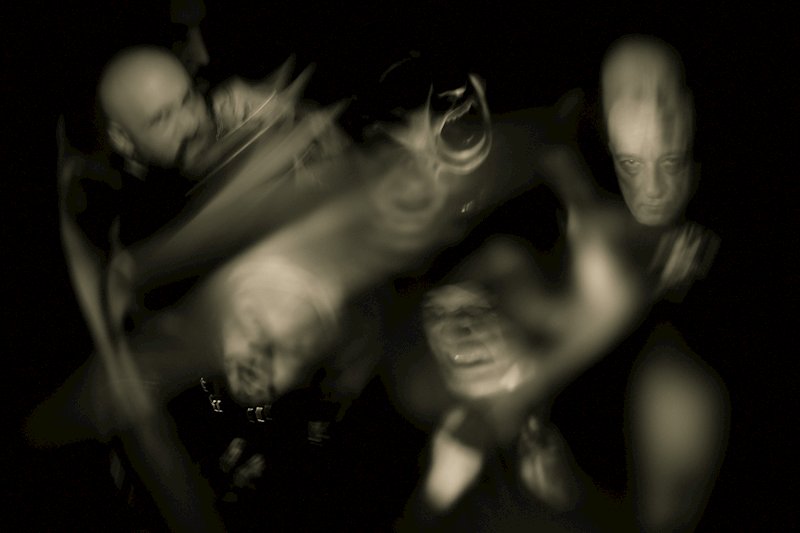 Mayhem are a band dedicated to pushing the bounds of extremity itself, and Liturgy of Death is living (or maybe I should say dead) proof of that. “There’s been absolutely zero compromise,” sums up Ghul. “We really have never compromised and I never see that happening simply to try and sell records. The music is extreme. The people are extreme. Pleasing others has never been on the agenda and that’s quite apparent when you listen to our stuff or see us live. There is something there for people to grab onto and experience, but it’s not supposed to be a pleasant experience or an easy experience. It’s Mayhem.” If you also consider yourself a servant of the dark arts, you can find Mayhem and their undisputed Black Metal magic on Facebook and on Instagram, stream their music on Spotify, and of course grab a copy of their sulfurous new album from the Century Media Records’ BandCamp or webstore, or by clicking HERE or HERE. Mayhem are Black Metal, Black Metal is Mayhem, and Liturgy of Death is among us to keep that combined fire burning for centuries to come.







 THE HEADBANGING MOOSE