Prepare yourself for a 32-minute descent to the bottomless pits of hell while listening to the ancient thrashing Black and Death Metal brought forth by this arcane Belarusian horde.
Anti-Christianity, death, cruelty and other controversial topics, all vociferated in the darkest existing form of Belarusian. That’s what you’ll get in Sychodžańnie, the brand new and extremely occult EP by a Belarusian Death/Black Metal mysterious entity that goes by the name of Ljosazabojstwa, formed in 2013 in the capital city of Belarus, Minsk. If you have absolutely no idea how extreme music sounds when sung in “White Russian”, Sychodžańnie might be the perfect opportunity for you not only to feel the strength of this distinct East Slavic language in metal, but also to get to know more about Ljosazabojstwa, a fresh new name in underground music that will certainly disturb your peace of mind.
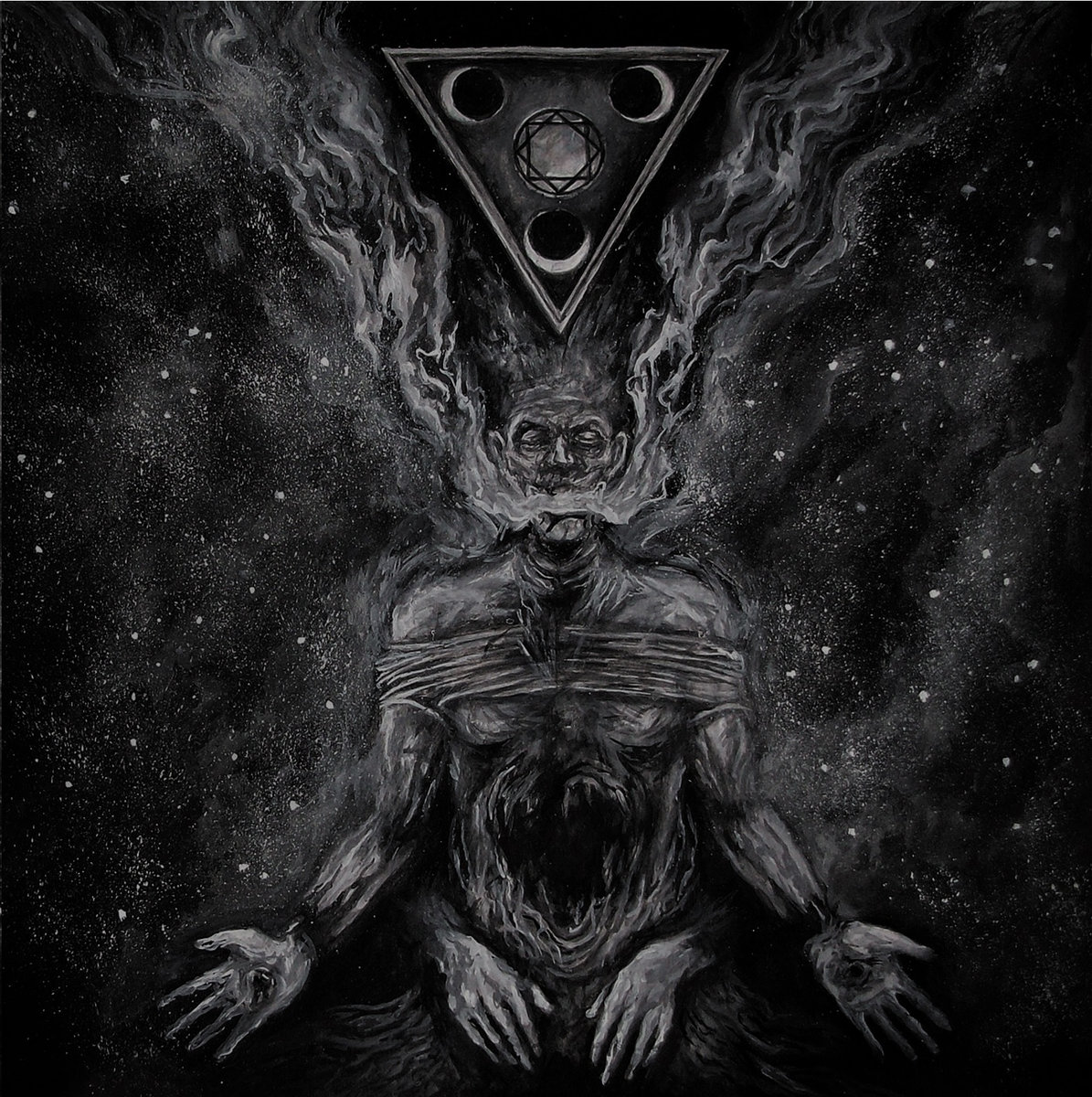
After releasing a demo titled Staražytnaje Licha, in 2016, Ljosazabojstwa are more than ready to haunt our minds with their demolishing, blackened sounds found in their new EP. With Sychodžańnie, which by the way was mixed and mastered by Ghostalgy Productions and features artwork and logo by VR, this arcane band takes their brand of ancient thrashing Black and Death Metal to a whole new level, balancing barbaric riffage with uncanny interludes and spoken word samples that make for a unique experience. In other words, prepare yourself for a 32-minute descent to the bottomless pits of hell while listening to the album’s six tracks of ruthless music, definitely not recommended for the faint of heart.
This cavernous album beings with Pozirk U Biezdań, an ominous intro where the mesmerizing sound of an organ opens the gates of the underworld to the dark and puissant Zhuba, where Blackened Doom, Black and Death Metal are united in the most aggressive way, with the deep growling by the band’s mysterious vocalist being supported by the cutting sound of guitars. In addition, its raw and vile beats, together with the song’s eccentric ending, will darken your thoughts without a shadow of a doubt. Then blackness keeps growing in intensity in the lesson in sluggish Blackened Death Metal entitled Piekła, with its guitar riffs feeling like a chainsaw hacking your limbs off. Moreover, its faster passages interspersed with slower Doom Metal-inspired moments add several layers of intricacy to the musicality, and it seems the band loves to include some wicked spoken excerpts (probably taken from underground movies) to their creations, just to give them an awesome slasher-flick soundtrack-like vibe.
Slow and steady beats ignite another feast of primeval, Stygian sounds by Ljosazabojstwa named Šliach Na Miehida, with their demonic lead singer vociferating the song’s cryptic lyrics in a truly threatening manner, also presenting a smooth acoustic break almost at the end before devastation returns in full force (and when you least expect, you’ll find yourself addicted to the band’s hellish music). The title-track Sychodžańnie is a horror movie-inspired instrumental bridge that will invade your senses before Zabojstwa Ljosu comes crushing your skull with a tempest of metallic, rip-roaring sounds, infernal vociferations and demented vocal samples. In addition, its guitars bring an acid hybrid of Death and Doom Metal riffs, while drums continue to smash us mercilessly until its devastating and climatic grand finale.
If you want to take a more detailed listen at Sychodžańnie, simply go to YouTube to fill your ears with Ljosazabojstwa’s dark Belarusian sounds, but if you’re already hooked on their vile music you can grab your copy of the EP at the band’s own BandCamp page, at the Hellthrasher Productions’ BandCamp or webstore, or at Discogs. And there you have the most demonic score you can imagine for some of those extremely somber, sorrowful and distressed moments you’ll face in life, how about that?
Best moments of the album: Piekła and Zabojstwa Ljosu.
Then we lay there… Embracing our last stare… On a moonlit afternoon…
As The Headbanging Moose is based in Toronto, Canada, probably the most multi-cultural city in the world, there’s nothing better than having as our last metal chick of the year of 2017 a woman of Dutch and Indonesian descent that was born in Cape Town, South Africa, but that currently resides here in Toronto, playing an also diverse range of musical styles such as Alternative Metal, Nu Metal, Rock, Industrial and even Electronica. This woman, who’s a skillful vocalist and guitarist, goes by the name of Fallon Bowman, known for her involvement with the bands Kittie, Pigface and Amphibious Assault, as well as a solo career which she’s been pursuing since around 2011. Having said that, are you ready to bang your head to the electrifying music by the exotic Fallon?
Born on November 16, 1983 in Cape Town, a port city on South Africa’s southwest coast, on a peninsula beneath the imposing Table Mountain, Fallon has been active in the world of alternative and heavy music since 1996, when at the age of fourteen years old she helped to form Canadian Alternative Metal act Kittie with classmate Mercedes Lander and Mercedes’ sister, Morgan Lander, playing guitar and performing backing vocals for the band from their inception in 1996 until August 2001, when she left the band. As a matter of fact, her passion for music actually started a few years before Kittie, when she was around 10 years old, when she was fascinated with a guitar her grandfather had at his home in South Africa. However, she mentioned the guitar was not her first choice, as at first she wanted to be a drummer when she was around 12, but her parents were against it and she ended up getting a guitar from them after they saw her performance playing the song Violet, by Hole, at a school assembly with a friend using a friend’s guitar. Getting back to Kittie, Fallon has already explained several times in different interviews why she left the band, saying she was unhappy with some things in the band so she felt that maybe it was time for her to depart. Our dauntless guitarist recorded two albums with Kittie, those being the full-length Spit, in 1999, and the EP Paperdoll, in 2000, comprised of a remix of Spit’s song Paperdoll and five songs from Spit recorded live on June 15, 2000 at the Hultsfred Festival in Sweden.
Regarding the writing and meaning of the song Choke in Spit, Fallon said that it is “about someone telling you that they love you so much, and they put you up on a pedestal and make you feel great, then they turn around and say “screw you”, and you can sense that feeling while listening to the song (which you can do HERE). Furthermore, just to give you an idea of the impact of the release of Spit, right after that Kittie went on tours with bands such as Chevelle, Slipknot, Suicidal Tendencies, and Shuvel, also performing at Ozzfest and at the 2001 SnoCore festival. Hence, if you want to listen to Fallon playing her flammable guitar with Kittie, I recommend the songs Brackish and Charlotte, both taken from Spit.
Right after her departure from Kittie, Fallon experienced a period of stress due to splitting up with her friends from the band, but she managed to overcome that difficult situation after a while and got involved with her two next endeavors, the distinct bands Pigface and Amphibious Assault. Pigface is an industrial music supergroup formed in 1990 by Martin Atkins (Ministry, Killing Joke) and William Rieflin (Ministry, KMFDM, R.E.M., King Crimson), featuring tons of guest musicians such as our metal babe Fallon. She ended up recording several tracks with Pigface for their 2003 album Easy Listening…, which led her to begin writing music again due to the enjoyment she had during the recording process. She then purchased a sequencer and began exploring the industrial music genre that she admired but had never actively pursued, also filling her basement in the following months with drum machines and synthesizers, which in the end led to the writing of the songs for District Six, the debut album by her upcoming industrial project Amphibious Assault, mixing lots of heavy elements and aspects with her passion for industrial music. The name of the project was chosen during a flight from Toronto to New Jersey, when Bowman, at the age of seventeen, was skimming through a Tom Clancy novel when she came upon the term “amphibious assault”, with the whole project being, according to our talented musician herself, her personal “homage” to her KMFDM days, when she was obsessed with them. Amphibious Assault went on for a few years, from 2003 until 2007, with two full-length albums released, the aforementioned District Six in 2003 and On Better Days and Sin-Eating in 2006. If you want to take a listen at this more electronic side of Fallon, I recommend you check the songs Tears In Rain, District 6, The Importance Of Finding Narcissism, Mistakes, Breaks, Way Too Lates, and Benedictine, among many others.
This slideshow requires JavaScript.
After the end of Amphibious Assault, Fallon mentioned that a new project was about to become a reality, tentatively named “Oh No, Torpedo!”, but that in the end became her solo project Fallon Bowman & The Grace Dynasty (with The Grace Dynasty being a five-piece band that included Rhim of The Birthday Massacre on drums), playing a series of live shows before announcing their forthcoming debut album, titled Human, Conditional, from 2011. However, right after the recording of the album was done, it was decided that the project would drop “The Grace Dynasty” from its name, being then just known as Fallon Bowman. You can take a detailed listen at Human, Conditional at Bowman’s own BandCamp page, with songs like the title-track Human, Conditional and Rio de Janeiro being a good sample of how her latest project sounds like.
Regarding her vocal range and her skills as a musician, Fallon mentioned in one of her interviews she’s highly influenced by R&B (thanks to her sister and parents), which allows her to do more than “just” scream and yell while singing, and that she hadn’t taken any singing lesson until she left Kittie. She said that her vocal teacher taught her all sorts of essential lessons about maintaining pitch while moving, and that she incorporated those into her performances to give it a more theatrical vibe. In addition, she also mentioned the emotion she transpires during her live performances is something that just happens, it’s very organic and it arises from the same place her lyrics and pain come from. And even in the middle of that sea of emotions, Fallon has time to sharpen her playing skills, being able to play guitar, keyboards, bass and sing (and getting there in regards to the piano), all helping her become a better composer. And did you know she has a degree in archeology? Well, that’s something almost no one actually knew until she was the subject of a prank for an episode of the short-lived Animal Planet series Freak Encounters a few years ago.
Fallon’s influences in music are just as diverse as her own background, with our talented multi-instrumentalist being highly influenced by R&B when it comes to her vocal style, but of course she also draws a lot of inspiration from electronic and rock music, saying that she loves the contrast between angelic singing and harder music. In terms of names, she said her taste for music varies from Whitney Houston to Deftones, from Calvin Harris to VNV Nation to Nirvana, and so on, mentioning that there’s beauty in all types of music. When asked about a band that she would have loved to tour with from the past, she promptly mentioned Nirvana, saying that meeting Kurt Cobain would have been a mind-blowing experience and that Nirvana, alongside with Hole, were the bands that made her want to be a musician. Furthermore, Fallon still had time to create her own dream band, that being David Gahan from Depeche Mode on vocals, Danny Carey from Tool on drums, Ryan from Mudvayne on bass, and Jimi Hendrix on guitar. How awesome do you think that supergroup would sound?
When asked about all changes that have impacted the music industry since she started her career back in 1996, she said when Kittie started they had almost no focus on the internet, as there wasn’t Facebook or anything like that at that time, saying it was all about street teams made up of fans that would spread the word about each band, something that doesn’t happen anymore nowadays. Fallon has been trying to learn about new apps and platforms to promote her music, and you can find her in several places, as for example you can buy her music on BandCamp, something that didn’t exist at all in the 90’s. Well, she’s also on Facebook, Twitter, Instagram and YouTube, so let’s say she has adapted to this new reality in the music business as much as her taste in music has changed and evolved, right? Well, now let’s wait and see what the future holds for this young and restless musician, hoping that she keeps “invading” all current and new types of social media sites and music apps with her uniqueness and electricity.
“I didn’t consciously think of what I was doing as a step for me as a woman of colour – it was more simple than that – being a teenager wanting to be a rockstar. In retrospect however, no one besides maybe Skin was doing that style of music and was also a woman of colour. It’s a bit mind blowing really. There was really no one else doing that at that level.” – Fallon Bowman
Unafraid of exercising their freedom of speech in their homeland, three dauntless Saudi black metallers keep fighting against tyranny, oppression and authoritarianism with their brand new, distinct and acid album.
Forged in 2008 in the fires of Dammam, the capital city of Saudi Arabia’s Eastern Province and the sixth largest city in Saudi Arabia after Riyadh, Jeddah, Mecca, Medina and Taif, Black/Folk Metal trinity Al-Namrood is another one of those cases where no matter how talented and bright the band members are, the religious and political leaders of their homeland will do whatever it takes to end their career (not to say something even harsher than that), restricting their reach and forcing them to remain anonymous to stay alive (as you can read in an excellent and very detailed article titled “Witch Hunts, Resurgence and Defiance: Heavy Metal In The Middle East”, published by an online publication named The Quietus). However, the only Black Metal band in Saudi Arabia doesn’t seem to be scared to exercise their freedom of speech with their brand new album Enkar, where once again Al-Namrood translates into first-class metal music their austere position against their own country’s authoritarian regime.
Al-Namrood (or (النمرود in Arabic) means “Nimrod” (which translates to “the non believer”), a Babylonian king who ruled the world maliciously and stated “I am the God of all creation”, and the group chose the name as their form of defiance against religion. After the successful release of their 2010 album Estorat Taghoot, the band decided to shift their focus away from the ancient Babylon land to a hub with deeper Arabian aspect, pronouncing the utter darkness of the Arabian Peninsula and therefore playing what can be called “Arabian Occult Metal”. If you love Black Metal in the vein of bands like Marduk, Darkthrone and Bathory mixed with the most obscure and anti-religious aspects of the music by Candlemass, Black Sabbath and Kreator, all embraced by the unique tones and sounds from the Middle-Eastern culture, then you must take a listen at Enkar as soon as possible, as this album might change considerably your view of underground Extreme Metal.
And those sounds from the Middle-East are joined by metallic lines to form a unique musicality led by the enraged and sick vocals by Humbaba in the opening track, titled Nabth, a feast of eccentricity and sheer madness, with the guitars by Mephisto sounding truly mesmerizing. In addition, the song’s official video, with its images of protests, riots and police brutality from across the Middle-East, match perfectly with the music played by Al-Namrood. Enhancing the lunacy flowing from the guitars, the band offers us Halak, a great display of Orient Metal tailored for banging our heads and prancing together with the band, with highlights to the electrified beats by Ostron; followed by Xenophobia, another acid creation by Al-Namrood that deals with an extremely controversial topic, with Humbaba firing some truly demented vociferations from start to finish to make the final result even more impactful.
Estibdad brings forward a kick-ass hybrid of Folk and Orient Metal where all band members are on fire, in special Mephisto with his slashing riffs, not to mention you can feel the anger and rage flowing from Humbaba’s desperate growls. Efsad keeps the momentum going with its rhythmic drumming and Middle-Eastern-inspired riffs and bass lines effectively delivered by Mephisto, whereas Estinzaf, perhaps the most Heavy Metal (or I should say Black Metal) of all songs, presents more traditional guitar lines and drums, but of course still bringing the band’s own regional twist. Moreover, Humbaba sounds like a Saudi version of the iconic Mike Patton (Faith No More) during the whole song due to the level of lunacy and the weird noises he produces with his voice, which in the end is a very positive complement to the overall result. And in Ensaf we face a darker sonority that grows in intensity as time goes by, with even the vocal lines by Humbaba sounding more obscure and sharper than before, culminating in a mesmerizing pace with hints of progressiveness and Folk Metal elements to boost its taste.
In Egwaa we’re treated to what’s probably their most primeval mode, a hypnotizing and stylish break from all madness from the rest of the album deeply rooted in their own homeland’s traditions and sounds, with their smooth but at the same time extremely potent percussion stealing the spotlight. Then when it looks like that gentle break will still go on for a while, the band returns with an imposing, epic tune titled Ezdraa, transporting the listener to the darkest side of Saudi Arabia, with Ostron kicking some serious ass with his intricate drumming, before Entiqam, a nice ending to such distinct album, showcases a more-demented-than-ever Humbaba, leading the band’s ominous and classy musicality while the song’s Middle-Eastern elements sound heavier, crisper and more piercing than in all previous tracks.
You can enjoy all the madness, violence and hatred from Enkar by listening to the full album on Spotify, and of course purchase this Saudi gem at the Shaytan Productions’ BandCamp, on iTunes, on Amazon, on CD Baby or at Discogs. Al-Namrood, who can be found on Facebook despite the fact the band members have to remain anonymous, not only continue to pave a fantastic path in underground heavy music with this idiosyncratic album, spreading their music all over the world and always moving forward against all odds, but they also serve as some sort of inspiration for other musicians in Saudi Arabia and from any other countries with very strict laws to keep pursuing their dreams and to keep fighting against tyranny, oppression and authoritarianism, all in the name of freedom and metal.
Best moments of the album: Nabth, Estibdad and Ensaf.
Embark on a journey through the aggressive peaks and heavenly calm moments of life and death, crafted by a five-piece Iranian act that’s willing to face all adversities in their homeland to spread their music all over the world.
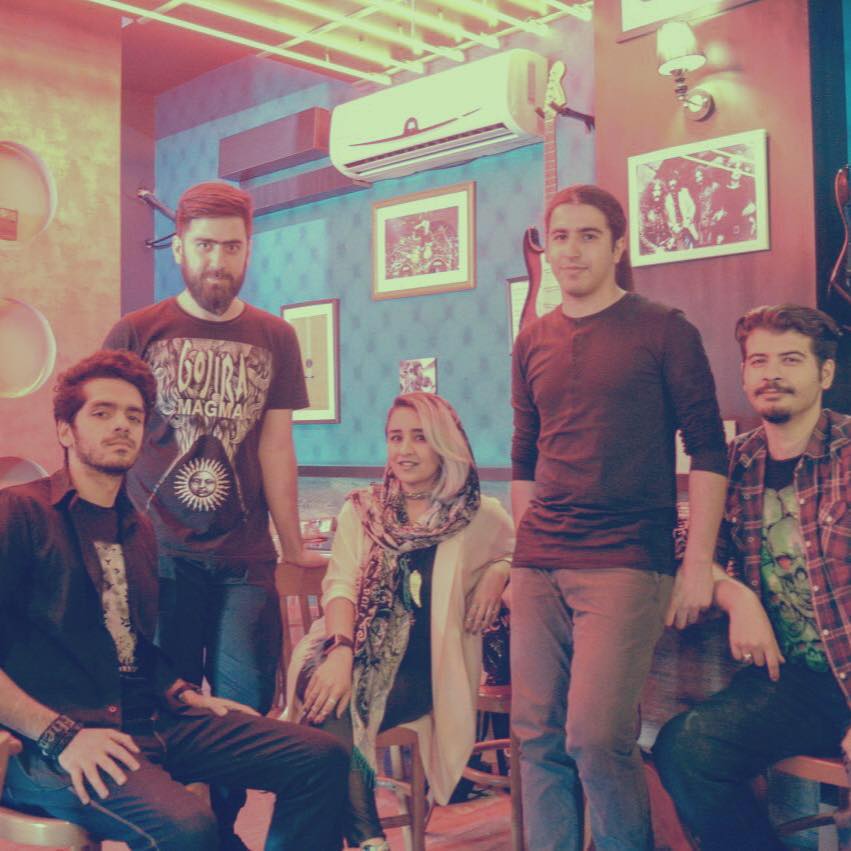
Every single time we at The Headbanging Moose do a review of an album by a band hailing from the Middle-East, we never know exactly how hard and dangerous it was (and is) for that specific band to record that album due to all restrictions imposed by religious and political parties in those countries. If you have no idea of what I’m talking about, take a quick read at this short and sweet article titled “How playing heavy metal in Iran can put your life in danger”, posted online at the Huck Maganize website. Formed in 2014 in Tehran, the capital of Iran located in the north of the country, female-fronted five-piece Progressive Metal act Heterochrome have just released their debut effort entitled Melancholia, a journey through the aggressive peaks and heavenly calm moments of life and death, and it seems that they are willing to face all perils and adversities in their homeland to spread their music all over the world.
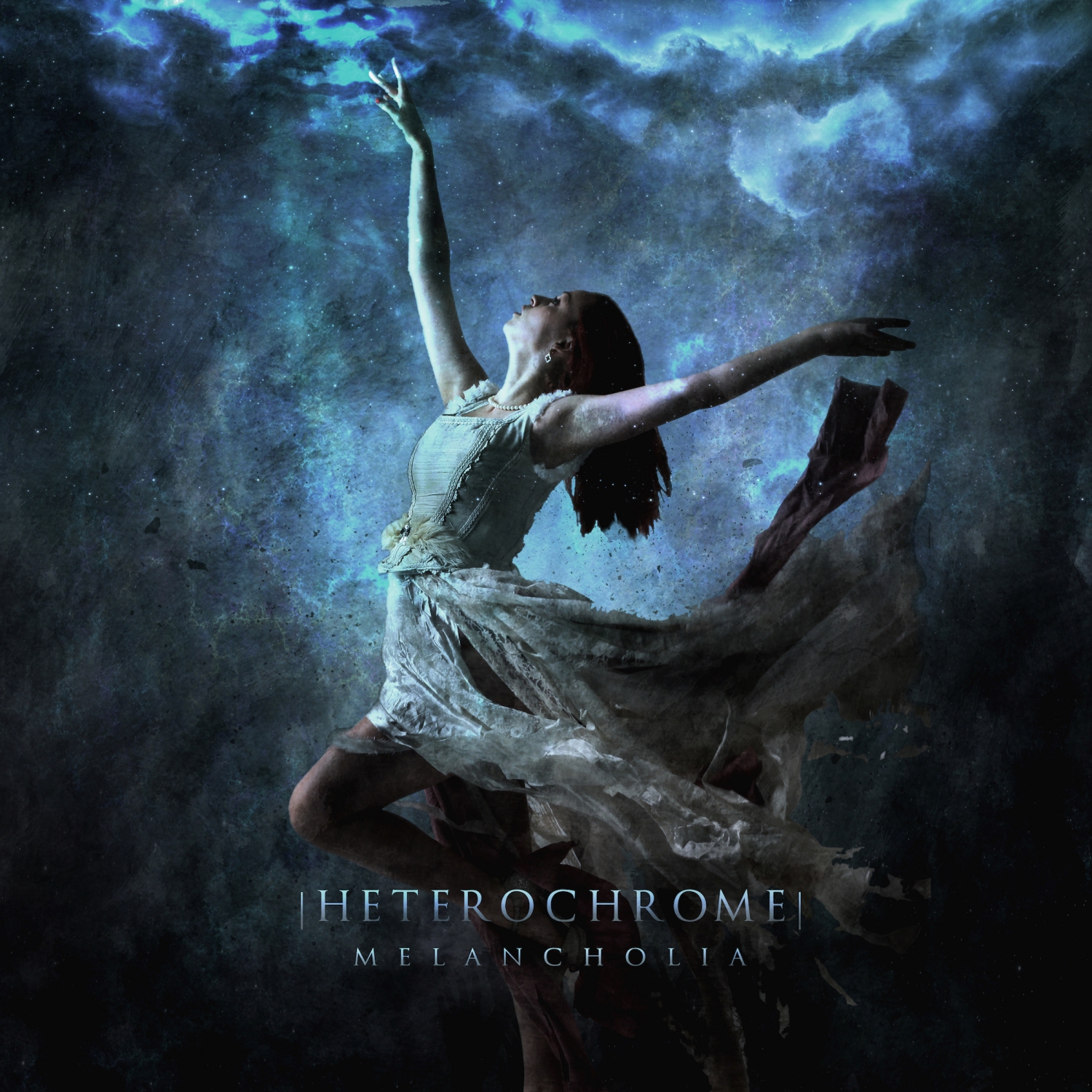
The band was brought into being when guitarist Mohammadreza Rezaei and vocalist Mida met each other in 2014 and started writing music together, with the rest of the band members joining the duo in the coming years. Displaying a delicate but powerful artwork designed by Caelan Stokkermans, from Caelan Stokkermans Arts (who already worked with another band recently reviewed at The Headbanging Moose, called Ezerath), Melancholia is an amalgamation of sounds and styles, from the darkest and heaviest screams and thoughts to moments of tenderness, love and hope, all meticulously embraced by the band’s progressive and intricate passages. Furthermore, Mida ends up stealing the spotlight with her passionate vocal performance throughout the entire album, and if what people say is true about how women are completely discouraged to create music (in special Heavy Metal) in Iran, putting even their lives in danger for doing that, then she’s not only a highly skilled singer, but also a daredevil metalhead.
The opening track Cage displays tons of progressiveness flowing from all instruments from its very first second, being led by the sharp guitars by Mohammadreza and his bandmate Khashayar Oveisi, with Mohammadreza and the angelical voice of Mida bringing a classy and melancholic vibe to the music. Then leaning towards Progressive Rock blended with contemporary Hard Rock we have Hang, where Mida enchants us all to the precise beats by drummer Mohammad Mirboland and the metallic bass by Armin Afzali, with the songs harsh growls adding an extra dosage of heaviness and electricity to the song’s introspective lyrics (“Every breath I take, brings me closer / Every second wasted, counts past the border / Every bridge falls broken, burning over / As I sprint through the myst, the night is over”).
The following track, named Regret, is a smooth instrumental Progressive Metal tune with hints of Acid Rock, generating a dark and soulful “waltz” perfect for closing your eyes and banging your head together with the band. Moreover, Mohammad becomes the “captain” of the ship with both his fast-paced beats and more rhythmic drumming, with the song ending with a kick-ass guitar solo by Mohammadreza. And the band keeps the momentum going with Purgatory, a song highly recommended for fans of all types of heavy music that can be broken down into several distinct pieces, from the hypnotizing, gentle parts led by Mida to a pure metallic extravaganza and more progressive passages, therefore showcasing all the band’s versatility and also experimenting with darker sounds and nuances of Rock N’ Roll.
Their most experimental vein rises in Paradise, with the guitar duo comprised of Mohammadreza and Khashayar spearheading this feast of whimsical tunes and notes, boosted by the intricate bass lines by Armin. Furthermore, this pleasant composition proves Heterochrome definitely know how to use the fusion of male and female vocals in all their creations in a beyond compelling way. And last but not least, let the fires burn to the sound of the thrilling chant Inferno, a multi-layered mid-tempo tune that will pierce your mind and hypnotize you, while the bass lines by Armin embrace Mida’s stunning voice. Once again presenting a gripping guitar solo by Mohammadreza and beautiful, poetic lyrics as the icing on the cake (“Let me bleed / Naked by the fire / I’m drowning deep / Drowning in denial / Burning in / The inferno I made for myself”), the song remains flawless from start to finish, flowing to a gentle ending full of melancholy bursting from both Mida’s and Mohammadreza’s voices.
As aforementioned, I don’t know for sure how dangerous it is for a band like Heterochrome to craft their music in Iran, but it seems that they’re more than ready to take all possible risks in the name of Heavy Metal. With that said, we should all show our utmost support to those Iranian metallers (and to their freedom of speech) by liking their Facebook page, listening to their music on YouTube or on Spotify, and especially by purchasing Melancholia on BandCamp, iTunes, Amazon or CD Baby, always hoping that they succeed in their arduous journey and that they keep delivering good metal music to our ears, therefore inspiring others in Iran to do the same.
Descend into the crypts of Hades to the sound of the perturbing and dense Black Metal brought forth by this ruthless Venezuelan horde.
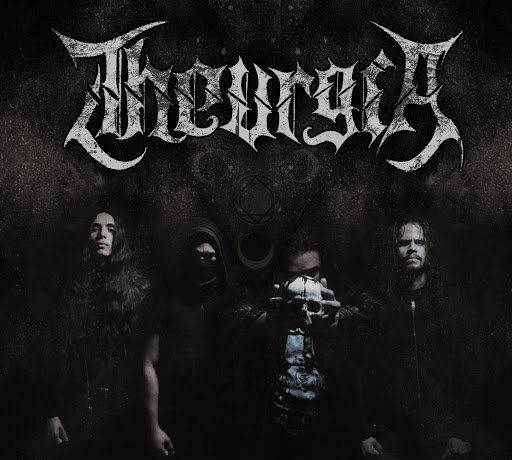
Forged in the scorching fires of Maracaibo, Venezuela in 2014 from the ashes of a band called Daemonhorn, but currently located in Colombia, old school Black Metal horde Theurgia are among us to blast pure hatred and violence with the release of their debut full-length album, titled Transformation. Recorded at Fenix Estudio in Barranquilla, Colombia, mixed and mastered at Dae Home Studio, and featuring an ominous album art created by John Quevedo Janssens (with the art in the digital edition being designed by the band’s own vocalist and guitarist Daemonae), Transformation brings all elements that make traditional Black Metal so compelling and menacing, helping the band carve their name in the history of underground South American extreme music.
The word “Theurgia” is the Lesser Key of Solomon (also known as Clavicula Salomonis Regis) called “Ars Theurgia Goetia”, the invocation of 31 demonic entities (those being emperors, dukes, kings and princes) with special characteristics. With such an imposing name, the music by Theurgia couldn’t sound more perturbing and dense than what they offer us in Transformation, with their lyrics talking about important topics such as general philosophy and war (in full gear). In the 40 minutes of visceral, disturbing music of the album, the band comprised of lead singer and guitarist Daemonae, guitarist Mortum P., bassist Teuterastus and drummer Hellbeats deliver an enraged message to the world, stating that darkness is upon us and there’s nothing we can do to avoid our grievous fate. In other words, if you’re searching for high-end raw old school extreme music or even the perfect soundtrack to the apocalypse, Transformation has exactly what you need to enfold your darkest and most villainous thoughts.
An intro directly from the pits of hell, titled The Torch ov Creation, announces devastation is about to break loose in ILV (The Verb of Waters), which begins in a doom-ish mode until Daemonae starts to fire his blackened growls while Hellbeats lives up to his own moniker on drums, with the music gradually evolving to raw and furious old school Black Metal. If that solid start is not heavy enough for you, the title-track Transformation presents the Venezuelan quartet on their most menacing beast mode, with Mortum P. delivering truly infernal riffs that effectively complement the demented drumming by Helbeats. Put differently, this full-bodied ode to darkness will offer your ears a chaotic havoc of Black Metal sounds led by the aggressive gnarls by Daemonae.
Transmutation (Of Synesthetic Formula) brings forward more of the band’s evil and obscure sounds, with Daemonae vociferating like a demonic entity while Teuterastus and Hellbeats threaten us all with their rumbling instruments, disturbing our senses until the songs climatic ending. Then we have My Oeneric Dreams, a short, ominous bridge to the visceral Procesio IV – Monotonous Chant, another song that begins in a Doom Metal fashion before exploding into a haunting feast of Black and Death Metal. This is a top-notch blackened aria where Hellbeats sets fire to the musicality with his drums, while Mortum P. distils his sulfuric riffs mercilessly. If you’re a fan of vile Blackened Death Metal, this song is simply tailored for your avid inner demon.
There’s no time to breathe with an onrush of crushing extreme music named Procesio V – Dolorvm, presenting an imposing sonority generated by the mesmerizing Black Metal riffs by Mortum P. and the unearthly bass by Teuterastus; followed by Procesio VI – Mea Spíritus in Opium (the creation of our souls before apparent orthodox existence), where the band gets to a truly demented level, delivering high dosages of putrid gnarls, devilish riffs and blast beats, resulting in a scathing descend into the crypts of Hades with Theurgia, therefore ending the album on a high note. And as a bonus track to the physical version of the album we have their cover version for Dissection’s Retribution – Storm of the Light’s Bane(check the original version HERE), taken from the tribute album “In Memory of Jon Nödtveidt – A Tribute to Dissection”, bringing all the fury of the original song by Dissection with Theurgia’s own perverse twist.
An orchestral and emotional concept album sang completely in Portuguese that will take you to the year of the horror when a giant earthquake destroyed the city of Lisbon.
The year of 1755 marks the year of the horror when a giant earthquake destroyed the city of Lisbon, when almost 100 thousand souls lost their lives, and this tragic event is still considered one of the most disastrous catastrophes in European history and nature. Now in 2017, in remembrance of the victims and the band’s hometown, the 1755 Lisbon earthquake was turned into a vicious, rip-roaring concept album straightforwardly titled 1755, the twelfth full-length studio release by Portuguese Dark Metal masters Moonspell, an orchestral and emotional adventure sang completely in Portuguese (which gives the whole album an additional poetic touch) that will transport your mind and soul to November 1, 1755, the holy day of All Saints’ Day and the day that the earth shook like never before in Lisbon.
There are a few remarkable differences between 1755 and Moonspell’s latest releases such as Night Eternal, Alpha Noir/Omega White and especially Extinct, as the band “distanced” themselves a little from the more Gothic and melodic approach from the past decade to venture through the realms of symphonic and epic sounds, and the final result couldn’t be more breathtaking. Featuring a lavish artwork by Portuguese artist João Diogo (Dramafall), 1755 might not be an easy listen at first for newcomers to the world of Moonspell or even to longtime fans of the band who don’t know a single word in Portuguese, but the final result is so compelling, sharp and cohesive I’m sure the whole album will grow on you until it becomes a mandatory part of your day-to-day playlist.
When I first saw the tracklist for 1755 I asked myself why they added one of their old songs as the opening track of the album, but after hitting play everything made sense. Em Nome Do Medo (or “in the name of fear”) is an obscure, haunting and absolutely awesome orchestral version for their biggest classic sung in Portuguese, from their 2012 album Alpha Noir/Omega White (take a listen at the original version HERE), with highlights to the superb job done by guest musician Jon Phipps (who actually created the orchestrations for the whole album) and the insanely beautiful choir (comprised of the amazing Crystal Mountain Singers and Tristania’s own Mariangela Dermutas) that accompanies frontman Fernando Ribeiro and his piercing vocals, and that epic aura of darkness goes on in the title-track 1755, where keyboardist Pedro Paixão delivers as usual some insane keys that complement the guitar sounds flawlessly. And what to say about Ricardo Amorim’s souful guitar solo? Put differently, I simply can’t wait to witness Moonspell playing this metallic opera live. And leaning towards a more metallic, rockin’ vein we have the threatening In Tremor Dei (or “fear Of God”), presenting the band’s characteristic Dark Metal with Fernando being beautifully supported by guest vocalist Paulo Bragança (who supplies the trenchant voice of a Fado fallen angel who is a big part of the Portuguese culture), with the song’s lyrics perfectly depicting the fire, wreckage, despair and death that took over Lisbon that day.
Desastre (the Portuguese word for “disaster”) gets closer to what the band did in Night Eternal, with Fernando’s growls sounding deeper and more enraged as he screams the word “culpado” (or “guilty” in English) with all his fury. Furthermore, the beats by drummer Miguel Gaspar will hit you hard inside your mind, showing how acute the entire album is. Then orchestral elements shine in another great display of Dark Metal blended with classical music titled Abanão (which means “quake” or “shakeup”), where Pedro once again boosts the song’s epicness with his keyboards while Miguel and bassist Aires Pereira live up to the song’s name with their rumbling beats and bass punches, respectively; followed by Evento (or “event”), where Moonspell keep blending their own sonority from Night Eternal with Memorial and more intense elements from orchestral music, not to mention how its lyrics showcase the thin line between love and hate people experience with religion. It’s another one of the top moments of the album, and needless to say it should also sound fantastic if played live. And 1 De Novembro (or “1st of November”), in reference to the day the earthquake happened, brings forward a more contemporary version of Moonspell where Fernando’s voice sounds considerably different than usual and where tons of heaviness and epicness arise due to the excellent job done by Pedro and Miguel on keys and drums.
1755 Deluxe Box
Then infused with modern Gothic and Dark Metal similar to what they did in the darkest and most melancholic tracks of Alpha Noir/Omega White, but with an epic twist, Ruínas (or “ruins”) displays an 80’s-inspired rhythm where the bass lines by Aires sound ominous, with its lyrics passionately declaimed by Fernando transmitting a true sense of hopelessness, setting the tone for Todos Os Santos (or “all saints”), one of the strongest tracks of the album and the musical depiction of the eternal war between men and God. Its thrilling guitars combined with the powerful vocals by Fernando and its thunderous backing vocals result in top-notch Moonspell music, also presenting a catchy-as-hell chorus (even if you don’t know anything in Potuguese) in a beyond perfect closing to such sad and important event in the history of Portugal. As a matter of fact, there’s still one more song in the regular version of the album, their cover version for Brazilian rock band Os Paralamas do Sucesso’s hit Lanterna Dos Afogados (listen to the original song HERE), feeling more like a “bonus” than a regular track and sounding very somber, melancholic and touching, with Fernando giving a lesson in dark vocals. Moreover, if you go with any of the special editions of 1755, you’ll also be treated to the Spanish version of Desastre, which according to Moonspell themselves is a homage to all their Spanish-speaking fans around the world, as in the late 18th century a mixture of Spanish and Portuguese was spoken in the streets of Lisbon.
What Moonspell did in 1755, turning all devastation, death and grief from the 1755 Lisbon earthquake into first-class art, is not only terrific musically speaking, but it also proves that the human being is capable of finding beauty even in the most adverse moments, and I guess that’s some sort of subliminal message the band wanted to send us all with this excellent album. With that said, go grab your favorite version of 1755 at the Napalm Records webshop, or at the band’s own BandCamp page or official European webstore, and learn more about one of the saddest and most terrifying day in the history of Portugal. 1755 might be known as the year of the horror, as the year when God abandoned the people of Lisbon, but at least we have Moonspell to properly tell that grim story to us all and to soothe our hearts and souls forevermore with their undisputed Dark Metal.
Best moments of the album: 1755, In Tremor Dei, Evento and Todos Os Santos.
Worst moments of the album: None.
Released in 2017 Napalm Records
Track listing 1. Em Nome Do Medo 5:32
2. 1755 5:12
3. In Tremor Dei 4:26
4. Desastre 3:22
5. Abanão 4:08
6. Evento 4:43
7. 1 De Novembro 3:53
8. Ruínas 4:45
9. Todos Os Santos 5:10
10. Lanterna Dos Afogados (Os Paralamas do Sucesso cover) 6:30
Band members Fernando Ribeiro – vocals
Ricardo Amorim – guitars
Pedro Paixão – keyboards, guitars
Aires Pereira – bass
Miguel Gaspar – drums
Guest musicians Jon Phipps – orchestrations
Paulo Bragança – vocals on “In Tremor Dei”
Martin Lopez – darbuka in “1755”
Crystal Mountain Singers (Carmen Simões, Alexandra Bernardo, Silvia Guerreiro) and Mariangela Dermutas – choirs
Enjoy this concept album about how urban life can separate us from reality and how at the same time it gives us freedom to cross its boundaries, all enfolded by first-class blackened music made in Poland.
“Biesy were born out of everyday working, urban and monotonous realities. The project explores how urban concrete life can separate you from reality, but at the same time enables you to cross its borders. This is not the place for faith – there is no time nor will. During the night people go astray and willingly drown among the masses on the streets. In the morning they fall down to create a passage for everything that is wonderfully common and hideously sincere. However, it is not certain if they even left the room.”
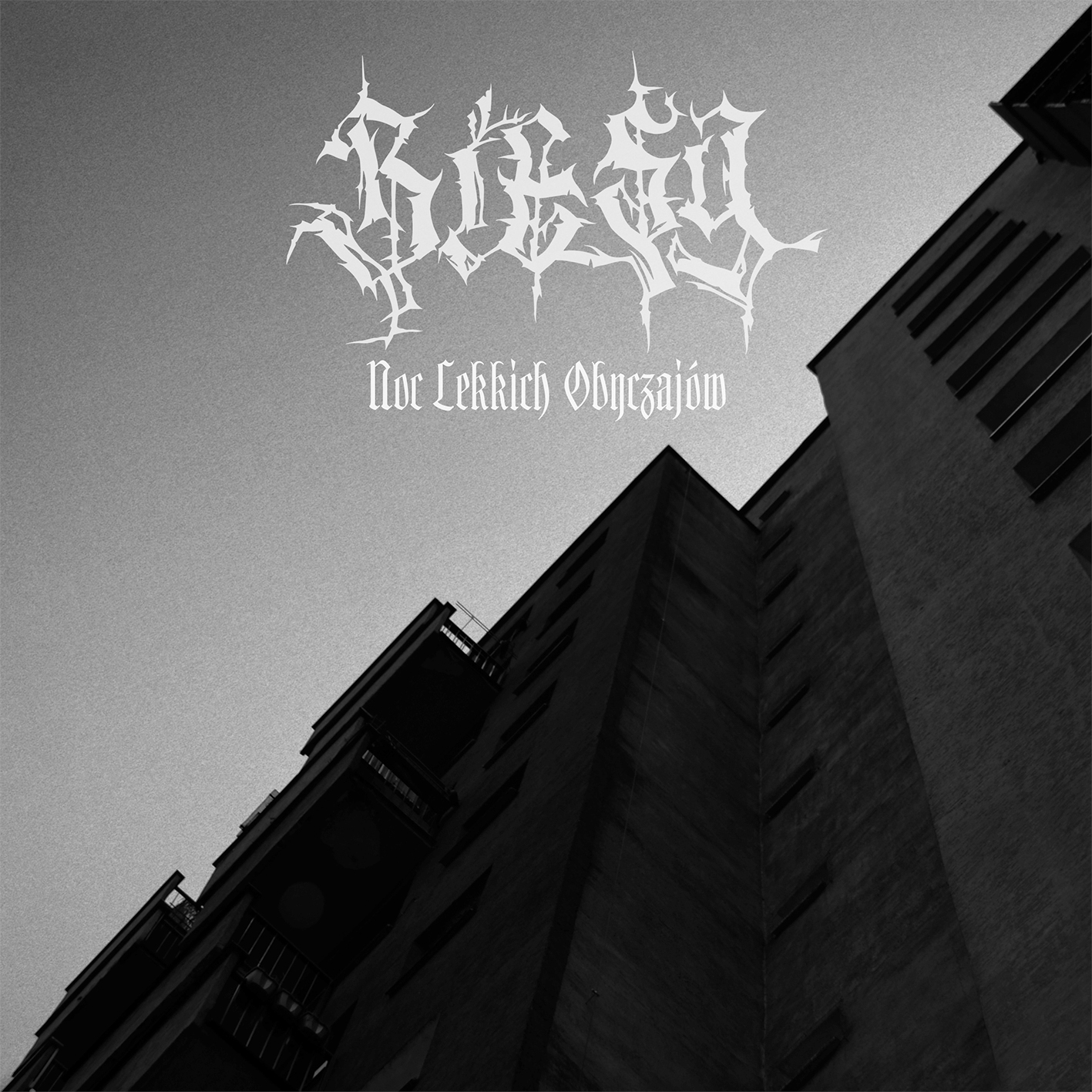
Those poetic words work as a classy introduction to the core essence of Black/Death Metal act Biesy, a brand new project formed in 2014 in Cracow, Poland by lead singer Stawrogin, guitarist, bassist, songwriter and lyricist PR, and drummer Maciej Pelczar. Biesy translates to “fiends” or “demons” from Polish, and from that you can imagine how dark their music should sound in their debut full-length release Noc Lekkich Obyczajów, or “night of weak morals” in English, a concept album about how urban life can separate us from reality and how at the same time it gives us freedom to cross its boundaries, as mentioned above, all enfolded by an ominous and depressive form of extreme music not recommended for the lighthearted. Add to that the concrete gray layout designed by PR himself together with Mentalporn, the menacing logo created by Ihasan, and the fact that all songs are entirely sung (or maybe I should say growled or gnarled) in Polish, and there you have a distinct, full-bodied Extreme Metal ode to everything we love and hate in our concrete jungles.
In the opening track, titled Każdego Dnia (which should translate as “every day”), ominous sounds grow in intensity until the music morphs into the most vile form of Blackened Doom you can think of, with Stawrogin sounding truly demonic on vocals while PR does an amazing job with his mesmerizing guitar lines, resulting in a cold and beautiful display of extreme music that darkly flows into a climatic ending. In W Krew (which should mean something like “in blood”), the power trio switches to a more demolishing mode, blasting a Stygian fusion of Black and Death Metal led by Maciej, who showcases all his skills by delivering both rhythmic and sluggish punches as well as infernal blast beats. In the end, it becomes impossible not to have your heart darkened by this superb hymn. And it seems like peace and happiness are definitely two items you won’t find in the music by Biesy, which is exactly the case in Powroty (or “returns” in English), even more doomed than the two previous songs and with the vociferations by Stawrogin being extremely menacing. Put differently, it’s unhappy, melancholic and visceral Blackened Doom tailored for headbanging until you crack your neck in half.
The second batch of somber sounds by Biesy begins with Czerń Nas Prosi (or “blackness calls us”), the shortest of all tracks, feeling like a satanic invocation with Maciej firing some traditional Doom Metal beats while PR sounds hellish on both guitar and bass, not to mention Stawrogin’s evil gnarls; followed by Rzucony W Przestrzeń (which translates as “thrown into space”), the longest and most obscure of all songs, starting with a deep, enraged roar by Stawrogin. Not only this is a lesson in Extreme Metal where PR is insanely dark on guitars, but its heaviness keeps growing and growing until after around four minutes there’s a creepy intermission that goes on for another four minutes until the trio returns with all their fury and malignancy, with the vocal parts getting more deranged and evil, ending in the most obscure way possible. And if you think you’re safe from Biesy after all that darkness, you’re absolutely wrong, as they have one final onslaught of Black, Death and Doom Metal to disturb your mind and soul, the title-track Noc Lekkich Obyczajów, where Maciej takes his already devilish drumming to a whole new level of dementia accompanied by the lancinating riffs by PR. This fantastic album of extreme music couldn’t have ended in a better way than this, I must say.
In summary, it doesn’t matter if you speak fluent Polish or if you don’t know a single word in this distinct language, Noc Lekkich Obyczajów (which is available for a full stream on YouTube) is definitely worth a shot. What Biesy did in the entire album, uniting the aggressive and damned sounds of Death, Black and Doom Metal with the disorders and unpredictability of life in the city in a sharp and bold manner, deserves our total recognition and respect. You can buy your copy of Noc Lekkich Obyczajów on BandCamp, at the Third Eye Temple webshop or at Discogs, and after finally having the album on your hands, you can add the perfect soundtrack to spend your deranged nights in the city.
Best moments of the album: W Krew and Noc Lekkich Obyczajów.
Worst moments of the album: None.
Released in 2017 Third Eye Temple
Track listing 1. Każdego Dnia 5:08
2. W Krew 6:38
3. Powroty 7:06
4. Czerń Nas Prosi 3:51
5. Rzucony W Przestrzeń 11:29
6. Noc Lekkich Obyczajów 7:59
Band members Stawrogin – vocals
PR – guitars, bass
Maciej Pelczar – drums
Get “motograted” by the thrilling fusion of Alternative Metal and Hard Rock blasted by this tenacious American outfit.
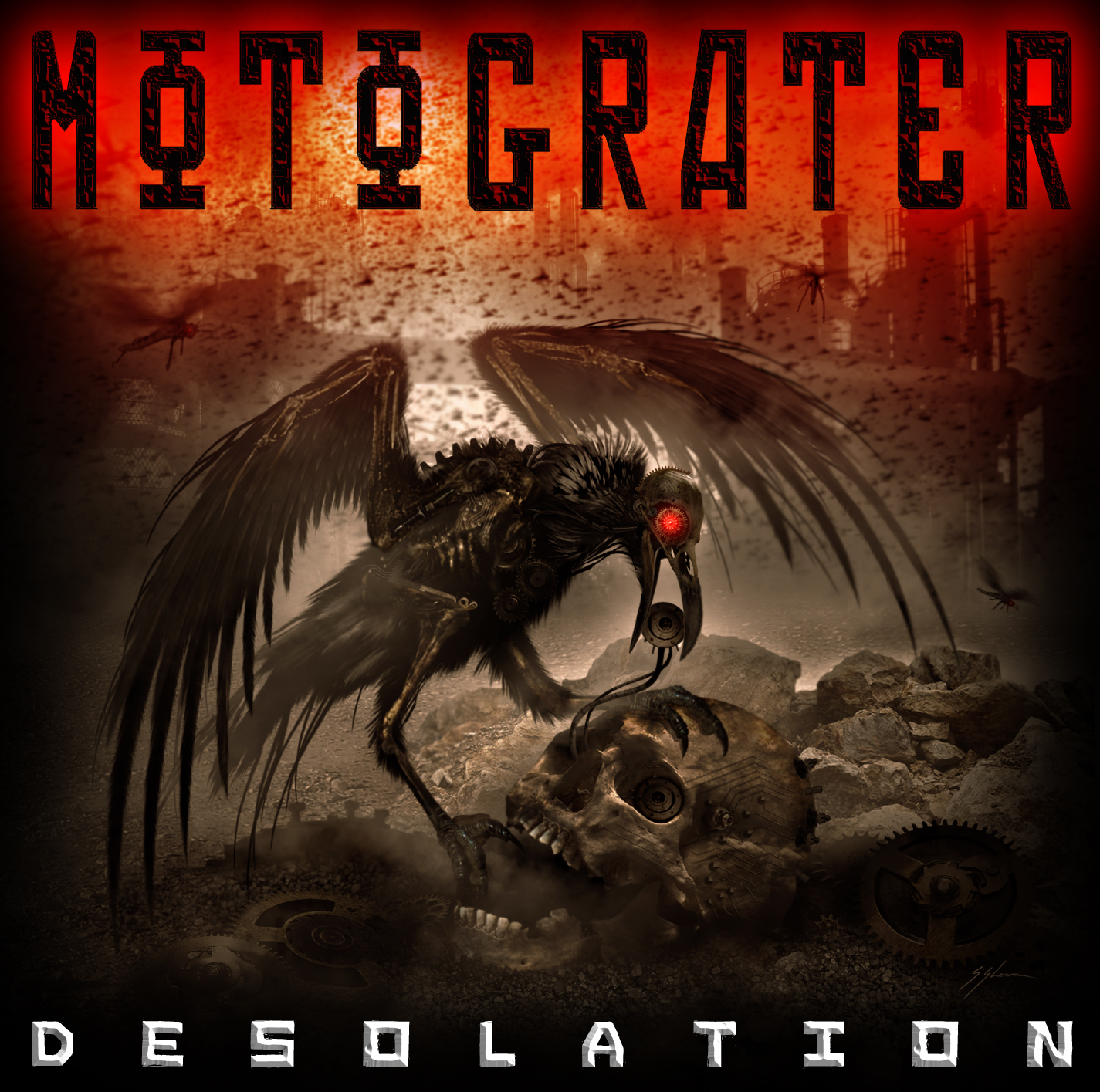
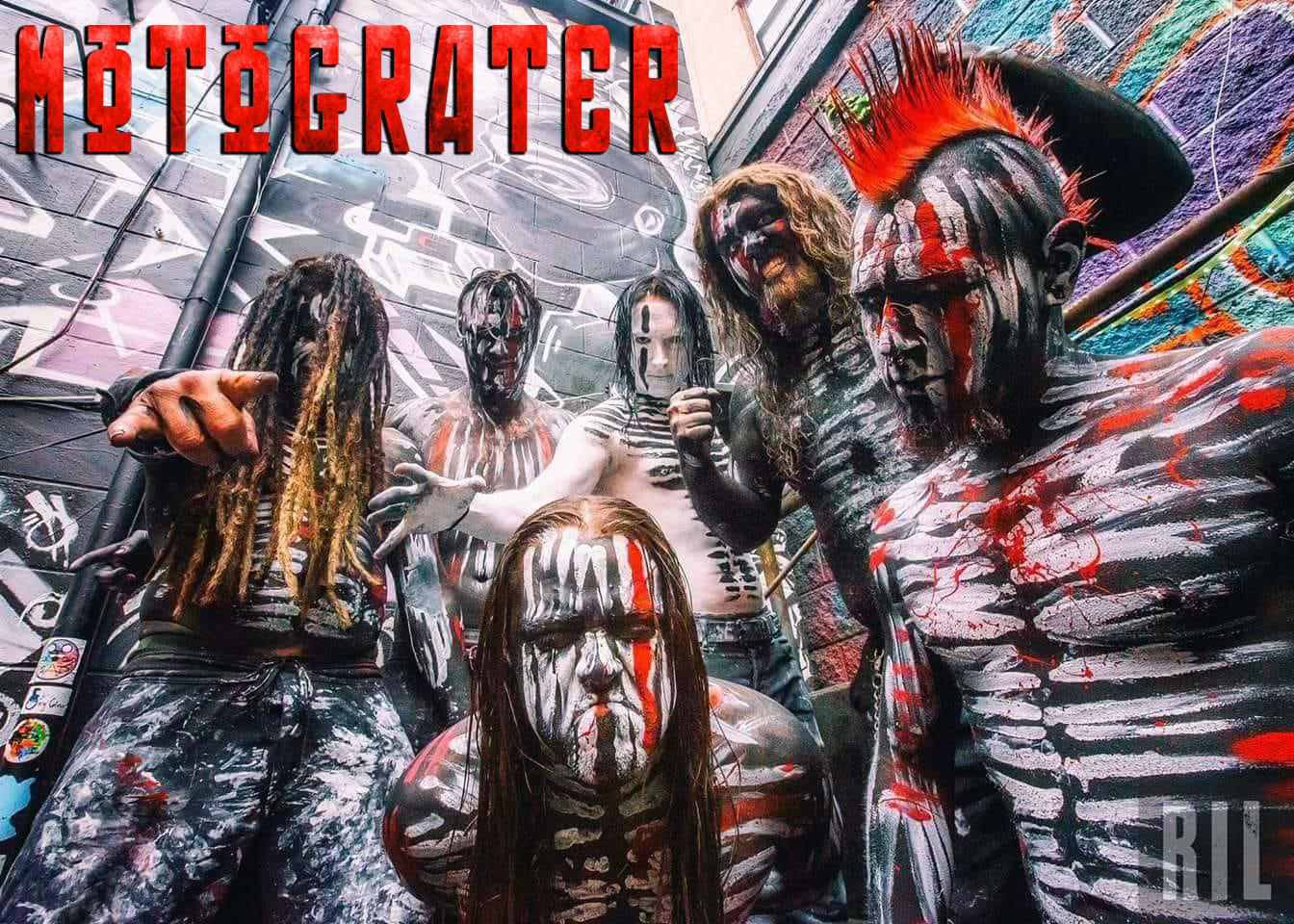
Do you know what a “motograter” is? If you’re familiar with the fusion of Alternative Metal, Heavy Metal and Hard Rock crafted by a relentless American squad known as Motograter, you already known that the “motograter” is a homemade musical instrument designed with industrial cable and guitar pieces that creates a unique bass sound, and by that you can imagine how thunderous their music sounds. Formed in 1995 in Santa Barbara, California, United States, the band (which by the way displays a tribal style body paint for their live concerts) has suffered considerable lineup changes and a few split-ups since their inception, but that didn’t stop the band from keeping on rocking, being reunited once again a few years ago and releasing this year their second full-length album after their 2003 debut self-titled release (featuring Ivan Moody from Five Finger Death Punch on vocals), the hard and heavy Desolation, now with James Legion (Deadform, The Breathing Process) on the vocal duties.
As aforementioned, the reinvigorated Motograter, comprised of the talented James Legion on vocals, Matthew “Nuke” Nunes and Jesse Stamper on guitars, Mylon Guy on bass, Noah “Shark” Robertson on drums and Dustin “Skunk” Anderson on the motograter, will hit you in the face with a feast of alternative and metallic sounds found in their new album, with the artwork designed by Mister-Sam Shearon (who has already worked with renowned bands such as Iron Maiden, Ministry, Rob Zombie and Rammstein, among several others, and also created covers for comic books and graphic novels including Clive Barker’s Hellraiser, Judge Dredd and The X-Files) effectively representing the energy and aggressiveness you’ll find throughout the entire album. With that said, are you ready to be “motograted” by this insane metal tribe?
You’ll experience modernity and electricity flowing from the very first second of the opening track Parasite, where Mylon, Noah and Dustin provide their welcome card in the form of thunderous and vibrant background sounds, giving all the necessary support for James to thrive with his vocals in an awesome blend of Hard Rock with Alternative and Nu Metal. Gripping guitar lines kick off another born-to-be-a-hit composition by Motograter, titled Dorian, with Matthew and Jesse slashing our ears with their riffs while Noah keeps the musicality as heavy as it can be with his pounding drums, not to mention the song’s completely addictive chorus that won’t leave your head for a few weeks; and their galvanized, rumbling sounds continue to permeate the atmosphere in Victim, another great sample of their contemporary Alternative Metal led by the ominous vocals by James.
In the excellent Paragon it becomes clear that those American metallers will never get tired of piercing our brains with their rumbling tones and roars, with the motograter going along really well with the song’s guitar riffs and the potent voice by James, being perfect for banging our heads nonstop together with the band due to its modern and thrilling rhythm. Slowing down a bit and sounding less metallic, Bleeding Through is a semi-ballad by this skillful sextet recommended for some radio play, albeit not as dynamic and fun as the rest of the album, followed by Misanthropical, which despite feeling like it’s going to be another ballad, it slowly morphs into an obscure metal chant with the motograter shaking the foundations of the earth, while the infernal duo Noah and Mylon continue to set fire to the music, and with the song’s guttural vocals adding some good amount of fury to the overall result. Daggers keeps the album at a great level of intricacy and stamina in an interesting mix of what’s almost a dark ballad with the heavier sounds of Alternative Metal, with Mathew and Jesse being fantastic on guitars, delivering both smoother and more electrified riffs during the whole song.
The last part of the album begins with Portrait of Decay, a hybrid of the more visceral music by Slipknot with the melody found in bands such as Alter Bridge, therefore becoming another strong candidate to become a radio favorite due to its catchy pace and vocals. Locust sounds and feels more aggressive than most of the album’s previous tracks, with Noah smashing his drums flawlessly while Mylon and Dustin make sure the music remains vibrant at all times (and let’s not forget about its harsh growls, one of the main ingredients that make this tune so amazing). Rise (There Will Be Blood), the second to last tune in Desolation, is one of those songs to jump up and down with the band during their live performances, bringing elements of more alternative bands like Linkin Park to their already potent sonority, followed by Shadows, a decent dark ballad that’s slightly below what Motograter can offer us despite the great job done by James on vocals. It’s still very enjoyable, though, especially if you’re into modern metal ballads.
In case you feel you’re more than ready to be “motograted” by Motograter, simply follow them on Facebook and listen to their music on YouTube or on Spotify. And if Desolation brings forward all you enjoy in modern metal music, you can buy your copy at the EMP Label Group webstore as a regular CD or as a CD + t-shirt bundle, as well as on iTunes, on Amazon or at Discogs. Not only Desolation has all elements needed to be a must-have album for admirers of contemporary Alternative Metal, but above all it will definitely help Motograter in solidifying their path in heavy music, and let’s hope the band’s lineup is finally stabilized once and for all and that they keep delivering high-end albums like this one for many years to come.
Best moments of the album: Parasite, Dorian, Paragon and Locust.
Worst moments of the album:Bleeding Through and Shadows.
Band members James Legion – vocals
Matthew “Nuke” Nunes – guitar
Jesse Stamper – guitar
Mylon Guy – bass
Noah “Shark” Robertson – drums
Dustin “Skunk” Anderson – motograter
Overflowing rage, despair and electricity, the brand new album by this implacable Colombian act will certainly help the band cement their name in the Extreme Metal underground scene worldwide.
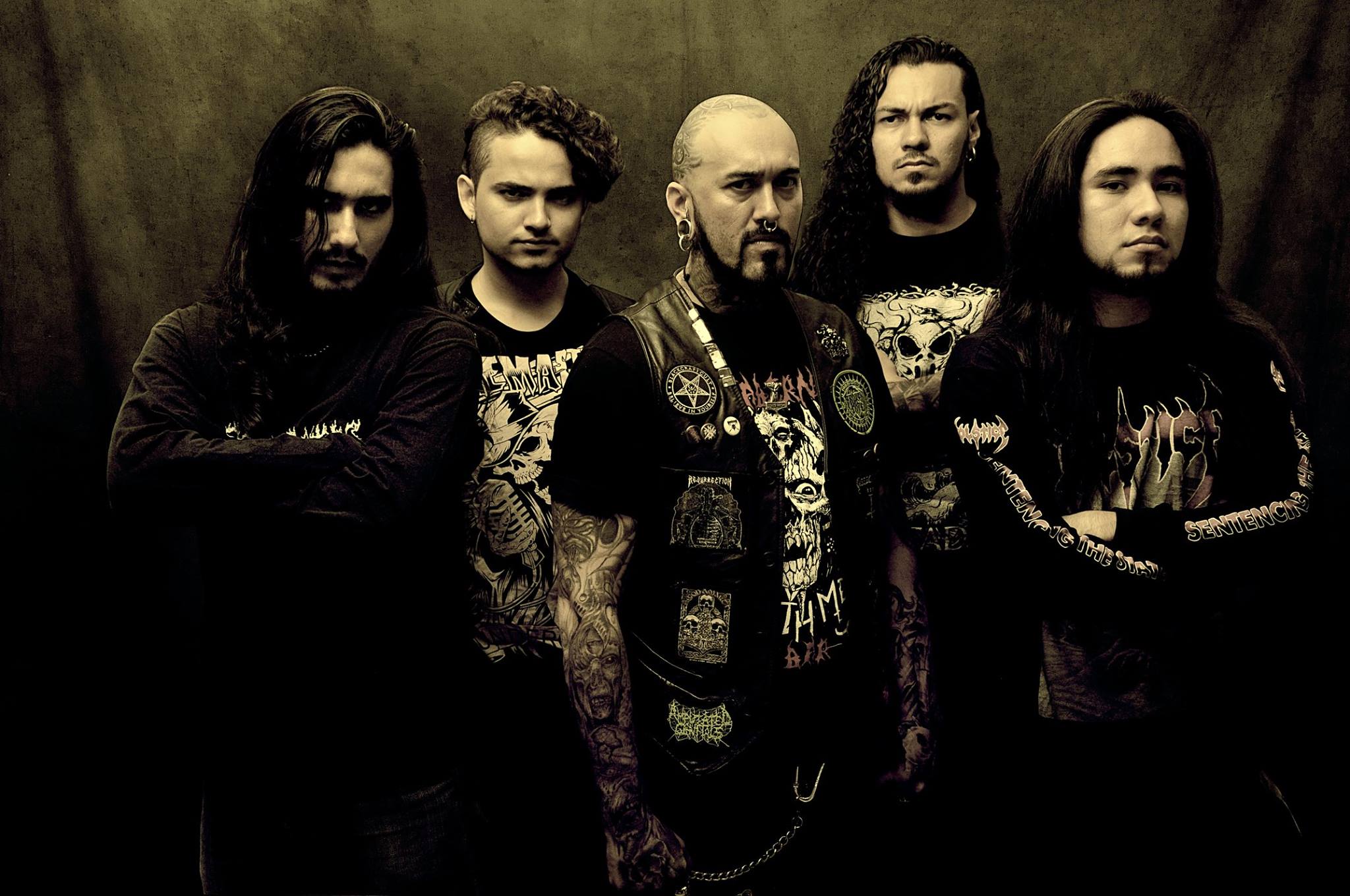
Formed in the fall of 2005 in Pereira, the capital city of the Colombian department of Risaralda, Melodic Death/Black Metal act Eshtadur has been on a roll since their inception, making a name for themselves in all four corners of the world with their unrelenting fusion of extreme sounds in the vein of bands such as At The Gates, Behemoth, Soilwork, Dimmu Borgir and Septicflesh, always adding imposing and symphonic elements to their music to make it even more impactful to our ears. For instance, the band has already toured Colombia, Peru and Mexico, they headlined a stage at Rock Al Parque (which is not only the largest rock festival in Colombia and one of the most important in Latin America, but also arguably the largest free rock festival in the continent) in 2016, and they’re getting ready for their first ever US dates and many other festival appearances in the coming months.
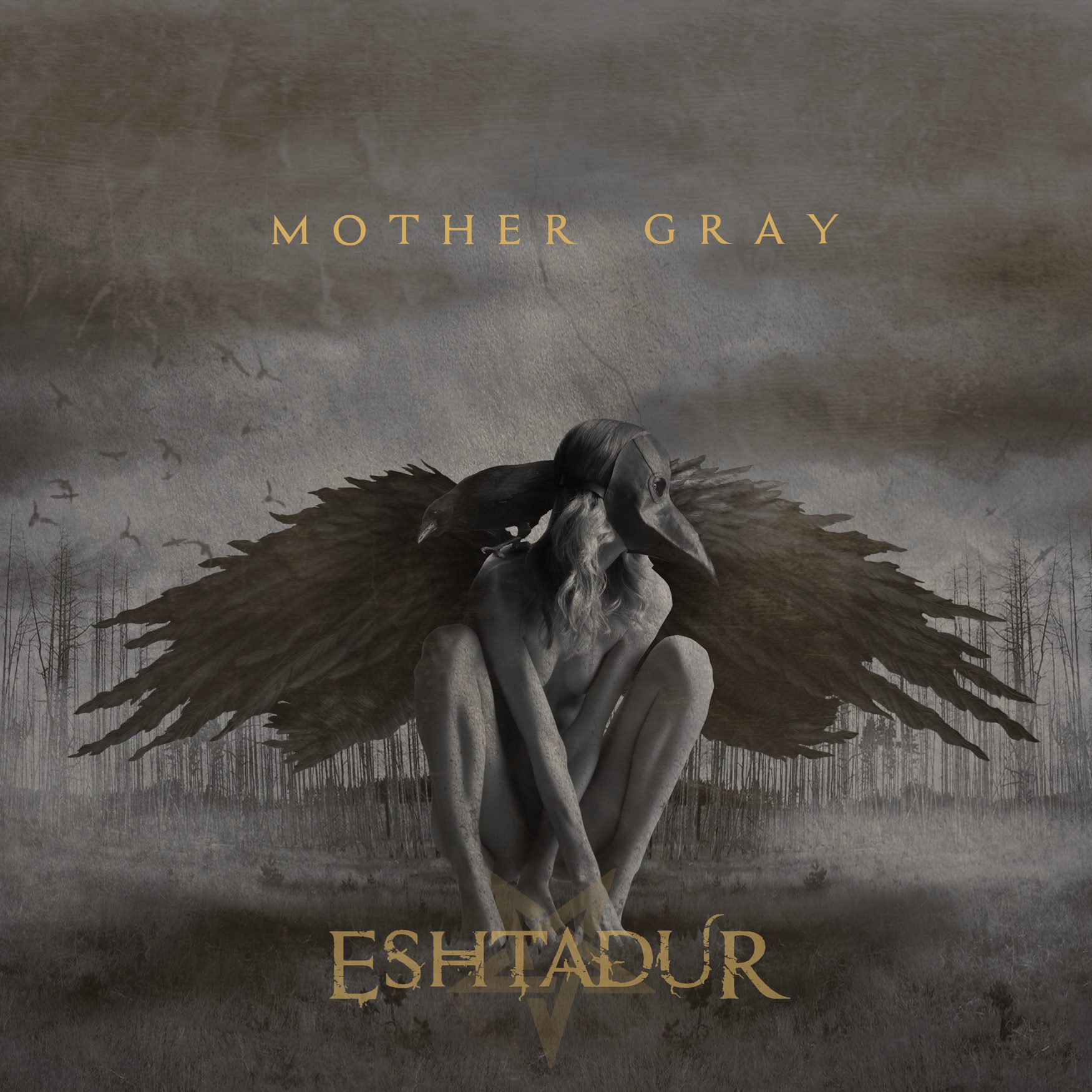
Having already released the full-length albums Dominated by Dummies, in 2011, and Stay Away from Evil and Get Close to Me, in 2013, as well as their debut demo Rebellion of Angels, in 2007, and the EP Oblivion, in 2015, the band comprised of Jorg August on vocals and guitars, Alejo Bet on guitars, Victor Valencia on bass and Mauro Marin on drums is effectively expanding their exposure to the metal scene worldwide with their third full-length installment, the excellent Mother Gray, featuring a classy artwork designed by French artist Sylvain (Razorimages), guest guitar solos by Christofer Malmström (Darkane), and an endless amount of electricity and rage flowing from all their instruments, all led by the desperate growls by Jorg.
The heavy and dark guitars by Jorg and Alejo ignite the aggressive opening track Belong To Nowhere, a high-end fusion of Symphonic Black Metal with Death and Melodic Death Metal where Mauro sounds possessed with his demonic blast beats while Jorg screams in a rabid and desperate manner throughout the entire song. Building an instant connection with the previous tune, Plaguemaker keeps the menacing aura crafted by the band even stronger, displaying a good balance of guitar lines, growls and potent drumming, while the keyboards in the background give it a Dimmu Borgir-inspired vibe; followed by the Melodic/Symphonic Metal aria Cornered At The Earth, where the band engages in their most sinister mode by deepening their growling and strengthening their beats, culminating in a violent and gripping rhythm boosted by its dark lyrics (“Gray the future and gray the earth / Dust in the soil, foil the religion / And the permanent conclusion of being the one who brings pest /Back to the world”). Whereas the Doom Metal-inspired Desolation brings forward a melancholic intro that slowly grows into an imposing sonority, as heavy and dense as it can be, with some faster moments to keep it fresh and vibrant. Moreover, the desperation flowing from the vocals is outstanding, going on and on until the song’s visceral ending to the sound of deep and putrid roars.
Getting back to a faster and more melodic sounding but still presenting the band’s characteristic symphonic elements, also showcasing fiery guitar riffs and solos as well as total havoc blasted by Mauro’s insane beats, the powerful Time Hole To Paris will certainly generate some sick mosh pits during their live concerts, while in March Of The Fallen we face an epic and somewhat funereal beginning to yet another ominous creation by Eshtadur, an eccentric “waltz” of Dark Metal with its keyboards and vocals taking the obscurity to a whole new level, again presenting more of those putrid gnarls before all is said and done. And as their “formula” seems to be one Stygian song followed by a sonic demolition, it’s time to speed things up again with the high-octane chant The Day After I Die, presenting slashing guitars blended with epic keys and rabid growls, without a single second of peace during its five minutes of sheer devastation.
As the first bonus track added by Eshtadur to Mother Gray, we have another symphonic extravaganza that will attack our senses named Heavens to The Ground (originally released in their 2015 EP Oblivion), with the guitars by Jorg and Alejo and the drumming by Mauro being in absolute sync, while the song’s keys make sure the atmosphere remains eerie for the otherworldly vociferations by Jorg. The second bonus offered by the band is entitled Last Day Of The Condors, also from their EP Oblivion, sounding slightly similar to its predecessor (in special its guitar and vocal lines), not as tasty but still very enjoyable. And lastly we have a very cohesive, potent and fresh version they recorded in 2014 for Survivor’s hit Burning Heart (check out the original version HERE) featuring guest musicians Björn “Speed” Strid (Soilwork) and Christopher Clancy (Mutiny Within) on vocals, and Per Nilsson (Scar Symmetry) and Allan Marcus (Arecibo) on lead guitars. Survivor might be better known by the usual rocker for the all-time Rocky Balboa-classic “Eye of the Tiger”, but this song also represents all the passion Survivor had for rock music, not to mention this cover version is Eshtadur’s own tribute to Survivor’s longtime frontman Jimi Jamison (R.I.P.), who died of a heart attack in September 2014.
If you enjoyed all the fury blasted by Eshtadur in Mother Gray, I highly recommend you go check their Facebook page and YouTube channel for more of their kick-ass music, and if you want to purchase Mother Gray (which you can listen in its entirety on Spotify), you can grab your copy of the album at the Bleeding Music Records’ BandCamp, on iTunes, on Amazon, or at several other locations such as Barnes & Noble and ImportCDs. As mentioned in the beginning of this review, Mother Gray overflows rage, despair and energy, and as you’re more than aware of, those are some of the main elements which make us love Heavy Metal so much. In other words, Eshtadur nailed it with Mother Gray, surely making all metalheads in Colombia proud of their music.
Best moments of the album: Belong To Nowhere, Cornered At The Earth and Time Hole To Paris.
Worst moments of the album: None.
Released in 2017 Bleeding Music Records
Track listing 1. Belong To Nowhere 3:27
2. Plaguemaker 4:28
3. Cornered At The Earth 5:01
4. Desolation 6:50
5. Time Hole To Paris 5:21
6. March Of The Fallen 7:32
7. The Day After I Die 5:06
Oblivion/Burning Heart bonus tracks 8. Heavens to The Ground 3:26
9. Last Day Of The Condors 3:15
10. Burning Heart (Survivor cover) 4:33
Band members Jorg August – vocals, guitars
Alejo Bet – guitars
Victor Valencia – bass
Mauro Marin – drums
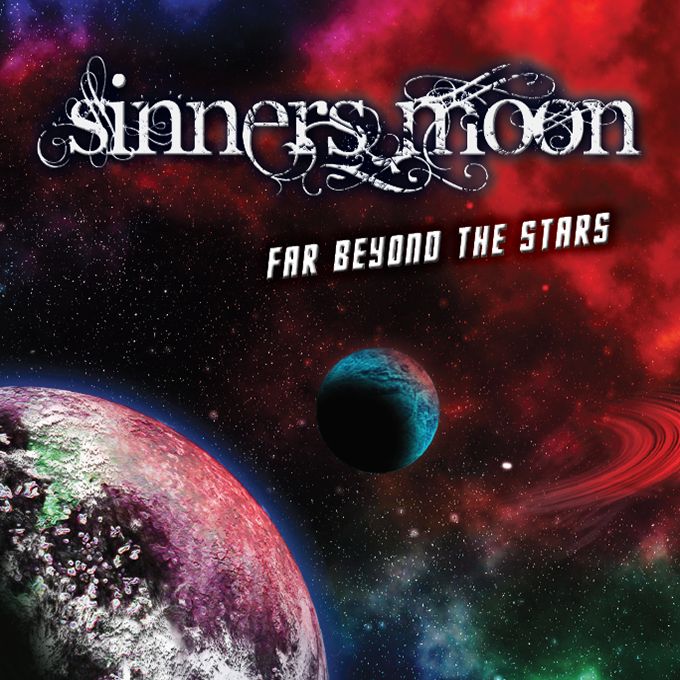
What are you waiting for to fly far beyond the stars with the brand new (and extremely fun) EP by this Symphonic Metal squad from Slovakia?
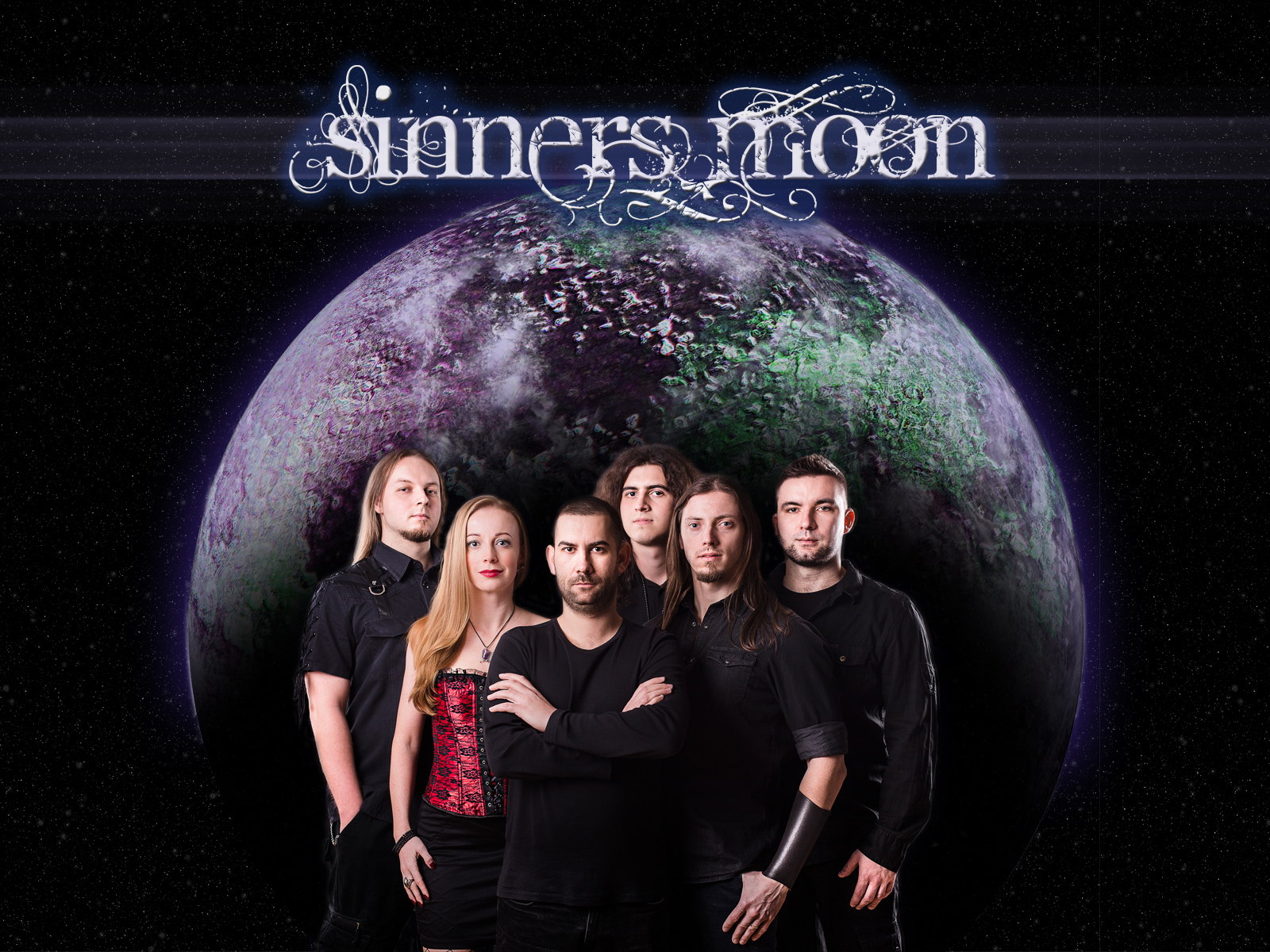
If you’re a fan of the music by bands such as Nightwish, Epica, Sonata Arctica, After Forever and Kamelot, among several others, you’ll be happy to know that an up-and-coming Symphonic Metal band hailing from Sereď, a town in southern Slovak Republic, is back with their imposing sounding in a brand new EP that not only lives up to the legacy of the genre, but that also offers some interesting variations and surprises that keep it truly entertaining from start to finish. I’m talking about Sinners Moon and their EP titled Far Beyond The Stars, another solid step in their recent but already exciting career and a highly recommended option for fans of the fusion of heavy music with operatic vocals and fantasy.
The fact the Sinners Moon managed to keep the exact same lineup (Simona and Derick on vocals, LukeN on guitars, Viktor on bass, Jarthuusen on keyboards and Jan on drums) that recorded their 2015 full-length opus Atlantis also helped the band in maintaining a high level of cohesiveness and dynamism in their new EP. As a matter of fact, one of the most complex songs in Atlantis, the 8-minute aria Fly to the Moon, works as the prequel to the music found in Far Beyond The Stars, proving LukeN and his bandmates are extremely focused when creating the music by Sinners Moon, always trying to give it a purpose and a soul.
The first half of the EP presents the trademark musicality by Sinners Moon, with their metal symphony permeating the air form the very first second in the intro Awakening (The Suite), creating the perfect ambience for the title-track Far Beyond The Stars, an electrifying fusion of Symphonic Metal with the more traditional version of Scandinavian Melodic Metal, where frontwoman Simona delivers her passionate and delicate vocal lines in contrast with Derick’s demonic gnarls. Moreover, LukeN is on fire with his guitar, making a flammable duo with Jarthuusen, and if you love Melodic Metal I’m sure you’ll feel energized by the song’s powerful lyrics (“Reach out your hand for the stars high above / We are hungry to find this world left aside / Please take me there we will fly to the moon / Far beyond all the stars we will touch them together”). Then in the awesome Travelers the rumbling bass by Viktor is quickly joined by Jarthuusen and LukeN, generating an amazing metallic vibe while Jan keeps the song’s pace at a thrilling level. In addition, the guitar riffs fired by LukeN provide Simona all she needs to declaim the song’s beautiful lyrics in a compelling way (“Dreams of love, dreams of life / Somewhere else we gain our hopes / With this heart and these hands / We will build a ourselves a new home / Never give up, never give in on our ways”).
After that blast of Symphonic Metal, the band brings forward two welcome surprises in Far Beyond The Stars, starting with their cover version for Skúsime To Cez Vesmír, which translates as “let’s try it through the universe”, by Slovak 80’s rock band Tublatanka (watch a vibrant live version of Tublatanka playing it in 1989 HERE). Sinners Moon added their own symphonic twist to this excellent rock song, with highlights to the amazing job done by Jan on drums as well as the electrified vocals by Simona. And the second treat of the EP is the opening track Far Beyond The Stars in a smooth and lovely piano-ballad version, with total focus on the beautiful voice of Simona, being the perfect soundtrack for being “captured” in a warm and comforting embrace by the person you love the most.
In summary, after all the epicness and imposing sounds found in Atlantis, it looks like Sinners Moon wanted to take an “alternative break” from all the seriousness that surrounded that album and show fans of heavy music a more relaxed side of the band, and let’s say they nailed it in Far Beyond The Stars, which can be purchased on BandCamp, at the Slovak Metal Army webstore or at Discogs. Also, don’t forget to visit the band’s Facebook page and YouTube channel for more of their top-tier metal music, and if you’re already addicted to their symphonic sounds you should definitely go for the deluxe digital version of the album, including a bonus demo track from their early days (before the lineup was even solidified) titled Dawn Of War, which by the way displays an above average overall production and a high-end sound quality for being just a demo, as well as few bonus featurettes including a special digital EP wallpaper, a digital booklet and a “thank you” note from the band. With that said, what are you waiting for to grab your copy of this fun EP and fly with Sinners Moon far beyond the stars?
Best moments of the album: Travelers and Skúsime To Cez Vesmír.
Worst moments of the album: None.
Released in 2017 Slovak Metal Army
Track listing 1. Awakening (The Suite) 1:42
2. Far Beyond The Stars 4:19
3. Travelers 4:10
4. Skúsime To Cez Vesmír (Tublatanka cover) 4:24
5. Far Beyond The Stars (Piano Version) 5:08
Deluxe Digital Version bonus track 6. Dawn Of War (2009 Demo Version) 5:47
Band members Simona – vocals
Derick – growls
LukeN – guitars
Viktor – bass
Jarthuusen – keyboards
Jan – drums


 Anti-Christianity, death, cruelty and other controversial topics, all vociferated in the darkest existing form of Belarusian. That’s what you’ll get in Sychodžańnie, the brand new and extremely occult EP by a Belarusian Death/Black Metal mysterious entity that goes by the name of Ljosazabojstwa, formed in 2013 in the capital city of Belarus, Minsk. If you have absolutely no idea how extreme music sounds when sung in “White Russian”, Sychodžańnie might be the perfect opportunity for you not only to feel the strength of this distinct East Slavic language in metal, but also to get to know more about Ljosazabojstwa, a fresh new name in underground music that will certainly disturb your peace of mind.
 Slow and steady beats ignite another feast of primeval, Stygian sounds by Ljosazabojstwa named Šliach Na Miehida, with their demonic lead singer vociferating the song’s cryptic lyrics in a truly threatening manner, also presenting a smooth acoustic break almost at the end before devastation returns in full force (and when you least expect, you’ll find yourself addicted to the band’s hellish music). The title-track Sychodžańnie is a horror movie-inspired instrumental bridge that will invade your senses before Zabojstwa Ljosu comes crushing your skull with a tempest of metallic, rip-roaring sounds, infernal vociferations and demented vocal samples. In addition, its guitars bring an acid hybrid of Death and Doom Metal riffs, while drums continue to smash us mercilessly until its devastating and climatic grand finale.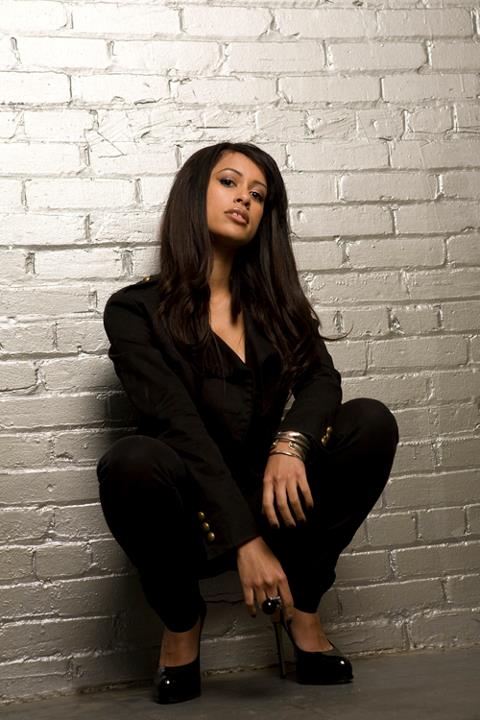






 THE HEADBANGING MOOSE