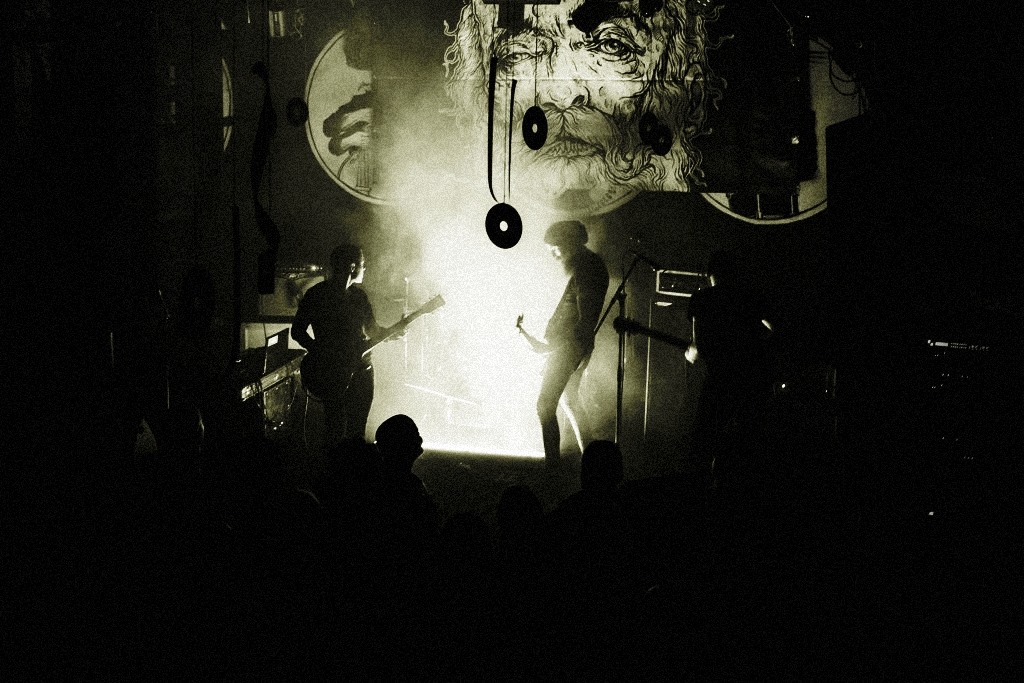
Album Review – Jasmeno / Assemblage of Cinematic Idioms (2026)

After nearly four years, Poland’s own Avantgarde Metal act returns with a work that not only expands on its existing language, but also redefines it in an almost sculptural spirit.

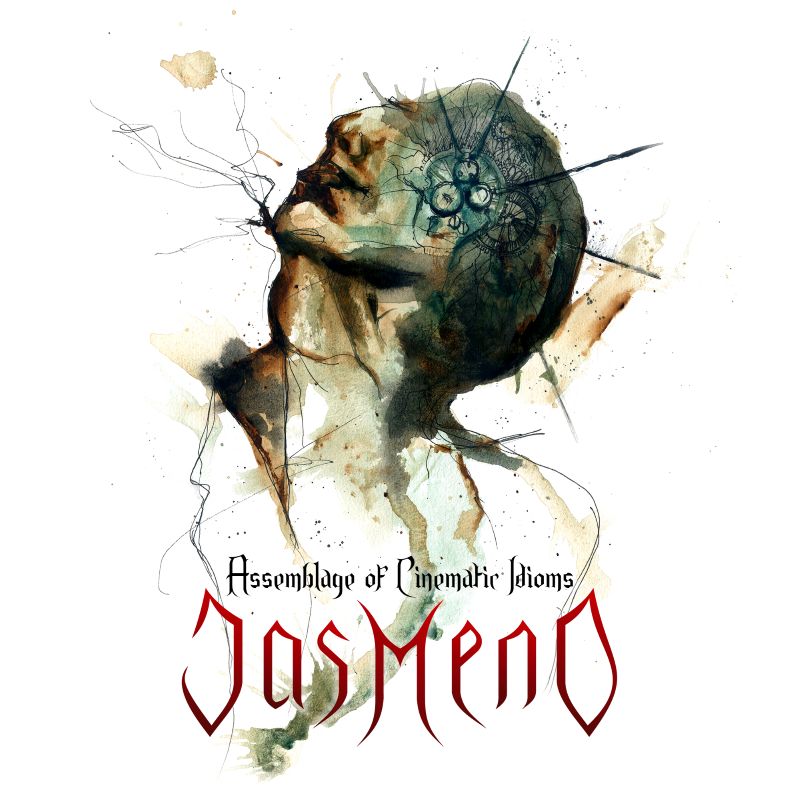
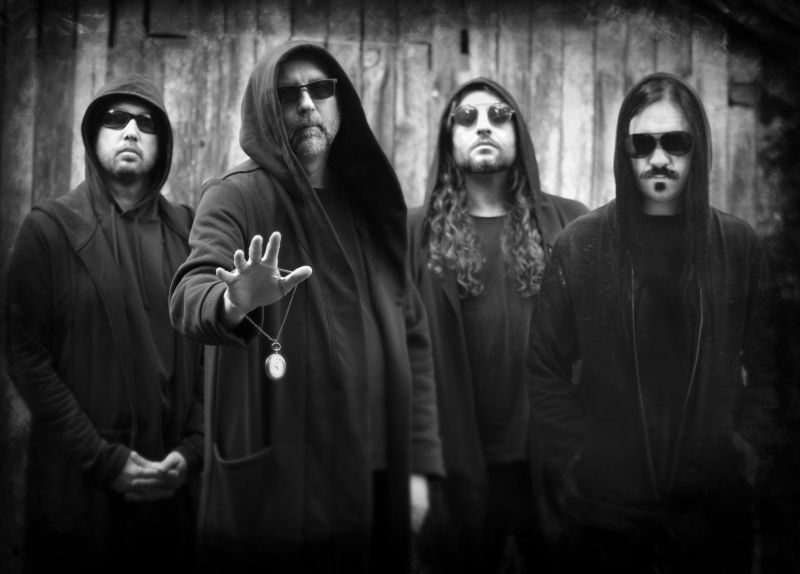
After nearly four years, Poland’s own Avantgarde Metal act Jasmeno returns with a work that not only expands on its existing language, but also redefines it in an almost sculptural spirit, titled Assemblage of Cinematic Idioms, offering us all six extensive tracks totaling nearly 50 minutes, creating a cohesive, thoughtful structure. Featuring the band’s mastermind Slavomir Nietupski on orchestrations, synthesizers, grand piano and programming, alongside vocalist Brian Gawaski, guitarist Michal Grall (Sinister, Unblessed Divine), and bassist Artur Olkowicz (Art of Illusion, Mechanism), as well as an array of guest musicians including Bartlomiej Krysiuk (Patriarkh, Batushka), Marc Grewe (Morgoth, Insidious Desease), Snorre Ruch (Thorns, Satyricon), and Yusaf Parvez (DHG, Dødheimsgard), among many others, Assemblage of Cinematic Idioms is a musical assemblage in its purest form – fragmented yet coherent, multi–layered yet subordinated to a single vision without the use of artificial intelligence solutions. Produced by Slavomir Nietupski and Tangled Records, mixed and mastered by Jakub Mankowski at Sounds Great Promotion Studio, and with all graphic design, hand paintings and layout by Slavomir NietupskiIn (in memory of Wladyslaw Hasior), the album is not about being an easily digestible beauty, but about the intensity of experiences and the recurring desire to commune with the Jasmeno universe.

The opening track Synesthesia Imperialis offers a cinematic intro that gradually evolves into a bestial display of the band’s core avantgarde and experimental sounds, with the powerful vocals by Brian walking hand in hand with all riffs, bass lines and imposing orchestrations by Michal, Artur and Slamovir; followed by A Code of Equivocation, another beautiful, bold and captivating creation by the quartet, alternating between heavier moments and pure atmospheric, introspective passages, with their guitars exhaling fire. Then venturing through the realms of Epic and Melodic Death Metal we have His Rebirth, again presenting an imposing ambience that will embrace our souls in darkness; and their riffs and solos will pierce our minds in The Void, while Brian’s vocals are back to their more epic vibe, like the soundtrack to a futuristic thriller, not to mention how charming the piano sounds. The Provocation ov Fate is as intense and vibrant as its predecessors, with the band once again delivering an overdose of Avantgarde Metal magic, Needless to say, it should sound incredible if played live, whereas lastly we face Seduced by Ambiguity, a more introspective, grim creation that concludes the album on a Stygian mode, with all guitars sounding menacing.

Emerging as a complete work both conceptually and in terms of execution, Assemblage of Cinematic Idioms offers a sonic matrix that resembles an assembly line more than a classic album – a space in which each element has its own name, but only when fully assembled does it reveal its full meaning, based on the principles of collaboration and openness. Not only that, the diversity of personalities found in the album gives the entire piece additional depth and a distinctive character among contemporary productions, with each guest bringing their own idiom – a distinct, yet unique language of emotion and sophisticated experiences. Having said all that, you should definitely give Slavomir and his Jasmeno a shout on Facebook and on Instagram, stream their music on YouTube and on Spotify, and of course purchase their striking new album from BandCamp. Assemblage of Cinematic Idioms might not be an easy listen at first, but once the music hits you, get ready for a wild ride together with one of the most interesting bands of the Polish music scene.

Best moments of the album: Synesthesia Imperialis and The Provocation ov Fate.

Worst moments of the album: None.

Released in 2026 Tangled Records

Track listing
1. Synesthesia Imperialis 10:12
2. A Code of Equivocation 8:03
3. His Rebirth 5:19
4. The Void 8:08
5. The Provocation ov Fate 7:55
6. Seduced by Ambiguity 8:15

Band members
Brian Gawaski – vocals
Michal Grall – guitars
Artur Olkowicz – electric & fretless bass
Slavomir Nietupski – orchestrations, synthesizers, grand piano & programming

Guest musicians
Bartlomiej Krysiuk – vocals
Marc Grewe – vocals
Slawomir Slavo Maryniewski – vocals
Snorre Ruch – vocals
Joanna Zondlowska – vocals
Sasha Janowicz – vocals
Yusaf Parvez – vocals, electric guitars
Lecia Louise – electric & acoustic guitars
Piotr Filonowicz – electric guitars
Mariusz Domaradzki – electric guitars
Marek Depa – electric guitars
Tomasz Andrzejewski – electric guitars
Jakub Wagner – flamenco guitars
Lukasz Kowalski – electric guitars
Robert Kolakowski – synthesizers
Ryszard Kramarski – synthesizers

Album Review – Tardigrade Inferno / Hush (2026)

Russia’s own Dark Cabaret Metal outfit returns with their third studio offering, blending their thoughtful songwriting, ironic lyricism, and aesthetic visuals with an authentic sound delivered with studio precision.

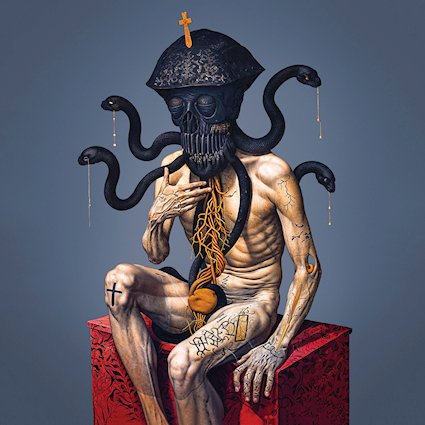
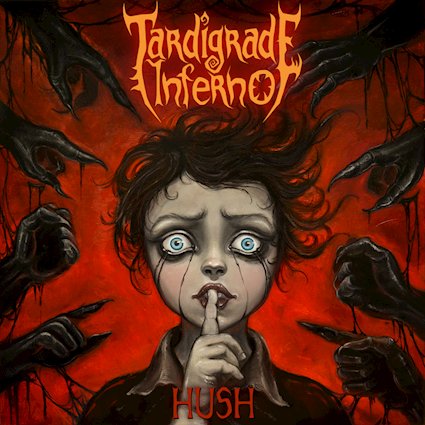
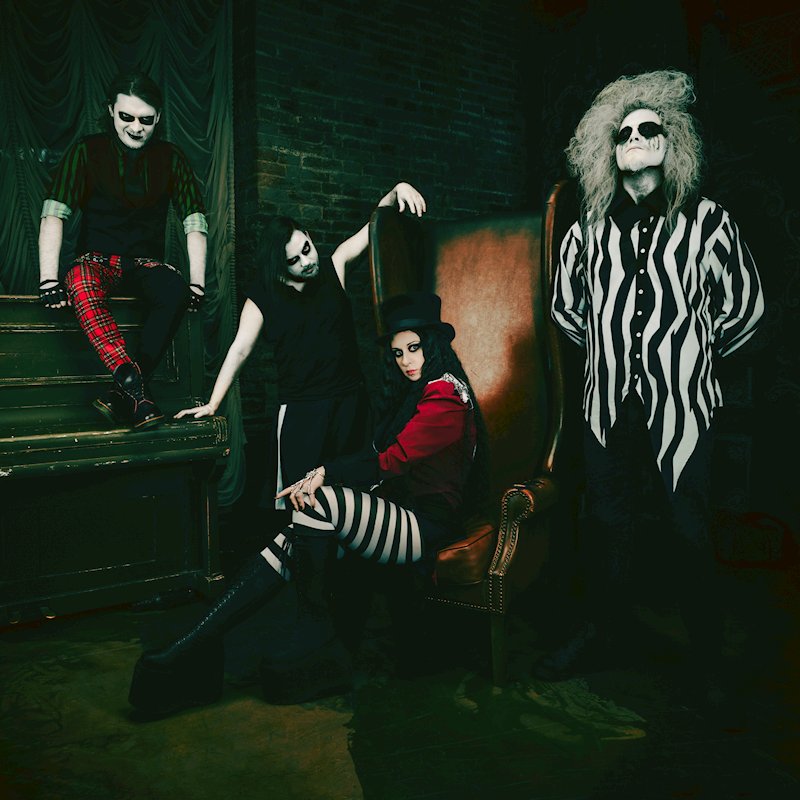
Formed in 2016 in Saint Petersburg, Russia (but apparently now located in Melbourne, Australia), the charming Avantgarde/Progressive Dark Metal/Rock known as Tardigrade Inferno, named after the resilient “slow walkers” (tardigrades) and the concept of a fiery hell (inferno), returns with another overdose of their “Dark Cabaret Metal” in their third full-length album, titled Hush. Produced by Vladimir Lehtinen at Blastbear Sound, and with a darkly delicate artwork by Milena Kress, the follow-up to their 2023 sophomore Burn the Circus is a compelling result of the evolving signature style by vocalist Darya Rorria, guitarist Alexander Pavlovich, bassist Maxim Belekhov, and drummer Andrew Drew, and the sheer power of their live performances, blending their thoughtful songwriting, ironic lyricism, and striking, highly aesthetic visuals with an authentic sound delivered with studio precision.

The album kicks off with the circus-like intro The Final Show, a work of madness by the band, hitting us hard in the head before we face Hide’n’Seek, starting in a tribalistic way to the hammering drums by Andrew and, therefore, inspiring us all to headbang like true maniacs while Darya delivers a Stygian vocal performance for our total delight. Deadly Fairytales is kinda like the epitome of “Dark Cabaret Metal”, as if Slipknot decided to hit the dance floor or start their own musical, with Alexander’s riffs adding an extra kick to the music; whereas All In Your Head is a song that should sound incredible live, leaning towards the Alternative Metal played by bands like Butcher Babies and Wednesday 13, followed by Dead Fish Smile, and I’m not sure if it’s a dark ballad or just a slower-than-usual song, but in the end it gets a bit generic.

They get back on track and put the pedal to the metal in the high-octane Subatomic Heist, with the guitars by Alexander walking hand in hand with Maxim’s thunderous bass lines; and their avantgarde and experimental vein pulses harder in I.C.D., while Darya screams the song’s wicked words like a mad queen. Goor keeps the energy flowing with its futuristic background elements and the always heavy artillery crafted by Maxim and Andrew, while the title-track Hush brings to our avid ears a striking fusion of Dark Metal with Metalcore and Alternative Rock and Metal, with Darya’s vocals and Alexander’s eerie guitar lines being in absolute sync. Finally, after the piano interlude Hypograph, we’re treated to six minutes of total metal madness titled I Am Eternal, focusing on Darya’s introspective, deep vocals while her bandmates make sure every single space in the air is filled with their heavy sounds.

Having always paid special attention to the visual side of their art, from stage costumes and characters to their album covers, Tardigrade Inferno are on absolute fire from start to finish in Hush, inviting us all for a wild and whimsical journey together with the band. You can find more information about Tardigrade Inferno, their music, tour dates, and plans for the future on Facebook, on Instagram, and on VKontakte, subscribe to their YouTube channel, stream their discography on any platform such as Spotify, and above all that, grab a copy of the striking Hush from BandCamp. With the release of Hush, it’s also the first time the band’s mascot, the Tardigrade, is absent from the artwork, symbolizing a kind of coming-of-age. The toys have been left behind in the nursery, and you better get ready as the band’s lunatic music found in Hush will mercilessly drag you to hell.

Best moments of the album: Hide’n’Seek, Subatomic Heist and Hush.

Worst moments of the album: Dead Fish Smile.

Released in 2026 Independent

Track listing
1. The Final Show 2:29
2. Hide’n’Seek 3:40
3. Deadly Fairytales 4:16
4. All In Your Head 4:12
5. Dead Fish Smile 5:01
6. Subatomic Heist 2:53
7. I.C.D. 5:29
8. Goor 5:55
9. Hush 3:38
10. Hypograph 0:44
11. I Am Eternal 6:28

Band members
Darya Rorria – vocals
Alexander Pavlovich – guitars
Maxim Belekhov – bass
Andrew Drew – drums

Album Review – In The Woods… / Otra (2025)

These Norwegian Avantgarde Metal veterans are ready to take us on a musical journey down the river that crosses their beautiful homeland in their seventh studio album.

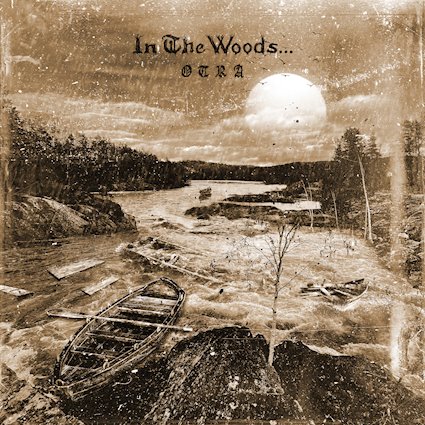
Formed in late 1991 by members of the original lineup of Green Carnation, whom they are a continuation of, Kristiansand, Agder, Norway’s own Avantgarde/Progressive Black/Gothic Metal act In The Woods…, one of the first bands to use the name “Pagan Metal” as a description for their style, is ready to stun us all once again with their seventh studio album, titled Otra, the follow-up to their critically acclaimed 2022 opus Diversum. Recorded at In The Woods Homestudio (vocals, guitars, bass), and by John Ronny Bøe at Krutt Studio (drums), mixed and mastered by Frédéric Gervais at Studio Henosis, and with a stylish artwork and layout by Seiya Ogino of Ogino Design, the new album by Bernt Fjellestad on vocals, Kåre André Sletteberg on the guitars and keyboards, Bernt Horne Sørensen also on the guitars, Nils Olav Drivdal on bass, and Anders Kobro on drums is a must-listen for fans of Ulver, Shores of Null, Saturnus, and Dødheimsgard, among others, with all songs revolving around stories connected to the eponymous river that winds for 245 kilometers through the South of Norway and spills into the Skagerrak, the strait that separates the country from Denmark and Sweden, at the band’s home in Kristiansand.

Melancholy and doom flow from the vocals by Bernt Fjellestad in The Things You Shouldn’t Know before the whole band begins their darkened attack led by the pounding drums by Anders. In addition, Kåre also sounds sharp on keyboards, resulting in over eight minutes of majestic avantgarde music. The classic Scandinavian riffs by Kåre and Bernt Horne Sørensen will inspire you to bang your head nonstop in A Misrepresentation of I, again boosted by the deep vociferations by Bernt Fjellestad; whereas the next song, titled The Crimson Crown, also brings forward a pensive, grim start that evolves into a melodic and progressive fusion of Doom and Gothic Metal, with Nils making our heads tremble with his metallic bass lines. The album continues on a serene yet Stygian mode in The Kiss and the Lie, where Nils and Anders once again generate a dense atmosphere perfect for Bernt Fjellestad’s deep clean vocals, followed by Let Me Sing, another solid fusion of Avantgarde and Doom Metal, sounding heavy on bass thanks to the energy Nils puts into his playing. Come Ye Sinners is by far the heaviest and therefore the most exciting of all songs, with their riffs and beats transpiring doom while also living up to the legacy of Avantgarde and Progressive Death Metal; and lastly, it’s sheer melancholy in The Wandering Deity, with Anders dictating the song’s pace supported by the whimsical riffage by Kåre and Bernt Horne Sørensen, ending the album on a climatic and dark vibe.

Demonstrating the strength and artistic maturity of the Norwegians’ third incarnation, Otra is indeed an enticing and highly pleasurable album to listen to, respecting the band’s past while at the same time also breaking new ground. Hence, if you want to be part of this new musical journey by In The Woods… down the river that crosses their beautiful homeland, you can follow them on Facebook and on Instagram for news, tour dates and other nice to know details about the band, stream their classic creations on Spotify, and of course purchase Otra from BandCamp or by clicking HERE. In The Woods… are always evolving, always expanding their horizons, and Otra is the ultimate depiction of their creativity, leaving us eager for more from those Norwegian trailblazers in the coming years without a shadow of a doubt.

Best moments of the album: The Things You Shouldn’t Know, A Misrepresentation of I and Come Ye Sinners.

Worst moments of the album: Let Me Sing.

Released in 2025 Prophecy Productions

Track listing
1. The Things You Shouldn’t Know 8:32
2. A Misrepresentation of I 6:11
3. The Crimson Crown 6:21
4. The Kiss and the Lie 5:31
5. Let Me Sing 7:01
6. Come Ye Sinners 7:16
7. The Wandering Deity 5:57

Band members
Bernt Fjellestad – vocals
Kåre André Sletteberg – guitars, keyboards
Bernt Horne Sørensen – guitars
Nils Olav Drivdal – bass
Anders Kobro – drums

Guest musicians
Alf Erik Sørensen – addditional keyboards
Hector Montero – additional synths

Album Review – Lord Agheros / Anhedonia (2025)

One of the leading Atmospheric and Avantgarde Black Metal names in Italy returns with its cinematic, emotional and dramatic seventh studio album.

One of the leading Atmospheric and Avantgarde Black Metal names in Italy, Catania, Sicily-based entity Lord Agheros takes us into a musically extreme world that mixes Nordic-style Black Metal with ancient and melancholic atmospheres linked to symphonic and ambient elements in its newborn spawn Anhedonia, the seventh studio album in its brilliant career. Recorded, mixed and mastered by Lord Agheros at Molon Labe Studio, with graphic project and layout by Federico De Luca, the new album by vocalist and multi-instrumentalist Gerassimos Evangelou offers a beautiful slab of what he likes to call “Atmospheric Emotional Black Metal”, bringing forward the cinematic essence of Ulver, the Avantgardism of Ihshan, the strength of Wolves In The Throne Room, the Mediterranean touch of Moonspell, and the dramatic elements of Empyrium.

A melancholic, soothing start evolves into a deep feast of harsh and ethereal vocalizations that lasts for over six minutes in Lament of the Lost, flowing into Harmony of Despair, which also starts in a serene manner before Gerassimos delivers devilish riffs and beats boosted by a grandiose backdrop, also presenting delicate piano notes and endless fire. Eclipse of Hope offers another enfolding dosage of his emotional version of Atmospheric Black Metal, alternating harsh, visceral moments and delicate passages, whereas a reverberating sound will enfold you in darkness in Lost Dreams Ritual, taking too long to take off despite its interesting tribalistic vibe.

Sorrow’s Shroud is a lot heavier, more introspective and somber than its predecessors, with Gerassimos kicking some ass with both his harsh vociferations and serene, soothing instrumental passages; flowing into the beyond atmospheric Soul’s Descent into the Void, with its piano notes matching beautifully with the female vocals by a mysterious guest vocalist, also connecting with the melodic track Tears in the Silence, where Gerassimos focuses on the ethereal sound of his acoustic guitar alongside the gentle sound of the piano, and ending with the Avantgarde Metal feast named Ancient Echoes, with all vocalizations and ambient elements putting a pensive conclusion to the album.

In a nutshell, Anhedonia is a sort of musical journey between esoteric and oriental sounds, Ambient-wave elements and references to Nordic musical traditions, but without losing the identity of the project made by the beauty of the atmospheres that blend inextricably with the sonic extremism of Black Metal. Hence, don’t forget to follow Gerassimos and his Lord Agheros on Facebook and on Instagram, to stream his music on Spotify, and of course to buy a copy of his striking new album from BandCamp or from My Kingdom Music’s BandCamp or webstore. As it is for years now, always expect the unexpected. Because this was, is, and will always be the main path of Lord Agheros.

Best moments of the album: Harmony of Despair, Sorrow’s Shroud and Soul’s Descent into the Void.

Worst moments of the album: Lost Dreams Ritual.

Released in 2025 My Kingdom Music

Track listing
1. Lament of the Lost 6:30
2. Harmony of Despair 3:46
3. Eclipse of Hope 4:34
4. Lost Dreams Ritual 5:02
5. Sorrow’s Shroud 5:50
6. Soul’s Descent into the Void 4:44
7. Tears in the Silence 5:12
8. Ancient Echoes 4:13

Band members
Gerassimos Evangelou – vocals, all instruments

Concert Review – Zeal & Ardor (The Opera House, Toronto, ON, 11/28/2024)

Fans in Toronto had the pleasure of enjoying a very diverse and dark night of heavy music on a cold and chilly Thursday in the city.

OPENING ACTS: Zetra and Gaerea

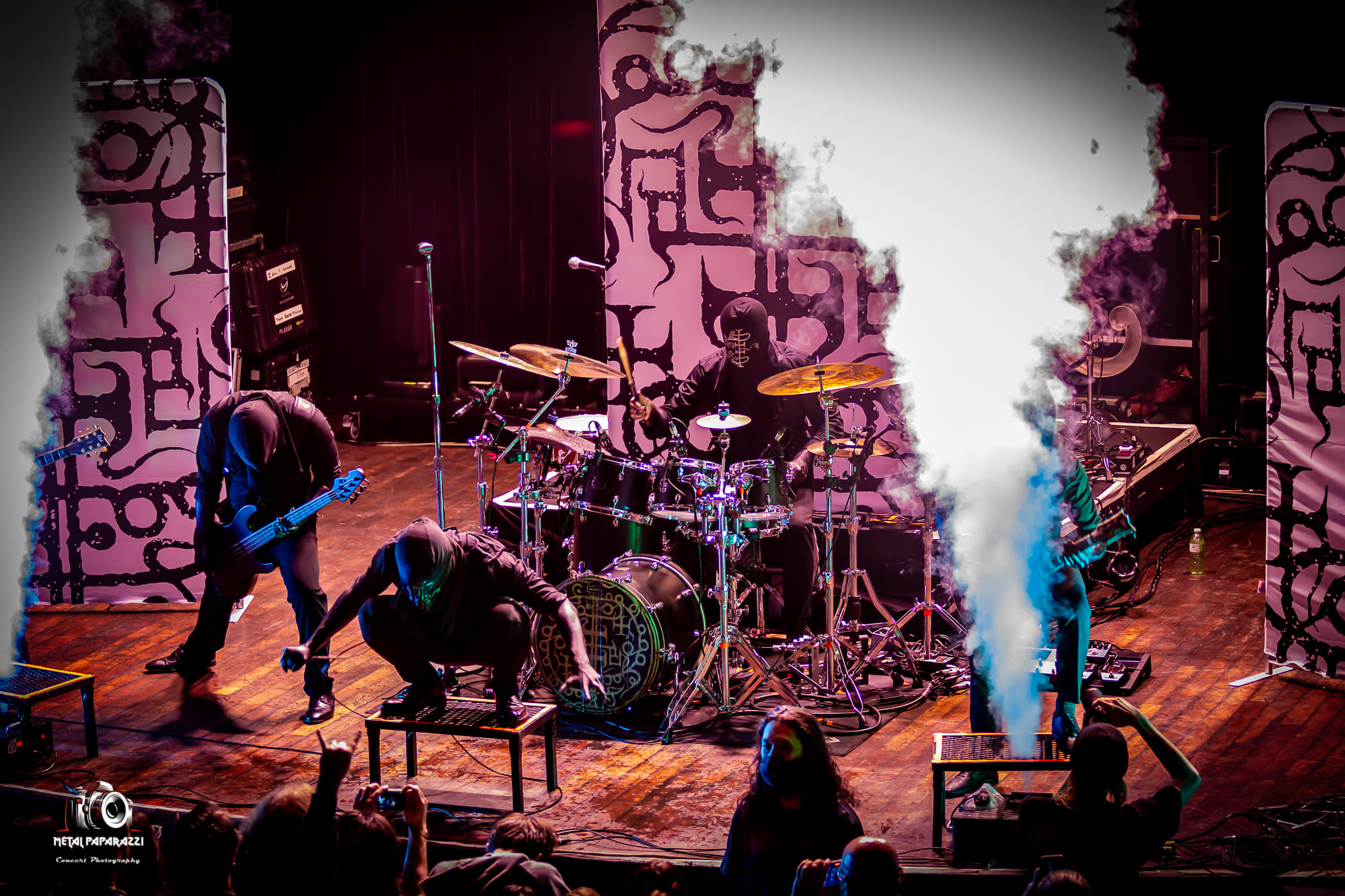
Traffic to get to Toronto and to leave the city any day of the week is brutal, but Thursday nights seem to be the worst of all. It took me forever to arrive at The Opera House this Thursday night to enjoy the concerts by ZETRA, GAEREA and ZEAL & ARDOR during their North American Tour 2024, to the point I completely missed the show by London, England-based Synth Rock duo ZETRA. Not only that, the way back home was even worse as two lanes of the QEW were closed due to construction, which turned my usual 25-minute drive into a 1h40min nightmare, but I’ll stop my rant here and focus on the music, which is what really matters. Fortunately, my buddy Keith Ibbitson of Metal Paparazzi was there to enjoy their show and take some killer photos of them, and of course you can listen to their self-titled 2024 album on BandCamp and on Spotify. I’m not sure if they were the right choice to open the night, as some fans considered their show a bit weird for their taste, but I can’t say much as I wasn’t there.

Setlist
Sacrifice
Starfall
Shatter the Mountain
Suffer Eternally
Gaia
The Angel Cries

Band members
Adam – vocals, guitars
Jordan – vocals, synthesizers

It was not even 8pm when Porto, Portugal’s own Black Metal creature GAEREA kicked off their stunning performance, and even with the huge delay due to traffic and the hassle of finding a parking spot I made it to the venue exactly two seconds before they began their show. And what a show that was, my friends! Those uncanny black metallers sounded brilliant during their short but extremely captivating and hypnotizing set, with their theatricals, especially the moves by their ultra talented and charismatic lead singer, certainly converting several Zeal & Ardor fans to the Gaerea cult. The entire band was on fire, and the reaction of the crowd, including some intense mosh pits, made their whole show even more memorable.

It was my third time seeing Gaerea live, and I don’t know if it was the fact that this was by far the best venue they played in, if the songs from their newborn spawn Coma like The Poet’s Ballet, Hope Shatters and World Ablaze (all available on BandCamp and on Spotify, by the way) are among the best they’ve ever created, or if it was a combination of both, but this was by far their best ever presentation in the city of Toronto. The crowd was in total sync with the band, and you could notice everyone headbanging nonstop, some with their eyes closed to simply let their music do the entire job. I honestly hope Gaerea return to Toronto in a not-so-distant future as a headliner, because they definitely deserve a lot more time to kick some ass onstage with their unique music.

Setlist
The Poet’s Ballet
Hope Shatters
Unknown
World Ablaze
Wilted Flower
Laude

Band members
*Information not available*

ZEAL & ARDOR

I’m going to be honest with all of you and confess that I had pretty much zero idea of what ZEAL & ARDOR was before this show, and not even listening to their 2024 album GREIF helped me identify their genre or style. Although they’re labeled by some as an Avantgarde Metal band that mixes sounds of African-American spirituals with Black Metal, once they hit the stage the task of identifying what the hell they were playing got even worse, as each song sounded completely different form the other, sometimes sounding like a Gospel band, sometimes like an Experimental Rock one, and even showing elements from Djent in their music (and you can check all that on BandCamp and on Spotify). Don’t get me wrong, Manuel Gagneux and his crew did a great job and the reaction from their fans was fantastic, but for me personally it was a weird combination of different sounds from start to finish.

When they played their heavier songs, like Feed the Machine, it felt more like a metal concert, but then there were some weird songs like Devil Is Fine in their setlist that were a bit boring in the end. One thing that worked really well onstage was the presence of backing vocalists Denis Wagner and Marc Obrist, who not only added depth to all songs, but the fact they kept dancing, headbanging and interacting with the crowd the whole time inspired the band’s most diehard fans to jump up and down and scream even louder. As I said, it was a phenomenal concert for fans of the band, but for me Gaerea stole the night with their much heavier and sinister performance. Well, I’m a Black Metal enthusiast, so maybe my opinion shouldn’t count, right? Anyway, I wouldn’t mind seeing Zeal & Ardor again live as those guys are excellent musicians, mainly bassist Lukas Kurmann who’s indeed a metallic beast, and you should give them a try too as their uncompromised blend of styles might be exactly what you’re looking for if you’re thinking about exploring new lands in music.

Setlist
the Bird, the Lion and the Wildkin
Wake of a Nation
Götterdämmerung
Ship on Fire
Erase
Gravedigger’s Chant
Tuskegee
Blood in the River
Kilonova
Run
Golden Liar
Sugarcoat
Death to the Holy
to my ilk
Feed the Machine
Devil Is Fine
Trust No One
I Caught You
Clawing out

Band members
Manuel Gagneux – lead vocals, guitars, keyboards, synthesizer, programming
Tiziano Volante – rhythm guitar, lead guitar
Lukas Kurmann – bass
Marco Von Allmen – drums
Denis Wagner – backing vocals
Marc Obrist – backing vocals

This slideshow requires JavaScript.

Album Review – Kuujeojabenojujanomiashikushija / The Hunting Boar! The Hunting Tyrant! (2020)

A solitary man on a mission seeking self-emptying and seeing the violent animal within brings to our ears his brand new experimental musical journey.

“You can kill it, but you must see it.”

If you throw  the expression “Kuujeojabenojujanomiashikushija” into Google Translator just out of curiosity like I did, you’ll see the app recognizes it as Swahili, translating it to “Come on in, take a look and enjoy yourself!” I have absolutely no idea if that was the intention of the mysterious American vocalist and multi-instrumentalist R.P. when he originally named his Experimental Death Metal project Kuujeojabenojujanomiashikushija, a solitary man on a mission seeking self-emptying and seeing the violent animal within, but just like its name, this extreme music entity offers a weird, uncanny and absolutely experimental musical journey to the listener in its second studio album, beautifully entitled The Hunting Boar! The Hunting Tyrant!, following up on all the madness found in the project’s 2014 debut EP 82121 and its 2017 full-length opus Hheoalle. In addition, as you might suspect based on the uniqueness of the project, absolutely everything in the album was done by R.P. himself, giving it an additional touch of lunacy and rawness and, therefore, sounding very organic from start to finish.

A mix of Industrial and Avantgarde Metal kicks off the album in the wicked intro Ripped Apart Under Glimmering Constellations, before R.P. slashes his raw, dirty guitar and crushes his drums like a maniac in the excellent Christ’s Descent Into Hell, and let me tell you that the song’s lyrics couldn’t have been more insane than what they already are (“Words accursed: mutational and eclipsed / Iron disc, zwarte zon / Coma of the soul from death to death / I wring the neck! It’s finished. / Poison diplomacy”). You better leave your mind and ears wide open as rumbling bass punches, cryptic vociferations and a sense of hopelessness and despair permeate the air in Vision Of Spinning Golgotha, uniting the sickness of Industrial Death Metal with the finesse of Progressive Metal, whereas R.P.’s demented riffs and beats are the main ingredients in Predator Reconfigured As Prey, another disruptive, dissident metal extravaganza that will make your head tremble throughout its less than three minutes of intense obscurity. And extracting sheer rage and insanity from his razor-edged guitar, R.P. offers our ears more of his Experimental Death Metal in Lycanthrope Before God, resulting in a headbanging tune tailored for admirers of the genre.

Then eerie noises ignite three minutes of industrialized sounds and tones in the instrumental (and lengthy) aria titled Entry, setting the stage for R.P. to roar venomous words (“If they can see me, I will kill them”) nonstop in They Can See Me, while the music remains as paradoxal to anything that can be called mainstream as possible, making an instant bridge with the also eccentric Murderer Swings The Censer, one of the most progressive of all songs, taking his innovative Death Metal to a whole new level of heaviness and fury and ending in a truly sick manner before R.P. comes ripping once again with his austere riffs and low-tuned bass in Scent Trail Under Arched Sconces. Blending the most visceral elements from Death, Groove and Industrial Metal with tons of feeling and darkness, this is one of the best songs of the album hands down. Lastly, are you ready for another round of sick guitars, pounding drums and wicked background noises? That’s what you’ll get in Do You See Over That Mountain?, sounding like an industrialized and instrumental version of the progressive madness blasted by Mastodon, and morphing into the idiosyncratic Epektasis, starting in an atmospheric and ethereal way before becoming a Progressive Rock and Metal exhibit by R.P. until all fades into the void.

I guess after all is said and done, the aforementioned translation to the project’s name, “Come on in, take a look and enjoy yourself!”, makes total sense, as if R.P. is indeed inviting us all to enter his wicked realm of experimentations and violence, take a very good look (or maybe I should say listen) around, and have a good time to the sound of each one of his multi-layered creations. Hence, in order to do that and show him your support and admiration for the underground, you can start following R.P. and his Kuujeojabenojujanomiashikushija on Facebook and purchase a copy of The Hunting Boar! The Hunting Tyrant! From the project’s own BandCamp page. As R.P. himself likes to cryptically say, “you can kill it, but you must see it”, or in the case of his newborn opus, you can kill “it”, but of course you must listen to his entertaining new album first.

Best moments of the album: Christ’s Descent Into Hell, Predator Reconfigured As Prey and Scent Trail Under Arched Sconces.

Worst moments of the album: Entry.

Released in 2020 Independent

Track listing
1. Ripped Apart Under Glimmering Constellations 1:09
2. Christ’s Descent Into Hell 3:20
3. Vision Of Spinning Golgotha 1:55
4. Predator Reconfigured As Prey 2:45
5. Lycanthrope Before God 2:14
6. Entry 3:00
7. They Can See Me 1:30
8. Murderer Swings The Censer 3:23
9. Scent Trail Under Arched Sconces 4:03
10. Do You See Over That Mountain? 3:13
11. Epektasis 4:33

Band members
R.P. – vocals, all instruments

Album Review – Embrace of Disharmony / De Rervm Natvra (2019)

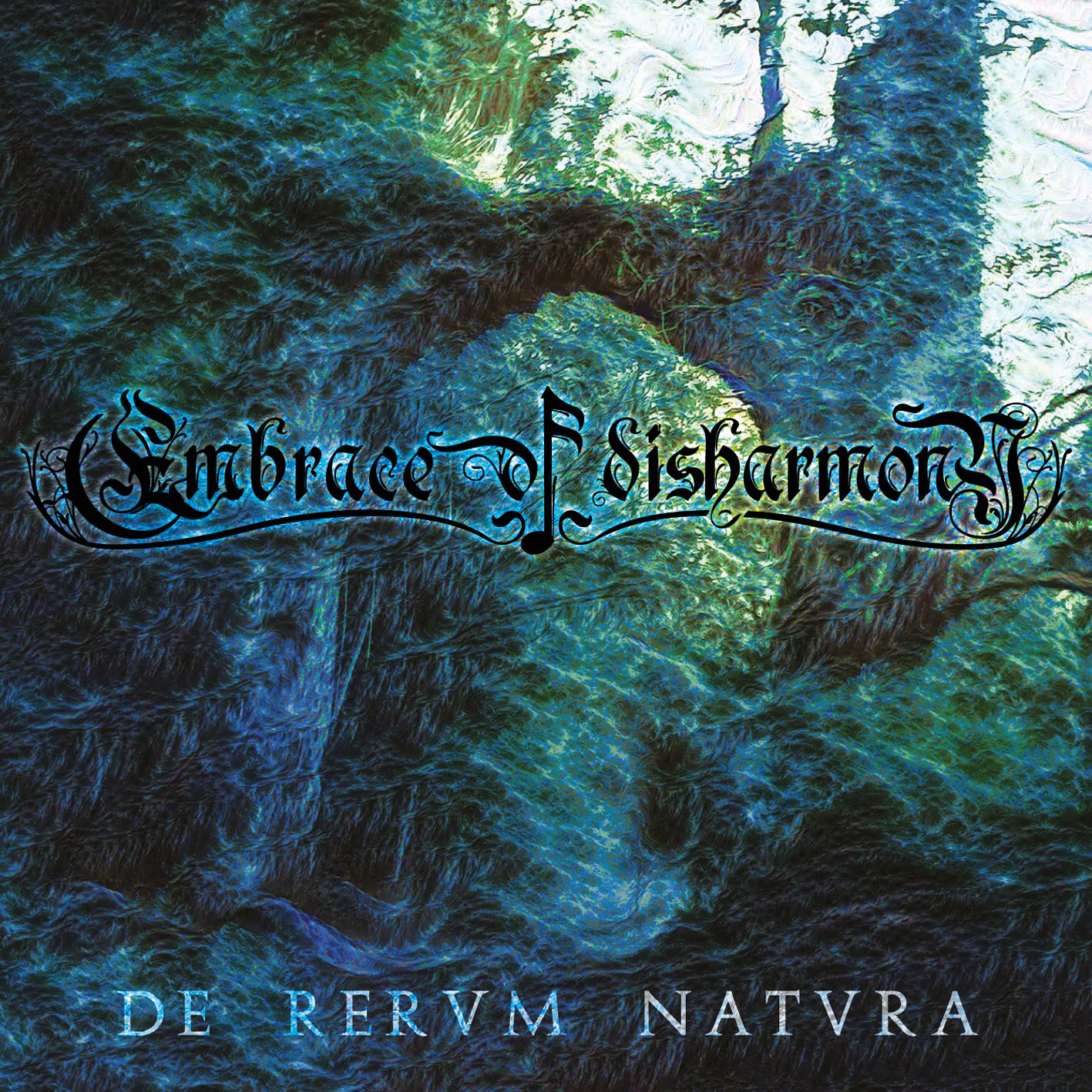
A fascinating journey into a unique universe of Avantgarde and Progressive Dark Metal inspired by Lucretio’s poem “De Rervm Natvra” and his theory of the universe.

Forged in in 2006 the fires of Rome, the stunning capital of Italy, with the main goal of uniting the dark and epic Progressive Metal from bands like Symphony X and Adagio with elements from Avantgarde and Extreme Metal bands, as well as several orchestral outfits like Arcturus, Winds, Dimmu Borgir and Opeth, Avantgarde/Progressive Dark Metal four-piece act Embrace of Disharmony is unleashing upon humanity their second full-length opus entitled De Rervm Natvra, which translates from Latin as “on the nature of things”, a fascinating journey into a unique musical universe thoroughly crafted by the band, released five years after their debut album Humananke.

Comprised of Gloria Zanotti on vocals, Matteo Salvarezza on guitars, vocals and programming, Leonardo Barcaroli on bass and Emiliano Cantiano on drums, Embrace of Disharmony offer in De Rervm Natvra a more extreme sonority but at the same time a more avantgarde-ish aura than in Humananke, all spiced up by idiosyncratic electronic elements and a superb lyrical theme based on Lucretio’s poem “De Rervm Natvra” and his theory of the universe. Recorded at Dis(agio)harmony Studios and Hombre Lobo Studios with Valerio Fisik, mixed by Giuseppe Orlando at Outer Sound Studio, and mastered by Mika Jussila at Finnvox Studios, De Rervm Natvra is not only a great piece of symphonic and extreme music, but the overall sound quality of the album is simply outstanding, showing how focused all band members and their entire crew were, delivering first-class metal music to our avid ears.

Ethereal sounds permeate the air in Prohoemivm (“introduction”), with the voices in the background delivering a cryptic message and warming up our senses for the symphonic and eerie Lavdatio Epicvri (“in praise of Epicurus”), where Matteo’s background effects and keys grow in intensity until the entire band begins smashing their instruments furiously. And their venomous version of Dream Theater mixed with Cradle of Filth goes on in the 10-minute extravaganza De Primordiis Rervm (“the beginning”), a darker version of Epic Symphonic Metal with Emiliano sounding like a stone crusher on drums and with the delicate vocals by Gloria bringing more finesse to the overall musicality in an avalanche of symphonic sounds, somber passages, operatic choirs and tons of progressiveness. Then the quartet continues to mesmerize us with their dark symphony in De Motv Primordiorvm Rervm (“the beginning of motion”), another thrilling Progressive Dark Metal voyage where Matteo delivers crisp riffs while Leonardo and Emiliano are at the same time utterly progressive and vicious with their bass and drums, respectively; followed by De Infinitate Orbivm (“infinite worlds”), where a wicked intro evolves into a feast of Symphonic Metal showcasing classic piano notes, a menacing atmosphere and rumbling bass lines. Furthermore, Gloria and Matteo make a very dynamic and inspired vocal duo, while Emiliano doesn’t stop hammering his drums for our total delight.

In De Mortalitate Animae (“the immortality of the soul”), it’s impressive how the quartet is capable of transforming their music into some sort of theater or movie score, showcasing acoustic guitars while the smooth vocals by Gloria dictate the song’s rhythm, also presenting explosions of extreme music intertwined with pure Progressive Metal. De Pavore Mortis (“the terror of death”) starts in a whimsical and serene manner, again morphing into a Symphonic Metal party where Emiliano sounds even more brutal than before on drums while Gloria delivers some vicious, heavier-than-usual vocal lines to add an extra kick to the song; whereas in the Symphonic and Progressive Metal aria De Captionibvs Amoris (“the seizures of love”) we’re treated to the most wicked intro of the entire album, a dark and futuristic start that gets even more enfolding thanks to Matteo’s keys and Emiliano’s beats, generating a powerful paradox of sounds and setting the stage for Gloria to shine on vocals. Lastly we have De Formatione Orbis (“the formation of the world”), the most experimental of all songs, closing the album in a really distinct way and even flirting with Folk Metal at times. Once again presenting a potent vocal duet by Gloria and Matteo and flammable guitar riffs, the music gets a bit too atmospheric compared to the rest of the album, but nothing that could harm its overall electricity and impact.

In summary, Embrace of Disharmony are more than ready to take your hand and guide you through their whimsical and captivating world of heavy music in De Rervm Natvra, which is by the way available for a full listen on Spotify, and in order to show them your true support and admiration go check what they’re up to on Facebook, and purchase De Rervm Natvra from their BandCamp page, Apple Music, Amazon, or Discogs, or click HERE for all available options in the market. Gloria, Matteo, Leonardo and Emiliano might be only four musicians, but what they offer our ears in their new album sounds like if they were a full-bodied orchestra, meaning that not only they’re extremely talented and passionate about what they do, but also that fortunately for all of us we’ll be hearing from Embrace of Disharmony for many years to come, embellishing the airwaves with their fusion of the past, present and future of heavy music.

Best moments of the album: De Primordiis Rervm, De Infinitate Orbivm and De Captionibvs Amoris.

Worst moments of the album: De Formatione Orbis.

Released in 2019 My Kingdom Music

Track listing
1. Prohoemivm / Lavdatio Epicvri 3:05
2. De Primordiis Rervm 9:54
3. De Motv Primordiorvm Rervm 5:58
4. De Infinitate Orbivm 6:53
5. De Mortalitate Animae 7:53
6. De Pavore Mortis 6:12
7. De Captionibvs Amoris 5:53
8. De Formatione Orbis 8:14

Band members
Gloria Zanotti – vocals
Matteo Salvarezza – guitars, vocals, programming
Leonardo Barcaroli – bass
Emiliano Cantiano – drums

Guest musician
Marco Migliorelli – spoken words on “De Infinitate Orbivm” and “De Mortalitate Animae”

Album Review – Orchid / Miasma (2019)

Immerse yourself in the debut full-length opus by four Indian metallers who are not afraid to experiment with the new and the unknown, always ready to push their own boundaries in heavy music.

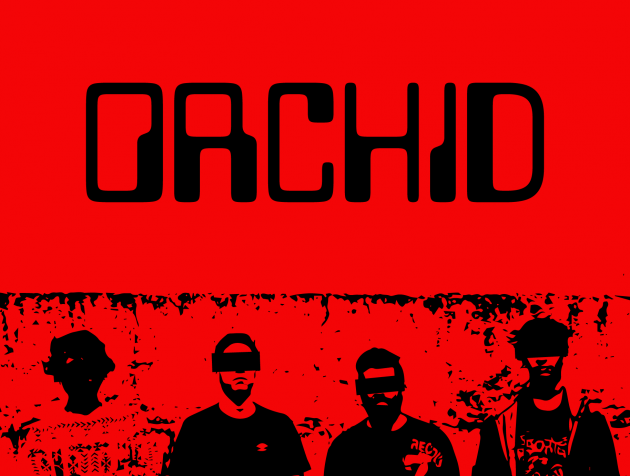
Formed in late 2011 in Bangalore (also known as Bengaluru), the capital of India’s southern Karnataka state, Avantgarde/Progressive Metal entity Orchid is a four-piece band comprised of Kaushal on vocals, Vinay on the guitar, Rahil on bass and Mayur on drums that plays a dense and very distinct blend of Heavy Metal with several other genres and styles such as Progressive Rock, Hardcore and Psychedelic Rock leanings (as well as Mathcore), pushing the boundaries of heavy music in the subcontinental underground and remaining one of the most original bands to emerge from the region.

In 2016, Orchid released their much-awaited self-titled debut EP to critical acclaim with Rolling Stone India calling it “one of the best cult classics of 2016” and “one of the most intriguing metal releases of the year”, inspiring the guys to keep moving forward and keep spreading their distinguished music to all four corners of the earth with their debut full-length opus Miasma, an album tailored for fans of bands like Dillinger Escape Plan, Gorguts and Frank Zappa, among others. Unlike their previous EP, which touched upon themes of techno-surrealism, Miasma is more straightforward with sociopolitical themes, with the artwork, done by the band’s own drummer through Copycat, containing elements from every song on the album.

An enraged scream by Kaushal kicks off the low-tuned, sluggish and heavy-as-hell opening track Obsolescence, with Vinay delivering lancinating riffs while Mayur brings tons of intricacy and dementia to the musicality with his beats, remaining crazy, vibrant and unique from start to finish, whereas in Solipsist we’re treated to two and a half minutes of top-notch Progressive Metal where Kaushal growls and roars manically while Vinay and Rahil give a lesson in progressiveness and heaviness with their stringed weapons. Then we have Master Supreme, a short and sweet headbanging tune led by the crushing drums by Mayur, bringing to our avid ears the most insane elements from Progressive and Groove Metal. “The song is about the pervasive influence and the growing epidemic of gurus/godmen and their cults in Indian society as well as abroad. Religion and spirituality is the biggest scam in the world; and because we live in India, we have a front-row seat to the circus,” commented the band about this austere and captivating song.

After the shortest song of the album, it’s time for the longest one, titled Dead End, offering seven minutes of insanity, rage and eccentricity. In other words, a full-bodied sonic extravaganza full of breaks and variations, not to mention the beautiful Jazz-inspired passage featuring guest Aadarsh Subramaniam and his old school keyboard solo, building an instant bridge to the also pulverizing Identoid, where Rahil extracts truly thunderous roars from his bass while Mayur and Kaushal “duel” to see who’s the most aggressive and demented one, maintaining the album at a high level of ferocity and intricacy. Following such fun tune we have Sugar Pill, showcasing the most progressive of all starts but quickly morphing into a sonic onrush of crisp guitar riffs, Hardcore-inspired drums and raspy growls, fading into a very alternative and sluggish outro, before Zero-Sum Game comes crushing like a thunderbolt, already beginning in full force and bringing a violent Kaushal on vocals, while Vinay keeps firing his classic and slashing guitar lines in a lesson in modern-day Progressive Metal with Avantgarde Metal and Mathcore nuances. Lastly the band offers us all Disassembly Line, not as vibrant and crushing as all previous songs but still a good sample of all the madness the quartet can blast through their music, with highlights to the once again amazing job done by Mayur on drums.

In a nutshell, the guys form Orchid were able to condense all their skills, influences and rage in a very intricate and solid way throughout Miasma, placing their brand new album as a fresh option for fans of heavy music who are always in pursuit of bands that think outside the box and that are not afraid to experiment with the most distinct music styles and genres. Having said that, what are you waiting for to show your support to those Bangalore-based metallers? Go check what they’re up to on Facebook, subscribe to their YouTube channel for more of their music, and purchase Miasma directly from their BandCamp page as well as from Instamojo. I bet you’ve never thought metal music made in India could sound so insane and eccentric like this, right?

Best moments of the album: Obsolescence, Dead End and Zero-Sum Game.

Worst moments of the album: Disassembly Line.

Released in 2019 Independent

Track listing
1. Obsolescence 5:54
2. Solipsist 2:34
3. Master Supreme 1:10
4. Dead End (feat. Aadarsh Subramaniam) 6:59
5. Identoid 2:47
6. Sugar Pill 4:22
7. Zero-Sum Game 4:32
8. Disassembly Line 3:48

Band members
Kaushal – vocals
Vinay – guitars
Rahil – bass
Mayur – drums, percussion

Guest musician
Aadarsh Subramaniam – keyboard solo on “Dead End”

Album Review – Mord’A’Stigmata / Hope (2017)

Explore the obscure sea of negativity and spirituality crafted by this up-and-coming Polish unit, all embraced by atmospheric passages, caustic guitars and tormented growls.

Formed by guitarist, composer and main visionary Static in 2004 in Bochnia, a town located only around 50km from the multicultural city of Kraków, in southern Poland, Black/Avantgarde Metal act Mord’A’Stigmata has been on a constant growth since the band’s inception, reinventing themselves year after year with each album released and, at the same time, maintaining a reasonable distance from the main routes taken by extreme music in general. After the considerable success of their 2013 full-length album Ansia and their 2015 EP Our Hearts Slow Down, Mord’A’Stigmata return with their fourth full-length album, titled Hope, a bold musical statement that has all it takes to become their most accomplished work to date.

Divided into four distinct chapters, Hope is a ride into the palest corners of the void within oneself, a landscape of deep melancholy adorned with sparks of light that will please fans of bands such as Agalloch, Neurosis and Altar of Plagues. The album’s enigmatic artwork, designed by Bartek Rogalewicz from Hellywood (who has already worked with iconic groups like Rogi, Non Opus Dei and Behemoth), represents exactly what you’ll face in Hope, an obscure sea of negativity and spirituality embraced by lugubrious and atmospheric passages, caustic guitars and tormented growls, providing you a full-bodied experience in avant-garde extreme music.

The distorted but melodious lines crafted by guitarists Golem XIV and Static kick-off the 12-minute aria of darkness Hope, an ominous fusion of Black and Doom Metal where lead singer and bassist Ion effectively darkens the musicality with his hellish gnarls. Not only that, the band also brings forward hints of Blackened Doom and Dark Metal with their instruments, especially after four minutes when Ion delivers some deep clean vocals, with the music displaying a hypnotic pace until the song’s ardent ending. That obscure aura goes on in the Stygian and intricate composition The Tomb from Fear and Doubt, with drummer DQ and his doomed beats leading the rhythm while Ion grasps the song’s somber lyrics (“Have you ever lost something you ever had? / Have you ever missed someone that never was? / Have you ever stared into the abyss / with the matches stuck between the eyelids?”) and all instruments maintain a sulphuric stench reeking in the air. In addition to that, once again blending the darkest and most visceral elements from Black and Doom Metal, the wicked sounds emanating from the last part of the song will penetrate deep in your blackened soul without a shadow of a doubt.

Rhythmic beats and cursed guitars ignite another fantastic composition by Mord’A’Stigmata, entitled To Keep the Blood, where a melancholic but fierce instrumental builds the desired ambience for Ion to thrive with his devilish growls. This is not only the song with the most electrified vibe, but also a newborn hymn of Black and Doom Metal, with Golem XIV and Static enhancing the song’s impact considerably through their sharp guitar lines. Lastly, in the mournful In Less than No Time, tribal drumming and the band’s trademark damned sounds create a mesmerizing tone, growing in intensity until Ion comes vociferating his hopeless words (“There is a kind of grief / Can’t be expressed by tears / Nor yelled into the night / On an empty field”). Presenting elements from the music by Paradise Lost, My Dying Bride, Katatonia and other icons of Doom Metal, this beautiful creation by Mord’A’Stigmata is the perfect fourth and final act for Hope, with highlights to the superb work done by DQ on drums.

You can find all details about the chthonic creations of this talented quarter from Poland, as well as their current tour dates and plans for the future, through their Facebook page, with Hope being available for purchase at their official BandCamp page, at the Pagan Records’ BandCamp page or webshop in CD-digipack, in LP format, as a CD + T-shirt combo or as an LP + T-shirt combo, as well as on Amazon and at Discogs. After putting your hands on Hope, simply let the darkness blasted by Mord’A’Stigmata fill your inner void, guiding you on a path of no return to the underworld of heavy music.

Best moments of the album: To Keep the Blood.

Worst moments of the album: None.

Released in 2017 Pagan Records

Track listing
1. Hope 12:02
2. The Tomb from Fear and Doubt 12:08
3. To Keep the Blood 8:45
4. In Less than No Time 11:30

Band members
Ion – vocals, bass
Golem XIV – guitars
Static – guitars
DQ – drums