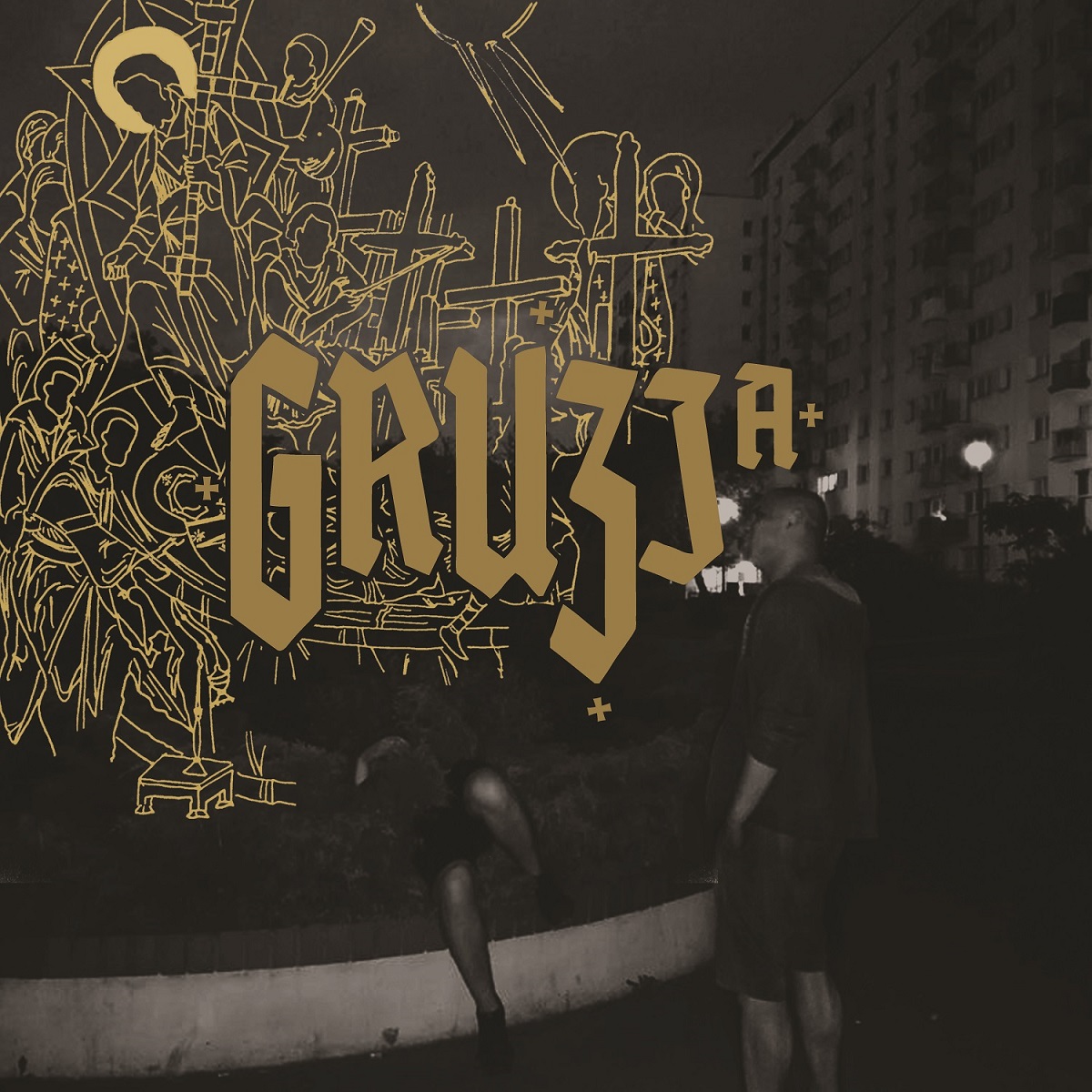
A raw and visceral manifestation of Black Metal overflowing dirty sex, drugs, alcohol and extreme aggression, directly from Poland into your deranged mind.
“Music against aesthetisation Music against shopping centres Gals, devil, railway sidings…”
From the filthy, moist and drunken basements of Poland, one of the most prolific countries in the world of underground Extreme Metal, here comes a cryptic and heavy-as-hell entity known as Gruzja (which I believe is Polish for “Georgia”), distilling their vicious, nihilistic Black Metal in their brand new opus entitled I Iść Dalej, which translates to English as “and go ahead” or “and move further”. Recorded in the summer of 2018 in Tbilisi, the capital of the country of Georgia, and mixed and mastered by HG, I Iść Dalej is an amalgamation of infernal sounds, alcohol, pus, rot, ugliness and dirty sex, perfectly representing the everyday life of the band’s mysterious members, or as in their own words, “the spirit is local, but the music – from afar. Gruzja deals with art and, consequently, it is part of a culture. A culture of violence.”
A very unique intro of wicked sounds and noises warms up our senses for an avalanche of distorted, pulverizing riffs and crushing beats in Gruzini (“Georgians”), offering us three and a half minutes of raw and vile Black Metal where the vocal lines are beyond infernal, all spiced up by the fact everything is sung in Polish, of course. Then even more phantasmagorical, disturbing and crude we have Moja Ratyzbona (“my Regensburg”), with its riffage sounding crude and old school, accompanied by the song’s Doom Metal-inspired sluggish beats, while its putrid vociferations add an extra touch of evil to the musicality (not to mention how demented the clean vocals also sound and feel), whereas in Opuść Mnie (“leave me”) we’re treated to an austere wall of Black Metal sounds with an epic vibe perfect for crushing your skull into the circle pit, with an endless amount of aggressiveness and rage flowing from all instruments, in special from its frantic beats.
Manam is another perturbing chant by Gruzja, an excellent representation of what Extreme Metal is all about in the Polish underground scene, blending the most obscure elements from Black Metal to the atmospheric and gloomy waves of Doom Metal with vocals that couldn’t sound more desperate than this; followed by Jego Głos (“his voice”), presenting some amazing nuances of Punk and Hardcore added to their core Black Metal, therefore making their music even more rebellious and potent like if the instrumental parts from Motörhead were blended with the rabid and raspy vocal lines of The Exploited. And get ready for over four minutes of visceral sounds and tones in Ilu Nas Było? (“how many of us were there?”), darkening the skies like we expect from classic Doom Metal, with the strident tone from the guitar potentializing the gruesome and demonic roars blasted by the band’s uncanny lead singer, almost vomiting the song’s Polish words in our faces. Lastly, Gruzja offer us Iść Dalej (“go ahead”), completely different form the rest of the album, feeling more like a remix version of a song than an original composition per se (or maybe it’s just an outro, who knows). It’s not bad at all, but it takes away a little of the insane and hellish atmosphere from all previous songs.
Take a listen at this disturbing and very enjoyable album of underground music in full on YouTube or on Spotify and get ready to be smashed like an insignificant insect by the unruly and deranged Gruzja, and in order to show your true support to this very interesting Polish band simply follow them on Facebook, and purchase I Iść Dalej from the Godz ov War Productions’ BandCamp or webstore. In a nutshell, I Iść Dalej is a raw and visceral album of Black Metal overflowing sex, drugs, alcohol and an infinite amount of our good old aggression. What else can you ask for in underground extreme music, right?
Best moments of the album:Moja Ratyzbona and Opuść Mnie.
Worst moments of the album:Iść Dalej.
Released in 2019 Godz ov War Productions
Track listing 1. Gruzini 3:28
2. Moja Ratyzbona 4:18
3. Opuść Mnie 3:59
4. Manam 4:50
5. Jego Głos 3:08
6. Ilu Nas Było? 4:40
7. Iść Dalej 4:20
Heretics, atheists and rebels, it’s time to burn in the fires of the dark and occult Black Metal masterfully crafted by the greatest Greek institution in the history of heavy music.
“Since man cannot live without miracles, he will provide himself with the miracles of his own making. He will believe in any kind of deity even though he may otherwise be a heretic, an atheist, and a rebel.” – Fyodor Dostoyevsky
It is not a coincidence that our review number 666 exhales blasphemy, heresy and, above all, first-class occult Black Metal and a lot of fire. Hailing from Athens, the capital of the beautiful Greece and the heart of Ancient Greece, here comes the greatest Greek metal institution of all time, the almighty Rotting Christ, spitting fire upon humanity with their fantastic and very atmospheric new opus, entitled The Heretics, their thirteenth studio album and a beautiful follow-up to their excellent 2016 release Rituals. Recorded at Pentagram Studios in Athens, mixed and mastered at Fascination Street Studio in Örebro, Sweden, and featuring a stunning artwork by Ukrainian designer Vyacheslav Smeshko and cover art by Greek artist Maximos Manolis, Rotting Christ’s new album is absolutely incendiary, going against all types of religion, church and creed.
And when I say incendiary I’m not exaggerating, as pretty much every single song from The Heretics mentions the world “fire”, proving the band’s mastermind, vocalist and multi-instrumentalist Sakis Tolis and his brother, drummer Themis Tolis, knew exactly what they were doing when turning what it truly means to be a heretic into their unparalleled Dark Metal. All lyrics are obscure, austere and rebellious, which together with all beautiful intonations by guests Stelios Steele and Dayal Patterson, as well as an array of guest musicians such as Irina Zybina (vocalist for Russian Pagan/Folk Metal bands Alkonost and Грай), Alexis Karamelis and Melechesh Ashmedi, makes the experience of listening to The Heretics truly hypnotizing, enfolding our souls in darkness and fire while the music remains as heavy, intricate and epic as we got used to from the Tolis Brothers. In other words, are you ready to burn in the purifying fires of the Dark Metal blasted by the one and only Rotting Christ?
The imposing In the Name of God brings forward a very atmospheric start, with the words by Russian philosopher Fyodor Dostoyevsky spoken by guest Stelios Steele setting the stage for the crushing wall of sounds created by the Tolis Brothers, always in the name of fire, not to mention how its headbanging riffs will inspire you to break your neck in half, while Vetry Zlye, also called “Ветры злые” (which translates as “evil winds” from Russian), is another beautiful composition by those Greek metallers with the help of guest vocalist Irina Zybina and her mesmerizing voice, getting closer to what the band did in Rituals and with the drums by Themis sounding as imposing and demolishing as we like it in classic extreme music. “The mind is universe and can make a heaven of hell a hell of heaven”, and it’s with those words by English poet John Milton that Rotting Chirst kick off another thrilling hymn titled Heaven and Hell and Fire, showcasing austere, cryptic lyrics (“Beyond the burning fire, heaven and hell / Today I give you choices: life or death / I offer you desire, I sentence you to death / Today I give you a choice, I give you Hell”) that perfectly match with the song’s flammable, classic and very melodic musicality, with Sakis once again being a beast with his riffs and unmatched roars.
Hallowed Be Thy Name is a mesmerizing and extremely obscure hymn by led by Themis’ pounding beats, with Sakis extracting those low-tuned, Stygian sounds we love so much from his guitar and bass. Put differently, join their mass and burn with them, also savoring the words by William Shakespeare powerfully declaimed by Stelios, putting a majestic end to the song. Following such enfolding tune we have Dies Irae, where Sakis’ work on the guitar is the perfect example of how heavy and harmonious a riff can be at the same time, as well as the song’s background choir bringing even more thunder to this already potent song; whereas in I Believe (or “Πιστεύω”), which is based on a poem by Nikos Kazantzakis, a giant of modern Greek literature, the instrumental pieces are a bit too “polluted”, but nothing that makes the song boring or not enjoyable. Moreover, it should work a lot better live as it has the potential to generate huge circle pits due to its frantic pace. Back to a more visceral mode, we have the fabulous Fire God and Fear, with the words by French philosopher Voltaire (“Those who can make you believe absurdities can make you commit atrocities.”) generating a stunning paradox with the birds gently chirping in the background in the beginning, before the scorching riffs and thunderous drums by the Greek brothers of metal urge us all to bang our heads nonstop. Hence, this is by far one of my favorite songs of the entire album, where we can savor that classic Rotting Christ sonority with a welcome contemporary twist.
Rotting Christ The Heretics Box Collector
The Voice of Universe is another song that will reach deep inside your mind and soul, with Sakis vociferating its insurgent words (“The angel, I won’t serve again / I won’t have a place anymore in heaven / It’s my own soul, it’s my own mind / And can make a heaven of hell, a hell of heaven.”) while Themis keeps blasting his trademark tribal beats, and when you think those Greek metallers couldn’t sound more mesmerizing and brutal at the same time they deliver the excellent The New Messiah, featuring an excerpt from Matthew 24:11 (“And many false prophets will arise and lead many astray.”), with the guitars and all background elements and voices filling out all spaces in the air. And lastly, as the icing on the cake we have the magnificent, somber and ferocious The Raven, based on what’s probably the most famous poem by the iconic american writer Edgar Allan Poe, offering our ears over five minutes of cutting riffs, Black and Doom Metal drums, and endless poetry, with highlights to the sensational job done by Stelios Steele, giving life to Poe’s renowned lines. Actually, if you have some spare money to purchase any of the special editions of the album, you’ll also be able to enjoy the bonus tracks The Sons of Hell and Phobos (also called “The Sons of Hell, Pt. 1 & 2” by some people), two dark and demolishing tunes that make it worth the additional investment, or in other words, two excellent samples of modern-day Black Metal infused with epic and atmospheric elements.
In summary, The Heretics, available for a full listen on YouTube and on sale from several locations such as the band’s own BandCamp page and the Season of Mist webstore (and if I were you, I would go for the limited edition deluxe wooden boxset as it comes with several awesome perks), is definitely an album that will touch your heart and soul, taking you on a fascinating musical ride through the woes of religious wars, Zoroastrianism and the eternal war between good and evil. That’s what the unrelenting Rotting Christ offer us in their top-of-the-line new opus, and may Sakis and his horde continue to burn us all heretics, atheists and rebels with their dark and occult Black Metal for many decades to come.
Best moments of the album:Heaven and Hell and Fire, Hallowed Be Thy Name, Fire God and Fear and The Raven.
Worst moments of the album:I Believe.
Released in 2019 Season of Mist
Track listing 1. In the Name of God 4:13
2. Vetry Zlye 3:14
3. Heaven and Hell and Fire 4:52
4. Hallowed Be Thy Name 5:06
5. Dies Irae 3:45
6. I Believe 3:42
7. Fire God and Fear 4:49
8. The Voice of Universe 5:22
9. The New Messiah 3:07
10. The Raven 5:23
Deluxe Edition/Limited Edition Deluxe Boxset bonus track 11. The Sons of Hell 4:18
Band members Sakis Tolis – vocals, guitars, bass, keyboards, percussion
Themis Tolis – drums
Guest musicians Giannis Kalamatas – guitars (live)
Van Ace – bass (live)
Stelios Steele – poem intonation on “In the Name of God”, “Hallowed Be Thy Name” and “The Raven”
Alexis Karamelis – backing vocals on “I Believe”
Stratis Steele, Alexandros Louziotis, Giannis Stamatakis & Theodoros Aivaliotis – vocals (choirs)
Nikos Velentzas, Stamatis Ampatalis, Vasilis Koutsoyflakis & Manos Six – percussion
Irina Zybina – female Vocals on “Vetry Zlye”
Dayal Patterson – intonation on “Heaven and Hell and Fire” and “Fire God and Fear”
Melechesh Ashmedi – vocals on “The Voice of Universe”
Witness the birth of True Norwegian Black Metal and its most notorious practitioners in the vision of award-winning director Jonas Åkerlund, despite the annoying fact the entire movie is spoken in English.
“A teenager’s quest to launch Norwegian Black Metal in Oslo in the early 1990s results in a very violent outcome.”
That’s how the producers of the good movie Lords Of Chaos, which was screened at several film festivals in 2018 and released in theaters on February 8 and on demand on February 22 this year, are promoting their version of the birth of True Norwegian Black Metal and its most notorious practitioners, those being Kristian ‘Varg’ Vikernes (also known for his revolutionary one-man project Burzum), Pelle ‘Dead’ Ohlin and, above all, Øystein ‘Euronymous’ Aarseth, the founder of and central figure in the early Norwegian Black Metal scene, the co-founder of the Norwegian Black Metal band Mayhem, and the founder and owner of the Extreme Metal record label Deathlike Silence Productions and record shop Helvete. All of them were members of one of the most infamous bands of all time, Mayhem, being part of a militant cult-like group known as the “Black Metal Inner Circle”.
If you’re a longtime fan of True Norwegian Black Metal, there’s nothing new to you in the movie that you don’t already know, but it’s still interesting to see how director Jonas Åkerlund, a Swedish director and drummer known for music videos like Madonna’s Ray of Light, Rammstein’s Pussy and The Prodigy’s Smack My Bitch Up, and a member of Swedish Black Metal institution Bathory from 1983 to 1984, portrayed all the trademark chaos, rebelliousness and violence of the Norwegian scene in the 90’s. Featuring Rory Culkin (yes, he’s the younger brother of Macaulay Culkin) as Euronymous, who did a great job trying to humanize such distinct character of the Black Metal universe, Emory Cohen as the untamable Varg, Jack Kilmer as the disturbed Dead, Sky Ferreira as Euronymous’ girlfriend Ann-Marit, and Valter Skarsgård as Emperor’s drummer and convicted murderer Bård Guldvik ‘Faust’ Eithun, as well as Anthony De La Torre as Jan Axel ‘Hellhammer’ Blomberg and James Edwyn as Kjetil ‘Manheim’ (considered by many the true founders of Mayhem in 1984, when the band was still named Musta), Lords Of Chaos is far from being a masterpiece, but it’s still a very entertaining movie that provides (to a certain point, of course) a very good view of how Black Metal changed the lives of those reckless kids that had a fairly decent life in Norway.
Despite the real Varg being completely against Lords Of Chaos, even stating in a 2016 video that Mayhem, Burzum and Darkthrone all denied the movie rights to their music, the movie is indeed a compelling ride that transforms Mayhem’s iconic guitarist Euronymous into a normal person like any of us, focusing on his fears and personal strugles as a young guy living in Norway, having won the jury prize best film award at the Molins de Rei Horror Film Festival in 2018 and being nominated to several other awards worldwide. However, if there’s one thing that really bothered me throughout the entire movie was the fact that all actors in the film speak in English (and with their American accents) all the time, despite the movie being entirely shot is Oslo, the capital of the beautiful Norway. In my opinion, they could have selected a few good Norwegian actors and done the whole movie in Norwegian to give it a much more realistic vibe, as it was sometimes pretty inconsistent and cringeworthy (at least for me) watching people in Norway, with the TV, newspapers and everything else in Norwegian, speaking like if they were all born and raised in Los Angeles or New York. That small but important detail doesn’t necessarily ruin the movie, but whenever you watch it I’m sure you’ll also have that feel that you’re watching a “Black Metal edition” of Beverly Hills, 90210 being aired on a Tuesday at 3pm on a random public access TV channel. I understand the use of English was somewhat essential for reaching a broader audience and having better support to promote the movie, but I still think the Norwegian language would have made the entire movie a thousand times more entertaining.
Apart from that language issue, Lords Of Chaos is extremely well produced, presenting a fantastic photography, including some stunning scenes from Norway’s unique nature and landscapes and, of course, strong colors and imagery to represent the main characters’ depression, madness and fears, and the story flows smoothly with very few plot holes (and historical inaccuracies) until the end. Furthermore, it’s nice to see how human all those musicians were, despite the fact many of their fans like to idolize them (as we pretty much do with any member of our favorite bands no matter which type of music they play). For instance, in one of the first scenes of the movie, we can see Euronymous, Dead and the others partying outdoors like any regular teenager, listening to some ass-kicking, old school metal hymns, having a lot of beer and trying to impress the girls around them. No murder, no arson, nor anything like that, only kids enjoying life and trying to find their place in society. As simple as that, just like many, many Black Metal bands reviewed here at The Headbanging Moose who focus on their music rather than on violent or illegal activities.
In addition, although Jonas Åkerlund stated in a 2018 interview that he used little Black Metal in the movie in part because “it’s kind of painful to listen to black metal music if you’re not used to it or don’t love it,” there’s still a lot of good Black Metal and other types of extreme and not-so-extreme music played throughout the entire movie. While watching it, get ready to bang your head and raise your horns to classics such as Funeral Fog by Mayhem, Inri and Satanic Lust by Sarcofago, Fast as a Shark by Accept, Stand up and Shout by Dio, Born for Burning, Sacrifice and The Return of Darkness and Evil by Bathory, Outbreak of Evil by Sodom, Serpent Eye by Cathedral, and Exhume To Consume by Carcass, among several others. Not only that, there are obviously some very entertaining scenes where both Mayhem and Burzum are either rehearsing, recording in the studio or playing live, which by the way is one of my favorite musical moments of the movie, with Mayhem’s chaotic sound mixed with the bloody and demented performance by their frontman Dead being the undisputed depiction of True Norwegian Black Metal.
Anyway, the main topic presented during the whole movie is obviously the extremely delicate relationships between Euronymous and Dead during what can be considered the first phase of Mayhem (until the always perturbed Dead loses it and commits suicide by blowing his brains out with a shotgun, with Euronymous taking a picture of his deceased friend and turning it into the disturbing cover art of their 1995 bootleg live album Dawn of the Black Hearts), and especially between Euronymous and the one who would become his arch nemesis in the end, the beyond controversial Varg. I mean, Dead was absolutely nuts from the very beginning, and apparently he’s always been like that due to a very tough childhood where he was bullied and beaten all the time at school, and Euronymous was just a regular musician until turning into a Black Metal beast with excellent sales, marketing and promotion skills, but the transformation of Varg from a chubby guy who liked Scorpions into a total lunatc who would reach the point of burning churches in the name of Black Metal is simply fantastic. For instance, pay good attention to the whole scene where Varg invites the press to his “lair” and tells them his name is “Count Grishnackh”, among other ridiculous comments and statements he makes. That’s hilarious and could have easily been included in any American teen movie.
And Jonas Åkerlund keeps humanizing all characters the entire movie, showing how Euronymous got some money from his father to open Helvete and start his record label, how Varg got money from his mother to help record a Mayhem album (and kept asking Euronymous for that money to pay his mom back), and how Faust couldn’t stop watching horror movies, which was one of the reasons why he got so interested in killing someone, or as he said, in piercing a knife through someone’s body like in the movies. And unless you come from a different dimension and knows absolutely nothing about True Norwegian Black Metal, you’ll be relatively shocked with how things turn at the end of the movie when Varg, feeling betrayed by his former friend Euronymous, who according to Varg himself turned his back not only to him but to the “Black Metal Inner Circle” and to the entire scene to focus on his musical career and on his girlfriend, decides to put an end to their relationship for good (or I should say not good at all). Let’s say Euronymous was what Dani Filth, from Cradle Of Filth, and Nergal, from Behemoth, are nowadays, an excellent performer and musician with a normal life backstage, which somehow sparks a lot of rage from the ones who consider themselves “true Black Metal fans”, got it?
There are many interviews and videos online where Jonas Åkerlund, Rory Culkin and Emory Cohen discuss Lords Of Chaos, like this one with BUILD Series NYC, and you can also find more information about the movie directly from their Facebook page, Twitter and Intagram. However, I highly recommend you avoid all that before watching Lords Of Chaos (don’t even watch the trailer below), as a few of those interviews and videos might “ruin” some important parts of the movie for you. Put differently, turn off the lights and light up some candles, turn off your smart phone, put on your most diabolical metal shirt, grab a beer or some red wine, and dive deep into the beautiful but somber Norway together with Euronymous, Dead and Varg, and become a “lord of chaos” yourself. You’re going to love this movie or completely hate it, but at least give it a try and then see what you think about it.
Best moments of the movie:Every scene where Euronymous interacts with either Dead or Varg is excellent. Rory Culkin, Emory Cohen and Jack Kilmer do a pretty solid job playing those three iconic characters.
Worst moments of the movie:As aforementioned, the fact that all dialogues are spoken in English and not in Norwegian, despite the entire movie being set in the beautiful Norway and based on Norwegian characters.
Released in 2018 Gunpowder & Sky/Arrow Films
Directed by Jonas Åkerlund
Cast
Rory Culkin – Øystein ‘Euronymous’ Aarseth
Emory Cohen – Kristian ‘Varg’ Vikernes
Jack Kilmer – Pelle ‘Dead’ Ohlin
Sky Ferreira – Ann-Marit
Valter Skarsgård – Bård Guldvik ‘Faust’ Eithun
Anthony De La Torre – Jan Axel ‘Hellhammer’ Blomberg
Jonathan Barnwell – Jørn ‘Necrobutcher’ Stubberud Full cast & crew
Combining Black, Death and Doom Metal into a poisonous but intoxicating musical cocktail, here comes an Israeli one-man band armed with his excellent debut opus.
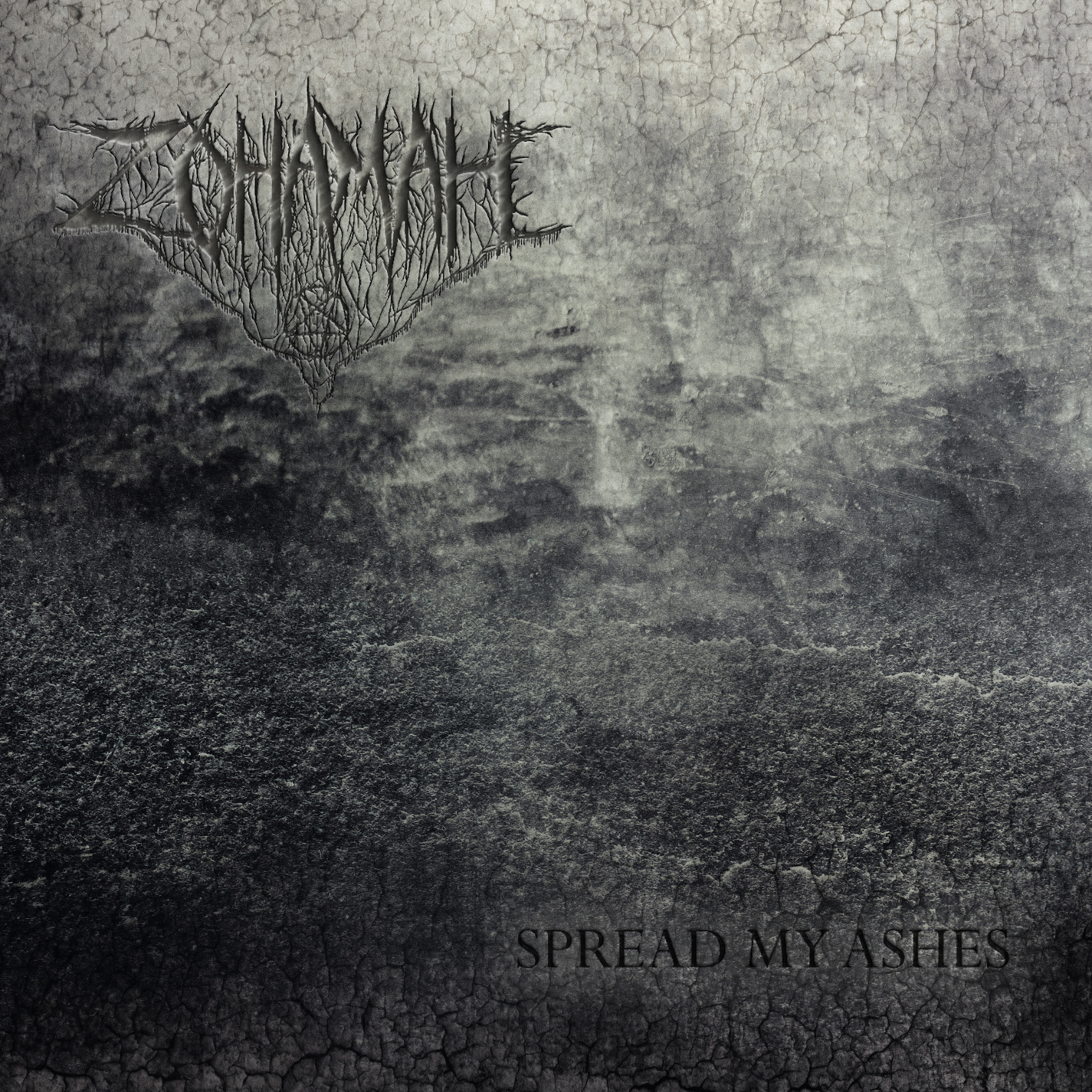
An intentionally cryptic band from Israel, Black/Death Metal one-man army Zohamah, which by the way is an expression taken from the Kabbalah that translates to “darkness” or “pollution”, a form of evil that results in kilkull (or spiritual damage), is unleashing upon humanity its first full-length opus, entitled Spread My Ashes, a follow-up to its debut EP Manic Depression, from 2017. Combining Black, Death and Doom Metal into a poisonous but intoxicating musical cocktail, Zohamah is the brainchild of vocalist and multi-instrumentalist H.M. (also known as Hezi Menashe), known from several underground bands such as Romuvos, Spawn of Evil and Immaterial, with all lyrics and music being written by H.M. himself, not to mention the album was also recorded, mixed and mastered by this extremely talented Israeli metaller.
The howling wind warns us all there’s a Black and Doom Metal storm coming in the opening track New World, generated by the somber gnarls and damned riffs blasted by H.M. It couldn’t have sounded more devilish than this, with H.M. also showcasing his superior skills on drums. Then presenting a Black Sabbath-inspired main riff enfolded in absolute obscurity we have The Darkness Whispers in My Ear, where H.M. is once again on fire with his demonic roars and intricate beats amidst the song’s hypnotizing rhythm; followed by Zohamah’s 2017 single, named Emptiness, a feast of the most Stygian sounds a man can generate, with his scorching hot guitar lines blending beautifully with his rumbling bass and rhythmic drumming, bringing elements from the most diverse types of classic extreme music.
A lot more Death Metal than its predecessors, which is noticeable specially on H.M.’s deeper growls, Black Cloud offers three minutes of aggressive, sulfurous and ruthless sounds, and the music remains vibrant and grim until all fades into pitch black darkness, whereas Broken Mirror is another demented creation by H.M., presenting the most melancholic and obscure elements from underground Blackened Doom. In addition, H.M. growls in a true desperate manner, bursting his lungs in pain and anguish. The title-track Spread My Ashes is a disturbing and harmonious instrumental bridge, building the ambience for the song that carries the name of the project, Zohamah, to captivate our senses with its neck-breaking pace, infernal screams and blast beats, ending the album on a high (and visceral) note just the way we love in underground extreme music.
It doesn’t really matter if you appreciate the works of one-man bands like Zohamah or not, you should definitely take a shot at Spread My Ashes, available in its entirety on on YouTube and on Spotify, as this is one of those albums that perfectly represent all the talent, hard work, passion for heavy music and darkness found in the independent Extreme Metal scene. If after listening to Spread My Ashes you feel like you want to know more about H.M. and his Zohamah (and I’m sure you will), you can follow him on Facebook, and show him your utmost support by purchasing the album from the Redefining Darkness Records’ BandCamp page, from the Hells Headbangers’ webstore, from iTunes or from Amazon. In the end, H.M. is not only spreading his ashes on us with Zohamah’s brand new album, but also showing all of us fans of metal music that the Israeli scene is a lot more interesting, vibrant and obscure than we can imagine.
Best moments of the album:The Darkness Whispers in My Ear and Broken Mirror.
Worst moments of the album: None.
Released in 2019 Redefining Darkness Records
Track listing 1. New World 4:45
2. The Darkness Whispers in My Ear 4:38
3. Emptiness 5:04
4. Black Cloud 3:14
5. Broken Mirror 4:29
6. Spread My Ashes 1:52
7. Zohamah 5:42
Telling the story of the most important forbidden grimoires in European history, this unrelenting Spanish horde delivers an excellent album that lives up to the legacy of 90’s Black Metal.
Born in 2014 in Palma de Mallorca, a resort city located in the Balearic Islands in Spain, with the task of putting the Black Metal genre back in the shadow of the glory it had in the 90’s, following the label from the most infamous bands from that period as a pure conceptual beginning (but excluding arsoning or murders, of course), the unstoppable horde that goes by the name of Inferitvm has just released their sophomore album The Grimoires, an epic story about black magic, esoteric rituals and all the different ingredients of true classical Black Metal. Having said that, do you accept the challenge of deciphering the forbidden texts that Inferitvm have brought back to life?
Comprised of lead singer and guitarist Sorcerer V., guitarist Lord Insekkton, bassist Aghanazzar and drummer Bârg, the sound of Inferitvm is fast, raw and full of details and reminiscences, with bands like Emperor and Immortal, as well as several other renowned groups from Norway, Sweden and Finland, serving as the main inspiration for their music. Telling the story of the most important forbidden grimoires in European history, delving into the miseries and stories behind them, The Grimoires is a manual for unraveling all the mysteries of black magic, with a symphonic twist that will undoubtedly surprise all who enjoy devilish and extreme music. Furthermore, the album brings some orchestral variations which end up helping to introduce your mind into the concept and imagery of an album that’s definitely “not for children”, with its lyrics being based on ancient spells and rituals of esoteric origin, and with the majority of recital refrains expressing the prayers and rituals in a solemn and profound way.
Phantasmagorical keys generate a menacing ambience in the intro Trithemius, before Inferitvm comes ripping with the sonic onrush titled Codex Gigas, where Sorcerer V. gnarls and vociferates like a demon to the imposing beast by Bârg. Moreover, Sorcerer v. and Lord Insekkton bring tons of melody to the musicality with their strings, flirting with contemporary Melodic Black Metal but still sounding loyal to the foundations of classic Black Metal. Then their devastation goes on in the sulfurous and pulverizing Clavicula Salomonis, a lecture in Black Metal bringing forward the most malevolent elements of the genre spearheaded by Sorcerer V.’s infernal roars; and there’s no time to breathe as the quartet keeps blasting sheer obscurity through their damned instruments in Malleus Maleficarum, with Sorcerer V. and Lord Insekkton being on fire with their riffs and solos throughout this marching mass of absolute evil.
In Goetia of Shadows, Bârg and Aghanazzar keep smashing their instruments nonstop, generating a reverberating sound that will please all fans of the genre, all balanced by some very harmonious guitar lines and hellish growls, whereas Galdabrök is another hammering, disturbing hymn of darkness by Inferitvm, with Bârg and his pounding drums dictating the rhythm while Sorcerer V. grasps the song’s obscure lyrics poetically and darkly. In Liber Lux Tenebris, the scorching hot guitars by Sorcerer V. and Lord Insekkton add a touch of Doom Metal to their already infernal music before all hell breaks loose in another feast of old school Black Metal perfect for banging your head in the name of evil. And De Occulta Philosophia is probably one of the most disturbing songs of the whole album (if not the most), where all band members make sure they extract the most Stygian sounds form their instruments, in special the band’s infernal guitar duo with their classic riffage, ending in the most unsettling way possible.
Fortunately for all fans of extreme music, the last batch of songs from The Grimoires is just as thrilling and vile as the rest of the album, starting with La Poule Noire, presenting a classic Scandinavian Black Metal sound with the band’s own twist, sounding as violent as it can be, with its guitar solos creating an interesting paradox with the blast beats delivered by Bârg; followed by De Praestigiis Daemonum, a truly infernal aria where Inferitvm crush our minds mercilessly with their brutality, darkness and rage, or in other words, a demolishing Black Metal tune with a few breaks and variations added to bring more taste and punch to the overall result. And last but not least, the cryptic vocalizations by Sorcerer V. ignite the closing tune titled De Umbrarum Regni, spiced up with nuances of Doom Metal and Blackened Doom, remaining creepy and atmospheric until its visceral ending.
In a nutshell, this unstoppable Spanish horde more than succeeds in telling stories of black magic and evil spells in the form of the pulverizing Black Metal found in The Grimoires (available for a full listen on Spotify), and in order to show your true support to those four horsemen of old school Black Metal simply follow them on Facebook, and grab your copy of such distinct album from their BandCamp page, from the Inverse Records webstore, from iTunes or from Amazon. Because, in the end, all you have to do is let the ancient spells and malignancy flowing from the music by Inferitvm consume your soul, keeping the flame of 90’s Black Metal burning bright for decades to come.
Best moments of the album:Clavicula Salomonis, Malleus Maleficarum and De Occulta Philosophia.
Worst moments of the album: None.
Released in 2019 Inverse Records
Track listing 1. Trithemius 1:23
2. Codex Gigas 5:46
3. Clavicula Salomonis 6:55
4. Malleus Maleficarum 6:23
5. Goetia of Shadows 6:04
6. Galdabrök 5:14
7. Liber Lux Tenebris 5:41
8. De Occulta Philosophia 7:01
9. La Poule Noire 5:30
10. De Praestigiis Daemonum 5:02
11. De Umbrarum Regni 5:26
Band members Sorcerer V. – vocals, guitar
Lord Insekkton – guitar
Aghanazzar – bass
Bârg – drums
Blending the fury and harmony of Scandinavian metal with symphonic elements, here comes a French Melodic Death Metal unity ready to show the world what they got with their sophomore album.
If you’re a fan of modern-day Melodic Death Metal the likes of Arch Enemy, The Agonist, In Flames and Soilwork, I’m sure you’ll love the music found in Prokopton, the sophomore full-length album by French metallers Aephanemer. Blending the fury and harmony of the traditional Scandinavian sound from the Gothenburg scene with several distinct symphonic and epic elements, this talented French four-piece army will captivate your senses with the potency, speed and intricacy found in each one of the eight tracks of their brand new opus, positioning them as one of the most interesting and promising names not only of the current metal scene in their homeland France, but anywhere else in the world where the modernity and specially the intensity of Melodic Death Metal are truly appreciated.
Formed in 2013 in Toulouse, capital of France’s southern Occitanie region, as a one-man band by guitarist Martin Hamiche to release six instrumental pieces inspired by his Scandinavian Melodic Death Metal heroes (with the 2014 EP Know Thyself being forged of those six songs), Aephanemer, which is the merger of the French words “éphémère” (ephemeral) and “fânée” (folded), have been making a name for themselves since becoming a full-bodied group in 2015 when vocalist and guitarist Marion Bascoul, bassist Anthony Delmas (replaced by Lucie Woaye Hune in 2017) and drummer Mickaël Bonnevialle joined Martin in his quest for heavy music. Featuring a classy artwork by Niklas Sundin (Cabin Fever Media), mixed by Dan Swanö (Unisound AB) and mastered by Mika Jussila (Finnvox Studios), Prokopton is an amalgamation of everything the band stands for and what we can expect from them in the future, sounding as exciting as it can be from start to finish.
An epic, Arch Enemy-inspired intro morphs into a more symphonic version of Melodic Death Metal led by Martin’s razor-edged riffs and Marion’s demonic roars in the title-track Prokopton, flowing flawlessly like an arrow high in the sky until its grand finale; whereas background orchestrations set the tone for the also inspiring The Sovereign, where Mickaël dictates the rhythm with his precise beats while Marion, Martin and Lucie offer the listener a feast of flammable sounds. Epicness keeps flowing from their music in Dissonance Within, another dense, multi-layered composition bringing the best elements from Symphonic and Melodic Death Metal where Marion growls its rebellious lyrics like a she-demon (“Time to fight, no backing down / For I will have no rest until my skill prevails / Disembodied, a whistling sound / The singing of my blade ravages the plain”), and flirting with Symphonic Black Metal at times, Snowblind is a fun headbanging extravaganza with highlights to the pounding drums by Mickaël and another thunderous performance by Marion on vocals, not to mention the song’s majestic atmosphere.
At Eternity’s Gate is an instrumental bridge the likes of Gamma Ray and Arch Enemy that sets the stage for the thrilling Back Again, perfect for slamming into the pit and enjoying a cold pint of beer while the quartet crushes our heads with their instruments, with the band’s stringed trio being in absolute (and totally awesome) sync. In the very progressive, intricate and exciting Bloodline, Marion takes the lead with her Black Metal-like gnarls while the rest of the crew doesn’t let the electricity go down, firing stunning guitar riffs and solos, thunderous bass punches and smashing beats. And last but not least, in the dark and imposing If I Should Die poetry flows majestically form its lyrics (“Maybe it is going to take me nowhere / But I reckon not having to go anywhere / I don’t keep any illusion to hold dear / I just need to be ready to disappear / Void comes from the self alone / Fear from what we believe we own / Stoics across time give an advice / May death be daily before our eyes”) while all band members showcase their refined skills, resulting in a hybrid of a metal opera with the devastation of extreme music.
In a nutshell, Aephanemer are ready to take you on a fun and thrilling music journey through the realms of contemporary Melodic Death Metal with Prokopton, and all you have to do to join them is following the band on Facebook, subscribe to their YouTube channel, and obviously purchase their new album directly from their BandCamp page or from iTunes or Amazon, where by the way the album comes with instrumental versions for each and every song as a beyond special bonus from the band to you. Mr. Martin Hamiche had a dream when he started Aephanemer, and now based on the high quality of the music found in Prokopton we can say without a shadow of a doubt that dreams not only do come true, but sometimes they also kick some serious ass for our total delectation.
Best moments of the album:The Sovereign, Dissonance Within and Bloodline.
Worst moments of the album: None.
Released in 2019 Primeval Records
Track listing 1. Prokopton 5:13
2. The Sovereign 5:17
3. Dissonance Within 6:12
4. Snowblind 4:24
5. At Eternity’s Gate 2:55
6. Back Again 5:50
7. Bloodline 5:29
8. If I Should Die 9:08
Band members Marion Bascoul – vocals, rhythm guitar
Martin Hamiche – lead guitar
Lucie Woaye-Hune – bass
Mickaël Bonnevialle – drums
Let the witch hunt begin to the sound of the infernal fusion of Black and Thrash Metal by this dynamic duo hailing from Colombia.
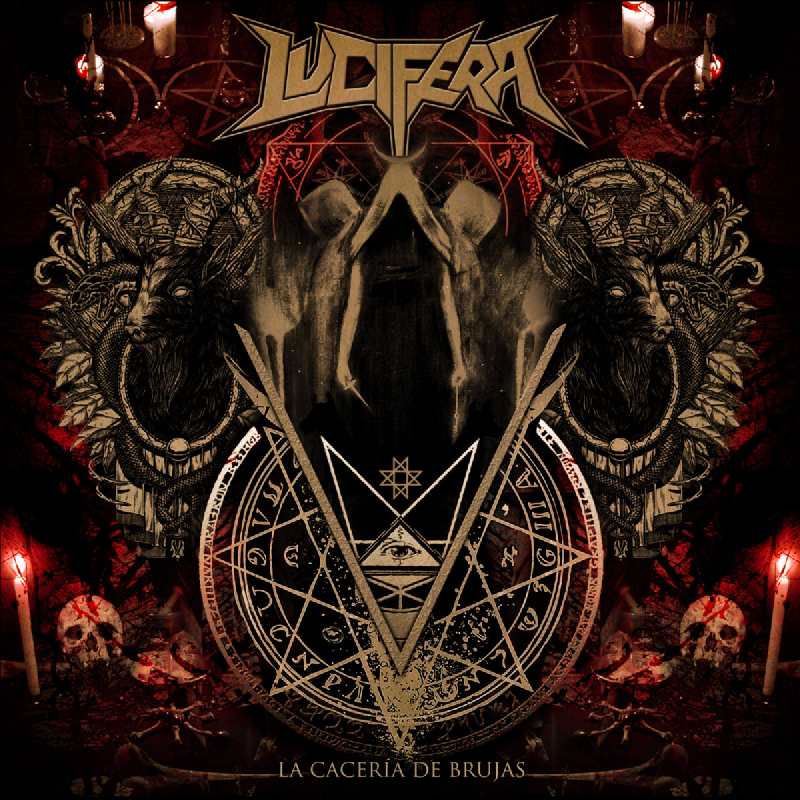
Spawned in the year of 2008 in the ardent fires of Pasto, the capital of the department of Nariño, in southern Colombia as an hellish duo comprised of guitarist and composer David HellRazor and vocalist and bassist Alejandra Blasfemia, Black/Thrash Metal outfit Lucifera started off playing a much more conventional form of Thrash Metal, evolving into an obscure and demonic beast over the years while still maintaining the amazing dynamism between the band’s founding members. Now in 2019 it’s time for Lucifera to spread darkness and blasphemy with their highly anticipated fourth full-length and defining opus entitled La Caceria De Brujas, or “the witch hunt” in English, taking the band’s primeval elements to a whole new level of malignancy, hatred and professionalism.
Featuring a menacing design by HR Design, from the band’s hometown Pasto, La Caceria De Brujas offers the listener a 39-minute tour de force of the blackest Thrash Metal and thrashiest Black Metal split into eight demonic hymns that will please all of fans of true, ancient metal music from the very depths of the underworld. In addition, one very interesting and important detail about La Caceria De Brujas is the fact that the lyrics for each song were pretty much written by a different musician. For instance, the lyrics for “Arde En Llamas” were written by Sonia Sepulchral (Bolivia), “Sigillum Diaboli” by Alicia Leguizamon (Colombia), “Sortilegio” by Clara Kultarr (Peru), “Ceremonia Secular” by the band’s own she-demon Alejandra Blasfemia (Colombia), “Pacto Pagano” by Melissa Kalissa (Colombia), “Conjuro” by Silvia Gers (Argentina), and “Brujeria” by Adriana Mavir (Mexico). However, that doesn’t mean the songs feel or sound disconnected; quite the contrary, the transition from song to song couldn’t have sound more powerful and thrilling, adding an extra touch of obscurity to the entire album thanks to this amazing “coven” of lyricists.
Evil distortions and vociferations kick off the blasphemous, belligerent and pulverizing opening track Arde En Llamas, with Alejandra sounding like the beast incarnate on vocals, while David blasts truly demonic sounds from his sonic weapons. Furthermore, you can sense influences from the early days of Slayer and classic Black Metal in their music, which obviously translates into absolute awesomeness. And Alejandra keeps growling manically (and always in Spanish, which makes her message even more obscure and vibrant) and punching us in the head with her rumbling bass in Sigillum Diaboli, a frantic hymn perfect for slamming into the circle pit to the vicious riffs by David, followed by Sortilegio, even more satanic than its predecessors by blending the speed and rawness of Thrash Metal with the darkness of Black Metal, with David sounding bestial not only with his riffs but also with his crushing beats. Then a disturbing intro taken from the original motion picture soundtrack “The Witch – Witch’s Coven” (written and performed by Mark Korven in 2015) ignites the demonic Ceremonia Secular, with the guitars by David bringing thunder to the overall musicality, resulting in a fantastic headbanging, mid-tempo display of extreme music that flows infernally until its grand finale.
Putting the pedal to the metal, the Colombian duo gets back to a more dissonant, high-octane sonority in Pacto Pagano, showcasing guitars and bass in absolute sync which consequently generates a menacing ambience for our total delight, while Alejandra’s gnarls sound like the utmost depiction of madness and rage. Following a similar disruptive, devilish pattern as its predecessor, Conjuro is another superb exhibit of underground Thrash and Black Metal by Alejandra and David, who by the way is on total fire with his riffs and solos, making our heads tremble in a demented way, which is also the case in Brujeria, where David demolishes his drums providing Alejandra all she needs to unleash her inner demon on vocals, or in other words, her anguished roars match flawlessly with the song’s thunderous bass and riffs from start to finish. Lastly, ending such sensational album the duo offers us Evocación Del Caos, by far the most obscure of all songs, an instrumental extravaganza presenting hints of Doom Metal and Blackened Doom forming a damned sonority that goes on and on, mesmerizing our senses and darkening our minds until all fades into a cold void, giving place to a final and very unsettling combination of evil sounds and tones.
In summary, let the witch hunt begin to the sound of the beyond fulminating fusion of Black and Thrash Metal found in La Caceria De Brujas, courtesy of this talented and electrifying Colombian duo, and in order to show all your support to Lucifera go check what they’re up to on Facebook and grab your copy of such blasphemous and sulfurous album from the Dunkelheit Produktionen’s BandCamp page or webstore in CD format or as a limited black, red or sun-amber edition LP (including an A2 format poster and a metalpin). Because if you’re going to be part of a coven, you better choose one where you can also enjoy first-class metal music, like what Lucifera more than succeeds in providing to our ears always avid for ass-kicking underground Extreme Metal.
Best moments of the album:Arde En Llamas, Sigillum Diaboli, Pacto Pagano and Conjuro.
Drawing influences from the Hellenic Black Metal scene, here comes a Singaporean squad armed with their brand new album of dissonant and hypnotic sounds.
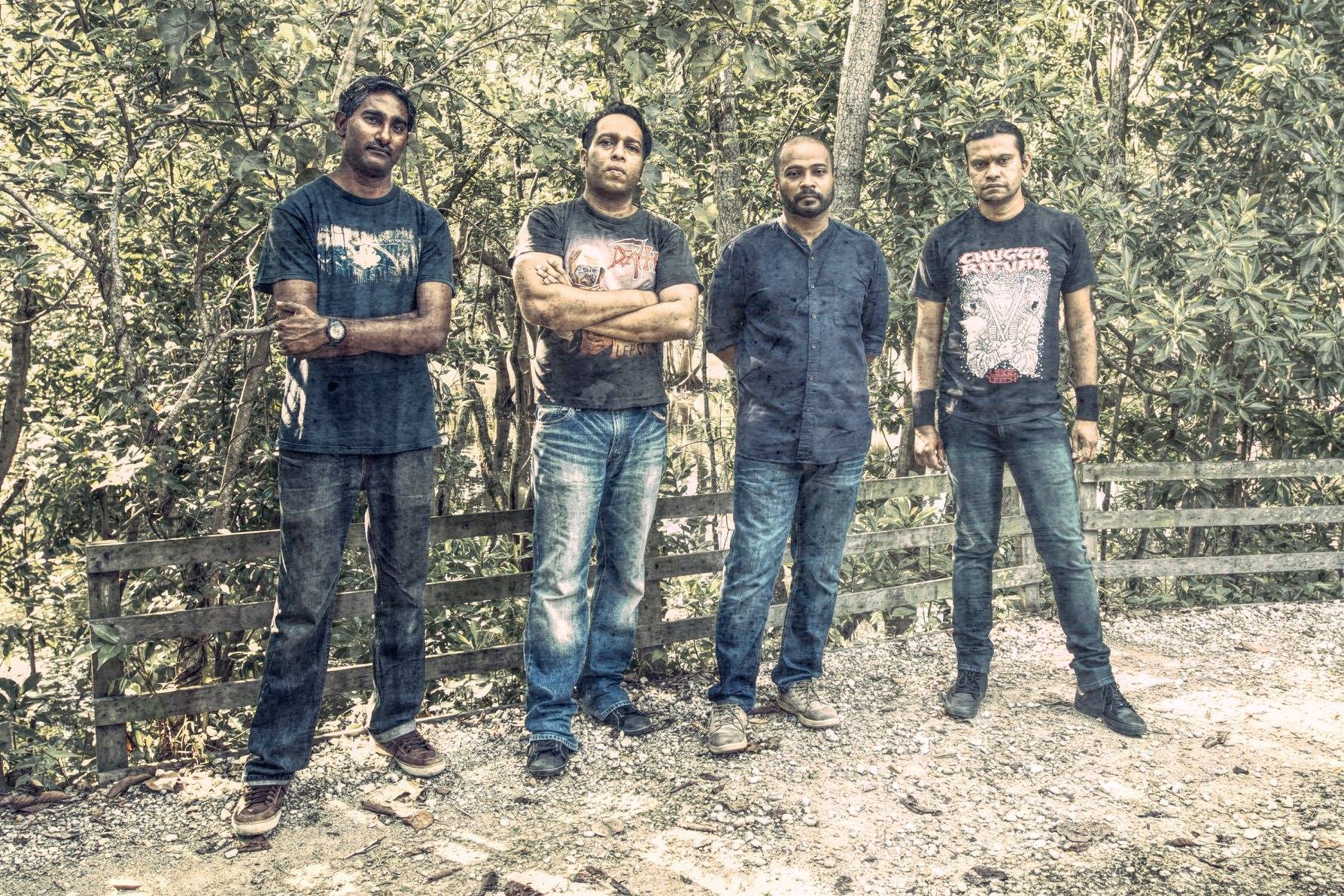
Formed in 2011 in Singapore by Kathir, vocalist and bassist for Rudra, an iconic Death and Black Metal act from the local scene, The Wandering Ascetic are making a name for themselves in the underground of heavy music by blasting a more exemplary black and thrash sonority without the Indian classical instruments seen in the music by Rudra, but still retaining their trademark spiritual fervor. Accompanied by guitarist Vinod (also from Rudra), bassist Jayakumar and drummer Kannan K, Kathir and his The Wandering Ascetic draw their influences from the Hellenic Black Metal scene (as well as obviously from Rudra), generating dissonant, hypnotic sound s infused with crushing riffs and grooves, elevating their music and art to a whole different level.
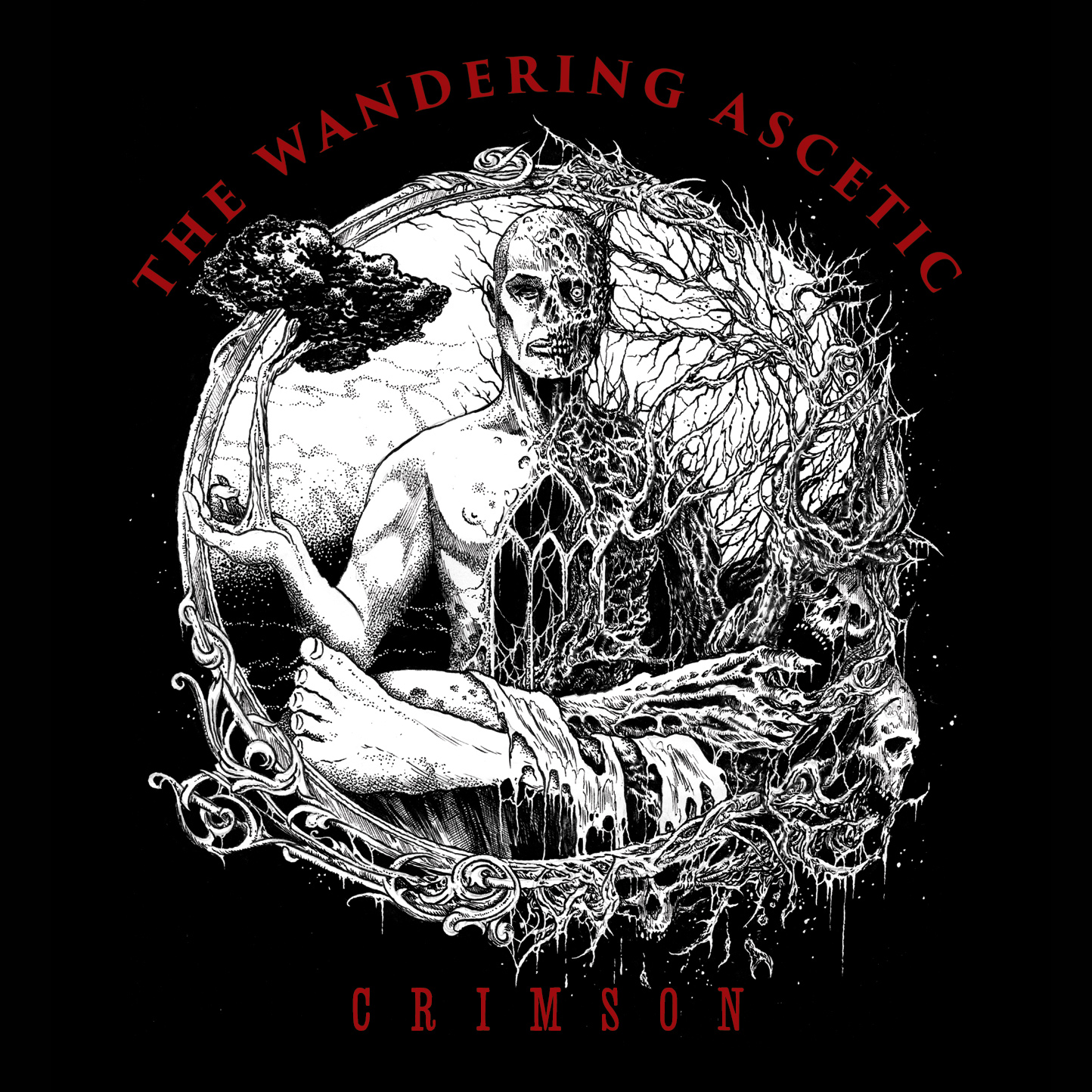
After the release of their debut EP titled Manifest Destiny, in 2013, it’s time for The Wandering Ascetic to smash our senses once again with their first full-length opus, the excellent Crimson, featuring a life-transforming artwork by Mark Riddick (Fetid Zombie) and layout by Turkka Rantanen (Demilich, Demigod). Comprised of 10 unrelenting songs ranging from pure old school Black Metal to modern-day Southern Rock and Groove Metal, Crimson is a solid and very entertaining statement by The Wandering Ascetic in a scene that seems stagnant at times, showing how powerful Singaporean metal can be and, as a consequence, opening several doors in the international market for the band.
Vinod begins his slashing attack accompanied by Jayakumar’s thunderous bass in Eva Braun, with Kathir roaring demonically for our total delight in a Black and Death Metal attack spiced up by hints of Progressive Metal, flowing darkly until its eerie end; then the tribal beats by Kannan K ignite another obscure composition named I Sing the Body Electric, showcasing an obscure rhythm inspired by old school Black and Doom Metal tailored for fans of the genre where the guitar lines by Vinod sound as flammable as they can be. Bringing elements form the music by Gojira, Mastodon and Tool we have the beautifully titled The Exorcism of Mrs. Doe, a very intricate and sulfurous tune where Jayakumar and Kannan K generate a dense and disturbing atmosphere with their weapons, followed by The Gods Bleed!, a song perfect for breaking your neck headbanging spearheaded by Vinod’s devilish riffs, while Kathir continues to vociferate like a demonic entity, not to mention how metallic and impactful Jayakumar’s bass punches sound and feel.
Beast of Burden presents more melody blended with sheer darkness in the form of modern-day Death and Black Metal, with Vinod being on absolute fire with his riffs and solos while the gnarls by Kathir only get more and more infernal, and The Wandering Ascetic keep hammering our heads with their crushing sonority in The Will to Live, where all four band members make sure we don’t stop banging our heads to their vicious music, with highlights to Kathir’s enraged growls and Vinod’s ass-kicking guitar solo. After such high level of devastation, it’s time to dive deep into the crypts of Hades with those Singaporean metallers in To Hell, Back and to Hell Again, a classic, straightforward metal extravaganza with elements from the dirty Rock N’ Roll played by bands like Motörhead and Chrome Division, which obviously means it kicks some serious ass.
Here for the Good Things keeps the album at a very good level of malignancy and hatred despite sounding a bit generic (or I should say less inspired than the other songs), with Vinod slashing his guitar in a very precise and aggressive manner; and the cutting sound of his guitar is once again the main ingredient in the visceral Assassins, displaying some hypnotizing instrumental parts, in special Vinod’s guitar solo, while Kannan K doesn’t let the energy go down by smashing his drums nonstop. Finally we have Orang Laut, an ominous and grim blast of extreme music highly inspired by classic Doom Metal, with Vinod and Jayakumar extracting the most Stygian sounds from their strings and with the music ending as dark as anyone can imagine.
It’s not always that we have the pleasure of facing high-end metal music from such distinct country, completely out of the North American and European markets, and we metalheads should not only thank The Wandering Ascetic for that by following them on Facebook, but mainly by purchasing their new album Crimson from their own BandCamp page, from the Transcending Obscurity webstore, or from other retailers like Target. Crimson might not be considered a true revolution in music, but the four guys from The Wandering Ascetic definitely put on a lot of energy, creativity and passion in the writing, composing and recording of the album to ensure they were not just playing “more of the same”. Quite the contrary, Crimson does sound very unique and compelling, elevating the name of Singapore in the world of heavy music and paving a very interesting future for the quartet.
Best moments of the album:I Sing the Body Electric, The Gods Bleed! and To Hell, Back and to Hell Again.
Worst moments of the album:Here for the Good Things.
Released in 2019 Transcending Obscurity Asia
Track listing 1. Eva Braun 5:18
2. I Sing the Body Electric 4:46
3. The Exorcism of Mrs. Doe 4:28
4. The Gods Bleed! 4:42
5. Beast of Burden 4:01
6. The Will to Live 3:15
7. To Hell, Back and to Hell Again 3:10
8. Here for the Good Things 4:10
9. Assassins 5:04
10. Orang Laut 3:12
Band members Kathir – vocals
Vinod – lead & rhythm guitars
Jayakumar – bass
Kannan K – drums
Enjoy these German tales from the past connected to the present through themes of freedom, fear and fighting oneself in the face of death, all embraced by first-class Black Metal.
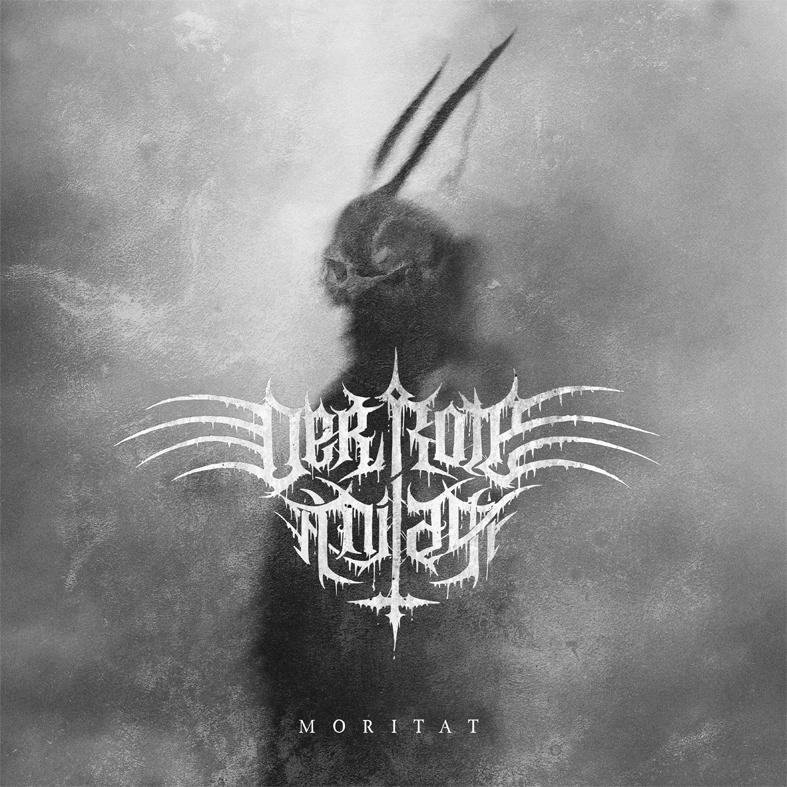
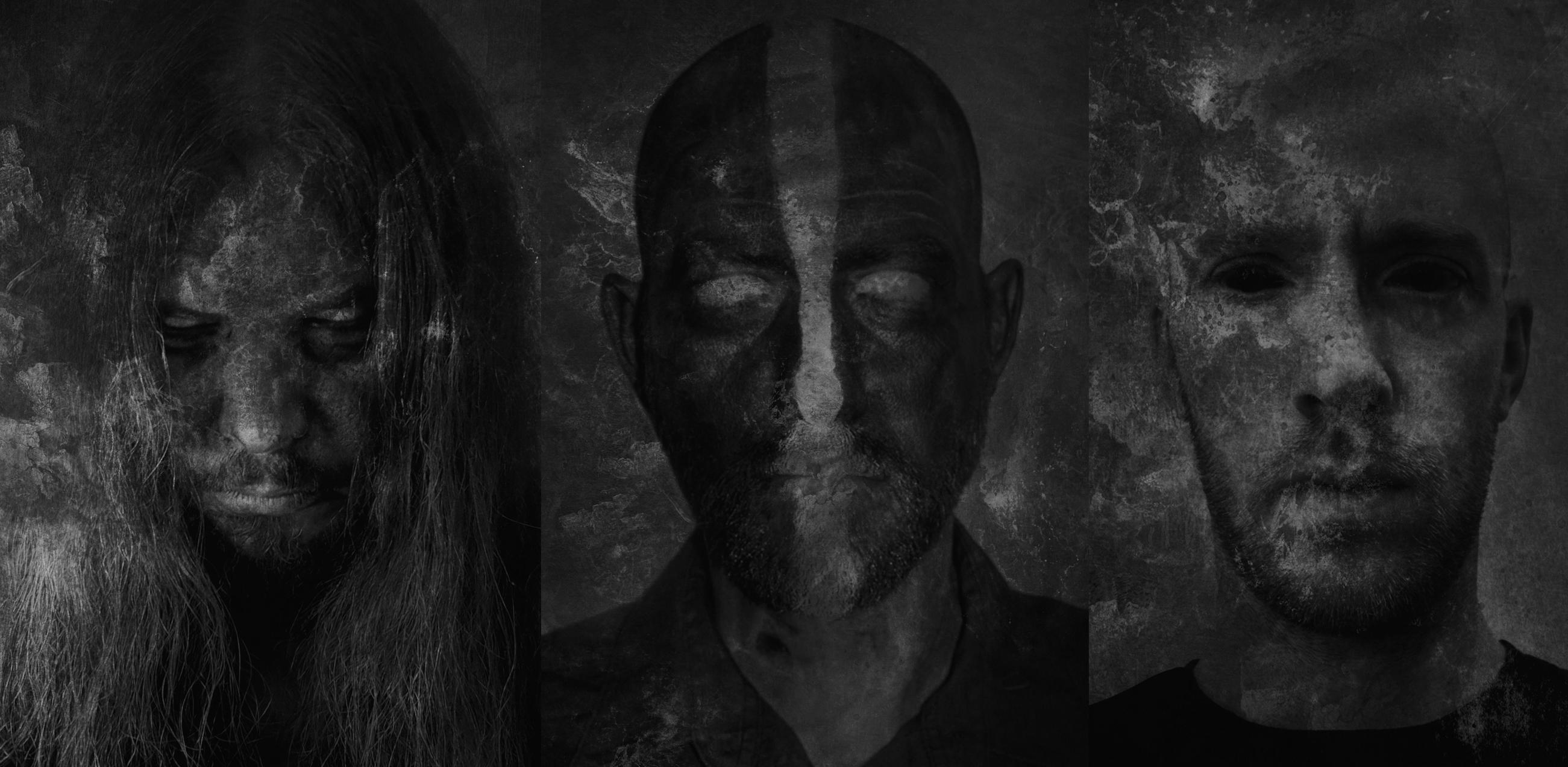
I, II, III, IV and V. More than just Roman numerals, those represent the five pillars of a German Black Metal unity known as Der Rote Milan, who are beyond ready to keep haunting our souls with their second full-length opus, entitled Moritat, the follow-up to and a logical progression from their 2016 debut album Aus der Asche. Not only that, their new album can also be considered a concept release, as Moritat tells local stories based on real events during a thirty-year war that took place during the 17th century, with its central character being the historical figure Schinderhannes, an outlaw considered by some to be the “German Robin Hood”. These stories, which take place in the southwestern Germany’s Hunsrück region, are connected to the present through themes of freedom, fear and fighting oneself in the face of death.
Forged in 2015 in the fires of Trier, a southwestern German city in the Moselle wine region lying in a valley between low vine-covered hills of red sandstone in the west of the state of Rhineland-Palatinate, near the border with Luxembourg, Der Rote Milan (which would translate to English as “the red kite”) continue to play Melodic Black Metal in Moritat, finding their identity in a combination of vicious blast beats, catchy melodies, and calm, thoughtful moments. The lyrics are performed in German to underscore the local character of the stories, giving the whole experience of listening to their music an extra touch of aggressiveness, obscurity and pure evil. Comprised of six very detailed and bold songs, Moritat surpasses the 40-minute barrier in great fashion, positioning this cryptic entity as one of the most promising new names of the underground German scene.
Gentle notes gradually morph into a brutal but very melodic devastation entitled Die Habsucht (or “the greed” in English), where IV begins fulminating everything and everyone with his demonic beats while lead singer III fires some absolutely enraged roars, with the music flowing majestically until a somber and atmospheric break takes over, powerfully getting back to an infernal Black Metal ending. Then it’s time for I and II to pulverize our ears with their scorching riffs in Drohende Schatten (“threatening shadows”), a lesson in Melodic Black Metal by this Teutonic horde, sounding even more demented and violent than the opening track, whereas Gnosis der Vergänglichkeit (“gnosis of transience”) is an ode to all things dark and mournful with a melancholic Atmospheric Black Metal-inspired intro where III’s otherworldly growls and vociferations sound utterly anguished and grim, while V keeps the ambience menacing with his low-tuned bass.
And that intricate and lugubrious vibe keeps haunting our souls in Der letzte Galgen (“the last gallows”), where III growls demonically while his bandmates extract the most vicious and piercing sounds possible from their instruments, with IV once again stealing the spotlight with his precision and technique, getting almost tribal with his beats at times (which in the end enhances the song’s taste and punch even more). There’s no time to breathe with more of their vibrant fusion of classic Black Metal with distinct melodic and atmospheric styles in Der Findling (“the boulder”), reaching deep inside our hearts and blackening them beautifully, with I, II and V being in a fantastic and extremely evil sync with their strings, before the title-track Moritat (“ballad”) brings to our metallic ears 12 minutes of visceral sounds and noises, with the amount of aggression and obscurity flowing from each instrument being truly outstanding. Not only that, IV keeps demolishing his drums in a very precise and melodic way, while the guitars sound and feel extremely sharp, therefore cutting our skins mercilessly, with the music remaining epic until the song’s triumphant and dark finale.
In case these simple, straightforward words are not enough to show you how potent and somber the music by those German metallers sounds and feels, you can take a more detailed listen at Moritat in its entirety on YouTube, and of course after getting stunned by their disturbing sonic waves you must check what Der Rote Milan are up to on Facebook, and purchase Moritat from their own BandCamp page, from the Unholy Conspiracy Deathwork’s BandCamp page or Big Cartel, from iTunes or from Amazon. In a nutshell, the gates to the underworld of German Black Metal are open, and Der Rote Milan are right there waiting to claim your soul to the sound of their brand new, pulverizing concept album of first-class Melodic Black Metal.
Best moments of the album:Drohende Schatten and Moritat.
Worst moments of the album: None.
Released in 2019 Unholy Conspiracy Deathwork
Track listing 1. Die Habsucht 6:10
2. Drohende Schatten 3:26
3. Gnosis der Vergänglichkeit 7:42
4. Der letzte Galgen 7:21
5. Der Findling 4:16
6. Moritat 12:01
Band members III – vocals
I – guitars
II – guitars
V – bass
IV – drums
No kisses, no games, don’t think I want love… Do not complain, it’s the speed metal way!
It’s time to put the pedal to the metal here on The Headbanging Moose by presenting to you one of the meanest, fastest and most ferocious ladies in the world of heavy music, a woman that loves Heavy and Speed Metal from the bottom of her heart and who takes no prisoners in her quest for underground music. Not only a talented musician, she’s also a model, a designer and an artist, always fighting for her dreams and never giving up or slowing down no matter what. I’m talking about Constanza Godoy Díaz, better known by her fast and furious moniker of Tanza Speed (or simply Tanza), the vocalist and multi-instrumentalist behind American Heavy/Speed Metal band Outline and the project’s previous incarnation, Chilean Speed Metal band Demona. With that said, are you ready to accelerate and bang your heads together with Tanza?
Born on August 13, 1990 in Quilpué, a city and capital of the Marga Province in central Chile’s Valparaíso Region, and living her entire childhood in Villa Alemana near her family and friends, Tanza is the daughter of two 80’s metalheads and has always been linked to the metal scene (by the way, her father Mauricio “Jackie” Godoy played guitar in two bands from Valparaíso, those being Distorsion and D.O.D.), with her passion for metal music starting when she was around 12 years old while searching for her own identity and exploring different styles. In 2007, at the age of 17, she created her own band Demona (a project without major expectations that didn’t release anything until 2008), only days after moving to Santiago to study English in university. She didn’t finish her career, though, because she realized it was not what she wanted and decided to change her major and study what she really wanted, photojournalism. However, that only lasted for one year, as she couldn’t continue her studies due to her move to Canada in 2011. Tanza actually said being a photographer was pretty exciting, especially in her home country due to all violence and riots happening at that time, and she still takes photos at her home studio and publishes those on her own website.
Our dauntless musician considers herself a person that likes to learn and study by observing things, always trying to notice the differences between cultures as she’s already lived in Chile, Canada and the United States, and traveled to countries like Brazil and Japan, enjoying seeing the contrasts in people. For instance, when she was a kid she enjoyed observing her mother and grandmother sew, always trying to replicate what they were doing, which ended up helping her develop her skills as a fashion designer. Regarding the time when she moved to Canada, in 2011, Tanza said that was necessary as she was being bullied a lot in her homeland Chile. The local scene didn’t really love her, and due to her lack of experience things got out of control and she couldn’t continue in the band she was at that time anymore. It was thanks to her Canadian friends that she decided to save some money and try a new life in Canada, opening up a whole new world of possibilities for her not only as a musician, but as an artist and a businesswoman.
Before Demona, Tanza was part of a couple of bands with some friends, but nothing that could be considered a serious or professional project, those being Chilean Thrash Metal band Corrosion, where she played guitars and with whom she played a few live concerts and recorded only one demo, and another band named Poisoned, where she was also the guitarist, but that lasted only for a few months. In addition, you can also find Tanza collaborating with American Power/Thrash Metal band Destructor in their 2016 album Back in Bondage, not as a musician but as their cover model, giving a touch of delicacy and sexiness to their crushing music. However, as aforementioned, after forming Demona in 2007 Tanza really started to build a career in heavy music, with the band either working as her solo project, where she took care of vocals and played all instruments, or as a regular band with other musicians involved. Since 2008, Tanza and her Demona have released a promo EP in 2008, followed by the demo Metal Is Me in 2009, the EP Die in Violence in 2010, the demo Nightmare in 2011, the EP MIM / The Assassin in 2012, the full-length albums Metal Through the Time, in 2012, and Speaking with the Devil (which she was also responsible for the layout), in 2013, and finally the EP 2015, obviously launched in 2015. The idea behind Demona was quite simple, as Tanza started playing the guitar at home on a regular boring day during her teens, wrote an original song and voilà, the project was born, with the name Demona being inspired by the word “demon”, but with the additional “a” giving it a more feminine touch. You can visit the band’s YouTube channel to get a good taste of their vicious music, like this video of the band playing the song The Apocalypse live in Sherbrook, Quebec, Canada on August 12, 2011, or also go to Tanza’s personal channel to watch her kicking some ass live in Osaka, Japan in 2014 with the songs Demona and Dirty Speed Metal.
In addition, as briefly mentioned in the beginning of this tribute to Tanza, Demona recently morphed in 2017 to a new entity entitled Outline, having released in 2017 their first demo named Fire Whiplash and, more recently, an expanded and more professional version of that demo, with the addition of a few new songs to it and, of course, a better overall production. Outline is not just a continuation of Demona, but an enhanced project where Tanza, together with J. Hammer, the mastermind behind American Black/Speed Metal/Punk one-man army Hammr, reveal to the diehard fans of Demona a newer and more traditional side of Tanza, and you can take a good listen at that metamorphosis directly at Outline’s BandCamp page or YouTube channel, like the title-track to their debut album Fire Whiplash. Under this new name, Tanza is known as “The Speed”, while J. Hammer is simply “The Hammer”, just to give you an idea of how raw, direct and metallic their music sounds.
This slideshow requires JavaScript.
Not only an up-and-coming metalhead, Tanza is also the founder of her own clothing store named Speed Clothes, an idea that was originated as soon as Tanza moved to Canada in 2011, when she was broke and didn’t speak the language, and therefore felt the need and desire to start her own business inspired as mentioned by her mother and grandmother. In 2012, she made her first printed swimsuit on spandex and things started to change, but it was in 2015 when she relocated to the United States after getting married that her business really took off, investing all she had at that time to create a product that would fulfill every girl’s demands when it comes to metal clothing, empowering them to dress as they please and “looking hot without sacrificing brutality”, as frontman Mauro Gonzales from American Thrash Metal act Bonded by Blood said once. Furthermore, as Tanza herself stated, she’s not just selling clothes, but also taking care of all other business areas such as marketing, promotion, photography, customer service and website development, for example. You can get more information about Speed Clothes from their official website or from their Facebook page, getting in touch with Tanza and, if you’re a girl who loves metal above all things, maybe even purchase new clothes or accessories for your devilish wardrobe.
Still regarding Speed Clothes and fashion in general, Tanza said in one of her interviews that freedom and creativity are the key points in metal fashion, allowing people to express themselves and to innovate, which is something Tanza believes is a crucial part of metal music. “Metal wouldn’t be what it is now without innovation, and innovation comes with trying new things. Whether you want it or not, it implies that you have to mix and try and invent things. Mainstream artists wear a lot of leather with studs and stuff and, if that’s what you mean then, I think that’s great,” said our multi-talented metaller, complementing by saying why innovation is essential in her line of business. “You cannot pretend you are still in the ‘80s when you are using the internet, you know? Even in metal, we can’t keep it squarely in the ‘80s. I understand the tendency, but the 17-year-old girls of today simply do not care about the ‘80s anymore. They want cool things. And why shouldn’t there be cool things for metal, as there are for everything else in life?”
Tanza’s inspirations and idols in music and arts in general are pretty much everything we metalheads love, with underground bands like Living Death, Wardance, Desaster and Sentinel Beast being among her favorite ones alongside metal titans such as Judas Priest and the early days of Metallica. However, she mentioned in one of her interviews that she also takes lots of inspiration from other kinds of music like classic rock, such as Queen and Led Zeppelin, and also from 80’s synth pop like Yazoo, Depeche Mode and Trans X. As a matter of fact, Tanza and her Demona were originally inspired by her own personal experiences plus a wide range of styles, from national classic folklore to the most remote and underground bands that may exist, which is basically why her music sounds so raw, vibrant and honest, working as a representation of her own true self.
When asked about the metal scene in her homeland Chile, Tanza said that Chilean metal fans are extremely passionate, loving metal from the bottom of their hearts and with their souls, but that also means they can be very hateful as well to anyone who doesn’t have the same beliefs and ideas or to who’s too different from them. She said that, while she was living in Chile, women were not very accepted in the metal scene, not being taken seriously as they should as the scene was too sexist and elitist at that time which, as already mentioned, was one of the main reasons why she left her country and moved to Canada. However, even with all those hassles, Tanza loves metal from her homeland, with bands like Force of Darkness, Atomic Aggressor, Pentagram, Insanity and Invocations Spells being among the ones she personally recommends to anyone who’s interested in knowing more about Heavy Metal made in Chile.
It was in 2014 when Tanza had perhaps her biggest adventure in the world of heavy music, having visited and played in Japan, the “Land of the Rising Sun”, something not very common for several bands (especially if we’re talking about bands from Chile), with the story behind her trip to Japan being very curious to say the least. Before travelling to Japan, Tanza was going through a boring and depressed period in her life, almost ready not to play with Demona anymore. One day, out of nowhere, a Japanese label called Rock Stakk Records contacted her for playing her music in Japan alongside Japanese musicians, resulting in the first ever (and so far, the only) occasion Demona performed live in Japan. Furthermore, Tanza obviously has a strong connection now with the Japanese rock and metal scene, recommending countless local bands such as Sabbat, Metalucifer, Gastunk, X Japan and Loudness, among many, many others.
And last but not least, when asked about her hobbies and other activities, our alternative Chilean singer and model (or “trollmodel”, as her own uncle would say) answered that she actually doesn’t have much time for hobbies, although she loves doing some relaxing activities like taking pictures and recording videos once in a while. Overall, her time is divided between music, her clothing store and modeling (and of course her husband). There are several interesting interviews with Tanza Speed online, such as this one for The Noise Hour Radio Show on May 22, 2013, where she talks about the music by Demora and other nice-to-know details about her career. The only thing is that the full interview is in Spanish, her mother tongue, but as a true supporter of underground metal I guess it’s a very good opportunity for you to practice your Spanish, right? All in the name of our good, old, fast and furious Heavy Metal.
“Metal wouldn’t be what it is now without innovation, and innovation comes with trying new things. Whether you want it or not, it implies that you have to mix and try and invent things.” – Tanza Speed


 “Music against aesthetisation
 Manam is another perturbing chant by Gruzja, an excellent representation of what Extreme Metal is all about in the Polish underground scene, blending the most obscure elements from Black Metal to the atmospheric and gloomy waves of Doom Metal with vocals that couldn’t sound more desperate than this; followed by Jego Głos (“his voice”), presenting some amazing nuances of Punk and Hardcore added to their core Black Metal, therefore making their music even more rebellious and potent like if the instrumental parts from Motörhead were blended with the rabid and raspy vocal lines of The Exploited. And get ready for over four minutes of visceral sounds and tones in Ilu Nas Było? (“how many of us were there?”), darkening the skies like we expect from classic Doom Metal, with the strident tone from the guitar potentializing the gruesome and demonic roars blasted by the band’s uncanny lead singer, almost vomiting the song’s Polish words in our faces. Lastly, Gruzja offer us Iść Dalej (“go ahead”), completely different form the rest of the album, feeling more like a remix version of a song than an original composition per se (or maybe it’s just an outro, who knows). It’s not bad at all, but it takes away a little of the insane and hellish atmosphere from all previous songs.








 THE HEADBANGING MOOSE