Get ready for a feast of modern Death Metal blasted by a hardworking German act with their debut full-length opus, singing about the constant anger borne from injustice, human stupidity and religious bigotry.
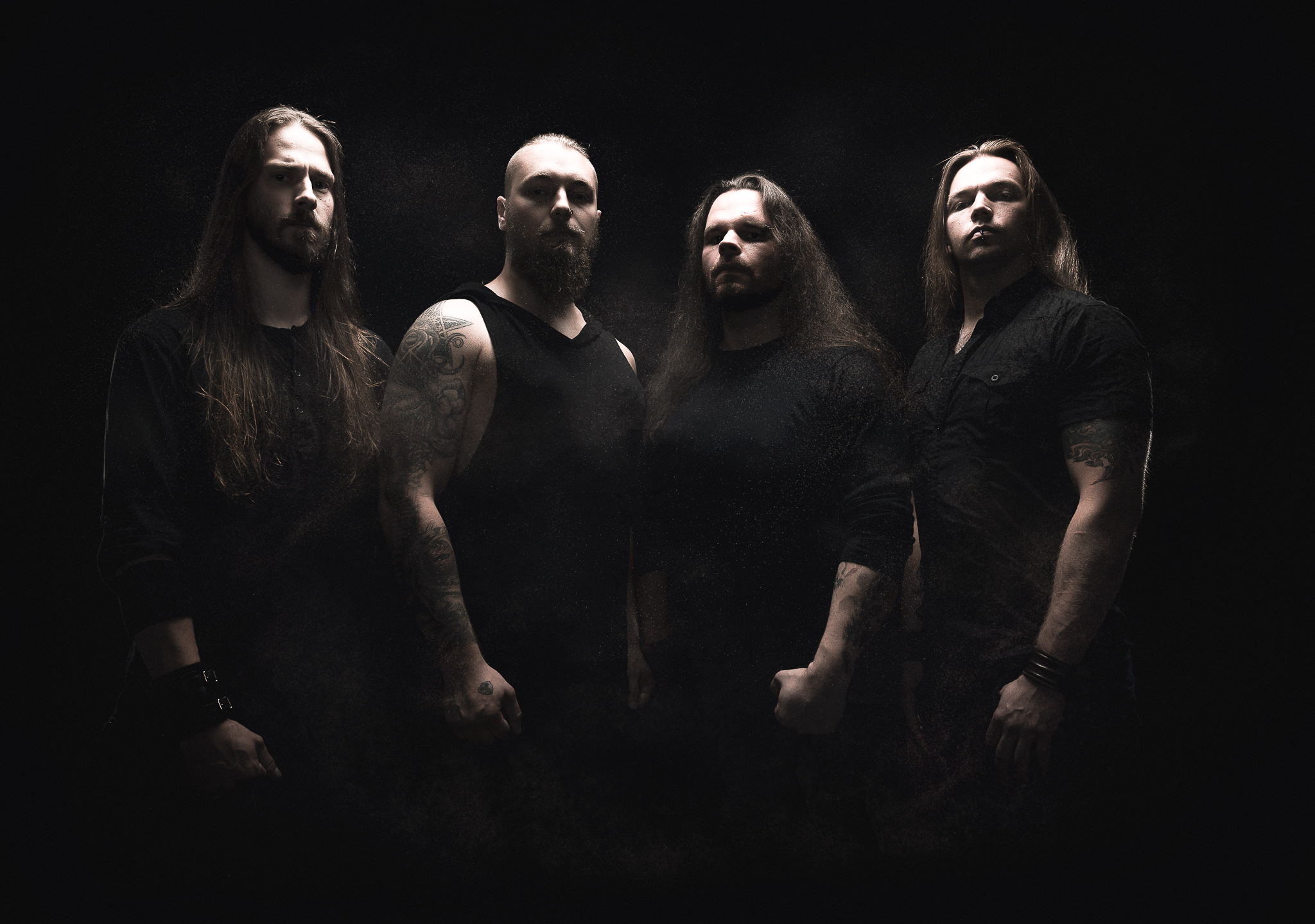
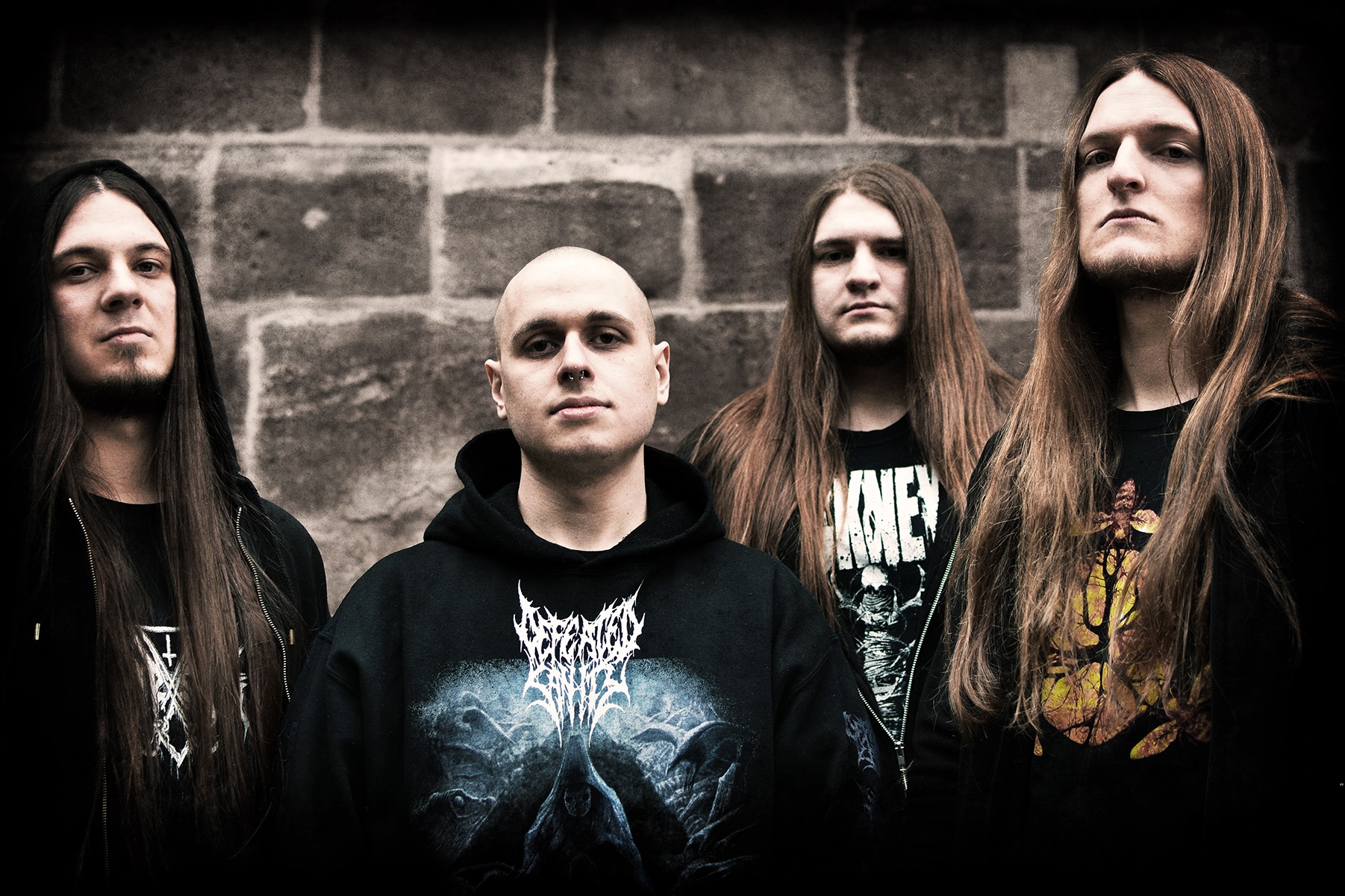
It’s time to be absolutely pulverized by the frantic, modern and very technical Death Metal played by a German four-piece act known as Pestilent Reign, who are releasing their debut full-length album this year, entitled Pyres. Formed in 2013 by guitarist Lars Hägele and vocalist Christoph Sauner in the city of Sttutgart, in Southern Germany, Pestilent Reign released two EP’s after their inception, those being Shivering Chaos, in 2015, and The Zealot, in 2016, leading the band to play from local to international shows at festivals like Monthly Assault in Switzerland and Nice To Eat You in the Czech Republic, and sharing the stage with well-known bands like Benighted, Wormed, Unfathomable Ruination, Implore, Pighead, Analepsy, Omophagia, Spasm, Gutalax, Serrabulho, Deserted Fear, Rottenness, Warfuck and Abysmal Torment.
Across 39 minutes split in eight fulminating tracks, Pyres draws strength from a multitude of influences such as Psycroptic, Dying Fetus, Aborted and Revocation in a multi-faceted manner that’s as rewarding to listen to as it is fun. On Pyres, Pestilent Reign strikes the perfect balance between straightforward modern Death Metal, sledgehammer-like brutality, thrashy hooks, technically adept flourishes, and monstrous grooves. Featuring an obscure cover artwork by Bahrull Marta (Abomination Imagery) from Indonesia, and with lyrical themes based on the constant anger borne from injustice, human stupidity and religious bigotry, Pyres is the result of the band’s dedication and hard work, powerfully representing their passion and devotion to extreme music.
A song that starts with a crazy voice barking the sentence “PEOPLE ARE CANCER!” has to be violent and austere, and Martyr is all that, igniting the intricate and piercing devastation by the quartet with Sebastian Unić showcasing all his skills behind his drum kit, before Christoph starts firing his Barney Grimway-inspired growls in an entertaining exhibit of modern and aggressive Progressive Death Metal. And their sonic demolition goes on in You Will Kneel in Piss and Blood, a Death Metal tune with some Black Metal nuances where Lars sounds pulverizing with his metallic riffs. Moreover, it’s impossible not to love the breaks and variations presented by the band throughout the song, while Christoph keeps blasting furious gnarls and screeches nonstop. And the band offers another explosion of their scorching Death Metal in Saviour, which also sounds melodic and extremely vile at the same time, showcasing a beastly Sebastian on drums while Lars and his flammable guitar add an extra touch of dementia to the musicality. And in Ouroboros, it’s impressive how they master the art of blending the aggressiveness and rage from Death Metal with the intricacy of Progressive Metal, with Christoph sounding like a vile creature on vocals while the rest of the band will inspire you to crush your head into the circle pit.
Cleanse the Flesh presents razor-edged riffs and nonstop annihilation flowing from start to finish, with bassist Matthias “Mick” Figura together with Sebastian creating a dense background perfect for the rabid screams by Christoph; whereas in Zealot a brutal and electrifying intro morphs into ass-kicking Progressive Death Metal, with Sebastian and his blast beats adding a touch of darkness to the music. In addition, pay good attention to the interesting narration about going to a Death Metal concert and its connection with Satan, as it brings a pinch of comedic relief to their crushing music. A demonic screech ignites another circle pit-catalyst titled I.M.T.R.M., a great tune by this demented German squad with both Lars and Matthias grinding their axes like there’s no tomorrow. And last but not least we have Gutter´s Filth, perhaps the most intricate and wicked of all songs in Pyres, where all four band members are smashing and pounding their instruments mercilessly. Moreover, the level of complexity flowing from the guitar lines by Lars is outstanding, not to mention the demented performance by Christoph on vocals.
The fury spawned by Pestilent Reign can be better appreciated by following them on Facebook, and if you want to carry all the rottenness of old school Death Metal fused with the complexity of progressive music from Pyres (which by the way is available for a full listen on YouTube) with you wherever you go, you can buy a copy of the album at the Rising Nemesis Records BandCamp or Big Cartel, at the Rebirth the Metal Productions BandCamp or Big Cartel, as well as on iTunes, Amazon or City Disc, and keep supporting the always fun and always exhilarating underground Extreme Metal scene.
Best moments of the album: You Will Kneel in Piss and Blood, Ouroboros and Gutter´s Filth.
Worst moments of the album:Saviour.
Released in 2018 Rising Nemesis Records/Rebirth the Metal Productions
Track listing 1. Martyr 4:20
2. You Will Kneel in Piss and Blood 3:34
3. Saviour 5:28
4. Ouroboros 4:02
5. Cleanse the Flesh 3:08
6. Zealot 6:59
7. I.M.T.R.M. 4:58
8. Gutter´s Filth 6:07
Band members
Christoph Sauner – vocals
Lars Hägele – guitar
Matthias “Mick” Figura – bass
Sebastian Unić – drums
Representing an exploration beyond the sane and mentally sound, this talented Swedish horde is ready to haunt our souls with seven unrelenting tracks of atmospheric and sinister Black Metal.
“Embrace your shadow self – your dark aspects. Don’t hide away. Let those harmless creatures, turn into raging monsters. Let chaos guide your consciousness. You are ov Shadows.”
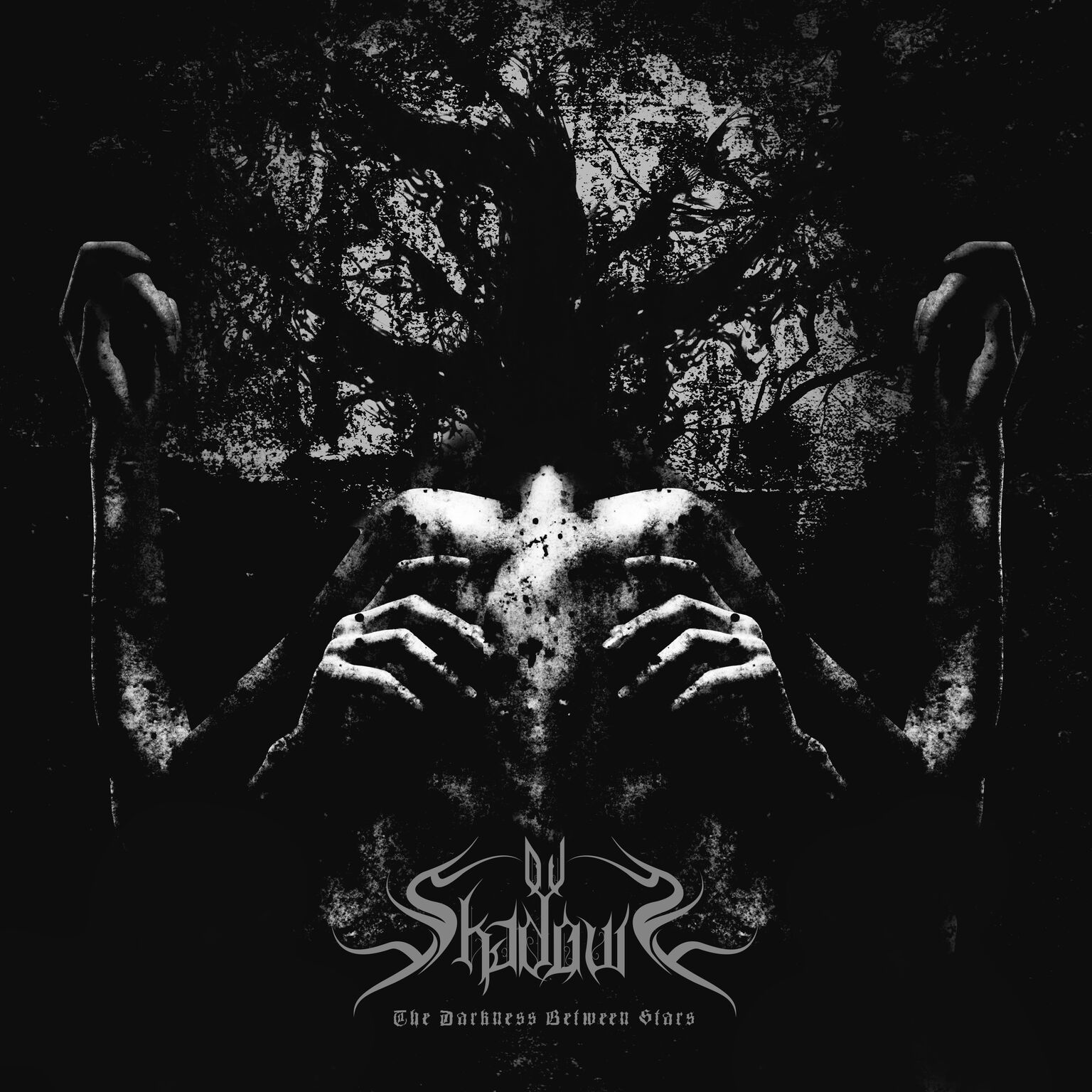
Those few sentences frame the concept behind Swedish Black Metal horde Ov Shadows, representing an exploration beyond the sane and mentally sound. With their music and lyrics, Ov Shadows acknowledge the duality that divide a persona and the shadow self, continuing further into the dark, a portal into chaos without barriers and rules. And after crossing that portal, you’ll be ready to explore the sinister realms of Atmospheric Black Metal ruled by Ov Shadows in their brand new album, entitled The Darkness Between Stars.
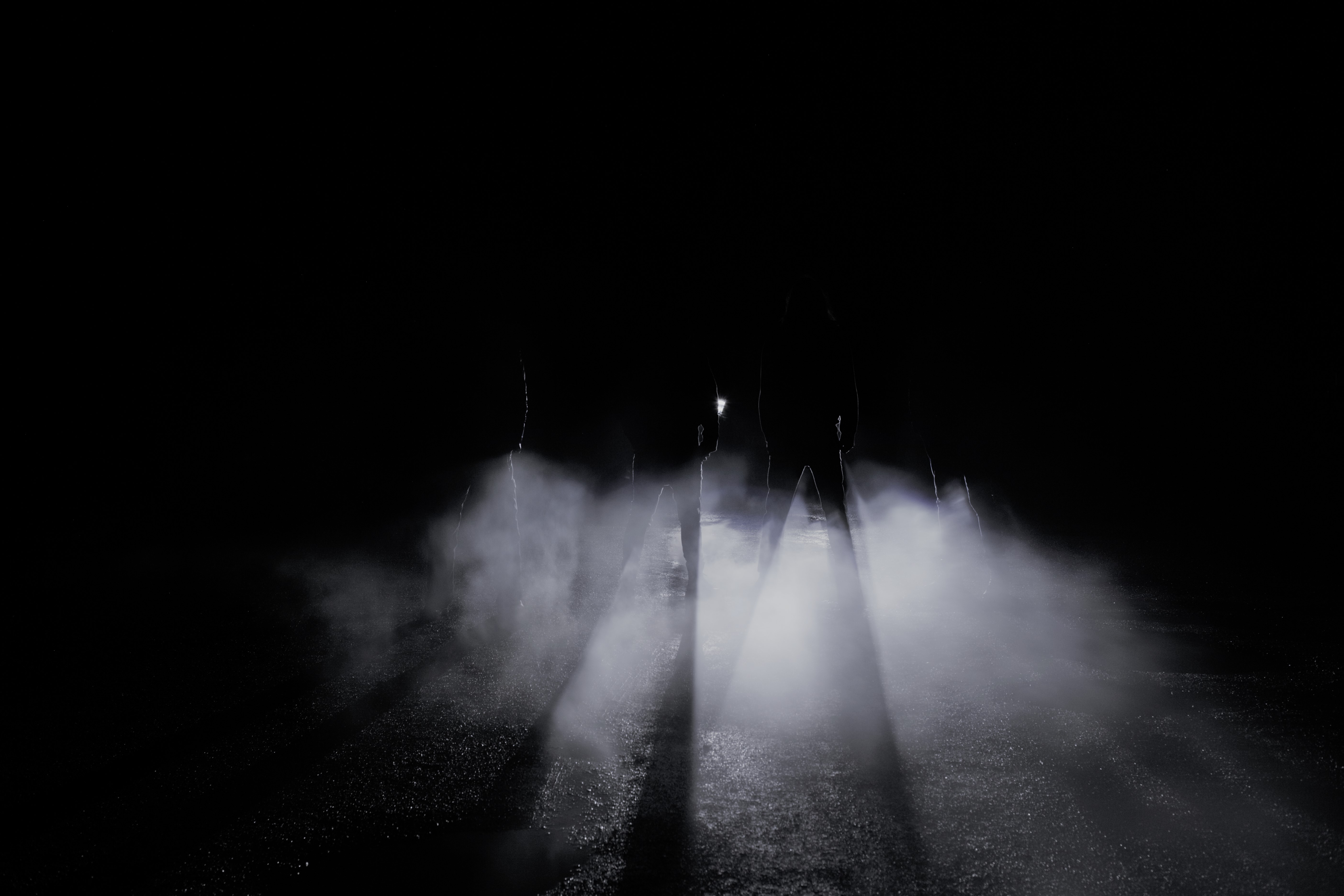
Formed in the city of Gothenburg in 2016, the band comprised of RA (aka Ronny Attergran) on vocals and bass, AF (aka Andreas Frizell) and AA (aka Anders Ahlbäck) on the guitars, and JW (aka Jonas Wickstrand) on drums returns after their 2016 debut EP Monologues with more of their Stygian sound, delivering epic riffs that turn from mournful to triumphant in a way that is stirring and emotionally satisfying. In other words, The Darkness Between Stars has everything that one could possibly want out of a Black Metal album, those being a truly dark atmosphere, an epic feel, the right mix of melody and grimness, and an engaging song structure.
Ominous sounds emerge from the dark chambers of hell until the quartet begins their devilish mass in the title-track The Darkness Between Stars, blasting sheer brutality and blasphemy during its almost 7 minutes of music. RA sounds like a possessed demon on vocals, while JW delivers the most classic form of blast beats, generating a straightforward musicality recommended for admirers of the genre. In Bellowing Shadows, darkness and rage keep flowing from the band’s instruments in an excellent display of Black Metal, with their evil guitar duo AF and AA cutting our skin with their old school riffage, whereas RA’s gnarls sound and feel even more disturbing. And displaying hints of Doom Metal and Blackened Doom (but still reeking of putrid Black Metal) we have The Hanged Man, where JW continues his pulverizing path while both guitars sound as sulfurous as they can be, all spiced up by a sinister atmospheric passage before all hell breaks loose again.
The acid Disguised As Altruism is another demolishing Black Metal feast by Ov Shadows, with its guitars getting more and more scorching as the music progresses while the overall malignancy is considerably boosted by JW’s unstoppable beats, living up to the legacy of Scandinavian Black Metal. The Ritual of the Natural Flame already begins in full force, with the four members of the band summoning total darkness with their Stygian instruments, in special RA and his high-pitched demonic roars (not to mention the song’s somber and absolutely menacing break). After such beautiful blast of Black Metal, strident riffs and gnarls set the tone in the dense metallic extravaganza named Hordes Abiding the Narrator, with all instruments generating a mesmerizing dark ambience perfect for RA and his vociferations. Lastly, their final onrush of blasphemy and obscurity comes in the form of a 7-minute devastating tune named A Sky In Vain, where AF and AA create a wall of darkness with their riffs while JW switches between classic Black Metal drumming and Doom Metal-inspired beats, flowing into a melancholic and obscure ending.
If you want to take a detailed listen at The Darkness Between Stars, click HERE and enjoy this very cohesive and professional album in its entirety. Also, in order to show your true support to this skillful Swedish horde, simply visit their Facebook page for news, tour dates and other nice-to-know details about the band, and their YouTube channel for more of their unrelenting Black Metal. And of course, purchase The Darkness Between Stars on BandCamp or on Big Cartel, letting the somber music by Ov Shadows penetrate deep inside your mind, blackening your thoughts until there’s no way back.
Best moments of the album: Disguised As Altruism and The Ritual of the Natural Flame.
Worst moments of the album: None.
Released in 2018 Black Market Metal
Track listing 1. The Darkness Between Stars 6:58
2. Bellowing Shadows 5:40
3. The Hanged Man 6:26
4. Disguised As Altruism 5:56
5. The Ritual of the Natural Flame 7:19
6. Hordes Abiding the Narrator 5:58
7. A Sky In Vain 7:42
Band members RA – vocals, bass
AF – guitars
AA – guitars
JW – drums
Exploring a darker-than-usual path in their brand new album, this Finnish squad has all it takes to become a reference in modern and aggressive Melodic Death Metal.
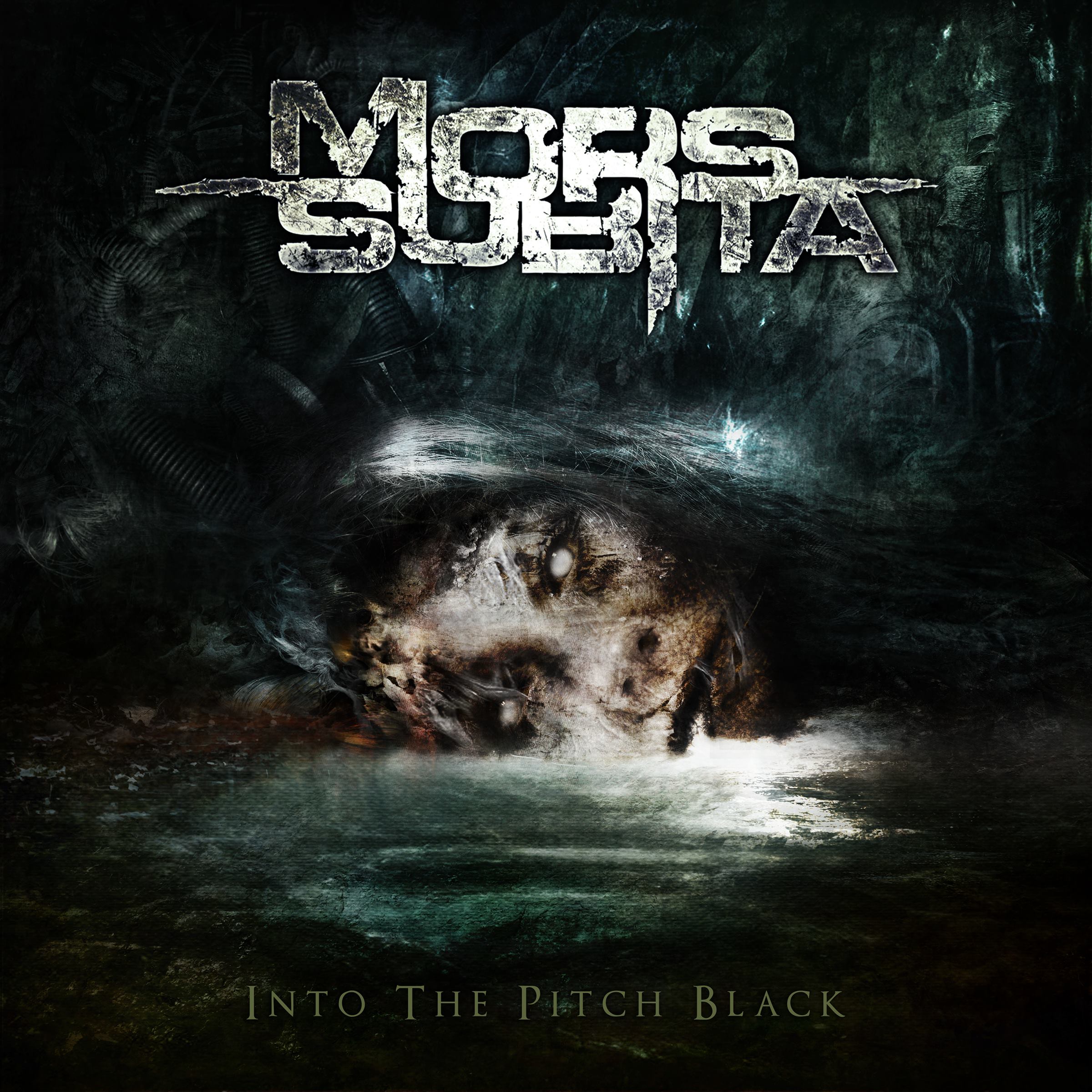
Formed in 2000 in Oulu, a city located in central Finland, Mors Subita (Latin for “sudden death”) play what can be called “Aggressive Modern Melodic Death Metal”, having released since their inception two demos, two EP’s and two critically acclaimed full-length albums, the first titled Human Waste Compression, in 2011, and the second titled Degeneration, in 2015, which peaked at number 26 on the official Finnish album charts. Now after three years of touring and recording, the band comprised of Eemeli Bodde on vocals, Mika Lammassaari (Eternal Tears of Sorrow, Wolfheart) on guitars and backing vocals, Mika Junttila on bass, and Ville Miinala (Thyrane, Darker Grounds) on drums returns with a blistering new 11-track album titled Into the Pitch Black.
This new album from Mors Subita showcases just how far the band’s songwriting and musicianship has developed since the debut of their sophomore album, with these 11 new tracks being a testament to the work ethic employed within the band. With searing vocals, gut twisting melodies, fierce drumming and the fast yet always tasteful riffing the band has come to be known for, Into the Pitch Black builds on the identity Mors Subita has forged for themselves with their previous albums, and promises to not disappoint even the most hardened melodeath fan. These new compositions present a new dimension to the ever-evolving sound of the band, with even more emphasis being given to the melodies while also incorporating the use of industrial samples not heard on previous releases. The result has manifested in some of the heaviest and crushing tracks the band has ever written, while still encapsulating their signature sound which has set them apart from all others in the melodeath scene.
The short, futuristic intro Path to the Abyss revs up the engines for the melodic and aggressive As Humanity Weeps, with its lyrics about how vile the human soul can be (“How much more blood is there to shed before you realize, / That no one has the right to take another’s life. / Feed them pain, feed them fear. / Reduce yourself to human filth.”) and all the sonic devastation going on matching perfectly with the proposed theme. After such great start, the band fires another potent tune titled Dead Sun, where the guitar by Mika couldn’t sound more metallic and vibrant, while Eemeli delivers sheer rage through his screams in a solid display of modern Scandinavian Metal. And in Defeat we face contemporary sounds and tones in a very melodic and exciting atmosphere, again bringing Mika’s lancinating riffs and endless violence.
In the title-track Into the Pitch Black, they engage in their most Scandinavian Melodic Death Metal mode, with Mika doing a great job with his riffs while Ville keeps the rhythm at a nice headbanging pace with his beats. Then in Alas Ville puts the pedal to the metal with his accelerated beats and double bass, accompanied by the metallic bass by the band’s other Mika (Mika Junttila), generating a thrilling vibe for Eemeli and his visceral growls, therefore keeping the album at a high level of adrenaline and fury. And Mors Subita managed to get even more ferocious and angry in the belligerent tune I, God, with all band member being on fire (in special Ville with his Black Metal-inspired beats), resulting in a top-notch Melodic Death Metal extravaganza for our total delight.
Never slowing down or selling off, they keep blasting anti-mainstream compositions like Vultures, showcasing very melodic guitar lines by Mika while Ville increases the intricacy of his beats; followed by Fear is Just the Beginning, presenting three minutes of demolishing riffs and beats, with the screams by Eemeli getting to a truly rabid stage. Hence, this song will certainly incinerate the crowd and incite them to slam their skulls into the circle pit. Despite its promising beginning and the solid work done on guitars during the entire song, the music in Shadows falls flat after a while, proving Mors Subita should stick to their most furious sounding to thrive. Fortunately, those Finnish metallers get back on track for one final blast of enraged Melodic Death Metal titled The Void, ending the album on a high note with highlights to the bestial job done by Ville on drums and Eemeli’s demented vociferations.
If you want to feel all the rage and violence flowing from the music by Mors Subita in more detail, I suggest you check their official Facebook page for news and tour dates, their YouTube channel and Spotify for more of their incendiary Melodic Death Metal, and obviously purchase Into the Pitch Black from the Inverse Records webstore, from Record Shop X, or from other physical and online retailers such as metalmailorder.com. The name Into the Pitch Black not only gives a sense of obscurity to the entire album, but it also points to a heavier (and consequently more interesting) future for Mors Subita, a band I’m sure will have a lot of fun exploring this new darker path in their future releases, which in the end will be extremely beneficial for themselves and, above all, for fans of their more austere form of melodeath music.
Best moments of the album:As Humanity Weeps, Into the Pitch Black and I, God.
Worst moments of the album:Shadows.
Released in 2018 Inverse Records
Track listing 1. Path to the Abyss 0:35
2. As Humanity Weeps 4:08
3. Dead Sun 3:49
4. Defeat 4:41
5. Into the Pitch Black 4:22
6. Alas 4:42
7. I, God 4:01
8. Vultures 3:01
9. Fear is Just the Beginning 3:20
10. Shadows 5:06
11. The Void 7:03
Band members Eemeli Bodde – vocals
Mika Lammassaari – guitars, backing vocals
Mika Junttila – bass
Ville Miinala – drums
Blending a dark atmosphere with Middle-Eastern riffs and incendiary lyrics, here comes a fearless Lebanese horde armed with their brand new album of skull-crushing Black Metal.
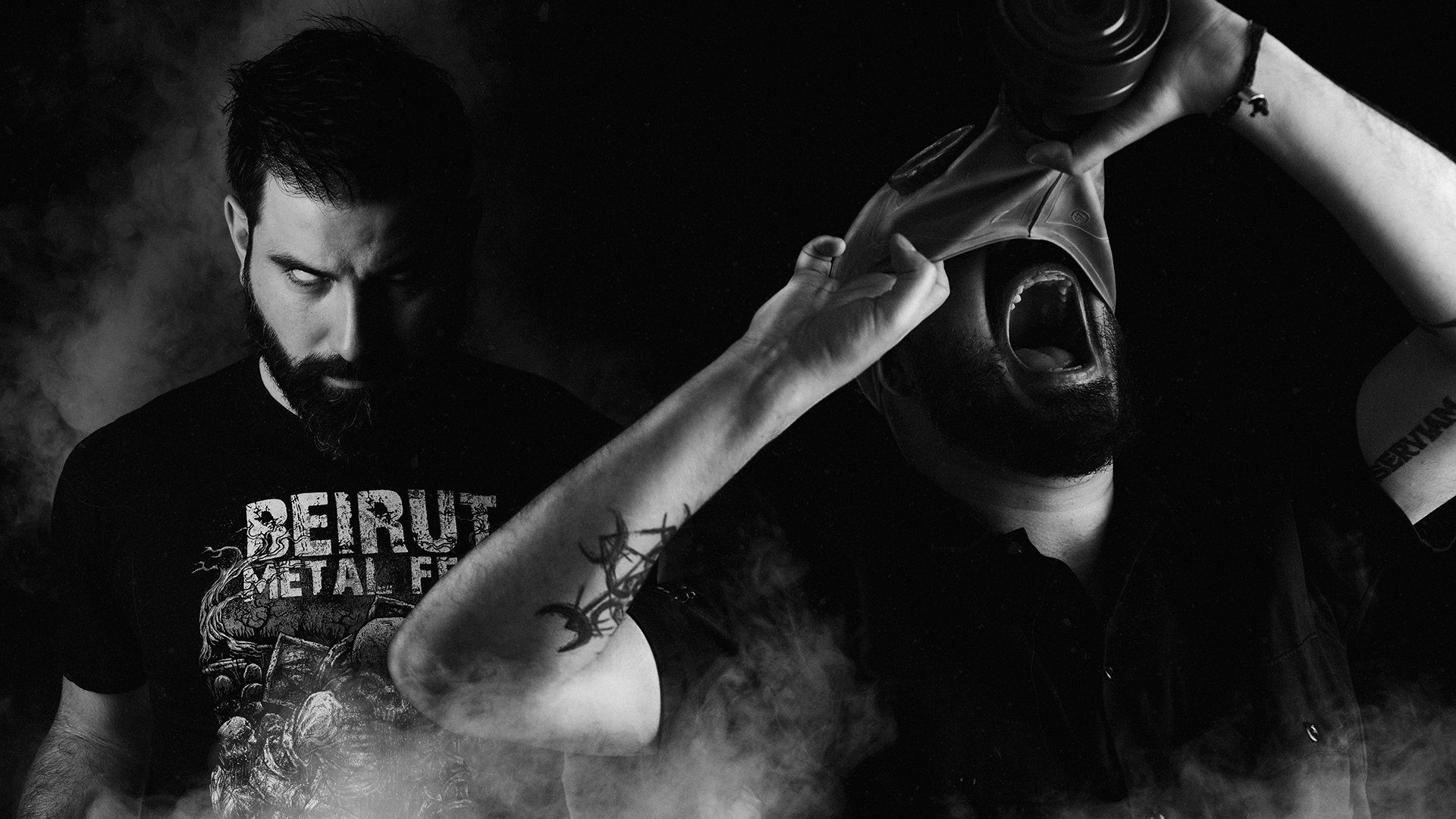
Brought into being as a one-man project in 1998 by Anthony Kaoteon (Death Drive) in the scorching fires of Ashrafieh, one of the oldest districts of Beirut, the capital of Lebanon, under the name Chaotaeon (from the merger of Chaotic and Aeon), Black/Death Metal act Kaoteon is one of those bands that keep fighting for metal and for freedom of speech no matter how hideous the consequences might be for them. For instance, in 2001 the band was forced to change their name to Kaoteon after an incident with the authorities in which they got arrested, where the police though that Chaotaeon was the translation of “devils” from Arabic, leading to false accusations that the band is satanic. In addition, on December 20, 2003 while the band was playing live, a handful of undercover police entered the club with automatic rifles, took the band hostage, locked them in the trunks of unmarked cars, and interrogated them for days, shuttling them from one location to another.
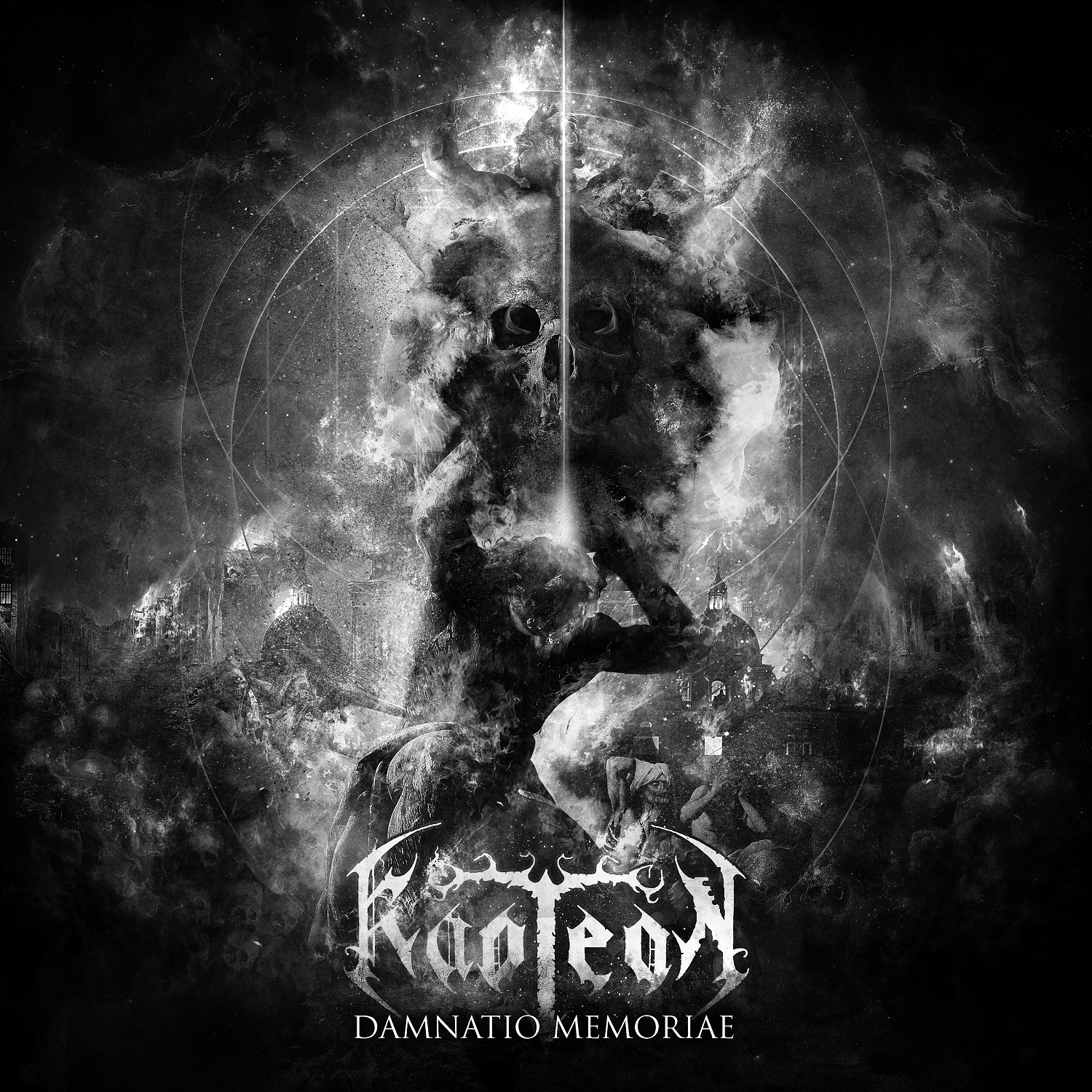
Blending a brutally dark atmosphere with riffs that range from anthemic post-rock to Middle-Eastern folklore and incendiary lyrics driven by the band’s background in their turbulent homeland, Kaoteon (now based in Amsterdam, in the Netherlands) return once again to darken our souls with their brand new opus titled Damnatio Memoriae, the ancient Latin punishment of eradicating a person or figure from all memory and mention. Featuring a somber artwork by Mexican musician and artist Néstor Ávalos (Black Arts) as well as bass wizard Linus Klausenitzer of Obscura and drum master Fredrik Widigs of Marduk as session musicians, joining full-time members Anthony Kaoteon on guitar and Walid Wolflust (Ordum) on vocals, Damnatio Memoriae brings nine skull-crushing, unrelenting and explosive Black Metal hymns that will undoubtedly leave you feeling ravaged and raw after all is said and done.
The title-track Damnatio Memoriae is a modern and vibrant Black Metal composition that will fulminate your senses, bringing forward sheer aggression from the very first second. Furthermore, Fredrik as we all know is a demonic beast on drums, generating the perfect demolishing vibe for Walid to declaim the song’s controversial lyrics through his enraged roars (“My heaven differs from yours. / Where is the loving light? Where is the eternal peace? / Desolate, grey, tyrannic, lonesome / Lit with my passion to burn”). If that start wasn’t demented enough for you, Kaoteon keep burning our souls with their blackened music in Barren Lands, where Anthony is absolutely on fire with his guitar accompanied by Linus and his menacing bass, sounding devastating from start to finish, whereas in Raging HellFire they managed to sound even more visceral and disturbing, with Walid barking and screaming like a rabid beast in a flammable display of brutal (and therefore fantastic) Black Metal (and don’t forget to check the song’s guitar playthrough by Anthony HERE).
In the pulverizing Venom of Exalt, be prepared to be completely crushed by the nonstrop blast beats by Fredrik, while Anthony delivers more of his always insane riffs. In addition, Walid is in his most hellish mode, growling harsher and harsher as the music evolves in this tune highly recommended for lovers of true extreme music. Taking their sonority to the extreme, Kaoteon deliver another explosion of devilish growls, intricate beats and endless hatred flowing from Anthony’s stringed ax in The Will, with the desperate screams by Walid increasing the impact of this already boisterous song. And a soulful guitar solo by Anthony ignites a feast of darkened sounds entitled Non Serviam, blending old school Black Metal with contemporary Blackened Death Metal in a dense and menacing ambience. Needless to say, that powerful combination turns it into one of the top songs of the entire album.
In Light of Compassion their sounding keeps growing darker and darker, showcasing a fierce neck-breaking riff supported by the pounding drums by Fredrik, with Walid firing some deep enraged gnarls. Moreover, the last part of this chant is a thrilling Black Metal demolition with hints of old school Death Metal, piercing our minds mercilessly. The second to last tune in Damnatio Memoriae, the incredible sonic onrush of Black and Death Metal named Into the Mouth of Kaos, presents a high level of dementia bursting from Walid’s screams, with the riffs by Anthony exhaling pure Black Metal while Fredrik doesn’t stop detonating our ears with his crushing performance. And last but not least, it’s time for A Breath, a slightly different version of Kaoteon bringing forward more progressiveness than their usual destruction thanks to the intricate guitar lines by Anthony, and the final result couldn’t sound more compelling and vibrant, ending this sensational album of Extreme Metal in the best way possible.
While online, I suggest you go check out this interesting article about Kaoteon and their fascinating origin story via Revolver Magazine, giving you a much better idea of how hard it is to be a metal fan in the Middle-East. As a matter of fact, Kaoteon said in a group statement that “Lebanese metalheads are some of the friendliest and most amazing people to hang out with. It is sad to see great potential in this world gone to waste because someone somewhere decided to label people at birth and imprison them into their borders. The scene itself is thirsty for metal, so international bands should expect amazing interaction from the crowd. The Dutch scene – where we exist now – shows strong support for local talent, unlike the Lebanese scene. The Dutch scene loves their bands above all, while we feel that the Lebanese metal scene favors the international bands.” Hence, why not showing your support to true Lebanese metal by liking Kaoteon’s official Facebook page, subscribing to their YouTube channel and, above all that, purchasing the awesome Damnatio Memoriae from their BandCamp page, from CD Baby, from iTunes or from Amazon? Bands like Kaoteon are the reason why we all know from the bottom of our hearts that heavy music will never die, proving the passion for metal and for freedom of speech can beat any type of adversity, even if that means you’re putting your life at risk.
Best moments of the album: Damnatio Memoriae, Raging HellFire, Non Serviam and Into the Mouth of Kaos.
Worst moments of the album: None.
Released in 2018 Independent
Track listing 1. Damnatio Memoriae 4:33
2. Barren Lands 5:26
3. Raging HellFire 4:26
4. Venom of Exalt 4:35
5. The Will 5:41
6. Non Serviam 4:46
7. Light of Compassion 4:29
8. Into the Mouth of Kaos 4:18
9. A Breath 4:57
Band members Walid WolfLust – vocals
Anthony Kaoteon – guitars
Immerse yourself in this concept album about a Sanctum, an ethereal place where lost souls find shelter, bringing an amalgamation of sounds and nuances that will at the same time soothe your soul and stimulate your senses.
Anuar Salum, the mastermind behind Mexican Atmospheric Post-Metal Phendrana, is a self-taught multi-instrumentalist based in Mexico City who at the age of 12 started the project under the name Pakistuf, in memory of his grandfather Emilio Kuri Rame, recording a couple of albums and sharing the stage with bands like Alcest, Gehenna and Nader Sadek. Of Syrian and Lebanese descent, Anuar then took the project into a whole new direction in 2016 by changing the project’s main focus and concept, incorporating atmospheric and progressive elements to his music, and eventually changing its name to Phendrana. Now in 2018 it’s time for Anuar and his Phendrana to unleash upon humanity their first full-length opus, titled Sanctum: Sic Transit Gloria Mundi.
Recorded between October 2016 and November 2017, Sanctum: Sic Transit Gloria Mundi (with “sic transit gloria mundi” being a Latin phrase that means “thus passes the glory of the world”) is a concept album about a Sanctum, an ethereal place where lost souls find shelter. The album is divided in seven parts, those being a description of the Sanctum, three transitions from different souls to it, two stories about the past lives of Sanctum inhabitants, and an ode to the night. Featuring an elegant artwork by Mexican artist Caro Fer, based on the painting “Vanitas Symbols in a Landscape” by Dutch painter Matthias Withoos (1627–1703), this whimsical and unique album of contemporary heavy music will beautifully transport you to the Sanctum proposed by Anuar, bringing an amalgamation of sounds and nuances that will at the same time soothe your soul and stimulate your senses in a striking way.
A crescendo of dark sounds invades our ears until Anuar arrives with his harsh gnarls in a feast of contemporary extreme music titled Sanctum, a perfect depiction of modern-day Post-Metal featuring beautiful keyboards thoroughly blended with the song’s riffs and bass lines, with the second half of the song being a progressive and atmospheric sonic voyage. In addition, Anuar definitely knows how to add a touch of poetry to his lyrics (“An ivory gate, with marble wardens / A citadel, enshrined in an ocean of clouds / Hallways born in the heart of the forest / A legacy, a destiny, written in blood.”). Then we face sheer melancholy flowing from Anuar’s smooth guitar lines in The Threshold, a gentle bridge to the full-bodied aria Ethereum, with the song’s lyrics also bringing a sense of introspection to our souls (“Once an arcane blue aurora / Once ethereal, a fragrant memory / Once a sanctum for the shadows / Once a threshold to their twilight.”). Italian guest Vera Clinco (from Caelestis) provides her share of delicacy to the music with her gorgeous voice, with trenchant blast beats permeating the air in total sync with the song’s whimsical keys and atmospheric passages, again showcasing rage and desolation flowing from Anuar’s growls.
The Dream is another gentle bridge provided by Phendrana, ideal for closing our eyes and preparing our spirits for Where Ages Meet, where acoustic guitars ignite a precise extravaganza of modern metal music blended with ambient and rock music. Vera Clinco joins Anuar once again to beautify the overall musicality while the band’s mastermind continues his dark musical path through his raging roars and sharp guitar lines. Furthermore, several distinct elements from the most diverse range of styles are added to the background, increasing the song’s taste considerably. The Bog offers the listener one last breath of instrumental sounds and tones, this time infused with the mesmerizing sound of water, before the multi-layered Gjenganger presents Mexican musician Aracoelium as a guest vocalist, hypnotizing us all with her choir-like vocals, as well as what’s perhaps the heaviest sounding of all tracks with rawer-than-usual riffs and Black Metal-inspired frantic beats. And to make things even more exciting, an otherworldly break brings some peace to our hearts for a while, until Anuar returns in full force with his final stint of harmonious and thrilling devastation.
The music shelter to your lost soul crafted by Anuar and his Phendrana can be fully appreciated on YouTube and on Spotify, and you can always support such skillful artist by following him on Facebook and by buying a copy of Sanctum: Sic Transit Gloria Mundi through his BandCamp page, on iTunes or on Amazon. I confess I wasn’t familiar with the work by Anuar when the project was named Pakistuf, but I’m sure what he’s doing now with Phendrana represents an inspiring and healthy evolution for him as an artist and as a human being, and let’s hope he can continue to put us in a metallic trance with his atmospheric and modern heavy music for decades to come.
Best moments of the album: Sanctum and Where Ages Meet.
Worst moments of the album: None.
Released in 2018 Sickness Records
Track listing 1. Sanctum 9:04
2. The Threshold (Instrumental) 1:55
3. Ethereum 9:15
4. The Dream (Instrumental) 1:51
5. Where Ages Meet 7:48
6. The Bog (Instrumental) 2:10
7. Gjenganger 6:58
Band members Anuar Salum – vocals, all instruments
Guest musicians Vera Clinco – female vocals on “Ethereum” and “Where Ages Meet”
Aracoelium – female vocals (choir) on “Gjenganger”
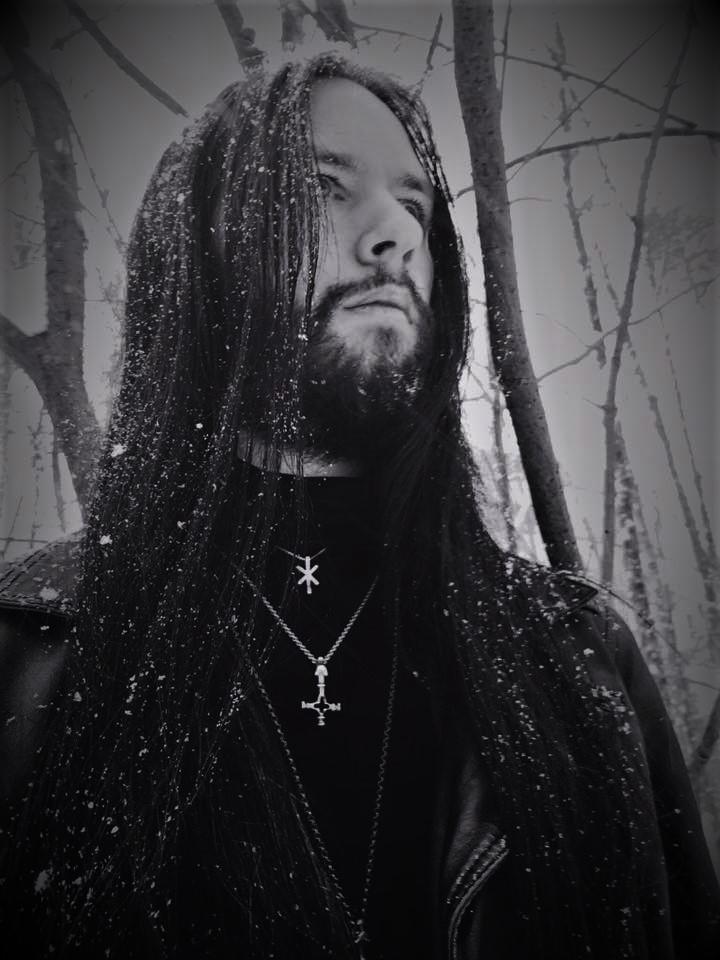
Let’s talk about the darkness with the multi-talented Stein Akslen, the mastermind behind Norwegian Romantic Black Metal project Minneriket.
Stein Akslen (Minneriket)
The Headbanging Moose: Can you please start by introducing yourself to our readers? Who is Stein Akslen, and what is Minneriket? Why and when did you decide to start such distinct project, and where do you want Minneriket to be in the following years?
Stein Akslen: Minneriket is a solo project I started a few years ago to be able to create music focusing solely on atmosphere and an internal dialogue with myself. It’s about being nostalgic but still innovative, rooted in tradition but walking new paths and carving out a whole new beast. As some might know, I started in Blodsgard long before Minneriket and I saw great success with that band where we hold our art to the highest standards truly representing the elite of the genre, but I needed another outlet – something more egocentric, minimalistic and completely without ambitions. With Blodsgard we have goals, but in Minneriket there are no goals – there are only soundscapes, audio therapy and a straight-to-the-core kind of songwriting. The only thing I know about the future for Minneriket is that it will continue to evolve, that no ground is too sacred to tread upon, and that there are no barriers for sound, message or aesthetics.
THM: As mentioned in our review to your latest album Anima Sola, Minneriket plays what can be called “Romantic Black Metal”. Can you explain us what such distinct label truly means? What’s the real definition of it? And do you enjoy having your music categorized this way?
SA: Well I coined the term, so of course I enjoy it. The Romantic era was an artistic and intellectual movement that originated in Europe towards the end of the 18th century. The Romantic art had an emphasis on strong emotions, individualism and a glorification of the cultural past and the nature that surrounds us. This is a philosophy that resonates with what I do with Minneriket.
Romance is so much more than just the popularization of love. Romance is strong and deep emotional desires, a yearning to connect to something and to grow emotionally attached. This approach, trying to convey the deep longing for something outside of yourself, either in nature or spirit, is the essence of what I wish to achieve with Minneriket.
THM: The title and artwork (designed by Czech artist Anna Marine) in Anima Sola (or “lonely soul” in English) are based on the catholic imagery of the lonely spirit burning in purgatory. In addition to that, you mentioned you composed Anima Sola because “we need to talk about the darkness”. Can you tell us more details about that?
SA: “We need to talk about the darkness” become like a tag-line for this release. You know, Black Metal music has become this watered-down version of itself: people compose music in a certain way and sing about certain topics because they’re expected to – because they have this blue-print of what an album should look and sound like. It’s a very shallow understanding of art, and I oppose that with every fiber of my body. You can spew out album after album claiming you’re the Antichrist incarnate, and nobody bats an eye because that’s just “how it’s supposed to be”. I need to make something that’s real. That will speak directly to your emotions. To make you question your existence and reflect on your life and values.
I’m a melancholic person by nature, and decided to dwell in that mental basement for a lot longer than usual when crafting this album. A lot of Black Metal listeners have a very superficial understanding of the darkness they pride themselves in representing and that’s what makes this an uncomfortable album for many; it’s true, it’s real, and it’s challenging. There’s no aggression here, no hatred or other lyrical “staples” – no easy way out – it’s solitude, depression, anxiety and a yearning for something outside of your reach. We all feel this from time to time, some more than others, but I wanted to take the time to really explore this. I don’t respect either taboos nor your perfect presentation of life on social media – I want what’s real, what’s uncomfortable and the raw and untainted emotions… And that is why we need to talk about the darkness.
THM: In Anima Sola, you offer the listener the chance to enjoy your classic Black Metal in both English and Norwegian, with pretty much half of the album being in one language, half in the other. How do you decide if a song will be sung in English or Norwegian? What’s your process to write the lyrics for a song?
SA: Earlier I used to think that it was a conscious choice I did. That the songs in Norwegian perhaps were closer to heart, and that the ones in English were more directed outwards to an audience. But I’m not so sure anymore. I prefer Norwegian myself, but I’ve got to be pragmatic about it too – some things just sound better in English. I can’t force it into one way or another, if a translation would diminish the value of the lyrics. So I really just let the songs decide the language themselves.
I always start with the lyrics, or at least some half-finished lyrics. Maybe just a title or a few sentences. Then I build the words and the music around this idea. I’m looking for “What was the essence of this word?”, “What were I feeling when I wrote this sentence?”, then I revisit that place inside myself time after time until the lyrics are done and I can start creating an audio representation of the words, which then turns into the whole song. I go back and forth a lot of course, but that’s the main framework I work within.
Album Review – Minneriket / Anima Sola (2018)
THM: Although Minneriket is considered a one-man band, you had the help of guest musician Fredrik Rex (Blodsgard) on guitars and bass in two songs of the album, An All Too Human Heart and Det lyset jeg ikke kan se (“the light I cannot see”). How did you invite Fredrik to be part of the album, and how was the recording process with him?
SA: Well I’ve worked with Rex in Blodsgard for about 10 years now, so it’s only natural that if I’m looking for creative input that he’s my go-to-guy. He’s got a whole other kind of musical understanding than I have, and he’s both very creative and have good techniques. I have pretty deep trust-issues when it comes to my art, so it’s best for me to use him because we’re able to communicate well. So I just invited him over one day, played him some of music I was working on, it was mostly finished already and just needed the right kind of flavor and seasoning, so I asked him for a few lead-guitar parts and a bass-line. Very low-key and informal, just how it should be. After using about 30 minutes to tell me how weird it is that I tune my guitars a half step down, he took about 15 minutes to record the parts.
And here’s where I need to admit a mistake… He actually played on “Tro, håp og kjærlighet” and not “An All Too Human Heart”. That’s a typo in the booklet!
THM: One of my favorite songs of the album, the full-bodied aria Det lyset jeg ikke kan se, feels like a 13-minute descent into the pits of hell. How was it for you to compose such bold song? And is the final result exactly what you wanted it to be after listening to it now that the album is out?
SA: I’m glad you like that one! It was a very challenging song to do. I needed it to be this kind of huge sonic behemoth, and it’s difficult to maintain the claustrophobic atmosphere throughout 13 whole minutes. The music had to fit the lyrics, which really takes you to the dark corners of your mind. It needed to be repetitive and monotonous, a feeling of hopelessness but still dynamic and drive the song forward, and at the same time without becoming boring or losing the listener on the way. But I think that the way the guitars blend with the different vocal techniques I used here really makes it work.
Hindsight will always be 20-20 (to do some Megadeth-paraphrasing), but looking back on it I’m really proud of that song. It has a little of everything that Minneriket is about, and it’s objectively a great piece of music too.
THM: The closing song of the album, Time for Suicide, seems to deal with a very delicate and controversial topic. The lyrics for this song are dark, pensive and somewhat disturbing, like “Headaches taunt me with flashbacks of the past / Call it fear, but I think it runs deeper / an infection that eats away at my soul / furthering my suffering and doubling my agony”. What details can you tell us about this song? What were your main goal when you wrote it?
SA: I guess this is a song with no hidden meaning, haha! It’s a pretty obvious thing. “Time for Suicide” is just that, a song about suicidal thought patterns and self-destructive behavior that may have risen above you and become its own entity. The moment where you lose your autonomy and your control. This all goes back to what I said initially about how we need to talk about the darkness. These things build up inside of a lot of people, and it’s controversial, it’s taboo, and even hidden away in shame. That’s not healthy, not at all. We need to face it, own it, and in that way rise above it and take back control. It’s not a song that advocates suicide or self-harm, not at all, but it’s a song that let’s you know that it’s out there, that we shouldn’t hide it just because it’s uncomfortable. There’s no reason to be ashamed of who you are or what emotions you’re experiencing, and I find it very important to shine some light on these subjects. Nothing good comes from keeping quiet.
THM: Now let’s talk about the musician Stein Akslen. Who are your biggest influences in music? And what other sources do you usually go to while crafting your Black Metal music?
SA: I always credit the ambient albums by Burzum and Mortiis/Vond with being my initial inspiration to start making music myself. This extreme minimalistic synth atmosphere was something unlike anything I’d ever heard when I first experienced it, and I instantly knew that I would be able to convey emotions in a similar manner. The “Stormblåst” album by Dimmu Borgir (the original one of course, not the re-recording) meant a lot to me with how it balances harmonies with rhythms, and “Pentagram” by Gorgoroth have some of the best rock’n’roll drums you’ll ever hear within Black Metal, that was a bold choice and really lifted that album to a new bar.
Lyric-wise I don’t look so much to other bands, as I honestly believe most of the lyrics – especially in the metal genre – is complete and utter crap. There’s a few exceptions, but they are few and far between. I rather look to older poets, like Ulven, Jonsson, Crowley, Ibsen, etc., to see how it’s possible to say a lot with few words. To really grasp just how minimalistic you can be and still present a mountain of meaning.
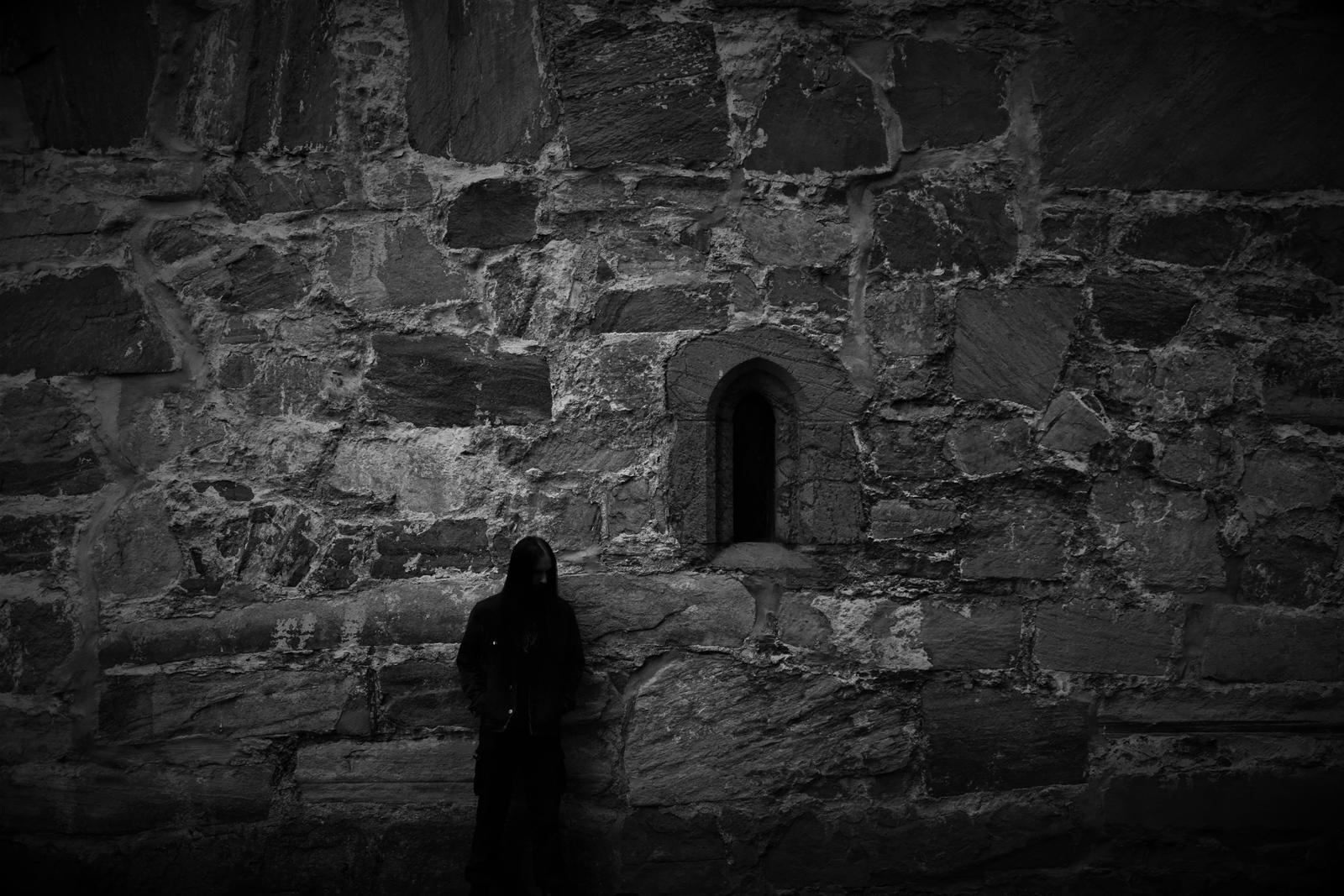
Stein Akslen (Minneriket) at the legendary Nidarosdomen in Trondheim, Norway
THM: Do you envision Minneriket playing live one day as a full band, with other musicians helping you take your music to the stage? Or is it always going to be a pure studio project? And do you dream of touring with any specific renowned Black Metal band in the future with any of your bands or projects (Blodsgard, V0id&Khaos, Vakslen or Minneriket)?
SA: I’ll go live with Minneriket when I can co-headline with Burzum and have Darkthrone as supporting act.
THM: What’s your view of the current metal scene in Norway, the birthplace of Black Metal? Is it pointing to an exciting future? What other underground acts hailing from Norway like Minneriket can you recommend to our readers?
SA: Mostly just a bunch of self-obsessed drunken party-rockers who thinks spikes and corpse paint gives them some sort of credibility or validity. Doing their best to re-enact the music they like themselves, while completely failing to grasp or present anything of integrity or artistic value. I can’t recommend anyone in good conscience.
THM: Thank you very much for your time, and I hope to hear more from Minneriket in a not-so-distant future as your music is truly captivating. Please feel free to send your final words and considerations to our readers, and to invite everyone to join the dark world of Minneriket.
SA: Thank you. I released the last video from Anima Sola for the song “Alle hjerter banker ei” (Not all hearts beat) a few days ago for a fitting celebration of Valentines day… And after popular demand I also made Minneriket merchandise available for the first time ever, and everything can be ordered through the links on www.minneriket.com.
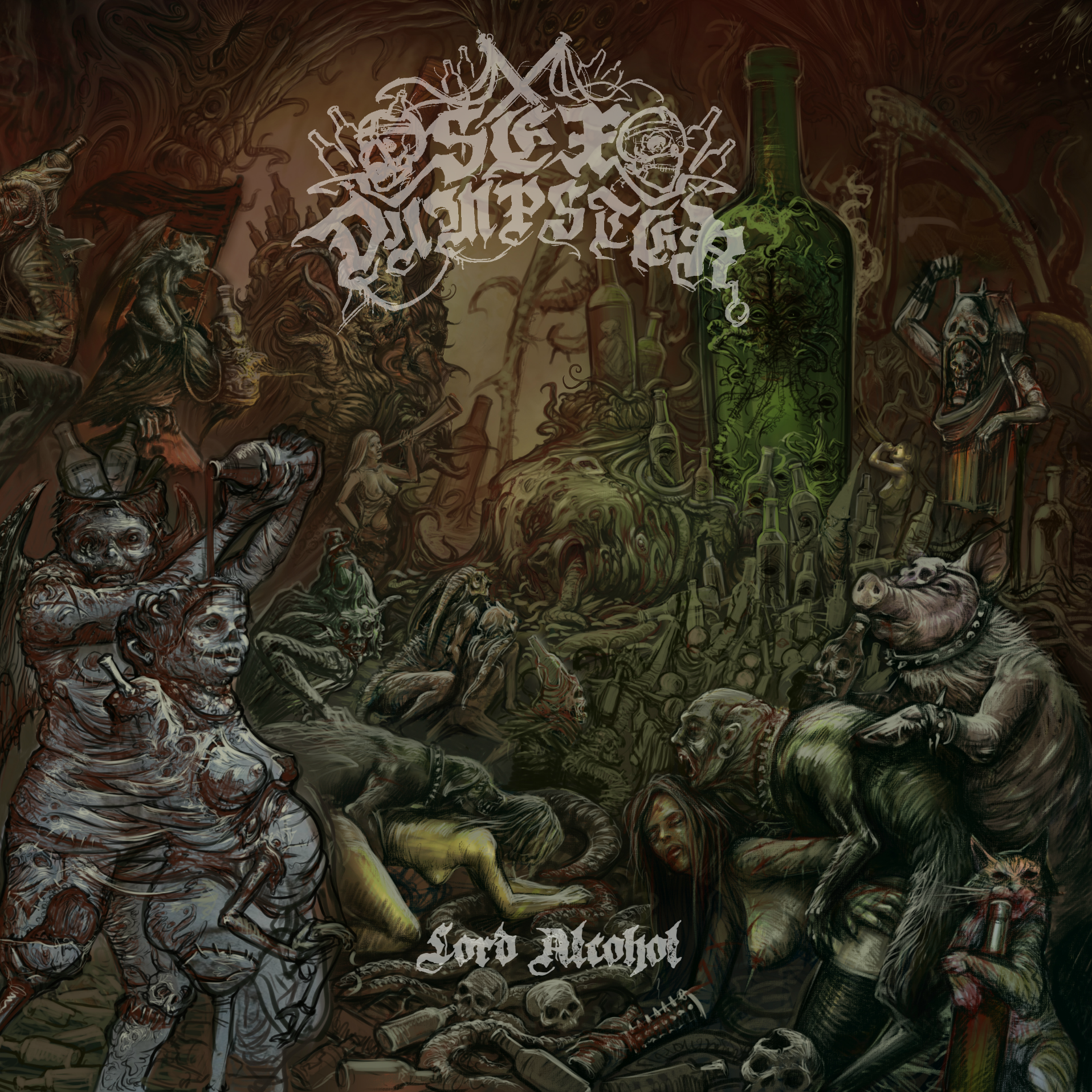
Breathing in the rotten stench of humanity’s decay, here come Sex Dumpster and their one-way trip to the void in the form of filthy Black Metal.
The world we’ve built is a hard, unforgiving place, full of cruelty, dirt and despair. Every shadow hides a nightmare and every alleyway a nest of unreasoning hatred. You may want to avert your gaze, wrap yourself in a protective cloak of pretty lies and colourful deceptions, immerse yourself in the garish delusions of television and the distracting mundanity of music for the masses, but you can’t hide from reality forever. That’s why an infamous Black Metal duo that goes by the charming name of Sex Dumpster is among us, to tear away your blindfolds and grind your face into the filth of existence until you choke, and they’ll do that by mercilessly crushing your senses with their unrelenting new album, poetically titled Lord Alcohol.
The origins of Sex Dumpster can be traced back to frozen isolation in Alaska, where vocalist and multi-instrumentalist Hiram Lohr first pulled together the disparate souls that would form the band Thousand Year War. After releasing a full-length album and one EP, Thousand Year War collapsed into ruin, with Hiram turning his back on the ice and snow and heading to the sultry, putrefying heat of Mexico, more specifically to Cozumel, a mostly undeveloped Mexican island in the Caribbean Sea, where he breathed in the rotten stench of humanity’s decay and submerged himself in the conscienceless bile of bitter existence. Armed with riffs rusted in piss and blood, wielded with a vicious, vehement intent and radiating a haunting atmosphere of emptiness, Lord Alcohol is Sex Dumpster’s howling hymn to nothingness, a one-way trip to the void highly recommended for fans of bands like Taake, Urgehal and Nattefrost.
Put together a violent mix old school Black Metal with a Punk Rock attitude and the most aggressive lyrics you can think of, and there you have the demented Bible Up Your Ass (and you better get used to the “gentle” song names found in Lord Alcohol). In this inspiring chant, Hiram seems to be vomiting the song’s blasphemous words, which in the end works really well, while the bestial Grega Plamberger doesn’t stop crushing his drum set; and Hiram’s filthy rant of profanity goes on in Cunt World, firing some truly acid riffs and gnarls tailored for haunting our souls, therefore generating the perfect soundtrack for slamming into the pit or banging your head like a maniac. And Doom Metal-inspired lines set the tone for the vile Shit On My Grave, a darker and more melancholic tune where Grega switches between slower, almost sluggish beats and sheer devastation, with his infernal drumming flawlessly supporting Hiram’s deranged screams.
Ivar The Boneless is an Epic Black Metal-like creation by Sex Dumpster, a deviant battle hymn showcasing crushing beats, raw guitar riffs and an amazing performance by Hiram and his harsh vocals, and the final result couldn’t sound more compelling and vibrant; whereas Lord Alcohol continues with the epic vibe from its predecessor, worshiping our beloved alcohol through Grega’s rhythmic drumming and the spot-on atmospheric elements in the background, in an interesting fusion of raw Black Metal with modern Epic Metal. Then Sex Dumpster smash our heads with a brilliant cover version for GG Allin’s classic I Kill Everything I Fuck, from the album Brutality & Bloodshed for All by GG Allin & The Murder Junkies (check the original version HERE). In a nutshell, Sex Dumpster’s version is just as dirty, nasty and aggressive as the original one recorded by one of the most demented and controversial artists of all time. And there’s more craziness for your ears in This Lonely Rope, an obscure and sluggish chant where the strident sound of guitars make an interesting duo with the heaviness of drums, all embraced by an almost mesmerizing rhythm (despite not being as good as all previous songs).
With a name like Fist Fucking Motherfucker you can only expect violence, hatred and devastation flowing from all instruments, with a great job done by Hiram and his crisp Black Metal riffs. Let’s say that although this is perhaps one of the worst songs for listening in a public place (if you care about your personal reputation, of course), it’s indeed a damn fun composition. The second to last deranged tune in Lord Alcohol, entitled Klonopin Dreams, Suicidal Requiems, is an instrumental extravaganza where the duo goes mental, mixing Black Metal with other metal styles such as Power and Progressive Metal (and even hints of non-metal styles), turning it into a must-listen for fans of the more disturbed side of metal music. Lastly, closing the album we have more crude, belligerent and visceral sounds coming from the duo’s guitar lines and drums in Under The Night, with all the darkness bred by Sex Dumpster growing in intensity until the song’s abrupt finale.
Do you have the guts to enter the realm of sheer debauchery and sacrilege brought forth by Hiram Lohr and his bloodcurdling spawn Sex Dumpster? In case you consider yourself demented enough to face the band’s crusty Black Metal, all you have to do is visit Sex Dumpster’s Facebook page to get more info about this American-Mexican monstrosity and their irreligious music. Right now you won’t find Lord Alcohol for sale at any retailer such as BandCamp, iTunes or Amazon, and I have absolutely no idea if the album will ever be on sale at any of those. Maybe that’s what Hiram wants, right? Maybe the only place you’ll be able to find Lord Alcohol will be behind a dirty and stinking dumpster, in line with all the rottenness found throughout such distinct album.
Best moments of the album: Bible Up Your Ass, Ivar The Boneless and Fist Fucking Motherfucker.
Worst moments of the album:This Lonely Rope.
Released in 2018 Independent
Track listing
1. Bible Up Your Ass 4:20
2. Cunt World 4:41
3. Shit On My Grave 4:49
4. Ivar The Boneless 5:08
5. Lord Alcohol 6:01
6. I Kill Everything I Fuck (GG Allin cover) 2:23
7. This Lonely Rope 5:06
8. Fist Fucking Motherfucker 3:30
9. Klonopin Dreams, Suicidal Requiems 4:26
10. Under The Night 5:34
Band members Hiram Lohr – vocal, guitar, bass
Grega Plamberger – drums
A blasphemous and extremely austere album of old school Black Metal by a cult Dutch entity, offering us all endless fury, hate, rage and scorn, all spiced up by a bit of good old black magic.
Twenty seven years after their foundation, Dutch Black Metal horde Funeral Winds are more than ready to spread darkness upon the earth with the release of their fourth full-length album, titled Sinister Creed. Definitely not a prolific band, the Rotterdam-based offspring of multi-instrumentalist Hellchrist XUL won’t offer you anything that hasn’t been there since their beginning back in 1991, those being fury, hate, rage and scorn, all spiced up by a bit of good old black magic, allowing you to summon demons while listening to this blasphemous and extremely austere album of old school Black Metal. Written and recorded between 2014 and 2017 at Necromanteion Studio, in Belgium, Sinister Creed will please all fans of the darkest forms of extreme music without a shadow of a doubt, making your hearts and souls even darker than they already are.
Do not look for any fine music craftsmanship, as Funeral Winds are devoted to master the black arts, not some hip fine tune; therefore, there is only one thing you can expect from this infernal Dutch duo, and that’s total devastation. If you are into music evolutions, new genres and refined, subtle post-production gimmicks you are very welcome to look elsewhere, as Sinister Creed is an album for those whose thirst for blood was never satisfied, whose love for the early 90’s is still alive and kicking, and whose black flame never extinguished. It might have taken over 10 years for Funeral Winds to return with new material, with their previous installment, named Nexion Xul – The Cursed Bloodline, being released in the already distant year of 2007, but the duo is back in full force to destroy the silence that took place during their hiatus with endless dosages of hellspawn Black Metal.
Sinister noises ignite the ode to darkness entitled The Road to Perdition, before Hellchrist XUL comes crushing our souls mercilessly with his demented gnarls and pulverizing riffs, giving life (or I should say death) to the song’s darkly poetic lyrics (“The angles slowly align themselves / With every step I take / on this unpaved road to perdition / A path full of rocks with sharp edges / That cut strips of flesh / with each incautious step taken”). In Cursed is this Pantheon of Flesh we’re treated to absolute chaos and devastation in the form of Black Metal, with session drummer M.Z. Inversus sounding like an unstoppable bulldozer. Furthermore, the song has a hardcore feel that only makes it more flammable and therefore more enjoyable, setting the tone for another onslaught of aggressive, old school Black Metal named The Arrival, showcasing the always demented screams by Hellchrist XUL, powerfully boosted by the song’s sick drumming, insane guitar lines and endless obscurity.
The title-track Sinister Creed maintains the album’s acidity and rage at an extremely high level, With pure sulphur flowing from all instruments, in special from its blast beats and flammable guitars which will rip your heart out in a gruesome way. Then featuring Amon XUL on guest vocals, Funeral Winds manage to get even more frantic and demented than before in Blood, a fantastic display of visceral Black Metal that’s utterly loyal to the foundations of the genre; followed by Black Moon over Saturn: featuring Hekte Zaren on guest vocals, this insane tune presents an operatic, choir-like intro to a feast of blackened sounds and roars, resulting in a beautiful blend of raw Black Metal with Doom Metal and symphonic elements.
Never slowing down, never softening their music, Funeral Winds continue their path to the underworld by offering the listener an explosion of metallic riffs and bestial drums named Seven Arrows, Knife and Flame (Sekhmet), where Hellchrist XUL sounds truly possessed on vocals (which in Black Metal is always a very positive addition to the musicality, of course). And as the closing act of such demonic album we have Nunc et in Hora Mortis Nostrae, which means “now and at the hour of our death” in English, with its over seven minutes of first-class Black Metal that will disturb your peace and exterminate your mind, also presenting some insanely dark words vociferated by Hellchrist XUL (“I have crawled from the womb of eternal darkness / Out of the void into the light I abhor / I have crawled from the womb of emptiness / Out of the abyss into this world / I am here not to please, I am here not to bring joy”), with the music flowing flawlessly until its ungodly, transcendental ending.
You can take a full, detailed listen at Sinister Creed on YouTube or on Spotify, and in case you’re already a loyal member of the dark side you can purchase the album at the Funeral Winds’ BandCamp, at the Avantgarde Music’s BandCamp or Big Cartel, at the Season of Mist webshop, at Record Shop X, on iTunes or on Amazon. Also, don’t forget to follow Funeral Winds on Facebook and to keep an eye on their YouTube channel for more music and videos by such distinct Black Metal act, and may the pitch black darkness bred by Funeral Winds in their Mephistophelian career keep haunting our souls for decades to come.
Best moments of the album: Cursed is this Pantheon of Flesh, Blood and Nunc et in Hora Mortis Nostrae.
Worst moments of the album: None.
Released in 2018 Avantgarde Music
Track listing
1. The Road to Perdition 4:47
2. Cursed is this Pantheon of Flesh 3:59
3. The Arrival 3:30
4. Sinister Creed 2:44
5. Blood 3:05
6. Black Moon over Saturn 5:26
7. Seven Arrows, Knife and Flame (Sekhmet) 4:27
8. Nunc et in Hora Mortis Nostrae 7:37
Band members Hellchrist XUL – vocals, all instruments
M.Z. Inversus – drums (session)
Guest musicians Amon XUL – additional vocals on “Blood”
Hekte Zaren – additional vocals on ‘Black Moon over Saturn”
A scorching extravaganza of Norwegian Black Metal that will consume your soul, thoroughly put together by a one-man army of darkness.
Norwegian Romantic Black Metal one-man army Minneriket is the work of vocalist and multi-instrumentalist Stein Akslen, who created the project back in 2014 for as much a philosophical and spiritual channeling as a musical outlet. Drawing on influences as various as punk and goth yet steeped in the intensity of the early Norwegian Black Metal scene, Minneriket, which translates as “the kingdom of memories”, is honest and real, reflecting both self and society, knocking down barriers and ignoring taboos, breathing new life into the genre in a completely uncompromising manner. After the releases of the albums Vargtimen in 2015, Stjerner, speil og svartebøker… in 2016, and more recently the Burzum tribute From the Veins of a Nearly Dead Boy in 2017 (which officially received inclusion on the Vikernes Burzum website), Minneriket returns in full force, unleashing upon humanity the project’s latest opus Anima Sola.
The title of the album, which means “lonely soul” in English, and the artwork, designed by Czech artist Anna Marine, are based on the catholic imagery of the lonely spirit burning in purgatory. The soul which is burning forever, but is never entirely consumed by the flames. It’s the war between spirits and matter, and fire as both a destructive force of nature and the kindle in your heart. Musically speaking, Anima Sola is a scorching extravaganza of Norwegian Black Metal that will consume your soul, with Stein doing a fantastic job on vocals, guitars, bass and keyboards throughout the whole album, leaving you completely disoriented after each of its ten piercing compositions is over, it doesn’t matter if sung in English or in his mother tongue Norwegian.
Tro, håp og kjærlighet (Norwegian for “faith, hope and love”) brings a somber, melancholic intro that keeps growing darker and darker, until Stein arises from the crypts of hades with his hellish gnarls, with his Stygian guitars generating a mesmerizing rhythm. In other words, this is Atmospheric Black Metal at its finest. And things get even better in An All Too Human Heart, featuring guest musician Fredrik Rex (Blodsgard) on guitars and bass. Offering the listener that strident Black Metal riffage we all love so much, Stein attacks our souls with an infernal storm of old school Norwegian Black Metal, sounding absolutely bestial on vocals and, consequently, more obscure than anything or anyone you can imagine. Furthermore, it’s impressive how he masterfully blends the sheer obscurity of Black Metal with the smoothness and delicacy of ambient music, which is exactly the case in When Life Gets Sick, the Dead Grow Strong, always sounding and feeling pugnacious and chthonic, with the song’s riffs and beats being in full diabolical sync, effectively boosting its overall impact.
Then disturbing sounds permeate the air in I am the Serpent Son, a song tailored for lovers of the darkest form of Norwegian Extreme Metal where Stein uses his voice in an otherworldly way to distill its stylish lyrics (“I submit to your beauty and wisdom / I will learn all your black arts / Mother Lilith! / See to all my needs / so that I may grow and conquer this world”). And there’s not a single second of peace or hope in over seven minutes of extreme music in Between Infinity and Melancholy, where Stein keeps firing his blistering guitar lines and enraged vociferations, with the musicality feeling extremely raw and primeval, but still very polished due to the above average production of the album. Then in Det lyset jeg ikke kan se (or “the light I cannot see”), also featuring Fredrik Rex, we face over 13 minutes of a descent into the pits of hell full where thunderous bass punches and steady beats steal the spotlight for the first three minutes, before a sonic onrush of traditional Black Metal lacerates our minds mercilessly. In addition, Stein and his Minneriket don’t let our souls rest not even during the atmospheric break in this full-bodied blackened aria, proving how precise he is with his instruments.
Stein then treats us with a wicked beginning and his disturbing, Satanic vocal lines in Sorger er tyngst i solskinn (“sorrow is the heaviest in sunshine”), all effectively supported by the song’s somber instrumental pieces, feeling extremely metallic, inhuman and bizarre from start to finish; while Alle hjerter banker ei (or “all hearts beat one” in English) leans towards vile Blackened Doom, where once again Stein delivers hypnotizing riffs and beats that will drag your soul to the underworld, with endless grief and despair flowing from all instruments. And his most damned and depressive side keeps dominating his mind in the desperate hymn Smerte, skjønnhet og Satan (“pain, beauty and Satan”), being slow and steady as good Doom Metal should be without forgetting the project’s old school Black Metal core, before a sonic havoc of putrid sounds entitled Time for Suicide comes crushing our hearts, with its lyrics being as perturbing as they can be, especially through Stein’s evil gnarls (“Headaches taunt me with flashbacks of the past / Call it fear, but I think it runs deeper / an infection that eats away at my soul / furthering my suffering and doubling my agony”).
In summary, Anima Sola, which can be enjoyed in its entirety on Spotify, might be considered by many Minneriket’s strongest work to date, proving how focused, professional and passionate about extreme music Mr. Akslen is, always moving forward and never sounding outdated or bland. You should definitely check his other albums, news and future plans on Facebook and on YouTube, and grab your copy of Anima Sola through the project’s own BandCamp page, on iTunes or on Amazon. Stein himself commented that the album was created because “we need to talk about the darkness”, also saying that the album “speaks of solitude and ineptitude, loss and yearning; humorless Black Metal with music and lyrics equally painful and raw.” Well, let’s face it, the man behind Minneriket more than succeeded in sending his dark message to the world with Anima Sola.
Best moments of the album: An All Too Human Heart, I am the Serpent Son and Det lyset jeg ikke kan se.
Worst moments of the album:Smerte, skjønnhet og Satan.
Released in 2018 Akslen Black Art Records
Track listing
1. Tro, håp og kjærlighet 5:40
2. An All Too Human Heart 3:33
3. When Life Gets Sick, the Dead Grow Strong 3:59
4. I am the Serpent Son 4:34
5. Between Infinity and Melancholy 7:35
6. Det lyset jeg ikke kan se 13:25
7. Sorger er tyngst i solskinn 6:10
8. Alle hjerter banker ei 4:52
9. Smerte, skjønnhet og Satan 3:30
10. Time for Suicide 2:27
Band members Stein Akslen – vocals, guitars, bass, keyboards
Guest musician Fredrik Rex – guitars and bass on “An All Too Human Heart” and “Det lyset jeg ikke kan se”
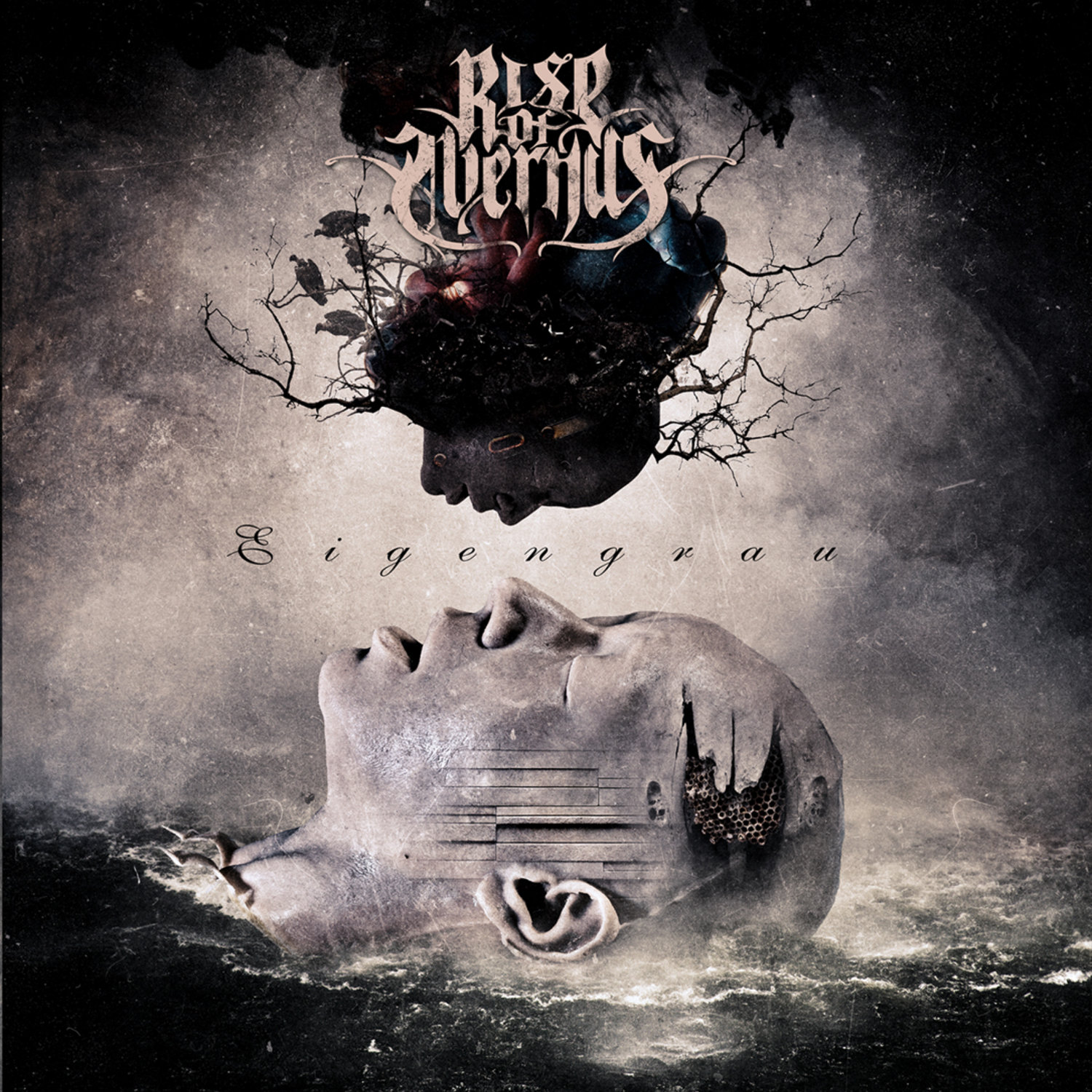
Blending elements from progressive and symphonic music with the most obscure side of Extreme Metal, all enfolded by majestic orchestrations, here come Rise of Avernus with their heaviest and darkest opus thus far.
Eigengrau (German: “intrinsic gray”, lit. “own gray”; pronounced [ˈʔaɪ̯gn̩ˌgʁaʊ̯]), also called Eigenlicht (Dutch and German: “own light”), dark light, or brain gray, is the uniform dark gray background that many people report seeing in the absence of light.
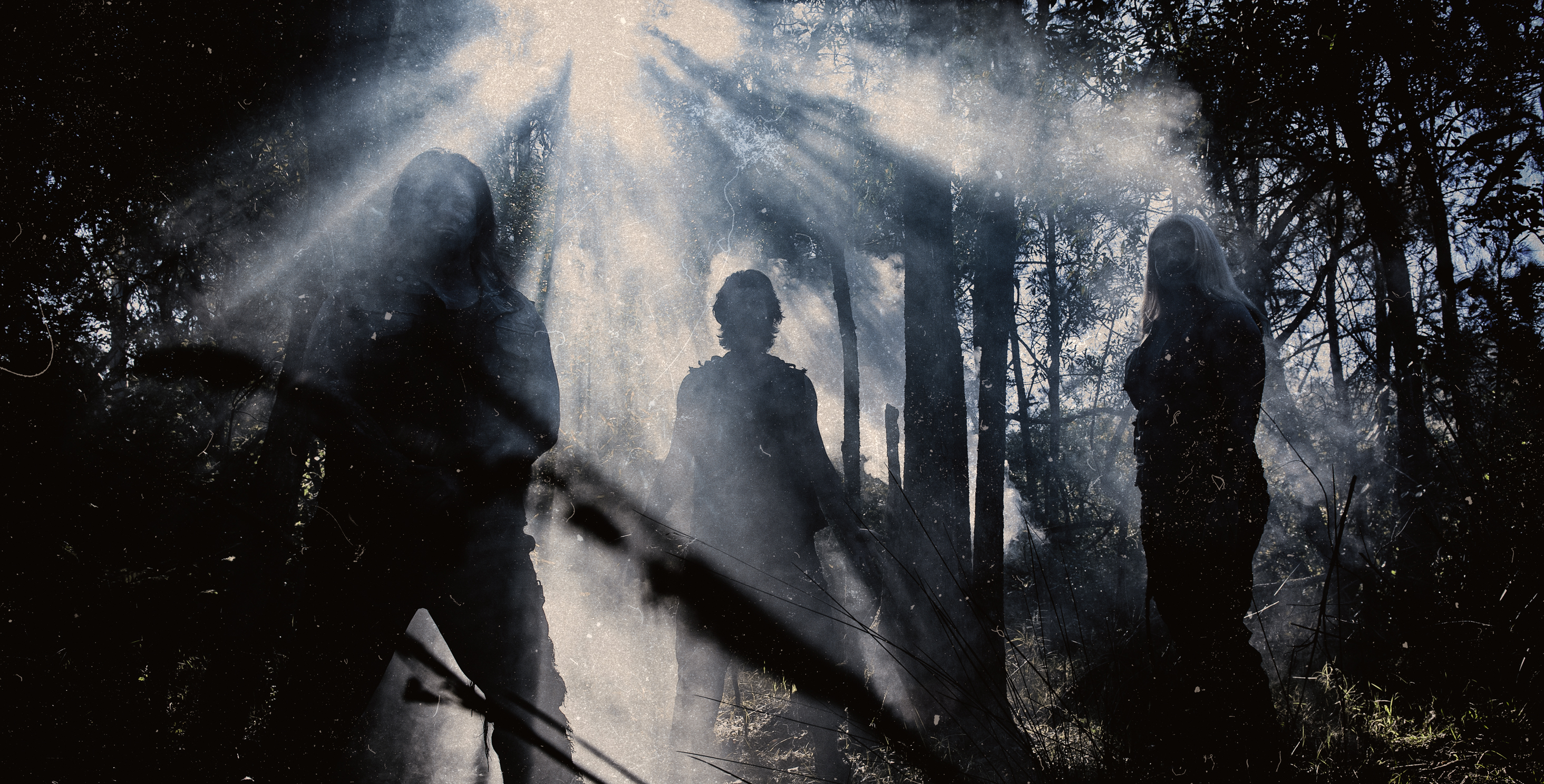
Since their inception in 2011, Australian Dark Orchestral Death/Doom Metal horde Rise of Avernus has been making a name for themselves throughout the metal community with their unique style blending elements from progressive and symphonic music with the darkest side of Extreme Metal, all enfolded by majestic orchestrations. Within the short time since the release of their 2012 debut EP, they’ve followed a relentless touring schedule, supporting some major international acts such as Apocalyptica, Enslaved, Eluveitie, Prong, Septicflesh, Fleshgod Apocalypse, Rotting Christ and Sigh along the way. Now in 2018 it’s time for this Sydney-based blackened squad to spread their devilish wings all over the world once again with Eigengrau, their fourth studio release and, more important than that, their heaviest and darkest opus thus far.
Featuring a Stygian artwork by world renowned artist Seth Siro Anton (aka Spiros Antoniou from Septicflesh), Eigengrau is the experience of seeing a deep grey shade in the total absence of visible light, or what one may refer to as a “perfect darkness.” Upon this canvas, an individual can project their subconscious, their processes, their anxieties and their fears. Thematically, Eigengrau explores the fluidic nature of these self-created experiences, how they can be shaped and how they may change at the point of one’s own death. Other tracks go on to explore the intricacies of personal realities, influenced by external factors or via spiritual and religious indoctrination. The nature of self-realization and being forced to confront weakness to overcome it. The distinct sound of the album reflects these altered states, oscillating between delicate movements and nightmarish grandiosity.
And Rise of Avernus’ nightmare of tenebrous and imposing sounds begin in full force in the opening track Terminus, showcasing a movie-inspired start before becoming a majestic fusion of the extreme music by bands like Cradle of Filth, Dimmu Borgir, Behemoth and Necronomicon with a raw Death Metal twist. Furthermore, Ben VanVollenhoven, the (black) heart and soul of the band, sounds insanely infernal on vocals, as well as Andrew Craig and his thunderous drums. Following such fantastic beginning we have Ad Infinitum (or “to infinity”), a neck-breaking, symphonic tune led by the atmospheric keys by Mares Refalaeda where Ben once again brings sheer darkness to the musicality with his demonic voice, resulting in a flawless combination of Atmospheric and Symphonic Black Metal.
Then we have a movie score-inspired beginning to yet another venomous feast by Rise of Avernus titled Gehenna, showcasing a beautiful but still obscure mid-tempo rhythm led by the guitars by Ben, who also provides a powerful performance with both his harsh and clean vocals (not to mention how awesome all orchestrations are); while Eigenlicht offers the listener almost eight minutes of a descent into the pitch black crypts of Hades, presenting smooth guitar lines by Ben and the always gripping keys by Mares, with the atmospheric break halfway through it being a thing of beauty. To sum up, this is Symphonic Black Metal at its finest, with the whole music ending in dense and ferocious fashion for our total delectation. And there’s’ still a lot more to go in Eigengrau, with tribal beats igniting another sonic extravaganza named Tempest, where Ben sounds more hellish and cavernous than before while Andrew and Mares fill all empty spaces with their burning instruments, resulting in a flawless mix of orchestral and heavy music.
Forged in Eidolon brings forward an ominous intro rising from the pits of hell directly into your mind, with the spectral orchestrations and keyboards by both Ben and Mares imprisoning your soul in the metallic realm of evil reigned by Rise of Avernus. Then serene sounds are joined by a wave of sublime orchestrations in Mimicry, creating the perfect ambience for the demonic growls by Ben and enhanced by the astounding keys by Mares. And as the closing act to this impressive album we have Into Aetherium, a wondrous composition that starts with almost three minutes of an instrumental blast of melancholic and obscure Symphonic Black Metal before all hell breaks loose, darkening our thoughts and hearts during its eight minutes of duration. Led by the bestial drums by Andrew, this fiendish hymn sets the perfect landscape for Ben to continue his path to the underworld, gnarling like an evil entity until the song’s mesmerizing and grandiose ending.
What are you waiting for to show your support for Rise of Avernus and purchase your copy of Eigengrau, one of the best extreme albums you can find out there, blending the aggressiveness of Death, Doom and Black Metal with the finesse and epicness of orchestral music? Eigengrau is available through Rise of Avernus’ own BandCamp page or Big Cartel (where by the way you can also find an album + patch + shirt bundle and an album + patch + pin + shirt + canvas/artwork bundle), as well as through the Aural Music webstore as a regular CD format or as a very special woodbox edition, if all of those versions of the album are still in stock, of course (which I doubt due to the insanely high quality of the music in question). Also, don’t forget to pay a visit to Rise of Avernus on Facebook for news, tour dates and other nice-to-know details about the band, and to listen to more of their classy music on YouTube. This is not only the band’s boldest, darkest and heaviest release to date, as aforementioned, but a lesson in extreme music that will certainly figure among the best metal albums of 2018 not only at The Headbanging Moose, but in several other publications all over the world where dark music always prevails.
Best moments of the album: Terminus, Eigenlicht, Tempest and Into Aetherium.
Worst moments of the album: None.
Released in 2018 Code666
Track listing
1. Terminus 5:43
2. Ad Infinitum 4:54
3. Gehenna 5:59
4. Eigenlicht 7:33
5. Tempest 4:51
6. Forged in Eidolon 5:56
7. Mimicry 3:53
8. Into Aetherium 8:03
Band members Ben VanVollenhoven – vocals, guitar, orchestrations
Mares Refalaeda – vocals, keyboards
Andrew Craig – drums, percussion
 It’s time to be absolutely pulverized by the frantic, modern and very technical Death Metal played by a German four-piece act known as Pestilent Reign, who are releasing their debut full-length album this year, entitled Pyres. Formed in 2013 by guitarist Lars Hägele and vocalist Christoph Sauner in the city of Sttutgart, in Southern Germany, Pestilent Reign released two EP’s after their inception, those being Shivering Chaos, in 2015, and The Zealot, in 2016, leading the band to play from local to international shows at festivals like Monthly Assault in Switzerland and Nice To Eat You in the Czech Republic, and sharing the stage with well-known bands like Benighted, Wormed, Unfathomable Ruination, Implore, Pighead, Analepsy, Omophagia, Spasm, Gutalax, Serrabulho, Deserted Fear, Rottenness, Warfuck and Abysmal Torment.
 Cleanse the Flesh presents razor-edged riffs and nonstop annihilation flowing from start to finish, with bassist Matthias “Mick” Figura together with Sebastian creating a dense background perfect for the rabid screams by Christoph; whereas in Zealot a brutal and electrifying intro morphs into ass-kicking Progressive Death Metal, with Sebastian and his blast beats adding a touch of darkness to the music. In addition, pay good attention to the interesting narration about going to a Death Metal concert and its connection with Satan, as it brings a pinch of comedic relief to their crushing music. A demonic screech ignites another circle pit-catalyst titled I.M.T.R.M., a great tune by this demented German squad with both Lars and Matthias grinding their axes like there’s no tomorrow. And last but not least we have Gutter´s Filth, perhaps the most intricate and wicked of all songs in Pyres, where all four band members are smashing and pounding their instruments mercilessly. Moreover, the level of complexity flowing from the guitar lines by Lars is outstanding, not to mention the demented performance by Christoph on vocals.