Metal Chick of the Month – Diva Satanica

Kill’em all, Diva Satanica!

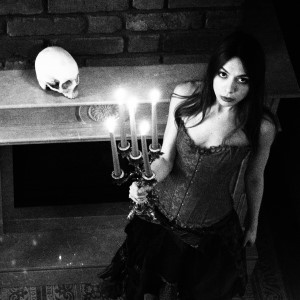
My dear metalheads, how about we celebrate SEVEN FUCKIN’ YEARS of The Headbanging Moose in great fashion with one of the most charismatic, hardworking and talented growlers of the current metal scene? Not only she will haunt your soul with her wicked screams and roars, but she’s also a stunning alternative model and a collaborator of one of the best metal magazines in her home country. I’m talking about the venomous she-wolf Rocío Vázquez, better known by her incendiary moniker Diva Satanica, the frontwoman for Spanish Melodic Death Metal band Bloodhunter and more recently for the international all-female Thrash Metal horde Nervosa, kicking some serious ass with her onstage performance and her beyond potent vocals wherever she goes. Are you ready to have Diva Satanica screaming like a beast right in your face on our humble tribute to such amazing exponent of the Spanish Extreme Metal scene?

Born on June 25, 1988 in La Coruña, Galícia, in the North-West of Spain, known as “the land of witches”, but currently residing in Madrid, the capital city of Spain, Diva Satanica is a lover of all kinds of music, but of course she nurtures a special, deep passion for Rock N’ Roll and almost all subgenres of Heavy Metal, especially the ones that suit her needs of talking about feelings. As mentioned by our unstoppable diva in one of her interviews, no one in her family enjoys metal music and in the beginning it was really hard for her to find friends with the same taste in music, but she managed to find her place in society as we can all witness now. In addition, although she said she was terrified the first time she listened to a Death Metal band, due to the fact she didn’t feel comfortable with melodic singing she decided to give growling a try, and well, we must all agree it was the best decision in her life, offering us all fans of heavy music the furious and thrilling creations brought forth by our diva together with her henchmen from Bloodhunter.

In regards to Bloodhunter, the band started about a year before Diva Satanica joined them, more specifically in 2008 in La Coruña (but also currently based in Madrid), by the hands of sole founding member, guitarist and main songwriter Dani Arcos, also known as Fenris, to develop some demos that didn’t fit at his other bands at that time, even with a melodic singer in the beginning. It was after several changes in their lineup and concept when Diva Satanica finally joined the band, currently comprised of our metal lady and Fenris, of course, together with guitarist G. Starless, bassist Daniel Luces and drummer Marcelo Aires. However, she only started singing (and growling) for the band in 2012, after writing the lyrics for a few of their songs and joining their rehearsals, and according to Diva Satanica her bandmates had to be very patient with her in the beginning as she used to sing looking to the wall instead of looking to the band, but from that moment on things started to happen for them, culminating with the release of their debut demo The First Insurrection, in 2013.

It was just a matter of time until the release of their debut full-length opus, self-titled Bloodhunter, which came to light in 2014 and quickly made a huge impact on the local Spanish scene, gathering the attention of fans and critics not only in Spain but anywhere else in the world where high-quality Melodic Death Metal is appreciated. A couple of years later, in 2017, the band released their sophomore effort, titled The End of Faith, showcasing a huge evolution in terms of sound quality, creativity, violence and, above all, in Diva Satanica’s guttural vocals, presenting a much more demonic, piercing and thrilling side of our devilish banshee. Apart from their two studio albums, Bloodhunter also released a couple of singles through the years, those being Ages of Darkness, in 2014, which was featured on a compilation called Oráculo Magazine: From the Shadows Vol.I, and a very entertaining cover version for Helloween’s all-time classic I Want Out, in 2018, where Diva Satanica shares the vocal duties with Spanish vocalist and guitarist Leo Jiménez, known for his solo band and other projects such as Stravaganzza and Saratoga. In addition to that, Bloodhunter also offered us fans a few more amazing cover songs, with their version for Arch Enemy’s hit Bury Me an Angel, featured on a compilation called Hardcore Hits Cancer Vol. III in 2018, Death’s Crystal Mountain, and more recently their rendition for Cradle of Filth’s demolishing tune Gilded Cunt, showing all of our diva’s versatility and range as the fantastic Extreme Metal singer she is.

Apart from those albums, singles and cover songs, you can also have a blast with Diva Satanica and the boys in their excellent 2020 live album Live in Madrid, containing six amazing live versions recorded on March 19, 2019 at the now (unfortunately) defunct We Rock in Madrid, including Dying Sun, All These Souls Shall Serve… Forever!, and Bring me Horror. Furthermore, you can find other non-official live footage from Bloodhunter on YouTube, such as for example Ancestors Ov All Gods also live at We Rock, but in 2015, The Bloody Throne live at Mangualde Hard Metal Fest 2017, and Eyes Wide Open live at Le Club in La Coruña in 2018, among many, many others. However, if you prefer watching official videos with all the usual production, special effects and other shenanigans, you can bang your head to the songs All These Souls Shall Serve… Forever!, Dying Sun, Embrace the Dark Light and Let the Storm Come.

As we don’t have anything official yet with Diva Satanica fronting the thrashing girls from Nervosa except for a live chat done in June 2020 with the “four horsewomen”, Brazilian guitarist and founder Prika Amaral, Italian bassist Mia Wallace (The true Endless, Triumph of Death, Niryth, Abbath), Greek drummer Eleni Nota (Lightfold, Mask of Prospero, Simplefast) and of course our beloved Diva Satanica, let’s talk a little about her previous bands, projects and special appearances in an array of bands from the most diverse styles, starting with a band she fronted from 2015 until 2019, Spanish Progressive/Melodic Death Metal/Metalcore band Outreach. Despite her short stint with Outreach, she recorded with the band the full-length Ephemeral Existence and the single Insane Mind, both in 2019, showcasing all her range and potency throughout the entire album (which I highly recommended you take a listen at).

You’ll also be able to enjoy her she-wolf roars in the songs Nothing to Believe, from the 2018 album Misanthropy, by El Salvadorian Thrash/Death Metal band Apes of God; Mutiladora Genital, from Spanish Death Metal masters Aposento’s 2014 self-titled album; Darkness Within, from the 2018 album Purgatory, by Spanish Melodic Death Metal band Suru; doing additional vocals in the entire album Mesías, released in 2019 by Spanish Heavy Metal band Leo Jiménez; impersonating the one and only Baphomet in the 2019 album El Secreto de los Templarios, by Spanish Heavy Metal/Hard Rock band Legado de una Tragedia, together with soprano Nancy Catalina and Sara Grün from Hiranya (and you can enjoy this nice making of with an explanation as to why those three vocalists were chosen for the part); and last but not least, doing additional and choir vocals in the songs La Cantiga de las Brujas (check also this amazing live version of the same song) and El Séptimo Sello, from the 2019 album Ira Dei, by Spanish Celtic/Folk Metal institution Mägo de Oz.

This slideshow requires JavaScript.

Such multi-talented metal diva would obviously have tons of distinguished influences in her style and career, and despite the fact that her moniker was clearly inspired by one of the best Arch Enemy songs of all time, Diva Satanica, and that most fans tried to label them as the Spanish version of Arch Enemy in the beginning, the members of Bloodhunter have many different influences in their musical careers, from Judas Priest to Behemoth and Death. When asked about her own personal favorites, Diva Satanica mentioned bands and artists the likes of Astarte, Eths, In This Moment, Skullfist, Behemoth, Axewound, Rotting Christ, Nightrage, Firewind and Lana del Rey, showing she enjoys any type of music, not only rock and metal, but also saying that it’s in Extreme Metal where she found her identity when singing. If you know Spanish and want to spend some time with Diva Satanica and her collection of metal and non-metal albums, you should definitely watch this video on YouTube, where she presents some of her favorite albums from bands and artists like Jimi Hendrix, Ramones, Bon Jovi, Guns N’ Roses, Skid Row, Alice In Chains, Firewind, Rotting Chirst, The Agonist and Eths. Regarding French metalcore band Eths, she mentioned in one of her interviews that the amazing Candice Clot, former frontwoman for what’s in my opinion one of the most underrated metal bands of all time, was essential in her decision to become an extreme music vocalist. In addition, you can enjoy Diva Satanica paying her own personal tribute to some of her biggest idols on her own YouTube channel, including her vocal performances of Septicflesh’s Prototype, Holy Moses’ Triggered, Behemoth’s Ov Fire And The Void, and a very unique version for Slayer’s darkest hit Raining Blood together with Spanish rock and metal cover band Femme Fractal.

As we’re talking about women in rock and metal, Diva Satanica complemented her thoughts by saying that apart from Candice Clot (and Diva Satanica even said that when Candice left Eths she was offered to audition, but she had to refuse it as she was barely 20 years old and had no means to travel nor the equipment to record with), she also loves the music by In This Moment, Jinjer and a Spanish underground band named Bones of Minerva, which I highly recommend you go check their music on their BandCamp page. In addition, she mentioned in one of her interviews that the song The Queen Beast is dedicated to Maria “Tristessa” Kolokouri from Greek Black Metal horde Astarte, one of her main influences and a good friend that sadly passed away in 2014 due to complications from leukemia, saying she was the first woman to create the first Black Metal band formed only by women, and we can easily see that beautiful tribute Diva Satanica paid to Tristessa in the song’s amazing lyrics (“Feel her wrath / She’s watching from the stars / Abstraction of life / The air, the nature, the skies are now her reign / The shades in darkened silverlights / The black flame burns! / The highest priestess arise”).

If you think it was easy for Diva Satanica to reach her current vocal style and growth as an Extreme Metal vocalist, she said her path so far has demanded (and will always demand) from her a lot of hard work, discipline and trial and error, acknowledging that she couldn’t sing properly on the band’s first album as she didn’t know exactly what she was doing nor she could sustain her vocals for long periods of time. It was only after watching several tutorials on YouTube , after consulting with different extreme music singers and after studying in detail the performances of all vocalists of the concerts she attended that she properly began shaping her voice, spending about two years improving her technique, even taking melodic singing classes at a given point in her life, and applying necessary warmup and diaphragm strengthening exercises to improve her performance. Then she said that because she started her “Extreme Vocal Lessons” to help other growlers to improve their vocals in the early stages of their careers, she ended up discovering different vocal types and ranges that she considered great choices to incorporate to her own style. If you want to take a peak at some of her videos where she gives important tips for growlers like her, you can watch this tutorial (also in Spanish) where she teaches how to do guttural and screaming vocals, and also this short lesson where she explains the difference between growls and screams versus grunts, pig squeals, shrieks and other vocalizations. One thing that is quite annoying to Diva Satanica is when people use gender to justify why women can’t growl, with her solution to that simply being inviting those people to watch Bloodhunter live, which in my opinion is indeed an amazing experience for the non-believers who will undoubtedly be stunned by her vicious roars.

When asked about the current metal scene in Galicia, where she comes from, and if her music and Death Metal are well-received by the people from that region in Northwest Spain, she said that although they’re a small community there are different styles that people tend to listen to the most from time to time. Around a decade ago, the Gothic scene was the most prevalent, switching to Alternative Metal and Metalcore in recent years. She also mentioned the importance of their own summer festival, Resurrection Fest, which started years ago as a small act but that it’s now one of the most important festival in Europe, proving the scene in Galicia is in excellent shape. As you might have noticed already, Diva Satanica loves performing on stage, and among her favorite songs to play live she mentioned some of her band’s most violent creations such as Let the Storm Come, Possessed by Myself and of course The Queen Beast, as already mentioned, as this song has a strong meaning for her and helps her add an extra amount of emotional feeling to her singing.

Not only an accomplished vocalist, Diva Satanica has also done some modeling in the past and contributed as a writer and journalist to a couple of magazines, including La Heavy, one of the biggest rock and metal publication in Spain, managed by the website Mariskal Rock. She said she started her modeling career a few years ago, but as she discovered a lot of people are interested in many different things other than art, she gave up and decided to focus on the metal scene, starting with a Greek webzine named Subexistance Music Production and then moving on to La Heavy. Apart from that, she’s also working towards a Degree as a Doctor in Nursery, and was a participant in the Spanish TV program La Voz (the Spanish version of The Voice) in 2017, surprising the coaches by screaming and growling instead of only doing clean vocals, being the first contestant to perform this type of singing. The international artist Juanes chose her to be part of his team, where she performed songs like Eurythmics’ Sweet Dreams, Survivor’s Eye of the Tiger and Lady Gaga’s Bad Romance. There’s even an interview she gave to a guy named Juan Destroyer on Mariskal Rock TV where she talks about her participation on the show, and how she inspired Juanes to get back on doing a heavier kind of rock. Moreover, she always mentions that being on La Voz was one of the best experiences of her life without any doubt, saying that as she was the first even participant to do guttural, she got a lot of recognition from fans and bands from all over the world, with icons such as  Michael Amott of Arch Enemy or Christos Antoniou of Septicflesh congratulating her for her amazing performance on the show.

Our dauntless diva also mentioned that there’s still a long road ahead of all musicians that dedicate their careers to more extreme styles of rock and metal, as there’s still a lot of prejudice everywhere (saying that even today in Madrid she has to cover her tattoos depending on the situation), but that it’s up to the musicians themselves to make their style more accepted by society, and that the more musicians bring their experience to light and defend their identity, the more the road will open up. As you can see, Diva Satanica is not only extremely talented and focused on her career, but she also has a strong opinion about the current state of the metal scene and about what any person needs to do to thrive in the music industry. Hence, you can check some extra interviews with this amazing Spanish she-wolf on YouTube, such as this one where she shares the latest update on both Bloodhunter and Nervosa, the current coronavirus pandemic situation and more, or this one to a show called “That Metal Interview with James”, recorded in June 2020, where she speaks of how she met Prika Amaral of Nervosa and how she was approached to join the Brazilian death metallers, about her experience being on the TV show La Voz, and about the future plans of both Bloodhunter and Nervosa regarding their musical direction for their next records. You’ll notice from all those interviews and from her music that Rocío Vázquez is more than just another vocalist; she’s a very humble and gentle human being, a hardworking musician, and a fulminating growler. Having said that, all that’s left to say is… ALL HAIL THE ONE AND ONLY DIVA SATANICA!

Diva Satanica’s Official Facebook page
Diva Satanica’s Official Instagram
Diva Satanica’s Official Twitter
Diva Satanica’s Official YouTube channel
Bloodhunter’s Official Facebook page
Bloodhunter’s Official Instagram
Bloodhunter’s Official Twitter
Bloodhunter’s Official YouTube channel
Bloodhunter’s Official BandCamp
Nervosa’s Official Facebook page
Nervosa’s Official Instagram
Nervosa’s Official Twitter
Nervosa’s Official YouTube channel

“Sometimes it’s not easy, sometimes you feel scared and things don’t go as you planned before, but you must keep on fighting to discover what you want in your life and who you are.” – Diva Satanica

Album Review – Calarook / Surrender Or Die (2020)

On a quest for booze we go together with those unstoppable Swiss pirates and their debut full-length album.

On a quest for booze we go! That’s what frontman Philipp Wyssen, guitarist Nico Wiget, bassist Flavio Pompeo, drummer Yves Locher and violinist Lukas Mischler, collectively known as the unrelenting Winterthur, Switzerland-based Pirate Metal crew Calarook, promise to deliver in their debut full-length album Surrender Or Die, mixing rabid Melodic Death Metal with Folk Metal parts and sometimes a pinch of wonderful nonsense, therefore inviting us all to celebrate, mosh and headbang like there’s no tomorrow. Calarook have been on a roll since the band’s inception in 2014 (under the name Calico), firing an endlessly captivating seafaring sound that leaves no one standing still or even sober, starting with their 2017 EP Calico, but it’s now with Surrender Or Die that the quintet is ready to take us all on a full-bodied adventure across the seven seas, offering our avid ears over 69 minutes of first-class metal music while at the same time being always ready for more booze, pillaging and partying in the name of heavy music.

The tolling bells in the epic intro 47°30’18”N 8°51’52”E warn us all their festivities are about to start in A Cursed Ship’s Tale, sounding furious and imposing thanks to the crushing beats by Yves and the guttural roars by Philipp, while Lukas brings his share of lunacy with his whimsical violin, flowing smoothly until its climatic finale. They offer more of their visceral fusion of Melodic Death Metal with classic Death Metal and pirate music in Quest For Booze, an ode to all alcoholic beverages where Nico is unstoppable with his riffage accompanied by the rumbling bass by Flavio and the once again magical violin by Lukas, whereas it’s time to break your necks headbanging to the sound of Into The Storm, with Yves pounding his drums like a cannon from a pirate ship while Philipp continues to blast his inebriate, unfriendly growls. In the title-track Surrender Or Die the “captain” vociferates the song’s sailing lyrics rabidly (“We change the course / To pursue the prey / The distance gets smaller / The target turns away / But we can catch up / Prepared to fight / The cannons are loaded / Everyone is quiet”) while his bandmates generate a strong ambience with their respective instruments, inspiring us all to fight side by side with the band; and Flavio and his metallic bass ignite the rhythmic, dancing tune curiously titled Invisible Pineapples, showcasing an amazing job done by Nico with his slashing riffs. Put differently, simply  grab your beer and your sword and get ready to rock together with those metal pirates.

And those buccaneers keep delivering heaviness, speed and harmony in the excellent Kraken’s Chest, the epitome of Pirate Metal overflowing electricity and fury, also presenting an interesting paradox between Lukas’ classy violin and Yves’ thunderous beats, before it’s time to slam into the circle pit to the fun Paul The Parrot. Let’s all be honest, no one can stand still to a metal song about a parrot, with Nico and Yves making sure the rhythm remains as vibrant as possible in a great display of modern-day Melodic Death Metal, while Jack Rackham is another song exhibiting a pleasant speed and pace, with the violin by Lukas adding tons of finesse to the overall result while his bandmates continue to invite us all to prance around the fire pit. Kicking Flamingos is what I call a weird name for a song, but they’re pirates which means all makes sense; however, musically speaking it’s not on par with the rest of the album, sounding a bit generic despite Flavio’s great performance on bass. Fortunately, Calarook get back on track with their trademark Pirate Metal in Davy Jones’ Locker, a lot more introspective than its predecessors while Nico dictates the pace with his classic riffs, accompanied by Philipp’s deep growling.

In Tentacle Explosion we have less than three minutes of hammering Melodic Death Metal infused with the stylish violin by Lukas, resulting in a great option for their live performances which will certainly inspire us all to raise our horns and grab a pint in the name of metal music; and their loyalty to drinking and piracy goes on in Loyal To None But Rum, where all Calarook are telling us is to simply get drunk and slam into the circle pit to the sound of their thrilling music. Then venturing through more traditional lands, they fire their most Heavy Metal of all songs, The Legend Of Liquor Island, bringing forward a galloping rhythm led by Yves and his old school beats while Philipp keeps roaring and growling like a true pirate, whereas in The Feast Of Emerald Meadows the band fills our ears with a more vicious and violent sonority while Nico’s riffs walk hand in hand with Lukas’ violin. Hence, it will certainly urge you to sing its chorus along with Calarook while crushing your skull into the mosh pit once again, and closing this 69-minute pirate quest the band fires the classic The Undying Sailor, where despite the great job done by Yves and Lukas with their beats and violin, the final result is a bit messy, not to mention the song goes on for way too long.

If you’re ready to set sail together with the drunk and talented Swiss pirates of Calarook and support them in their epic adventures, you can follow the band on Facebook and on Instagram, subscribe to their YouTube channel for their fun and fresh official videos, stream more of their rebellious music on Spotify, and obviously purchase a copy of Surrender Or Die from the band’s own webstore (and soon enough from several other locations). In a world where people have the attention span of a goldfish, we must admit releasing a 69-minute album is a beyond bold move by Calarook, but yet again, as already mentioned they are not just musicians, but metal pirates, and as the great privateers they are they know exactly what they are doing by releasing such imposing and epic album. Or do you think only 20 or 30 minutes of music would be enough for all the action you can have together with Calarook on board of their ship in their quest for metal, rum, flamingos, parrots and pineapples?

Best moments of the album: Quest For Booze, Invisible Pineapples, Kraken’s Chest and The Feast Of Emerald Meadows.

Worst moments of the album: Kicking Flamingos and The Undying Sailor.

Released in 2020 Independent

Track listing
1. 47°30’18”N 8°51’52”E 2:02
2. A Cursed Ship’s Tale 4:33
3. Quest For Booze 5:36
4. Into The Storm 7:05
5. Surrender Or Die 4:27
6. Invisible Pineapples 5:09
7. Kraken’s Chest 5:46
8. Paul The Parrot 3:36
9. Jack Rackham 3:22
10. Kicking Flamingos 3:33
11. Davy Jones’ Locker 3:47
12. Tentacle Explosion 2:34
13. Loyal To None But Rum 4:38
14. The Legend Of Liquor Island 3:03
15. The Feast Of Emerald Meadows 4:34
16. The Undying Sailor 5:37

Band members
Philipp Wyssen – vocals
Nico Wiget – guitar
Flavio Pompeo – bass
Yves Locher – drums
Lukas Mischler – violin

Album Review – Dynfari / Myrkurs er Þörf (2020)

The brand new album by an amazing Icelandic Atmospheric Black Metal unity sounds as beautiful and inspiring as it is quietly somber and menacing, and as illuminating as it is sorrowful.

Since the band’s formation as a duo in 2010 in the city of Reykjavík, Iceland, the Atmospheric Black Metal unity known as Dynfari has been making a name for themselves not only in Icelandic lands, but anywhere else in the world where Black Metal influenced, heavily atmospheric music is appreciated. Currently comprised of Jóhann Örn on vocals, bass, accordion, synths and guitars, Jón Emil on percussion and guitars, and Martin Tsenov and Bragi Knutsson also on the guitars, Dynfari deal with the philosophy of life, death, the universe, loss, hope and sorrow, having explored more progressive soundscapes in their blend of Post-Rock and Black Metal in the most recent works, while returning to a more atmospheric and direct attitude now in 2020 with their fifth full-length opus, titled Myrkurs er Þörf, or something like “darkness in needed” in English. Featuring a cryptic artwork by Metaztasis (Watain, Behemoth), the album is a chameleonic, labyrinthine mix of subgenres of rock and metal, sounding thickly atmospheric, as beautiful and inspiring as it is quietly somber and menacing, and as illuminating as it is sorrowful, flowing towards a darker, heavier side of the musical spectrum, expressing a violent refusal of merely becoming a means to an end.

The opening track Dauðans Dimmu Dagar (“the dark days of death”) starts in an ominous and ethereal way to minimalist guitar notes, being gradually accompanied by the percussion and beast by Jón until a dense wall of instrumental Atmospheric Black Metal fills out every single space in the air, morphing into the enfolding Langar Nætur (Í Botnlausum Spíralstiga), or “long nights (in bottomless spiral staircase)”, a flawless depiction of modern-day Icelandic Black Metal with Jóhann delivering anguished vocal lines while Martin and Bragi slash their seven-stringed weapons majestically. And the title-track Myrkurs Er Þörf keeps embracing our souls and taking us to chilling and despondent Icelandic lands showcasing another amazing guitar job done by the quartet, while Jóhann’s vocals sound like they’re coming from a place far, far away, whereas Ég Fálma Gegnum Tómið, or “I fade through the void”, exhales melancholy and hopelessness, with the Doom Metal-inspired beats by Jón walking hand in hand with the strident riffs by Martin and Bragi, keeping the album as dark and grim as possible.

The serene instrumental interlude titled Svefnlag (“sleeping layer”) brings some peace to our blackened hearts, setting the tone for the ode to despair and obscurity named Ég Tortímdi Sjálfum Mér (“I destroyed myself”), where Jóhann blasts his most introspective roars of the entire album while the song’s imposing background keys support the piercing riffage delivered by the quartet. Then what at first seems to be another calm and bitterly cold creation by Dynfari turns into a 10-minute majestic feast of heavy-as-hell, hypnotizing sounds titled Peripheral Dreams, a lecture in contemporary Black Metal led by the crushing beats by Jón intertwined with grandiose keyboards and doomed passages, also presenting elements from Folk Metal and Blackened Doom, running wild and free until its climatic grand finale. Lastly, the wicked bass lines by Jóhann ignite the closing tune Of Suicide and Redemption, an Atmospheric Black Metal aria that lives up to the legacy of the genre, bringing forward their trademark blast beats and symphonic keys and, therefore, ending the album on a truly inspiring note.

After all is said and done, I’m more than certain you’ll be mesmerized by the atmospheric and absolutely stunning music by Dynfari, and in order to show the band your support and appreciation don’t forget to follow them on Facebook, and of course to purchase a copy of Myrkurs er Þörf from their own BandCamp page, from the Aural Music webstore in CD, silver LP, or splatter LP format, and from other locations such as Amazon and mvdshop.com. An introspection on thoughts of suicide and self-destruction, Myrkurs er Þörf is another beautiful product form the always prolific and dynamic Icelandic metal scene, showing us all that not only Icelandic Black Metal continues to be on a healthy and inspiring rise, but also that we can count on the talented guys from Dynfari to keep embellishing the airwaves with their creations until darkness finally consumes us all.

Best moments of the album: Langar Nætur (Í Botnlausum Spíralstiga), Myrkurs Er Þörf and Peripheral Dreams.

Worst moments of the album: None.

Released in 2020 Code666

Track listing
1. Dauðans Dimmu Dagar 5:23
2. Langar Nætur (Í Botnlausum Spíralstiga) 6:37
3. Myrkurs Er Þörf 4:52
4. Ég Fálma Gegnum Tómið 4:39
5. Svefnlag 2:57
6. Ég Tortímdi Sjálfum Mér 5:10
7. Peripheral Dreams 10:35
8. Of Suicide and Redemption 6:37

Band members
Jóhann Örn – vocals, bass, accordion, synths, guitars
Jón Emil – percussion, guitars
Martin Tsenov – guitars
Bragi Knutsson – guitars

Album Review – Grimgotts / Sagas EP (2020)

A UK-based Symphonic Power Metal squad continues to chronicle the epic battles between men and dragons on the high seas of Andria in the second part of their new trilogy.

Fans of Rhapsody of Fire, Dragonforce, Sonata Arctica and Alestorm will be signing up to set sail with London, UK-based Symphonic Power Metal band Grimgotts with their brand new EP entitled Sagas, the second part of a trilogy that started earlier this year with the release of the EP Tales, and that will see its epic conclusion later in 2020 with the third EP Legends. Sagas continues to chronicle the epic battles between men and dragons on the high seas of the mythical land of Andria, which is by the way the band’s own original fantasy realm, just like what was told in the first EP of the trilogy and in their previous releases Lions of the Sea (2017) and Dragons of the Ages (2019), proving the band formed by frontman Andy Barton, guitarist David Hills, keyboardist Fabio Garau, bassist Nelson Moreira and drummer Mo Abdelgadir definitely know how to unite fantasy and heavy music with tons of symphonic and epicness flawlessly for the delight of metal fans across the seven seas (and beyond).

It’s time to sail together with the pirates from Grimgotts in the opening tune Northern Passage, a symphonic and epic feast led by the inspiring keys by Fabio and the always precise beats by Mo, while Andy declaims the song’s lyrics like a true bard. Put differently, simply grab your sword and join the band in their quest for metal, whereas the strident riffage by David ignites the even more metallic Power Metal tune Rise Again, accompanied by the rumbling bass by Nelson and the awesome balance between Andy’s vocal lines and Fabio’s magical keyboards, definitely making your day more exciting and fun. Then we have Plunder, Loot & Chantey, an absolutely perfect soundtrack for prancing around the fire while drinking a pint of mead, or if you prefer a more “technical” language, this is a very entertaining fusion of Symphonic Power Metal with Folk and Epic Metal, with Mo dictating the pace with his classic beats. And lastly, the band offers the faster and more traditional title-track Sagas, another great option for banging your heads with Grimgotts, with David and Fabio making an incendiary duo with their respective riffs and keys while Andy showcases all his talent as the band’s frontman, leaving us eager for the last EP of their trilogy in a not-so-distant future.

It feels like Grimgotts are following a treasure map with Tales, Sagas and Legends, with each EP and each song being a different adventure the listener needs to face before reaching the glorious end of the trilogy, and let’s all admit their formula is working really well, making us all excited and ready for their next challenge. Hence, don’t forget to follow those UK metallers on Facebook and on Instagram, to listen to more of their music on Spotify, and to grab your copy of Sagas (sooner than you can scream “ahoy!”) and all of their previous albums from their own BandCamp page, showing them your true support and proving you have what it takes to sail the unruly seas of Andria together with the boys from Grimgotts, spending your time signing metal anthems while drinking beer and raising your swords until the end of their exciting saga.

Best moments of the album: Rise Again and Plunder, Loot & Chantey.

Worst moments of the album: None.

Released in 2020 Independent

Track listing
1. Northern Passage 4:18
2. Rise Again 6:52
3. Plunder, Loot & Chantey 3:43
4. Sagas 4:06

Band members
Andy Barton – lead vocals
David Hills – guitars
Fabio Garau – keyboards
Nelson Moreira – bass
Mo Abdelgadir – drums

Album Review – Ruadh / The Rock of the Clyde (2020)

Open your heart and join musician and songwriter Tom Perrett in his Atmospheric Black Metal journey through the Iron Ages in Scotland.

Drawing from the vast well of history, culture and mythology, Glasgow, Scotland’s own musician and songwriter Tom Perrett set out to compose music purely to taste with his Atmospheric Black Metal solo-project Ruadh (which is pronounced ‘Roo-Ah’ and translates to ‘red’), creating an unmistakable atmosphere with the beating heart of old school Black Metal favourites of his since the project’s inception in 2018, such as Windir, Bathory, Burzum and others, which should also appeal to fans of Saor, Winterfylleth, Panopticon and similar acts. Hailing from Rutherglen (also known as the red glen) in the central belt of Scotland, Tom and his very special guests Cieti on female vocals, Kimberly Copland on bass and Philip Morrison on drums are unleashing upon us all Ruadh’s sophomore album The Rock of the Clyde, an evolution from their 2019 debut album Sovereign presenting six tracks of epic Scottish Atmospheric Black Metal with Folk elements, taking you through the Iron Ages in Scotland and also exploring the history and mythology of the people of Scotland, conveying both sorrow and uplifting, almost heroic tones, all embraced by the delicate and enthralling artwork by Joan Llopis Doménech Illustrations.

Tom and his bandmates don’t waste a single second and fill every single space in the air with crisp, dark and atmospheric sounds in Embers, where Tom fires some deep guttural roars accompanied by Philip’s classic, steady beats and Cieti’s delicate vocals in a 10-minute sonic voyage alternating between heavier moments and an enfolding and whimsical vibe, not to mention the amazing job done by our brave Scottish warrior with his strident guitar riffs. After a fantastic welcome card like that, a ritualistic intro kicks off the title-track The Rock Of The Clyde, morphing into an Atmospheric Folk and Black Metal extravaganza where Kimberly and Philip generate a bold and groovy base for Tom and his soulful riffs and solos, as well as his potent clean vocals, also bringing to our ears acoustic passages and endless melancholy before finally exploding into a visceral fusion of traditional Folk and Black Metal. And in Winters Light the band continues to pave their dark and introspective path, with Kimberly delivering thunderous bass jabs together with the blast beats by Philip while Tom is once again on absolute fire with his growling, his riffage and all background elements found throughout the song’s inspiring nine minutes of music.

Fields Of Heather is another lecture in Atmospheric Black Metal made in Scotland going full Black Metal at times, with all band members generating a classy and piercing sonority with their sonic weapons, sounding at the same time violent, rebellious and epic, and with Tom’s riffs and Kimberly’s bass walking hand in hand it doesn’t matter the speed of the music. Then acoustic and serene sounds and tones permeate the air in Only Distant Echoes Reign (Part 1), a very personal and gentle creation by Tom heightening our senses and warming up our hearts for the second part of this beautiful aria, Only Distant Echoes Reign (Part 2), where a murder of ravens in fugue follows Tom and his dense and captivating music, uniting the heaviness and darkness of Black and Death Metal with more atmospheric and ethereal sounds while Philip dictates the rhythm and Tom barks rabidly as usual, flowing majestically until the song’s grand finale and, consequently, putting a stunning conclusion to such vibrant voyage through Scottish lands.

You don’t need to travel all the way to Scotland to join Tom and his Ruadh in their quest for Atmospheric Black Metal, as all you need to do is follow the project on Facebook and on Instagram to know more about his music, his goals and his music, and above all that, grab your copy of The Rock of the Clyde directly from Ruadh’s own BandCamp page, from the Northern Silence Productions’ BandCamp page, or simply click HERE for all locations where you can buy and stream the album. Massive in both scope and scale, The Rock of the Clyde will feature among the best Atmospheric Black Metal albums of the year without a shadow of a doubt, proving not only that Tom is thoroughly connected to his Scottish roots, but also that underground metal music always sounds more compelling and vibrant when its made of Scottish iron.

Best moments of the album: The Rock Of The Clyde and Fields Of Heather.

Worst moments of the album: None.

Released in 2020 Northern Silence Productions

Track listing
1. Embers 10:01
2. The Rock Of The Clyde 10:20
3. Winters Light 9:01
4. Fields Of Heather 10:56
5. Only Distant Echoes Reign (Part 1) 4:44
6. Only Distant Echoes Reign (Part 2) 8:54

Band members
Tom Perrett – vocals, all instruments

Guest musicians
Cieti – female vocals
Kimberly Copland – bass
Philip Morrison – drums

Album Review – Nocturnal Escape / Uncharted Pathways (2020)

This talented German horde returns with a brand new concept album marking a stylistic change from their original sound to a soundtrack-like Black Metal offering.

Brought into being in 2014 as a recording project by  Leo and Klaus Bergmann after their previous band Bleak disbanded, Augsburg, Germany-based Epic/Atmospheric Black Metal band Nocturnal Escape is back in action now in 2020 with their sophomore installment, entitled Uncharted Pathways, a concept album consisting of five songs with a combined running time of nearly 58 minutes, marking a stylistic change from the riff-laden Melodic Death Metal found in their 2015 self-titled debut album to a soundtrack-like Black Metal offering. Featuring a grim and exquisite artwork by artist Daniela Teichmann, the album also presents to the listener a new growler, Paul Perlberg (replacing Thomas Zimmermann), and a new session drummer, James Knoerl, instead of the programmed drums from their first album, providing the overall sound a more organic and, therefore, more intense vibe.

The serene keys by Leo kick off the 10-minute aria entitled Exodus, evolving into a fusion of classic Black and Doom Metal where Paul roars and gnarls in a true devilish manner, filling every single space in the air with its background choir-like sounds, ritualistic drums and scorching hot guitar riffs, ending in a climatic and melancholic manner and building an instant bridge to Forlorn, once again presenting whimsical sounds blended with the band’s most vicious and extreme side, with Leo and Klaus slashing their strings in great fashion and, consequently, providing Paul all he needs to vociferate like a demon while James dictates the song’s charming rhythm with his sluggish beats. In addition, it becomes crystal clear in this dense and distinguished tune how the band decided to distance themselves from Progressive Death and Black Metal, being now fully invested in a hybrid of Black, Folk and Epic Metal.

Then featuring guest Rüdiger Bergmann on trombone, the trio’s acoustic guitars and low-tuned, rumbling bass lines ignite the also multi-layered and vibrant Tranquillity, morphing into an obscure and crisp Black Metal extravaganza led by Leo and his venomous riffage while Paul adds an extra touch of evil to it with his deep, enraged growls, also bringing forward a few eerie, symphonic breaks to enhance the intricacy and drama of the overall result, sounding and feeling as epic and detailed as it can be. And the band keeps stimulating our senses with their classy extreme music in Insight, where all background elements generate a Stygian atmosphere that will darken your heart and soul. Furthermore, the Black Metal blast beats by James make an interesting paradox with the clean vocals by Leo, resulting in a lesson in Atmospheric Black Metal with Leo’s crisp riffs and solos being the icing on the cake. And accelerating their pace and enhancing their electricity they offer us all the closing tune Departure, featuring guest vocals by Stefan Bauer, with James hammering his drums mercilessly until gentle piano notes permeate the air intertwined with heavy riffs and dense bass lines, flowing into a very symphonic, epic and enfolding finale.

In case you think you have what it takes to face almost one hour of the atmospheric and obscure passages by Nocturnal Escape, you can take a full listen at Uncharted Pathways on YouTube and on Spotify, and of course purchase the album from Apple Music, from Amazon or from the band’s own BandCamp page, where not only you’ll be able to compare their current sound with their debut effort, but you’ll also receive an exclusive remastered instrumental version of the entire album (which means almost 58 extra minutes of instrumental and atmospheric extreme music for your avid ears). Also, don’t forget to check what Leo, Klaus and Paul are up to on Facebook, subscribe to their YouTube channel for more of their music, and let the atmospheric and very detailed Black Metal made in Germany found in Uncharted Pathways penetrate deep inside your mind.

Best moments of the album: Tranquillity and Departure.

Worst moments of the album: None.

Released in 2020 Independent

Track listing
1. Exodus 10:20
2. Forlorn 8:35
3. Tranquillity 12:34
4. Insight 12:21
5. Departure 13:54

BandCamp Exclusive Remastered Instrumental bonus tracks
6. Exodus (Instrumental) 10:20
7. Forlorn (Instrumental) 8:35
8. Tranquillity (Instrumental) 12:34
9. Insight (Instrumental) 12:21
10. Departure (Instrumental) 13:54

Band members
Leo Bergmann – guitars, keyboards, clean vocals
Klaus Bergmann – bass
Paul Perlberg – harsh vocals

Guest musicians
James Knoerl – drums (session)
Rüdiger Bergmann – trombone on “Tranquillity”
Stefan Bauer – vocals on “Departure”

Album Review – Embrace of Disharmony / De Rervm Natvra (2019)

A fascinating journey into a unique universe of Avantgarde and Progressive Dark Metal inspired by Lucretio’s poem “De Rervm Natvra” and his theory of the universe.

Forged in in 2006 the fires of Rome, the stunning capital of Italy, with the main goal of uniting the dark and epic Progressive Metal from bands like Symphony X and Adagio with elements from Avantgarde and Extreme Metal bands, as well as several orchestral outfits like Arcturus, Winds, Dimmu Borgir and Opeth, Avantgarde/Progressive Dark Metal four-piece act Embrace of Disharmony is unleashing upon humanity their second full-length opus entitled De Rervm Natvra, which translates from Latin as “on the nature of things”, a fascinating journey into a unique musical universe thoroughly crafted by the band, released five years after their debut album Humananke.

Comprised of Gloria Zanotti on vocals, Matteo Salvarezza on guitars, vocals and programming, Leonardo Barcaroli on bass and Emiliano Cantiano on drums, Embrace of Disharmony offer in De Rervm Natvra a more extreme sonority but at the same time a more avantgarde-ish aura than in Humananke, all spiced up by idiosyncratic electronic elements and a superb lyrical theme based on Lucretio’s poem “De Rervm Natvra” and his theory of the universe. Recorded at Dis(agio)harmony Studios and Hombre Lobo Studios with Valerio Fisik, mixed by Giuseppe Orlando at Outer Sound Studio, and mastered by Mika Jussila at Finnvox Studios, De Rervm Natvra is not only a great piece of symphonic and extreme music, but the overall sound quality of the album is simply outstanding, showing how focused all band members and their entire crew were, delivering first-class metal music to our avid ears.

Ethereal sounds permeate the air in Prohoemivm (“introduction”), with the voices in the background delivering a cryptic message and warming up our senses for the symphonic and eerie Lavdatio Epicvri (“in praise of Epicurus”), where Matteo’s background effects and keys grow in intensity until the entire band begins smashing their instruments furiously. And their venomous version of Dream Theater mixed with Cradle of Filth goes on in the 10-minute extravaganza De Primordiis Rervm (“the beginning”), a darker version of Epic Symphonic Metal with Emiliano sounding like a stone crusher on drums and with the delicate vocals by Gloria bringing more finesse to the overall musicality in an avalanche of symphonic sounds, somber passages, operatic choirs and tons of progressiveness. Then the quartet continues to mesmerize us with their dark symphony in De Motv Primordiorvm Rervm (“the beginning of motion”), another thrilling Progressive Dark Metal voyage where Matteo delivers crisp riffs while Leonardo and Emiliano are at the same time utterly progressive and vicious with their bass and drums, respectively; followed by De Infinitate Orbivm (“infinite worlds”), where a wicked intro evolves into a feast of Symphonic Metal showcasing classic piano notes, a menacing atmosphere and rumbling bass lines. Furthermore, Gloria and Matteo make a very dynamic and inspired vocal duo, while Emiliano doesn’t stop hammering his drums for our total delight.

In De Mortalitate Animae (“the immortality of the soul”), it’s impressive how the quartet is capable of transforming their music into some sort of theater or movie score, showcasing acoustic guitars while the smooth vocals by Gloria dictate the song’s rhythm, also presenting explosions of extreme music intertwined with pure Progressive Metal. De Pavore Mortis (“the terror of death”) starts in a whimsical and serene manner, again morphing into a Symphonic Metal party where Emiliano sounds even more brutal than before on drums while Gloria delivers some vicious, heavier-than-usual vocal lines to add an extra kick to the song; whereas in the Symphonic and Progressive Metal aria De Captionibvs Amoris (“the seizures of love”) we’re treated to the most wicked intro of the entire album, a dark and futuristic start that gets even more enfolding thanks to Matteo’s keys and Emiliano’s beats, generating a powerful paradox of sounds and setting the stage for Gloria to shine on vocals. Lastly we have De Formatione Orbis (“the formation of the world”), the most experimental of all songs, closing the album in a really distinct way and even flirting with Folk Metal at times. Once again presenting a potent vocal duet by Gloria and Matteo and flammable guitar riffs, the music gets a bit too atmospheric compared to the rest of the album, but nothing that could harm its overall electricity and impact.

In summary, Embrace of Disharmony are more than ready to take your hand and guide you through their whimsical and captivating world of heavy music in De Rervm Natvra, which is by the way available for a full listen on Spotify, and in order to show them your true support and admiration go check what they’re up to on Facebook, and purchase De Rervm Natvra from their BandCamp page, Apple Music, Amazon, or Discogs, or click HERE for all available options in the market. Gloria, Matteo, Leonardo and Emiliano might be only four musicians, but what they offer our ears in their new album sounds like if they were a full-bodied orchestra, meaning that not only they’re extremely talented and passionate about what they do, but also that fortunately for all of us we’ll be hearing from Embrace of Disharmony for many years to come, embellishing the airwaves with their fusion of the past, present and future of heavy music.

Best moments of the album: De Primordiis Rervm, De Infinitate Orbivm and De Captionibvs Amoris.

Worst moments of the album: De Formatione Orbis.

Released in 2019 My Kingdom Music

Track listing
1. Prohoemivm / Lavdatio Epicvri 3:05
2. De Primordiis Rervm 9:54
3. De Motv Primordiorvm Rervm 5:58
4. De Infinitate Orbivm 6:53
5. De Mortalitate Animae 7:53
6. De Pavore Mortis 6:12
7. De Captionibvs Amoris 5:53
8. De Formatione Orbis 8:14

Band members
Gloria Zanotti – vocals
Matteo Salvarezza – guitars, vocals, programming
Leonardo Barcaroli – bass
Emiliano Cantiano – drums

Guest musician
Marco Migliorelli – spoken words on “De Infinitate Orbivm” and “De Mortalitate Animae”

Album Review – Waldgeflüster / Mondscheinsonaten (2019)

The perfect soundtrack for those crystalline winter, woodland walks, courtesy of a Bavarian heathen horde armed with their Folk-drenched Black Metal.

There’s nowhere like Germany in winter time. The forests, the castles, the markets and the “gluhwein” (a type of mulled wine from German-speaking countries made from red wine with cinnamon and other herbs and spices), all offer solace for the wandering winter soul, as well as the music as you’ll be able to enjoy in Mondscheinsonaten, the brand new opus by Munich, Bavaria-based Black/Folk Metal horde Waldgeflüster. Both the name of the band (German for “forest whisperings”) and the album name (which translates as “moonlight sonatas”) already give you a very good idea of how powerful their new Folk-drenched Black Metal eyries are, melting the coldest of hearts, but it’s after hitting playing and immersing yourself in their music that you’ll finally understand what Bavarian heathen music is all about.

Formed in 2005 as a one-man project by vocalist and multi-instrumentalist Winterherz (whose full name is Jan van Berlekom), Waldgeflüster evolved into a full-bodied band in 2014 when guitarists Dominik Frank and Markus Frey, bassist Arvagr and drummer Thomas Birkmaier joined Winterherz in his quest for metal music for good, after having played with him either as studio or live musicians in previous albums and concerts. Building strongly on the band’s heathen foundations, melding clean and harsh vocals seamlessly and integrating folk instrumentation sparsely enough to augment (but never over-embellish the exceptional blackened metal grounding), Mondscheinsonaten is perfectly pitched to fuel those crystalline winter, woodland walks with its immensely infectious melodies and haunting refrains, with the entire band sounding extremely crisp, mature and cohesive throughout the album’s over 60 minutes of stylish and enfolding music.

Embraced by the sound of the howling wind, the melancholic, acoustic Einleitung (“introduction”) warms up our hearts for the dense and thrilling Der Steppenwolf (“the steppenwolf”), with Winterherz growling deeply while Domink and Markus extract sheer darkness from their guitars. In other words, this is a journey through the realms of Atmospheric Black Metal and Blackened Folk Metal where the music keeps growing in intensity as time goes by, while Thomas, armed with his classic blast beats, makes sure not a single space is left empty. Then get ready for over twelve minutes of a flawless fusion of folk and extreme music entitled Gripfelstürme (“summit storm”), where the band’s guitar duo once again hypnotizes us with their scorching riffs and with Winterherz being on fire with both his demonic gnarls and his obscure clean vocals, also showcasing ethereal passages and backing vocals that add a touch of finesse to the overall result.  And Waldgeflüster continue to invade our minds and captivate our senses with the atmospheric Rotgoldene Novemberwälder (“red golden November forests”), uniting the most visceral elements from classic Black Metal with the melancholy of Atmospheric Black Metal, with strident guitar lines, intricate beats and pitch black darkness flowing nonstop from this bitterly cold aria.

In Und der Wind… (“and the wind…”), a serene intro explodes into sheer aggression and rage in the form of old school Black Metal with Thomas sounding bestial on drums while Arvagr delivers thunder through his bass lines. Moreover, your soul will certainly get lost throughout the song’s ten detailed and dense minutes; whereas in Von Winterwäldern und Mondscheinsonaten (“from winter forests and moonshine nights”) we’re treated to more flammable sounds flowing from all instruments, in special from Dominik’s and Markus’ guitars, with Winterherz roaring with all his strength while the music brings hints of Progressive Black Metal to make things even more entertaining. Then closing the regular version of the album we have the delicate Staub in der Lunge (“dust in the lungs”), beginning in the most serene way possible with its clean vocals and acoustic guitars dictating the rhythm before the entire band comes ripping one last time with their refined Black Metal sonority. In addition, Dominik and Markus once again steal the spotlight with their piercing guitar lines for our total delight. And if you acquire the black/grey double vinyl version of the album, you’ll also get the acoustic version for Der Steppenwolf as a bonus track, a beautiful and very delicate alternate rendering of one of the best songs of the album.

In case you’re already prepared to get lost in the heathen lands of Bavaria together with Waldgeflüster, you can enjoy Mondscheinsonaten in full  on YouTube and on Spotify, and purchase your copy of the album from the band’s own BandCamp page or from the Nordvis Produktion’s official webstore (as well as from several other locations by clicking HERE). In a nutshell, as aforementioned the “moonlight sonatas” by this talented horde of musicians hailing from the stunning Bavaria are the perfect soundtrack for a cold and pensive winter walk, proving once again Folkened Black Metal is more than just a subgenre of extreme music, but an intrinsic part of the lifestyle and culture of the coldest parts of earth.

Best moments of the album: Der Steppenwolf and Gripfelstürme.

Worst moments of the album: None.

Released in 2019 Nordvis Produktion

Track listing
1. Einleitung 3:08
2. Der Steppenwolf 7:51
3. Gripfelstürme 12:21
4. Rotgoldene Novemberwälder 6:28
5. Und der Wind… 10:52
6. Von Winterwäldern und Mondscheinsonaten 9:51
7. Staub in der Lunge 5:48

Black/Grey Double Vinyl bonus track
8. Der Steppenwolf (Acoustic version) 7:57

Band members
Winterherz – vocals, mandolin, keyboards
Dominik Frank – guitars, backing vocals
Markus Frey – guitars
Arvagr – bass, backing vocals
Thomas Birkmaier – drums

Guest musician
Johannes Schermaul – cello

Album Review – Silent Stream Of Godless Elegy / Smutnice (2018)

Deeply inspired by the Slavic feelings of ancient longing and melancholy, this Czech Folk Metal orchestra will take you on a pleasant journey through their wild and serene homeland in their brand new opus.

One of the pioneers of Folk Metal, Ostrava, Czech Republic-based band Silent Stream Of Godless Elegy, returns in 2018 with another beautiful album blending the darkest and at the same time most enfolding elements from Doom and Folk Metal, the stunning Smutnice, the sixth full-length installment in their solid career. Since their inception in 1995 when they emerged from Moravia, deep within the Slavonic heartlands, Silent Stream Of Godless Elegy have been delivering a first-class fusion of metal music with traditional Moravian folk deeply inspired by the Slavic feelings of ancient longing and melancholy, and they offer all that in Smutnice, taking you on a pleasant journey through their wild and serene homeland. As for the title, it’s not a common word in Czech language. “Smutnice” is a noun coming from the adjective “smutný”, which means “sad” or “sorrowful”, so the meaning could be something like “a poem of sadness” or “someone who brings sadness”.

Furthermore, the Moravians entered the iconic Grapow Studios once again to record with Roland Grapow himself, also joining forces with Yossi Sassi (Yossi Sassi & The Oriental Rock Orchestra, Orphaned Land), the world famous Oriental rock pioneer, who took care of the production of the album, bringing to the listener a crisp and impactful musicality enhanced by the album’s crystal clear production. Not only that, keep in mind Silent Stream Of Godless Elegy are not your regular metal band, as apart from Hana Hajdová and Pavel Hrnčíř on vocals, Radek Hajda on the guitar, Stanislav Pavlík on bass and Michal Milták on drums, the band also features a dynamic and unique duo comprised of violinist Gabriela Povraznikova and violoncellist Michal Sýkora, not to mention all special guests such as the Folklore Ensemble Kriváň on choir, Yossi Sassi himself playing an array of instruments like the bouzoukitara and the shaker, Míša Lipárová playing the dulcimer, and Martin Šob also on vocals and choir. At least for me that feels more like a full metal orchestra than a simple band, right?

The opening track Ten, Který Ukoval Slunce (or “The One Who Forged The Sun”) is folksy, embracing and fun, with the duo Gabriela and Michal Sýkora with their respective instruments bringing a whimsical aura to the overall sound, while Hana hypnotizes us with her classy vocal lines, providing a gentle and impactful start to the album. Then we have Kdo Z Nás Je Víc (“Which Of Us Is More”), a lot crazier, faster and heavier, which means it exhales awesomeness, spearheaded by the crushing beats by Michal Milták. Moreover, this time Hana shares the vocal duties with Pavel and his enraged gnarls, which by the way sound amazing in his mother tongue. And get ready for another round of captivating, smooth sounds and tones in Synečku (“My Beloved”), where Gabriela and Michal Sýkora once again warm our hearts with their strings, while Stanislav generates a rumbling and dense background curtain with his bass; followed by Ptakoprav (“He Who Talks To Birds”), a lesson in Folk Metal infused with Doom Metal nuances with the piercing guitar lines by Radek being beautifully complemented by Gabriela’s violin in a gentle but neck-breaking rhythm where Hana sounds as passionate and tuneful as usual.

Then a Doom Metal intro evolves into what’s perhaps the rawest and most experimental of all songs, named Malověrná (“She Of Little Faith”), with Radek and his riffs being in total sync with Michal Milták’s beats, while Stanislav’s bass keeps rumbling in the background. It just lacks an extra pinch of electricity, but nothing to worry about; on the other hand, the amazing Za Nevěstou (“To The Bride”), featuring Folklore Ensemble Kriváň, Yossi Sassi, Míša Lipárová and Martin Šob, is a full-bodied feast of folk and doomed sounds where all instruments sound and feel extremely sharp and thunderous, showcasing a lot of dynamism between Hana and Pavel on vocals, all embraced by stunning choir passages. Acoustic guitars and a rumbling bass set the stage for Hana and her touching vocals in the second to last track in Smutnice, titled Tichý Zpěv (“Quiet Tune”), also presenting the usual Doom Metal-inspired drums by Michal Milták and a flammable guitar solo by Radek, and closing the album we have a somber and delicate tempest of Doom and Folk Metal entitled Bezbřeží (“Shoreless”), a powerful and dense ballad by this distinguished band where once again Gabriela and Michal Sýkora steal the spotlight with their whimsical waves, ending the album in the most serene way possible.

Smutnice, available for a detailed listen on Spotify and on sale from several locations such as the band’s own BandCamp page and webstore, iTunes, Amazon and Discogs, is the perfect example of why Silent Stream Of Godless Elegy are still relevant not only in Folk and Doom Metal, but in heavy music in general, providing the listener truly raw and classic compositions inspired by their homeland (and entirely sung in their mother tongue, as a matter of fact). If you consider yourself an admirer and connoisseur of the most organic form of Folk Metal available anywhere in the world, I’m pretty sure you already know the work by Silent Stream Of Godless Elegy and you already have Smutnice on your hands. However, if you’re new to their world, go check what they’re up to on Facebook and on YouTube, sharpen your senses for an overdose of Folk Metal made in the Czech Republic, and enhance your connection with your inner self and with all the nature that surrounds you.

Best moments of the album: Kdo Z Nás Je Víc, Ptakoprav and Za Nevěstou.

Worst moments of the album: Malověrná.

Released in 2018 Redblack Productions

Track listing  
1. Ten, Který Ukoval Slunce 5:24
2. Kdo Z Nás Je Víc 4:54
3. Synečku 4:56
4. Ptakoprav 7:15
5. Malověrná 5:51
6. Za Nevěstou 6:33
7. Tichý Zpěv 5:59
8. Bezbřeží 7:37

Band members
Hana Hajdová – vocals
Pavel Hrnčíř – vocals
Radek Hajda – guitar
Stanislav Pavlík – bass
Gabriela Povraznikova – violin
Michal Sýkora – violoncello
Michal Milták – drums

Guest musicians
Folklore Ensemble Kriváň – vocals (choirs) on “Za Nevěstou”
Yossi Sassi – bouzoukitara, guitar, bass, shaker, vocals (choirs) on “Za Nevěstou”
Míša Lipárová – dulcimer, vocals (choirs) on “Kdo Z Nás Je Víc”, “Malověrná” and “Za Nevěstou”
Martin Šob – vocals (choirs) on “Malověrná” and “Za Nevěstou”