Album Review – Coldbound / The Gale (2018)

Living is an act of courage, and this Melodic Death Metal act from Sweden has the perfect soundtrack for that.

Founded by Greek multi-instrumentalist Pauli Souka in 2012 in Vantaa, a city in Finland that is part of the inner core of the Finnish Capital Region along with Helsinki, Espoo, and Kauniainen, but currently located in Hudiksvall, a Swedish city also known as Glada Hudik due to its hospitality and social life, the heavy-as-hell metal unity known as Coldbound returns with a brand new opus titled The Gale, their first Melodic Death Metal album to date. If you got used to the Black Metal-inspired approach of their previous releases such as their 2015 album Rites Under Moonlight, get ready to be stunned by the new Coldbound, sounding more polished, doomed, darker and, therefore, being highly recommended for fans of Insomnium, Draconian, Swallow The Sun and Wolfheart, among other excellent Scandinavian Melodic Death Metal acts.

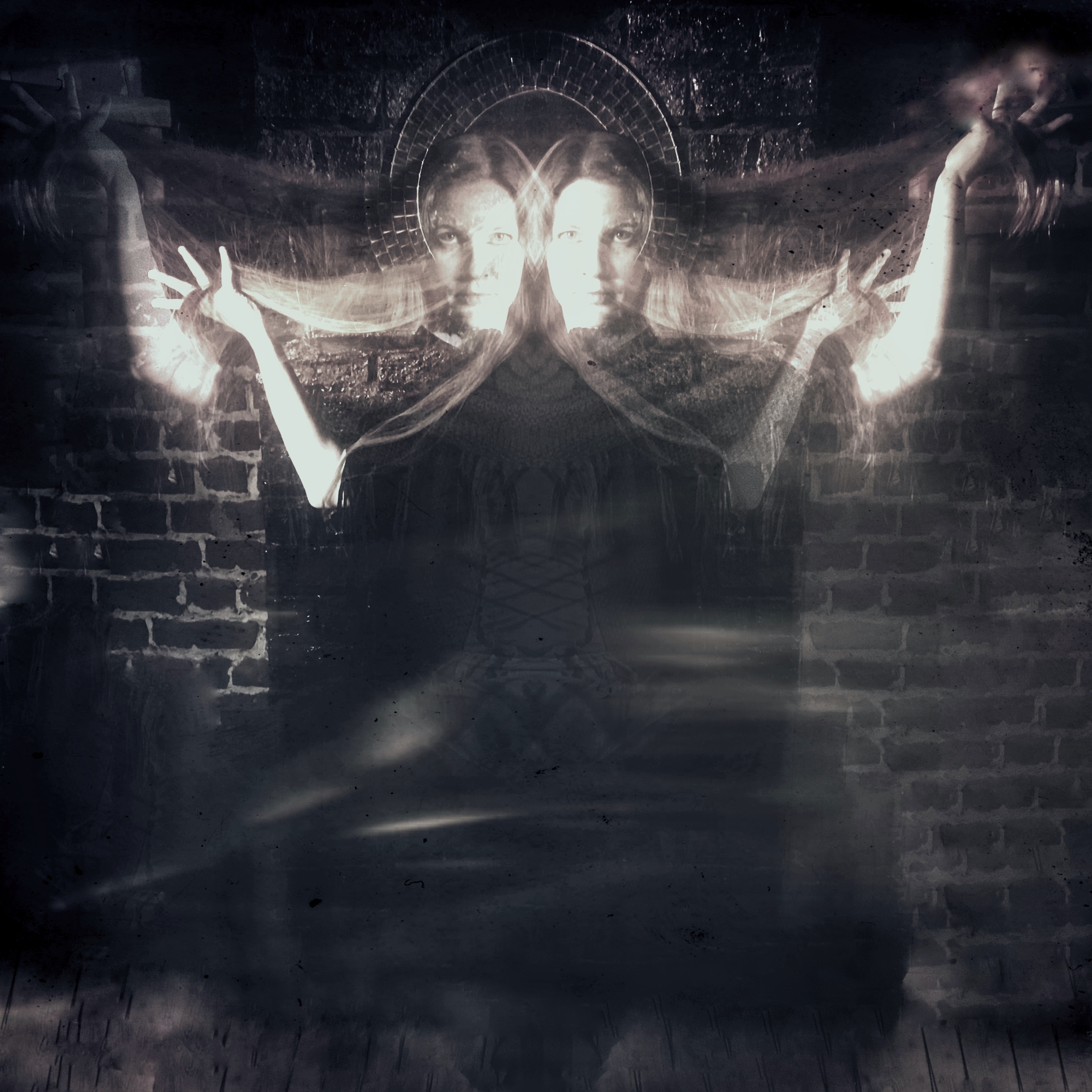
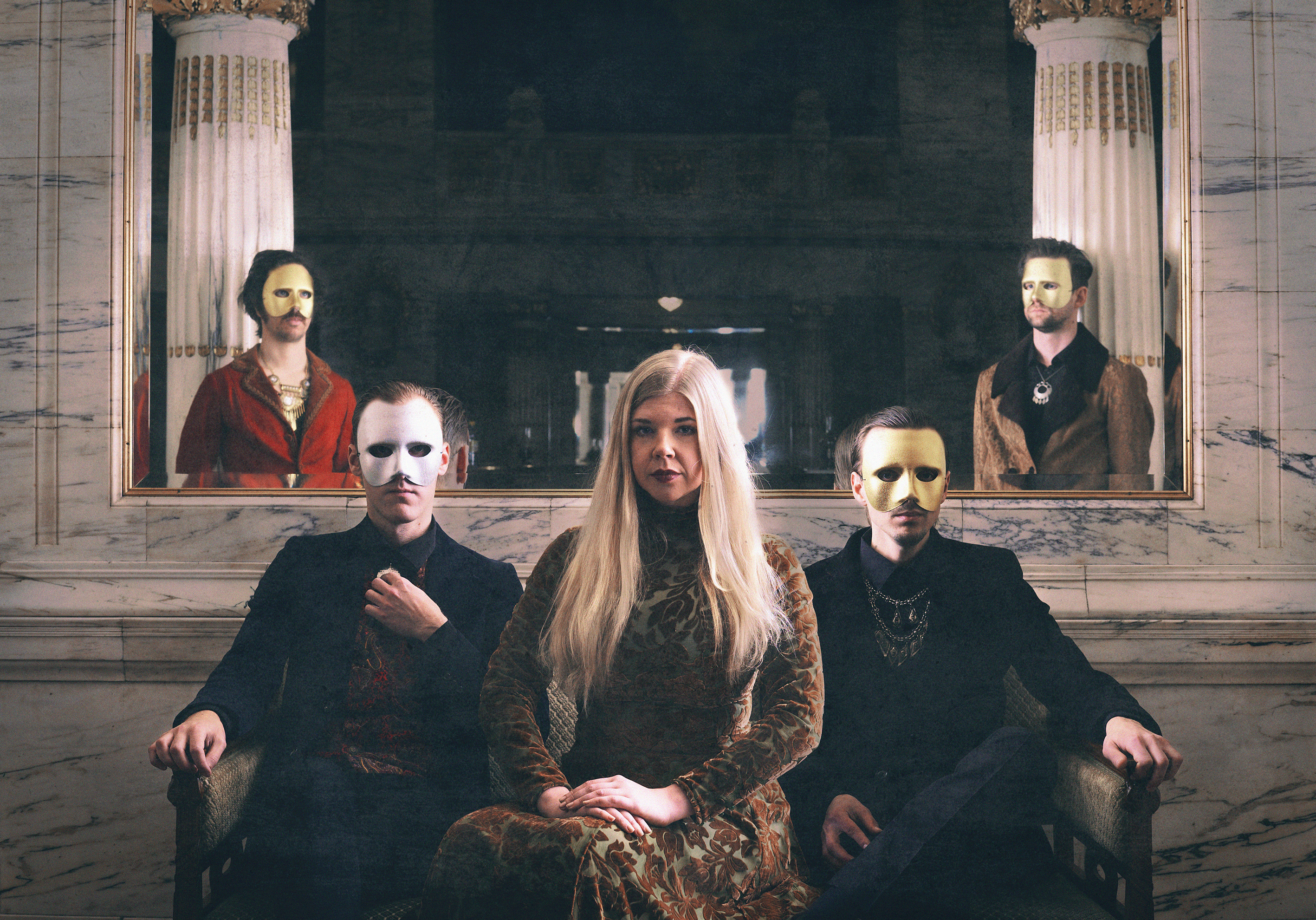
Featuring the aforementioned Pauli Souka on vocals, guitars, bass, keyboards and programming, accompanied by Swedish artist Paulina Medepona (also known as Satana Lucia, and who was also responsible for the incredible and obscure album art) and Finnish keyboardist Andras Miklosvari, the concept behind The Gale focuses on memories of nostalgia and personal struggles, having the purpose of raising the awareness of those who suffer from depression, those who have suicidal thoughts or those who feel lonely. The motto of the album, repeated continuously on the song “Shades of Myself” and displayed on the digipak version of it, is “living is an act of courage”, with the album’s lyrics being mostly inspired by personal struggles and somehow promoting optimism through dark times. Such important message  only gets stronger and stronger as the music progresses, showcasing all the talent and hard work of Pauli and his crew and placing them as one of the most interesting names of the current underground scene.

In the intro 61° 43′ N 17° 07 E, which by the way are the coordinates for a point in Hudiksvall, the soothing sound of rain and an ethereal vibe suddenly explode into a feast of extreme music, setting the stage for The Invocation, highly inspired by the dark and pensive music by Insomnium and with Pauli firing his anguished growls while at the same time keeping the music mournful with his Doom Metal-like beats. Needless to say, the song’s lyrics exhale poetry (“Dark is the night, and the veils are drawn of shadows / Dark is the day, while the sun is no longer awake / The sun is calling for your dawn / These words colour countless shades I shall revoke beyond these shores / And drink your fading crimson tear”), and heaviness keeps pounding our heads in the also obscure but very melodic Endurance Through Infinity, where the guitar lines bring a touch of epicness from Folk and Viking Metal, with Pauli making sure we crack our necks in half headbanging to the song’s crushing rhythm.

Enhancing the impact and delicacy of their music thanks to the keyboards by Andras and the stunning vocals by Paulina, Coldbound deliver a touching creation titled The Eminent Light, where the melancholy flowing from the guitars create an interesting paradox with its doomed beats; followed by the title-track The Gale, which kicks off in full force with its Black Metal blast beats and an enfolding atmosphere. Furthermore, this is probably Pauli’s most demonic mode from the entire album, blasting infernal growls and scorching riffs during the whole song, as well as thunderous and dense bass lines. Then we have the fantastic My Solace, with its lyrics taken from the poem book of Kostas Karyotakis titled “Nostalgia” (“My solace will be seen – by scars upon my heart / My solace will be told – by letter of remorse / The bitter greet – a cold farewell / The olden sorrows – that ignite again”). Andras once again brings tons of flavor to the musicality with his keys, while Pauli gives a lesson in dark, melancholic and gripping Melodic Death Metal, flowing majestically until its astounding finale.

Winters Unfold is another neck-breaking creation by Coldbound, with its rhythm and vibe once again presenting hints of Folk Metal and with the strident guitars by Pauli going along flawlessly with his growls; whereas in Shades Of Myself a promising start solidifies into a classic Scandinavian Melodic Death Metal tune, as polished and vibrant as we can expect from a band like Coldbound, and once again with Pauli adding a good amount of intricacy to the overall sound through his beats. Lastly, how about an 11-minute aria of melodic and obscure extreme music entitled Towards The Weeping Skies to conclude the album? In this journey through the dark, the vocals by Pauli get to a point where they can be considered “anguished whispers”, not to mention the outstanding phantasmagorical keys in the background. Hence, you’ll be hypnotized by Pauli’s guitar lines before the music fades into a gentle and touching outro, accompanied by the sound of a heavy and gorgeous tempest.

The Gale is available for a full listen on YouTube and on Spotify, but if I were you I would definitely show my honest support to such distinct act by purchasing the album from their own BandCamp page or Big Cartel (in digipak format or as a digipak + shirt bundle), from iTunes, or from Amazon. Also, don’t forget to pay Coldbound a visit at their Facebook page and YouTube channel, and let their comforting darkness embrace you. If living is an act of courage as Coldbound say, then The Gale might be the perfect soundtrack for that tough but always rewarding adventure.

Best moments of the album: Endurance Through Infinity, The Gale and My Solace.

Worst moments of the album: None.

Released in 2018 Moonlight Productions

Track listing
1. 61° 43′ N 17° 07 E 2:40
2. The Invocation 5:22
3. Endurance Through Infinity 7:15
4. The Eminent Light 5:36
5. The Gale 7:35
6. My Solace 7:18
7. Winters Unfold 5:35
8. Shades Of Myself 5:36
9. Towards The Weeping Skies 10:58

iTunes/Amazon bonus track
10.The Eminent Light (Instrumental) 5:32

Band members
Pauli Souka – vocals, guitars, bass, keyboards, programming

Guest musicians
Paulina Medepona – vocals on “The Eminent Light”
Andras Miklosvari – keyboards on “The Eminent Light”, “The Gale”, “My Solace” and “Winters Unfold”, orchestrations

Album Review – Skogen / Skuggorna Kallar (2018)

Weaving a tapestry of triumph and tragedy, loss and remembrance, this Swedish quartet translates the beauty and melancholy of their homeland into first-class Blackened Folk Metal.

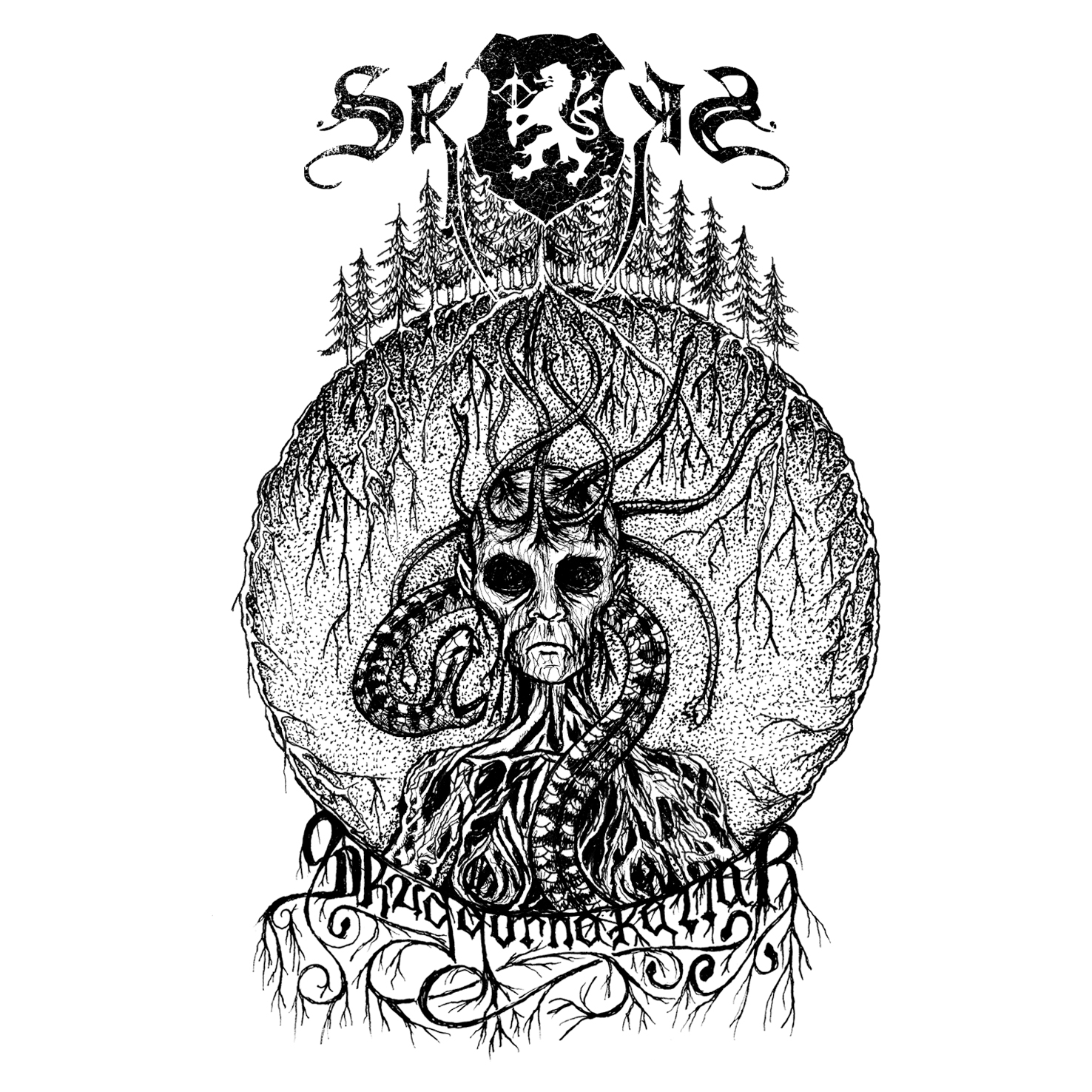
Born in 2009 under a frozen Swedish moon in the city of Växjö, Blackened Folk Metal horde Skogen has their sonic pentagram of albums in homage to the stark, nebular beauty of their motherland. Formed by vocalist and bassist Joakim Svensson and guitarist and vocalist Mathias Nilsson, who played together in other bands and shared the same musical vision, Skogen (which means “forest” in Swedish) released their debut album Vittra, in 2009, followed by Svitjod, in 2011, Eld, in 2012, I Döden, in 2014, and finally Skuggorna Kallar (or “the shadows call” from Swedish), now in 2018, all blending the robustness of Black Metal with the melancholy of folk music in a captivating manner, weaving a tapestry of triumph and tragedy, loss and remembrance.

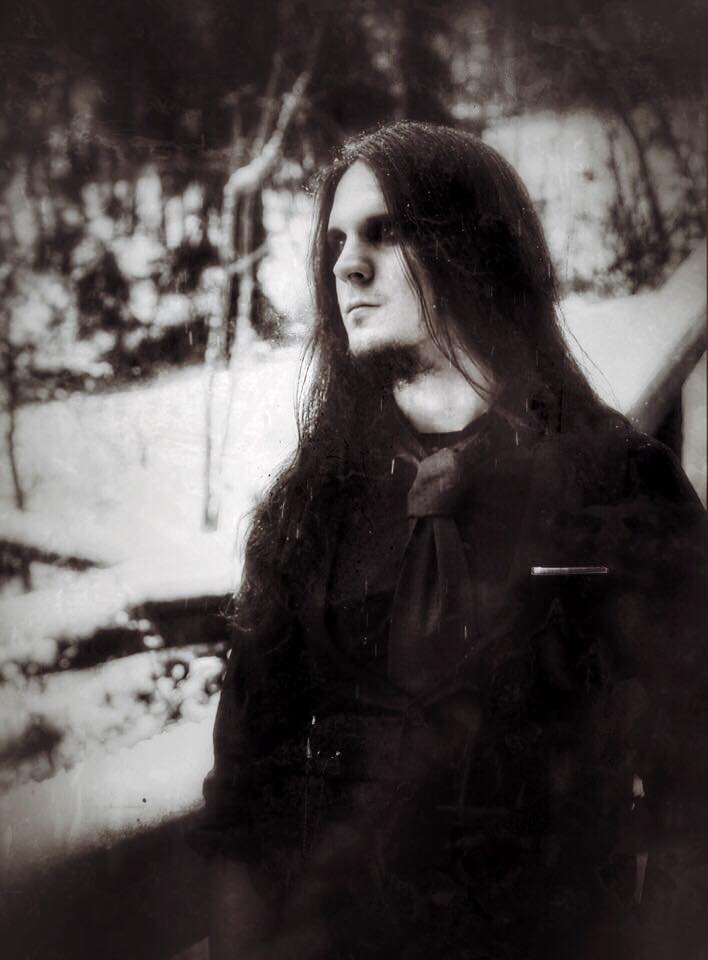
Possessed by the mysteries of nature and dedicated to paying homage to its majesty, both in light and darkness, Skogen will offer your avid ears a polarity of sounds felt in their music as subtly beautiful melodies and clean vocals are woven into the more pervasive darker tones that saturate Skuggorna Kallar, like the blanket of night, heavy with dew. Joakim and Mathias, accompanied by Jonathan Jansson on the guitar and L. Larsson on drums, as well as an array of fantastic guest musicians, deliver their most complete and darkest work to date in their new album, a must-have for fans of the cold and austere sounds of the North.

The opening track of the album Det Nordiska Mörkret, is also one of their two with a Swedish name, meaning “the Nordic darkness”, beginning in full force and as heavy and somber as it can be, where the anguished clean vocals by Joakim bring a touch of melancholy to the music while the background elements such as the whimsical bowed lyre by guest Vittervärja also enhance the song’s taste and impact considerably. Faster and leaning towards classic Folk Metal, När Solen Bleknar Bort (“when the sun fades away” from Swedish) presents more aggressive and cavernous vocals, with the music flowing smoothly thanks to the amazing riffage by the band’s guitar duo, not to mention L. Larsson’s precise beats; and their darkened sounds keep haunting our souls in Nebula, a gripping fusion of Folk, Black and Doom Metal, with the guitar lines by both Mathias and Jonathan sounding truly captivating, resulting in an enfolding sonority that will please all fans of such distinct underground metal genre.

An ominous, almost tribal bridge titled Omen sets the tone for the bitterly cold and neck-breaking Frostland, where L. Larsson and his rhythmic beats dictate the song’s pace while the band’s stringed trio fires some lancinating and thunderous riffs and punches in a vibrant display of Blackened Folk Metal. Then a somber atmosphere embraces one of their darkest compositions, The Suns Blood, with Joakim growling like a demonic entity while L. Larsson and his Doom Metal beats keep the music lugubrious and vile, also presenting guitar riffs and solos that bring more electricity to the overall result (as well as its folk, acoustic moments), whereas a giant wave of Black and Folk Metal arises in one of their boldest creations, the amazing Beneath the Trees, with all band members sounding crisp and aggressive, generating an epic ambience perfect for Joakim and his anguished gnarls, also feeling like two or three songs in one. Lastly, the bad offers us The Funeral, another 8-minute Folk Metal aria starting in a smooth, almost acoustic manner before exploding into beautiful extreme music, fading into a melancholic piano piece courtesy of guest musician Dísa, and then again getting back to the band’s puissant sonority until the song’s soulful ending.

In case you want to show your appreciation for Skogen, you can pay them a visit at their Facebook page for news, tour dates and other nice-to-know information, and of course buy your copy of Skuggorna Kallar (available for a full listen on YouTube) from their own BandCamp page, from the special page dedicated to Skogen at the Nordvis Produktion website, or from several other retailers like iTunes and Amazon. In a nutshell, Skogen more than succeeded in translating the beauty and melancholy of their beloved Sweden into their multi-layered folk music, carving their name as one of the most interesting and exciting groups from the underground Swedish metal scene.

Best moments of the album: När Solen Bleknar Bort, Nebula and Beneath the Trees.

Worst moments of the album: Frostland.

Released in 2018 Nordvis Produktion

Track listing   
1. Det Nordiska Mörkret 4:46
2. När Solen Bleknar Bort 4:54
3. Nebula 3:43
4. Omen 1:44
5. Frostland 4:24
6. The Suns Blood 4:33
7. Beneath the Trees 8:46
8. The Funeral 8:29

Band members
Joakim Svensson – vocals, bass
Mathias Nilsson – guitars, vocals
Jonathan Jansson – guitars, vocals
L. Larsson – drums, vocals

Guest musicians
Dísa – piano
Elis Edin Markskog – vocals
Vittervärja – bowed lyre

Album Review – Spiral Skies / Blues For A Dying Planet (2018)

Get ready to be put in a trance and to be taken on a unique musical journey by a psychedelic Swedish band and their “rock from another planet”.

With influences ranging over decades, Swedish Occult Rock band Spiral Skies has created a sound that can most easily be described as “rock from another planet”, a unique blend of folk, doom and 70’s-inspired rock music the likes of Jefferson Airplane, Curved Air and The Devil’s Blood, all embraced by a unique visual performance at their intense and enchanting live shows. After their debut EP A Queendom to Come, released in 2015, it’s time for Spiral Skies to further spread their sorcery with their brand new album beautifully titled Blues For A Dying Planet, an ode to the past that’s at the same time always looking into the future.

Formed in 2014 in the Swedish capital Stockholm, Spiral Skies are the talented Frida on vocals, Jonas and Dan on the guitars, Eric on bass and Daniel on drums, each one with a different musical background and distinct influences, but all sharing the same passion for 70´s genuine rock and metal music. In Blues For A Dying Planet, which features a classy cover illustration by Vadim Karasyov, cover and booklet design by Atmanoid, and cover photo by Björn Pettersson, the band brings forth an amalgamation of styles with a strong Psychedelic Doom Metal and Rock core essence, putting you in a trance and taking you to the golden years of rock, always spearheaded by the mesmerizing vocals by Frida.

An organ and the sound of the wind in the intro Black Hole Waltz ignite the feast of Rock N’ Roll and Heavy Metal named Awakening, with Jonas and Dan dictating the rhythm with their Iron Madein-ish riffs while Frida gives a lesson in passion and energy with her flamboyant vocals. Put differently, this rockin’ hymn has an old school Heavy Metal vibe that, when blended with its core Doom Metal essence, makes things even more captivating. Following such powerful start we have Dark Side of the Cross, a very good song to dance under the stars that leans towards the classic Doom Metal by Black Sabbath with a more whimsical Rock N’ Roll aura, also showcasing a great job done by Daniel with his intricate beats; and The Wizard’s Ball, where Frida keeps delivering sheer awesomeness through her charming and potent vocals, with the rest of the band keeping the music at a very pleasant and gripping pace, flowing smoothly until its climatic ending. Then it’s time to dance with Frida and the boys in Danse Macabre, a classic Hard Rock song with tons of psychedelic elements from Doom Metal added to its beautiful sonority, with Jonas and Dan blasting straightforward, old school guitar riffs that effectively help embellish the ambience.

Labyrinth of the Mind is perhaps the most Black Sabbath of all tracks, with a great balance between the heaviness of the guitar riffs and the gentle voice by Frida, resulting in a hypnotizing musicality perfect for closing your eyes and letting the band take you on a one-of-a-kind musical journey. In Shattered Hopes we’re treated to a hybrid between pure Psychedelic Rock and more contemporary Doom Metal and Hard Rock, uniting past and present through the riffs by the band’s guitar duo and the always fiery vocals by Frida; whereas the poetically-titled tune Left Is Right and Right Is Left Behind has its name translated into classic Rock N’ Roll with tons of psychedelia added to its mesmerizing waves. Furthermore, Eric with his solid bass lines and Daniel with his fierce beats create the perfect background for Frida to shine once again on vocals. And lastly, their feast of classy and gripping sounds is majestically concluded with the lesson in Psychedelic Rock and Metal named The Prisoner, a full-bodied voyage led by the heavy and very melodic guitars by both Jonas and Dan.

The enchanting voice by Frida and her Spiral Skies can be better appreciated through the band’s Facebook page and Spotify, and if you want to buy a copy of Blues For A Dying Planet and consequently have all that’s needed to prance around the fire pit under a moonlit sky, you can find the album on sale at the AOP Records’ BandCamp page or webstore, at the Nuclear Blast webstore, on iTunes or on Amazon. Although the 70’s might be long gone and everything is now just a distant memory, the music by bands like Spiral Skies is what keeps the spirit and passion of that golden decade burning bright inside our souls.

Best moments of the album: Awakening, Danse Macabre and The Prisoner.

Worst moments of the album: None.

Released in 2018 AOP Records

Track listing
1. Black Hole Waltz 1:25
2. Awakening 3:31
3. Dark Side of the Cross 4:04
4. The Wizard’s Ball 5:36
5. Danse Macabre 4:18
6. Labyrinth of the Mind 5:42
7. Shattered Hopes 3:18
8. Left Is Right and Right Is Left Behind 4:38
9. The Prisoner 6:02

Band members
Frida – vocals
Jonas – guitars
Dan – guitars
Eric – bass
Daniel – drums

Album Review – Ov Shadows / The Darkness Between Stars (2018)

Representing an exploration beyond the sane and mentally sound, this talented Swedish horde is ready to haunt our souls with seven unrelenting tracks of atmospheric and sinister Black Metal.

“Embrace your shadow self – your dark aspects. Don’t hide away. Let those harmless creatures, turn into raging monsters. Let chaos guide your consciousness. You are ov Shadows.”

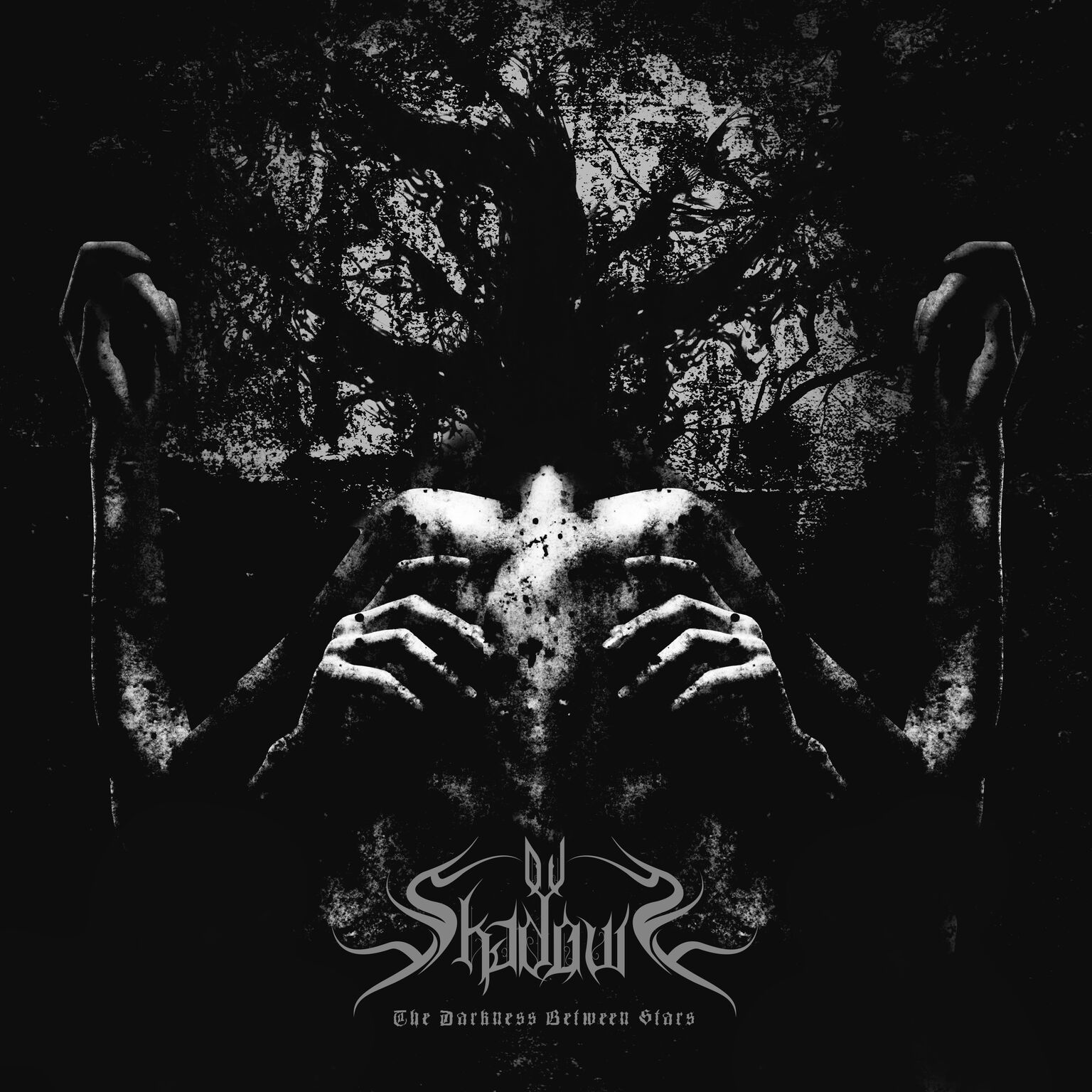
Those few sentences frame the concept behind Swedish Black Metal horde Ov Shadows, representing an exploration beyond the sane and mentally sound. With their music and lyrics, Ov Shadows acknowledge the duality that divide a persona and the shadow self, continuing further into the dark, a portal into chaos without barriers and rules. And after crossing that portal, you’ll be ready to explore the sinister realms of Atmospheric Black Metal ruled by Ov Shadows in their brand new album, entitled The Darkness Between Stars.

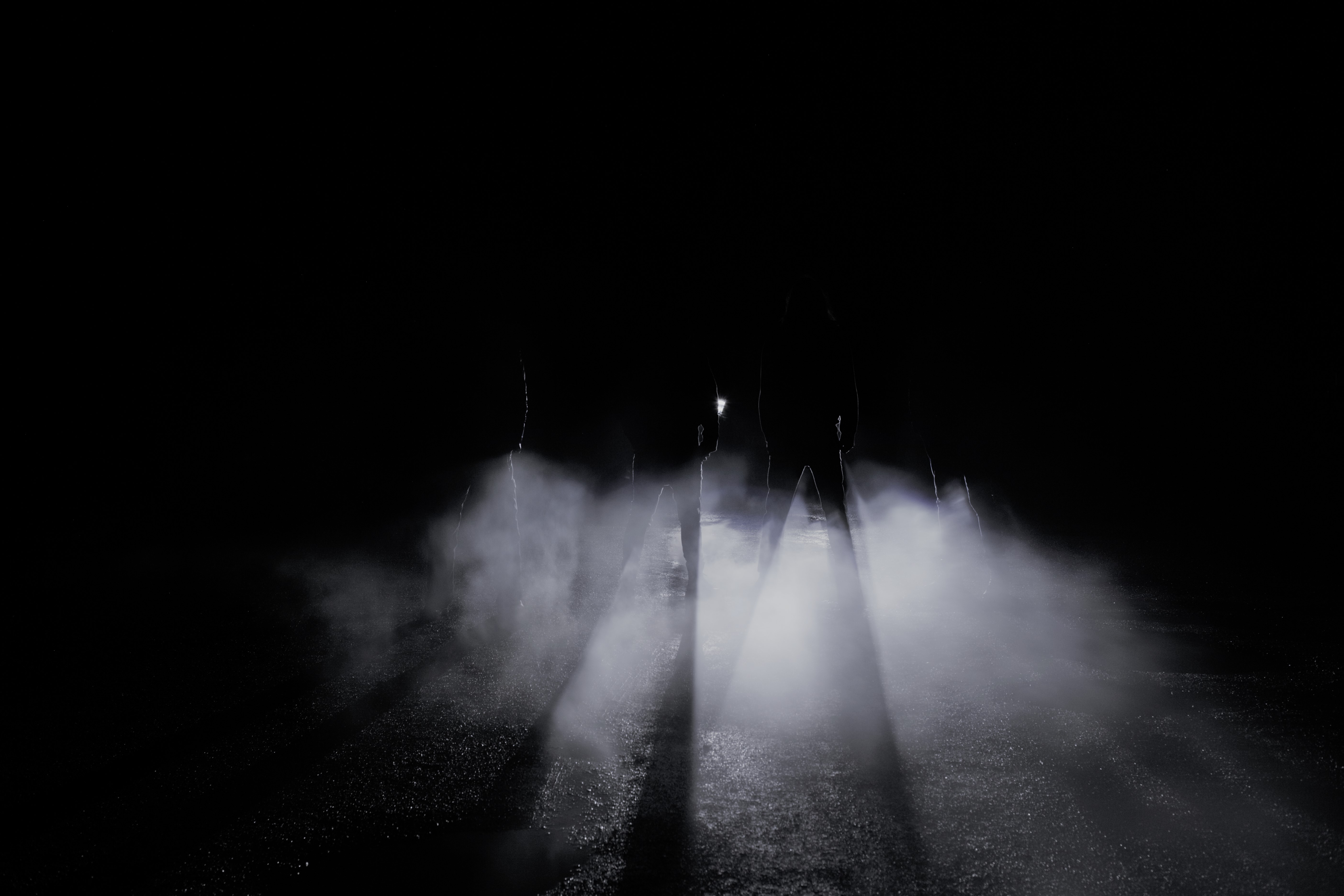
Formed in the city of Gothenburg in 2016, the band comprised of RA (aka Ronny Attergran) on vocals and bass, AF (aka Andreas Frizell) and AA (aka Anders Ahlbäck) on the guitars, and JW (aka Jonas Wickstrand) on drums returns after their 2016 debut EP Monologues with more of their Stygian sound, delivering epic riffs that turn from mournful to triumphant in a way that is stirring and emotionally satisfying. In other words, The Darkness Between Stars has everything that one could possibly want out of a Black Metal album, those being a truly dark atmosphere, an epic feel, the right mix of melody and grimness, and an engaging song structure.

Ominous sounds emerge from the dark chambers of hell until the quartet begins their devilish mass in the title-track The Darkness Between Stars, blasting sheer brutality and blasphemy during its almost 7 minutes of music.  RA sounds like a possessed demon on vocals, while JW delivers the most classic form of blast beats, generating a straightforward musicality recommended for admirers of the genre. In Bellowing Shadows, darkness and rage keep flowing from the band’s instruments in an excellent display of Black Metal, with their evil guitar duo AF and AA cutting our skin with their old school riffage, whereas RA’s gnarls sound and feel even more disturbing. And displaying hints of Doom Metal and Blackened Doom (but still reeking of putrid Black Metal) we have The Hanged Man, where JW continues his pulverizing path while both guitars sound as sulfurous as they can be, all spiced up by a sinister atmospheric passage before all hell breaks loose again.

The acid Disguised As Altruism is another demolishing Black Metal feast by Ov Shadows, with its guitars getting more and more scorching as the music progresses while the overall malignancy is considerably boosted by JW’s unstoppable beats, living up to the legacy of Scandinavian Black Metal. The Ritual of the Natural Flame already begins in full force, with the four members of the band summoning total darkness with their Stygian instruments, in special RA and his high-pitched demonic roars (not to mention the song’s somber and absolutely menacing break). After such beautiful blast of Black Metal, strident riffs and gnarls set the tone in the dense metallic extravaganza named Hordes Abiding the Narrator, with all instruments generating a mesmerizing dark ambience perfect for RA and his vociferations. Lastly, their final onrush of blasphemy and obscurity comes in the form of a 7-minute devastating tune named A Sky In Vain, where AF and AA create a wall of darkness with their riffs while JW switches between classic Black Metal drumming and Doom Metal-inspired beats, flowing into a melancholic and obscure ending.

If you want to take a detailed listen at The Darkness Between Stars, click HERE and enjoy this very cohesive and professional album in its entirety. Also, in order to show your true support to this skillful Swedish horde, simply visit their Facebook page for news, tour dates and other nice-to-know details about the band, and their YouTube channel for more of their unrelenting Black Metal. And of course, purchase The Darkness Between Stars on BandCamp or on Big Cartel, letting the somber music by Ov Shadows penetrate deep inside your mind, blackening your thoughts until there’s no way back.

Best moments of the album: Disguised As Altruism and The Ritual of the Natural Flame.

Worst moments of the album: None.

Released in 2018 Black Market Metal

Track listing
1. The Darkness Between Stars 6:58
2. Bellowing Shadows 5:40
3. The Hanged Man 6:26
4. Disguised As Altruism 5:56
5. The Ritual of the Natural Flame 7:19
6. Hordes Abiding the Narrator 5:58
7. A Sky In Vain 7:42

Band members
RA – vocals, bass
AF – guitars
AA – guitars
JW – drums

Metal Chick of the Month – Dagny Susanne

Malice, come closer to me!

The month of November in the Northern Hemisphere is always a synonym to colder temperatures and darker days, a sign that winter is coming and that all the happiness and warmth of the summer are long gone and will take even longer to return. Having said that, there’s nothing better than listening to some old school, menacing Scandinavian Black Metal to “celebrate” the Stygian season that’s about to begin, especially if it’s the Black Metal crafted by our metal chick this month, the multi-talented Swedish Valkyrie known as Dagny Susanne, the mastermind behind the top-notch extreme music project Nachtlieder. By the way, Nachtlieder is German for “night songs” or “songs of the night”. Do I need to say more?

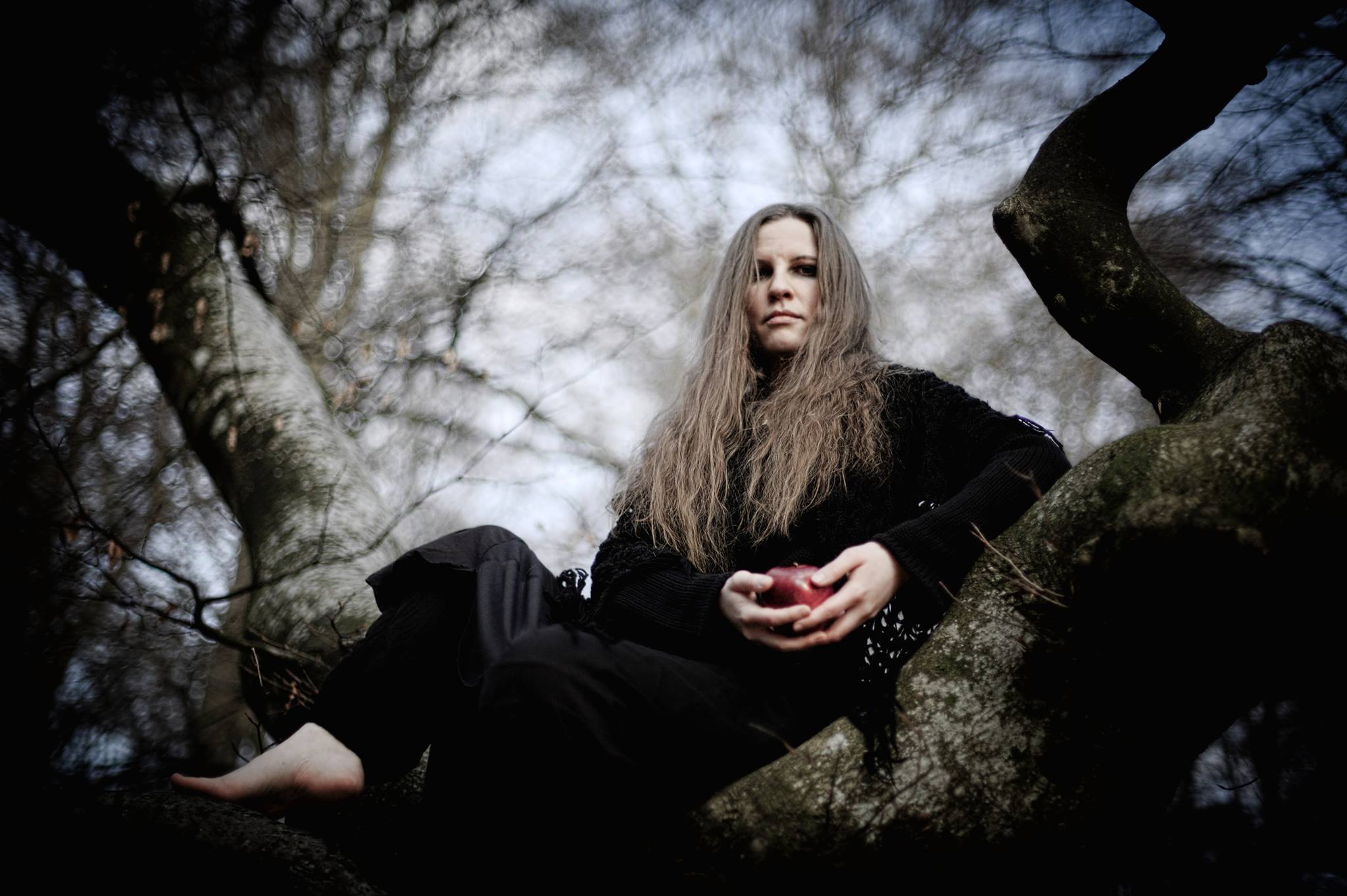
Born on September 9, 1986 in Kiruna, the northernmost town in Sweden, situated in the province of Lapland, but currently residing in the multi-cultural Swedish city of Gothenburg where she moved about a decade ago, Dagny Susanne (whose real full name is Karin Dagny Susanne Hansson) mentioned she never had any friends who were into heavy music nor could buy any albums in her hometown because there wasn’t a record store there at that time, being “forced” to download music using Napster with a modem, which obviously made her discovery of metal painfully slow. Furthermore, growing up in Kiruna affected her personality and the way she currently sees things both in good and bad ways, but her interest in metal, in meeting musicians and starting a band motivated her to move to Gothenburg. However, nowadays Dagny feels a little nostalgic when talking about her beloved Kiruna, saying that not only it’s a beautiful and serene place, but it also inspires you to work, clearing your head and putting you in a good state of mind due to its calmness and distance from bigger cities like Gothenburg and Stockholm. For instance, just to give you an idea of how isolated Kiruna is, Luleå, the biggest town in the same region, is nothing more, nothing less than three hours away from it.

Since 2008, Dagny has been embellishing the world of extreme music with her Black Metal outlet Nachtlieder, being responsible for the songwriting, the lyrics, all vocal parts and pretty much all other instruments except for the drums, played in almost all her releases by her longtime friend Martrum (also known as Dödsdyrk, from bands such as Minion and Wicked). After the release of two demos in 2009 and a promo album in 2010, Dagny and her Nachtlieder became a much bolder and intense entity after unleashing upon humanity the full-length albums Nachtlieder, in 2013, and more recently The Female of the Species, in 2015, with the latter having the Biblical character of Eve, the female of the species, as the central character in the album’s narrative as mentioned in our review for the album. However, the original idea of the album was taken from the book “The Female of the Species”, by American writer Joyce Carol Oates, a collection of novellas about women committing different acts of violence for various reasons, slightly changing to the narrative about Eve after Dagny began to reference the phenomenon of “Satanic feminism” where Satan, a symbol for liberation, is also used as a feminist icon in her lyrics. In addition, Dagny said that, as she used to work in a public library, she reads a lot and that has a significant influence on her lyrics (but not on her music, thought), starting with small text fragments before coming up with what the lyrics should be about.

If you want to take a good listen at the music by Dagny and her Nachtlieder, I highly recommend you go to BandCamp, YouTube or Spotify to do so, being suddenly embraced by her visceral Black Metal such as in the excellent songs Eve, Beyond Death, Leave the View To the Rats and A Meager Escapism. The only “issue” with Natchlieder is that you won’t be able to find any live material or footage online, as Dagny hasn’t been able to form a full-bodied band yet. She obviously wants to perform live some time, but there are a few barriers to that such as the availability of musicians in her circle of friends that would be willing to play her music, and if those musicians would be reliable enough to replicate her music to an acceptable level to her.

Prior to becoming Nachtlieder, our Swedish black metaller was the bass player for Gothenburg-based Death/Black/Thrash Metal band Wicked from 2006 to 2010, having recorded with them a demo titled Chaos in 2007, the single Gospel of Sickness in 2009 and the split album Abominations, Chaos and Bestial Warfare in 2009 together with the bands Adokhsiny, Land of Hate, Надимач and Wargoatcult. She mentioned that she learned a lot from that time as it was her first extreme band, in special about arrangements and the role of the bass guitar in a band. The band unfortunately disbanded after their lead singer moved out of town with his family, but all three members are still friends and try to meet as much as possible whenever they’re in the same city. Apart from Wicked and obviously Nachtlieder, you can find Dagny in a couple of bands and projects as a guest musician, being the bassist and guitarist for the 2016 album Winds of Transilvania, by American/Swedish Black Metal project Nattsvargr (led by American vocalist Noctir); and doing some vocals and violin for a German Ambient Black/Doom Metal band named Black Autumn.

Dagny also has a very interesting (and obviously strong) connection with Black Metal from her homeland, having discovered the genre in her teens and consequently listening to Swedish bands for hours and hours, in special her favorite of all, Dissection. For instance, she mentioned that Dissection’s first gig after guitarist, vocalist and main songwriter Jon Nödtveidt (R.I.P.) got out of prison was the first big concert she ever went to. When asked about the general concept of cold and dark winter days being the reason why Scandinavian Metal is so unique, our Swedish diva said that there are of course bands that succeeded in portraying the extreme conditions and contrasts that exist in the northern parts of Scandinavia through their music, but that you can also see a significant difference between the metal scene in Norway, Sweden and Finland. Furthermore, when asked what defines Black Metal as a genre, Dagny said that when she wrote her bachelor in musicology about Black Metal she tried to identify the elements that define the music, finding that certain intervals were used both in chord progressions and melodies, therefore making Black Metal a music style for her no matter what the lyrical content is. For example, she said that if Black Metal is all about Satanism as several people think, then a band like Immortal, one of the biggest and most influential exponents of the genre, wouldn’t be Black Metal.

This slideshow requires JavaScript.

As usual, I love to know about our metal girls’ opinions about women and sexism in the metal universe, and Dagny has a strong position about those topics, especially for playing a music style vastly dominated by men. First of all, she mentioned that gender isn’t the only thing that matters, citing other details such as age, profession, place of birth and residence and ethnicity, among others, as reasons why different people doing the exact same thing will certainly receive very distinct feedback from the society. However, she said she has already faced some not-so-subtle sexist comments directly to her face such as “chicks can’t play”, as well as the feeling of not being fully respected by guys whenever she was the only woman in the group. In addition, she said that although she doesn’t know for sure why the number of one-woman Black Metal bands is extremely low compared to one-man Black Metal projects, she feels that it might be due to the different networks between men and women and the conscious and subconscious differences in social sex. “From the day we’re born we’re not encouraged to do the same things and this includes the music we should listen to and perform and the instruments we should play”, said Dagny. Also, she thinks the well-established expression “’female-fronted metal” (which I confess I end up using quite often i my reviews and discussions) doesn’t really make sense at all, like the term “female vocals” instead of “clean vocals” when the singer is not a man, and that applies to Nachtlieder as very few people would associate those expressions with the type of music she plays.

As any musician in our modern-day society, Dagny also has to deal with illegal downloads of her music, but she doesn’t see those as a huge threat to music in general as many others do. She said that the biggest trouble for artists like her concerning illegal downloading is that they can’t keep track of their listeners, and knowing who her listeners are and that there are people out there who appreciate her music is always a boost to her creative process. She thinks that people who can afford it should prioritize paying for their music consumption, and the ones who can’t pay for it should at least be part of an informal “marketing campaign” by sharing the bands’ Facebook and BandCamp pages, leaving positive comments on YouTube, among other small but meaningful acts. The only thing that really bothers her in this case is when an album leaks before the release date, as she finds that really disrespectful towards the hardworking labels and artists. Furthermore, Dagny also considers the way music is shared by fans on the internet extremely positive for independent artists like herself, saying that for example fan initiatives like the Facebook community Death Metal Girls and the YouTube series The Female Vocalists of Extreme Music are great options for headbangers who want to broaden their knowledge of female artists in metal.

Lastly, one might think that a musician like Dagny, coming from the northernmost part of Sweden and playing the ominous Black Metal by Nachtlieder, must draw most or all of her inspiration in the night, but in reality that’s not what happens to her during her creative process. Dagny said she’s inspired by her instrument and what she’s playing at the moment, with the calm and relaxed feeling from the middle of the night being of course something she loves but that due to her working schedule is not something she can fully enjoy anymore. For instance, one of my favorite songs from The Female of the Species, the fantastic Nightfall, was written at night and had parts of its lyrics inspired by the first part in the Arnold Schoenberg opera Pierrot Lunaire, also known as “Moonstruck Pierrot”. I guess everyone reading this tribute to Dagny has already gotten “moondrunk” in life, feeling dizzy or lightheaded after staying awake for an entire night, but of course very few of us are capable of delivering such vibrant and captivating music by ourselves like this high-skilled woman who left her hometown, the distant city of Kiruna, to conquer the world of extreme music with her undisputed, raw and totally awesome Black Metal.

Nachtlieder’s Official Facebook page
Nachtlieder’s Official YouTube channel
Nachtlieder’s Official BandCamp page

“My own purpose with feminism is not to blame the trouble in the world on a specific group of people, but to raise the questions. Make people think about how they treat others and why. It’s all about recognizing human value, in the metal scene, but most of all outside of it. I’m certainly responsible too and no one is without flaws. We’re all products of the societies we live in.” – Dagny Susanne

Album Review – Arch Enemy / Will to Power (2017)

A good balance between the classic days of the band with the more modern path they decided to venture after the arrival of frontwoman Alissa White-Gluz. But please, they need to stay away from clean vocals.

Will to Power, the tenth studio album by Swedish Melodic Death Metal icons Arch Enemy, might be far from being a masterpiece, but at least in my humble opinion it’s a considerable improvement from their previous installment, the uninspired War Eternal, released in 2014. The first Arch Enemy album to feature guitarist Jeff Loomis (Nevermore, Conquering Dystopia) as well as clean singing as lead vocals, Will to Power presents a good balance between the classic days of the band with Angela Gossow on vocals with the more modern path they decided to venture after the arrival of frontwoman Alissa White-Gluz, with each song having its own soul and purpose on the album.

Although Jeff definitely brought a new dynamism to the music by Arch Enemy after joining the band in 2014, I guess it was the departure of Nick Cordle that same year that had the most positive impact on the songwriting by Michael Amott, who seems to have gotten rid of the damaging “generic” virus that infested his music in War Eternal. Furthermore, another nice touch in Will to Power is the album’s stylish and meaningful cover art, designed by American artist Alex Reisfar. “The human skull as a central focal point, the flesh sort of falling off into the circular pattern. The snake ouroboros weaving in and out of the mouths and throats of the severed heads of a wolf, a goat and a vampire bat… All representing self-determination and a predatory, almost parasitic will to power”, explained Mr. Amott, and as the music progresses in the album you’ll realize how powerful the art is and how much it enhances the impact of the whole album.

Set Flame to the Night is a classy intro perfect for their live performances, warming up the listener for the high-octane anthem The Race, my favorite song of the album, where Alissa and drummer Daniel Erlandsson take the lead with their wicked growls and unstoppable beats, respectively, violently questioning the dangerous direction our society is taking (“I heard there was a race / Where we’re all one race / Color, gender, age never could dictate / I saw there was a time / When we valued all life / Nobody oppressed, everyone had rights / Suddenly, in an age where the distance between us is binary / All we see, is an internal war friendly fire in the sky and respect on the floor”). Less intense and more melodic, Blood in the Water, another fantastic choice for their live concerts, transpires old school Arch Enemy with a pinch of their contemporary creations, with the flawless guitar duo comprised of Michael and Jeff being absolutely on fire, blasting slashing riffs and solos throughout the whole song. And in The World Is Yours we face more insane riffs by Michael and Jeff, not to mention the always awesome keys by guest musician Jens Johansson (Stratovarius) and the song’s sing-along, catchy chorus (“If you want the world / Use your mind / Take control / Feel the strength / Rise from within / If you really want it the world is yours”).

One of the first tracks in Will to Power to be revealed, The Eagle Flies Alone, is not as gripping as the rest of the album despite its powerful lyrics, with Alissa showcasing a good vocal performance, though, as well as the good job done by Michael and Jeff on the guitars; followed by Reason to Believe, which really feels like if Arch Enemy meets The Agonist as it’s the first ever Arch Enemy song with lead clean vocals in almost its entirety (with some growls added to make it less cheesy). It’s indeed a power ballad that might make their newer fans happy, but it’s unfortunately too generic compared to what they’re capable of. Not even Michael’s own brother, ex-Arch Enemy guitarist Christopher Amott, is capable of saving it from being tiresome. On the other hand, bassist Sharlee D’Angelo kicks off the dark and belligerent tune Murder Scene, where Alissa sounds truly enraged adding even more electricity to the song’s already boisterous rhythm. Put differently, it’s top-notch Melodic Death Metal with hints of traditional Death Metal, with highlights to the superb job done by both Michael and Jeff with their fiery strings; whereas First Day in Hell, the most ominous of all songs, brings forward a neck-breaking main riff boosted by Alissa’s obscure, deep gnarls and screams, and as the story being told evolves you’ll feel your soul getting darker and darker.

Then we have the instrumental bridge Saturnine, shaping up the sonority for the multi-layered and gripping Dreams of Retribution, a Melodic Death Metal feast that brings together the past, present and future of the band, with its guitars and bass being in total sync while Daniel adds progressiveness to the musicality and Jens once again kicks ass with his spot-on keyboard notes. The second to last song of the regular version of the album, titled My Shadow and I, is another violent creation by Arch Enemy, sounding slightly less inspired than some of the previous songs but still above average, mainly due to the intricacy found in drums and bass lines. Finally, A Fight I Must Win might be slower than most songs, but that doesn’t mean it’s not cohesive, piercing and metallic, representing almost to perfection the path Arch Enemy has been following with their latest albums, closing Will to Power in a strong way. Actually, if you go for the limited edition digipak, you’ll be treated to their cover for English Street Punk band Charged GBH’s 1982 song City Baby Attacked by Rats (you can listen to the original version HERE), an amazing version by Michael, Alissa & Co. that’s definitely worth the investment in the special edition of the album.

Overall, Will to Power is a pretty decent album by Michael and his crew, being recommended for all fans of modern Melodic Death Metal. After listening to the album for the very first time, I had some mixed feelings about some of the songs, while others (the ones where clean vocals where pretty much nonexistent) hit me in a very positive manner right from the first second, proving that, at least to my ears and my heart, Arch Enemy still got it and can deliver high-end metal music if they want to. I honestly believe the best thing the band can do right now is to stay away from the idea that clean vocals are a good addition or variation to their music, because in the end that’s certainly not what made this band so relevant and admired in Heavy Metal. I’m not saying Alissa is not a good singer when using her clean voice; quite the contrary, she’s an incredible vocalist, but Arch Enemy are a synonym to rebelliousness and anger, things that can only be represented by some high dosages of rabid screams and deep guttural growls.

Best moments of the album: The Race, Blood in the Water, Murder Scene and Dreams of Retribution.

Worst moments of the album: The Eagle Flies Alone and Reason to Believe.

Released in 2017 Century Media

Track listing
1. Set Flame to the Night (instrumental) 1:18
2. The Race 3:15
3. Blood in the Water 3:55
4. The World Is Yours 4:53
5. The Eagle Flies Alone 5:15
6. Reason to Believe 4:47
7. Murder Scene 3:50
8. First Day in Hell 4:48
9. Saturnine (instrumental) 1:09
10. Dreams of Retribution 6:40
11. My Shadow and I 4:05
12. A Fight I Must Win 6:37

Limited Edition Digipak bonus track
13. City Baby Attacked by Rats (Charged GBH cover) 2:48

Band members
Alissa White-Gluz – vocals
Michael Amott – lead guitars, backing vocals
Jeff Loomis – lead guitars, backing vocals
Sharlee D’Angelo – bass
Daniel Erlandsson – drums

Guest musicians
Jens Johansson – keyboards on “The World Is Yours”, “Saturnine” and “Dreams of Retribution”
Christopher Amott – guitars & keyboards on “Reason to Believe”

Album Review – Clawfinger / Use Your Brain (1995)

Use your brain and listen to the cult album by this distinct Swedish act, presenting an austere and impactful fusion of Rap and Heavy Metal.

Rating4

use-your-brainA few years before Limp Biskit, Slipknot or any other band considered part of the Nu Metal scene from the 90’s/2000’s started, there was already a Swedish band called Clawfinger playing a very original mix of Rap Metal, Hardcore, Rapcore, Funk Metal and even Industrial Metal in a very aggressive, politicized and anti-racist way. Although the band was formed back in 1989, it was just in 1993 that they launched their debut album called Deaf Dumb Blind (which included a very controversial song called “Nigger”, but again, in the most anti-racist way possible), and a couple of years later, in 1995, they launched their most interesting album in my humble opinion, titled Use Your Brain. If you hate Rap by all means and/or if you’re too narrow-minded to accept it mixed with Heavy Metal, don’t even bother listening to it. However, if you enjoy heavy music no matter what, then Use Your Brain might be an amazing addition to your day-to-day playlist.

Use Your Brain starts at a high note with my favorite song from the album, Power, which talks about exactly the opposite of most songs with the word “power” in their names: power can be really harmful to anyone who doesn’t know how to use it properly, which happens to the majority of the people that have it anyway. “Power to the one who doesn’t want it / Do you want it why do you want it”, screams lead singer Zak Tell, accompanied by some excellent heavy riffs by Erlend Ottem and Bård Torstensen and keyboards by Jocke Skog. The song is followed by Pay the Bill, which keeps the energy level up, and Pin Me Down, a more rhythmic track with strong lyrics that ended up becoming one of the band’s biggest classics.

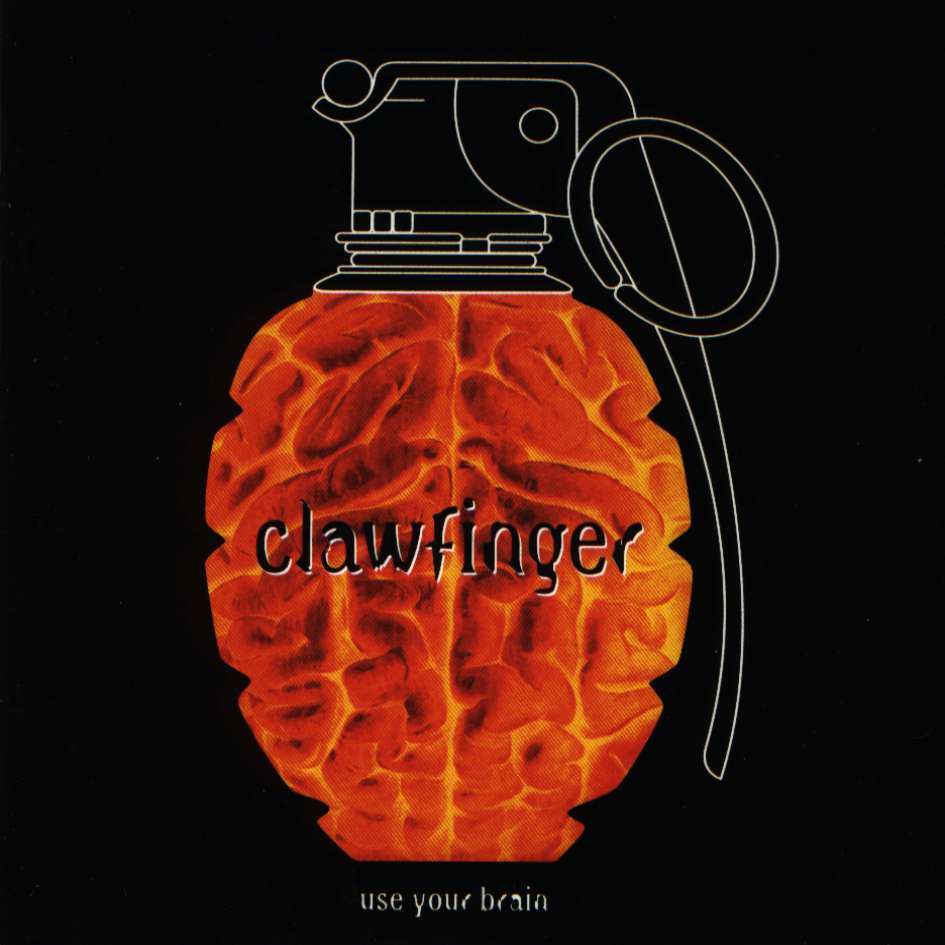
ClawfingerThe next song is called Wipe My Ass, a good example of how the band was able to unite Rap and Metal in a very solid way. The only thing I don’t understand is why sometimes I find this song with a different name, “Waste My Time”. Well, it’s probably due to the “beautiful” expression used in the original name, but honestly, who cares about that? Anyway, the next two tracks, Die High and It, are just average songs, especially the second one which is quite bland compared to the rest of the album. Fortunately the next song, called Do What I Say, takes the album back on track with its simple but strong riffs and amazing lyrics about the emotional and sometimes physical (and endless) war between parents and their kids, acidly declaimed by Zak Tell and his hostile vocals. I normally don’t add a huge chunk of any lyrics in my reviews, but this one is so good that deserves to be appreciated almost in full. Besides, although this song might have been recorded over 20 years ago, it still sounds fresh and contemporary, just to show you how parenting will never, ever be an easy task to anyone.

“I‘ve paid to raise you good
Done everything I could so don’t you dare to say
That I ever cared about you anyway
I gave you good food to eat
I kept you on your feet
I gave you all my good advice
Not once did I hear you
thank me for all that I’ve done
You don’t know anything
About my suffering
I went through a lot of pain
Just to get you where you are today
If I ever hit you
It’s because I have to
You have done something wrong
And you deserve the punishment, you’ll have to pay”

The rest of the album doesn’t have anything too special: Undone is considerably tasteless, while What Are You Afraid Of doesn’t do any good but at the same time it doesn’t harm the album. Things get a lot better with Back to the Basics, especially the eerie sound the band created with the guitars and keyboards working together; Easy Way Out with its addictive chorus and the groovy drums by Ottar Vigerstøl; and Tomorrow, a very good Rap Metal track that powerfully ends this very original and catchy album, with highlights to the rumbling sounds generated by Ottar and bassist André Skaug. In addition, the front cover is absolutely precise in summarizing the content of the music in the album (despite being fairly simplistic), and that “less is more” type of art is most probably the reason why I love it so much.

Use Your Brain_remastered

Use Your Brain 2004 Remastered Edition

The 2004 remastered version of the album also includes 3 bonus tracks and 3 bonus videos, so if you’re interested in buying it I suggest you go after the remastered one (which by the way is a lot easier to find in any webstore). Clawfinger released a statement around August 2013 saying they split up, which was a bummer at that time based on the quality of their music, but fortunately it seems those Swedish metallers are back in action and ready to deliver us another blast of their venomous music, going against the sea of boredom that dominates the scene nowadays. Hence, Use Your Brain (which can be enjoyed in its entirety HERE) is far from being a true masterpiece, but it’s an extremely enjoyable album with meaningful lyrics crafted by talented musicians and, above all, an excellent option to expand your horizons in the world of heavy music and a lot better choice than most of the crap the media makes us swallow every single day. In other words, use your goddamn brain at least once and enjoy the austere music by this unique band hailing from Sweden, alright?

Best moments of the album: Power, Pin Me Down, Do What I Say and Back to the Basics.

Worst moments of the album: It and Undone.

Released in 1995 WEA/MVG (Warner Music Group)

Track listing
1. Power 3:14
2. Pay the Bill 4:20
3. Pin Me Down 4:10
4. Wipe My Ass 3:13
5. Die High 2:34
6. It 5:21
7. Do What I Say 4:25
8. Undone 4:11
9. What Are You Afraid Of 3:47
10. Back to the Basics 2:27
11. Easy Way Out 2:39
12. Tomorrow 4:09

2004 Remastered Edition bonus tracks & videos
13. Better Than This 3:36
14. Three Good Riffs 3:56
15. Armageddon Down 3:36
16. Pin Me Down (Video Clip) 4:10
17. Tomorrow (Video Clip) 4:09
18. Do What I Say (Video Clip) 4:25

Band members
Zak Tell – lead vocals
Jocke Skog – keyboards, vocals
Erlend Ottem – lead guitar
Bård Torstensen – rhythm guitar
André Skaug – bass
Ottar Vigerstøl – drums

Album Review – Himiltungl / Öden (2017)

An unconventional album by three high-skilled musicians who want to share their inner Swedish darkness with others through their haunting mix of Black and Viking Metal with folk melodies from the deep forests of Jamtland.

Rating5

cover-digitalFormed in 2013 in Gothenburg, the second-largest city in Sweden and the fifth-largest in the Nordic countries, and inspired by the traditional Folk, Viking and Black Metal creations by bands like Týr, Vintersorg and Woods of Ypres, Folk Metal band Himiltungl (which means “the fucking moon” in ancient Swedish) weaves a haunting mix of Black and Viking Metal with folk melodies from the deep forests of Jamtland, a historical province in the center of Sweden. The band consists of three high-skilled musicians who want to share their inner Swedish darkness with others, and in that way invoke a sense of dread, joy and wonder, primarily singing in Swedish and Jamtlandic with lyrics conflictingly revolving around the majesty of nature interspersed with reflections on the terminality of life and death.

If all that explanation doesn’t make a lot of sense to you, simply hit play and enjoy the music found in Öden (which translates to “fates”), the long awaited follow-up to their debut album Svart Ravin, from 2013, telling stories of blood, loss and tragic ends while continuing to explore the folk-inspired path that was initiated with their first album, always moving towards heavier and more progressive sounds. Each song will sound completely different to your ears, sometimes bursting with anger and aggressiveness, sometimes being as smooth as the sound of a placid lake, and that’s exactly what Himiltungl wants you to feel while listening to Öden. This is not your average Folk Metal album, so you better sharpen your senses for the freakish amalgamation of sounds and emotions found in Öden in order to understand what the Folk Metal by Himiltungl truly means.

In Myrens Gäst, the trio starts blasting their dark music with folk elements from the very beginning, with the somber vocals by Jens being complemented by the also melancholic voice by Magnus. It’s quite difficult to label this as only one subgenre of heavy music, but I would personally say it sounds like some sort of “Melodic Dark Folk Metal”. Anyway, in The Dying War, one of the few songs in English from the album, Jens and his hellish gnarls perfectly fit the unusual and modern Folk Metal instrumental, with drummer Mattias bringing the necessary groove and progressiveness to the musicality. And Skogstokig brings forward Scandinavian guitar lines and minstrel-like vocals in a very traditional folk way, with its last part getting more metallic with potent riffs and beats alternating with harmonious vocalizations.

Paying homage to their tribal roots, the band offers the listener Eldsjäl, a touching blend of Folk Metal and ancient soundings where both Jens and Magnus deliver passionate performances on vocals, with some harsher moments to spice up the final result; followed by Shadows Crowd, their most contemporary composition, getting closer to Blackened Folk Metal. Mattias and Magnus craft the base to this melancholic and powerful chant with their beats and bass lines, while Jens once again delivers solid vocal lines throughout the entire song. In Kung Jorum a melancholic intro flows into heavier traditional music with all folk elements sounding crystal clear, also presenting interesting acoustic passages, whereas in Cerebration Gate an inspiring beginning quickly morphs into a mid-tempo Folk Metal hymn, presenting raspier gnarls by Jens and heavier guitar lines. This is in my opinion one of the best songs of the album, showcasing an effective combination of progressiveness and feeling.

himiltungl_oden-42

Photo by Paul Wennerholm – http://paulwennerholm.com/

In Tångsal, a song made to be played and sung around the fire pit, Jens grasps the song’s lyrics like a demonic entity while the instrumental parts feel like a blend of Folk and Pagan Metal with hints of Black Metal, before Sökaren brings forward medieval and folk elements added to its heavy and electrified guitars, with the backing vocals as well as the precise drumming by Mattias elevating the overall quality of the song. And Glöd, their most complex aria and the longest of all tracks at almost nine minutes, displays over two minutes of distorted noises before the music reaches its final shape and tone. Moreover, when the guitar by Jens gets heavier than usual, the song gets a lot more obscure and impactful.

Urmoder not only has an excellent pace and intensity, but the symphonic elements present in it also bring more darkness to the overall musicality, with all band members delivering a precise performance (in special Mattias with his potent and rhythmic beats) in what’s one of the most gripping of all songs. Ivolin, another blast of Folk and Pagan Metal, proves that when Himiltungl craft their modern and heavy version of minstrel-like music they effectively reflect their core essence and their inspirations; and in the introspective Hatarens Sång, minimalist guitar sounds generate the ambience for Jens and his bandmates to tell a story through their grim vocals, with all instruments being progressively added to the music for a climatic ending.

After listening to the multilayered Öden, available on iTunes and on Amazon, you’ll certainly agree with what I said in the beginning of this review about how difficult it is to label the music by this up-and-coming Swedish trio. You can definitely try giving a name or definition to their music, by studying more about the band and their creations through their Facebook page, YouTube channel, BandCamp and SoundCloud. As previously mentioned, I like to call their music as “Melodic Dark Folk Metal”, simply because it is indeed very melodic, constantly dark and always folk, but anything I say won’t be enough to describe their unconventional canticles.

Best moments of the album: Shadows Crowd, Cerebration Gate and Urmoder.

Worst moments of the album: Kung Jorum.

Released in 2017 Independent

Track listing
1. Myrens Gäst 6:32
2. The Dying War 3:10
3. Skogstokig 3:34
4. Eldsjäl 5:22
5. Shadows Crowd 4:41
6. Kung Jorum 7:18
7. Cerebration Gate 5:32
8. Tångsal 3:09
9. Sökaren 3:44
10. Glöd 8:55
11. Urmoder 3:58
12. Ivolin 4:03
13. Hatarens Sång 3:25

Band members
Jens – vocals, guitars
Magnus – bass, vocals
Mattias – drums

Album Review – Circle Of Indifference / Welcome To War (2016)

A solid album by a multi-cultural band that invites us all to go to war to the sound of their sharp Melodic Death Metal.

Rating5

CIRCLE OF INDIFFERENCE - Welcome to War cover artAfter listening to the brand new concept album by Melodic Death Metal band Circle Of Indifference, entitled Welcome To War, you might not believe in what I’m going to say about this interesting project recommended for fans of bands like Death and Carcass. Founded in 2013 by Swedish multi-instrumentalist Dagfinn Övstrud in the city of Hönö, Sweden, and having already released their debut album Shadows of Light, in 2014, Circle Of Indifference are a band where none of its members have ever met in person. I’m not joking. Apart from the band’s mastermind Dagfinn on guitars, bass and additional keyboards, Circle Of Indifference are Brandon L. Polaris on vocals directly from Belgium, Tyler Teeple on lead guitars representing Canada, and Kostas Vassilakis, a member of Progressive Death/Thrash Metal band Infravision, from Greece, on keyboards and drums. They use the Internet to communicate with each other, share their thoughts and ideas, record their separate parts in their respective homes, and everything is put together at the end of the recording process.

And although those four metallers are distant around 12,000km from each other in total, the final result is really good, sounding a lot more organic than many regular bands I know. The concept of the album, which presents the lives of two soldiers in World War II on either side of the conflict, starting from their enlistment at the early stages up until they come face to face during a battle at the end, helped the band members to stay focused and follow the same path while writing their parts of the music. The beautiful and melancholic cover art by Turkish digital artist and musician Aybars Altay, who resides in Germany and has already worked with another one of the bands reviewed at The Headbanging Moose (the excellent Norwegian Progressive Death/Black Metal act Maahlas), complements the intensity of the music in Welcome To War, putting a “face” to the story told by Dagfinn and his multi-cultural army.

Without further ado, it’s time to head to the battlefield to the sound of Conscription, bringing forward the heaviness of traditional Death Metal with the modernized atmosphere of Melodic Death Metal, not to mention how perfectly guitar riffs and keyboards complement each other. It’s a bit odd the name of the following song, Einbehrufung (Conscription), is the German translation for the title of the opening track, with its warlike ambience “torturing” the souls of the two main characters. In addition, the growls by Brandon L. Polaris lean towards old school Death Metal, reminding me of the vocals by Johnny Hedlund (Unleashed). Then a gloomy intro kicks off From This I Depart, before the amazing guitars lines by Dagfinn and the progressive drumming by Kostas suddenly fill all spaces in the music, getting more melodic than both previous tracks.

CIRCLE OF INDIFFERENCE band photoThe storyline gets more and more exciting as it progresses, with the kick-ass Menschenmörder (Murderer Of Man), one of the most exciting moments of the album, also presenting a dark intro that evolves to a modern and heavy chant. Furthermore, the guitars by Dagfinn transpire electricity, effectively supporting the song’s lyrics about the torments inside the mind of a soldier (“Inside, a sea of mixed emotions that I still hide / I cannot show them what I really feel / Outside, I wear a mask of brutal terror untied / I cannot show them what I really feel / Inside”). The title-track Welcome To War begins by blasting some loud shots and explosions, giving the sense that we’re in the middle of a battle, with its straightforward Melodic Death Metal sounding working extremely well.  In other words, Circle Of Indifference keep it simple and the final result is awesome, with highlights to the additional layers brought forth by keyboards and backing vocals.

In Kein Entkommen (No Escape), which presents a solid mix of harsh growls and clean vocals, Kostas maintains the energy at a high level with his unstoppable beats, while Tyler, who is beyond superb with all his guitar solos throughout the entire album, might have reached a new level of finesse in this tune. The second to last war anthem by Circle Of Indifference, named Veil Of Despair, offers a more modernized approach than usual, while yet again another great duo of guitars and keyboards lead the musicality. Moreover, Brandon’s voice sounds more polished in this case, maybe due to the song’s sharper sonority, therefore expanding the sonic range of the band. The last track, Ein Akt Der Güte (An Act Of Kindness), is obviously an epic conclusion to the story told so far, with the exciting keyboards by Kostas once again adding fire to the music, as well as the mesmerizing riffs by Dagfinn. The lyrics to the song couldn’t be more realistic, with Brandon declaiming a soldier’s final words full of sorrow and anger (“As I rest against the wall / I take a breath and close my eyes / The British soldier takes my hand / I feel at peace it’s time to die / It’s time to die”).

As previously mentioned, how they managed to be so concise even with each band member being located in distinct parts of the world is beyond my knowledge, but that’s absolutely irrelevant when the final product sounds as compelling as Welcome To War. This is another great example of how heavy music unites us all, no matter where we come from, and if you want to know more about Circle Of Indifference go check their Facebook page, YouTube channel (where the full album is available for a listen) and SoundCloud page, with Welcome To War being on sale at the band’s BandCamp page, on iTunes and on Amazon. I guess their only “problem” right now might be finding a way to get together for live performances, because if there’s one thing that those gigantic distances didn’t stop those guys from doing was creating powerful and dynamic Melodic Death Metal.

Best moments of the album: Menschenmörder (Murderer Of Man), Welcome To War and Ein Akt Der Güte (An Act Of Kindness).

Worst moments of the album: Einbehrufung (Conscription).

Released in 2016 Records Of Indifference

Track listing
1. Conscription 4:33
2. Einbehrufung (Conscription) 5:26
3. From This I Depart 5:35
4. Menschenmörder (Murderer Of Man) 5:05
5. Welcome To War 6:28
6. Kein Entkommen (No Escape) 4:22
7. Veil Of Despair 5:04
8. Ein Akt Der Güte (An Act Of Kindness) 7:45

Band members
Brandon L. Polaris – vocals
Dagfinn Övstrud – guitars, bass, additional keyboards
Tyler Teeple – guitar solos
Kostas Vassilakis – keyboards, drums

Album Review – Pyramido / Vatten (2016)

Dive into the troubled waters of Swedish Sludge and Doom Metal and feel all its heaviness, sorrow and insanity flowing through your veins.

Rating5

Pyramido-Vatten CoverVatten, the brand new album by Swedish Sludge/Doom Metal act Pyramido, is one of those albums that will twist your mind with its eerie noises, heaviness and growls (exclusively in Swedish), whereas at the same time will make you feel really good while listening to it. You’ll be introduced to a different music perspective in Vatten, something only bands from places like Scandinavia, where creativity is a core piece of people’s lives, are capable of doing. And although the name of the album means “water” in Swedish (not to mention that among their previous releases there are albums called Salt and Sand), this is not a concept album about water nor part of any “trilogy” about the elements.

This is not only the fourth full-length album in the already solid career by this Malmö-based five-piece band formed in 2006, but a step further in terms of melodies, complexity and feeling. Moreover, it’s quite interesting to see the contrast between the serenity found in the artwork designed by Swedish artist Anna Widengård together with lead singer Ronnie Källback and all the sonic turmoil engendered by Pyramido, therefore enhancing our senses as the music progresses. With that said, are you ready to swim in troubled Swedish waters?

Feel the thunderous sound of the old school Doom Metal bass guitar by Dan Widing, while guitarists Henrik Wendel and Dan Hedlund alternate between Black Metal riffs and sludgy and obscure Stoner Metal lines in the opening track, entitled En Linje i Sanden (“a line in the sand”), where albeit most of us won’t understand a word from its Swedish lyrics we can still have a lot of fun with the deranged screams by Ronnie. In Att Bida Sin Tid (“to bide his time”), sorrow and darkness grow through the steady and heavy beats by Sticky Manchester, which are effectively complemented by the song’s melodic guitars while Ronnie gets even more anguished on vocals (and that anger and hopelessness goes on until the end of the song for our total delight).

Pyramido av Fredrik Hylten-CavalliusTempus (“tense”) brings forward the metallic bass lines by Dan and an introspective feeling, being absolutely sluggish and perfect for breaking your neck while headbanging in solitude. Furthermore, a huge amount of despair and pain flows from Ronnie’s wicked growls, supported by the soulful guitars by Henrik and Dan. And there’s no hope in sight based on the resonant Doom Metal crafted by Pyramido, gathering elements from masters of doom like Celtic Frost and Black Sabbath and delivering an infernal hymn entitled Aktion (“action”) that will certainly please all fans of the genre. I love the main riff of this song, keeping up with the legacy from the aforementioned iconic bands and turning this into the best of all tracks in Vatten.

As one last shot of Pyramido’s addictive and sorrowful Stoner Metal we have En Rak Linje (“a straight line”), where the work on the guitars is once again superb and increases the song’s melancholy. In addition, the break at around three minutes brings a little peace to our minds before Ronnie comes back with his desperate growling, until the song reaches its somber but smooth conclusion in this 8-minute salutation to all things Doom Metal.

No matter how much you enjoy Sludge and Doom Metal, you have to experience listening to the music by Pyramido at least once to truly understand what this dark subgenre of heavy music is all about. And if you’re already a longtime fan of the sluggish and low-tuned heaviness found in the music by bands like Pyramido, you can purchase Vatten at the band’s official BandCamp page, and also at the Halo of Flies’ BandCamp page or webshop. As soon as you have Vatten on your hands, simply dive into its troubled waters of Sludge and Doom Metal to feel all its heaviness, sorrow and insanity flowing through your veins.

Best moments of the album: Aktion.

Worst moments of the album: None.

Released in 2016 Halo of Flies

Track listing
1. En Linje i Sanden 7:32
2. Att Bida Sin Tid 6:50
3. Tempus 6:49
4. Aktion 8:14
5. En Rak Linje 8:15

Band members
Ronnie Källback – vocals
Henrik Wendel – guitar
Dan Hedlund – guitar
Dan Widing – bass
Sticky Manchester – drums