Album Review – Moonspell / 1755 (2017)

An orchestral and emotional concept album sang completely in Portuguese that will take you to the year of the horror when a giant earthquake destroyed the city of Lisbon.

The year of 1755 marks the year of the horror when a giant earthquake destroyed the city of Lisbon, when almost 100 thousand souls lost their lives, and this tragic event is still considered one of the most disastrous catastrophes in European history and nature. Now in 2017, in remembrance of the victims and the band’s hometown, the 1755 Lisbon earthquake was turned into a vicious, rip-roaring concept album straightforwardly titled 1755, the twelfth full-length studio release by Portuguese Dark Metal masters Moonspell, an orchestral and emotional adventure sang completely in Portuguese (which gives the whole album an additional poetic touch) that will transport your mind and soul to November 1, 1755, the holy day of All Saints’ Day and the day that the earth shook like never before in Lisbon.

There are a few remarkable differences between 1755 and Moonspell’s latest releases such as Night Eternal, Alpha Noir/Omega White and especially Extinct, as the band “distanced” themselves a little from the more Gothic and melodic approach from the past decade to venture through the realms of symphonic and epic sounds, and the final result couldn’t be more breathtaking. Featuring a lavish artwork by Portuguese artist João Diogo (Dramafall), 1755 might not be an easy listen at first for newcomers to the world of Moonspell or even to longtime fans of the band who don’t know a single word in Portuguese, but the final result is so compelling, sharp and cohesive I’m sure the whole album will grow on you until it becomes a mandatory part of your day-to-day playlist.

When I first saw the tracklist for 1755 I asked myself why they added one of their old songs as the opening track of the album, but after hitting play everything made sense. Em Nome Do Medo (or “in the name of fear”) is an obscure, haunting and absolutely awesome orchestral version for their biggest classic sung in Portuguese, from their 2012 album Alpha Noir/Omega White (take a listen at the original version HERE), with highlights to the superb job done by guest musician Jon Phipps (who actually created the orchestrations for the whole album) and the insanely beautiful choir (comprised of the amazing Crystal Mountain Singers and Tristania’s own Mariangela Dermutas) that accompanies frontman Fernando Ribeiro and his piercing vocals, and that epic aura of darkness goes on in the title-track 1755, where keyboardist Pedro Paixão delivers as usual some insane keys that complement the guitar sounds flawlessly. And what to say about Ricardo Amorim’s souful guitar solo? Put differently, I simply can’t wait to witness Moonspell playing this metallic opera live. And leaning towards a more metallic, rockin’ vein we have the threatening In Tremor Dei (or “fear Of God”), presenting the band’s characteristic Dark Metal with Fernando being beautifully supported by guest vocalist Paulo Bragança (who supplies the trenchant voice of a Fado fallen angel who is a big part of the Portuguese culture), with the song’s lyrics perfectly depicting the fire, wreckage, despair and death that took over Lisbon that day.

Desastre (the Portuguese word for “disaster”) gets closer to what the band did in Night Eternal, with Fernando’s growls sounding deeper and more enraged as he screams the word “culpado” (or “guilty” in English) with all his fury. Furthermore, the beats by drummer Miguel Gaspar will hit you hard inside your mind, showing how acute the entire album is. Then orchestral elements shine in another great display of Dark Metal blended with classical music titled Abanão (which means “quake” or “shakeup”), where Pedro once again boosts the song’s epicness with his keyboards while Miguel and bassist Aires Pereira live up to the song’s name with their rumbling beats and bass punches, respectively; followed by Evento (or “event”), where Moonspell keep blending their own sonority from Night Eternal with Memorial and more intense elements from orchestral music, not to mention how its lyrics showcase the thin line between love and hate people experience with religion. It’s another one of the top moments of the album, and needless to say it should also sound fantastic if played live. And 1 De Novembro (or “1st of November”), in reference to the day the earthquake happened, brings forward a more contemporary version of Moonspell where Fernando’s voice sounds considerably different than usual and where tons of heaviness and epicness arise due to the excellent job done by Pedro and Miguel on keys and drums.

1755 Deluxe Box

Then infused with modern Gothic and Dark Metal similar to what they did in the darkest and most melancholic tracks of Alpha Noir/Omega White, but with an epic twist, Ruínas (or “ruins”) displays an 80’s-inspired rhythm where the bass lines by Aires sound ominous, with its lyrics passionately declaimed by Fernando transmitting a true sense of hopelessness, setting the tone for Todos Os Santos (or “all saints”), one of the strongest tracks of the album and the musical depiction of the eternal war between men and God. Its thrilling guitars combined with the powerful vocals by Fernando and its thunderous backing vocals result in top-notch Moonspell music, also presenting a catchy-as-hell chorus (even if you don’t know anything in Potuguese) in a beyond perfect closing to such sad and important event in the history of Portugal. As a matter of fact, there’s still one more song in the regular version of the album, their cover version for Brazilian rock band Os Paralamas do Sucesso’s hit Lanterna Dos Afogados (listen to the original song HERE), feeling more like a “bonus” than a regular track and sounding very somber, melancholic and touching, with Fernando giving a lesson in dark vocals. Moreover, if you go with any of the special editions of 1755, you’ll also be treated to the Spanish version of Desastre, which according to Moonspell themselves is a homage to all their Spanish-speaking fans around the world, as in the late 18th century a mixture of Spanish and Portuguese was spoken in the streets of Lisbon.

What Moonspell did in 1755, turning all devastation, death and grief from the 1755 Lisbon earthquake into first-class art, is not only terrific musically speaking, but it also proves that the human being is capable of finding beauty even in the most adverse moments, and I guess that’s some sort of subliminal message the band wanted to send us all with this excellent album. With that said, go grab your favorite version of 1755 at the Napalm Records webshop, or at the band’s own BandCamp page or official European webstore, and learn more about one of the saddest and most terrifying day in the history of Portugal. 1755 might be known as the year of the horror, as the year when God abandoned the people of Lisbon, but at least we have Moonspell to properly tell that grim story to us all and to soothe our hearts and souls forevermore with their undisputed Dark Metal.

Best moments of the album: 1755, In Tremor Dei, Evento and Todos Os Santos.

Worst moments of the album: None.

Released in 2017 Napalm Records

Track listing
1. Em Nome Do Medo 5:32
2. 1755 5:12
3. In Tremor Dei 4:26
4. Desastre 3:22
5. Abanão 4:08
6. Evento 4:43
7. 1 De Novembro 3:53
8. Ruínas 4:45
9. Todos Os Santos 5:10
10. Lanterna Dos Afogados (Os Paralamas do Sucesso cover) 6:30

Deluxe Box/Digipak/Limited Edition/Japanese Edition bonus track
11. Desastre (Spanish Version) 3:36

Band members
Fernando Ribeiro – vocals
Ricardo Amorim – guitars
Pedro Paixão – keyboards, guitars
Aires Pereira – bass
Miguel Gaspar – drums

Guest musicians
Jon Phipps – orchestrations
Paulo Bragança – vocals on “In Tremor Dei”
Martin Lopez – darbuka in “1755”
Crystal Mountain Singers (Carmen Simões, Alexandra Bernardo, Silvia Guerreiro) and Mariangela Dermutas – choirs

Album Review – Biesy / Noc Lekkich Obyczajów (2017)

Enjoy this concept album about how urban life can separate us from reality and how at the same time it gives us freedom to cross its boundaries, all enfolded by first-class blackened music made in Poland.

“Biesy were born out of everyday working, urban and monotonous realities. The project explores how urban concrete life can separate you from reality, but at the same time enables you to cross its borders. This is not the place for faith – there is no time nor will. During the night people go astray and willingly drown among the masses on the streets. In the morning they fall down to create a passage for everything that is wonderfully common and hideously sincere. However, it is not certain if they even left the room.”

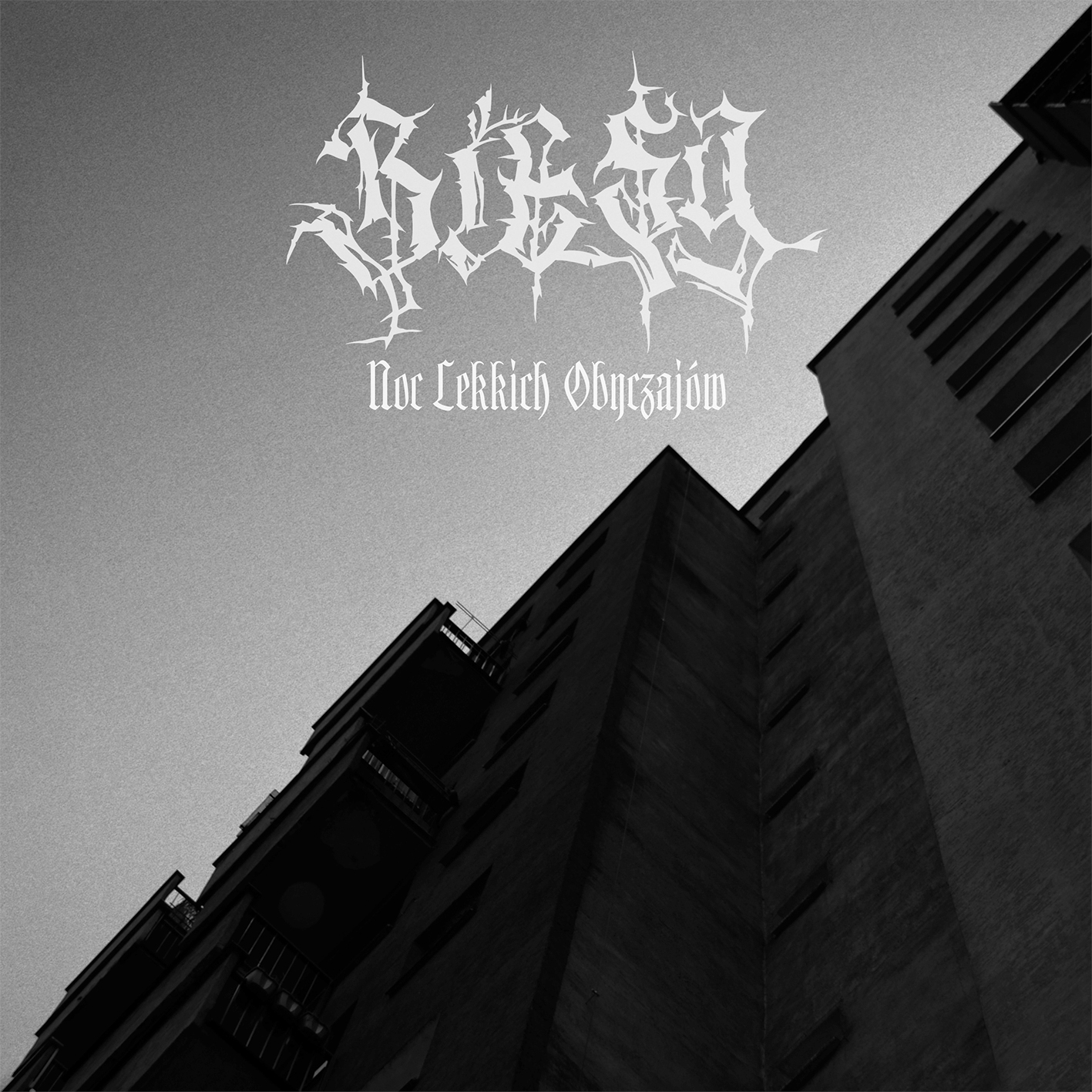
Those poetic words work as a classy introduction to the core essence of Black/Death Metal act Biesy, a brand new project formed in 2014 in Cracow, Poland by lead singer Stawrogin, guitarist, bassist, songwriter and lyricist PR, and drummer Maciej Pelczar. Biesy translates to “fiends” or “demons” from Polish, and from that you can imagine how dark their music should sound in their debut full-length release Noc Lekkich Obyczajów, or “night of weak morals” in English, a concept album about how urban life can separate us from reality and how at the same time it gives us freedom to cross its boundaries, as mentioned above, all enfolded by an ominous and depressive form of extreme music not recommended for the lighthearted. Add to that the concrete gray layout designed by PR himself together with Mentalporn, the menacing logo created by Ihasan, and the fact that all songs are entirely sung (or maybe I should say growled or gnarled) in Polish, and there you have a distinct, full-bodied Extreme Metal ode to everything we love and hate in our concrete jungles.

In the opening track, titled Każdego Dnia (which should translate as “every day”), ominous sounds grow in intensity until the music morphs into the most vile form of Blackened Doom you can think of, with Stawrogin sounding truly demonic on vocals while PR does an amazing job with his mesmerizing guitar lines, resulting in a cold and beautiful display of extreme music that darkly flows into a climatic ending. In W Krew (which should mean something like “in blood”), the power trio switches to a more demolishing mode, blasting a Stygian fusion of Black and Death Metal led by Maciej, who showcases all his skills by delivering both rhythmic and sluggish punches as well as infernal blast beats. In the end, it becomes impossible not to have your heart darkened by this superb hymn. And it seems like peace and happiness are definitely two items you won’t find in the music by Biesy, which is exactly the case in Powroty (or “returns” in English), even more doomed than the two previous songs and with the vociferations by Stawrogin being extremely menacing. Put differently, it’s unhappy, melancholic and visceral Blackened Doom tailored for headbanging until you crack your neck in half.

The second batch of somber sounds by Biesy begins with Czerń Nas Prosi (or “blackness calls us”), the shortest of all tracks, feeling like a satanic invocation with Maciej firing some traditional Doom Metal beats while PR sounds hellish on both guitar and bass, not to mention Stawrogin’s evil gnarls; followed by Rzucony W Przestrzeń (which translates as “thrown into space”), the longest and most obscure of all songs, starting with a deep, enraged roar by Stawrogin. Not only this is a lesson in Extreme Metal where PR is insanely dark on guitars, but its heaviness keeps growing and growing until after around four minutes there’s a creepy intermission that goes on for another four minutes until the trio returns with all their fury and malignancy, with the vocal parts getting more deranged and evil, ending in the most obscure way possible. And if you think you’re safe from Biesy after all that darkness, you’re absolutely wrong, as they have one final onslaught of Black, Death and Doom Metal to disturb your mind and soul, the title-track Noc Lekkich Obyczajów, where Maciej takes his already devilish drumming to a whole new level of dementia accompanied by the lancinating riffs by PR. This fantastic album of extreme music couldn’t have ended in a better way than this, I must say.

In summary, it doesn’t matter if you speak fluent Polish or if you don’t know a single word in this distinct language, Noc Lekkich Obyczajów (which is available for a full stream on YouTube) is definitely worth a shot. What Biesy did in the entire album, uniting the aggressive and damned sounds of Death, Black and Doom Metal with the disorders and unpredictability of life in the city in a sharp and bold manner, deserves our total recognition and respect. You can buy your copy of Noc Lekkich Obyczajów on BandCamp, at the Third Eye Temple webshop or at Discogs, and after finally having the album on your hands, you can add the perfect soundtrack to spend your deranged nights in the city.

Best moments of the album: W Krew and Noc Lekkich Obyczajów.

Worst moments of the album: None.

Released in 2017 Third Eye Temple

Track listing
1. Każdego Dnia 5:08
2. W Krew 6:38
3. Powroty 7:06
4. Czerń Nas Prosi 3:51
5. Rzucony W Przestrzeń 11:29
6. Noc Lekkich Obyczajów 7:59

Band members
Stawrogin – vocals
PR – guitars, bass
Maciej Pelczar – drums

Album Review – Motograter / Desolation (2017)

Get “motograted” by the thrilling fusion of Alternative Metal and Hard Rock blasted by this tenacious American outfit.

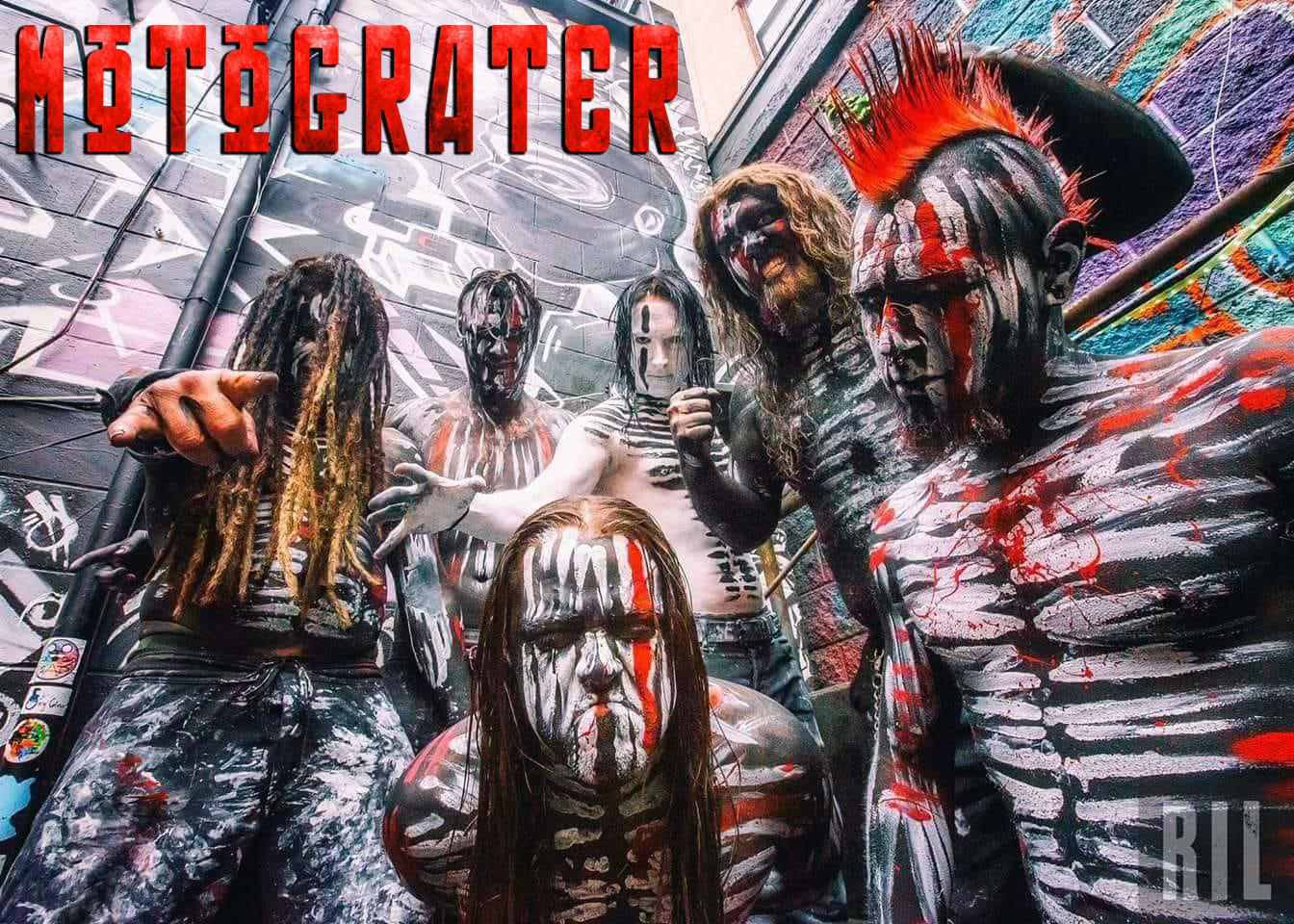
Do you know what a “motograter” is? If you’re familiar with the fusion of Alternative Metal, Heavy Metal and Hard Rock crafted by a relentless American squad known as Motograter, you already known that the “motograter” is a homemade musical instrument designed with industrial cable and guitar pieces that creates a unique bass sound, and by that you can imagine how thunderous their music sounds. Formed in 1995 in Santa Barbara, California, United States, the band (which by the way displays a tribal style body paint for their live concerts) has suffered considerable lineup changes and a few split-ups since their inception, but that didn’t stop the band from keeping on rocking, being reunited once again a few years ago and releasing this year their second full-length album after their 2003 debut self-titled release (featuring Ivan Moody from Five Finger Death Punch on vocals), the hard and heavy Desolation, now with James Legion (Deadform, The Breathing Process) on the vocal duties.

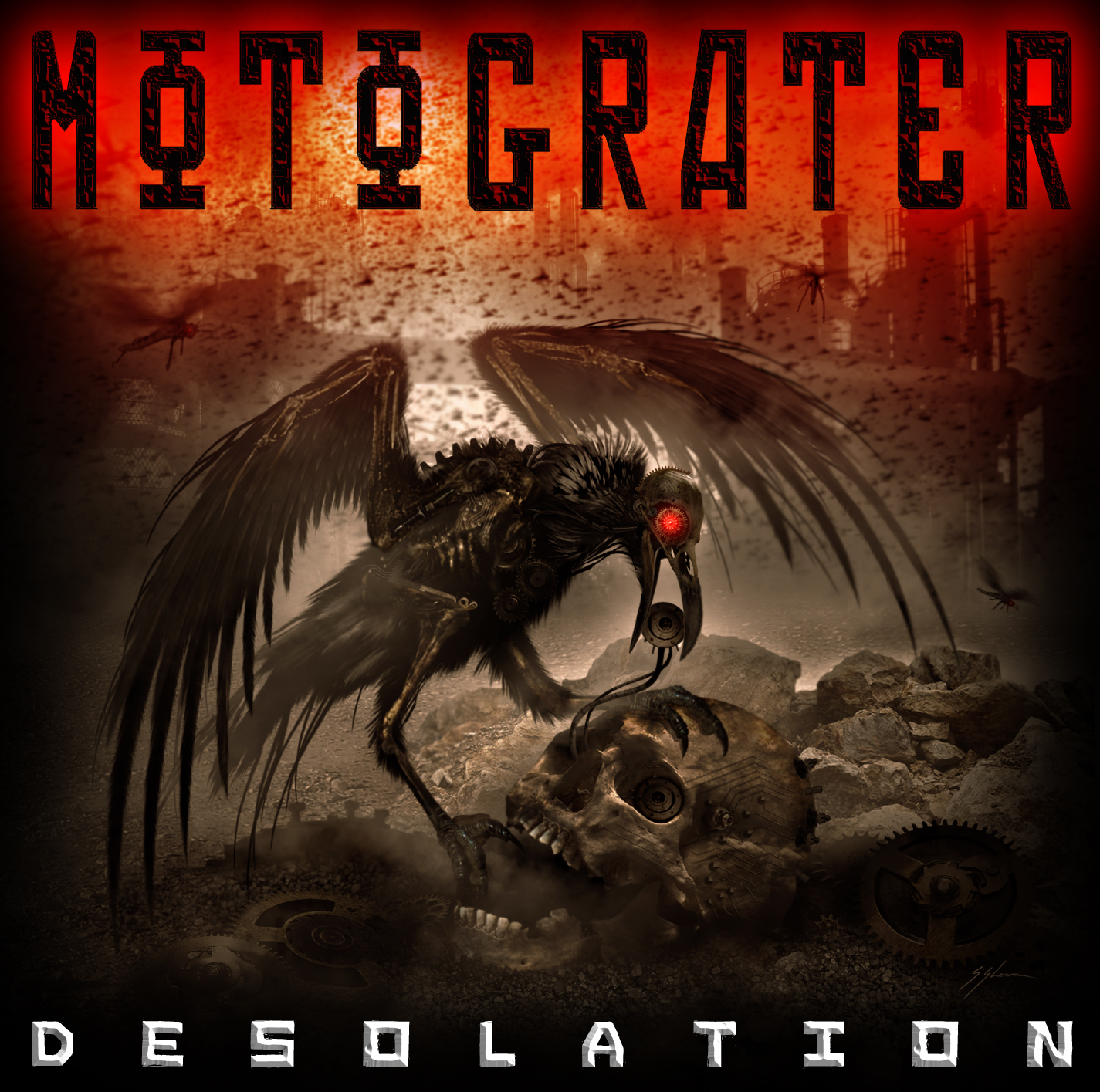
As aforementioned, the reinvigorated Motograter, comprised of the talented James Legion on vocals, Matthew “Nuke” Nunes and Jesse Stamper on guitars, Mylon Guy on bass, Noah “Shark” Robertson on drums and Dustin “Skunk” Anderson on the motograter, will hit you in the face with a feast of alternative and metallic sounds found in their new album, with the artwork designed by Mister-Sam Shearon (who has already worked with renowned bands such as Iron Maiden, Ministry, Rob Zombie and Rammstein, among several others, and also created covers for comic books and graphic novels including Clive Barker’s Hellraiser, Judge Dredd and The X-Files) effectively representing the energy and aggressiveness you’ll find throughout the entire album. With that said, are you ready to be “motograted” by this insane metal tribe?

You’ll experience modernity and electricity flowing from the very first second of the opening track Parasite, where Mylon, Noah and Dustin provide their welcome card in the form of thunderous and vibrant background sounds, giving all the necessary support for James to thrive with his vocals in an awesome blend of Hard Rock with Alternative and Nu Metal. Gripping guitar lines kick off another born-to-be-a-hit composition by Motograter, titled Dorian, with Matthew and Jesse slashing our ears with their riffs while Noah keeps the musicality as heavy as it can be with his pounding drums, not to mention the song’s completely addictive chorus that won’t leave your head for a few weeks; and their galvanized, rumbling sounds continue to permeate the atmosphere in Victim, another great sample of their contemporary Alternative Metal led by the ominous vocals by James.

In the excellent Paragon it becomes clear that those American metallers will never get tired of piercing our brains with their rumbling tones and roars, with the motograter going along really well with the song’s guitar riffs and the potent voice by James, being perfect for banging our heads nonstop together with the band due to its modern and thrilling rhythm. Slowing down a bit and sounding less metallic, Bleeding Through is a semi-ballad by this skillful sextet recommended for some radio play, albeit not as dynamic and fun as the rest of the album, followed by Misanthropical, which despite feeling like it’s going to be another ballad, it slowly morphs into an obscure metal chant with the motograter shaking the foundations of the earth, while the infernal duo Noah and Mylon continue to set fire to the music, and with the song’s guttural vocals adding some good amount of fury to the overall result. Daggers keeps the album at a great level of intricacy and stamina in an interesting mix of what’s almost a dark ballad with the heavier sounds of Alternative Metal, with Mathew and Jesse being fantastic on guitars, delivering both smoother and more electrified riffs during the whole song.

The last part of the album begins with Portrait of Decay, a hybrid of the more visceral music by Slipknot with the melody found in bands such as Alter Bridge, therefore becoming another strong candidate to become a radio favorite due to its catchy pace and vocals. Locust sounds and feels more aggressive than most of the album’s previous tracks, with Noah smashing his drums flawlessly while Mylon and Dustin make sure the music remains vibrant at all times (and let’s not forget about its harsh growls, one of the main ingredients that make this tune so amazing). Rise (There Will Be Blood), the second to last tune in Desolation, is one of those songs to jump up and down with the band during their live performances, bringing elements of more alternative bands like Linkin Park to their already potent sonority, followed by Shadows, a decent dark ballad that’s slightly below what Motograter can offer us despite the great job done by James on vocals. It’s still very enjoyable, though, especially if you’re into modern metal ballads.

In case you feel you’re more than ready to be “motograted” by Motograter, simply follow them on Facebook and listen to their music on YouTube or on Spotify. And if Desolation brings forward all you enjoy in modern metal music, you can buy your copy at the EMP Label Group webstore as a regular CD or as a CD + t-shirt bundle, as well as on iTunes, on Amazon or at Discogs. Not only Desolation has all elements needed to be a must-have album for admirers of contemporary Alternative Metal, but above all it will definitely help Motograter in solidifying their path in heavy music, and let’s hope the band’s lineup is finally stabilized once and for all and that they keep delivering high-end albums like this one for many years to come.

Best moments of the album: Parasite, Dorian, Paragon and Locust.

Worst moments of the album: Bleeding Through and Shadows.

Released in 2017 EMP Label Group

Track listing
1. Parasite 3:46
2. Dorian 3:46
3. Victim 3:30
4. Paragon 4:03
5. Bleeding Through 3:28
6. Misanthropical 3:41
7. Daggers 4:21
8. Portrait of Decay 3:35
9. Locust 3:42
10. Rise (There Will Be Blood) 3:40
11. Shadows 3:18

Band members
James Legion – vocals
Matthew “Nuke” Nunes – guitar
Jesse Stamper – guitar
Mylon Guy – bass
Noah “Shark” Robertson – drums
Dustin “Skunk” Anderson – motograter

Guest musicians
Aleksi Oksa – samples
Justin Fowler, Ahrue Luster & Jon Berrier – additional samples

Album Review – Eshtadur / Mother Gray (2017)

Overflowing rage, despair and electricity, the brand new album by this implacable Colombian act will certainly help the band cement their name in the Extreme Metal underground scene worldwide.

Formed in the fall of 2005 in Pereira, the capital city of the Colombian department of Risaralda, Melodic Death/Black Metal act Eshtadur has been on a roll since their inception, making a name for themselves in all four corners of the world with their unrelenting fusion of extreme sounds in the vein of bands such as At The Gates, Behemoth, Soilwork, Dimmu Borgir and Septicflesh, always adding imposing and symphonic elements to their music to make it even more impactful to our ears. For instance, the band has already toured Colombia, Peru and Mexico, they headlined a stage at Rock Al Parque (which is not only the largest rock festival in Colombia and one of the most important in Latin America, but also arguably the largest free rock festival in the continent) in 2016, and they’re getting ready for their first ever US dates and many other festival appearances in the coming months.

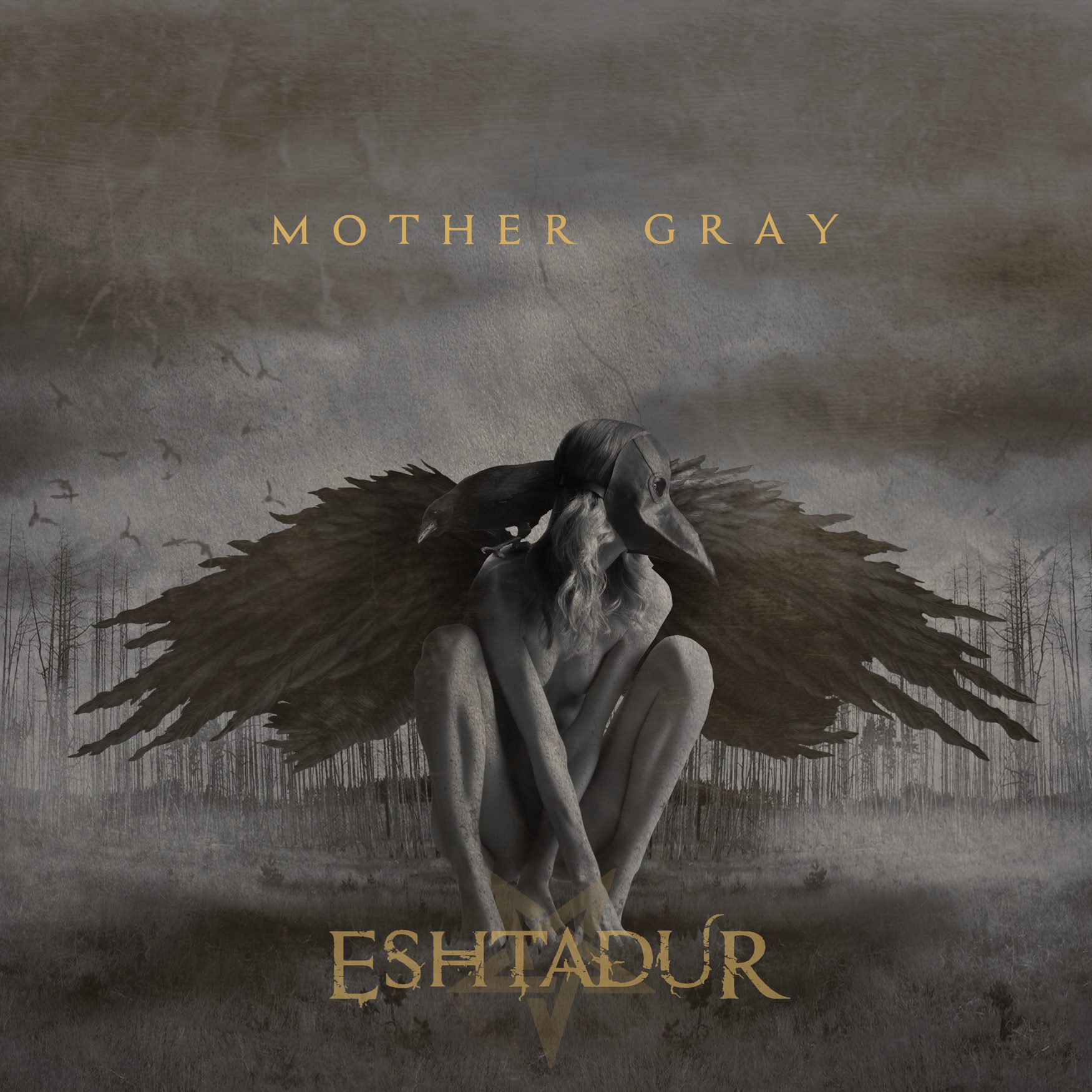
Having already released the full-length albums Dominated by Dummies, in 2011, and Stay Away from Evil and Get Close to Me, in 2013, as well as their debut demo Rebellion of Angels, in 2007, and the EP Oblivion, in 2015, the band comprised of Jorg August on vocals and guitars, Alejo Bet on guitars, Victor Valencia on bass and Mauro Marin on drums is effectively expanding their exposure to the metal scene worldwide with their third full-length installment, the excellent Mother Gray, featuring a classy artwork designed by French artist Sylvain (Razorimages), guest guitar solos by Christofer Malmström (Darkane), and an endless amount of electricity and rage flowing from all their instruments, all led by the desperate growls by Jorg.

The heavy and dark guitars by Jorg and Alejo ignite the aggressive opening track Belong To Nowhere, a high-end fusion of Symphonic Black Metal with Death and Melodic Death Metal where Mauro sounds possessed with his demonic blast beats while Jorg screams in a rabid and desperate manner throughout the entire song. Building an instant connection with the previous tune, Plaguemaker keeps the menacing aura crafted by the band even stronger, displaying a good balance of guitar lines, growls and potent drumming, while the keyboards in the background give it a Dimmu Borgir-inspired vibe; followed by the Melodic/Symphonic Metal aria Cornered At The Earth, where the band engages in their most sinister mode by deepening their growling and strengthening their beats, culminating in a violent and gripping rhythm boosted by its dark lyrics (“Gray the future and gray the earth / Dust in the soil, foil the religion / And the permanent conclusion of being the one who brings pest /Back to the world”). Whereas the Doom Metal-inspired Desolation brings forward a melancholic intro that slowly grows into an imposing sonority, as heavy and dense as it can be, with some faster moments to keep it fresh and vibrant. Moreover, the desperation flowing from the vocals is outstanding, going on and on until the song’s visceral ending to the sound of deep and putrid roars.

Getting back to a faster and more melodic sounding but still presenting the band’s characteristic symphonic elements, also showcasing fiery guitar riffs and solos as well as total havoc blasted by Mauro’s insane beats, the powerful Time Hole To Paris will certainly generate some sick mosh pits during their live concerts, while in March Of The Fallen we face an epic and somewhat funereal beginning to yet another ominous creation by Eshtadur, an eccentric “waltz” of Dark Metal with its keyboards and vocals taking the obscurity to a whole new level, again presenting more of those putrid gnarls before all is said and done. And as their “formula” seems to be one Stygian song followed by a sonic demolition, it’s time to speed things up again with the high-octane chant The Day After I Die, presenting slashing guitars blended with epic keys and rabid growls, without a single second of peace during its five minutes of sheer devastation.

As the first bonus track added by Eshtadur to Mother Gray, we have another symphonic extravaganza that will attack our senses named Heavens to The Ground (originally released in their 2015 EP Oblivion), with the guitars by Jorg and Alejo and the drumming by Mauro being in absolute sync, while the song’s keys make sure the atmosphere remains eerie for the otherworldly vociferations by Jorg.  The second bonus offered by the band is entitled Last Day Of The Condors, also from their EP Oblivion, sounding slightly similar to its predecessor (in special its guitar and vocal lines), not as tasty but still very enjoyable. And lastly we have a very cohesive, potent and fresh version they recorded in 2014 for Survivor’s hit Burning Heart (check out the original version HERE) featuring guest musicians Björn “Speed” Strid (Soilwork) and Christopher Clancy (Mutiny Within) on vocals, and Per Nilsson (Scar Symmetry) and Allan Marcus (Arecibo) on lead guitars. Survivor might be better known by the usual rocker for the all-time Rocky Balboa-classic “Eye of the Tiger”, but this song also represents all the passion Survivor had for rock music, not to mention this cover version is Eshtadur’s own tribute to Survivor’s longtime frontman Jimi Jamison (R.I.P.), who died of a heart attack in September 2014.

If you enjoyed all the fury blasted by Eshtadur in Mother Gray, I highly recommend you go check their Facebook page and YouTube channel for more of their kick-ass music, and if you want to purchase Mother Gray (which you can listen in its entirety on Spotify), you can grab your copy of the album at the Bleeding Music Records’ BandCamp, on iTunes, on Amazon, or at several other locations such as Barnes & Noble and ImportCDs. As mentioned in the beginning of this review, Mother Gray overflows rage, despair and energy, and as you’re more than aware of, those are some of the main elements which make us love Heavy Metal so much. In other words, Eshtadur nailed it with Mother Gray, surely making all metalheads in Colombia proud of their music.

Best moments of the album: Belong To Nowhere, Cornered At The Earth and Time Hole To Paris.

Worst moments of the album: None.

Released in 2017 Bleeding Music Records

Track listing
1. Belong To Nowhere 3:27
2. Plaguemaker 4:28
3. Cornered At The Earth 5:01
4. Desolation 6:50
5. Time Hole To Paris 5:21
6. March Of The Fallen 7:32
7. The Day After I Die 5:06

Oblivion/Burning Heart bonus tracks
8. Heavens to The Ground 3:26
9. Last Day Of The Condors 3:15
10. Burning Heart (Survivor cover) 4:33

Band members
Jorg August – vocals, guitars
Alejo Bet – guitars
Victor Valencia – bass
Mauro Marin – drums

Guest musician
Christofer Malmström – guitar solos

Album Review – Sinners Moon / Far Beyond The Stars EP (2017)

What are you waiting for to fly far beyond the stars with the brand new (and extremely fun) EP by this Symphonic Metal squad from Slovakia?

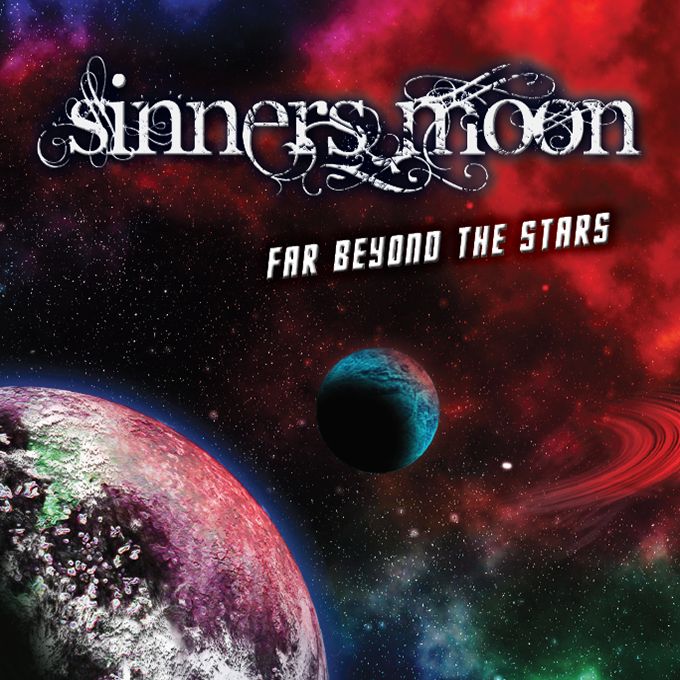
If you’re a fan of the music by bands such as Nightwish, Epica, Sonata Arctica, After Forever and Kamelot, among several others, you’ll be happy to know that an up-and-coming Symphonic Metal band hailing from Sereď, a town in southern Slovak Republic, is back with their imposing sounding in a brand new EP that not only lives up to the legacy of the genre, but that also offers some interesting variations and surprises that keep it truly entertaining from start to finish. I’m talking about Sinners Moon and their EP titled Far Beyond The Stars, another solid step in their recent but already exciting career and a highly recommended option for fans of the fusion of heavy music with operatic vocals and fantasy.

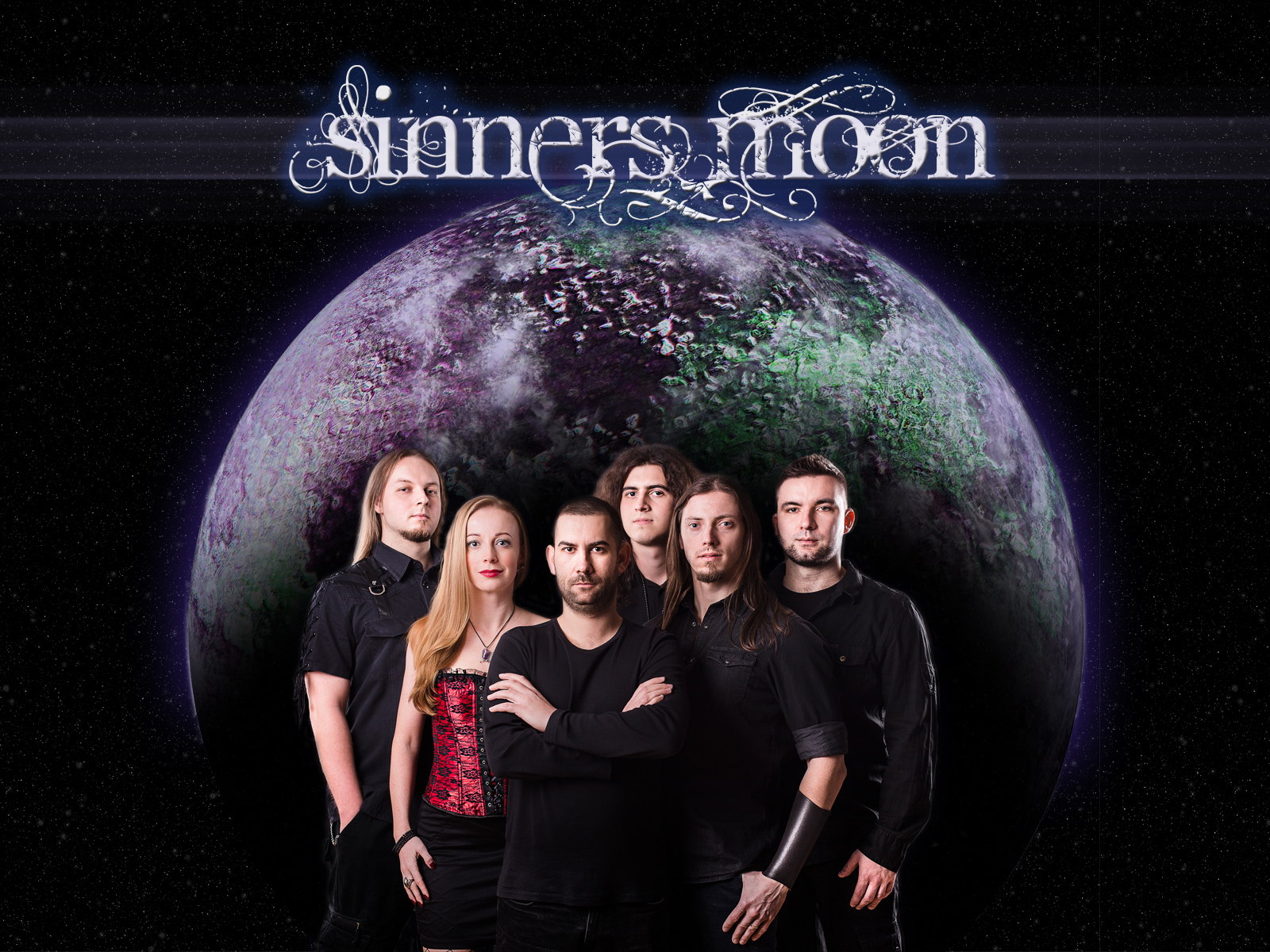
The fact the Sinners Moon managed to keep the exact same lineup (Simona and Derick on vocals, LukeN on guitars, Viktor on bass, Jarthuusen on keyboards and Jan on drums) that recorded their 2015 full-length opus Atlantis also helped the band in maintaining a high level of cohesiveness and dynamism in their new EP. As a matter of fact, one of the most complex songs in Atlantis, the 8-minute aria Fly to the Moon, works as the prequel to the music found in Far Beyond The Stars, proving LukeN and his bandmates are extremely focused when creating the music by Sinners Moon, always trying to give it a purpose and a soul.

The first half of the EP presents the trademark musicality by Sinners Moon, with their metal symphony permeating the air form the very first second in the intro Awakening (The Suite), creating the perfect ambience for the title-track Far Beyond The Stars, an electrifying fusion of Symphonic Metal with the more traditional version of Scandinavian Melodic Metal, where frontwoman Simona delivers her passionate and delicate vocal lines in contrast with Derick’s demonic gnarls. Moreover, LukeN is on fire with his guitar, making a flammable duo with Jarthuusen, and if you love Melodic Metal I’m sure you’ll feel energized by the song’s powerful lyrics (“Reach out your hand for the stars high above / We are hungry to find this world left aside / Please take me there we will fly to the moon / Far beyond all the stars we will touch them together”). Then in the awesome Travelers the rumbling bass by Viktor is quickly joined by Jarthuusen and LukeN, generating an amazing metallic vibe while Jan keeps the song’s pace at a thrilling level. In addition, the guitar riffs fired by LukeN provide Simona all she needs to declaim the song’s beautiful lyrics in a compelling way (“Dreams of love, dreams of life / Somewhere else we gain our hopes / With this heart and these hands / We will build a ourselves a new home / Never give up, never give in on our ways”).

After that blast of Symphonic Metal, the band brings forward two welcome surprises in Far Beyond The Stars, starting with their cover version for Skúsime To Cez Vesmír, which translates as “let’s try it through the universe”, by Slovak 80’s rock band Tublatanka (watch a vibrant live version of Tublatanka playing it in 1989 HERE). Sinners Moon added their own symphonic twist to this excellent rock song, with highlights to the amazing job done by Jan on drums as well as the electrified vocals by Simona. And the second treat of the EP is the opening track Far Beyond The Stars in a smooth and lovely piano-ballad version, with total focus on the beautiful voice of Simona, being the perfect soundtrack for being “captured” in a warm and comforting embrace by the person you love the most.

In summary, after all the epicness and imposing sounds found in Atlantis, it looks like Sinners Moon wanted to take an “alternative break” from all the seriousness that surrounded that album and show fans of heavy music a more relaxed side of the band, and let’s say they nailed it in Far Beyond The Stars, which can be purchased on BandCamp, at the Slovak Metal Army webstore or at Discogs. Also, don’t forget to visit the band’s Facebook page and YouTube channel for more of their top-tier metal music, and if you’re already addicted to their symphonic sounds you should definitely go for the deluxe digital version of the album, including a bonus demo track from their early days (before the lineup was even solidified) titled Dawn Of War, which by the way displays an above average overall production and a high-end sound quality for being just a demo, as well as few bonus featurettes including a special digital EP wallpaper, a digital booklet and a “thank you” note from the band. With that said, what are you waiting for to grab your copy of this fun EP and fly with Sinners Moon far beyond the stars?

Best moments of the album: Travelers and Skúsime To Cez Vesmír.

Worst moments of the album: None.

Released in 2017 Slovak Metal Army

Track listing
1. Awakening (The Suite) 1:42
2. Far Beyond The Stars 4:19
3. Travelers 4:10
4. Skúsime To Cez Vesmír (Tublatanka cover) 4:24
5. Far Beyond The Stars (Piano Version) 5:08

Deluxe Digital Version bonus track
6. Dawn Of War (2009 Demo Version) 5:47

Band members
Simona – vocals
Derick – growls
LukeN – guitars
Viktor – bass
Jarthuusen – keyboards
Jan – drums

Album Review – Rapheumets Well / Enders Door (2017)

Enjoy the third and final installment of the saga of the Atai in the form of a thirteen-song Sci-Fi opera of Symphonic and Progressive Black Metal.

After the releases of the first and second parts of a trilogy about the complex saga of the Atai (ancient architects), who aid in the propagation of sentient life throughout the multi-verse, those being the full length albums Dimensions, from 2014, and The Exile, from 2016, American Symphonic/Progressive Black Metal warriors Rapheumets Well return now in 2017 with the third and final installment of this musical saga, Enders Door, a thirteen-song science fantasy opera in the form of Symphonic Metal. Although this relentless North Carolina-based squad suffered a few lineup changes from their previous release, such as the departure of lead singer Tripp King (being replaced by the insanely talented growler Jeb Laird), their music remains bold, visceral and ominous, perfect to give a climatic ending to such compelling story.

And do you want to know what happens in Enders Door while the entire band is kicking some serious ass with their flammable instruments? Well, this is what Rapheumets Well will tell you: in the fifth era of the Avomenian Empire, amidst the planetary ruins of Vaath, a rogue traveler would discover an artifact that would forever change his place in the cosmos. Upon arriving to retrieve the artifact, it became apparent that Eryos’ brother Nathyiem would never make it to their arranged meeting point.  In departing from the planet Vaath, Eryos received a distress signal from his brother’s ship, coming from an uncharted planet.  Upon arriving, he found an odd world inhabited by a mysterious species called the Dreth led by lecherous matriarch named Eishar.  It is here that he would uncover a faced-door, an inter-dimensional gateway to the Ender.

In the opening track, titled The Traveler, we face an eerie, cinematic start to the album, transporting us to the world of Rapheumets Well by blending the finesse of keyboards and choir with devastating blast beats, before Jeb begins growling like a beast; followed by Distress on the Aberrant Planet, where the brutality led by the band’s mastermind Joshua “Nasaru” Ward on drums is effectively complemented by the keyboards by Annette Greene, while guitarists Brett Lee and Hunter Ross make sure they add the world “metal” to the music. The Autogenous Extinction offers the listener more demolishing, ominous sounds crafted by this unstoppable band, resulting in high-end Symphonic Black Metal with hints of Blackened Death Metal for admirers of the music by Dimmu Borgir and Behemoth, with Annette bringing balance to the sonic havoc with her smooth vocals. And in Secrets of the Demigods we’re treated to another great “duel” between Annette and Joshua, a true clash of delicate vocals and bestial beats, all embraced by a dark and dense background enhanced by classic guitar riffs and solos.

Then we have one of the longest and most complex of all tracks, Lechery Brought the Darkness, with its semi-acoustic intro suddenly exploding into sheer Symphonic Black Metal, with the paradox of voices between Annette with her angelic vocals and Jeb with his rabid gnarls sounding incredible from start to finish; and the title-track Enders Door, a fantastic tune showcasing a phantasmagorical background, extreme violence flowing form Joshua’s drums, and crushing guitar lines by both Brett and Hunter, perfectly depicting the traveler’s quest in the form of top-tier metal. In Prisoner of the Rift, they keep a menacing aura upon us with a fusion of Symphonic Metal with acoustic and even folk elements, creating a unique sonority led by the gentle voice of Annette, whereas The Diminished Strategist kicks off in full force, being an amazing representation of modern and intense Black Metal. Furthermore, the song’s keyboards sound mesmerizing when combined with the clean vocals by both Annette and Joshua, with the huge amount of progressiveness added to the music amidst all the sonic chaos going on resulting in an eccentric music voyage.

Nastarian Waltz works as a whimsical bridge to the imposing and epic Ghost Walkers Exodus, where Joshua continues to impress on drums with his nonstop beats and fills in a flawless combination of progressiveness, symphonic elements and the most devastating form of Black Metal. Put differently, this song alone sounds so complete it is already worth the investment on the album. On the other hand, Killing the Colossus, despite being another solid creation by Rapheumets Well, is not as gripping as the other songs of the album. Its guitars and keyboards in a dark sync help boost the song’s taste though, not to mention the obscure vociferations by Jeb. Lastly, after a piano-guided atmospheric bridge titled Eishar’s Lament, it’s time for the closing track of the album, the sinister Unveiling the Sapient, with Joshua once again pulverizing everything and everyone with his drums while Brett and Hunter deliver some Technical Death Metal-inspired guitar lines and solos, culminating in a sensational conclusion for this awesome Sci-Fi story.

What are you waiting for to dive into the metallic world of Rapheumets Well? You can buy your copy of Enders Door at the Test Your Metal Records’ BandCamp or Big Cartel, as well as on iTunes or Amazon, and remember you can also get online the first two installments of this heavy and gripping trilogy, such as HERE and HERE. I honestly don’t know what’s next for Rapheumets Well, if they’ll start a new trilogy with a whole different story, if they’ll release a regular album, or maybe even release a prequel to this existing trilogy. One thing is certain: no matter what their next step is, we can rest assured Joshua and his bandmates will certainly blow our minds once again with their multi-layered metal music.

Best moments of the album: Distress on the Aberrant Planet, Enders Door and Ghost Walkers Exodus.

Worst moments of the album: Killing the Colossus.

Released in 2017 Test Your Metal Records

Track listing
1. The Traveler 4:39
2. Distress on the Aberrant Planet 3:57
3. The Autogenous Extinction 4:45
4. Secrets of the Demigods 4:40
5. Lechery Brought the Darkness 6:39
6. Enders Door 6:35
7. Prisoner of the Rift 2:58
8. The Diminished Strategist 5:36
9. Nastarian Waltz 1:13
10. Ghost Walkers Exodus 5:41
11. Killing the Colossus 5:58
12. Eishar’s Lament 1:18
13. Unveiling the Sapient 7:21

Band members
Jeb Laird – lead vocals
Annette Greene – clean vocals, keyboards
Brett Lee – guitar
Hunter Ross – guitar
Joshua “Nasaru” Ward – drums, clean vocals

Album Review – Trivium / The Sin and the Sentence (2017)

Fast and intricate riffs, poetic lyrics, a sensational new drummer and, above all, the return of Matt’s trademark screams. That’s the formula for best metal album of the year.

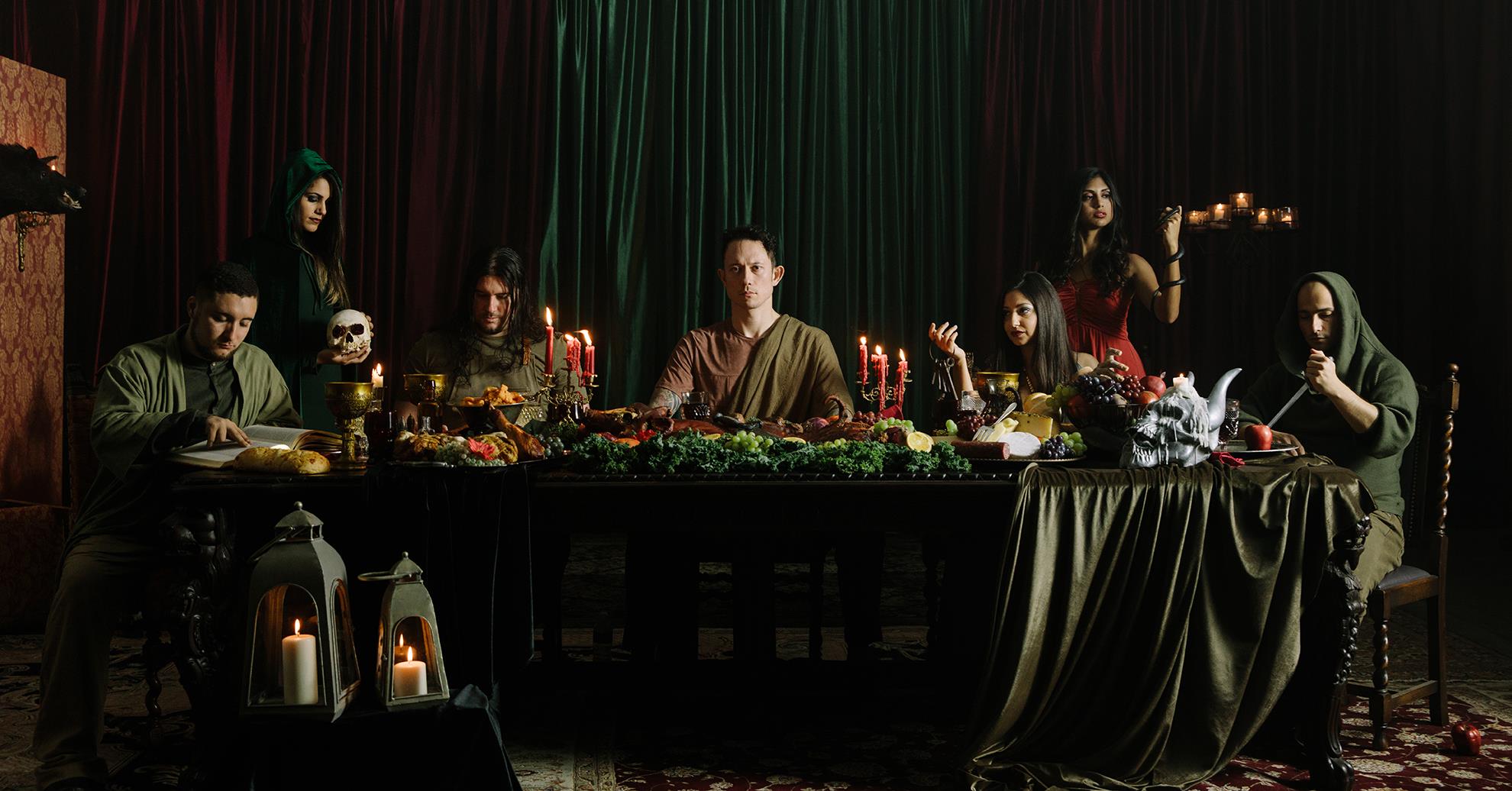
Finally, after two somewhat controversial albums (the technically excellent but not unanimous Vengeance Falls, from 2013, and the extremely tiresome Silence In The Snow, from 2015), Orlando-based Heavy Metal fighters Trivium are back on track with what’s probably going to be the best metal album for most critics and fans worldwide, the sharp, dynamic and vibrant The Sin and the Sentence. This amazing release (the eight studio album in their solid career) features everything you learned to love in the music by Trivium, such as fast and intricate riffs, poetic lyrics and, above all, the return of the band’s mastermind Matt Heafy’s screaming vocals, by far the most important element that makes The Sin and the Sentence a million light-years better than Silence In The Snow.

Not only Matt’s enraged growls are back, but it seems that the band has at long last found the perfect drummer for their music, the talented Alex Bent (Battlecross, Brain Drill, Dragonlord), who replaced drummer Paul Wandtke, and as soon as you hit play you’ll be able to clearly see the humongous difference Alex makes to their sound. In addition, another interesting thing in The Sin and the Sentence is that the album wasn’t going to be called this way if it wasn’t for the cover art and design done by Matt’s wife, Ashley Heafy, with whom he’s married since January 2010. In a recent interview, Matt stated that the working title for the album was The Revanchist and that the album was going to have gold and neon colors; however, those plans were changed once Ashley presented the band with symbols for each accompanying song, and from there The Sin and the Sentence was born.

The opening track, The Sin and the Sentence, kicks off in full force, with newcomer Alex showing us all the wonders a high-skilled drummer can do to a band. This born-to-be-a-classic tune is extremely addictive and as heavy as hell, with an inspired (and recovered) Matt simply kicking fuckin’ ass on vocals; and it seems that no matter how their music sounds, Matt & Co. definitely know how to craft beautiful lyrics (“I saw the dagger eyes staring back at me / I knew I’d never have a chance to bleed / Guilty, but in the sight of fallen men / They bury you before you speak / (The sin and the sentence)”). Then blending Death, Groove, Progressive and even Black Metal in an aggressive but very melodic manner, Beyond Oblivion, a technical tune that lives up to the band’s legacy, showcases fun, uprising backing vocals in sync with the rumbling sound of the bass by Paolo Gregoletto, not to mention their once again hypnotizing lyrics (“These shadows sleep so soundly / Appalled, he now averts his eyes / Disgraced, he felt so empty / Entrusting us with our demise”). And Other Worlds feels closer to what they did in the albums In Waves and Silence in the Snow by focusing on the clean vocals by Matt, while Corey Beaulieu and Matt deliver sharp and very harmonious guitar lines and solos, presenting hints of modern Hard Rock in its rhythm.

The second single of the album, The Heart from Your Hate, is another great example of how Trivium can adapt from being a truly heavy machine to a more radio-friendly band, presenting a catchy chorus that goes along really well with the song’s main riff; whereas Betrayer can be considered the most visceral and electrifying of all tracks in the album, a full-bodied, intricate composition that brings several elements from the band’s first (and more ferocious) albums. Furthermore, do you also think the guitars sound a lot like the classic riffage by Black Metal titans Emperor, one of Matt’s favorite bands of all time? Anyway, in The Wretchedness Inside, a song to bang your head like a maniac, Paolo sounds thunderous on bass, with the song’s overall rhythm reminding me of the most recent albums by Slipknot mixed with Trivium’s In Waves sounding. And, as usual, Matt provides us another blast of top-notch lyrics (“Submerged in dirt but it was never enough / To quell the fire in the back of my lungs / My bones are aching and my head is a mess / They said to run but I’m obsessed with the madness”). As a side note, this song was actually taken from a demo Matt ghostwrote for a different band in 2014; the song was never used though, so Trivium simply re-recorded it for The Sin and the Sentence. The following track, titled Endless Night, feels like some songs from Vengeance Falls, again with a higher focus on Matt’s clean vocals, also bringing hints of Hard Rock to their heavy sonority. Moreover, the sound of bass guitar, which by the way is simply fantastic the whole album, ends up boosting the impact of this specific tune considerably.

Sever the Hand is a first-class composition that can be divided in two distinct pieces, the first presenting a more melodic, smoother musicality, while the second brings all Trivium’s fury, in special the precise beats by Alex, the demonic riffage by Matt and Corey, and Matt’s sick growling. More obscure but still heavy and metallic, Beauty in the Sorrow displays gripping guitars by Matt and Corey (as well as one of the best guitar solos of the whole album), again bringing hints of traditional Black Metal in its riffs; whereas The Revanchist, one of Trivium’s most progressive songs of their past few albums and the longest in The Sin and the Sentence, brings forward powerful, metallic bass lines that will punch you in the head while Matt tells the story in a solid and entertaining manner, not to mention how Alex yet again steals the spotlight with his bestial, rhythmic drumming. Lastly, Thrown into the Fire is a song that showcases all elements from most of Trivium’s phases, not to mention how superb Matt’s screams sound. With the insane beats by Alex dictating the song’s rhythm, the final result is furious and harmonious just the way we love it, ending this awesome album in a brutal, vile and piercing way.

After listening to The Sin and the Sentence, do you also agree with me it will most probably be the best metal album of 2017? Let’s face it, there are tons of amazing albums launched this year, like the new ones from Kreator, Mastodon and Accept, but the new installment by Trivium is by far the most complete, creative and exciting of all (at least for me). Well, even if you think another album (or maybe albums) is better than The Sin and the Sentence, it’s still worth the investment, so go grab your favorite version of it at the Warner Music webstore, and don’t miss Matt & Co. when they take your city by storm in the coming months. And, obviously, let’s hope the band keeps the momentum going for years to come in the same awesome vein as they just delivered us all with The Sin and the Sentence.

Best moments of the album: The Sin and the Sentence, Betrayer, Sever the Hand and Thrown into the Fire.

Worst moments of the album: None.

Released in 2017 Roadrunner Records

Track listing
1. The Sin and the Sentence 6:23
2. Beyond Oblivion 5:17
3. Other Worlds 4:50
4. The Heart from Your Hate 4:04
5. Betrayer 5:27
6. The Wretchedness Inside 5:32
7. Endless Night 3:38
8. Sever the Hand 5:26
9. Beauty in the Sorrow 4:31
10. The Revanchist 7:17
11. Thrown into the Fire 5:29

Japanese Edition bonus track
12. Pillars of Serpents ’17 (re-recorded version) 5:03

Band members
Matt Heafy – lead vocals, guitar
Corey Beaulieu – guitar, backing vocals
Paolo Gregoletto – bass guitar, backing vocals
Alex Bent – drums, percussion

Album Review – Arch Enemy / Will to Power (2017)

A good balance between the classic days of the band with the more modern path they decided to venture after the arrival of frontwoman Alissa White-Gluz. But please, they need to stay away from clean vocals.

Will to Power, the tenth studio album by Swedish Melodic Death Metal icons Arch Enemy, might be far from being a masterpiece, but at least in my humble opinion it’s a considerable improvement from their previous installment, the uninspired War Eternal, released in 2014. The first Arch Enemy album to feature guitarist Jeff Loomis (Nevermore, Conquering Dystopia) as well as clean singing as lead vocals, Will to Power presents a good balance between the classic days of the band with Angela Gossow on vocals with the more modern path they decided to venture after the arrival of frontwoman Alissa White-Gluz, with each song having its own soul and purpose on the album.

Although Jeff definitely brought a new dynamism to the music by Arch Enemy after joining the band in 2014, I guess it was the departure of Nick Cordle that same year that had the most positive impact on the songwriting by Michael Amott, who seems to have gotten rid of the damaging “generic” virus that infested his music in War Eternal. Furthermore, another nice touch in Will to Power is the album’s stylish and meaningful cover art, designed by American artist Alex Reisfar. “The human skull as a central focal point, the flesh sort of falling off into the circular pattern. The snake ouroboros weaving in and out of the mouths and throats of the severed heads of a wolf, a goat and a vampire bat… All representing self-determination and a predatory, almost parasitic will to power”, explained Mr. Amott, and as the music progresses in the album you’ll realize how powerful the art is and how much it enhances the impact of the whole album.

Set Flame to the Night is a classy intro perfect for their live performances, warming up the listener for the high-octane anthem The Race, my favorite song of the album, where Alissa and drummer Daniel Erlandsson take the lead with their wicked growls and unstoppable beats, respectively, violently questioning the dangerous direction our society is taking (“I heard there was a race / Where we’re all one race / Color, gender, age never could dictate / I saw there was a time / When we valued all life / Nobody oppressed, everyone had rights / Suddenly, in an age where the distance between us is binary / All we see, is an internal war friendly fire in the sky and respect on the floor”). Less intense and more melodic, Blood in the Water, another fantastic choice for their live concerts, transpires old school Arch Enemy with a pinch of their contemporary creations, with the flawless guitar duo comprised of Michael and Jeff being absolutely on fire, blasting slashing riffs and solos throughout the whole song. And in The World Is Yours we face more insane riffs by Michael and Jeff, not to mention the always awesome keys by guest musician Jens Johansson (Stratovarius) and the song’s sing-along, catchy chorus (“If you want the world / Use your mind / Take control / Feel the strength / Rise from within / If you really want it the world is yours”).

One of the first tracks in Will to Power to be revealed, The Eagle Flies Alone, is not as gripping as the rest of the album despite its powerful lyrics, with Alissa showcasing a good vocal performance, though, as well as the good job done by Michael and Jeff on the guitars; followed by Reason to Believe, which really feels like if Arch Enemy meets The Agonist as it’s the first ever Arch Enemy song with lead clean vocals in almost its entirety (with some growls added to make it less cheesy). It’s indeed a power ballad that might make their newer fans happy, but it’s unfortunately too generic compared to what they’re capable of. Not even Michael’s own brother, ex-Arch Enemy guitarist Christopher Amott, is capable of saving it from being tiresome. On the other hand, bassist Sharlee D’Angelo kicks off the dark and belligerent tune Murder Scene, where Alissa sounds truly enraged adding even more electricity to the song’s already boisterous rhythm. Put differently, it’s top-notch Melodic Death Metal with hints of traditional Death Metal, with highlights to the superb job done by both Michael and Jeff with their fiery strings; whereas First Day in Hell, the most ominous of all songs, brings forward a neck-breaking main riff boosted by Alissa’s obscure, deep gnarls and screams, and as the story being told evolves you’ll feel your soul getting darker and darker.

Then we have the instrumental bridge Saturnine, shaping up the sonority for the multi-layered and gripping Dreams of Retribution, a Melodic Death Metal feast that brings together the past, present and future of the band, with its guitars and bass being in total sync while Daniel adds progressiveness to the musicality and Jens once again kicks ass with his spot-on keyboard notes. The second to last song of the regular version of the album, titled My Shadow and I, is another violent creation by Arch Enemy, sounding slightly less inspired than some of the previous songs but still above average, mainly due to the intricacy found in drums and bass lines. Finally, A Fight I Must Win might be slower than most songs, but that doesn’t mean it’s not cohesive, piercing and metallic, representing almost to perfection the path Arch Enemy has been following with their latest albums, closing Will to Power in a strong way. Actually, if you go for the limited edition digipak, you’ll be treated to their cover for English Street Punk band Charged GBH’s 1982 song City Baby Attacked by Rats (you can listen to the original version HERE), an amazing version by Michael, Alissa & Co. that’s definitely worth the investment in the special edition of the album.

Overall, Will to Power is a pretty decent album by Michael and his crew, being recommended for all fans of modern Melodic Death Metal. After listening to the album for the very first time, I had some mixed feelings about some of the songs, while others (the ones where clean vocals where pretty much nonexistent) hit me in a very positive manner right from the first second, proving that, at least to my ears and my heart, Arch Enemy still got it and can deliver high-end metal music if they want to. I honestly believe the best thing the band can do right now is to stay away from the idea that clean vocals are a good addition or variation to their music, because in the end that’s certainly not what made this band so relevant and admired in Heavy Metal. I’m not saying Alissa is not a good singer when using her clean voice; quite the contrary, she’s an incredible vocalist, but Arch Enemy are a synonym to rebelliousness and anger, things that can only be represented by some high dosages of rabid screams and deep guttural growls.

Best moments of the album: The Race, Blood in the Water, Murder Scene and Dreams of Retribution.

Worst moments of the album: The Eagle Flies Alone and Reason to Believe.

Released in 2017 Century Media

Track listing
1. Set Flame to the Night (instrumental) 1:18
2. The Race 3:15
3. Blood in the Water 3:55
4. The World Is Yours 4:53
5. The Eagle Flies Alone 5:15
6. Reason to Believe 4:47
7. Murder Scene 3:50
8. First Day in Hell 4:48
9. Saturnine (instrumental) 1:09
10. Dreams of Retribution 6:40
11. My Shadow and I 4:05
12. A Fight I Must Win 6:37

Limited Edition Digipak bonus track
13. City Baby Attacked by Rats (Charged GBH cover) 2:48

Band members
Alissa White-Gluz – vocals
Michael Amott – lead guitars, backing vocals
Jeff Loomis – lead guitars, backing vocals
Sharlee D’Angelo – bass
Daniel Erlandsson – drums

Guest musicians
Jens Johansson – keyboards on “The World Is Yours”, “Saturnine” and “Dreams of Retribution”
Christopher Amott – guitars & keyboards on “Reason to Believe”

Album Review – BloodBlind / BloodBlind EP (2017)

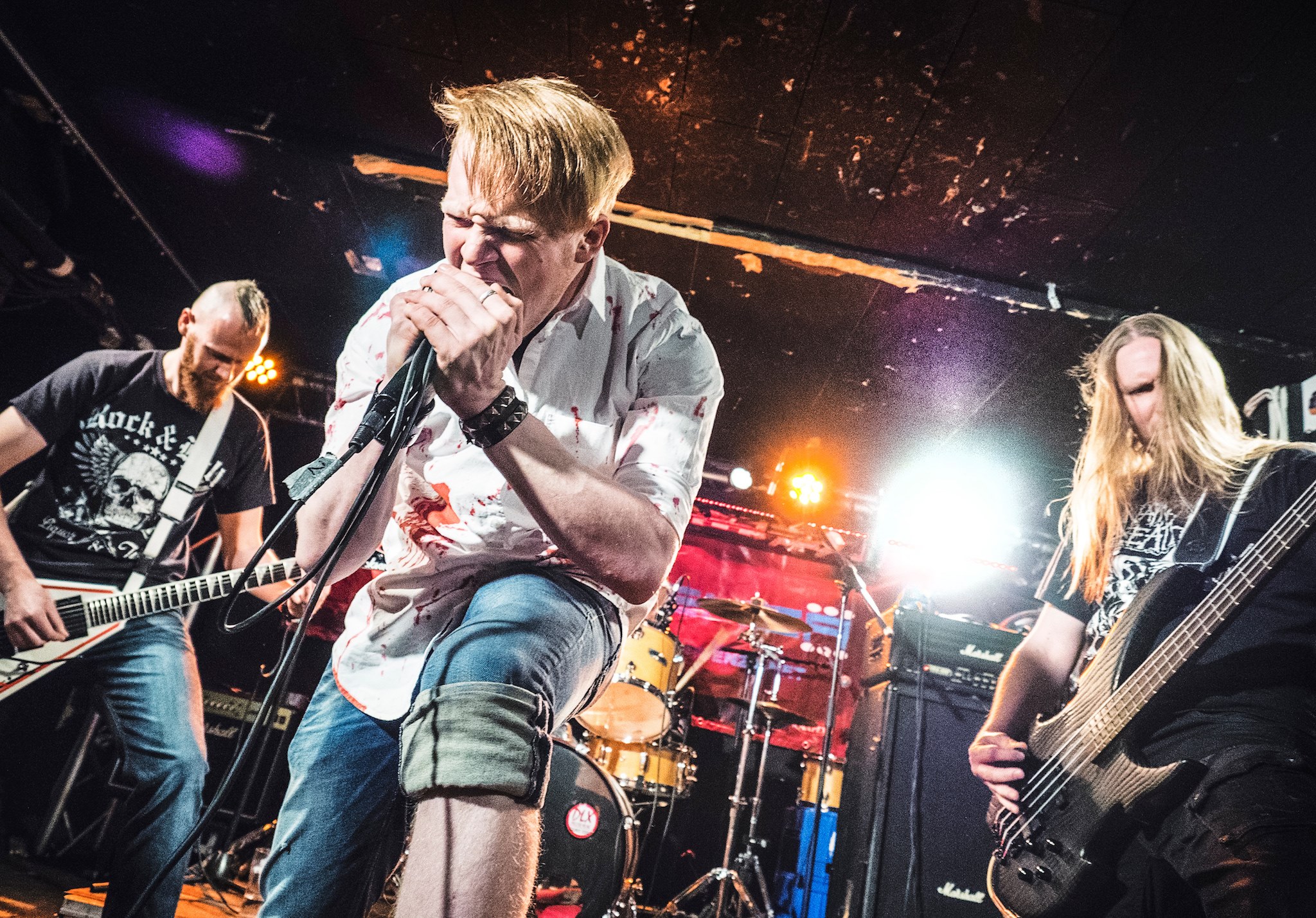
Mixing a punk attitude with metal music, a group of four Finnish musicians are ready to rock the world with the flammable amalgamation of different styles and ideas found in their debut album.

Mixing a punk attitude with metal music, a group of four musicians from Helsinki and Joensuu (a city and municipality in North Karelia in the province of Eastern Finland), has been working together for the past two years to give life to Melodic Thrash/Punk Metal entity BloodBlind, bringing their own influences to the mix and therefore creating a very unique sound. The result of that amalgamation of styles and ideas can be better appreciated in their debut self-titled EP, comprised of three electrified compositions that will help spread the word of BloodBlind throughout the world of independent heavy music.

The young and restless BloodBlind, formed by Tommi Kokko on vocals, Antti Kalliomäki on guitars, Janne Saksola on bass and Frank Fagerström on drums, were responsible for all of the production, visuals and themes found in the EP, with only some external help used in the mixing process. With their first release out, the band is gearing up to take to the stages and setting up to record their first full-length in a proper studio, but before that happens I highly recommend you open up some space in your room to bang your head and jump up and down to the invigorating and acid music offered in the EP by those four metallers who certainly know how to put the words “punk” and “metal” together in a compelling way.

Janne ignites the opening track Fuel for Fury with his heavy-as-hell, low-tuned bass punches, with the sound evolving to a blend of Thrash, Groove and Punk Metal led by the enraged growls by Tommi, while Antti makes sure the music remains as sharp and hostile as possssible with his riffs and solos. In the following tune, Will to Fight (featuring gang vocals on chorus by Finnish Thrash Metal band Maniac Abductor), BloodBlind deliver an anti-bullying message (“never give up, never give in”, says the band), joining in on the campaign against online bullying. With a stronger Rock N’ Roll vibe and endless electricity, Tommi’s screams sound even angrier than before (for a good reason), leaning towards Melodic Death Metal and Metalcore-like vocals, while Antti and Frank dictate the rhythm in this obscure anthem destined to be their biggest hit without a shadow of a doubt. And last but not least, we have another blast of Thrash and Punk Metal united with hints of Metalcore in Cancer of Society, a mid-tempo aggressive tune with highlights to the once again pounding beats by Frank and the menacing bass lines by Janne, not to mention the soulful solos by Antti and the flammable sounds emanating from both guitar and bass during the whole song.

In a nutshell, BloodBlind definitely succeeded in delivering exciting metal music through their short and sweet self-titled EP (which can be listened in its entirety on on YouTube or on Spotify), and if you want to show your support to this promising band go check their Facebook page and YouTube channel, and buy a copy of the album on BandCamp, on iTunes or on Amazon. There’s no doubt that those Finnish metallers are ready to rock the world with their thrilling music, proving one more time that talent and hard work, when properly put together, always result in something good.

Best moments of the album: Will to Fight.

Worst moments of the album: None.

Released in 2017 Independent

Track listing
1. Fuel for Fury 3:59
2. Will to Fight 4:53
3. Cancer of Society 4:21

Band members
Tommi Kokko – vocals
Antti Kalliomäki – guitars
Janne Saksola – bass
Frank Fagerström – drums

Guest musician
Maniac Abductor (band) – gang vocals on “Will to Fight”

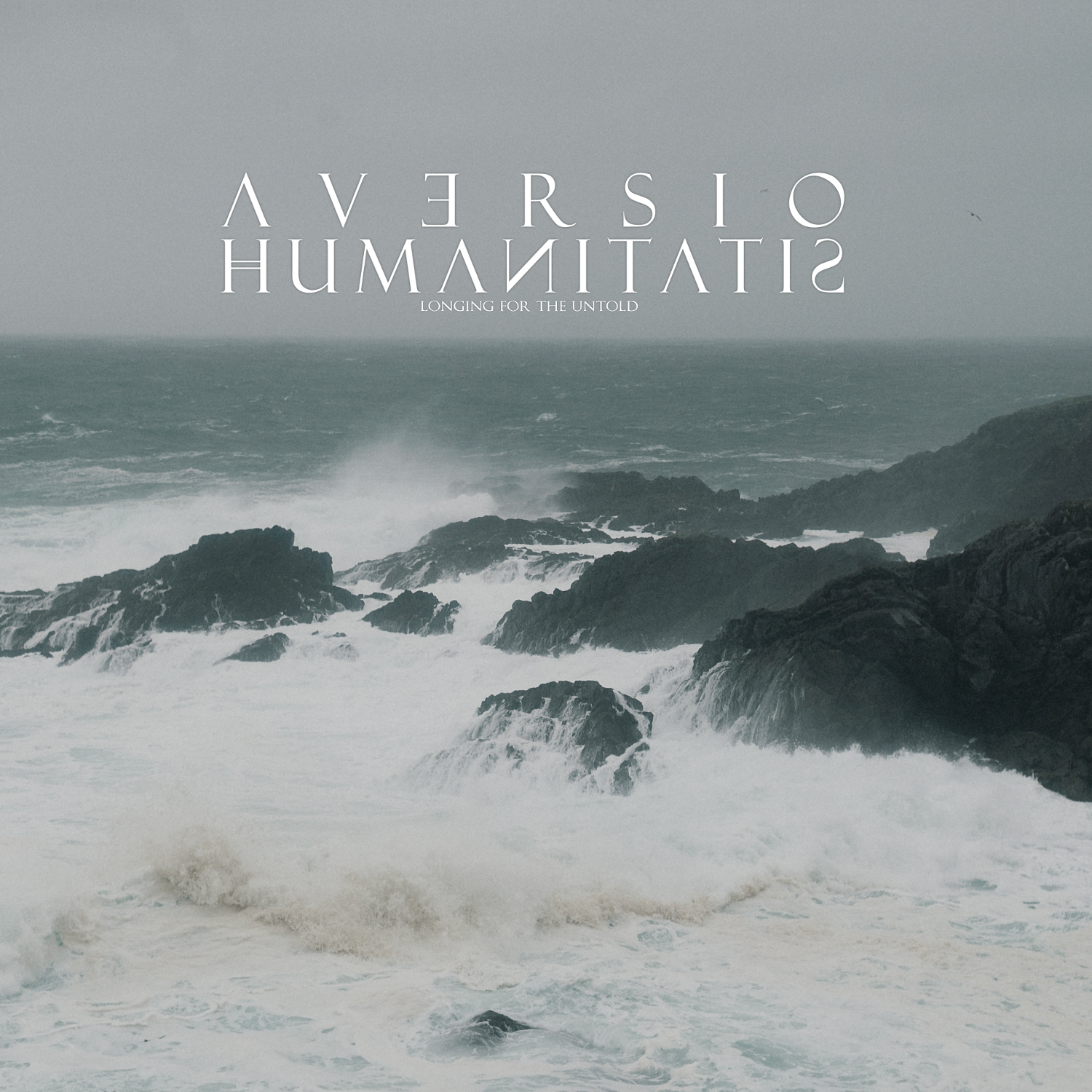
Album Review – Aversio Humanitatis / Longing for the Untold EP (2017)

Expanding upon their Black Metal roots by embracing the ferocity of the most mutated and cursed Death Metal, this Spanish horde brings forth a violent and ferocious one-way journey into darkness with their brand new release.

“Time is an ever open wound, that never hurts the same twice.”

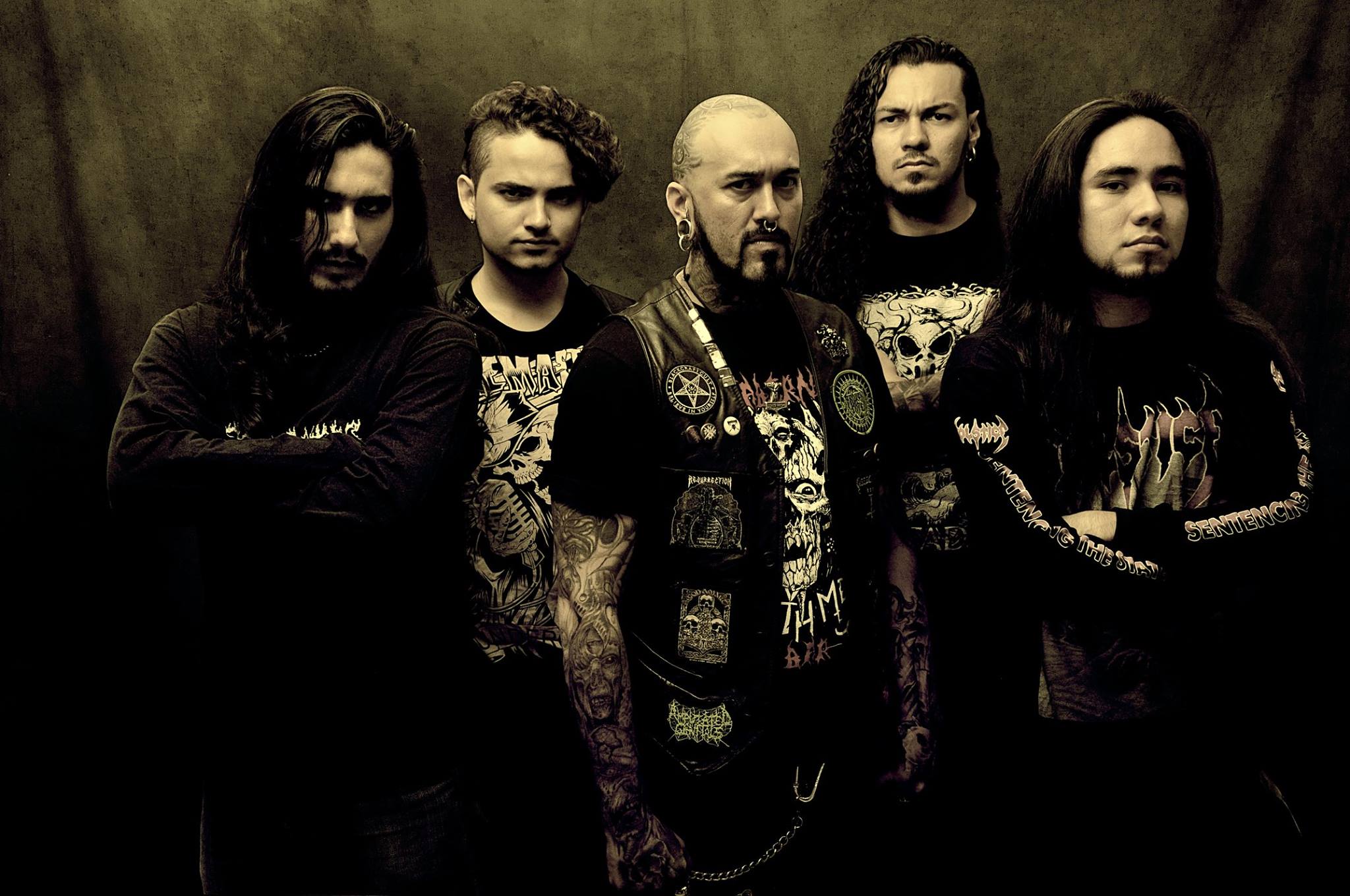
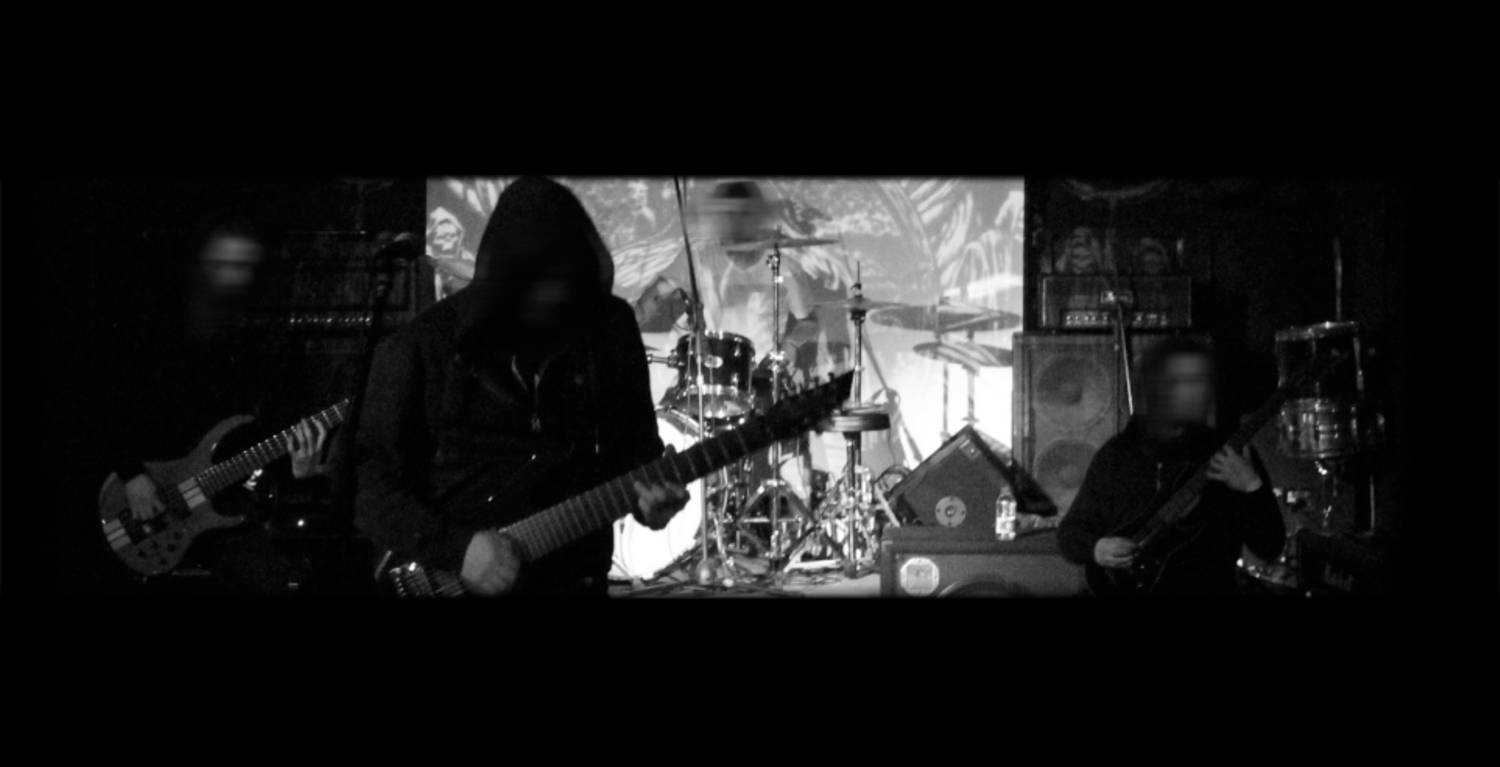
Since their inception in 2010 in the city of Madrid by a core and unchanged trio of mysterious locals, Spanish Black/Death Metal horde Aversio Humanitatis (Latin for “the loathing humanity”) has been slowly morphing into a beast of implausible proportions and of ungraspable intents, as they began to expand upon their Black Metal roots by embracing the ferocity of the most mutated and cursed Death Metal. This transcendental and abhorrent metamorphosis into otherworldly sonic tyrant fully sublimated in their 2017 EP Longing for the Untold, in which Aversio Humanitatis went from being a purely methodical and vaguely technical Black Metal band in the vein of Emperor, Satyricon and Abigor, to becoming something completely undefinable, shaped by the ever so apparent lineaments of an unquenchable black hole, a beast capable of harnessing the power of collapsing stars and of the very depths of Hades.

Originally released on CD in Spain only in early 2017, Longing for the Untold is by far the boldest and most Stygian opus by this idiosyncratic Spanish entity, surpassing their 2011 debut full-length album Abandonment Ritual in terms of heaviness, obscurity, chaos and aggressiveness. Now re-packaged with three bonus tracks from their 2013 split Three Ways of Consciousness (with Venezuelan/Chilean Black Metal act Selbst and Spanish Black Metal act Nihil) and with a new incredible artwork, Longing for the Untold brings forward a colossal behemoth of technically intimidating and sonically imposing Progressive Black Metal that lunges forth toward the listener with crushing force, levitating out of solid darkness. More than just an album, Longing for the Untold represents a place and time where the power of sound literally devours the senses, turning perception into a smoldering and swarming void of sensorial awe and of transcendental sonic disintegration.

The sensational title-track Longing for the Untold presents the fury of old school Black Metal mixed with atmospheric and menacing sounds, with vocalist and bassist A.M.’s dark guttural growls being spot-on, therefore enhancing the song’s obscurity and its wicked lyrics (“Time is an ever open wound / that never hurts the same twice / Twisted shards created by our will / shall open the flesh / in ways that may be poetry, or may be mundane / Since the shadow of our self is always / longer than our height / Since the pride of our self is always / shorter than our pain”), also showcasing truly infernal blast beast by drummer J.H. Prison of Shattered Glass feels a lot more doom-ish than the opening track, with A.M. and guitarist S.D. delivering pure evil through their strings. In other words, this is a lesson in Blackened Doom by this excellent Spanish entity, where the devilish background sounds, the ominous growls by A.M. and the sluggish beats by J.H. end up generating a sulfuric and disturbing ambience altogether, ending in a beautiful, Stygian way; whereas The Ever Shifting Path gets back to a more perturbing and belligerent sonority, with the Black Metal-inspired drumming by J.H. together with the hellish vociferations by A.M. being the main elements in this fantastic Extreme Metal aria, becoming even more impactful halfway through it.

Longing for the Untold BlackSeed Productions Edition

Closing this top-tier feast of obscure and extreme music we have the eerie Advent of the Inescapable, starting with an atmospheric, creepy intro before exploding into absolute hatred in the form of Black Metal, and that perturbing feeling goes on until the music fades into sheer darkness. Moreover, pay good attention to its lyrics, which are beyond perfect for the music played (“Transcend a fraudulent reality – / let fear and pain penetrate and go through / Deconstruct your being – / resign all perishable aspirations / Dissociation from all that surrounds you – / become an impassive entity / Accept your purpose in this world – / you are here to destroy and suffer”). As aforementioned, this new version of Longing for the Untold also contains three bonus tracks, all from their 2013 split Three Ways of Consciousness (Spears of Unlight, Psalms of the Wandering and Shrine of Involution), which add a 0.5 to the album’s overall score by offering more of Aversio Humanitatis’ undisputed fusion of Atmospheric Black Metal with Doom Metal.

After paying a visit to Aversio Humanitatis’ Facebook page and YouTube channel to know more about this distinct act hailing from Spain and to get a better taste of their music, I’m sure you’ll promptly search the web for a copy of Longing for the Untold  (which by the way can be enjoyed in its entirety HERE, including all bonus tracks). Well, let me tell you that your hunt will be an extremely easy task, as the album is available for purchase at the Sentient Ruin Laboratories’ BandCamp or webstore, at the BlackSeed Productions’ webstore in black vinyl, white vinyl or cassette, on Amazon or at Discogs; as well as at the band’s own BandCamp and at the BlackSeed Productions’ BandCamp or webstore (with or without the bonus tracks). And when you finally have this fantastic album on your hands, get ready for a violent , never-ending and ferocious one-way journey into darkness.

Best moments of the album: Longing for the Untold and The Ever Shifting Path.

Worst moments of the album: None.

Released in 2017 Sentient Ruin Laboratories

Track listing
1. Longing for the Untold 5:04
2. Prison of Shattered Glass 6:06
3. The Ever Shifting Path 5:36
4. Advent of the Inescapable 4:41

Vynil & Tape B-Side bonus tracks
5. Spears of Unlight 4:38
6. Psalms of the Wandering 5:34
7. Shrine of Involution 6:15

Band members
A.M. – vocals, bass
S.D. – guitars
J.H. – drums

Live musicians
N.H.T. – guitar, vocals
J.C. – bass