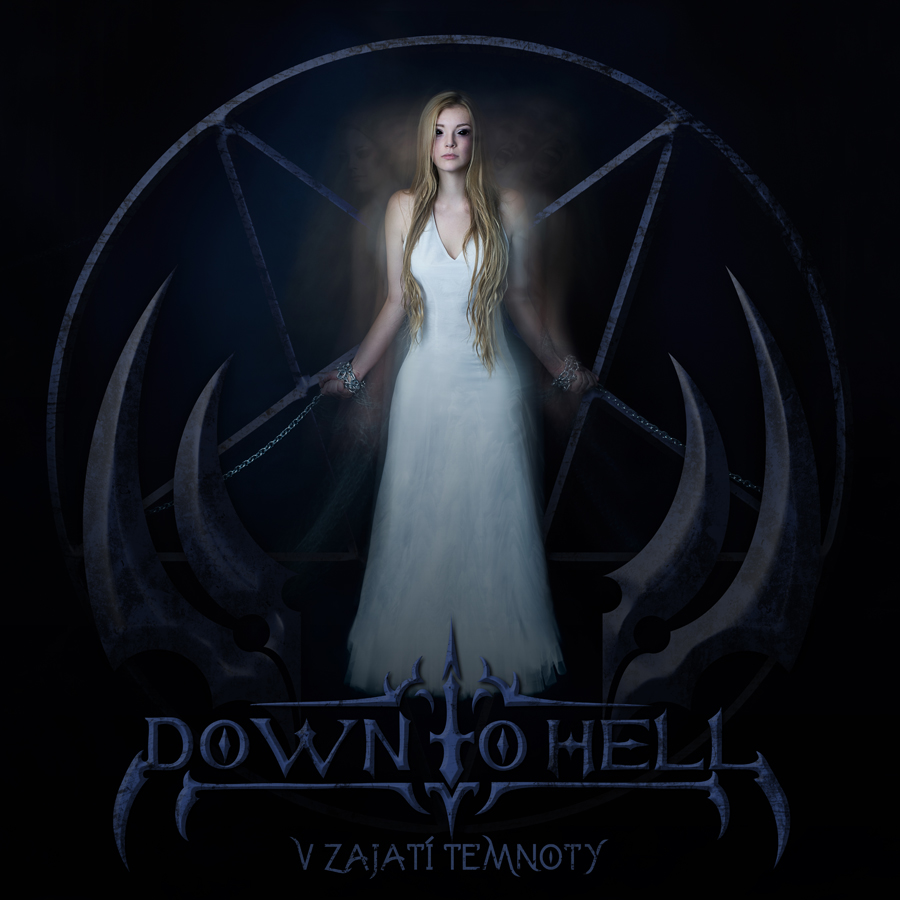
Album Review – Down To Hell / V Zajatí Temnoty (2015)

Let’s brave the world of Melodic and Symphonic Black Metal created by this talented Slovak six-piece band who sings entirely in their mother tongue.

Rating5

coverFounded in 2006 in the city of Malaciek (or Malacky), Slovakia, around 35 km north from the capital Bratislava, what Melodic/Symphonic Black Metal band Down To Hell have to offer the fan of heavy music goes beyond your usual symphonic and extreme elements. Their music relies heavily on contrasts, as in singing as well as their instrumental and lyrics written in the form of stories, providing a more complete experience to the listener. In addition, although they say they play Symphonic Black Metal, which instantly brings bands such as Dimmu Borgir to your mind, they sound rawer and more inclined to old school Black Metal than that.

However, the most noteworthy characteristic in the music by Down To Hell is the fact they did not “surrender” to the English language, singing their songs entirely in their mother tongue, Slovak, which adds an extra touch of darkness to their 2014/2015 debut full-length album V Zajatí Temnoty, or “Captive Darkness” in English. The only thing in English ends up being the band’s own name, which makes me wonder why they’re not called “Dole Do Pekla” instead. Anyway, let’s get down to business and see what V Zajatí Temnoty is made of.

Ticho Pred Búrkou, or “calm before the storm”, is exactly what this piano intro represents, and you can get a sense of how symphonic their music is before the actual storm begins in Pán Vetra, Búrky A Mrakov (“lord of wind, storms and clouds”), with the growls by singer/guitarist “Kani” Miroslav Gajdár matching perfectly with the musicality proposed while the keyboards by “Lubo” Ľubomír Müller complement the havoc created by the song’s guitar riffs and drums in a very interesting way. Slightly darker than the previous tune, Skazení (“wicked”) sounds almost like raw Black Metal in some instances but pure symphony in others, with the nice job done on guitars enhancing its overall quality. It’s the first song of the album to showcase the clean vocals by the gorgeous “Maťa” Martina Bilkovičová, who has a very good chemistry with Kani and his screams.

Keeping up with the previous songs, Bosorské Sólo is another great mix of extreme music and melodic instrumental, where it’s interesting to notice how drummer “Beňo” Dušan Šelc can easily change from a more rhythmic drumming to furious blast beats, providing more progressiveness to the music; followed by the “sudden attack” offered by the band in Krvavé Jazero (“bloody lake”). This song, which has a solid flow from start to finish, is how dark music should always be, with the smooth voice by Maťa being like a dream amidst its nightmare-ish beats. Unfortunately, the band disappoints a little in Prízrak (“phantom”), which despite starting differently than the other songs in a thrashier way, it doesn’t know if it’s Melodic Black Metal, Pop Metal or Symphonic Metal. It’s still an enjoyable tune, but below the album average especially as it’s not very clear what its final goal was.

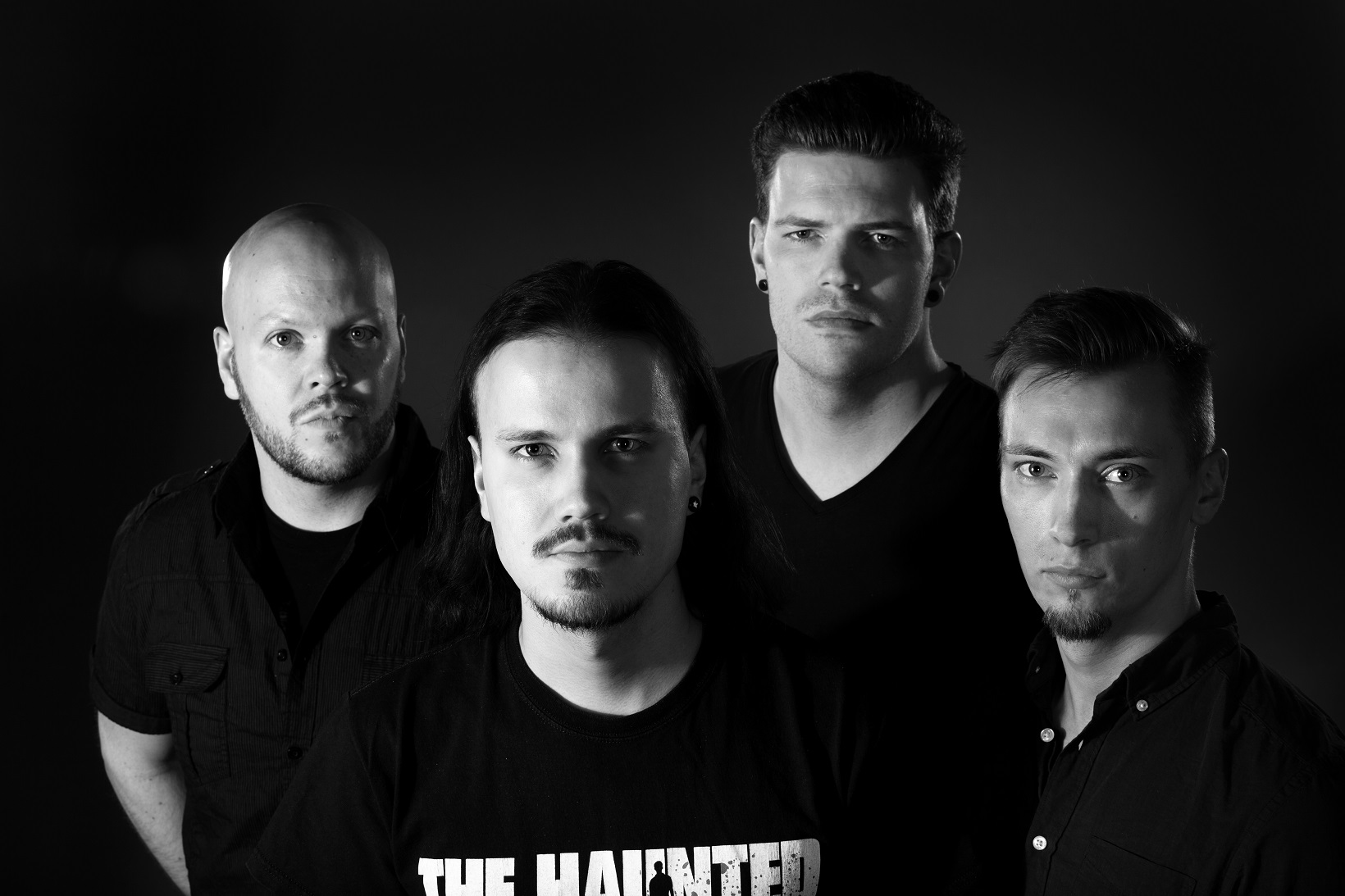
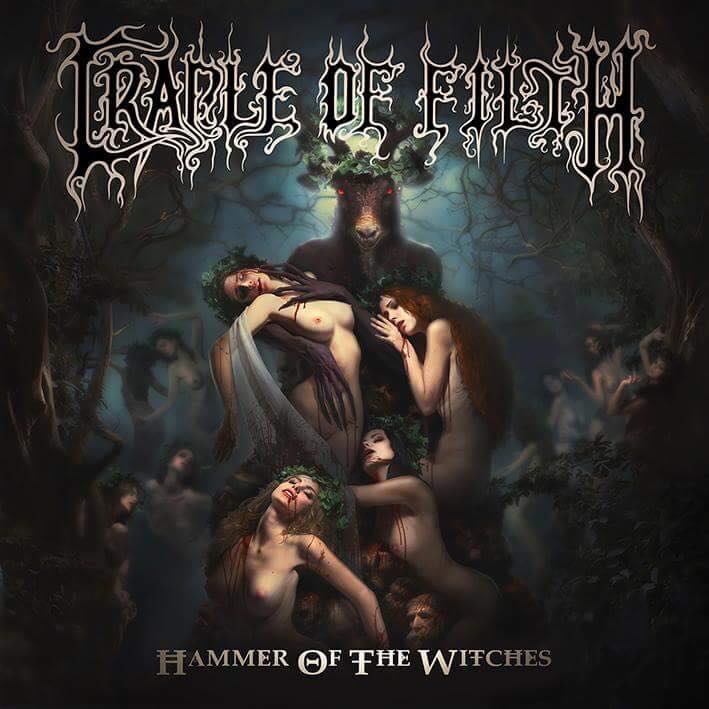
dth_allThe final triade in V Zajatí Temnoty couldn’t have started in a better way than with Smrť (“death”), where not only the guitar lines by Kani and “Ťapo” Martin Matlovič sound amazing, but Kani also does an awesome job ranging from high-pitched roars to truly deep guttural. Besides, pay attention to how the band is able to sound cruel and harmonic at the same time, just like what Extreme Metal icons Cradle of Filth perfectly do, and you’ll understand why this is one of the top moments of the album. Then we have the dark ballad/waltz Nemŕtva Nevesta (“undead bride”), where the clean vocals by Maťa steal the show, achieving an even more pleasant performance due to the keyboard notes by Lubo; and finally the excellent Drak (“dragon”), a fast and metallic tune that has that amazing European touch to increase its quality and cohesiveness, including elements from genres such as Folk and Viking Metal, with Lubo and bassist “Miro” Miroslav Hulka being responsible for building the whole ambience for the rest of the band.

To sum up, if you want to brave the world of Symphonic Black Metal sung in its entirety in a language other than English, visit Down To Hell’s official Facebook page, YouTube channel, Bandzone.cz and, of course, buy their music at their BandCamp page. This six-piece Slovak band truly knows what they’re doing, and I’m sure their non-English words won’t restrain them from reaching new heights with their music so talented they are.

Best moments of the album: Pán Vetra, Búrky A Mrakov, Krvavé Jazero and Smrť.

Worst moments of the album: Prízrak.

Released in 2015 Independent

Track listing
1. Ticho Pred Búrkou 1:41
2. Pán Vetra, Búrky A Mrakov 5:26
3. Skazení 6:43
4. Bosorské Sólo 8:40
5. Krvavé Jazero 7:10
6. Prízrak 7:48
7. Smrť 6:39
8. Nemŕtva Nevesta 7:35
9. Drak 6:28

Band members
“Maťa” Martina Bilkovičová – clean vocals
“Kani” Miroslav Gajdár – guitar, screams, growls
“Ťapo” Martin Matlovič – guitar
“Miro” Miroslav Hulka – bass guitar
“Lubo” Ľubomír Müller – keyboards
“Beňo” Dušan Šelc – drums

Album Review – Dys Inbunden / One With Morbidity, The Opus Misanthropy (2015)

Come worship the Other Side to the sound of the new demonic opus by this extremely talented and sinful Swedish cult.

Rating3

One-with-morbidity-the-opus-misanthrop_OmslagCall it “Deaosophic Metal”, Progressive Black Metal or simply Black Metal. The music disseminated by Dys Inbunden, one of the most nihilistic death obsessed bands in the world, in their masterfully chaotic new album One With Morbidity, The Opus Misanthropy, is going to hit you with an avalanche of depression, suicide, darkness and death beyond dispute. Even if you’re not a huge fan of extreme music, I strongly recommend you take a shot at this amazing album so intense it is.

Forged in the fires of Stockholm, Sweden in 2012 and after releasing their debut album (or their “first opus”, as the band refers to it) entitled Pandemonium Unchained in 2013, Dys Inbunden spent a dark period in 2014 recording their new opus with Honza Kapák at Hellsound Studio, in the Czech Republic. The result, as aforementioned, is awesomely professional and instigating, carving the band’s trademark on the global map of Extreme Metal. And now, after reading this quick intro about the hostile Dys Inbunden and their blasphemous creation One With Morbidity, The Opus Misanthropy, I dare you to hit play if you have the guts.

Well, if you were tough enough to do it, you’ll already face One With Morbidity, one half of the album title, which starts as the intro to some sort of occult ceremony that goes on for a while before a sonic apocalypse begins. What an outstanding production, where you can clearly listen to each instrument while at the same time it’s fuckin’ dark and heavy as hell. Not only that, Mr. Gefandi Ör Andlät knows how to desecrate our minds with his blustering screams. The second half of the album title, Opus Misanthropy, presents hints of Symphonic Black Metal in a poignant atmosphere, where even the clean cultic vocals sound intimidating, not to mention the spot-on orchestrations by Magister Nocturnal, which are not too portentous but adequate to the band’s purpose.

If you’re still alive and sane, the symphonic and devilish track Odious Worship Of Annihilation will mercilessly invade your soul, with Gefandi Ör Andlät sharpening his vocals to an even deeper satanic level while the instrumental keeps dense and extremely well-crafted. There’s not a single second of hope for over seven minutes of music in this tune, one of my favorites of the entire album hands down. Mischievous Paths Of Nocturnal Lust, the longest track of the album, doesn’t disappoint, with the duo of darkness offering us another Black Metal raid with extra layers of insanity, rhythmic variations and progressive passages. Its vocals and riffs are of course fiendish, and I’m sure you’ll feel your brain detaching from your skull to the sound of this evil feast. Then we have Through Demise and Decay, with its powerful riffs and harsh screams being its main ingredients, as well as those sick blast beats the way we love in Black Metal and a “chorus” that seems to incite a demonic worship; and The Illuminating Gaze Of Lucifer, where its Doom Metal vibe blended with the battering ram from Black Metal generate an interesting outcome. Moreover, as the name of the song contains the word “Lucifer”, it’s quite obvious the prince of darkness must be honored to be the inspiration for it.

dys inbundenDraconigena, a word that means “dragon-born” or “someone or something born of a dragon”, showcases Dys Inbunden spitting fire through their music. This is a very progressive and extreme tune, with highlights to the superb guitar lines by Gefandi Ör Andlät and its venomous ambience, sounding like three or four different songs in a combination of complexity and bestiality, and I guess I don’t need to say how solid the final result is. And continuing with the innovative names, Larva Pazuzu is the union of the words “larvae”, which in Roman mythology means a malevolent spirit of the dead or “a terrifying mask”, and “Pazuzu”, which in Assyrian and Babylonian mythology was the king of the demons of the wind and son of the god Hanbi, also representing the southwestern wind, the bearer of storms and drought. The music itself couldn’t be more direct, an awesome massacre where both Gefandi Ör Andlät and Magister Nocturnal sound deeply infuriated (and whoever is playing the drums is a beast).

Just when you think they’re going to take a break amidst so many wicked tunes, they continue their path of destruction with Nihilist Pariah, a raw old school Black Metal tune tailored for diehard black metallers, boosted by the deluxe production of the album, followed by Crown Of Carcosa, another masterful display of extreme music where the nuances of darkness brought forth by its symphonic elements sound really interesting. And what starts as a song by Opeth or Dream Theather evolves to a deranged but very melodic carnage in He Who Worships Death, with highlights to its high-end drumming and the uproar caused by the demonic voice of Gefandi Ör Andlät. Lastly, we have the frenetic Dimension Of Nihility, as vile as it can be, with the flawless support provided by Magister Nocturnal allowing Gefandi Ör Andlät to add more experimentations and a stronger taste to the music, and nothing is more suitable to end this Black Metal rite than a melancholic piano outro, named Without Life And Movement.

To be fair, it’s extremely difficult to summarize this Stygian masterpiece in just a few lines, so I deeply recommend you go like their Facebook page and check their music on YouTube, as well as buy One With Morbidity, The Opus Misanthropy at their official webstore, at the Liflätinn Productions webstore, on Amazon or at many other locations to really feel their music in your flesh. In other words, it’s time for us all to worship the Other Side to the sound of the new amazing opus by this talented and sinful Swedish cult.

Best moments of the album: Odious Worship Of Annihilation, Through Demise and Decay, Draconigena and Larva Pazuzu.

Worst moments of the album: Opus Misanthropy.

Released in 2015 Liflätinn Productions

Track listing
1. One With Morbidity 6:47
2. Opus Misanthropy 6:56
3. Odious Worship Of Annihilation 7:47
4. Mischievous Paths Of Nocturnal Lust 9:04
5. Through Demise and Decay 8:07
6. The Illuminating Gaze Of Lucifer 8:59
7. Draconigena 6:25
8. Larva Pazuzu 3:38
9. Nihilist Pariah 7:54
10. Crown Of Carcosa 5:35
11. He Who Worships Death 6:49
12. Dimension Of Nihility 6:07
13. Without Life And Movement 2:31

Band members
Gefandi Ör Andlät – vocals, lead guitar
Magister Nocturnal – bass, piano, orchestrations

Album Review – Amanita Virosa / Asystole (2015)

It’s time to go absolutely mental with the extreme and melodic music by this poisonous Finnish band.

Rating4

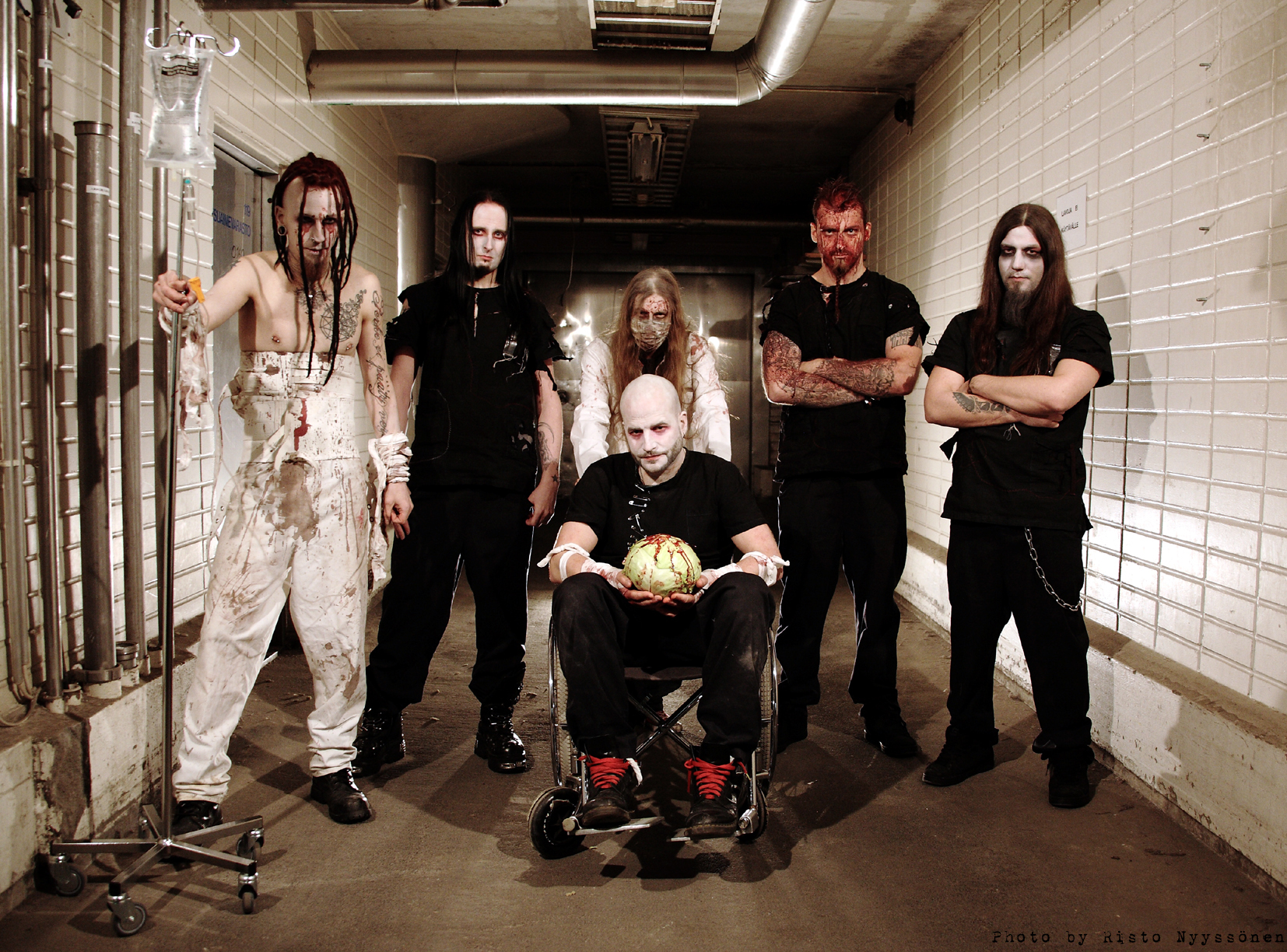
amanita-coverImagine one day you’re just wandering aimlessly in the woods when you suddenly spot a harmless and probably edible mushroom, and you think “why not give it a try?” Well, you might be facing one of the deadliest of all known poisonous mushrooms in the world, commonly known as the European destroying angel, which will fatally damage your liver and kidneys, taking you to the Other Side sooner than you expected. The scientific name of that lovely mushroom is Amanita Virosa, thereby chosen to be the name of a demented Finnish band that plays a brutal and melodic mix of different subgenres of metal music, kindly denominated by the band itself as “Hospital Metal”.

Formed in 2008 in the town of Mikkeli, Finland, around 240km from the capital Helsinki, what this talented sextet offers in Asystole, their first full-length album, definitely represents the conjunction of the words “hospital” and “metal” as stated by the band. By the way, in case you don’t know it, in medicine, asystole (colloquially known as flatline) is a state of no cardiac electrical activity, one of the conditions that may be used for a medical practitioner to certify clinical or legal death. And that’s exactly what will happen to you after the ruthless heart-stopping assault of hate, sorrow, mental distress and despair found in the entire album.

The semi-acoustic intro Vita a Mortam (Latin for “life from death”) is a little “tricky”, as it suggests the music will be calm or at most some traditional metal music, but then all hell breaks loose when My Slightest Hope begins, and let me tell you there’s no hope for the faint at heart in this song. It’s dark Symphonic Metal with elements of Black Metal the likes of Dimmu Borgir, with the possessed-like vocals by frontman Clamors together with the keyboards by Cantor Satana standing out amidst the sonic havoc. Even more symphonic and impetuous, I can imagine how fun the band should look on stage playing the awesome …Of Failing, which showcases Cantor Satana and drummer Torsoholocaust as the leaders of a music revolution: they do not stop for a single second at all, making this tune perfect for mosh pits and crowd surfing.

AV_AV_1b_copyIn the bloodthirsty Valuta Vereni Tähän Maahan (Finnish for “drain the blood of this country”), by the way the only track sung in their mother tongue, Amanita Virosa provide us all an ideal soundtrack to a Horror flick mainly due to its rawer and more exotic touch, with Clamors seeming really comfortable growling in Finnish throughout the whole song. Then it’s time for guitarists Kingcohol and Melnik13 (where the fuck did they find those names?) to showcase their skills with powerful riffs and solos in No Life King, an extreme exhibition of violence blended with a beautiful metallic melody where the band shows no mercy for our necks and souls.

Dead Inside is the perfect example of the “Hospital Metal” proffered by Amanita Virosa, where Melodic Death Metal meets Symphonic Black Metal in order to generate a crazy heavy mixture that ends up working pretty well, giving the song a nice desperate vibe and pointing it out as one of the best tracks to be played live. Following that sheer derangement, we have another song focused on keyboards and the deep growls by Clamors, entitled Mental Failure, with highlights to its “psychiatric” intro and its clean but extreme musicality, and the very technical tune Suck The Poison, relatively slower, more melancholic and symphonic than the other tracks, with its keyboards sounding like they’re its spinal cord. And last but not least, Dead Body Love keeps up with the energy found in rest of the album thanks to a powerful performance by the entire band, closing Asystole in a very effective way.

In summary, Asystole is a very good heavy music album that offers something new to the listener even in an era where almost nothing seems original anymore. Therefore, all you have to do now is visit their Facebook and SoundCloud pages, and also buy their music at the Inverse Records webstore, because it’s time to go absolutely mental with the fresh and extreme “Hospital Metal” brought forth by this amazing band from the land of ice and snow. This, my friends, is the only type of poison you should be injecting in your veins.

Best moments of the album: …Of Failing, Valuta Vereni Tähän Maahan and Dead Inside.

Worst moments of the album: Mental Failure.

Released in 2015 Inverse Records

Track listing
1. Vita a Mortam 1:58
2. My Slightest Hope 4:45
3. …Of Failing 4:14
4. Valuta Vereni Tähän Maahan 4:18
5. No Life King 4:38
6. Dead Inside 5:18
7. Mental Failure 4:53
8. Suck The Poison 5:18
9. Dead Body Love 4:06

Band members
Clamors – vocals
Kingcohol – guitar
Melnik13 – guitar
Robustuz – bass
Cantor Satana – keyboards
Torsoholocaust – drums

Album Review – Unleashed / Dawn Of The Nine (2015)

Let the mighty God of Thunder bang his head to the sound of old school Death Metal while he mercilessly smashes his foes with his hammer.

Rating5

unleashed_dawn of the nineFormed in the “distant” year of 1989 in the beautiful city of Stockholm, Sweden, and still alive and kicking after almost three decades, the iconic Death Metal band Unleashed can credit their longevity and glory to their unique music concept, being the pioneers in implementing completely different themes from most Death Metal bands, such as Viking culture, Norse folklore and even references to the work by the renowned English writer and poet J. R. R. Tolkien, to their furious and coarse sounding.

In order to keep the almighty God of Thunder grinning and banging his head to the brutal sound of Death Metal while he smashes hordes of infidels with Mjölnir, Unleashed are releasing in 2015 their twelfth studio album, the good Dawn Of The Nine. Although the album does not flirt with Black Metal as much as its predecessor, the excellent Odalheim (2012), which means it lacks a little more darkness, it’s still a celebration of extreme music, war, vengeance and sacrilege that will satisfy the hunger of death metallers all over the world for more of the band’s Viking Death Metal.

Shifting between Viking Metal and more traditional Death Metal, the opening track A New Day Will Rise relies upon a strong atmospheric background and the aggressive vocals by Johnny Hedlund, while the other band members make sure the music stays visceral. It’s not the most creative songwriting in the world, but it’s still very cohesive, which is also valid for They Came to Die and its elements of Thrash Metal and Symphonic Black Metal, offering a more exciting headbanging tune. The guitar lines by Fredrik Folkare and Tomas Måsgard enrich the melody found in the music, and of course drummer Anders Schultz doesn’t seem “happy” and crushes whoever is in his path. The ominous intro already summarizes the darkness in Defenders of Midgard, a song about the will to keep fighting for our beliefs and our beloved ones (“But we will rise again / And fight, fight to defend / Our Midgard ’til the very end / Fight to defend / Our Midgard ’til the very end”). However, the music itself is boring, getting really repetitive after a while and consequently falling flat, despite the good guitar solo by Fredrik.

Fortunately, they finally unleash their infamous Death Metal in Where Is Your God Now?: its direct lyrics about being a true godless warrior (“Here we are alive again / In a battle without end / So we rise from the caves / And march until sol descends”) are very effective and the growls by Johnny are a lot more cutting. In other words, get ready for some sick circle pits to the sound of this evil mix of Death and Black Metal. And although Johnny sounds a little tired in The Bolt Thrower, it’s another good old school Death Metal tune, where the most curious detail is that I don’t know if they’re talking about the ancient missile weapon named “ballista” or if it’s a tribute to British Death Metal band Bolt Thrower. Well, Johnny sings “a master of war that feels no pain”, which makes me think it’s about the band. Or maybe it’s the weapon? What a tricky question.

unleashed_2015Let the Hammer Fly is a straightforward fast tune that might not be innovative but works pretty well, where its instrumental appropriately sticks to the basics of extreme music and its second half feels a lot darker, with highlights to another good guitar solo by Fredrik Folkare; while Where Churches Once Burned, with a stronger atmospheric background and Black Metal-ish riffs, sounds a lot more extreme and blasphemous thanks to the melodic guitar lines by Fredrik and the blast beats fired by Anders until the song evolves to a mournful ending. In Land of the Thousand Lakes, Johnny begins with some low-tuned bass lines before the song becomes barbaric, which translates into a fast and brutal assault of riffs and beats that will break your fuckin’ neck.

The pure Doom Metal title-track Dawn of the Nine doesn’t live up to its goal, proving Unleashed sound a lot more powerful when they play at high speed and more violently. The song gets slightly more interesting in some parts, sounding like old school Black Sabbath, but that’s not enough to salvage it. And last but not least, Welcome the Son of Thor! is another decent Viking Death Metal tune despite its uninspired lyrics, where the primeval bass lines by Johnny are really potent and therefore add more balance to the drumming by Anders.

Long story short, if this is your type of music and you are interested in Scandinavian culture and floklore, there are different versions of the album available at the Nuclear Blast webstore, Amazon, iTunes and other retailers. As aforementioned, Dawn Of The Nine will surely keep the Norse gods and demons well pleased and ready for more Unleashed in a near future.

Best moments of the album: They Came to Die, Where Is Your God Now? and Where Churches Once Burned.

Worst moments of the album: Defenders of Midgard and Dawn of the Nine.

Released in 2015 Nuclear Blast

Track listing
1. A New Day Will Rise 3:51
2. They Came to Die 3:13
3. Defenders of Midgard 4:37
4. Where Is Your God Now? 4:24
5. The Bolt Thrower 3:49
6. Let the Hammer Fly 4:10
7. Where Churches Once Burned 5:18
8. Land of the Thousand Lakes 4:15
9. Dawn of the Nine 6:41
10. Welcome the Son of Thor! 4:34

Band members
Johnny Hedlund – vocals, bass
Fredrik Folkare – lead guitar
Tomas Måsgard – rhythm guitar
Anders Schultz – drums

Metal Chick of the Month – Ashley “Ellyllon” Jurgemeyer

ashley01

Fall for the love of me… Crawl for the love of me.

If you’re a fan of Cradle Of Filth, Abigail Williams or Orbs, you must have already heard of the red-haired diva Ashley “Ellyllon” Jurgemeyer, Ashley Ellyllon or Ashley Jurgemeyer, a very talented pianist, keyboardist and songwriter involved in so many different projects and bands, including scoring for film and television, that it’s quite hard to list all of them here without missing anything.

Born on July 30, 1984 in Scottsdale, Arizona, but currently residing in Los Angeles, California, Ashley started her music career at the age of six by taking classical piano lessons, finally earning some years later her Bachelor’s degree in Music Theory and Composition from Arizona State University in 2006. During her years at the Arizona State University, she studied with John Metz, Jody Rockmaker, and James DeMars, and was granted the Louis Kerr Grant in composition. After her graduation, she began her career in Rock N’ Roll and Heavy Metal in New York, where she was able to combine her background in classical music with the more modern musicality of genres such as Experimental Rock, Symphonic Black Metal and Extreme Metal.

Our redhead pianist was one of the founding members of American Symphonic Black Metal band Abigail Williams in 2005, with whom she recorded one EP called Legend, in 2006, and two full-length albums: In the Shadow of a Thousand Suns, in 2008, and more recently Becoming, in 2012, this time just as a guest musician. During her years with the band, where she was always responsible for all piano, synths, and orchestration parts, and sometimes also for some background vocals, she was able to go on tour and share the stage with Extreme Metal icons Emperor, Dark Funeral, Enslaved, among many others. If you want to know more about her contribution to the music of Abigail Williams, my suggestions as a start are the awesome songs FloodsInto the Ashes and Acolytes, all three from the album In the Shadow of a Thousand Suns.

Between her departure from Abigail Williams in 2009 and her return in 2012, Ashley became the new keyboardist for English Extreme Metal band Cradle Of Filth, replacing English keyboardist Rosie Smith. She toured with the band for a while, even taking part of the music video for The Death Of Love (watch it at the end of this text), from the album Godspeed On The Devil’s Thunder (which she didn’t record), and then recorded her only album with the band, the excellent Darkly Darkly Venus Aversa, in 2010. Her beautiful keyboard and piano lines can be enjoyed in powerful and heavy songs such as The Cult of Venus Aversa, Retreat of the Sacred Heart, and especially Lilith Immaculate (although she’s not in the official music video for this song). However, she mentioned her favorite Cradle Of Filth song to play live was not from her album with the band, but the sonic massacre Cthulhu Dawn, from the masterpiece Midian (2000).

She’s also part of American Experimental Rock supergroup Orbs, together with Dan Briggs (Between the Buried and Me) and Adam Fisher (Fear Before), with whom she recorded the album Asleep Next to Science, in 2010, the single These People Are Animals, in 2014, and now in 2015 the band will be releasing a new full-length album entitled Past Life Regression. The music here is completely different from Abigail Williams and Cradle Of Filth, as you’ll notice in the songs Sayer of the Law, Megaloblastic Madness, Something Beautiful, and The Northwestern Bearitories B – Kid Cancer, which is something mentioned by Ashley in one of her rare interviews like this one for PunkWorldViews.com.

This slideshow requires JavaScript.

Besides those bands and projects, Ashley was also responsible for the programming and string arrangement in the album Until I Feel Nothing (2011) by American Deathcore band Carnifex, and helped American Shock Rock singer Ryann Donnelly with the songwriting for her Girl EP (2012), which can be seen for example in the song Bang.. But hold your breath, because there’s still a lot more to go: our gorgeous “ginger” musician is also working on a solo classical piano album; composed the song Sunday Sundress for the Handmade Hostess Official Book Trailer; played keyboards and composed Casting The Circle, a very interesting song by a project called The Dreadful Hours; and was named “Best Keyboardist of 2010” by Alternative Press.

Are you tired already? Well, Ashley is definitely not, and it looks like she’s always ready for more when it’s about music, as she’s also featured on a video called Antiquity Music Sessions – Ep. 1 – The Baldwin Solid Body Harpsichord, where she beautifully plays the Baldwin Solid Body Harpsichord and, although we cannot see her pretty face, we can enjoy some of her abilities as a musician (and her perfect red hair, of course). And don’t forget to check all her other contributions, compositions and projects on her official website. In addition, one can imagine how much time Ashley has to spend on the road with all her bands and projects, and what she likes to do to spend free time on tour. She mentioned she loves exploring any city she’s in, reading, writing new music, connecting to her family through the internet, and of course playing her keyboards.

Ashley’s list of idols in the world of music is very eclectic, including many classical masters such as Russian pianist Sergei Rachmaninoff, Polish composer Frédéric Chopin, French composer Claude Debussy and Russian classical pianist Vladimir Horowitz, as well as more contemporary artists like English musician Matt Bellamy (Muse) and American keyboardist Jordan Rudess (Dream Theater). Moreover, her top 5 albums simply corroborate her broad music taste, as the list is composed by Muse’s Origin of Symmetry, Darkest Hour’s Undoing Ruin, Dimmu Borgir’s Enthrone Darkness Triumphant, Radiohead’s OK Computer, and Sigur Rós’ Agaetis Byrjun, which means she’s a fan of Alternative/Experimental Rock, Melodic Death Metal, Symphonic Black Metal, Post-Rock, and remember we’re only talking about her favorite albums, not everything that she listens to while performing her day-to-day activities!

In regards to her personal life, Ashley loves yoga, running, cooking, traveling, and curiously one of her favorite hobbies is making comic books. I tried to find anything she’s already produced in terms of comics on the web, but nothing came up. Maybe it’s just a personal thing for her, in other words, something she’s not willing to share with anybody else? Anyway, talking about her likes and dislikes, among her top places are Greece and New Zealand, her favorite movie is the unparalleled classic Silence of the Lambs, her favorite books are “Mozart in the Jungle” by Blair Tindall and “Still Life With Woodpecker” by Tom Robbins, and finally her favorite food and drink are, respectively, Thai food and Blood Mary. Why am I not surprised our redhead rocker loves a drink that has BLOOD in its name and is completely RED?

Equipment
Roland Fantom G8
Yamaha S90 ES
Roland Juno
Nord Stage 2 88

Ashley Jurgemeyer’s Official website
Ashley Jurgemeyer’s Official Facebook page
Ashley Jurgemeyer’s Official Twitter

Album Review – Cadaveria / Silence (2014)

A sinister parade of heavy music led by the reigning succubus of Black and Doom Metal.

Rating4

cadaveria_silenceI got to know Black/Gothic Metal band Cadaveria a couple of months ago while listening to The Metal Moose Show, and basically after that I had to go after more of their excellent obscure music. The band is led by the diabolical Italian beauty Cadaveria (aka Raffaella Rivarolo), known for being the former singer of Symphonic Black Metal band Opera IX. Now, after over ten years in action, the band releases their fifth full-length album, Silence, a sinister parade of Black and Doom Metal, with Gothic influences from the 80’s and the unique feminine touch by Cadaveria.

Despite being extremely hard for bands to stay relevant in Heavy Metal doing this type of dark music, more due to their demanding fans rather than to the music itself, Cadaveria somehow manage to reinvent their musicality with each release, avoiding that feeling of “I’ve heard that before a million times” from any person that gets in contact with their music, no matter if it’s a diehard fan or a brand new listener. Of course the music by Cadaveria is not light-hearted or commercial at all, so do not expect to listen to it anywhere, but only where it really matters: in the underground music world.

The opening track, Velo (The Other Side of Hate), which by the way is probably a play on words with “LOVE”, is the perfect representation of Melodic Black Metal with devilish feminine vocals (can I say Cadaveria is like the reigning succubus of Black Metal?), alternating traditional Black Metal with more symphonic parts and with Frank Booth and Dick Laurent doing an awesome job on guitars. Following that great start, as the name of the song says Carnival of Doom has an awesome Doom Metal punch, being brutal but delicate at the same time, with Cadaveria’s clean vocals redefining the meaning of the word “mesmerizing”, while in Free Spirit there’s a slight change in the band’s approach, with its guitar lines and vocals focusing on a more melancholic tune inspired by Gothic/Doom Metal from the 80’s.

cadaveriaThe Soul That Doesn’t Sleep emanates despair and darkness, with Cadaveria beautifully switching between harsh and clean vocals while the rest of the band maintains a morbid rhythm, solidifying the overall result, followed by Existence, which gets closer to apocalyptic Black Metal with drummer Marçelo Santos conducting the rhythm. In the modern and amazing Out Loud, the band offers us a heavy and furious tune with hints of Thrash and Death Metal, sounding like an even more wicked version of Arch Enemy and making it a perfect choice for circle pits, while Death, Again, which begins in the darkest and most melancholic way possible, has that type of hypnotizing melody, with Cadaveria making it even more enjoyable.

The last part of Silence brings to the listener an interesting mix of good, bad and, of course, dark tunes, starting with Exercise1, too generic compared to the rest of the album; Almost Ghostly, a feminine version of Paradise Lost blended with Tristania, with highlights to its amazing vocal lines; Loneliness, another excellent technical track with Gothic elements dominating the entire song; and finally Strangled Idols, again a more melodic and dark song, with its raw Rock N’ Roll vein being very beneficial to the overall energy of the song.

You can check the official album trailer HERE, visit the band’s official Facebook page, and of course buy their music and merchandise at their webshop or on iTunes. If there was a parade of Black and Doom Metal, Silence would definitely be its sinful and delectable soundtrack.

Best moments of the album: Carnival of Doom, The Soul That Doesn’t Sleep and Out Loud.

Worst moments of the album: Existence and Exercise1.

Released in 2014 Scarlet Records

Track listing
1. Velo (The Other Side of Hate) 4:14
2. Carnival of Doom 3:28
3. Free Spirit 4:44
4. The Soul That Doesn’t Sleep 3:34
5. Existence 4:56
6. Out Loud 3:16
7. Death, Again 5:04
8. Exercise1 3:54
9. Almost Ghostly 4:22
10. Loneliness 4:42
11. Strangled Idols 5:00

Band members
Cadaveria – vocals
Frank Booth – guitar
Dick Laurent – guitar
Killer Bob – bass
Marçelo Santos – drums

Album Review – Starkill / Virus Of The Mind (2014)

These promising American death metallers return with an interesting mix of symphony, harmony and darkness.

Rating4

starkill_coverAs promised HERE, it’s time to review Virus Of The Mind, the brand new album by one of the most promising Melodic Death Metal groups in the market today (and they’re not from Sweden this time), American band Starkill. Sounding like a hybrid of Behemoth and Arch Enemy, with lots of symphonic elements and the band’s own unique dark touch, this is an excellent choice for fans of a more contemporary Symphonic and Melodic Black/Death Metal, which is at the same time brutal but very harmonious.

Born in 2008 in Bloomington, Indiana under the name of Ballistika and then Massakren, before changing it once and for all to Starkill and moving to Chicago, Illinois, the band was kind of “catapulted” to significant stardom at the end of 2012 when they signed to Century Media Records, releasing their debut album Fires Of Life in 2013. Now with Virus Of The Mind they sound even more prepared for reaching new heights, especially due to their capacity of mixing so many different genres and subgenres of heavy music such as Melodic Death Metal, Power Metal, Thrash Metal and Symphonic Black Metal in the most professional and polished way possible.

And their symphonic vein can be noticed from the very beginning of the opening track, Be Dead or Die, where the awesome keyboard lines blend perfectly with its Power Metal-ish drums at the speed of light by Spencer Weidner, all guided by one of the band’s trademarks, the harsh growls by Parker Jameson. Winter Desolation follows a more Melodic Death Metal line, especially its riffs and solos à la Arch Enemy, and the first “batch” of clean vocals is a welcome addition in order to expand their music range, while Breaking the Madness elevates the adrenaline of the listener, being perfect for live performances. Moreover, despite the vocals being so harsh, it’s easy to understand the dark and interesting lyrics Parker is singing (“Madness permeates / Into my body and my mind, it starts to break / Bit there is fucking nothing left to take / Nothing to feel / Trapped in the labyrinth, losing sight of what is real / So hard to tell which way to go”).

The title-track Virus of the Mind is a very symphonic tune where the smooth keyboard notes make an interesting paradox with the harsh vocals, while the also atmospheric and dark Skyward focus on the synergy between its guitar effects and keyboard notes. Before Hope Fades, one of the singles of the album, is a good reason why they should stick to fast and heavy music: it sounds a lot like the bland material from the last couple of albums by Nightwish (except for the vocals, of course), being so pop and generic it doesn’t represent at all the true heavy music the band is capable of doing. At least they get back on track with some Symphonic Black Metal the likes of Dimmu Borgir in Into Destiny, albeit the clean vocals do not sound as if they belonged to this song.

starkillThe last part of Virus Of The Mind has its awesome and pretty bad moments at the same time, starting with the amazing apocalyptic musicality in God of This World, focusing heavily on its keyboards and the more obscure and violent lyrics (“I shall smite the earth with a curse / Enemies to ashes on the soles of my feet / Shedding blood as long as it takes / To cease this engine of grief”), followed by My Catharsis, where all elements of Melodic Death Metal can be found: very technical guitar solos, fast drums, heavy riffs and huge doses of guttural vocals. And finally, Convergence, which was supposed to sound more epic, but in fact it doesn’t live up to the expectations and ends up being just filler and, consequently, the worst song of the whole album by far.

In summary, the second installment by those American death metallers is not only a nice and professional combination of harmony and darkness, but above all it also helps consolidate Starkill in the heavy music scene today as one of the most promising names in Melodic Death Metal. Well, I guess we can already stop calling them “promising”, as they’re indeed a reality, right? And if they keep providing us such enjoyable music, maybe one day they can go even further and reach the status of classic.

Best moments of the album: Be Dead or Die, Breaking the Madness and God of This World.

Worst moments of the album: Before Hope Fades and Convergence.

Released in 2014 Century Media Records

Track listing
1. Be Dead or Die 4:36
2. Winter Desolation 5:16
3. Breaking the Madness 3:55
4. Virus of the Mind 4:47
5. Skyward 4:05
6. Before Hope Fades 4:52
7. Into Destiny 4:02
8. God of This World 5:39
9. My Catharsis 3:54
10. Convergence 4:18

Band members
Parker Jameson – lead guitar, vocals, keyboards
Tony Keathley – guitar, backing vocals
Shaun Andruchuk – bass guitar
Spencer Weidner – drums

Album Review – Second To Sun / Three Fairy Tales EP (2014)

Dark instrumental metal for people who love fast and furious music, recommended especially for the ones that cannot stand harsh vocals.

Rating5

Album artI know a lot of people that really enjoy the vigorous instrumental parts played by most Thrash, Death and Black Metal bands and artists. However, because of the aggressiveness of the guttural or harsh vocals that go along with those types of extreme music, they end up running away from those bands. If you find yourself in a similar situation, I have a very decent alternative for you: Russian Blackened Experimental Metal band Second To Sun and their new EP, entitled Three Fairy Tales, provides you modern and avant-garde heavy metal music, with elements of Black Metal and ethnic Finno-Ugric music, without those vocals that usually give you some undesired shivers.

Second To Sun was formed in Russia in 2012 by guitarist Vladimir Klimov, having released an EP entitled The God’s Favourite Whore (when the band suffered some lineup changes) and their first full-length album named Based On A True Story in 2013, before releasing now in 2014 their new EP. Bassist Anton Danilevski and drummer Theodor Borovski truly help Vladimir in his journey to create instrumental music that doesn’t sound annoyingly technical and consequently too snobbish, neither so basic to the point it becomes stale or uninspired. And they actually succeed in their proposal as we can see in this good (but short) album.

Based on the name of the EP, each one of the three tracks represents a different fairy tale, and they even have a specific image created for them, but as there are absolutely no vocal lines in any of them you’ll have to figure out their meaning by yourself. Starting the EP we have The Trapper, which focus on a more Symphonic Black Metal sonority blended with some modern and progressive music elements, as if Dream Theater joined the “dark side” of music. In addition, its heavy bass lines follow the pounding drums really well, plus a weird Russian voice giving the song an extra touch of creepiness.

second to sunIn Merämaa, the best of the three songs in my opinion, their progressiveness reaches its limit, intensified by some Nu Metal riffs and electronic elements, with its guitar lines being a mix of traditional Black Metal and video game-ish music. It’s almost as if the guitar is “trying” to actually speak! And finally Second To Sun offer us the more traditional song Barmaley, with highlights to its amazing double bass generating a more apocalyptic sounding. They prove with this song why they don’t need a singer to create captivating music, with kudos to bassist Anton Danilevski for his extremely strong bass lines throughout the whole song.

You can find Three Fairy Tales available for purchase at Second To Sun’s official BandCamp page, where you can also check the exclusive artwork for each of the three songs (just click on their info link). If one day they’ll add a singer to the band no one really knows, but so far they have been doing an excellent job letting their instruments speak on their behalf, crafting music highly recommended for fans of extreme metal that are not really fond of guttural vocals.

Best moments of the album: Merämaa.

Worst moments of the album: As I always mention when I review an EP, let’s wait for a full-length album to choose one or more bad moments.

Released in 2014 Independent

Track listing
1. The Trapper 4:02
2. Merämaa 3:01
3. Barmaley 3:59

Band members
Vladimir Klimov – guitars
Anton Danilevski – bass
Theodor Borovski – drums

Interview – Agnieszka “Nera” Górecka (NeraNature)

In an exclusive interview to the Headbanging Moose, Polish singer and songwriter Agnieszka “Nera” Górecka talks about NeraNature’s latest album Disorders, as well as her inspirations for singing and composing, her favourite bands and artists, the music industry and more. And there is also some very good news for the fans of Darzamat!

neraThe Headbanging Moose: Let’s start by talking about your new album, the excellent Disorders. After three long years, your fans are finally able to enjoy more of that Gothic and alternative music found in Foresting Wounds plus some new elements, without losing the band’s essence.  How was the creative process of the album, what inspired you the most for composing it, and what in your opinion are the main differences to your first album? What influence did the fact that you’re sharing your time between Poland and the UK have in the musicality of Disorders?

Agnieszka “Nera” Górecka: We started making new songs over a year ago. The good thing was we felt we had all the time in the world, as we didn’t have time limit and didn’t have to rush. We got down to work separately and having a base ready forwarded it to each other for further ideas. For the first time in my life a few songs started with my vocal lines and music was created after. It’s a pretty nice experience I might take advantage of in the future.

In terms of the lyrics my greatest inspiration is life itself. I keep observing people around me and I try being in somebody’s shoes, to understand what’s in their heads and why they act this or that way. I am a very empathetic person, so it’s quite a natural thing for me to see through someone’s eyes. Then I choose a common denominator for and I write.

When me and Marcus started the band we promised ourselves to push the boundaries of our own limitations and habits and no matter the music trend, do what we feel like doing, search different styles and keep developing. I would say that the main difference between ‘Foresting Wounds’ and ‘Disorders’ is that the latter is softer and more electronic.

Living in a new place gave me plenty of new impulses. I found out new things about the world, other cultures and myself. It got me out of my comfort zone and made me even more melancholic and pensive which you can hear on the new album (laugh).

THM: Do you have any extra material left (a cover version, a brand new composition, a totally different version of an existing song etc.) you didn’t feel like adding to the album for a given reason, just like what happens with many different bands and artists when releasing a new album? If so, are you planning on releasing that anytime in the future as a single or bonus track, or is it something you’re going to keep just for yourself?

Nera: There is always some extra stuff left which is not a part of the album for a certain reason. If I feel something kind of doesn’t belong in what we’re doing at the moment, I just drop it, and to be honest, never come back to it. I just know that working on the next album my heart and my mind will be in some other place, telling updated stories.

THM: Although the whole album sounds very personal I consider Twisted, one of the top moments of Disorders for me, even more personal, especially in regards to the lyrics. Not only that, it also feels very organic and you look very, very joyful in the music video. Can you tell us more about this specific song as to how it connects to your persona, in other words, what does Twisted truly represent in your career and in your life?

Nera: I agree, ‘Twisted’ is one of my favorites on the album. The song and the video is a portrait of a woman who cannot find happiness in the real life, so she begins to live in a self made world with her imaginary friend and lover. No matter how unreal it seems, it’s a thing that keeps her alive. As Albert Einstein said “A person starts to live when he can live outside himself.” Some people can treat it as a mental affliction but for me it is just a parallel world, which makes your life bearable and more exciting. Is it a personal song for me? Yes, it is (laugh).

THM: The beautiful ballad I Play, another one of my favorite songs in Disorders, also seems very introspective and emotive. I’m not sure if I can ask you that, but was it inspired by a special moment or event in your life and, if so, can you share more details about it with your fans? It’s always nice to know how an artist generates such honest and heartwarming music.

nera02Nera: This song is about people too sensitive to accept callousness and cruelty in this planet. In other words it is about discovering misanthropy in yourself after what you have experienced. It is about a will to reject the system created by man to enslave another man. It is also about my losing faith in man as such because of his chasing after money and his own comfort and his unthinking, consumerist attitude towards our planet, the only one we have.

The whole album is set in the boundary points between what for some is still the norm, and for others is madness. I’m trying to describe the emotions of people glowing with reluctance to this world. The reasons for their inadequacy may be different, but their fears and feelings are very similar. Hence the title “Disorders”.

THM: I guess most people, including yourself, probably consider Mistaken the most alternative song ever composed by NeraNature. Is that a sign of how your music might sound in the future, and how has the reaction of your fans been to this song so far?

Nera: We like the idea of finishing the album with some odd song, as the end is the beginning of something new.  We did it on the previous album with the song ‘Someone’ and now with ‘Mistaken’. We can’t predict the direction the band will follow in the future though, because it depends on what will catch our attention, what will inspire us and what stories will be ready for us to tell. The fact is that ‘Mistaken’ was composed by Marcus and me only and I can’t say we won’t make some more composition like that one, because be both like playing with electro flavour and  austere texture. Time will tell.

So far I heard opinions that the song is intriguing. Still, most people prefer the ‘regular’ songs like ‘Twisted’ and ‘Drifting’. De gustibus non disputandum est.

neranature_disorders

Album Review – NeraNature / Disorders (2014)

THM: It seems that you have embraced the new way the music industry is doing business nowadays, which means making available to the market only the digital version of your album, with no physical copies to be purchased anywhere. What are the main factors that made you opt to market the album only that way, and is there a chance your diehard fans will be able to buy a Disorders CD anytime soon?

Nera: With this album we decided to try to deal with the modern way of publishing, which omits people not involved in what we do. I personally needed some fresh and organic connection with myself, so I recorded my vocals all by myself in strange places like my car, for example. All that work on the album was one big experiment that ended up with no deal, no label, no strings attached – there is just us and the listeners. We made the music, the cover and the video with our own hands, using the tools we had. As simple as that. I think it was a one-time thing and I am sure we will cooperate with wiser and more experienced people in the future. Also, some limited physical copies might appear one day, but at the moment we’re good being out of business.

THM: You might have already answered this question a billion times, but what is the probability of you, Nera, being in a Symphonic Black Metal band again, being it Darzamat or any other band or project, even if it’s only as a guest musician for one single song? Is that type of music still present in your life? If so, which Symphonic Black Metal groups do you usually listen to and recommend to your fans?

Nera: I surely need some space for my alter ego (laugh), so I won’t leave Darzamat that easily. We are getting some stuff ready and the very first sounds are being made, so stay tuned for further info.

When it comes to music I’m not into one genre only. Let me just name some metal bands that were and are important for me: Tiamat, Emperor, The Gathering, Samael, Arcturus, Green Carnation, Opeth, Watain, Burzum, Limbonic Art, Ulver, System of a Down, Antimatter, Porcupine Tree, Bathory, Amorphis, Anathema and my latest discovery- Devil’s Blood.

THM: How about other bands, artists and music genres? What’s currently in your playlist for your day-to-day activities? I’m pretty sure you listen to a lot of Gothic, alternative and atmospheric music from the UK, right?

Nera: Actually, I don’t listen too much to Gothic music. I try not to limit myself and I reach for different stuff according to my mood. Lately, for instant, I listen to classical music and some jazz. If you checked my playlist now you would also find things like Kings of Leon, Riverside, Peccatum, Solstafir, Agnes Obel, Leszek Możdżer, Depeche Mode, Pink Floyd, Cocorosie, Ihsahn and Dead Can Dance. As you can see, I like a bit of this and that.

nera03THM: You probably know how huge the Polish community is in Canada (over a million Canadians claim full or partial Polish ancestry) and especially in Toronto, where over 4% of Torontonians are from Polish descent. However, besides the Blackened Death Metal by Behemoth, it’s really hard to find any material or to have any live concerts from Polish bands here in Canada. Why do you think this happens, and how likely is it to have NeraNature playing live in Canada and the US in the future?

Nera: That is a very good question, but to the Canadian agencies and promoters (laugh). I can assure you I would love to come and play with NeraNature and Darzamat, so I’m waiting for your invitation 😉

THM: Thank you very much for your time and for sharing with us all those details about your music and your life, and please feel free to send a final message to all your Canadian fans and to everyone else in the world that enjoys the music from NeraNature.

Nera: Thank you very much for your time, attention and support.

Remember to think for yourself and keep in touch with your soul! Wish you all the best! Nera

Links
NeraNature Facebook | YouTube
Darzamat Official Website | Facebook | YouTube

Album Review – Diablery / Architect (2014)

An Avant-garde Black Metal album full of dark and complex compositions, highly recommended for all fans of heavy music.

Rating4

cover _ copy 2If Black Metal itself is a genre that depends a lot on a strong atmosphere to succeed, that’s even more important for Symphonic Black Metal bands such as the very professional and technical independent band Diablery, who seem to master the art of creating dense atmospheric songs based on what you will find on their excellent debut album, entitled Architect. Are you a fan of heavy synths, desperate vocals and totally evil lyrics? If the answer is yes, this album is definitely what you’re seeking to feed your dark soul.

The music by this obscure band from Athens, Greece, which by the way is the country of many awesome bands like Rotting Christ, Firewind and Septicflesh, doesn’t have a single moment of simplicity or nonsense noises: all elements found in Architect, which was mixed and mastered at Toproom Studio in Norway by Børge Finstad (who has already worked with Mayhem, Enslaved, Borknagar, Theatre of Tragedy, among others), are perfectly connected by pleasant and deep melodies, and of course, an incredible somber feeling that is present throughout the whole album. Furthermore, nothing would have been possible without the above average skills of all band members, with highlights to the amazing synths and drums by Nazfell and Beleth, respectively.

Architect kicks off with Mysteria Aeterna, an eerie piano intro which prepares the listener for all the darkness to come, which indeed happens as soon as Architect of Manifestations starts: this is a very symphonic and melodic song, but at the same time 100% brutal, that I’m pretty sure most fans of Norwegian Symphonic Black Metal band Dimmu Borgir will enjoy. The same can be said about Embraced by the Theurgist, where you can feel the intensity in Diablery’s music and appreciate the excellent job done by Nazfell on synths, who adds many different layers to the song. Pay attention to it and you’ll notice this song presents so many variations it sounds like three or more songs in one.

band_photo_2Vanity of Darkness, one of the best songs of the whole album, has an intro that could easily be used as a movie score, followed by a powerful sonority and the awesome vocals full of despair by the talented singer and guitarist Setesh, while Magistris Inferiores is a shorter and more boisterous track that sounds a lot like some of the old songs by Dimmu Borgir. In addition, I must say Beleth is a beast on drums, and the keyboards at the end are very interesting and a good bridge for the next song, the superb Thus Made Perfect. The longest track of the album is a violent Black Metal tempest so professionally and beautifully done you won’t even remember we’re talking about an independent band, and when it’s over I’m sure you’ll play it again and again. One might ask if this song is part of a movie soundtrack, so mighty and complex it is.

The last part of the album begins with another good song called Seal Thy Mouths with Pillars of Azurite (I truly love how Black Metal bands name most of their songs), with its melancholic intro and an intense atmosphere, followed by the excellent mix of heavy riffs, strong synths and pounding drums found in Ichor Shrine Synagogue, and the more direct Black Metal from Blackness Enshrouds This Congregation, a very interesting song full of violent vocals and energetic drums. And finally, close your eyes and enjoy the “journey” through darkness offered by the band with the outro Horn of Amentet, one of the most interesting I’ve ever listened to. And I’m not even going to say much about the excellent album art: it emanates obscurity and malignancy, exactly like the music by Diablery does.

To sum up, Architect is not just one more Black Metal album, but a truly avant-garde collection of dark compositions where the main goal is to provide all fans of Heavy Metal, especially the more contemporary black metallers, a very creative and evil experience in heavy music. And if you really enjoyed the music by Diablery, you can support the band by purchasing Architect in digital format at their BandCamp official page, or a physical CD copy at their CreateSpace online merchstore.

Best moments of the album: Architect of Manifestations, Vanity of Darkness and Thus Made Perfect.

Worst moments of the album: Seal Thy Mouths with Pillars of Azurite.

Released in 2014 Independent

Track listing
1. Mysteria Aeterna (Intro) 1:47
2. Architect of Manifestations 6:05
3. Embraced by the Theurgist 6:28
4. Vanity of Darkness 6:37
5. Magistris Inferiores 4:17
6. Thus Made Perfect 9:31
7. Seal Thy Mouths with Pillars of Azurite 6:08
8. Ichor Shrine Synagogue 5:08
9. Blackness Enshrouds This Congregation 4:59
10. Horn of Amentet (Outro) 7:25

Band members
Setesh – vocals, guitar
Nimerius – guitar
Nazfell – synths
Desaster – bass
Beleth – drums