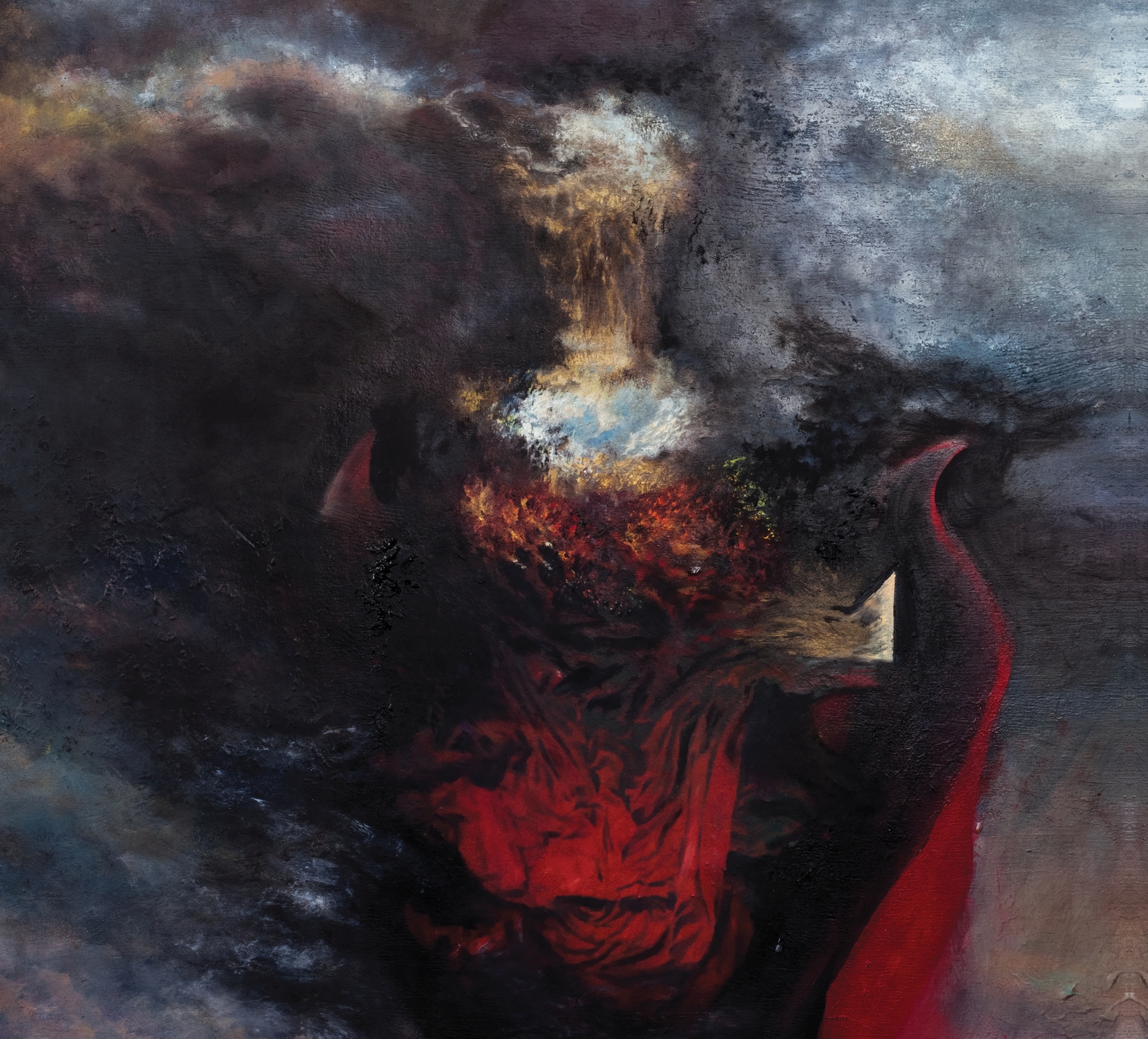
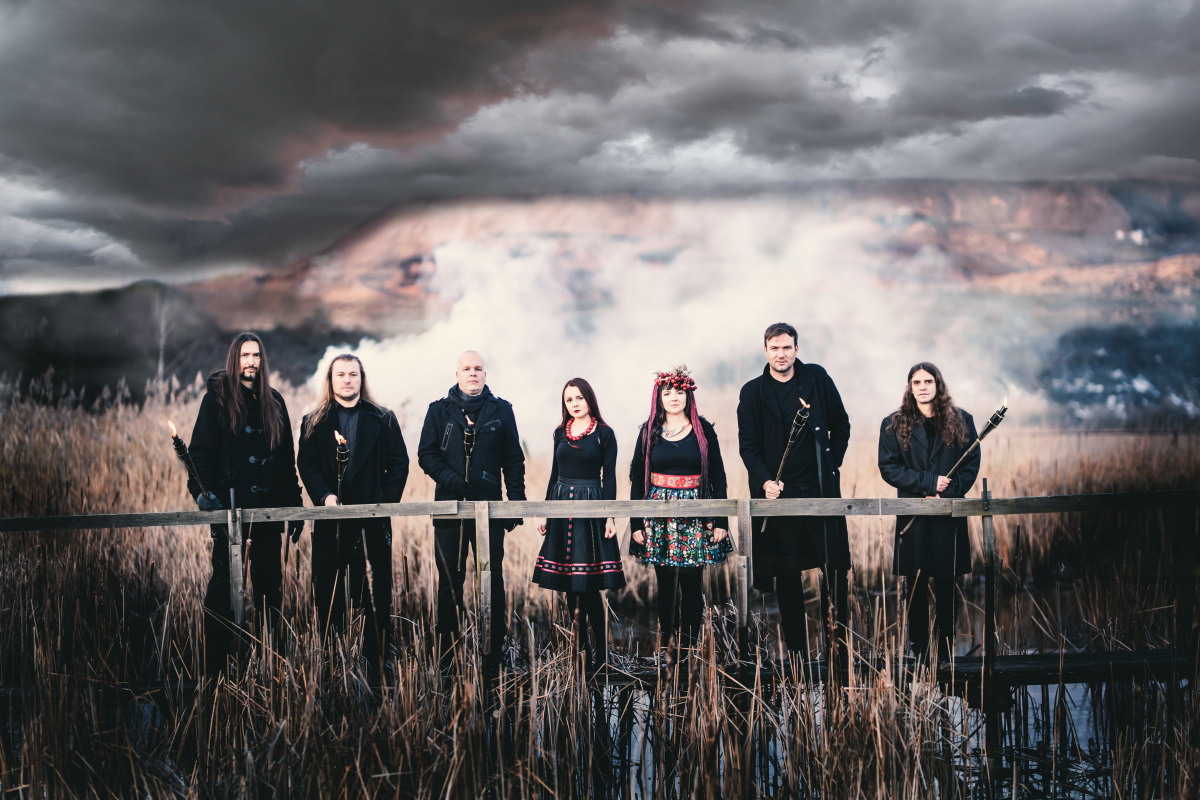
Telling the story of the most important forbidden grimoires in European history, this unrelenting Spanish horde delivers an excellent album that lives up to the legacy of 90’s Black Metal.
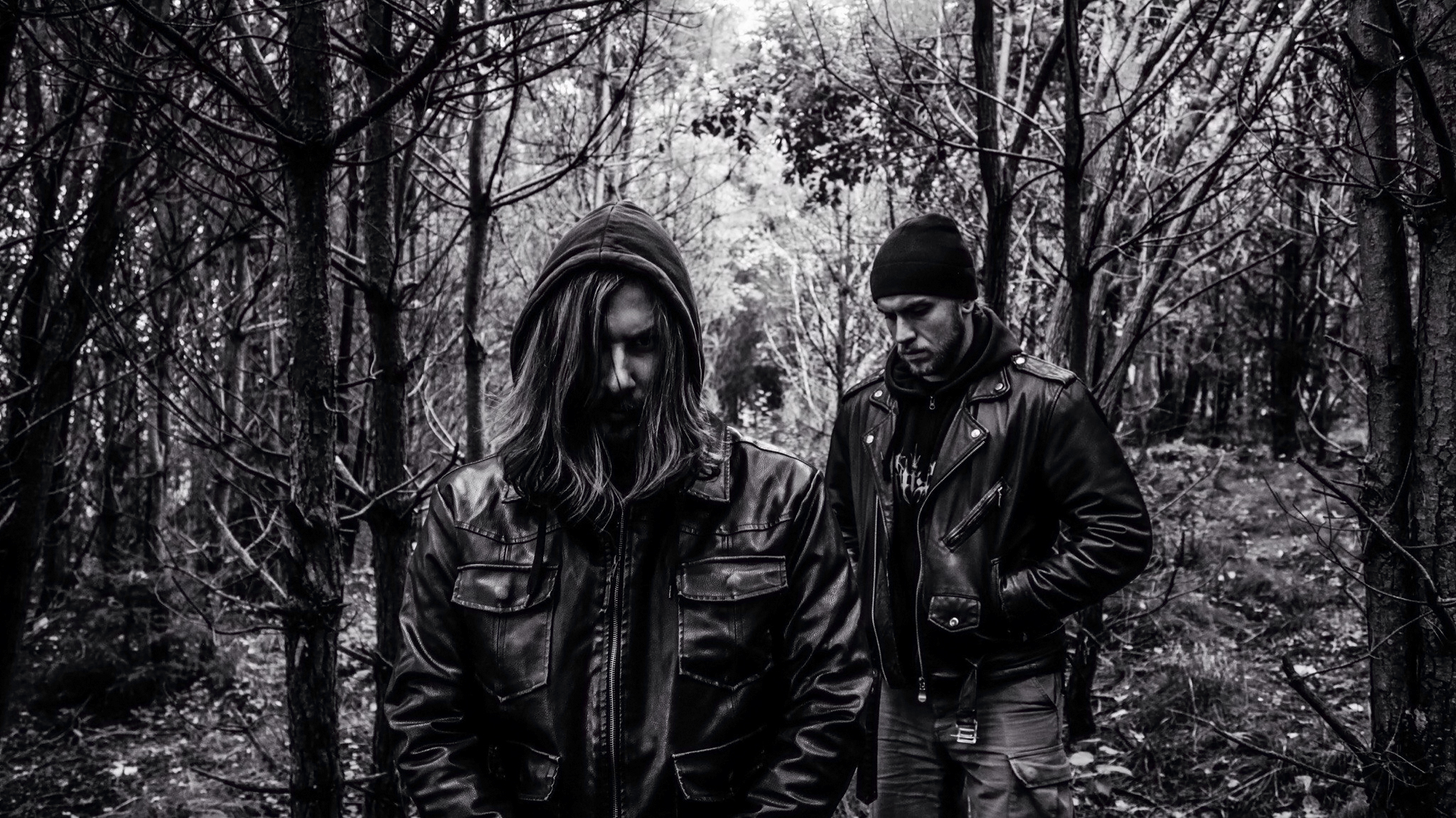
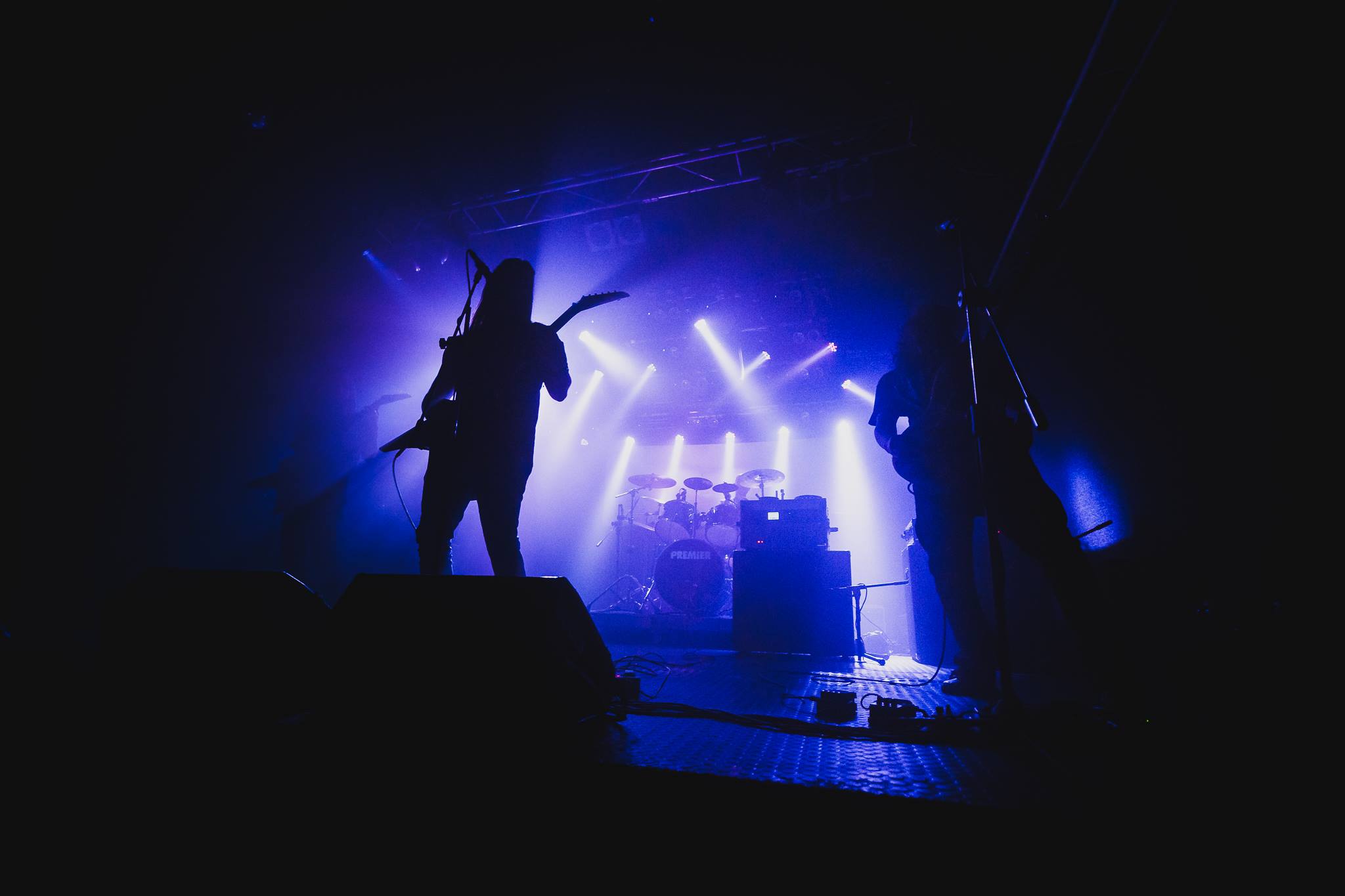
Born in 2014 in Palma de Mallorca, a resort city located in the Balearic Islands in Spain, with the task of putting the Black Metal genre back in the shadow of the glory it had in the 90’s, following the label from the most infamous bands from that period as a pure conceptual beginning (but excluding arsoning or murders, of course), the unstoppable horde that goes by the name of Inferitvm has just released their sophomore album The Grimoires, an epic story about black magic, esoteric rituals and all the different ingredients of true classical Black Metal. Having said that, do you accept the challenge of deciphering the forbidden texts that Inferitvm have brought back to life?
Comprised of lead singer and guitarist Sorcerer V., guitarist Lord Insekkton, bassist Aghanazzar and drummer Bârg, the sound of Inferitvm is fast, raw and full of details and reminiscences, with bands like Emperor and Immortal, as well as several other renowned groups from Norway, Sweden and Finland, serving as the main inspiration for their music. Telling the story of the most important forbidden grimoires in European history, delving into the miseries and stories behind them, The Grimoires is a manual for unraveling all the mysteries of black magic, with a symphonic twist that will undoubtedly surprise all who enjoy devilish and extreme music. Furthermore, the album brings some orchestral variations which end up helping to introduce your mind into the concept and imagery of an album that’s definitely “not for children”, with its lyrics being based on ancient spells and rituals of esoteric origin, and with the majority of recital refrains expressing the prayers and rituals in a solemn and profound way.
Phantasmagorical keys generate a menacing ambience in the intro Trithemius, before Inferitvm comes ripping with the sonic onrush titled Codex Gigas, where Sorcerer V. gnarls and vociferates like a demon to the imposing beast by Bârg. Moreover, Sorcerer v. and Lord Insekkton bring tons of melody to the musicality with their strings, flirting with contemporary Melodic Black Metal but still sounding loyal to the foundations of classic Black Metal. Then their devastation goes on in the sulfurous and pulverizing Clavicula Salomonis, a lecture in Black Metal bringing forward the most malevolent elements of the genre spearheaded by Sorcerer V.’s infernal roars; and there’s no time to breathe as the quartet keeps blasting sheer obscurity through their damned instruments in Malleus Maleficarum, with Sorcerer V. and Lord Insekkton being on fire with their riffs and solos throughout this marching mass of absolute evil.
In Goetia of Shadows, Bârg and Aghanazzar keep smashing their instruments nonstop, generating a reverberating sound that will please all fans of the genre, all balanced by some very harmonious guitar lines and hellish growls, whereas Galdabrök is another hammering, disturbing hymn of darkness by Inferitvm, with Bârg and his pounding drums dictating the rhythm while Sorcerer V. grasps the song’s obscure lyrics poetically and darkly. In Liber Lux Tenebris, the scorching hot guitars by Sorcerer V. and Lord Insekkton add a touch of Doom Metal to their already infernal music before all hell breaks loose in another feast of old school Black Metal perfect for banging your head in the name of evil. And De Occulta Philosophia is probably one of the most disturbing songs of the whole album (if not the most), where all band members make sure they extract the most Stygian sounds form their instruments, in special the band’s infernal guitar duo with their classic riffage, ending in the most unsettling way possible.
Fortunately for all fans of extreme music, the last batch of songs from The Grimoires is just as thrilling and vile as the rest of the album, starting with La Poule Noire, presenting a classic Scandinavian Black Metal sound with the band’s own twist, sounding as violent as it can be, with its guitar solos creating an interesting paradox with the blast beats delivered by Bârg; followed by De Praestigiis Daemonum, a truly infernal aria where Inferitvm crush our minds mercilessly with their brutality, darkness and rage, or in other words, a demolishing Black Metal tune with a few breaks and variations added to bring more taste and punch to the overall result. And last but not least, the cryptic vocalizations by Sorcerer V. ignite the closing tune titled De Umbrarum Regni, spiced up with nuances of Doom Metal and Blackened Doom, remaining creepy and atmospheric until its visceral ending.
In a nutshell, this unstoppable Spanish horde more than succeeds in telling stories of black magic and evil spells in the form of the pulverizing Black Metal found in The Grimoires (available for a full listen on Spotify), and in order to show your true support to those four horsemen of old school Black Metal simply follow them on Facebook, and grab your copy of such distinct album from their BandCamp page, from the Inverse Records webstore, from iTunes or from Amazon. Because, in the end, all you have to do is let the ancient spells and malignancy flowing from the music by Inferitvm consume your soul, keeping the flame of 90’s Black Metal burning bright for decades to come.
Best moments of the album:Clavicula Salomonis, Malleus Maleficarum and De Occulta Philosophia.
Worst moments of the album: None.
Released in 2019 Inverse Records
Track listing 1. Trithemius 1:23
2. Codex Gigas 5:46
3. Clavicula Salomonis 6:55
4. Malleus Maleficarum 6:23
5. Goetia of Shadows 6:04
6. Galdabrök 5:14
7. Liber Lux Tenebris 5:41
8. De Occulta Philosophia 7:01
9. La Poule Noire 5:30
10. De Praestigiis Daemonum 5:02
11. De Umbrarum Regni 5:26
Band members Sorcerer V. – vocals, guitar
Lord Insekkton – guitar
Aghanazzar – bass
Bârg – drums
One of the most infamous British covens returns to exorcise our demons with another fantastic lesson in Doom Metal.
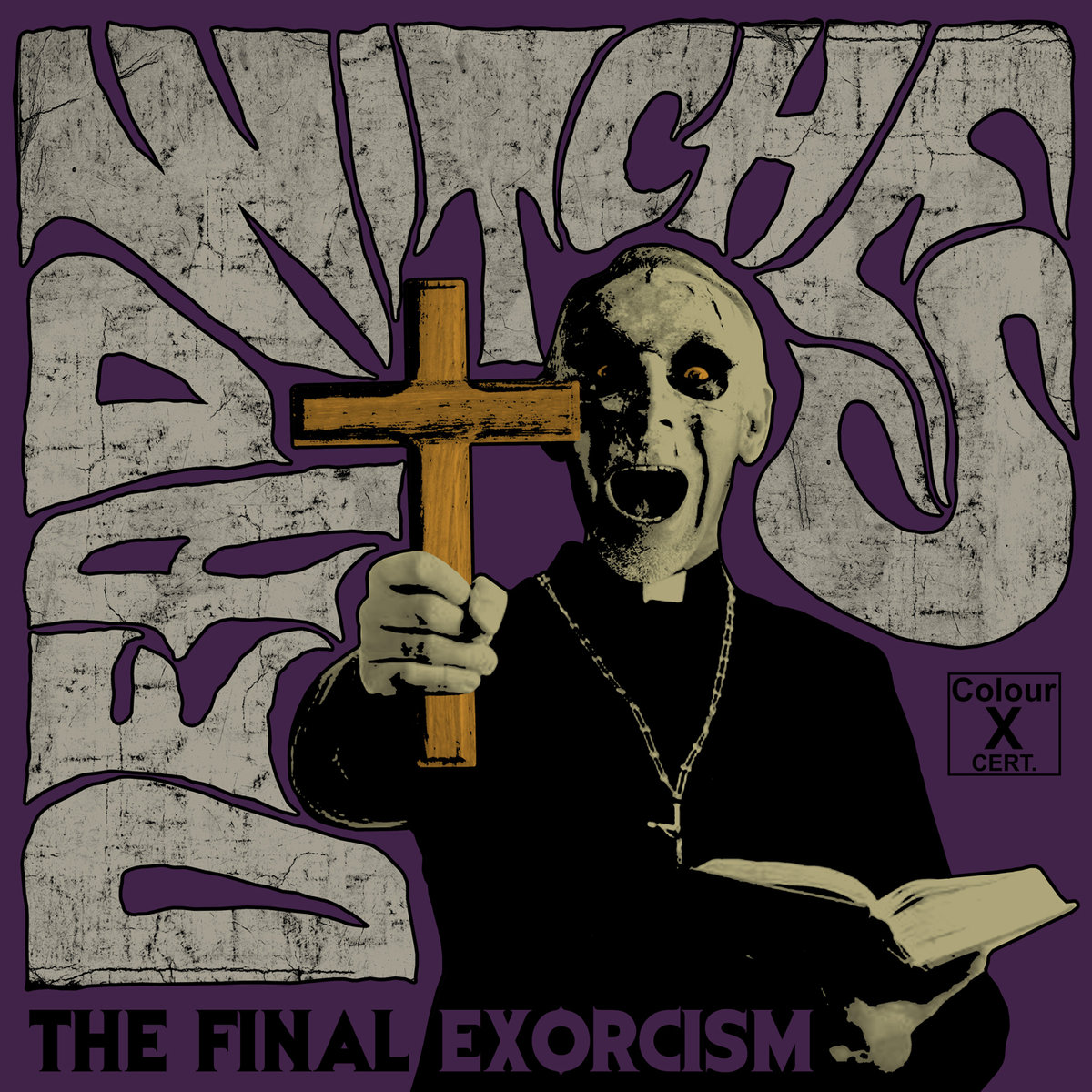
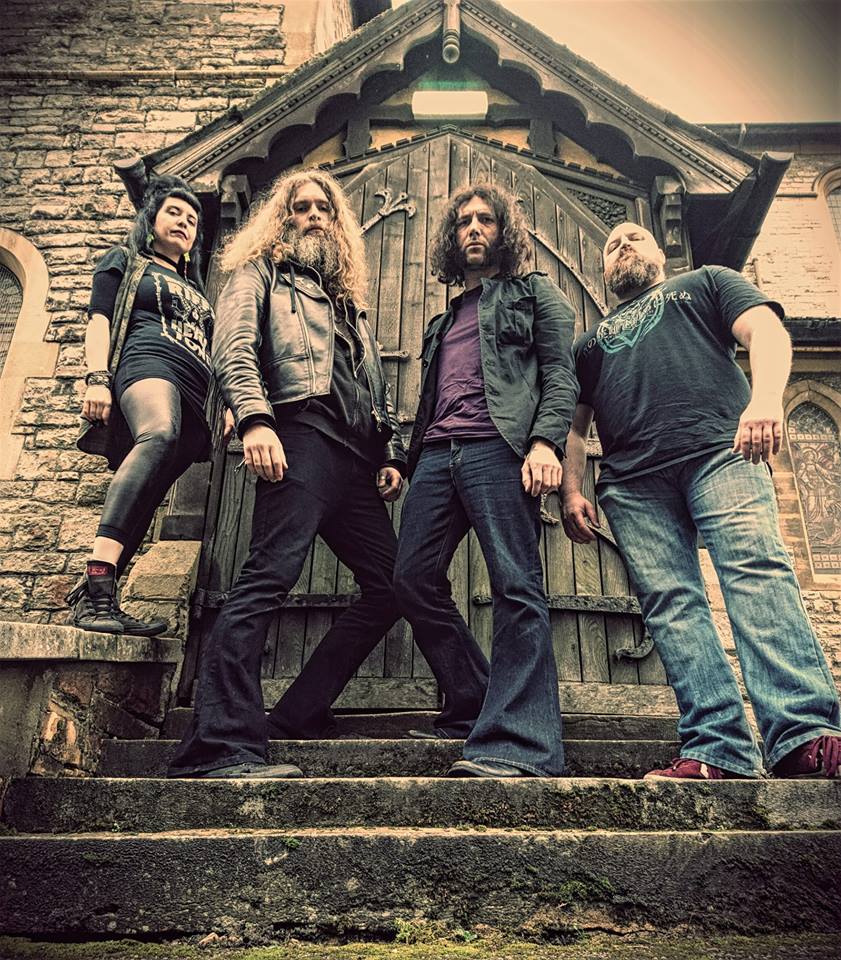
The haunting vocals, heavy riffs, fuzzed bass and savage drumming blasted by the infamous British Occult Stoner/Doom Metal coven known as Dead Witches are back for our total delight in 2019 in their brand new sophomore opus titled The Final Exorcism, a follow up to their 2017 extravaganza Ouija. The brainchild of drummer Mark Greening, founding member of Electric Wizard, Ramesses and With The Dead, Dead Witches took the underworld of heavy music by storm with their debut album in 2017, but it’s now with The Final Exorcism that the quartet sounds even more powerful, damned and gloomy, just the way we like it in Doom Metal.
Featuring the aforementioned Mark on drums accompanied by bassist Carl Geary and newcomers Soozi Chameleone (from Satlan) on vocals and Oliver Irongiant (from Grave Lines, Sea Bastard and End the Agony) on the guitar, replacing Virginia Monti and Greg Elk (R.I.P.), respectively, The Final Exorcism is not only the epitome of everything Dead Witches stand for, but a highly recommended album for admirers of devilish and cryptic doom who simply love the night. Put differently, get ready to be dragged down to pitch black darkness with over 40 minutes of classic Doom Metal made in England split into seven distinct and beautifully crafted songs embraced by the somber artwork by Goatess Doomwych, who had already worked with the band in their previous effort.
A cryptic, horror movie-inspired intro named There’s Someone There sets the stage for the sluggish and grim title-track The Final Exorcism, where Oliver begins his riff-attack together with Carl’s reverberating bass punches, all enfolded by Soozi’s sexy and hellish vocals and roars. In other words, this is first-class neck-breaking Doom Metal, offering our ears over seven minutes of somber and atmospheric passages, pounding beats and endless obscurity. And the distorted guitar lines by Oliver keep dictating the rhythm in Goddess Of The Night, while Mark does what he knows best, which is smashing his drums slowly, steadily and fiercely. In addition, Soozi sings like she’s the true goddess of the night, embellishing the airwaves with her damned vocals. Then Dead Witches ask a simple question to us in the wicked When Do The Dead See The Sun, with the answer being quite easy (obviously never), and the music translates that fact into sheer melancholy, feeling like it was taken from a Tarantino movie and, consequently, warming up our senses for The Church By The Sea, where Mark and Carl generate a massive wall of sounds with their weapons while Soozi will put you on a trance in this Sabbath-inspired Doom and Stoner Metal aria. Also, don’t forget to check out this sick live footage recorded on February 22, 2019 during their performance at Heavy Psych Sounds Fest at The Borderline, in London. It’s doom in its rawest form.
The last part of the album is just amazing, starting with Lay, Demon, a brutal and visceral Doom Metal hymn led by Mark’s Stygian beats, while Oliver and Carl keep extracting absolute evil from their strings. “Lay, Demon was the second track that we wrote for the new record, The Final Exorcism,” said Mark. “This is a slab of old-school doom, with a heavy crushing swing to it, as it plods along to cast out any evil spirits that have entered your soul. Vocalist Soozi Chameleone adds lyrics that tell the tale of a demonic romance, and what happens when you become entranced by an evil spirit …”; whereas in Fear The Priest the whole band summons our spirits for one final exorcism, with its bass and riffs sounding menacing and thunderous from start to finish. Furthermore, the music remains disturbing and alluring for over nine minutes, with Soozi once again stealing the spotlight with her demonic vocal performance. As Mark himself said about this feast of blackened sounds, “Fear The Priest was the last track to be written to complete the album, the idea of the track is based around demonic possession, good vs evil, the fear the possessed person has towards the priest, it’s the longest track on the album, the riffs are pure evil and I think it’s the perfect track to let people know what to expect from the new album.”
You can have a blast with Dead Witches by listening to their brand new sonic exorcism in full on YouTube, by following them on Facebook, by subscribing to their YouTube channel or by listening to more of their music on Spotify, as well as of course by purchasing The Final Exorcism from the Heavy Psych Sounds Records’ BandCamp or webstore, from iTunes or from Amazon. It doesn’t really matter how you do it, as long as you join this talented coven hailing from the UK, a place where dark and damp days, exorcisms and doom are just around the corner waiting, readily available for everyone who loves top-of-the-line dark and sluggish metal music and whose soul has already been consumed by darkness and evil.
Best moments of the album:The Final Exorcism and Fear The Priest.
Worst moments of the album: None.
Released in 2019 Heavy Psych Sounds Records
Track listing 1. There’s Someone There 0:35
2. The Final Exorcism 7:32
3. Goddess Of The Night 8:08
4. When Do The Dead See The Sun 1:38
5. The Church By The Sea 7:33
6. Lay, Demon 5:47
7. Fear The Priest 9:29
Band members Soozi Chameleone – vocals
Oliver Irongiant – guitar
Carl Geary – bass
Mark Greening – drums
Let the witch hunt begin to the sound of the infernal fusion of Black and Thrash Metal by this dynamic duo hailing from Colombia.
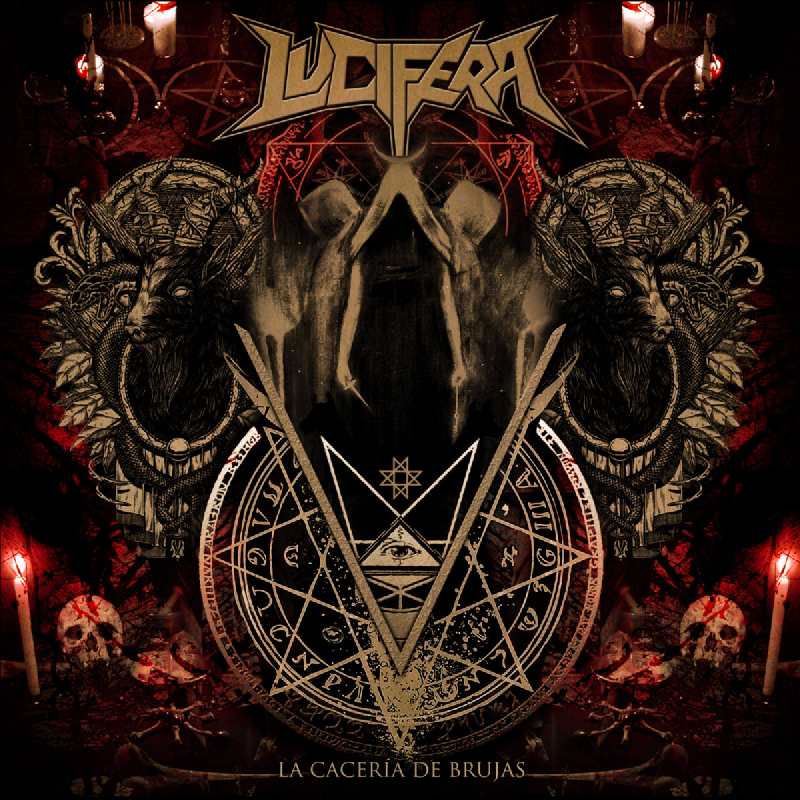
Spawned in the year of 2008 in the ardent fires of Pasto, the capital of the department of Nariño, in southern Colombia as an hellish duo comprised of guitarist and composer David HellRazor and vocalist and bassist Alejandra Blasfemia, Black/Thrash Metal outfit Lucifera started off playing a much more conventional form of Thrash Metal, evolving into an obscure and demonic beast over the years while still maintaining the amazing dynamism between the band’s founding members. Now in 2019 it’s time for Lucifera to spread darkness and blasphemy with their highly anticipated fourth full-length and defining opus entitled La Caceria De Brujas, or “the witch hunt” in English, taking the band’s primeval elements to a whole new level of malignancy, hatred and professionalism.
Featuring a menacing design by HR Design, from the band’s hometown Pasto, La Caceria De Brujas offers the listener a 39-minute tour de force of the blackest Thrash Metal and thrashiest Black Metal split into eight demonic hymns that will please all of fans of true, ancient metal music from the very depths of the underworld. In addition, one very interesting and important detail about La Caceria De Brujas is the fact that the lyrics for each song were pretty much written by a different musician. For instance, the lyrics for “Arde En Llamas” were written by Sonia Sepulchral (Bolivia), “Sigillum Diaboli” by Alicia Leguizamon (Colombia), “Sortilegio” by Clara Kultarr (Peru), “Ceremonia Secular” by the band’s own she-demon Alejandra Blasfemia (Colombia), “Pacto Pagano” by Melissa Kalissa (Colombia), “Conjuro” by Silvia Gers (Argentina), and “Brujeria” by Adriana Mavir (Mexico). However, that doesn’t mean the songs feel or sound disconnected; quite the contrary, the transition from song to song couldn’t have sound more powerful and thrilling, adding an extra touch of obscurity to the entire album thanks to this amazing “coven” of lyricists.
Evil distortions and vociferations kick off the blasphemous, belligerent and pulverizing opening track Arde En Llamas, with Alejandra sounding like the beast incarnate on vocals, while David blasts truly demonic sounds from his sonic weapons. Furthermore, you can sense influences from the early days of Slayer and classic Black Metal in their music, which obviously translates into absolute awesomeness. And Alejandra keeps growling manically (and always in Spanish, which makes her message even more obscure and vibrant) and punching us in the head with her rumbling bass in Sigillum Diaboli, a frantic hymn perfect for slamming into the circle pit to the vicious riffs by David, followed by Sortilegio, even more satanic than its predecessors by blending the speed and rawness of Thrash Metal with the darkness of Black Metal, with David sounding bestial not only with his riffs but also with his crushing beats. Then a disturbing intro taken from the original motion picture soundtrack “The Witch – Witch’s Coven” (written and performed by Mark Korven in 2015) ignites the demonic Ceremonia Secular, with the guitars by David bringing thunder to the overall musicality, resulting in a fantastic headbanging, mid-tempo display of extreme music that flows infernally until its grand finale.
Putting the pedal to the metal, the Colombian duo gets back to a more dissonant, high-octane sonority in Pacto Pagano, showcasing guitars and bass in absolute sync which consequently generates a menacing ambience for our total delight, while Alejandra’s gnarls sound like the utmost depiction of madness and rage. Following a similar disruptive, devilish pattern as its predecessor, Conjuro is another superb exhibit of underground Thrash and Black Metal by Alejandra and David, who by the way is on total fire with his riffs and solos, making our heads tremble in a demented way, which is also the case in Brujeria, where David demolishes his drums providing Alejandra all she needs to unleash her inner demon on vocals, or in other words, her anguished roars match flawlessly with the song’s thunderous bass and riffs from start to finish. Lastly, ending such sensational album the duo offers us Evocación Del Caos, by far the most obscure of all songs, an instrumental extravaganza presenting hints of Doom Metal and Blackened Doom forming a damned sonority that goes on and on, mesmerizing our senses and darkening our minds until all fades into a cold void, giving place to a final and very unsettling combination of evil sounds and tones.
In summary, let the witch hunt begin to the sound of the beyond fulminating fusion of Black and Thrash Metal found in La Caceria De Brujas, courtesy of this talented and electrifying Colombian duo, and in order to show all your support to Lucifera go check what they’re up to on Facebook and grab your copy of such blasphemous and sulfurous album from the Dunkelheit Produktionen’s BandCamp page or webstore in CD format or as a limited black, red or sun-amber edition LP (including an A2 format poster and a metalpin). Because if you’re going to be part of a coven, you better choose one where you can also enjoy first-class metal music, like what Lucifera more than succeeds in providing to our ears always avid for ass-kicking underground Extreme Metal.
Best moments of the album:Arde En Llamas, Sigillum Diaboli, Pacto Pagano and Conjuro.
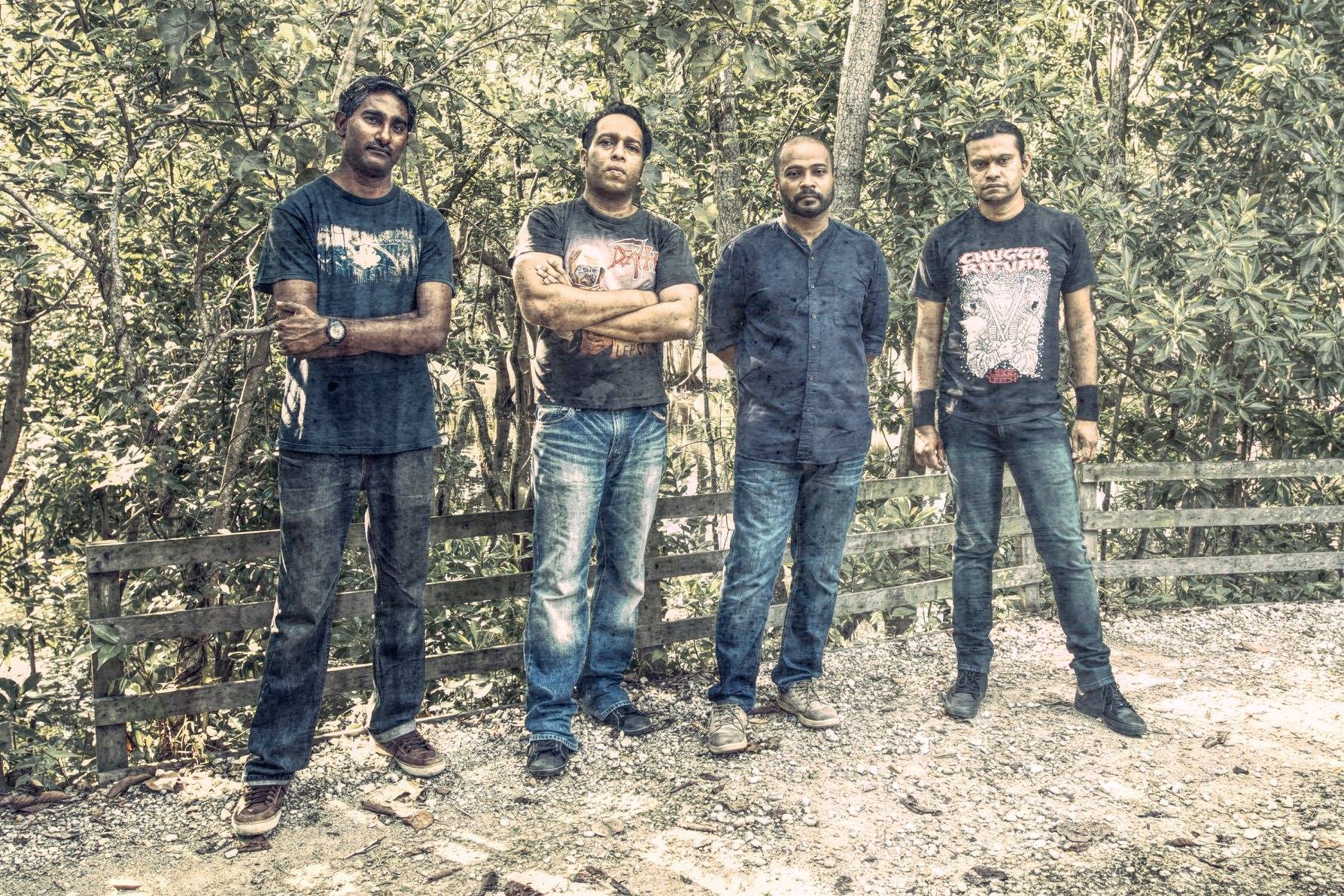
Drawing influences from the Hellenic Black Metal scene, here comes a Singaporean squad armed with their brand new album of dissonant and hypnotic sounds.
Formed in 2011 in Singapore by Kathir, vocalist and bassist for Rudra, an iconic Death and Black Metal act from the local scene, The Wandering Ascetic are making a name for themselves in the underground of heavy music by blasting a more exemplary black and thrash sonority without the Indian classical instruments seen in the music by Rudra, but still retaining their trademark spiritual fervor. Accompanied by guitarist Vinod (also from Rudra), bassist Jayakumar and drummer Kannan K, Kathir and his The Wandering Ascetic draw their influences from the Hellenic Black Metal scene (as well as obviously from Rudra), generating dissonant, hypnotic sound s infused with crushing riffs and grooves, elevating their music and art to a whole different level.
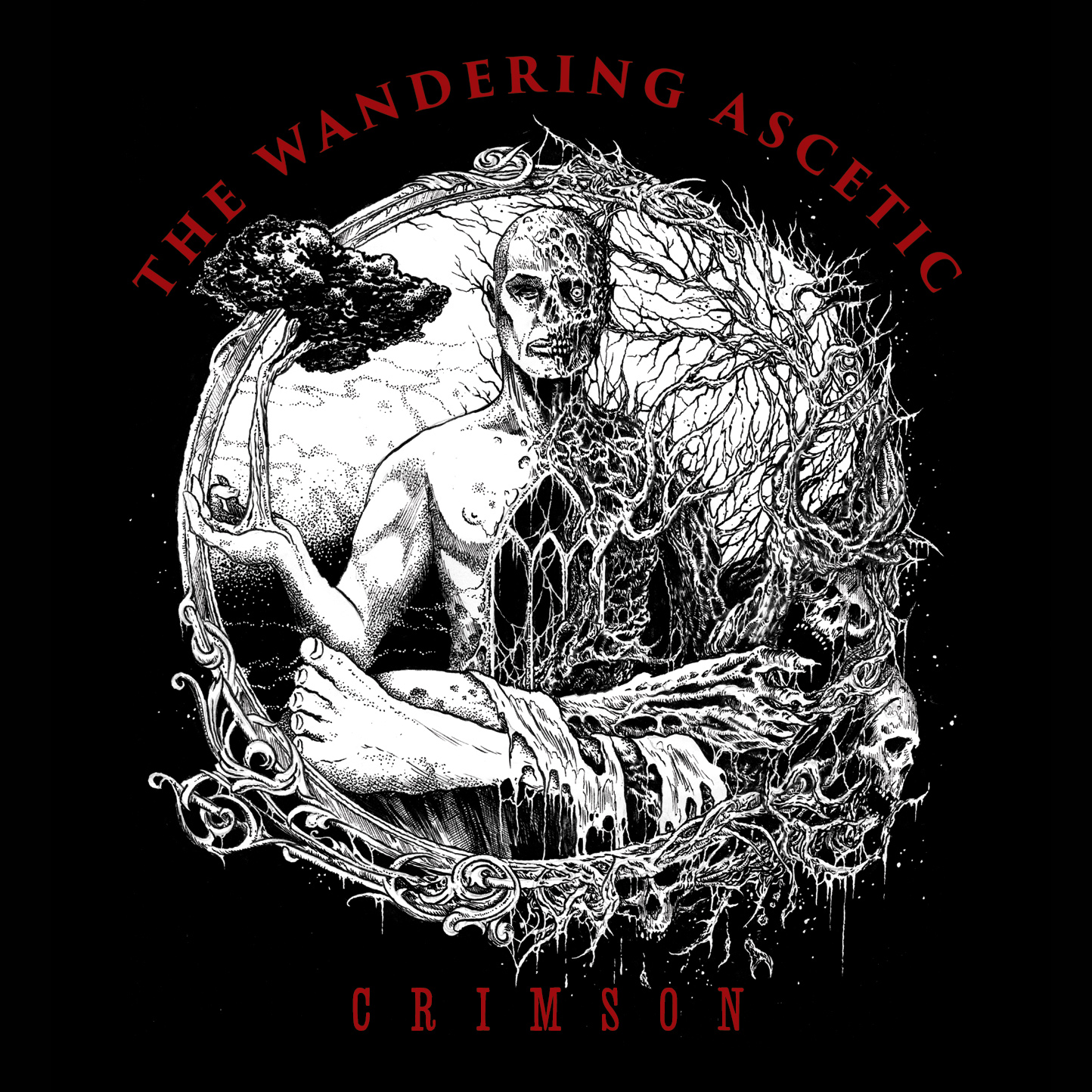
After the release of their debut EP titled Manifest Destiny, in 2013, it’s time for The Wandering Ascetic to smash our senses once again with their first full-length opus, the excellent Crimson, featuring a life-transforming artwork by Mark Riddick (Fetid Zombie) and layout by Turkka Rantanen (Demilich, Demigod). Comprised of 10 unrelenting songs ranging from pure old school Black Metal to modern-day Southern Rock and Groove Metal, Crimson is a solid and very entertaining statement by The Wandering Ascetic in a scene that seems stagnant at times, showing how powerful Singaporean metal can be and, as a consequence, opening several doors in the international market for the band.
Vinod begins his slashing attack accompanied by Jayakumar’s thunderous bass in Eva Braun, with Kathir roaring demonically for our total delight in a Black and Death Metal attack spiced up by hints of Progressive Metal, flowing darkly until its eerie end; then the tribal beats by Kannan K ignite another obscure composition named I Sing the Body Electric, showcasing an obscure rhythm inspired by old school Black and Doom Metal tailored for fans of the genre where the guitar lines by Vinod sound as flammable as they can be. Bringing elements form the music by Gojira, Mastodon and Tool we have the beautifully titled The Exorcism of Mrs. Doe, a very intricate and sulfurous tune where Jayakumar and Kannan K generate a dense and disturbing atmosphere with their weapons, followed by The Gods Bleed!, a song perfect for breaking your neck headbanging spearheaded by Vinod’s devilish riffs, while Kathir continues to vociferate like a demonic entity, not to mention how metallic and impactful Jayakumar’s bass punches sound and feel.
Beast of Burden presents more melody blended with sheer darkness in the form of modern-day Death and Black Metal, with Vinod being on absolute fire with his riffs and solos while the gnarls by Kathir only get more and more infernal, and The Wandering Ascetic keep hammering our heads with their crushing sonority in The Will to Live, where all four band members make sure we don’t stop banging our heads to their vicious music, with highlights to Kathir’s enraged growls and Vinod’s ass-kicking guitar solo. After such high level of devastation, it’s time to dive deep into the crypts of Hades with those Singaporean metallers in To Hell, Back and to Hell Again, a classic, straightforward metal extravaganza with elements from the dirty Rock N’ Roll played by bands like Motörhead and Chrome Division, which obviously means it kicks some serious ass.
Here for the Good Things keeps the album at a very good level of malignancy and hatred despite sounding a bit generic (or I should say less inspired than the other songs), with Vinod slashing his guitar in a very precise and aggressive manner; and the cutting sound of his guitar is once again the main ingredient in the visceral Assassins, displaying some hypnotizing instrumental parts, in special Vinod’s guitar solo, while Kannan K doesn’t let the energy go down by smashing his drums nonstop. Finally we have Orang Laut, an ominous and grim blast of extreme music highly inspired by classic Doom Metal, with Vinod and Jayakumar extracting the most Stygian sounds from their strings and with the music ending as dark as anyone can imagine.
It’s not always that we have the pleasure of facing high-end metal music from such distinct country, completely out of the North American and European markets, and we metalheads should not only thank The Wandering Ascetic for that by following them on Facebook, but mainly by purchasing their new album Crimson from their own BandCamp page, from the Transcending Obscurity webstore, or from other retailers like Target. Crimson might not be considered a true revolution in music, but the four guys from The Wandering Ascetic definitely put on a lot of energy, creativity and passion in the writing, composing and recording of the album to ensure they were not just playing “more of the same”. Quite the contrary, Crimson does sound very unique and compelling, elevating the name of Singapore in the world of heavy music and paving a very interesting future for the quartet.
Best moments of the album:I Sing the Body Electric, The Gods Bleed! and To Hell, Back and to Hell Again.
Worst moments of the album:Here for the Good Things.
Released in 2019 Transcending Obscurity Asia
Track listing 1. Eva Braun 5:18
2. I Sing the Body Electric 4:46
3. The Exorcism of Mrs. Doe 4:28
4. The Gods Bleed! 4:42
5. Beast of Burden 4:01
6. The Will to Live 3:15
7. To Hell, Back and to Hell Again 3:10
8. Here for the Good Things 4:10
9. Assassins 5:04
10. Orang Laut 3:12
Band members Kathir – vocals
Vinod – lead & rhythm guitars
Jayakumar – bass
Kannan K – drums
Immerse yourself into a work of windswept mysticism and pure pagan fury dedicated to the most important and powerful totem in the culture of southern Slavs.
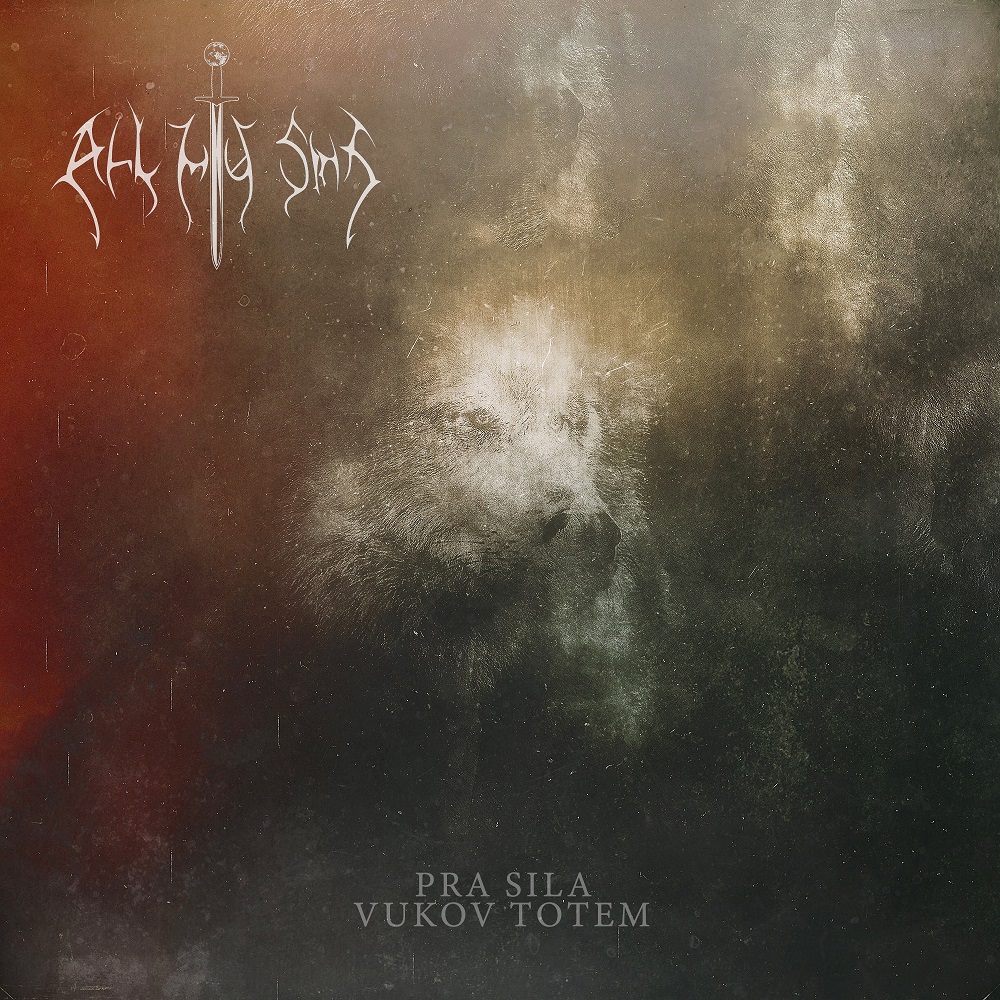
Originating from the southern regions of Europe, Serbian Black Metal duo All My Sins was officially formed by multi-instrumentalists Nav Cosmos and V in the year of 2000 in the city of Pančevo around the idea of claiming their own place among the already-established Second Wave of Black Metal. Inspired by the spiritual heritage of the land they come from, the band started making records, each of them conceptually placed around certain mythological symbols such as their brand new opus entitled Pra Sila – Vukov Totem, which would be roughly translated to English as “The Primordial Force of the Wolf’s Totem”, a work of windswept mysticism and pure pagan fury dedicated to the most important and powerful totem in the culture of southern Slavs, the wolf.
Featuring a somber cover art by Romanian musician and artist Daniel Dorobantu (Thy Veils) and guest musicians Nemir, Khargash and Jaguar (from underground Serbian bands like Obscured and Terrörhammer), All My Sins’ newborn eight-track album portrays the wolf as the ancient ancestor of Serbian people, a creature with unusual attributes that is believed to possess obscure divine powers, narrating a vast spiritual journey throughout the realms of southern Slavic mysticism. The meeting of man and wolf, mystically dangerous yet magnificent at the same time, depicts the encounter with a demonic being and concurrently the moment when a man meets his native forefather. In the world of wilderness abandoned by man, contradictory and strong, the wolf represents everything we are not, unknown and terrifying, or the perfection of a stranger.
In the opening track Vukov Totem, or “Totem of the Wolf”, a demented blast of visceral Black Metal invades our ears mercilessly, with V pulverizing his strings with his violent shredding while Nemir shakes the foundations of the earth with his blast beats before a cosmic break turns the sonic devastation into a more progressive and atmospheric extravaganza. Their incendiary feast of Slavic Black Metal goes on in Zov iz Magle, or “A Call from the Mist”, where Nav Cosmos roars and gnarls powerfully from the bottom of his blackened heart, with the entire song feeling very dense, enfolding and also bringing some deep, phantasmagorical clean vocals, while its instrumental parts remind me of old school Norwegian Black Metal; followed by Vetrovo Kolo, or “The Wheel of the Wind”, another brutal explosion of extreme sounds by All My Sins where Nemir sounds even more enraged and bestial on drums, while Nav Cosmos vociferates manically. Furthermore, the song’s razor-edged guitar riffs will violently pierce your mind and soul, leaving you completely disoriented after all is said and done. And U Mlazevima Krvi, or “In the Streams of Blood”, brings forward devastation, rage, madness and top-notch Pagan Black Metal to our ears. What else can you ask for, right? Moreover, Nav Cosmos’ deranged growls in his mother tongue end up adding an extra touch of lunacy to the overall musicality, just like what happens in the whole album.
Then it’s time to get smashed into the circle pit to the fulminating Opsena, or “The Phantasm”, showcasing almost eight minutes of crushing Black Metal with Atmospheric Black Metal nuances while V continues to brutalize his strings powerfully, with the music morphing into a completely new sonority after a cryptic, somber passage, feeling a lot more melodic and introspective. In the bridge Mesecu u Oko, or “Towards the Moon’s Eye”, wicked, Stygian noises are spiced up by Nav Cosmo’s anguished gnarls, flowing into over 10 minutes of a beyond atmospheric display of contemporary Black Metal named Konačna Ravnodnevica (Čin Prvi), or “The Final Equinox (Act I)”, sounding epic and bold from start to finish, with Nemir delivering sheer darkness through his crisp drumming, until melancholy permeates the air in Konačna Ravnodnevica (Čin Drugi), or “The Final Equinox (Act II)”, featuring guest Khargash on bass and backing vocals. This is a fantastic Atmospheric Black Metal chant infused with hints of Doom Metal, remaining as sluggish and grim as it can be and, therefore, putting a pensive ending to such demolishing album of Pagan Black Metal.
Brewing since the ancient days, Pra Sila – Vukov Totem (available for a full listen on YouTube) is now being released into the modern era with a timelessness that’s exciting to behold, and you can savor that first-class fusion of Black Metal and the Slavic culture by purchasing the album from the band’s own BandCamp page, from the Saturnal Records’ BandCamp page or webstore, from Amazon, or from Discogs. Also, don’t forget to follow the band on Facebook and on VKontakte, and immerse yourself into a sensational world of South Slavic Black Metal mysticism crafted by this talented and undisputed Serbian duo.
Best moments of the album:Vukov Totem, Vetrovo Kolo and U Mlazevima Krvi.
Worst moments of the album:Konačna Ravnodnevica (Čin Drugi).
Released in 2018 Saturnal Records
Track listing 1. Vukov Totem 9:43
2. Zov iz Magle 7:56
3. Vetrovo Kolo 6:25
4. U Mlazevima Krvi 3:52
5. Opsena 7:57
6. Mesecu u Oko 1:19
7. Konačna Ravnodnevica (Čin Prvi) 10:25
8. Konačna Ravnodnevica (Čin Drugi) 8:10
Band members Nav Cosmos – vocals, recitals, bass
V – guitars, bass, clean and backing vocals, recitals, keys, vrg
Progressing in their own unique interpretation of desolation, this cryptic Atmospheric Black Metal entity from Belarus are unleashing upon humanity their second revelation.
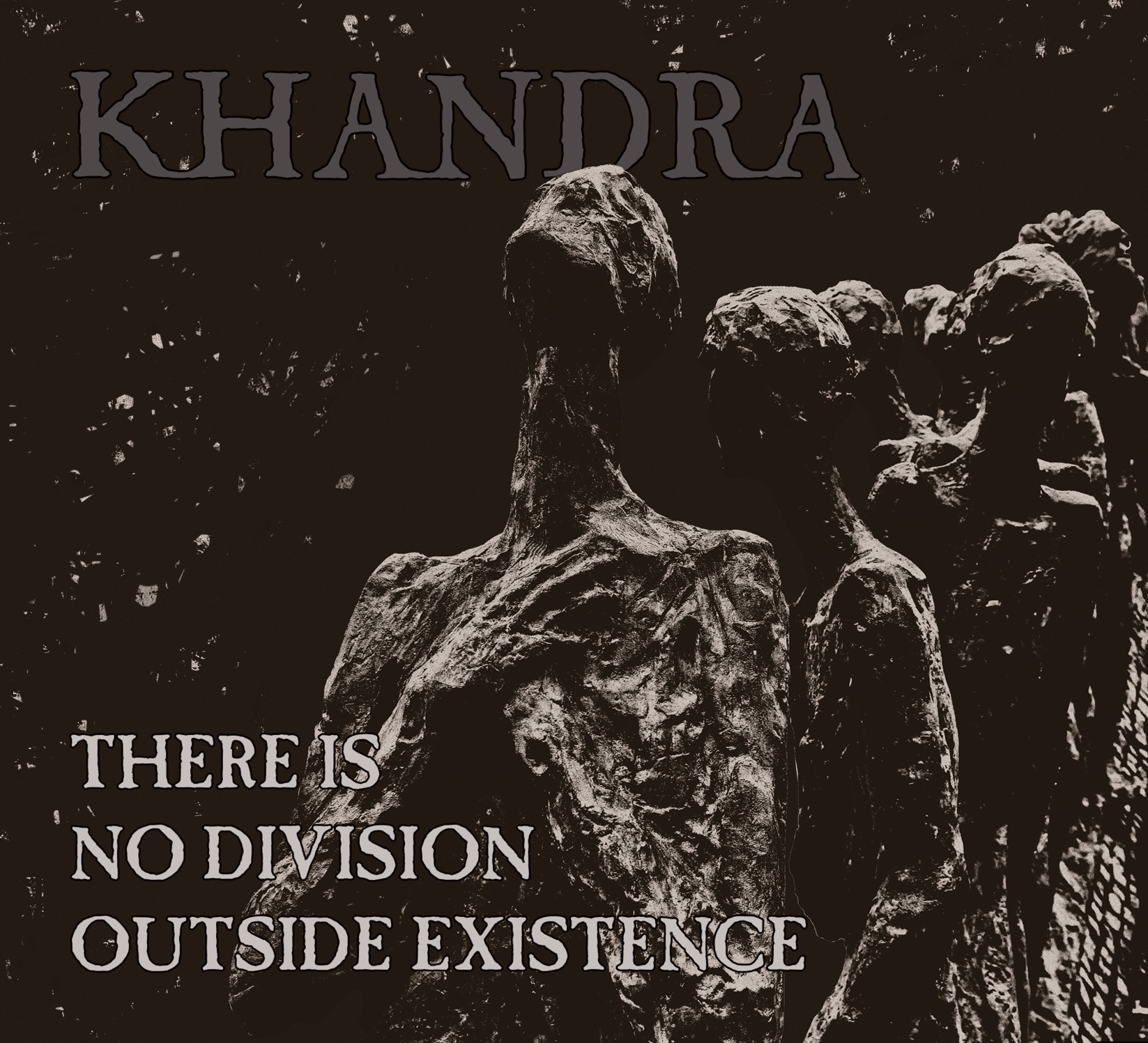
Hailing from the Belarusian capital Minsk, Khandra (or Хандра), the Russian word for “melancholy”, are an Atmospheric Black Metal duo comprised of vocalist LDZMR (Vladimir Borodulin) and multi-instrumentalist DMTR (Dmitry Romanovsky) who sparked a bit of interest with their 2017 debut two-song EP All Is of No Avail. Progressing in their own unique interpretation of desolation, those two cryptic entities holed themselves up in the winter of 2018 to invoke and expel their second revelation, a somber and malevolent four-track EP entitled There is No Division Outside Existence, and they had a few interesting comments about their newborn spawn. “The concept of the project is the flaw and inability of consciousness to reflect the boundlessness of the nothingness in the frames of reality that (reality) only exists within and in the sanity. It is a sort of an attempt of exceeding the limits of imagination, which makes the lyrics unavailable for criticism from the point of view of logical thinking. The musical vessel here is a result of expression that has no bonds with any personal emotion of social nature.”
Ominous sounds rising from the pits of hell ignite the atmospheric and menacing intro titled Into the Absolute Nothingness, before demonic, austere waves invades our ears in Decaying into the Ascended, where Dmitry shows no mercy for his stringed weapons, delivering cutting riffs and thunderous bass lines while Vladimir gnarls like a true creature from the underworld. Put differently, it’s a very melodic and electrifying hybrid of old school Black Metal with contemporary Atmospheric Black Metal, with its hellish blast beats adding an extra touch of aggressiveness to the overall musicality, ending in a tribal and visceral way. And the duo continues to fire their Stygian sounds and vociferations in the title-track There is No Division Outside Existence, another infernal creation where the crisp and metallic sounds of the guitar together with the rumbling bass roars create the perfect atmosphere for Vladimir to growl and bark rabidly. And lastly we have Progressing in Desolation, offering the listener almost nine minutes of the darkest form of Atmospheric Black Metal you can think of, spiced up with Doom Metal nuances and the creepy, harsh vocalizations by Vladimir. Moreover, Dmitry is truly infernal with his phantasmagorical guitar, not to mention how well they move from an enraged sonic havoc to more harmonious and mesmerizing lines and then back, with the music remaining dense and strident until its lugubrious grand finale and, therefore, being highly recommended for lovers of the darkest side of metal.
In a nutshell, Khandra are more than just your regular metal band, and There Is No Division Outside Existence, available for a full listen on YouTube and on Spotify, and on sales from their own BandCamp, from the Redefining Darkness Records’ BandCamp, from the Possession Productions’ BandCamp, from iTunes or from Amazon, is the ultimate representation of what the duo is capable of and how deep they can crawl inside your mind. Because, in the end, Khandra are a musical manifestation that can only be illuminated through experience, and all you have to do is listen and absorb.
Best moments of the album:Decaying into the Ascended.
Worst moments of the album: None.
Released in 2018 Redefining Darkness Records
Track listing
1. Into the Absolute Nothingness 3:27
2. Decaying into the Ascended 7:44
3. There is No Division Outside Existence 5:59
4. Progressing in Desolation 8:31
Band members Vladimir Borodulin – vocals
Dmitry Romanovsky – guitars, bass
Crafting Black and Doom Metal “out of nothing”, this Brno-based band is here to introduce us all to their gloomy vision of underground metal with their debut album.
Ex nihilo is a Latin phrase meaning “out of nothing”, often appearing in conjunction with the concept of creation, as in creatio ex nihilo, meaning “creation out of nothing”, chiefly in philosophical or theological contexts, but also occurring in other fields. It’s with that concept in mind that Depths Above, a Czech Black/Doom Metal band formed in 2015 in the city of Brno by current and former members of the bands Bhagavat (Italy), Desert Witch (Slovakia) and Inferno (Czech Republic), are releasing their debut installment, the 32-minute 4-track album Ex Nihilo, introducing us all to their gloomy vision of underground metal in which genres like Black, Death and Doom Metal mix in various dosages and moods. The wicked album artwork, created by the band’s own vocalist and guitarist Vama Marga, is a very good indication of what to expect from Vama together with guitarist Dreamancer, bassist Ivan Teleranko Dvorsky and drummer Sarapis, but it’s when you hit play that you’ll actually be able to feel all the madness and fury flowing from their distinguished music.
Ominous and cavernous sounds ignite the Black and Doom Metal aria Here and Everywhere, morphing into a gargantuan feast of extreme sounds led by Sarapis’ frantic drums and Vama’s and Dreamancer’s choleric riffs, before Vama begins growling like a demonic entity. And the music remains menacing and austere until its Stygian finale, being flawlessly followed by the flammable The Descent, where Ivan and Sarapis make the ground rumble with their thunderous instruments, being perfect for breaking your neck headbanging. Furthermore, the music gets more atmospheric and eccentric as time goes by, also showcasing a beautiful and impactful work done by the band’s devilish guitar duo.
Almost tribal, but always hypnotizing and obscure, A Prayer presents Vama, Dreamancer and Ivan complementing Sarapis’ nocturnal beats flawlessly with their piercing and dense strings in an instrumental extravaganza of Blackened Doom and classic Doom Metal, infused with elements from Progressive Metal the likes of Tool and Mastodon; whereas the title-track Ex Nihilo closes the album as demented and vibrant as the other songs in the form of a massive wall of darkened sounds spearheaded by Vama and his enraged roars. Moreover, it’s by far the most Black Metal of all songs, spiced up by the utter melancholy and anguish of Doom Metal, without a single space being left empty, invading your ears mercilessly and therefore closing the album on a high, cryptic and malevolent note.
You can get in touch with the talented Vama and his henchmen through their Facebook page, and grab your copy of Ex Nihilo exclusively from their BandCamp page. As aforementioned, Ex nihilo means “creation out of nothing”, and Depths Above explored that concept to perfection when creating the music found in their new album, showing the world the band is here to stay, proudly carrying the flag of Black and Doom Metal as high as the sun, but of course with their hearts and minds being as blackened as extreme music demands.
Best moments of the album:The Descent and Ex Nihilo.
Worst moments of the album: None.
Released in 2018 Independent
Track listing 1. Here and Everywhere 7:30
2. The Descent 7:04
3. A Prayer (Instrumental) 7:31
4. Ex Nihilo 9:04
Band members Vama Marga – vocals, guitars
Dreamancer – guitars
Ivan Teleranko Dvorsky – bass
Sarapis – drums
Deeply inspired by the Slavic feelings of ancient longing and melancholy, this Czech Folk Metal orchestra will take you on a pleasant journey through their wild and serene homeland in their brand new opus.
One of the pioneers of Folk Metal, Ostrava, Czech Republic-based band Silent Stream Of Godless Elegy, returns in 2018 with another beautiful album blending the darkest and at the same time most enfolding elements from Doom and Folk Metal, the stunning Smutnice, the sixth full-length installment in their solid career. Since their inception in 1995 when they emerged from Moravia, deep within the Slavonic heartlands, Silent Stream Of Godless Elegy have been delivering a first-class fusion of metal music with traditional Moravian folk deeply inspired by the Slavic feelings of ancient longing and melancholy, and they offer all that in Smutnice, taking you on a pleasant journey through their wild and serene homeland. As for the title, it’s not a common word in Czech language. “Smutnice” is a noun coming from the adjective “smutný”, which means “sad” or “sorrowful”, so the meaning could be something like “a poem of sadness” or “someone who brings sadness”.
Furthermore, the Moravians entered the iconic Grapow Studios once again to record with Roland Grapow himself, also joining forces with Yossi Sassi (Yossi Sassi & The Oriental Rock Orchestra, Orphaned Land), the world famous Oriental rock pioneer, who took care of the production of the album, bringing to the listener a crisp and impactful musicality enhanced by the album’s crystal clear production. Not only that, keep in mind Silent Stream Of Godless Elegy are not your regular metal band, as apart from Hana Hajdová and Pavel Hrnčíř on vocals, Radek Hajda on the guitar, Stanislav Pavlík on bass and Michal Milták on drums, the band also features a dynamic and unique duo comprised of violinist Gabriela Povraznikova and violoncellist Michal Sýkora, not to mention all special guests such as the Folklore Ensemble Kriváň on choir, Yossi Sassi himself playing an array of instruments like the bouzoukitara and the shaker, Míša Lipárová playing the dulcimer, and Martin Šob also on vocals and choir. At least for me that feels more like a full metal orchestra than a simple band, right?
The opening track Ten, Který Ukoval Slunce (or “The One Who Forged The Sun”) is folksy, embracing and fun, with the duo Gabriela and Michal Sýkora with their respective instruments bringing a whimsical aura to the overall sound, while Hana hypnotizes us with her classy vocal lines, providing a gentle and impactful start to the album. Then we have Kdo Z Nás Je Víc (“Which Of Us Is More”), a lot crazier, faster and heavier, which means it exhales awesomeness, spearheaded by the crushing beats by Michal Milták. Moreover, this time Hana shares the vocal duties with Pavel and his enraged gnarls, which by the way sound amazing in his mother tongue. And get ready for another round of captivating, smooth sounds and tones in Synečku (“My Beloved”), where Gabriela and Michal Sýkora once again warm our hearts with their strings, while Stanislav generates a rumbling and dense background curtain with his bass; followed by Ptakoprav (“He Who Talks To Birds”), a lesson in Folk Metal infused with Doom Metal nuances with the piercing guitar lines by Radek being beautifully complemented by Gabriela’s violin in a gentle but neck-breaking rhythm where Hana sounds as passionate and tuneful as usual.
Then a Doom Metal intro evolves into what’s perhaps the rawest and most experimental of all songs, named Malověrná (“She Of Little Faith”), with Radek and his riffs being in total sync with Michal Milták’s beats, while Stanislav’s bass keeps rumbling in the background. It just lacks an extra pinch of electricity, but nothing to worry about; on the other hand, the amazing Za Nevěstou (“To The Bride”), featuring Folklore Ensemble Kriváň, Yossi Sassi, Míša Lipárová and Martin Šob, is a full-bodied feast of folk and doomed sounds where all instruments sound and feel extremely sharp and thunderous, showcasing a lot of dynamism between Hana and Pavel on vocals, all embraced by stunning choir passages. Acoustic guitars and a rumbling bass set the stage for Hana and her touching vocals in the second to last track in Smutnice, titled Tichý Zpěv (“Quiet Tune”), also presenting the usual Doom Metal-inspired drums by Michal Milták and a flammable guitar solo by Radek, and closing the album we have a somber and delicate tempest of Doom and Folk Metal entitled Bezbřeží (“Shoreless”), a powerful and dense ballad by this distinguished band where once again Gabriela and Michal Sýkora steal the spotlight with their whimsical waves, ending the album in the most serene way possible.
Smutnice, available for a detailed listen on Spotify and on sale from several locations such as the band’s own BandCamp page and webstore, iTunes, Amazon and Discogs, is the perfect example of why Silent Stream Of Godless Elegy are still relevant not only in Folk and Doom Metal, but in heavy music in general, providing the listener truly raw and classic compositions inspired by their homeland (and entirely sung in their mother tongue, as a matter of fact). If you consider yourself an admirer and connoisseur of the most organic form of Folk Metal available anywhere in the world, I’m pretty sure you already know the work by Silent Stream Of Godless Elegy and you already have Smutnice on your hands. However, if you’re new to their world, go check what they’re up to on Facebook and on YouTube, sharpen your senses for an overdose of Folk Metal made in the Czech Republic, and enhance your connection with your inner self and with all the nature that surrounds you.
Best moments of the album:Kdo Z Nás Je Víc, Ptakoprav and Za Nevěstou.
Worst moments of the album:Malověrná.
Released in 2018 Redblack Productions
Track listing
1. Ten, Který Ukoval Slunce 5:24
2. Kdo Z Nás Je Víc 4:54
3. Synečku 4:56
4. Ptakoprav 7:15
5. Malověrná 5:51
6. Za Nevěstou 6:33
7. Tichý Zpěv 5:59
8. Bezbřeží 7:37
Band members Hana Hajdová – vocals
Pavel Hrnčíř – vocals
Radek Hajda – guitar
Stanislav Pavlík – bass
Gabriela Povraznikova – violin
Michal Sýkora – violoncello
Michal Milták – drums
Guest musicians Folklore Ensemble Kriváň – vocals (choirs) on “Za Nevěstou”
Yossi Sassi – bouzoukitara, guitar, bass, shaker, vocals (choirs) on “Za Nevěstou”
Míša Lipárová – dulcimer, vocals (choirs) on “Kdo Z Nás Je Víc”, “Malověrná” and “Za Nevěstou”
Martin Šob – vocals (choirs) on “Malověrná” and “Za Nevěstou”
It’s time to head into the battlefields of the Great War together with these talented and obstinate Blackened Death and Doom Metal infantrymen from Ukraine.
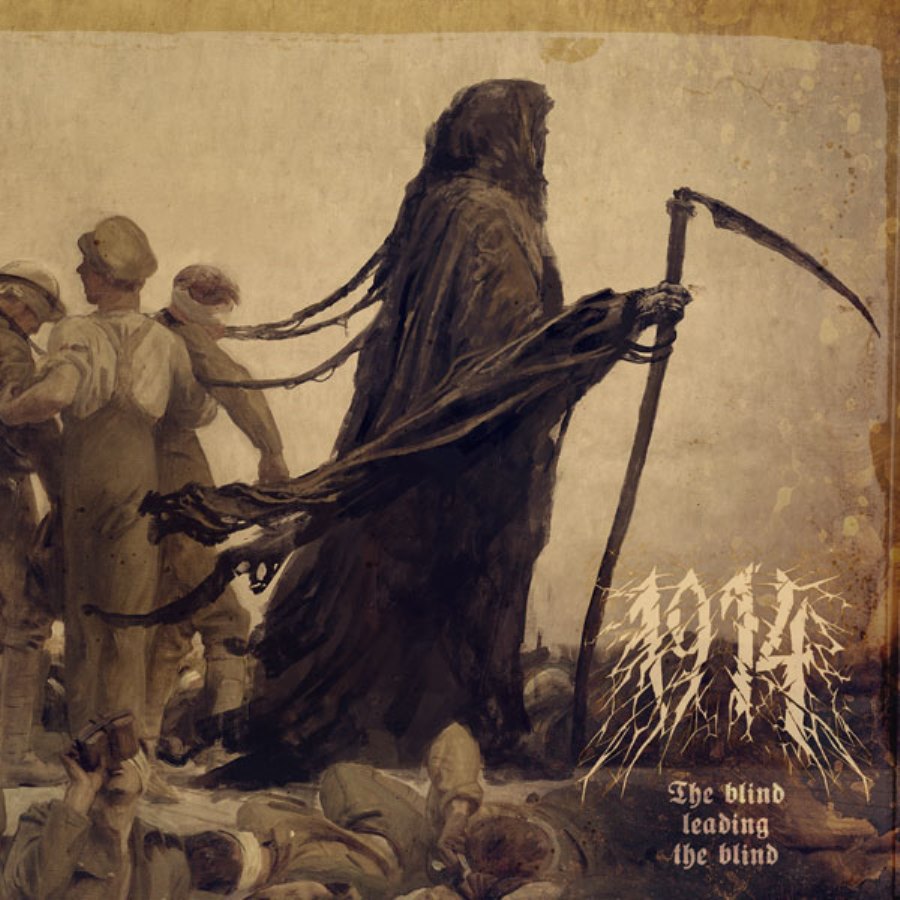
It’s time to head into the battlefields of World War I together with Ukranian Blackened Death/Doom Metal infantrymen 1914 and their brand new opus, the breathtaking The Blind Leading the Blind. World World I might not get explored as it should very often, as World War II typically overshadows it, but this Liviv-based squad, formed in 2014 at the 100th anniversary of World War I, makes a damn solid case for its historical significance (click HERE for an in-depth interview regarding the band’s ideology), with their unique and incendiary fusion of Black, Death, Doom and even Sludge Metal being stomping, heavy-as-hell, therefore inspiring the strength and bravery within to march towards death.
Comprised of 2.Division, Infanterie-Regiment Nr.147, Oberleutnant – Ditmar Kumar on vocals, 37.Division, Feldartillerie-Regiment Nr.73, Wachtmiester – Liam Fessen and 5.Division, Ulanen-Regiment Nr.3, Sergeanten – Vitalis Winkelhock on the guitars, 9.Division, Grenadier-Regiment Nr.7, Unteroffiziere – Armin von Heinessen on bass and 33.Division, 7.Thueringisches Infanterie-Regiment Nr.96, Gefreite – Rusty Potoplacht on drums, 1914 pay homage to all that fell fighting the Great War, with their themes covering topics such as the Battle of Gallipoli (and the involvement of Ataturk), the Brusilovsky breakthrough, the Battle of Verdun and the gas attack at Ypres, not being political nor warmongers, but just telling the tales of war, injustice, fear, hopelessness and endless death as they happened. Featuring a deadly, lugubrious artwork by Czech artist Vladimir “Smerdulak” Chebakov, The Blind Leading the Blind is a precious gem of extreme music, positioning 1914 not only as one of the best underground metal bands of the current scene, but of the past decade without a shadow of a doubt.
War In is a beautiful, wicked and dark intro that takes us to the horrors of World War I, exploding into visceral Blackened Death Metal in Arrival. The Meuse-Argonne (inspired by the Meuse-Argonne Offensive, the greatest American battle of the First World War, where in six weeks the AEF lost 26,277 killed and 95,786 wounded), led by the pulverizing drums by Rusty, while Ditmar roars the song’s lyrics manically (“Arrival / The Meuse-Argonne offensive started like clockwork / We planned to break through the Hindenburg line / I know what we are fighting for / Hopefully to end the war”), also bringing the most Stygian elements from classic Doom Metal. Then we have A7V Mephisto, a World War I German tank masterfully translated into a brutal and heavy tune where the entire band showcases their heavy artillery by blasting sheer obscurity inspired by old school Black Sabbath and Celtic Frost, in special Liam and Vitalis with their lethal riffs, but with a more demonic twist; followed by High Wood. 75 Acres of Hell, an infernal display of Black and Death Metal spearheaded by Ditmar’s growls while Armin and Rusty keep the ambience as dense and grim as possible with their respective instruments, displaying the battle for High Wood’s 75 acres, which started on July 14 and raged nearly continuously for 64 days, coming to be known as “The hell of High Wood” or “The rottenest place on the Western Front.”
Bagpipes ignite a sinister and pulverizing cover version for The Exploited’s all-time hit Beat The Bastards, sounding as rebellious and fun as the original version, but of course with a more metallic and crushing vibe, with highlights to the beautiful job done by both Liam and Vitalis with their hellish guitars. In the interesting bridge Hanging On The Barbed Wire, the infantry sings while marching under a heavy storm (“If you want to find the General, / I know where he is, / If you want to find the General, / I know where he is / He’s pinning another medal on his chest / I saw him, I saw him / Pinning another medal on his chest.”), setting the tone for the superb Passchenhell, a wordplay with The Battle of Passchendaele, also known as the Third Battle of Ypres, a campaign of World War I fought by the Allies against the German Empire. Musically speaking, it’s another flawless display of Blackened Death Metal infused with Doom Metal nuances, also featuring the beyond special guest vocalist David Ingram (Benediction, Bolt Thrower, Just Before Dawn). Furthermore, Rusty is once again bestial on drums, whereas Ditmar together with David will haunt your soul with their demonic growling.
“Hello there, soldier! Ready to kill more Germans?” Those warlike words ignite a fantastic sonic havoc by 1914 titled C’est Mon Dernier Pigeon, leaning towards pure old school Black Metal, feeling and sounding as thunderous and menacing as possible and ending in the most demolishing way you can think of; followed by Stoßtrupp, the German word used to describe shock troops or assault troops created to lead an attack, where another eerie, obscure narration suddenly explodes into a darkened feast of Black and Death Metal tailored for cracking your neck headbanging, with Armin sounding vicious with his rumbling bass punches. Lastly, we have The Hundred Days Offensive, an Allied offensive that lasted from August 8 to November 11, 1918, ending World War I, and 1914 turned that battle into 10 minutes of first-class Blackened Death and Doom Metal where you can feel the horrors of the battlefield in the music, remaining very introspective, melancholic, and flowing infernally until the music morphs into the sensational and creepy outro War Out, the perfect ending to such brilliant album.
In summary, The Blind Leading the Blind, which by the way had as its official release date the 11th hour on the 11th day of the 11th month (Central European Time), marking the 100th anniversary of the end of World War I, is a must-have not only for admirers of Extreme Metal, but also for anyone who wants to learn more about World War I in a very unorthodox and exciting way. Available for purchase from the band’s own BandCamp page, as well as from the Archaic Sounds’ BandCamp page, from the Redifining Darkness Records’ BandCamp page, from iTunes and from Discogs, The Blind Leading the Blind definitely redefines the career of 1914, propelling them into a more-than-promising future. Having said that, don’t forget to follow them on Facebook, subscribe to their YouTube channel, grab your weapons and be prepared to face death in the battlegrounds of the Great War.
Best moments of the album:Arrival. The Meuse-Argonne, Beat The Bastards, Passchenhell and C’est Mon Dernier Pigeon.
Worst moments of the album: None.
Released in 2018 Archaic Sound/Redefining Darkness Records
Track listing 1. War In 1:14
2. Arrival. The Meuse-Argonne 6:20
3. A7V Mephisto 8:13
4. High Wood. 75 Acres of Hell 5:27
5. Beat The Bastards (The Exploited cover) 5:02
6. Hanging On The Barbed Wire 2:28
7. Passchenhell (feat. David Ingram) 7:01
8. C’est Mon Dernier Pigeon 5:22
9. Stoßtrupp 6:13
10. The Hundred Days Offensive 10:01
11. War Out 1:55
Kneeling at my feet, encased in black sheaths of ecstasy… Fulfill your deepest desire to submit to me…
It’s time to set fire to The Headbanging Moose with a woman that’s perhaps the most eccentric, distinct and explosive of all metal chicks who have already embellished our pages through the years. She’s not only a professionally trained actress, dancer, singer, performer and an internationally recognized model in the Gothic and fetish genres, having been featured in several publications and websites, but also an activist and the frontwoman for an American metal act that blends the heaviest and most obscure elements from Gothic, Black and Death Metal. If you have absolutely no idea who that woman is, I bet you’ll be stunned by her talent, beauty and passion for music and arts in general. Having said that, let’s cut to the chase and begin our humble tribute to our last metal lady of 2018, the unstoppable and dauntless Lilith Astaroth (also known as Goddess Lilith), lead singer for Boston, Massachusetts-based metal entity Sorrowseed. In other words, are you ready for total chaos and anarchy with Lilith?
Born on October 31, 1997 in Cambridge, just outside of Boston, Massachusetts, in the United States, Lilith loves music from the bottom of her heart, having started her musical pursuits at the age of five when she learned to play the piano. At the age of fourteen, she began to teach herself how to play the guitar, and in the following year she started her first band, curiously named Satan’s Kids, a Grunge and Rock N’ Roll project inspired by the music from icons like Marilyn Manson, Nirvana and Pantera. And Lilith received a lot of criticism in her early days as a singer, as people kept saying she sounded “like a guy” and that she should start singing “like a normal person”. However, despite that continuous criticism, including being kicked out of a band for “screaming too much”, she refused to change her vocal style and kept working hard for several years, until Sorrowseed came along in 2009 after numerous failed band attempts.
Her style of singing combines low guttural growling and high-pitched shrieking, being often compared to famous extreme vocalists like Dani Filth and Angela Gossow, but also exploring after 2010 a more operatic style in the soprano range, like in her 2011 cover version for the classic Christian Woman, by Type O Negative (I guess all women who succumbed to the dark side of music are admirers of the deceased Peter Steele). A true lover of cybergoth, steampunk and latex fashions, Lilith explores her sexuality while creating music at the same time, offering her fans a full-bodied experience during her live performances and on her videos. Using a combination of inhalation and exhalation screams, she is able to produce a vast array of sounds with her voice, turning each live show into a ferocious display of intensity. Since the beginning of her career, she has released several solo works and has lent her voice and performed live with many different projects throughout New England including Sorrowseed, Mostri and Pandora’s Toybox, always loyal to the Doom, Death, Industrial and Gothic Metal styles. Her biggest inspirations when writing and composing music are quite straightforward and interesting. Lilith was very clear and honest when saying that hatred, or unbridled hatred for humanity and its ignorance, always inspire her to write music, as her day-to-day experiences with other human beings gave her plenty of reason to be angry much of the time. Obviously all that hatred and anger couldn’t be better represented than the flammable fusion of Extreme Metal styles from all her bands and projects.
In regards to her most famous project, American Melodic Doom Metal band Sorrowseed, Lilith formed the band in 2009 in Boston highly influenced by bands like Amorphis, Behemoth, Cradle of Filth, Dimmu Borgir, Emperor, Satyricon and Therion, singing about controversial topics like the Apocalypse and anything related to the total annihilation of mankind, as well as spreading stories of madness, death, destruction, dark mythology and horror to the masses, all embraced by the band’s obscure musicality. As a matter of fact, the band started in 2008 by Josh Carrig, of Pandora’s Toybox, evolving to its desired shape and form only in 2010, with the concept behind the band being based on the story of two characters, the Reaping Willow and the Scarab Prophet. Lilith obviously portrays the Reaping Willow, who was once the nature Goddess, Demeter. Over time, she watched humankind’s pollution, ignorant destruction and environmental abuse overcome the earth. She wept for the ignorance of mankind, becoming enraged with madness and, as a consequence, transforming into the Reaping Willow who, along with the Scarab Prophet, is set upon the destruction of mankind, unleashing apocalyptic terror onto humanity. The band has already released one EP titled Portents, in 2009, and four full-length albums since their inception, those being The Extinction Prophecies (2011), Descent of the Scarab Prophet (2012), Dread Sylvan Summonings (2012), and Nemesis Engine (2013), including incendiary songs like Ocean Scorn (and you can always listen to their albums and obviously purchase them from their own BandCamp page). Working as a way for Lilith to channel her powerful feelings into something creative and non-destructive, as she’s always been very much about vengeance, wrath, and destruction, Sorrowseed kick some serious ass live as you can see in their performance during the Damsels of Darkness Tour playing the song Arcana (of the Lich Queen), with their first ever concert happening at the launch party of 420Mass.com during the 2010 Boston Freedom Rally.
You can also find Lilith lending her beautiful and devilish voice to several distinct bands and projects in the world of heavy music, such as doing vocals for Chilean/American Thrash/Death Metal band Angor from 2014 to 2015, and for American Blackened Death Metal band Coffin Birth starting in 2016. She also worked as a guest vocalist in the song Bloodborne Penance, from the 2016 album The Bowels of Chaos, by Coffin Birth; in the song Halle Ravine, from the 2017 album The Sachem’s Tales, by American Atmospheric Black Metal band Dzö-nga; and in the song The Black Feathered Vixen, from the 2013 EP Unleash the Inferno, by American Death Metal one-man band Eric Pellegrini. There are other projects which are not as “clear” as the ones listed above, such as her involvement as the lead singer of Nemesis Engine, a hybrid of ex-Sorrowseed and ex-Theogonia members which was actually a code name used for the revamped Sorrowseed lineup, as well as her participation with other bands including a Melodic Death Metal band (with use of electric violin) with former bandmate Chris Adamcek and Rachel Zuckerman named Akashic Shadow, in 2012, and an upcoming collaboration with Melodic/Progressive Death Metal act Solemn Vision, from New York.
This slideshow requires JavaScript.
As aforementioned, Lilith is not only a regular vocalist and musician, but also an actress focused on the underground and independent scene. It was in 2009 when she began exploring the world of acting, starting with taking courses from Harvard University, doing extra work for major films, and landing minor roles in independent films such as God of Vampires, Nun of That, Heaven and Hell, Legless and Scrooge in the Hood. She has also appeared on NESN as a ring girl for Boston Boxing, has done several interviews in the cosplay documentary Cosplayer Nation, appeared on NBC’s The Dr. Keith Show to talk about safety as a public figure on the internet, and appeared several times in the reality-based web series Quiet Desperation. You’ll also find Lilith in many different music videos as an actress, such as When Steel and Bone Meet, by Goatwhore; Misbegotten Candy, Down in the Mire, and Slaves to the Sleigh, by Pandora’s Toybox; Runnin From Jesus, by Matalon; and Babylon Train, by Desar.
Furthermore, you can take a look at her her IMDb profile to see in detail all B-movies, shorts and TV series she’s been featured, like playing a character named Petunia Pete Sawyer in the 2017 comedy-horror movie Groundhog. In addition to that, Lilith has also attended a good amount of public events through the years, like doing public speaking in different editions of the annual Boston Freedom Rally and the Philadelphia Freedom Festival Benefit, as well as constantly improving her acting skills by taking several training sessions and courses like Introduction to Acting and Advanced Acting from Harvard University, in 2009, Acting Shakespeare and Introduction to Public Speaking also from Harvard University, in 2010, and private classes in C.O.R.E. Acting, in 2013. Do you think that’s already a lot for just one person? Well, you better be prepared, because there’s still a lot more to come.
If you haven’t noticed yet, Lilith is also an internationally recognized professional model, having shot in different exotic locations ranging from Iceland to Montreal, Ireland, Costa Rica, London, Germany and Italy, as well as all over the United States, with some of her favorite runway events being the Montreal Fetish Weekend Fashion Show, and the New Designer’s Fashion Show of New England. A versatile model with 8 years of experience and a wide variety of looks, ranging from classic pinup, swimsuit, Gothic, cosplay, fantasy, fetish, sci-fi, horror, among many others, Lilith has already done event hosting, art modeling, spokesmodeling, living art, bodypainting, being a Ring Girl, Go-Go dancing, and modeling for some of the edgiest latex designers emerging in the fetish fashion scene. However, when asked which career out of music, modeling, dancing and acting she would like to pursue the most, our devilish goddess said music is what she’s really focused on (as we all know, screaming is something that has always been very natural to her), but she also truly wants to pursue professional acting to the fullest. Acting is according to Lilith herself the most challenging of all activities because there’s always room for improvement with anyone, but finding appropriately paying work in modeling and dancing is the most challenging thing she’s been facing on a regular basis. In addition, maintaining a healthy balance of all those activities and responsibilities is not an easy task at all (by the way, she’s also a LMT – Licensed Massage Therapist, an activist for cannabis legalization, animal rights, and preservation of nature, and a reiki master), but as a great and very efficient multi-tasker she is, nothing stops Lilith from always moving forward in her life and career.
One very important topic to Lilith is her utmost support to the legalization of marijuana, and she has a very strong opinion about what should be done in this case. In one of her interviews, she said that people need to focus the war on drugs against the real problems, like pills, which originate with drug companies, and crime which is funded in large part from marijuana. In her own words, Lillith said that “no one is making pills at home – they come from drug companies with bad policies, operating under bad laws with bad inventory and bad control, they have huge lobby groups that let them get away with this and pills have become one of the most major problems in America.” She complemented by saying that she personally would rather not put any chemicals in her body or take the risk of becoming addicted to a chemical, and she has found that she doesn’t need to take those risks, because marijuana helps alleviate her health issues. “We need to take ‘the money’ out of the illegal marijuana equation; by legalizing and regulating we would lower the prices by lowering the value (the price is artificially propped up by its illegal status), and this would take a big bite out of the pocketbook that funds guns and harder drugs, and open the door to affordable, safe and legal medical marijuana.”
When asked in one of her interviews about the current music scene in the United States and what has changed since she started her career in 2009, Lilith said that it actually hasn’t changed much, despite an increase in the number of metal bands in her area, New England, which according to Lilith herself is at the same time a good and a bad thing because some of those bands are very talented, but others are just terrible. She also said there are some bands she’s a good friend of, such as Faces of Bayon, Matalon, Abnormality, AbSynthe, Necrophiliac Meat Circus, Fever Vein and Voices of the Dead, among others, and that she loves to meet and work with bands that play a similar style to hers because those are not only easier to keep in touch, but to also play more shows together. And last but not least, when asked how important her fans are to her, she was pretty straightforward saying that without fans there would be no one to perform for. She does her best to treat her fans well and hook them up with good prices and merch, and communicate with them every day through her website and all her social media. That being said, I guess no one can complain at all that Lilith is a lazy or an arrogant person; quite the contrary, although we all know how unique she is, the world of metal music definitely needs more women with the same attitude, stamina and passion as the multi-talented Lilith Astaroth.
“Since I was young, I’ve always been the center of attention. My parents were always sticking a camera or video camera in my face, so I got used to it early. It wasn’t until I was 15, however, that I decided I wanted to front a band. Oddly enough, it was Nirvana that inspired me to find this path. I taught myself how to play guitar and formed my first band shortly thereafter.” – Lilith Astaroth


 Born in 2014 in Palma de Mallorca, a resort city located in the Balearic Islands in Spain, with the task of putting the Black Metal genre back in the shadow of the glory it had in the 90’s, following the label from the most infamous bands from that period as a pure conceptual beginning (but excluding arsoning or murders, of course), the unstoppable horde that goes by the name of Inferitvm has just released their sophomore album The Grimoires, an epic story about black magic, esoteric rituals and all the different ingredients of true classical Black Metal. Having said that, do you accept the challenge of deciphering the forbidden texts that Inferitvm have brought back to life?
 In Goetia of Shadows, Bârg and Aghanazzar keep smashing their instruments nonstop, generating a reverberating sound that will please all fans of the genre, all balanced by some very harmonious guitar lines and hellish growls, whereas Galdabrök is another hammering, disturbing hymn of darkness by Inferitvm, with Bârg and his pounding drums dictating the rhythm while Sorcerer V. grasps the song’s obscure lyrics poetically and darkly. In Liber Lux Tenebris, the scorching hot guitars by Sorcerer V. and Lord Insekkton add a touch of Doom Metal to their already infernal music before all hell breaks loose in another feast of old school Black Metal perfect for banging your head in the name of evil. And De Occulta Philosophia is probably one of the most disturbing songs of the whole album (if not the most), where all band members make sure they extract the most Stygian sounds form their instruments, in special the band’s infernal guitar duo with their classic riffage, ending in the most unsettling way possible.