Album Review – Dzö-nga / The Sachem’s Tales (2017)

A demonic entity hailing from the United States gives life to the Algonquin folklore in a brand new concept album of vibrant and classy Atmospheric Black Metal.

In case you’re searching for the next name in Atmospheric and Epic Black Metal, you must take a listen at The Sachem’s Tales, the brand new concept album by an American Black Metal project that goes by the name of Dzö-nga (pronounced “zone-gah”), formed in 2016 in the city of Boston, Massachusetts, United States by multi-instrumentalist Cryvas. By the way, did you know Dzö-nga is the name of a cryptid or demon that is said to haunt the mountain Kangchenjunga, the third highest mountain in the world lying partly in Nepal and partly in Sikkim, India? Drawing inspiration from world mythologies, Dzö-nga is definitely the perfect name to represent the music by this heavy and eccentric monster of underground extreme music.

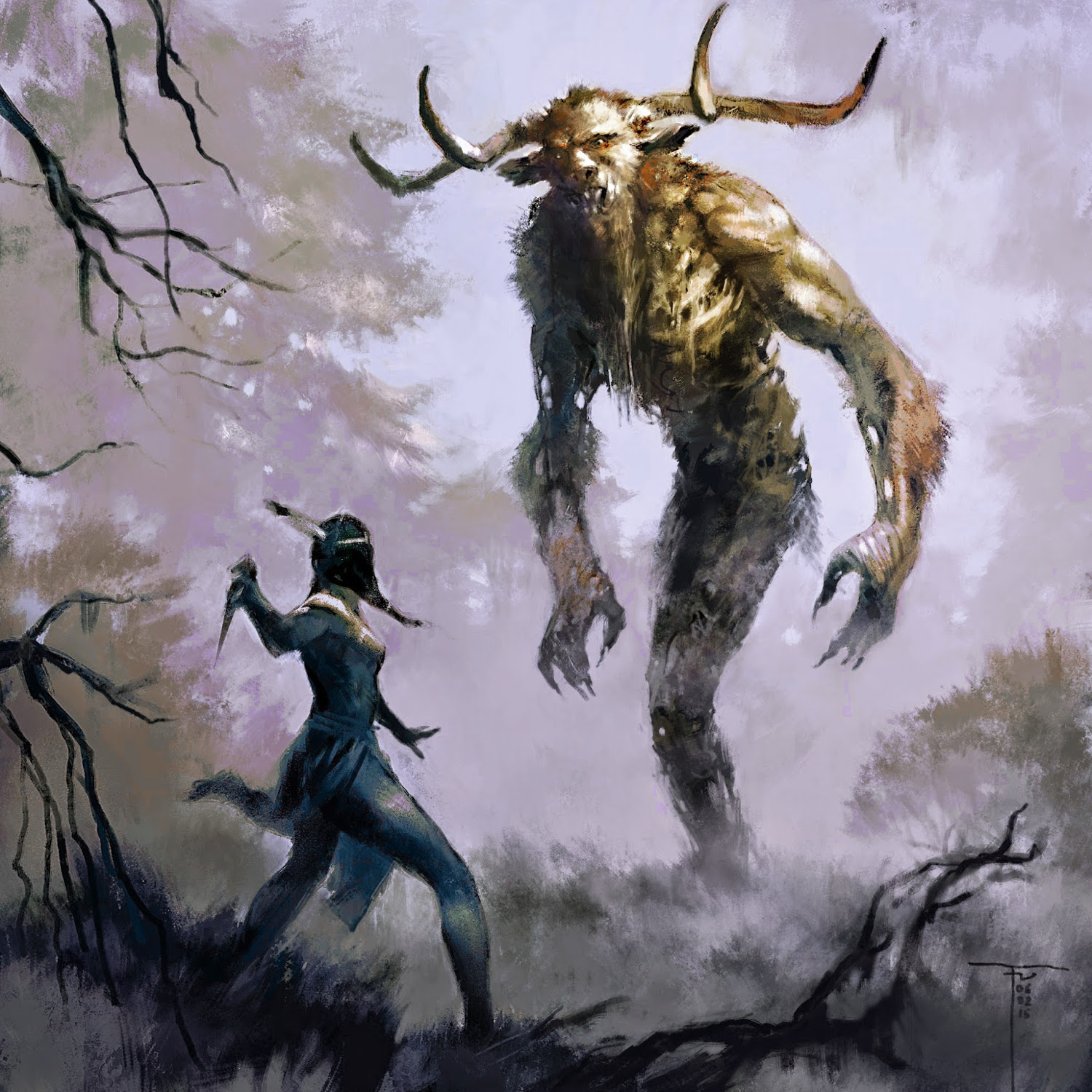
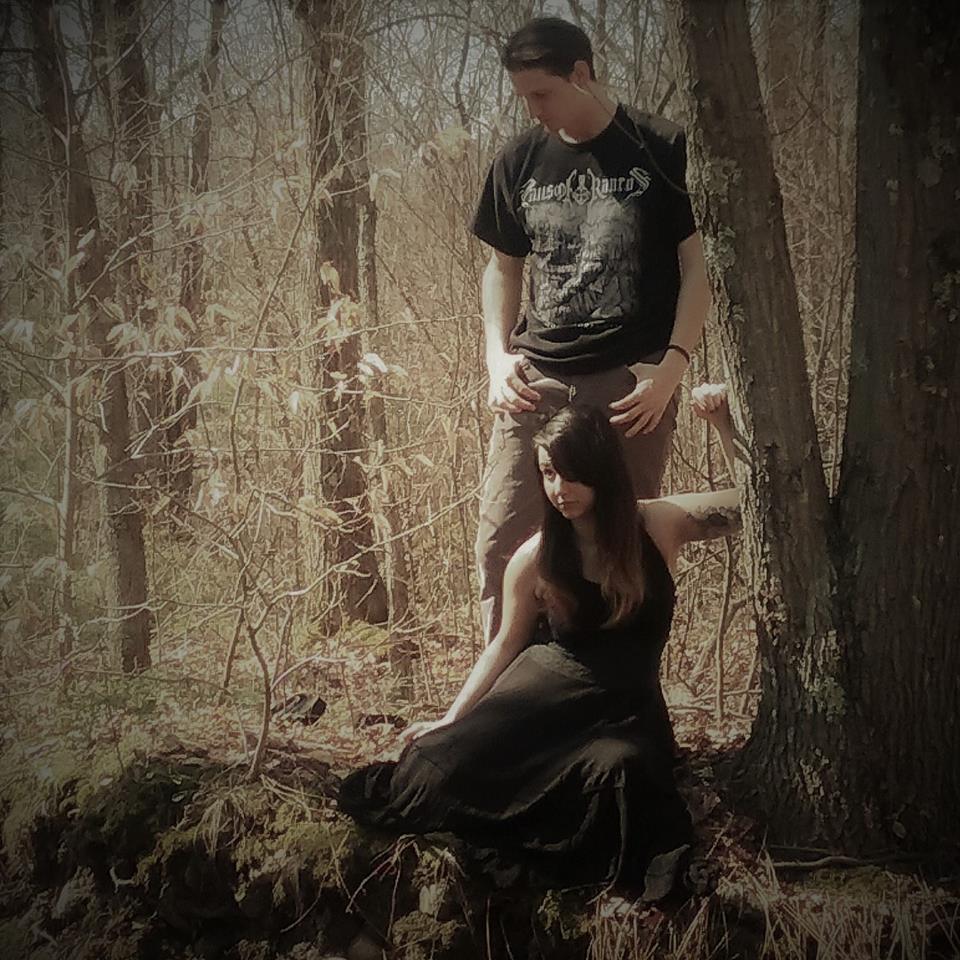
The Sachem’s Tales, Dzö-nga’s second full-length album and a concept album about the Algonquin folklore from creation mythos (“Against the Northern Wind”) to apocalyptic prophesies (“A Seventh Age of Fire”), is the project’s first release to feature Grushenka Ødegård on vocals, with Cryvas and Grushenka being joined by guest musicians Aaron Maloney (This or the Apocalypse) as their session drummer and Lilith Astaroth (Sorrowseed) lending an ethereal voice to “Halle Ravine”. Featuring a classy cover art titled “The Wendigo”, designed by British illustrator Frank Victoria, The Sachem’s Tales will certainly please all fans of the more atmospheric side of extreme music fused with folk elements, especially the ones who love the sound by bands like Agalloch, Falls of Rauros, Moonsorrow and Coldworld, among others.

Midewiwin Lodge, a serene instrumental intro led by the acoustic guitars by Cryvas and spiced up by elements from Mother Nature, sets up the ambience for the melancholic and gripping To the Great Salt Water, with the contrast between the piano and the blast beats perfectly supporting the gentle voice of Grushenka and the growls by Cryvas, enhancing the impact of its fairy tale-inspired lyrics (“What shall I tell our children? / Tell them our story / Tell them who they are / Far beyond the mountains / Where wild-men roam / Over the raging river’s foam / Follow the Whiteshell west”). Put differently, this is a beautiful rollercoaster of emotions crafted by Dzö-nga, going from deeply enraged moments to slower passages of pure tenderness. Then in The Wolves Fell Quiet what starts in a calm mode with the suave notes of the piano embracing our souls suddenly explodes into magnificent Atmospheric Black Metal, with Cryvas growling and gnarling like a hellish entity. Furthermore, multi-layered waves of blackened sounds mixed with ambient music turn listening to this tune into a distinct and dense journey through darkness.
In the acoustic ballad Halle Ravine, it’s time for Lilith Astaroth to give life to the song’s poetic lyrics, bringing hope and melancholy at the same time to our hearts, with the song’s smoother sonority also showcasing how versatile Cryvas is as a musician; followed by Against the Northern Wind, where blast beats ignite a flammable fusion of Atmospheric Black Metal with Folk and Dark Metal, once again presenting paradoxical elements that create a unique experience to the listener. Moreover, Cryvas’ demonic roars and Grushenka’s angelical voice complement each other in a superb way, making it impossible not to feel touched by all sounds blasted by the band, all reaching deep inside our hearts and souls. A Seventh Age of Fire brings forward almost 10 minutes of top-tier extreme music by Cryvas and his crew, where Aaron not only proves he’s a rabid beast behind his drums, but he also displays an extremely refined technique, therefore adding tons of intricacy to the musicality. And effectively complementing this stylish aria, Cryvas offers us all some epic church-inspired pipes, with all instruments converging to a climatic acoustic ending with the song’s lyrics yet again coming from a dark and thrilling fairy tale (“Be brave and you will be protected / Be wise and you will be rewarded / (Hear in our silence that we are at peace / Our mantle passed to you) / Light again the ancient flame / Lead our people back home”). And before all is said and done, we’re treated to the instrumental outro The Witching Meadow, a song that contains several elements found in Folk Metal, with its kick-ass piano notes generating a comforting atmosphere to end this fantastic album in great fashion.

You can enjoy this fairy tale of Extreme Metal in full on YouTube, follow Dzö-nga on Facebook, listen to their other creations on SoundCloud, and obviously purchase The Sachem’s Tales at the band’s own BandCamp page, at the Avantgard Music’s BandCamp, on Amazon or at Discogs. Having said that, let’s hope that this gargantuan, hazy creature named Dzö-nga keeps haunting not only mountain Kangchenjunga, but everywhere else in the world where high-quality metal music is appreciated for many years yet to come.

Best moments of the album: To the Great Salt Water and Against the Northern Wind.

Worst moments of the album: None.

Released in 2017 Avantgarde Music

Track listing
1. Midewiwin Lodge (Instrumental) 2:35
2. To the Great Salt Water 8:49
3. The Wolves Fell Quiet 7:23
4. Halle Ravine (feat. Lilith Astaroth) 4:04
5. Against the Northern Wind 7:16
6. A Seventh Age of Fire 9:23
7. The Witching Meadow (Instrumental) 3:26

Band members
Cryvas – vocals, all instruments
Grushenka Ødegård – vocals

Guest musicians
Aaron Maloney – drums (session)
Lilith Astaroth – vocals on “Halle Ravine”

Album Review – Al-Namrood / Enkar (2017)

Unafraid of exercising their freedom of speech in their homeland, three dauntless Saudi black metallers keep fighting against tyranny, oppression and authoritarianism with their brand new, distinct and acid album.

Forged in 2008 in the fires of Dammam, the capital city of Saudi Arabia’s Eastern Province and the sixth largest city in Saudi Arabia after Riyadh, Jeddah, Mecca, Medina and Taif, Black/Folk Metal trinity Al-Namrood is another one of those cases where no matter how talented and bright the band members are, the religious and political leaders of their homeland will do whatever it takes to end their career (not to say something even harsher than that), restricting their reach and forcing them to remain anonymous to stay alive (as you can read in an excellent and very detailed article titled “Witch Hunts, Resurgence and Defiance: Heavy Metal In The Middle East”, published by an online publication named The Quietus). However, the only Black Metal band in Saudi Arabia doesn’t seem to be scared to exercise their freedom of speech with their brand new album Enkar, where once again Al-Namrood translates into first-class metal music their austere position against their own country’s authoritarian regime.

Al-Namrood (or (النمرود‎ in Arabic) means “Nimrod” (which translates to “the non believer”), a Babylonian king who ruled the world maliciously and stated “I am the God of all creation”, and the group chose the name as their form of defiance against religion. After the successful release of their 2010 album Estorat Taghoot, the band decided to shift their focus away from the ancient Babylon land to a hub with deeper Arabian aspect, pronouncing the utter darkness of the Arabian Peninsula and therefore playing what can be called “Arabian Occult Metal”. If you love Black Metal in the vein of bands like Marduk, Darkthrone and Bathory mixed with the most obscure and anti-religious aspects of the music by Candlemass, Black Sabbath and Kreator, all embraced by the unique tones and sounds from the Middle-Eastern culture, then you must take a listen at Enkar as soon as possible, as this album might change considerably your view of underground Extreme Metal.

And those sounds from the Middle-East are joined by metallic lines to form a unique musicality led by the enraged and sick vocals by Humbaba in the opening track, titled Nabth, a feast of eccentricity and sheer madness, with the guitars by Mephisto sounding truly mesmerizing. In addition, the song’s official video, with its images of protests, riots and police brutality from across the Middle-East, match perfectly with the music played by Al-Namrood. Enhancing the lunacy flowing from the guitars, the band offers us Halak, a great display of Orient Metal tailored for banging our heads and prancing together with the band, with highlights to the electrified beats by Ostron; followed by Xenophobia, another acid creation by Al-Namrood that deals with an extremely controversial topic, with Humbaba firing some truly demented vociferations from start to finish to make the final result even more impactful.

Estibdad brings forward a kick-ass hybrid of Folk and Orient Metal where all band members are on fire, in special Mephisto with his slashing riffs, not to mention you can feel the anger and rage flowing from Humbaba’s desperate growls. Efsad keeps the momentum going with its rhythmic drumming and Middle-Eastern-inspired riffs and bass lines effectively delivered by Mephisto, whereas Estinzaf, perhaps the most Heavy Metal (or I should say Black Metal) of all songs, presents more traditional guitar lines and drums, but of course still bringing the band’s own regional twist. Moreover, Humbaba sounds like a Saudi version of the iconic Mike Patton (Faith No More) during the whole song due to the level of lunacy and the weird noises he produces with his voice, which in the end is a very positive complement to the overall result. And in Ensaf we face a darker sonority that grows in intensity as time goes by, with even the vocal lines by Humbaba sounding more obscure and sharper than before, culminating in a mesmerizing pace with hints of progressiveness and Folk Metal elements to boost its taste.

In Egwaa we’re treated to what’s probably their most primeval mode, a hypnotizing and stylish break from all madness from the rest of the album deeply rooted in their own homeland’s traditions and sounds, with their smooth but at the same time extremely potent percussion stealing the spotlight. Then when it looks like that gentle break will still go on for a while, the band returns with an imposing, epic tune titled Ezdraa, transporting the listener to the darkest side of Saudi Arabia, with Ostron kicking some serious ass with his intricate drumming, before Entiqam, a nice ending to such distinct album, showcases a more-demented-than-ever Humbaba, leading the band’s ominous and classy musicality while the song’s Middle-Eastern elements sound heavier, crisper and more piercing than in all previous tracks.

You can enjoy all the madness, violence and hatred from Enkar by listening to the full album on Spotify, and of course purchase this Saudi gem at the Shaytan Productions’ BandCamp, on iTunes, on Amazon, on CD Baby or at Discogs. Al-Namrood, who can be found on Facebook despite the fact the band members have to remain anonymous, not only continue to pave a fantastic path in underground heavy music with this idiosyncratic album, spreading their music all over the world and always moving forward against all odds, but they also serve as some sort of inspiration for other musicians in Saudi Arabia and from any other countries with very strict laws to keep pursuing their dreams and to keep fighting against tyranny, oppression and authoritarianism, all in the name of freedom and metal.

Best moments of the album: Nabth, Estibdad and Ensaf.

Worst moments of the album: Estinzaf.

Released in 2017 Shaytan Productions

Track listing
1. Nabth 3:55
2. Halak 3:17
3. Xenophobia 4:24
4. Estibdad 3:23
5. Efsad 3:03
6. Estinzaf 3:17
7. Ensaf 4:28
8. Egwaa 4:02
9. Ezdraa 4:24
10. Entiqam 5:18

Band members
Humbaba – vocals
Mephisto – guitars, bass, percussion
Ostron – keyboards, percussion

Album Review – Biesy / Noc Lekkich Obyczajów (2017)

Enjoy this concept album about how urban life can separate us from reality and how at the same time it gives us freedom to cross its boundaries, all enfolded by first-class blackened music made in Poland.

“Biesy were born out of everyday working, urban and monotonous realities. The project explores how urban concrete life can separate you from reality, but at the same time enables you to cross its borders. This is not the place for faith – there is no time nor will. During the night people go astray and willingly drown among the masses on the streets. In the morning they fall down to create a passage for everything that is wonderfully common and hideously sincere. However, it is not certain if they even left the room.”

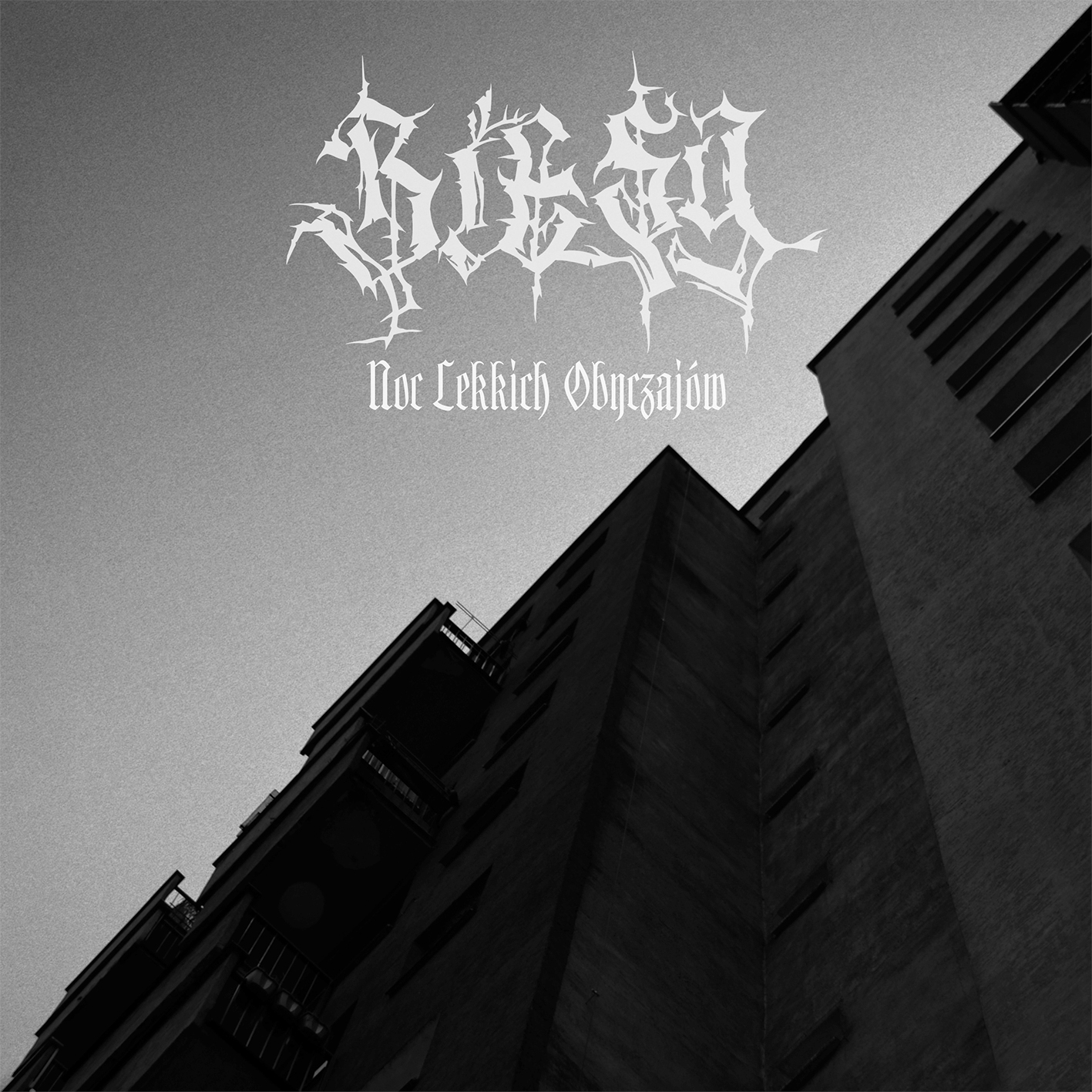
Those poetic words work as a classy introduction to the core essence of Black/Death Metal act Biesy, a brand new project formed in 2014 in Cracow, Poland by lead singer Stawrogin, guitarist, bassist, songwriter and lyricist PR, and drummer Maciej Pelczar. Biesy translates to “fiends” or “demons” from Polish, and from that you can imagine how dark their music should sound in their debut full-length release Noc Lekkich Obyczajów, or “night of weak morals” in English, a concept album about how urban life can separate us from reality and how at the same time it gives us freedom to cross its boundaries, as mentioned above, all enfolded by an ominous and depressive form of extreme music not recommended for the lighthearted. Add to that the concrete gray layout designed by PR himself together with Mentalporn, the menacing logo created by Ihasan, and the fact that all songs are entirely sung (or maybe I should say growled or gnarled) in Polish, and there you have a distinct, full-bodied Extreme Metal ode to everything we love and hate in our concrete jungles.

In the opening track, titled Każdego Dnia (which should translate as “every day”), ominous sounds grow in intensity until the music morphs into the most vile form of Blackened Doom you can think of, with Stawrogin sounding truly demonic on vocals while PR does an amazing job with his mesmerizing guitar lines, resulting in a cold and beautiful display of extreme music that darkly flows into a climatic ending. In W Krew (which should mean something like “in blood”), the power trio switches to a more demolishing mode, blasting a Stygian fusion of Black and Death Metal led by Maciej, who showcases all his skills by delivering both rhythmic and sluggish punches as well as infernal blast beats. In the end, it becomes impossible not to have your heart darkened by this superb hymn. And it seems like peace and happiness are definitely two items you won’t find in the music by Biesy, which is exactly the case in Powroty (or “returns” in English), even more doomed than the two previous songs and with the vociferations by Stawrogin being extremely menacing. Put differently, it’s unhappy, melancholic and visceral Blackened Doom tailored for headbanging until you crack your neck in half.

The second batch of somber sounds by Biesy begins with Czerń Nas Prosi (or “blackness calls us”), the shortest of all tracks, feeling like a satanic invocation with Maciej firing some traditional Doom Metal beats while PR sounds hellish on both guitar and bass, not to mention Stawrogin’s evil gnarls; followed by Rzucony W Przestrzeń (which translates as “thrown into space”), the longest and most obscure of all songs, starting with a deep, enraged roar by Stawrogin. Not only this is a lesson in Extreme Metal where PR is insanely dark on guitars, but its heaviness keeps growing and growing until after around four minutes there’s a creepy intermission that goes on for another four minutes until the trio returns with all their fury and malignancy, with the vocal parts getting more deranged and evil, ending in the most obscure way possible. And if you think you’re safe from Biesy after all that darkness, you’re absolutely wrong, as they have one final onslaught of Black, Death and Doom Metal to disturb your mind and soul, the title-track Noc Lekkich Obyczajów, where Maciej takes his already devilish drumming to a whole new level of dementia accompanied by the lancinating riffs by PR. This fantastic album of extreme music couldn’t have ended in a better way than this, I must say.

In summary, it doesn’t matter if you speak fluent Polish or if you don’t know a single word in this distinct language, Noc Lekkich Obyczajów (which is available for a full stream on YouTube) is definitely worth a shot. What Biesy did in the entire album, uniting the aggressive and damned sounds of Death, Black and Doom Metal with the disorders and unpredictability of life in the city in a sharp and bold manner, deserves our total recognition and respect. You can buy your copy of Noc Lekkich Obyczajów on BandCamp, at the Third Eye Temple webshop or at Discogs, and after finally having the album on your hands, you can add the perfect soundtrack to spend your deranged nights in the city.

Best moments of the album: W Krew and Noc Lekkich Obyczajów.

Worst moments of the album: None.

Released in 2017 Third Eye Temple

Track listing
1. Każdego Dnia 5:08
2. W Krew 6:38
3. Powroty 7:06
4. Czerń Nas Prosi 3:51
5. Rzucony W Przestrzeń 11:29
6. Noc Lekkich Obyczajów 7:59

Band members
Stawrogin – vocals
PR – guitars, bass
Maciej Pelczar – drums

Album Review – Eshtadur / Mother Gray (2017)

Overflowing rage, despair and electricity, the brand new album by this implacable Colombian act will certainly help the band cement their name in the Extreme Metal underground scene worldwide.

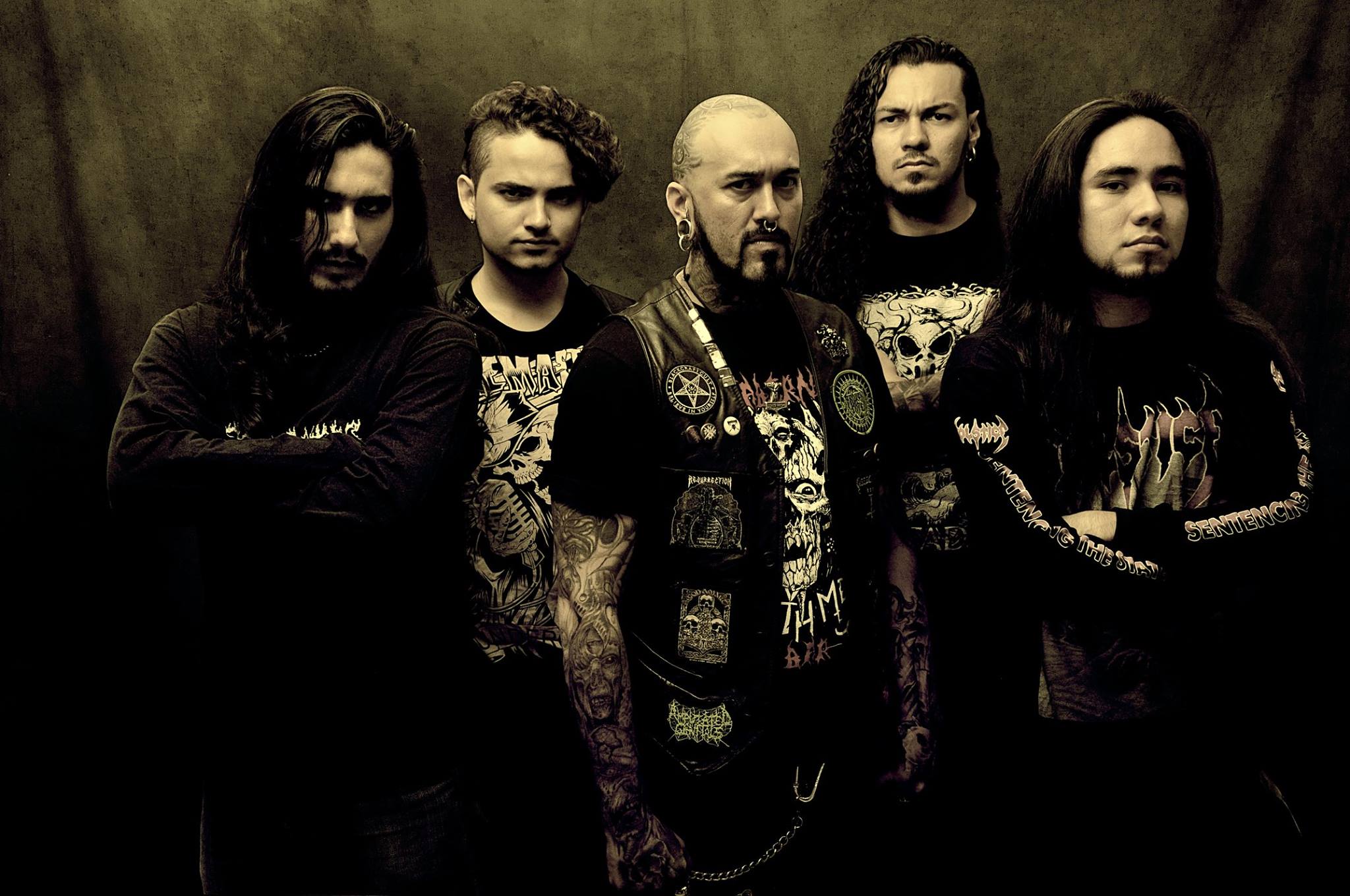
Formed in the fall of 2005 in Pereira, the capital city of the Colombian department of Risaralda, Melodic Death/Black Metal act Eshtadur has been on a roll since their inception, making a name for themselves in all four corners of the world with their unrelenting fusion of extreme sounds in the vein of bands such as At The Gates, Behemoth, Soilwork, Dimmu Borgir and Septicflesh, always adding imposing and symphonic elements to their music to make it even more impactful to our ears. For instance, the band has already toured Colombia, Peru and Mexico, they headlined a stage at Rock Al Parque (which is not only the largest rock festival in Colombia and one of the most important in Latin America, but also arguably the largest free rock festival in the continent) in 2016, and they’re getting ready for their first ever US dates and many other festival appearances in the coming months.

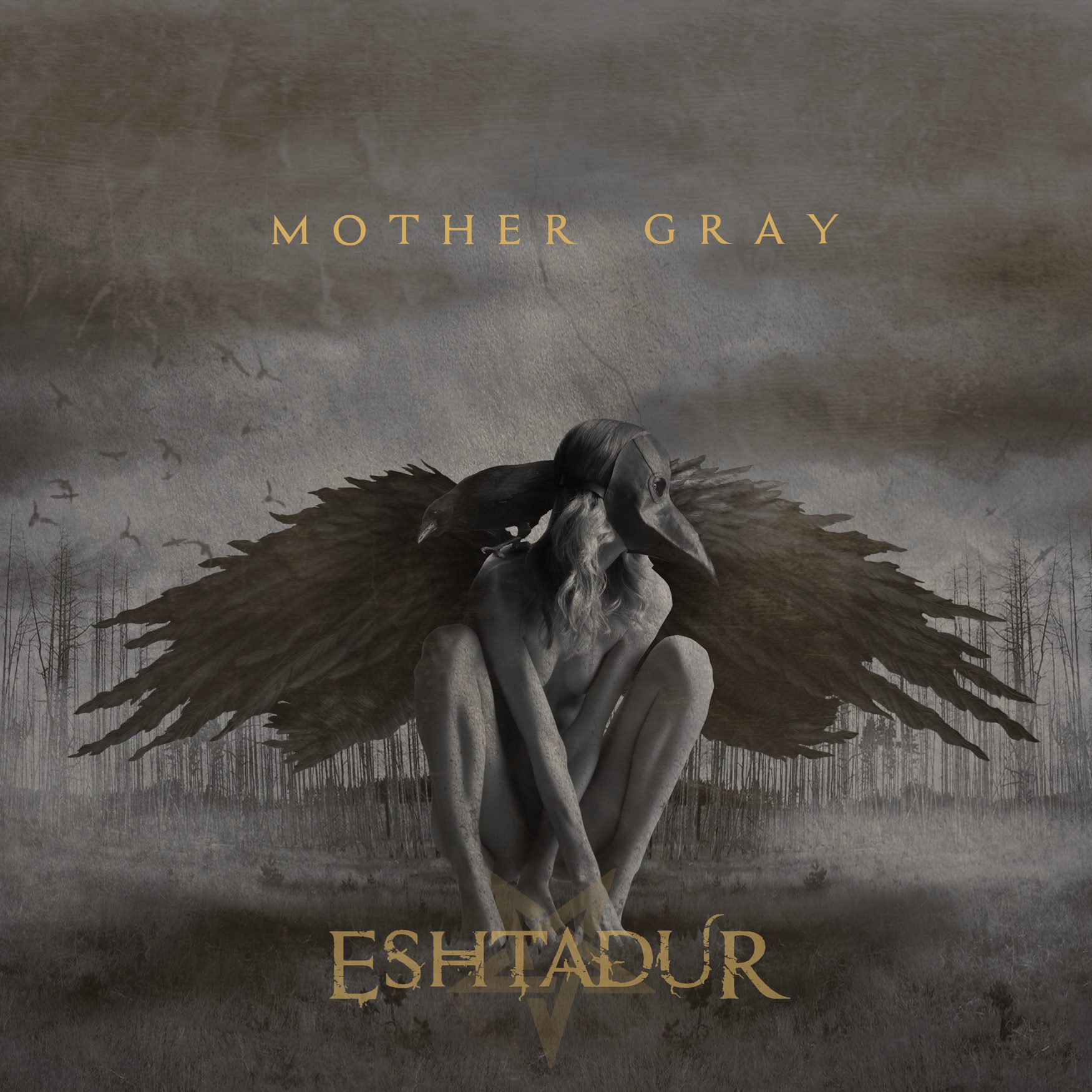
Having already released the full-length albums Dominated by Dummies, in 2011, and Stay Away from Evil and Get Close to Me, in 2013, as well as their debut demo Rebellion of Angels, in 2007, and the EP Oblivion, in 2015, the band comprised of Jorg August on vocals and guitars, Alejo Bet on guitars, Victor Valencia on bass and Mauro Marin on drums is effectively expanding their exposure to the metal scene worldwide with their third full-length installment, the excellent Mother Gray, featuring a classy artwork designed by French artist Sylvain (Razorimages), guest guitar solos by Christofer Malmström (Darkane), and an endless amount of electricity and rage flowing from all their instruments, all led by the desperate growls by Jorg.

The heavy and dark guitars by Jorg and Alejo ignite the aggressive opening track Belong To Nowhere, a high-end fusion of Symphonic Black Metal with Death and Melodic Death Metal where Mauro sounds possessed with his demonic blast beats while Jorg screams in a rabid and desperate manner throughout the entire song. Building an instant connection with the previous tune, Plaguemaker keeps the menacing aura crafted by the band even stronger, displaying a good balance of guitar lines, growls and potent drumming, while the keyboards in the background give it a Dimmu Borgir-inspired vibe; followed by the Melodic/Symphonic Metal aria Cornered At The Earth, where the band engages in their most sinister mode by deepening their growling and strengthening their beats, culminating in a violent and gripping rhythm boosted by its dark lyrics (“Gray the future and gray the earth / Dust in the soil, foil the religion / And the permanent conclusion of being the one who brings pest /Back to the world”). Whereas the Doom Metal-inspired Desolation brings forward a melancholic intro that slowly grows into an imposing sonority, as heavy and dense as it can be, with some faster moments to keep it fresh and vibrant. Moreover, the desperation flowing from the vocals is outstanding, going on and on until the song’s visceral ending to the sound of deep and putrid roars.

Getting back to a faster and more melodic sounding but still presenting the band’s characteristic symphonic elements, also showcasing fiery guitar riffs and solos as well as total havoc blasted by Mauro’s insane beats, the powerful Time Hole To Paris will certainly generate some sick mosh pits during their live concerts, while in March Of The Fallen we face an epic and somewhat funereal beginning to yet another ominous creation by Eshtadur, an eccentric “waltz” of Dark Metal with its keyboards and vocals taking the obscurity to a whole new level, again presenting more of those putrid gnarls before all is said and done. And as their “formula” seems to be one Stygian song followed by a sonic demolition, it’s time to speed things up again with the high-octane chant The Day After I Die, presenting slashing guitars blended with epic keys and rabid growls, without a single second of peace during its five minutes of sheer devastation.

As the first bonus track added by Eshtadur to Mother Gray, we have another symphonic extravaganza that will attack our senses named Heavens to The Ground (originally released in their 2015 EP Oblivion), with the guitars by Jorg and Alejo and the drumming by Mauro being in absolute sync, while the song’s keys make sure the atmosphere remains eerie for the otherworldly vociferations by Jorg.  The second bonus offered by the band is entitled Last Day Of The Condors, also from their EP Oblivion, sounding slightly similar to its predecessor (in special its guitar and vocal lines), not as tasty but still very enjoyable. And lastly we have a very cohesive, potent and fresh version they recorded in 2014 for Survivor’s hit Burning Heart (check out the original version HERE) featuring guest musicians Björn “Speed” Strid (Soilwork) and Christopher Clancy (Mutiny Within) on vocals, and Per Nilsson (Scar Symmetry) and Allan Marcus (Arecibo) on lead guitars. Survivor might be better known by the usual rocker for the all-time Rocky Balboa-classic “Eye of the Tiger”, but this song also represents all the passion Survivor had for rock music, not to mention this cover version is Eshtadur’s own tribute to Survivor’s longtime frontman Jimi Jamison (R.I.P.), who died of a heart attack in September 2014.

If you enjoyed all the fury blasted by Eshtadur in Mother Gray, I highly recommend you go check their Facebook page and YouTube channel for more of their kick-ass music, and if you want to purchase Mother Gray (which you can listen in its entirety on Spotify), you can grab your copy of the album at the Bleeding Music Records’ BandCamp, on iTunes, on Amazon, or at several other locations such as Barnes & Noble and ImportCDs. As mentioned in the beginning of this review, Mother Gray overflows rage, despair and energy, and as you’re more than aware of, those are some of the main elements which make us love Heavy Metal so much. In other words, Eshtadur nailed it with Mother Gray, surely making all metalheads in Colombia proud of their music.

Best moments of the album: Belong To Nowhere, Cornered At The Earth and Time Hole To Paris.

Worst moments of the album: None.

Released in 2017 Bleeding Music Records

Track listing
1. Belong To Nowhere 3:27
2. Plaguemaker 4:28
3. Cornered At The Earth 5:01
4. Desolation 6:50
5. Time Hole To Paris 5:21
6. March Of The Fallen 7:32
7. The Day After I Die 5:06

Oblivion/Burning Heart bonus tracks
8. Heavens to The Ground 3:26
9. Last Day Of The Condors 3:15
10. Burning Heart (Survivor cover) 4:33

Band members
Jorg August – vocals, guitars
Alejo Bet – guitars
Victor Valencia – bass
Mauro Marin – drums

Guest musician
Christofer Malmström – guitar solos

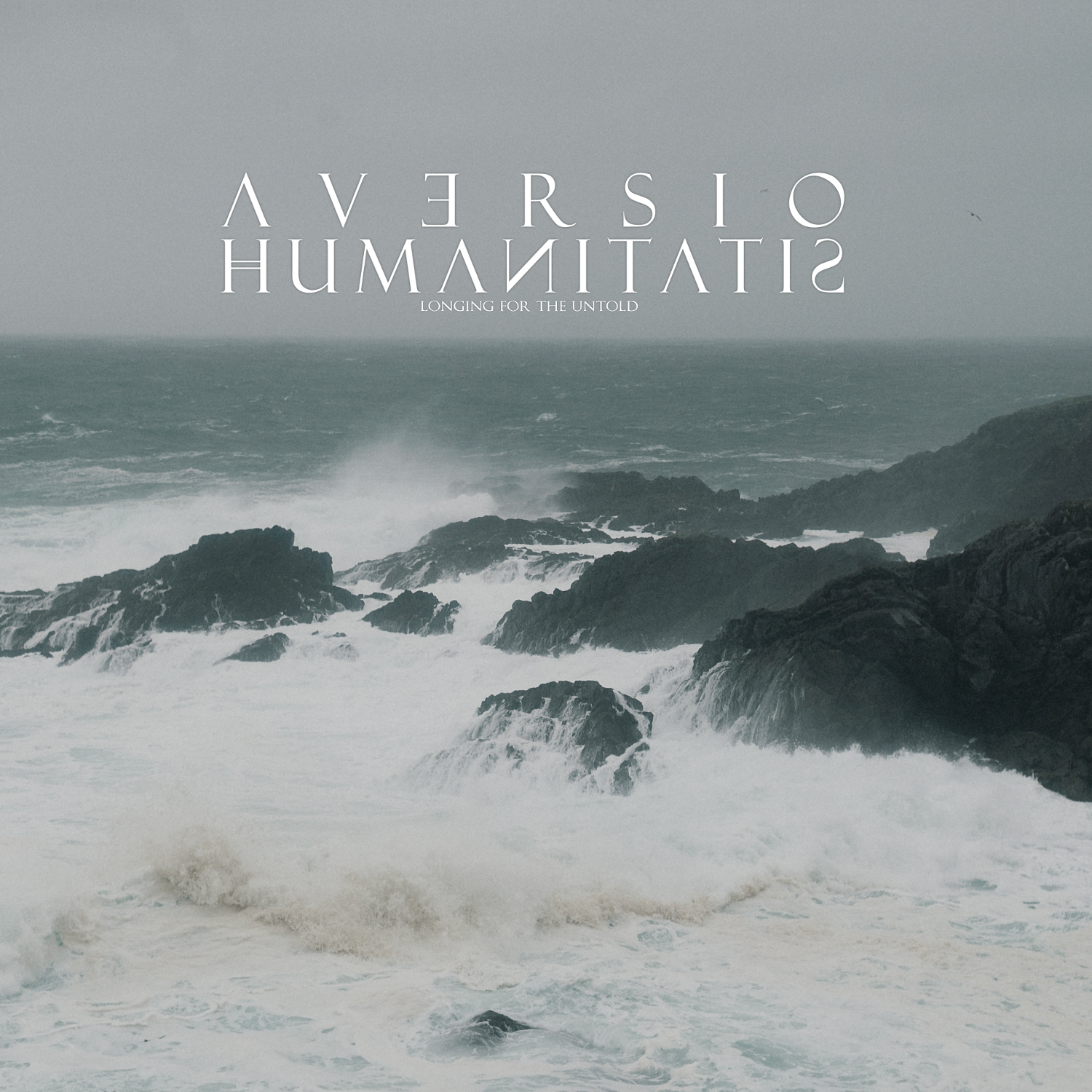
Album Review – Aversio Humanitatis / Longing for the Untold EP (2017)

Expanding upon their Black Metal roots by embracing the ferocity of the most mutated and cursed Death Metal, this Spanish horde brings forth a violent and ferocious one-way journey into darkness with their brand new release.

“Time is an ever open wound, that never hurts the same twice.”

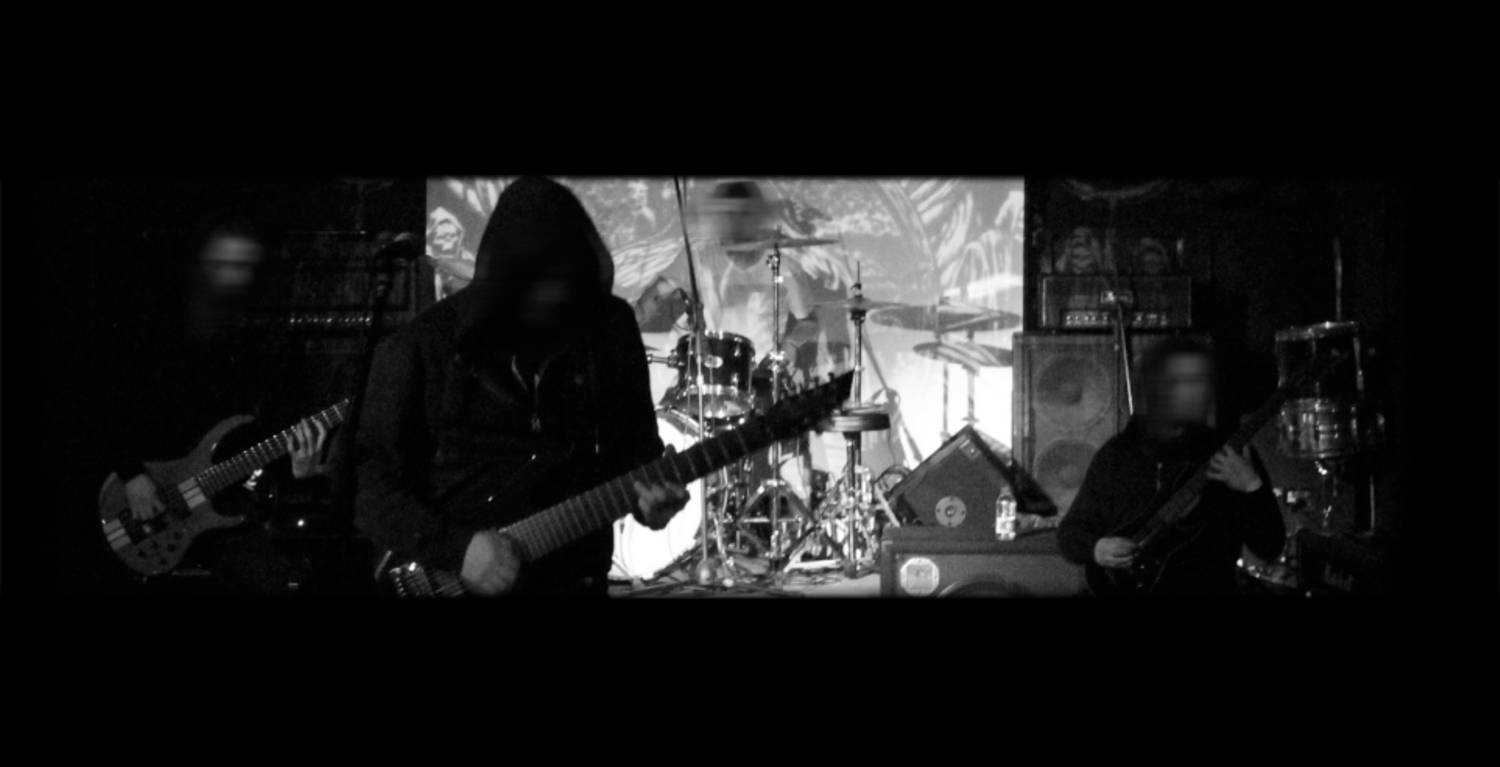
Since their inception in 2010 in the city of Madrid by a core and unchanged trio of mysterious locals, Spanish Black/Death Metal horde Aversio Humanitatis (Latin for “the loathing humanity”) has been slowly morphing into a beast of implausible proportions and of ungraspable intents, as they began to expand upon their Black Metal roots by embracing the ferocity of the most mutated and cursed Death Metal. This transcendental and abhorrent metamorphosis into otherworldly sonic tyrant fully sublimated in their 2017 EP Longing for the Untold, in which Aversio Humanitatis went from being a purely methodical and vaguely technical Black Metal band in the vein of Emperor, Satyricon and Abigor, to becoming something completely undefinable, shaped by the ever so apparent lineaments of an unquenchable black hole, a beast capable of harnessing the power of collapsing stars and of the very depths of Hades.

Originally released on CD in Spain only in early 2017, Longing for the Untold is by far the boldest and most Stygian opus by this idiosyncratic Spanish entity, surpassing their 2011 debut full-length album Abandonment Ritual in terms of heaviness, obscurity, chaos and aggressiveness. Now re-packaged with three bonus tracks from their 2013 split Three Ways of Consciousness (with Venezuelan/Chilean Black Metal act Selbst and Spanish Black Metal act Nihil) and with a new incredible artwork, Longing for the Untold brings forward a colossal behemoth of technically intimidating and sonically imposing Progressive Black Metal that lunges forth toward the listener with crushing force, levitating out of solid darkness. More than just an album, Longing for the Untold represents a place and time where the power of sound literally devours the senses, turning perception into a smoldering and swarming void of sensorial awe and of transcendental sonic disintegration.

The sensational title-track Longing for the Untold presents the fury of old school Black Metal mixed with atmospheric and menacing sounds, with vocalist and bassist A.M.’s dark guttural growls being spot-on, therefore enhancing the song’s obscurity and its wicked lyrics (“Time is an ever open wound / that never hurts the same twice / Twisted shards created by our will / shall open the flesh / in ways that may be poetry, or may be mundane / Since the shadow of our self is always / longer than our height / Since the pride of our self is always / shorter than our pain”), also showcasing truly infernal blast beast by drummer J.H. Prison of Shattered Glass feels a lot more doom-ish than the opening track, with A.M. and guitarist S.D. delivering pure evil through their strings. In other words, this is a lesson in Blackened Doom by this excellent Spanish entity, where the devilish background sounds, the ominous growls by A.M. and the sluggish beats by J.H. end up generating a sulfuric and disturbing ambience altogether, ending in a beautiful, Stygian way; whereas The Ever Shifting Path gets back to a more perturbing and belligerent sonority, with the Black Metal-inspired drumming by J.H. together with the hellish vociferations by A.M. being the main elements in this fantastic Extreme Metal aria, becoming even more impactful halfway through it.

Longing for the Untold BlackSeed Productions Edition

Closing this top-tier feast of obscure and extreme music we have the eerie Advent of the Inescapable, starting with an atmospheric, creepy intro before exploding into absolute hatred in the form of Black Metal, and that perturbing feeling goes on until the music fades into sheer darkness. Moreover, pay good attention to its lyrics, which are beyond perfect for the music played (“Transcend a fraudulent reality – / let fear and pain penetrate and go through / Deconstruct your being – / resign all perishable aspirations / Dissociation from all that surrounds you – / become an impassive entity / Accept your purpose in this world – / you are here to destroy and suffer”). As aforementioned, this new version of Longing for the Untold also contains three bonus tracks, all from their 2013 split Three Ways of Consciousness (Spears of Unlight, Psalms of the Wandering and Shrine of Involution), which add a 0.5 to the album’s overall score by offering more of Aversio Humanitatis’ undisputed fusion of Atmospheric Black Metal with Doom Metal.

After paying a visit to Aversio Humanitatis’ Facebook page and YouTube channel to know more about this distinct act hailing from Spain and to get a better taste of their music, I’m sure you’ll promptly search the web for a copy of Longing for the Untold  (which by the way can be enjoyed in its entirety HERE, including all bonus tracks). Well, let me tell you that your hunt will be an extremely easy task, as the album is available for purchase at the Sentient Ruin Laboratories’ BandCamp or webstore, at the BlackSeed Productions’ webstore in black vinyl, white vinyl or cassette, on Amazon or at Discogs; as well as at the band’s own BandCamp and at the BlackSeed Productions’ BandCamp or webstore (with or without the bonus tracks). And when you finally have this fantastic album on your hands, get ready for a violent , never-ending and ferocious one-way journey into darkness.

Best moments of the album: Longing for the Untold and The Ever Shifting Path.

Worst moments of the album: None.

Released in 2017 Sentient Ruin Laboratories

Track listing
1. Longing for the Untold 5:04
2. Prison of Shattered Glass 6:06
3. The Ever Shifting Path 5:36
4. Advent of the Inescapable 4:41

Vynil & Tape B-Side bonus tracks
5. Spears of Unlight 4:38
6. Psalms of the Wandering 5:34
7. Shrine of Involution 6:15

Band members
A.M. – vocals, bass
S.D. – guitars
J.H. – drums

Live musicians
N.H.T. – guitar, vocals
J.C. – bass

Album Review – Carcass / Heartwork (1993)

Wake up and listen to this Melodic Death Metal wonder.

Rating3

carcass_heartworkWhen a band or artist changes their musical direction towards something more commercial or mainstream, in order to become more famous and consequently make more money without worrying about their morality or principles, their old diehard fans start calling them a sellout. We have seen this type of thing happening hundreds of times with different bands from a wide range of musical styles, especially in Heavy Metal which always tends to be a more conservative genre than any other. Who doesn’t remember all the negative reaction of the fans and the specialized media to Metallica’s Load or Judas Priest’s Turbo? However, sometimes this change is for better, and that’s exactly what happened to Liverpool’s Extreme Metal masters Carcass when they “abandoned” their old Splatter/Grindcore to show the world a more polished material with the album Heartwork, released in 1993, becoming the pioneers of what we call today as Melodic Death Metal.

Although Heartwork was considered a radical change by lots of their old fans, and as I mentioned before a sellout by many, the album is far from sounding commercial or any shit like that. This is a milestone in the world of extreme music, quickly becoming the source of inspiration for hundreds of bands all over the world due to the quality and complexity of its music. The first track, Buried Dreams, already shows a much “cleaner” Carcass than ever before, but it’s still very extreme and violent. That new Carcass, a lot more melodic, offer us then Carnal Forge, which is pure Melodic Death Metal with amazing vocals, especially the initial scream, and beautiful solos by both Bill Steer and Michael Amott.

Can we call the unique No Love Lost a Melodic Death Metal ballad? This song is a classic with its perfect riffs and lyrics (“Without emotion you heartstring’s played / Strummed and severed to the tune of a tragic serenade”), and as one of the album’s singles it got a pretty cool video too. Then comes the best song of all, the title-track Heartwork,  a heavy music masterpiece with incredibly fast riffs, awesome solos, an addictive chorus (“A canvas to paint, to degenerate / Dark reflections – degeneration / A canvas to paint, to denigrate / Dark reflections, of dark foul light”), and Jeff Walker being absolutely fantastic on vocals, sounding like an (extremely) evil version of Dave Mustaine. This is a Death Metal anthem with flawless synchronicity of all band members, and a mandatory track in any music selection for a heavy workout at the gym.

carcassAfter an impeccable start, the album loses a little momentum with Embodiment, which is not as amazing as all previous tracks. Moreover, this song reminds me a lot of what Arch Enemy do today, clearly due to Michael Amott’s influence, but not as cohesive. This Mortal Coil is an excellent song with awesome guitars, making it one of the best in the album and a great song for any live performances. The next song is fantastic too, albeit it has a very weird name: Arbeit Macht Fleisch is a derivation of “arbeit macht frei”, the famous German phrase found over the main gates of many Nazi concentration camps during World War II (including Auschwitz I) that means “work makes (you) free”. In this case, the meaning would be “work makes (you) meat”, a more suitable expression for the gruesome heavy music played by Carcass.

The last part of Heartwork begins with Blind Bleeding the Blind, a very technical song with lots of groove and electricity, followed by Doctrinal Expletives, which is a more straightforward, traditional metal song. The last track of the album, Death Certificate, has an amazing start and very interesting lyrics, but in my opinion it’s its fast and heavy rhythm what makes it so great. This is the end of an outstanding album, with Bill Steer and Michael Amott kickin’ ass from start to finish (what those two guys did with their guitars together in Heartwork was glorious) and Jeff Walker adding a creepy touch to it with his guttural, raspy voice. In addition, we can see here one of the most extraordinary front covers in the history of heavy music, called “Life Support 1993”, designed by the deceased Swiss artist H. R. Giger.

The band released Swansong in 1996, and 17 years later they got back with the amazing Surgical Steel, in 2013, but Heartwork is still their biggest work so far and something quite impossible to be beaten (and if I were you, I would definitely go for the Full Dynamic Range Edition with its four amazing bonus tracks). Carcass might have changed their musicality, with an almost complete shift in their vocal style and more diversity in their music and lyrics, but instead of a sellout they became a reference in Melodic Extreme Metal. If you love truly heavy, violent music with a solid melody in the background and insanely gory words, well, let’s just say that you must “wake up and smell the carcass”.

Best moments of the album: No Love Lost, Heartwork, This Mortal Coil and Arbeit Macht Fleisch.

Worst moments of the album: Embodiment.

Released in 1993 Earache Records

Track listing
1. Buried Dreams 3:58
2. Carnal Forge 3:54
3. No Love Lost 3:22
4. Heartwork 4:33
5. Embodiment 5:36
6. This Mortal Coil 3:49
7. Arbeit Macht Fleisch 4:21
8. Blind Bleeding the Blind 4:57
9. Doctrinal Expletives 3:39
10. Death Certificate 3:38

Full Dynamic Range Edition bonus tracks
11. This Is Your Life 4:09
12. Rot ‘n’ Roll 3:51
13. Carnal Forge (live in Tokyo) 4:25
14. Heartwork (live in Tokyo) 5:01

Band members
Jeff Walker – vocals, bass guitar
Bill Steer – lead guitar
Michael Amott – lead guitar
Ken Owen – drums

Album Review – Cradle of Filth / Cryptoriana – The Seductiveness of Decay (2017)

UK’s most visionary and hellish outfit returns with another blast of malignancy and eroticism in the form of the twelfth studio album in their undisputed career.

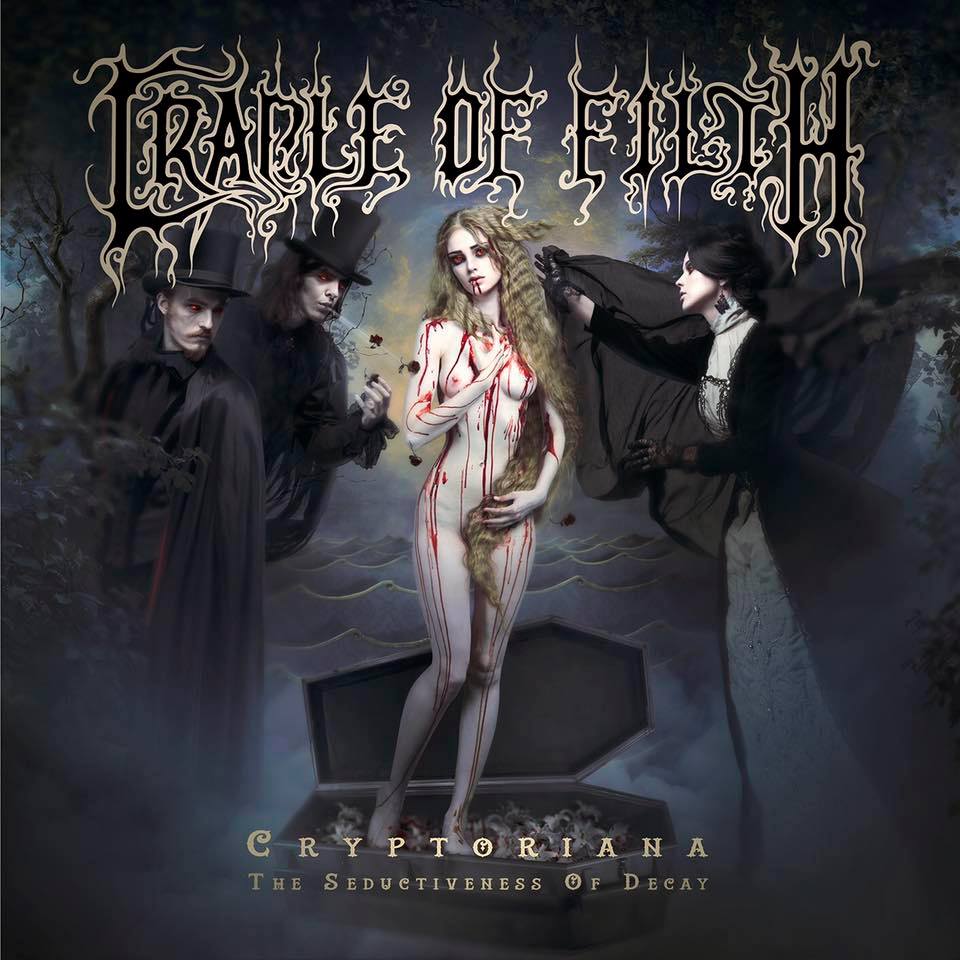
After their 2015 majestic and imposing album Hammer Of The Witches, British Extreme Metal institution Cradle of Filth had the arduous task of maintaining such high level of malignancy, electricity and eroticism in their brand new opus, stylishly titled Cryptoriana – The Seductiveness of Decay, the twelfth studio album in their undisputed career. Despite not being as fantastic and cohesive as its predecessor, Cryptoriana – The Seductiveness of Decay still brings forward the classic sound by Cradle of Filth we all learned to love through the years, solidifying even more their already distinguished reputation among fans of extreme music.

The band’s iconic mastermind and vocalist Dani Filth said the album “is deeply infused with Victorian gothic horror and thus the title is a reflection of that.’Cryptoriana’ implies the Victorians’ infatuation with the supernatural, the grave and the ghoulish. And the subtitle, ‘The Seductiveness of Decay’, further cements this attraction to death and the glittering lengthy process of self-annihilation”. In addition to that, one very interesting fact about Cryptoriana – The Seductiveness of Decay is that this is their second album in a row with the exact same lineup, which for an ever-changing band like Cradle of Filth is a huge milestone. The artwork was also created by the same artist from Hammer Of The Witches, Latvian designer Arthur Berzinsh, and form that you can have a very good idea of how similar both albums are visually and musically speaking, although as aforementioned the band had an almost impossible mission to surpass Hammer Of The Witches in regards to its exceptional quality.

Exquisite Torments Await can be considered a 2-minute “expanded” intro, showcasing demented and dark noises together with the band’s characteristic melody and potency, already bringing forward their usual blast beats and devilish orchestrations. Well, Dani’s first high-pitched scream says it all. The following tune, the first single of the album titled Heartbreak and Séance, kicks off at full speed with the gentle but powerful guitars by both Richard Shaw and Marek “Ashok” Šmerda bringing balance to the havoc led by the flammable Dani and the insanely talented drummer Martin “Marthus” Škaroupka. In other words, it’s classic and modern Cradle of Filth united in a solid and exciting manner (and don’t forget to check the uncensored version for its official video, it’s definitely worth it). And in Achingly Beautiful, an esoteric beginning quickly explodes into Cradle of Filth’s unique Black Metal, feeling like two or three songs in one due to its complexity and all breaks and variations, with the keyboards by Canadian beauty Lindsay Schoolcraft generating an amazing vibe in the background, not to mention her always pleasant backing vocals.

The main riff in Wester Vespertine reminds me of some of the guitar lines from their 1998 cult album Cruelty and the Beast, more specifically from the classic “Thirteen Autumns and a Widow”, proving Dani knows how to blend the past, present and future of his band in a very cohesive manner. Moreover, Marthus continues his sonic onrush with his potent and unstoppable beats and fills, enhancing the song’s potency considerably. Then it’s time for Richard and Ashok to lead the epic intro in The Seductiveness of Decay, before the band speeds up the pace delivering a neck-breaking, smashing tune tailored for both old school fans and newcomers to the world of Cradle of Filth. Dani has an absolutely flammable performance with his demonic growls and screeches, with the music becoming a symphonic devastation halfway through it with highlights to the awesome solos by Richard and Ashok. And featuring Liv Kristine as a guest vocalist (turning it into some sort of “beauty and the beast” duo with Dani), Vengeful Spirit maintains the album at a high level of seductiveness, vileness and darkness, with Marthus being totally diabolical on drums whereas Lindsay continues to deliver delicate and whimsical key notes to bring more balance to the music.

Despite bringing the trademark wicked lyrics by Dani (“Purring the sweet tempered soughing / Of lucrative Savannah wind / Stirs the great flotsam of clouds that are vowing / To usher the evening in / Affecting the set of the reckoning sun / From burnished gold to crimson hue / Before this night is quite sorely undone / The Devil is coming for you”), You Will Know the Lion by His Claw doesn’t sound as inspired as the rest of the album, presenting generic guitar lines and no gripping moments at all; whereas a beyond imposing beginning, full of symphonic elements, opens the gates of hell for Dani and his bandmates to blast the mysterious and funereal tune Death and the Maiden. Furthermore, a somber shadow remains above the band from start to finish, with Dani spearheading the musicality with his satanic growls, while Marthus and Lindsay craft a truly powerful atmosphere with their respective beats and keys until the song’s hellish finale.

And if I were you I would certainly go for the special edition of the album, which contains two amazing bonus tracks that are worth your additional investment. The first one, named The Night at Catafalque Manor, brings more of Cradle of Filth’s renowned Symphonic Black Metal, with highlights to its amazing orchestrations and the rumbling bass lines by Daniel Firth. Then closing the limited edition we have a flawless cover version for Annihilator’s biggest classic Alison Hell (if you’re from another planet and has never listened to the original version, you can take a shot at it HERE), from their 1989 cult album Alice in Hell. This is indeed a superb tribute to this Canadian institute, and Dani simply nailed it like what he did in the past with other all-time metal hits like Iron Maiden’s “Hallowed Be Thy Name”, Slayer’s “Hell Awaits” and Venom’s “Black Metal”.

Dani and his Cradle of Filth still have a lot of fire to burn in their career, and Cryptoriana – The Seductiveness of Decay is a strong statement that they’re still relevant to the world of heavy music, being capable of producing excellent material year after year. Simply visit Nuclear Blast’s official webstore to pick your version of the brand new album by UK’s most visionary and hellish outfit in the history of extreme music, and be more than prepared for when Dani and his devilish horde take your city by storm with their live performances (if they haven’t done so yet).

Best moments of the album: Heartbreak and Séance, The Seductiveness of Decay and Alison Hell.

Worst moments of the album: You Will Know the Lion by His Claw.

Released in 2017 Nuclear Blast

Track listing
1. Exquisite Torments Await 2:15
2. Heartbreak and Séance 6:24
3. Achingly Beautiful 7:02
4. Wester Vespertine 7:24
5. The Seductiveness of Decay 7:38
6. Vengeful Spirit (feat. Liv Kristine) 6:00
7. You Will Know the Lion by His Claw 7:22
8. Death and the Maiden 8:48

Limited Edition Digipak/Vinyl bonus tracks
9. The Night at Catafalque Manor 7:31
10. Alison Hell (Annihilator cover) 5:01

Band members
Dani Filth – lead vocals
Richard Shaw – guitars
Marek “Ashok” Šmerda – guitars
Daniel Firth – bass
Lindsay Schoolcraft – female vocals, keyboards
Martin “Marthus” Škaroupka – drums

Guest musician
Liv Kristine – female vocals on “Vengeful Spirit”

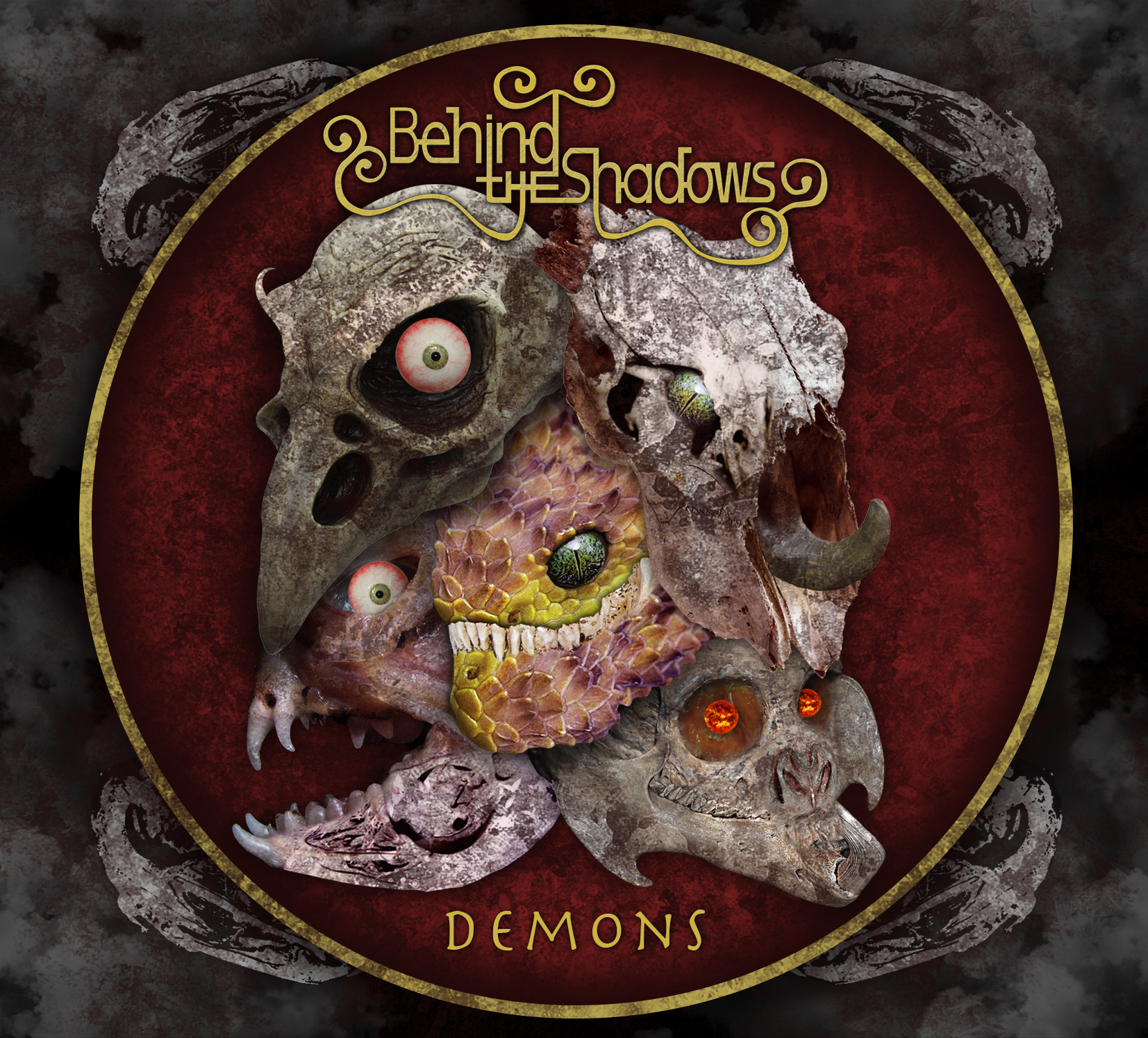
Album Review – Behind the Shadows / Demons (2017)

Offering fans of heavy music an amalgamation of diverse metal genres and subgenres, this very interesting project hailing from Greece is ready to rumble with their brand new full-length album.

Here’s a very interesting project hailing from the always prolific city of Alexandroúpoli, the capital of the Evros regional unit in East Macedonia and Thrace, in Greece, offering fans of heavy music a unique amalgamation of diverse metal genres and subgenres to the point each one of their songs sound very distinct when compared to their other creations. I’m talking about Symphonic/Power Metal act Behind the Shadows, who started as Mind Mirror in the year of 1997, but who since 2008 has been blasting metal music under their new name for admirers of both heavier sounds and more melodic lines, as you’ll be able to see in their brand new album, titled Demons.

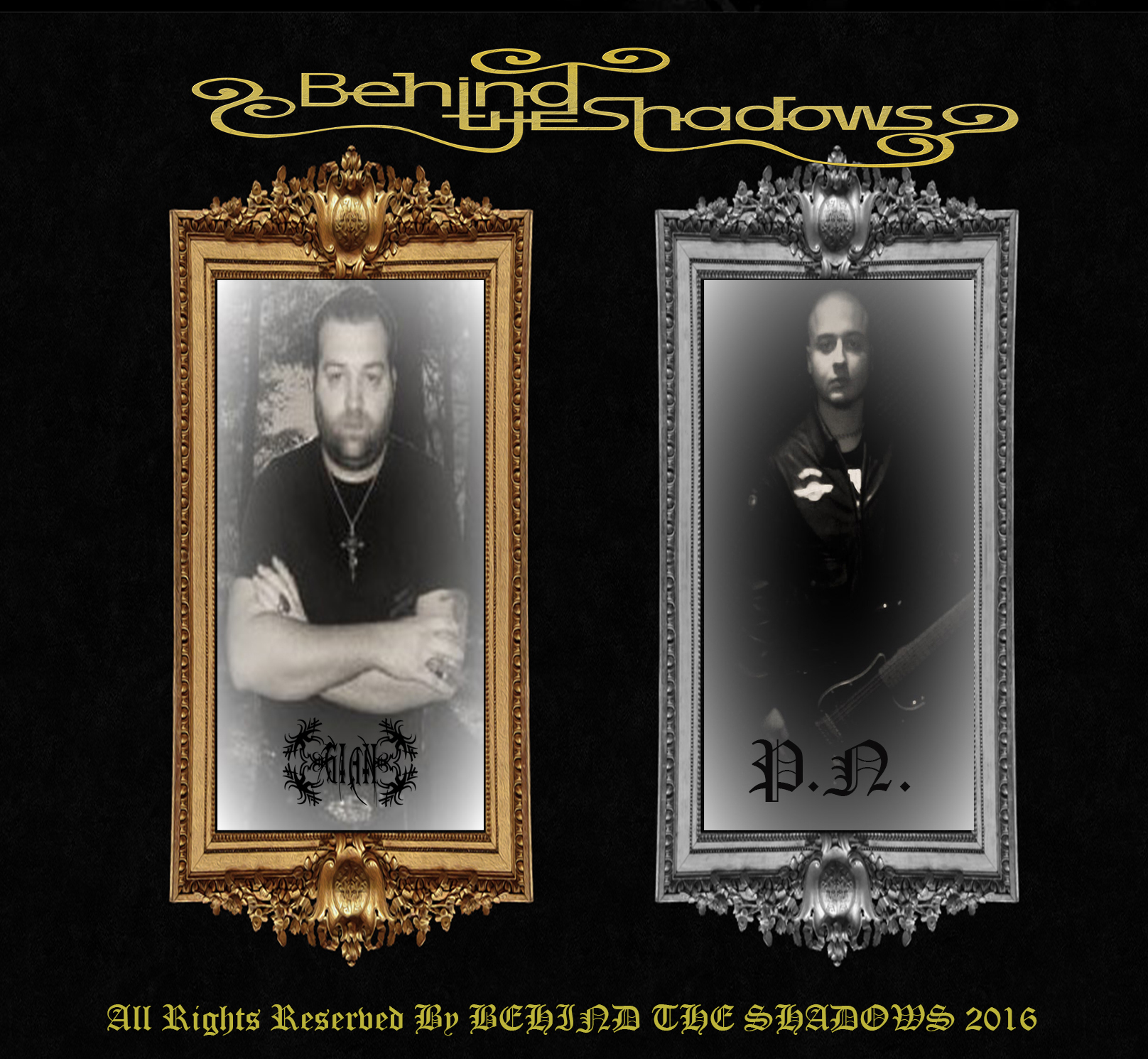
Comprised of Gian, the band’s mastermind who takes care of guitars and bass, and Pasxalis Nikiphoridis on vocals and on lead and rhythm guitars, Behind the Shadows had some fantastic support from several musicians from the Greek scene to bring Demons into being. For instance, the album features guest vocalists Zion (Crossover, Hocus) and Christos Kaliatsas, and guest guitarists Dimitris Haidemenos (Lost in Neverland), Stratos Vrachiolias (Defision), Sotiris Pavlidis (Bacchanalia) and Kyriakos Mpouloumpasis, all providing their personal share of electricity and feeling to the music found in the album. As aforementioned, the final result in Demons is really good, with the music being cohesive, diverse and, above all, as metal as it can be.

And their heavy and epic symphony begins in full force in the opening track, the excellent Become The Apocalypse, where the dynamic duo Gian and Pasxalis do a great job with their potent vocals and riffs, specially during the song’s catchy chorus, not to mention the series of kick-ass solos by guest guitarists Dimitris, Stratos and Kyriakos. Coma To Hell, also featuring Kyriakos on lead guitar, presents a darker and more lancinating vibe, sounding like the early days of Metallica and Megadeth with a Death Metal twist, with the band relying on the song’s brutal drumming as their heavy artillery, therefore enhancing the impact of this hellish creation considerably; while in the vicious Power Metal hymn Piece Of Shadows, Gian and Pasxalis keep blasting pure metal from their guitars, with the harsh growls bringing more obscurity to the overall result. Moreover, pay good attention to the traditional Heavy Metal guitar duo the likes of Iron Maiden during the whole song as the icing on the cake. And featuring guest musician Zion on vocals adding an extra touch of “thrashiness” to the music with his hardcore attitude, The Beast Rises From The East brings to the listener a vibrant and heavy-as-hell sonority, with both Gian and Pasxalis delivering slashing riffs and bass lines nonstop.

Zombie Flesh Eaters, featuring Christos on vocals, is another kick-ass hybrid of Power Metal and more extreme forms of music such as Death Metal, sounding visceral from start to finish with some electrifying guitar lines by Gian and Pasxalis, keeping the momentum going for the title-track Demons, where cavernous growls bring ferocity to the music while the guitars bring melody and balance to the final result, feeling quite epic at times, not to mention the awesome contribution by Stratos and Sotiris on lead guitar. Then elements from Thrash Metal and Hardcore can be seen in the fast-paced tune Necrophilia, a devastating tune perfect for their live performances with a frantic flow, followed by Holy Lie, perhaps the song with the highest amount of extreme elements from Death and Black Metal, in special it’s demonic drumming and deep growling. Furthermore, their work on guitars is simply superb in this dark and melodic chant.

Crucified For The Innocences keeps the album’s quality at a good level through its flammable riffs, hellish growls and piercing rhythm, with once again the guitar solos stealing the spotlight so thrilling they sound. Moreover, there’s not even a single second of peace during the whole song, which is always a good thing in metal. Sweet Darkness, the second to last track in Demons, definitely lives up to its name, with its eerie intro morphing into a tempest of heaviness and aggressiveness led by its gruesome growls, culminating in an amazing Extreme Metal extravaganza; and lastly, Nightmare is as vile and demonic as its predecessors albeit not as creative, falling flat after a while but nothing that could truly harm the overall quality of the album.

In summary, it doesn’t really matter if you’re a fan of traditional Heavy Metal, dark and piercing Black Metal, modern Death Metal or Symphonic Metal, as Behind the Shadows will always have good music to offer you from their metallic arsenal. You can take a very detailed listen at their music at their BandCamp page, where by the way you can purchase Demons, as well as on ReverbNation, and continue to support bands like Behind the Shadows to keep underground Greek metal (and of course metal in general) alive and on fire.

Best moments of the album: Become The Apocalypse, Piece Of Shadows, Demons and Sweet Darkness.

Worst moments of the album: Nightmare.

Released in 2017 Independent

Track listing
1. Become The Apocalypse 5:18
2. Coma To Hell 4:34
3. Piece Of Shadows 4:51
4. The Beast Rises From The East 6:51
5. Zombie Flesh Eaters 4:13
6. Demons 4:54
7. Necrophilia 4:09
8. Holy Lie 4:29
9. Crucified For The Innocences 5:22
10. Sweet Darkness 3:48
11. Nightmare 4:04

Band members
Gian – rhythm guitars, bass
Pasxalis Nikiphoridis – lead & rhythm guitars, vocals

Guest musicians
Dimitris Haidemenos – lead guitar on “Become The Apocalypse”
Christos Kaliatsas – vocals on “Zombie Flesh Eaters”
Stratos Vrachiolias – lead guitar on “Become The Apocalypse” and “Demons”
Sotiris Pavlidis – lead guitar on “Zombie Flesh Eaters”
Kyriakos Mpouloumpasis – lead guitar on “Become The Apocalypse” and “Coma To Hell”
Zion – vocals on “The Beast Rises From The East”

Album Review – Cult of Erinyes / Tiberivs (2017)

Inspired by the Roman Emperor Tiberius, here comes a ruthless Belgian Ritualistic Black Metal horde with their brand new and utterly fantastic concept album.

One of the most talented and prominent bands of the Extreme Metal independent scene in Europe, Belgian Ritualistic Black Metal horde Cult of Erinyes, is back with their unsparing music in the form of a concept album titled Tiberivs, inspired by the Roman Emperor Tiberius, who ruled one of the greatest empires of mankind from 14 AD to 37 AD. It doesn’t matter if you’re a newcomer to the dark world of this Brussels-based band or if you’re already a fan of works such as A Place to Call My Unknown, Blessed Extinction and their latest EP Transcendence, the music found in Tiberivs will leave scathing scars on your skin and poison your blood, leaving you eager for more of the band’s mordant creations.

As commented by the band’s mastermind Corvus, “I always perceived Cult of Erinyes as a portal that allows my mind to connect with different universes. I had, from the very beginning of the creative process, to immerse myself in a definite time period – the Ancient Roman Empire, Tiberius era. Each song, melody, and riff had to refer to a variation of emotions forgotten by time itself. What sounded like a fantastic challenge ended as a nightmare where my subconscious got lost. Desperation, frustration, and madness raised dangerously. This third album is our most progressive effort so far, but also contains radical and intense parts sublimed by Mastema’s urges for ferocity. We both went as far as we could on this album and were lucky to be helped in our task by longtime devoted musicians Algol (bass, additional guitars), Baron (lead guitars, artwork), and Déhà, who handled the drums, some guitars/keys, and the the mix/mastering process. Last but not least, Alex (Kall, Hypothermia, Craft) offered us a five-star bass-line on the intro and Marc DeBacker, my brother in Wolvennest, added some crystal-clear guitar sounds on the end of the album. This album also marked the end of my longtime musical and spiritual journey with Mastema. I can only but respect his decision and salute the energy he shared on Tiberivs. This concept album was his idea, and I’m glad we end our collaboration on this high and digressive note. He will be replaced for future live and recording duties by the most extreme and mentally extreme singer I know, Déhà, who is known for his work with Yhdarl, Maladie, We All Die (Laughing), and shitloads of other good projects. For all those reasons, I will hate and cherish this album. For Centuries To Come.”

In the opening track, titled Archaea, 41 B.C., fires burn amidst some eerie voices and moans, being slowly joined by the band’s atmospheric instrumental and topped off with a narration about how Romans were raised by wolves and that wolves are born to hunt and kill, resulting in a beyond ominous intro to the devastating Nero (Divine Providence), offering the listener the band’s old school Black Metal with their traditional ritualistic twist in the form of a sensational tempest of slashing guitars and blast beats. Moreover, not only Mastema sounds more devilish and brutal than ever, but the song’s frantic sounds are effectively blended with its ambient passages, turning it into a full-bodied blackened experience that’s definitely worth a listen. And in Casvs Belli, which means “an act or situation provoking or justifying war”, we’re treated to an explosion of extreme music with the demonic riffs by Corvus together with Algol and Baron generating a truly belligerent atmosphere, all enhanced by the infernal growls by Mastema and the obscure keys by Corvus.

Bred for War connects instantly and perfectly with the previous song to the point they can even be considered one major composition split in two, with sheer bestiality flowing from the awesome drumming by Déhà. In other words, this is straightforward Black Metal perfect for Corvus and his horde to tell the story proposed in the album; followed by Loner, a song that kicks off like a raging bull, smashing everything through the blast beats by Déhà and the fast and cutting guitars by Corvus, with Algol strengthening the song’s melody with his bass lines. The final result couldn’t sound more amazing, a furious and occult creation by Cult of Erinyes with an excellent job done by Mastema giving life to the song’s dark lyrics. Germanicvs, with its almost 8 minutes of blackened sounds and a demonic aura, keeps up with the foundations of Black Metal, being one of the most obscure and dense of all songs of the album led by the sustained drums by Déhà and spiced up by dark vociferations by Mastema.

An eerie, dark intro ignites another menacing creation by this talented Belgian horde, titled First of Men, a hybrid of Atmospheric and Ritualistic Black Metal with hints of Blackened Doom. Moreover, although it doesn’t show the same fury that emanates from the rest of the album, it’s still essential for the storyline. In Damnatio Memoriae (or “damnation of memory” in English), the music grows in intensity and darkness until after one minute it becomes a feast of Blackened Doom sounds enfolding the demented gnarls by Mastema, remaining rhythmic and dynamic thanks to the excellent job done by Déhà on drums until its thrilling Stygian ending; whereas For Centuries to Come is an 11-minute aria where Corvus showcases all his abilities as a multi-instrumentalist, while Mastema elevates his evil growls and screams to a whole new infernal level. This is by far the most complete and detailed of all songs, with its second half being a work-of-art of extreme music, not to mention its atmospheric elements beautifully complementing the piercing guitar riffs and solos, flowing into a fantastic and climatic conclusion to the album.

In a nutshell, the implacable Cult of Erinyes sounds stronger and more menacing than ever in Tiberivs (which can be enjoyed in its entirety HERE) and, despite being their ultimate album with the demonic Mastema on vocals, I’m sure the band will still provide us a lot of amazing material like this in the future. Furthermore, this brilliant concept album can be purchased at the band’s own BandCamp page, at the Caverna Abismal Records’ BandCamp or webstore, and at the Aural Music Webstore, as well as on iTunes, Amazon and Discogs. The roots to the greatest empire in the history of mankind are deeply connected to the lives of wolves, and there’s nothing better than the austere extreme music by Cult of Erinyes to show you how harsh, ruthless and vicious wolves can be.

Best moments of the album: Nero (Divine Providence), Loner and For Centuries to Come.

Worst moments of the album: First of Men.

Released in 2017 Caverna Abismal Records

Track listing
1. Archaea, 41 B.C. 2:40
2. Nero (Divine Providence) 7:42
3. Casvs Belli 6:24
4. Bred for War 3:52
5. Loner 4:27
6. Germanicvs 7:40
7. First of Men 5:49
8. Damnatio Memoriae 6:04
9. For Centuries to Come 10:59

Band members
Mastema – vocals
Corvus – lead and rhythm guitar, bass, keyboards
Algol – bass, rhythm guitar
Baron – lead guitar
Déhà – drums, additional guitar & keyboards

Guest musicians
Alex – bass on “Archaea, 41 B.C.”
Marc DeBacker – additional guitar on “For Centuries to Come”

Album Review – Torture Squad / Far Beyond Existence (2017)

Don’t cross the path of one of the most respectful bands from the Brazilian Thrash and Death Metal scene, or they will mercilessly crush you with the pulverizing music from their sensational new album.

If there’s a band that beautifully epitomizes what old school underground Thrash and Death Metal are all about, that band has to be the ruthless Brazilian four-piece outfit Torture Squad who, since their inception in the distant year of 1990 in the city of São Paulo, a metropolis with almost 20 million people located in the southeast region of Brazil, has been fighting for heavy music and remained loyal to their foundations, even with all the adversities in a country where metal is far from being a popular genre. Carrying a powerful name inspired by the song “Death Squad”, by American thrash metallers Sacred Reich, and having already released seven studio albums, two live albums and three EP’s, it’s time for Torture Squad to attack humanity once again with another sensational blast of traditional extreme music, titled Far Beyond Existence, the eight full-length release in their solid and exciting career.

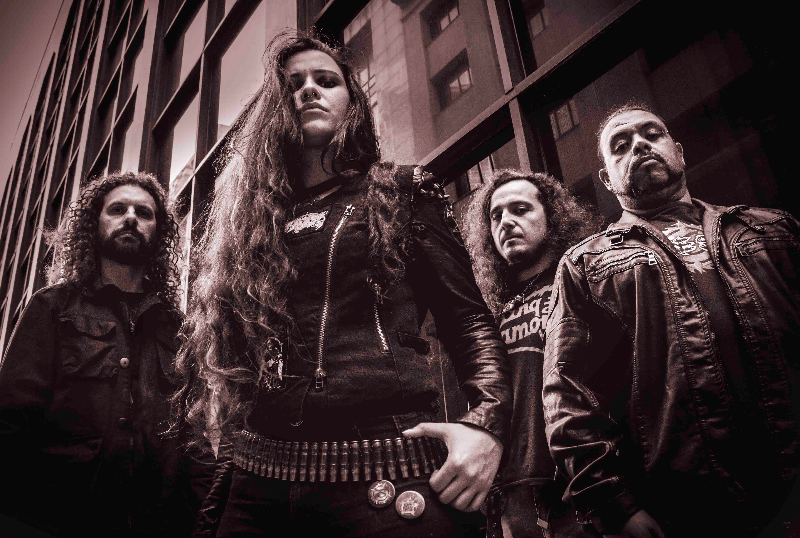
Featuring a somber and ominous artwork by Brazilian artist Rafael Tavarez (who has already provided his brilliant art to several other bands all over the world such as Dark Ministry, Vulture and Moonkult), Far Beyond Existence is the first full-length opus by Torture Squad to feature the she-wolf Mayara “Undead” Puertas as their lead singer, as well as Rene Simionato on guitars. As a matter of fact, although the talented Mayara and Rene already released last year an EP with Torture Squad, the excellent Return of Evil, it’s now with the band’s new full-bodied installment that they have all the room needed to showcase their refined abilities as musicians and their utmost passion for all things extreme. And they more than succeed in their mission as you’ll see when you start listening to this incendiary album of Brazilian Extreme Metal.

In the fantastic opening track Don’t Cross My Path, Rene presents his welcome card in the form of cutting, flammable riffs, while the band’s wardogs Amílcar on drums and Castor on bass are simply thunderous with their respective instruments. And what to say about Mayara? She’s a true unstoppable she-demon, kicking some serious ass with both her deeper guttural and her more strident screams. As the name of the song says, don’t dare to cross her path under any circumstances, unless that’s what you really want deep down inside, right? Continuing with their sonic destruction, sirens warn the listener a tempest of old school Thrash and Death Metal is about to come in No Fate, another boisterous creation by this Brazilian quartet that exhales heaviness and aggression, with Amílcar giving a lesson in drumming by being rhythmic, violent and groovy at the same time. And connecting instantly with where the previous song ended, Blood Sacrifice presents a serene and somewhat esoteric intro, suddenly exploding into belligerent Thrash Metal. Amílcar once again demolishes his drums in a fantastic way, while Mayara keeps barking, gnarling and screaming like a beast, resulting in one of my favorite songs of the album by far; followed by Steady Hands, a mid-tempo tune perfect for some intense headbanging intercalated with some faster and more furious parts, with Rene once again blasting a metallic feast of heavy and raw riffs, not to mention the great job done by Castor with his demonic bass punches enhancing the song’s heaviness to the limit.

The also superb Hate, featuring British vocalist Dave Ingram (Benediction, Bolt Thrower, Just Before Dawn) on guest vocals, is more ferocious than most of the previous songs, where the pounding drums by Amílcar are in perfect sync with Castor’s bass lines and Mayara’s grunts, and with the song’s ending being a thing of beauty tailored for smashing your skull into the circle pit. In Hero for the Ages, slashing riffs and accelerated beats generate a warlike atmosphere perfect for Mayara to attack us with her devilish guttural vocals. Furthermore, it’s truly impressive how all songs sound extremely imposing and heavy, and of course this one couldn’t be an exception to that, with Castor hitting us hard in the last part of the song with his bass guitar. The title-track Far Beyond Existence is a lesson in traditional Thrash Metal, sounding simply excellent for the band’s live concerts, showcasing a neck-breaking, galloping pace that will certainly stimulate the spawn of some intense mosh pits, all boosted by the amazing guitar solo by Rene amidst all the rumbling sounds emanating from bass and drums. And leaning towards a more obscure form of Death Metal, mainly due to the deep and enraged gnarls by Mayara and the old school riffs by Rene, Cursed by Disease keeps the album’s momentum going, with the special narration by Brazilian drummer Edu Lane (Nervochaos) and its old school lyrics (“A rotting corpse remains preserved / Receptacle of the spirit of a king / Sarcophagus was sealed with all his treasure / And on the walls the paintings bore a curse / Death will attack / With its trident / for those who disturb / The pharaoh”) spicing up the final result.

You Must Proclaim, featuring Brazilian multi-instrumentalist Luiz Louzada (Chemical Disaster, Predatory, Vulcano) as a guest vocalist (making a demonic duo with Mayara on vocals), begins with Castor punching his bass mercilessly, emanating a violent and metallic sound that grows in intensity together with all other instruments until it becomes a thrilling Thrash Metal onrush; whereas Just Got Paid,  their pulverizing version for a ZZ Top classic (which original version can be enjoyed HERE), sounds as groovy and hellish as it can be, led by the harsh vocals by guest vocalist Alex Camargo (Krisiun) and the exciting riffage by Rene. Moreover, Castor’s bass sounds once again insanely deafening, which obviously translates into sheer awesomeness. Before all is said and done, Castor and his potent bass kick off the instrumental extravaganza titled Torture in Progress, featuring Brazilian keyboardist Marcelo Schevano, with those bass wallops being the main ingredient during the song’s first part, always accompanied by Amílcar’s intricate beats. In addition, the Deep Purple-inspired keys by Marcelo bring a fresh taste to the overall musicality, culminating in almost 10 minutes of top-notch Brazilian metal. Then closing the album we have Unknown Abyss, a cinematic intro (or outro, depending on how you listen to it, as I’m not really sure why it was added as the last track of the digital version of the album) where Mayara “presents” herself to the fans of the band like a demonic entity rising from the underworld. Needless to say, it will sound fantastic as the intro to their live performances.

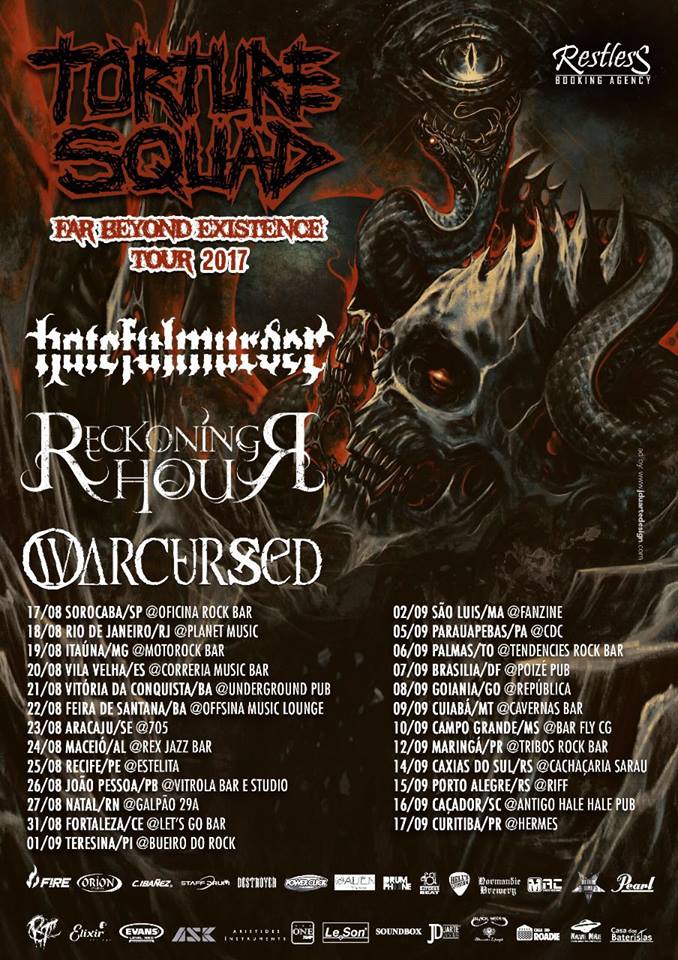
In a nutshell, when Mayara had the arduous mission a couple of years ago to replace Torture Squad’s longtime iconic vocalist Vitor Rodrigues, she already proved the world she was the right choice for the band, but in Far Beyond Existence her performance reached such a stunning level she has emphatically carved her name as the band’s undisputed voice (hopefully) for many years to come. If you want to know more about Torture Squad, simply go to their Facebook page for news and tour dates (if you’re in Brazil, don’t miss their Far Beyond Existence Tour 2017, which is just about to start on August 17), and to Spotify to listen to Far Beyond Existence in its entirety. You can also buy the album through the Secret Service Records’ webstore, on iTunes or on Amazon, and show all your support to high-end underground metal from Brazil, more specifically to one of the most respectful, hard-working and thrilling bands in the history of Brazilian heavy music.

Best moments of the album: Don’t Cross My Path, Blood Sacrifice, Hate and Far Beyond Existence.

Worst moments of the album: None.

Released in 2017 Secret Service Records

Track listing
1. Don’t Cross My Path 5:48
2. No Fate 6:35
3. Blood Sacrifice 7:38
4. Steady Hands 5:23
5. Hate (feat. Dave Ingram) 4:11
6. Hero for the Ages 5:42
7. Far Beyond Existence 6:44
8. Cursed by Disease (feat. Edu Lane) 5:02
9. You Must Proclaim (feat. Luiz Louzada) 5:06
10. Just Got Paid (ZZ Top cover) (feat. Alex Camargo) 4:11
11. Torture in Progress (Instrumental) (feat. Marcelo Schevano) 9:37
12. Unknown Abyss (Intro) 3:01

Band members
Mayara “Undead” Puertas – vocals
Rene Simionato – guitars
Castor – bass, backing vocals
Amílcar Christófaro – drums

Guest musicians
Dave Ingram – additional vocals on “Hate”
Edu Lane – narration on “Cursed by Desease”
Luiz Louzada – additional vocals on “You Must Proclaim”
Alex Camargo – vocals on “Just got Paid”
Marcelo Schevano – Hammond organ on “Torture in Progress”