One of the best metal hordes hailing from Latvia is ready to bring down the hammer with their fourth studio album, proudly dedicated to their vast and beautiful homeland.
Founded in 2014 in the cold woods of Latvia, more specifically in the city of Daugavpils, located in south-eastern Latvia, the unstoppable horde known as Varang Nord combines harsh Death Metal riffs with epic accordion chants, creating a unique blend of northern Folk, Pagan and Viking Metal while praising a mighty battle, a bloody sacrifice to the Old Gods and a joyful northern feast with endless mugs of ale. Now in 2021, the band comprised of Maksims “Wolf” Popovs on vocals and guitar, Jelena Kalniša on vocals and accordion, Javgenijs Selivanovs also on the guitar, Danila Lopuha on bass and vocals, Vjačeslavs Janens on percussion and vocals, and Aigars Zeiza on drums returns to the battlefield with Pārķiuņa Uomurs, or “thunder’s hammer” in English, their fourth studio album, proudly dedicated to their homeland, the power and beauty of its nature and the depth of its cultural roots. Produced by the band and recorded at their personal studio, and mixed and mastered by Gints Lundbergs at Sound Division Studios, Pārķiuņa Uomurs is also the band’s first-ever album where all lyrics are written in the Latgalian language (an eastern dialect of Latvian), giving it an even more personal and organic feel.
A war is about to begin in the epic intro Pi Tuoļim Krostym, getting us ready for our bloodthirsty destiny to the sound of Stuojīs!, where the accordion by Jelena and the blast beats by Aigars make a superb paradox, offering Maksims everything he needs to roar like a true barbarian while Jelena brings a touch of finesse and melancholy with her clean vocals. Cīņis Gors, a battle anthem capturing the spirit of hard, long sea travels and conquests Northmen have been involved in, is a fun and inspiring Pagan and Viking Metal tune where the background elements by guest Yuri Borin walk hand in hand with the slashing guitars by Maksims and Javgenijs; and let’s keep banging our heads to Pārķiuņa Uomurs, another solid composition by this Latvian horde with Danila, Vjačeslavs and Aigars making the earth tremble with their imposing kitchen, whereas their warlike metal feast goes on in Dzeļža Ryuda, again presenting a headbanging, prancing rhythm led by Jelena’s wicked accordion, not to mention the awesome job done by Maksims with his evil growls.
It’s time then for a journey through the melancholic realms of old school Pagan Metal spearheaded by Jelena’s vocals in Svietņeica, accompanied by the rhythmic beats by Aigars and all somber background sounds, while Maksims roars deeply and more enraged in Uperiešona, a classic Viking Metal extravaganza the likes of Amon Amarth that will please all fans of the genre, with Danila crushing his bass guitar while Maksims and Javgenijs bring fire to the music with their riffage. And let’s prance around the fire pit together with those Latvian marauders in Syt Pa Seyi, a Pagan Metal feast perfect for their live performances with Aigars once again kicking some ass behind his drum set. Then mesmerizing accordion sounds, infernal and thunderous bass jabs and blast beats, and troll-like vocals set the tone in Troļļs, the epitome of Latvian Folk Metal where all band members are on absolute fire from start to finish, followed by Karaveiri, another good composition by those talented metallers (albeit not as dynamic nor creative as its predecessors) that flows into the atmospheric, acoustic outro Ceļš Da Sātai, bringing peace to our hearts after such intense battle.
Having said all that, I guess I don’t need to tell you that the time has come to grab your sword and shield, and join Varang Nord in the battlefield to the sound of their new opus, right? In order to do that, you can stream the album in full on Spotify, or prove you’re a true warrior from the North and purchase a copy of the album from Dead Pulse or from Apple Music. Also, don’t forget to follow the band on Facebook, on VKontakte and on Instagram for all things Varang Nord, and to subscribe to their YouTube channel for more of their epic music and videos. Varang Nord are not just another band recommended for fans of bands the likes of Ensiferum, Amon Amarth and Turisas, but a fantastic Latvian institution that truly deserves our appreciation for their contribution to heavy music. And let those talented Latvians bring down the hammer on us all!
Best moments of the album: Cīņis Gors, Uperiešona, Syt Pa Seyi and Trolls.
A spiritual journey to the mysteries untold in the form relentless, epic Black Metal infused with ancient folk melodies, masterfully brought forth by this emerging Armenian raging force.
Having emerged as a raging force from the depths of the Armenian underground metal scene in 2016, Yerevan-based Pagan Black Metal horde Ildaruni (which by the way is the ancient pagan name of the second largest river that flows through Armenia, currently known as Hrazdan River) represents a blend of relentless, epic Black Metal and ancient folk melodies, forgotten from times immemorial, exploring the height of the Urartian domain through the cognitive machinations of a bygone age and the esoteric apprehension of ancient pagan occultism. Recorded by Armen Shaverdian and Mark Erskine at Armen Shaverdian’s Guitar Clinic Studio, mixed and mastered by George Emmanuel (Lucifer’s Child, Rotting Chris) at Pentagram Studio, and displaying an ominous artwork by Mark Erskine (Erskine Designs), the band’s debut opus Beyond Unseen Gateways is a hymn to the blazing light that sank into shadowy shrines, to the wild darkness that covered the debris of Ardini, and to the bygone flame that enlightened the sanctum of Haldi, introducing an authentic sound and a spiritual journey to the mysteries untold masterfully brought forth by frontman Artak Karapetyan, guitarists Robert Meliksetyan and Mark Erskine, bassist Garbis Vizoian and drummer Arthur Poghosyan.
Atmospheric and epic from the very first second, the intro Haldinini Baushini, Imsheini Tariani will transport you to the fantastic realm ruled by Ildaruni, with the tin whistle by guest Arthur Atayan adding an extra touch of mystery to their music, before Robert and Mark begin slashing their guitars in the Epic Metal tune Treading the Path of Cryptic Wisdom, presenting beautiful hints of Folk and Pagan Metal while Artak roars and growls lie a true demonic entity; followed by the also imposing Perpetual Vigil, showcasing an obscure, sinister intro led by the tribal beats by Arthur and morphing into a headbanging beast crafted by this talented Armenian horde, living up to the legacy of Melodic and Pagan Black Metal. And get ready for over eight minutes of infernal blast beats, incendiary riffs and venomous growls in the Black Metal aria Boundless Numen: Gardens of Ardini, a lecture in extreme music spearheaded by the sulfurous vociferations by Artak that will haunt your soul for all eternity.
Once again blending the epicness of Pagan Metal with the heaviness and fury of Black Metal, the quintet fires the demolishing musical journey Towards Subterranean Realms, not to mention how thunderous the bass jabs by Garbis sound in paradox with all background orchestrations; and there’s no time to breathe as those Armenian metallers keep embellishing the airwaves with their bold and dense sound in Exalted Birth, another explosion of modern-day Melodic Black Metal with the band’s guitar duo stealing the spotlight with their wicked riffage supported by Arthur Atayan’s hypnotizing bagpipes. They still have fuel for another ass-kicking Black Metal onrush entitled Arakha, with Arthur setting the tone with his tribal, massive beats, accompanied by the strident sound of the guitars and the always vile roaring by Artak, and right after an imposing and stunning start Ildaruni come ripping in Whence Ravenstone Beckons, providing us fans eight minutes of impressive Black Metal where Arthur sounds more devilish than ever on drums while also featuring guest vocals by Anna Hovhannesyan, with the music flowing darkly until the end.
I must say that listening to Beyond Unseen Gateways is indeed a unique sonic experience, or a “spiritual journey” as the band itself mentioned, and the hybrid of Black Metal with folk elements and paganism matched flawlessly with the stories told throughout the album’s impressive 52 minutes of first-class metal music. Having said that, let’s all show our total support and respect to the guys from Ildaruni by following them on Facebook and on Instagram for news, tour dates and other nice-to-know info about the band, by streaming their awesome creations on Spotify, and obviously by purchasing a copy of Beyond Unseen Gateways from their own BandCamp page (or simply click HERE for all locations where you can buy or stream the album in full). The ominous flame now burns stronger as Iladruni have just unleashed their long-waited cryptic incantations in the form of their incendiary debut effort, appealing to fans of renowned acts the like of Kawir, Rotting Christ and Windir. And may the gates of genesis reopen and herald forth an epoch of exaltation anew.
Best moments of the album: Treading the Path of Cryptic Wisdom, Boundless Numen: Gardens of Ardini and Exalted Birth.
Band members Artak Karapetyan – vocals
Robert Meliksetyan – guitars, keyboards
Mark Erskine – guitars, keyboards
Garbis Vizoian – bass
Arthur Poghosyan – drums
Guest musicians Arthur Atayan – tin whistle on “Haldinini Baushini, Imsheini Tariani,” “Treading the Path of Cryptic Wisdom,” and “Towards Subterranean Realms”, bagpipes on “Exalted Birth”
Anna Hovhannesyan – vocals on “Whence Ravenstone Beckons”
The Finnish clan of the wilderness is ready to put us all to dance around the firepit once again with their majestic fusion of folk elements and heavy sounds.
Forged in the already distant year of 1993 (first as Shamaani Duo and later as Shaman), Finnish Folk Metal institution Korpiklaani is more than ready to put us all to dance around the firepit once again with their fusion of folk elements and heavy sounds found in their eleventh studio album, titled Jylhä, and let me tell you there couldn’t be a better name to describe such awesome record. Jylhä is the Finnish word for “majestic”, which is exactly what frontman Jonne Järvelä, guitarist Kalle “Cane” Savijärvi, bassist Jarkko Aaltonen, violinist Tuomas Rounakari, accordionist Sami Perttula and drummer Samuli Mikkonen have to offer throughout the album’s 13 original compositions in the impressive span of one hour of music, all embraced by the beautiful artwork by Finnish designer Jan “Örkki” Yrlund (Darkgrove Design), resulting in one of the most sonically diverse records they’ve ever written and, therefore, proving why they’re considered one of the most important names of the genre alongside giants the likes of Finntroll, Eluveitie, Ensiferum and Turisas.
The tribal beats by Samuli kick off the dark and folk Verikoira (“bloodhound”), a headbanging, beer-drinking tune by those old school Finnish guys with the violin by Tuomas and the accordion by Sami taking us back on a journey to a distant time, whereas it’s time to slam into the circle pit and drink some vodka in the name of Folk Metal in Niemi (“the cape” or “peninsula”), a song about the triple murder in Lake Bodom in 1960 that shocked the whole Finland, with Jonne leading his horde with his inebriate vocals while the slashing guitar by Cane adds some extra spice to the overall result. Then we have Leväluhta (“algae”), with its name taken from a spring in Isokyrö where remains of approximately a hundred Iron Age bodies have been found buried, highly inspired by Finnish traditional folk music where Samuli’s beats dictate the rhythm accompanied by the wicked accordion by Sami; followed by Mylly (“the mill” or “grinder”), the story of a man’s journey to the mill who on his way sees a figure sitting on a fence, a “devil” with a hoof as a foot. Musically speaking, it’s another entertaining round of their fusion of Folk and Heavy Metal where Jonne nicely declaims the song’s dark words.
A melancholic and pensive intro led by Jonne’s introspective vocals evolves into a dark and metallic Folk Metal extravaganza titled Tuuleton (“windless”), showcasing the razor-edge riffs by Cane in constant paradox with the crying violin by Tuomas, while in Sanaton Maa (“wordless land”), inspired by a legend known at least in Kaukola and Valkeala in Finland, a beautiful melody flawlessly flows from their unstoppable riffs, violin and accordion, resulting in a Folk Metal headbanger that will please all fans of the band. The violin by Tuomas keeps crying in Kiuru (“lark”), not as inspiring nor as vibrant as its predecessors despite the decent job done by Jonne with his trademark raspy vocals and the always stylish riffs by Cane; and Cane continues to extract electrifying sounds from his stringed axe in Miero, showcasing elements from Doom and Melancholic Metal carefully inserted in their traditional Folk Metal, therefore exhaling sadness while Jonne is effectively supported by his bandmates’ backing vocals.
Get ready to prance around the fire pit together with the boys from Korpiklaani in the fun Pohja (“base” or “ground”), where Samuli is on fire with his crushing drums while Cane and Jarkko make our heads tremble with their riffs and bass jabs, not to mention Tuomas’ incendiary violin solo. Then more traditional, old school Finnish music in the form of Folk Metal is offered to us all in Huolettomat (“careless”), keeping the atmosphere light and exciting while Jonne’s vocals sound like a drunk minstrel from the past; and never tired of drinking and partying around the fire, the band brings to our ears the straightforward Anolan Aukeat, with Samuli and Jarkko providing Tuomas and Sami a strong base for their refined violin and accordion sounds. Their second to last display of insanity and booze comes as the semi-acoustic extravaganza titled Pidot (“feast”), which should work really well if played live mainly because of how much fans of the band love this type of dancing tune, and last but not least Korpiklaani fire the grim and heavy Juuret (“roots”), presenting their usual dexterity and musical roots infused with pensive and sluggish sounds, changing its shape and form as the music progresses and with Cane, Tuomas and Sami displaying all their passion for folk music.
In a nutshell, we can rest assured that as long as the Finnish clan of the wilderness is among us, our good old Folk Metal will remain alive and kicking, with albums like Jylhä beautifully showing how majestic and fun Scandinavian Metal (as well as all other styles from the north) can be. Hence, don’t forget to give the guys from Korpiklaani a shout on Facebook and on Instagram, to subscribe to their YouTube channel and to search for them on Spotify for more of their first-class music, and of course to buy your copy of Jylhä by clicking HERE or HERE. Every single time Korpiklaani release a new album, you know it’s time to stretch our legs and arms, grab some cold beer, start the fire and get ready to spend hours and hours dancing around the firepit, celebrating the Scandinavian culture and, above all, our deep passion for heavy music together with those unstoppable Finnish metallers.
Best moments of the album: Niemi, Pohja and Huolettomat.
One of Sweden’s most talented extreme music duos returns with six epic tracks of pure channeling of forceful darkness in their third full-length opus.
Inevitable, as the spreading twilight and turmoil when the blackness of winter swallows the sun, the massive and multi-layered Ödhin, the third full-length album by Swedish Black/Folk Metal act Bhleg, sweeps the world with icy winds and drowns it in the beautiful colors of the night. Enswathed in ancient Scandinavian wisdom, this blackened metal offering muses on the endtimes, as the Norns’ twines of fate have never resounded clearer or with more vigor. Hailing from Västra Götaland, a county or län on the western coast of Sweden, Bhelg are a musical and spiritual journey spearheaded by vocalist L. and multi-instrumentalist S. that began in 2007, but which would not take shape until 2013, having released their debut opus Draumr Ást in 2014 and their sophomore effort Solarmegin in 2018. However, it’s now in 2021 that the duo, supported by session drummer A., sounds sharper than ever, offering in Ödhin six epic tracks of pure channeling of forceful darkness, showcasing vicious outbursts of savagery, reflective moments of melancholy and a primal strength with roots in all three worlds, mesmerizing us with a message as ancient as time that, in the end, our fate shall come for us all.
Obscure vociferations emerge from the pits of the underworld in the raw and epic Vyss, where A. delivers top-notch, old school Black Metal blast beats while S. hammers his stringed weapons mercilessly, all of course boosted by the demonic gnarls by L.; and continuing their darkened path of Folk and Black Metal we’re treated to Alyr III, another bold and dense extravaganza thoroughly crafted by L. and S., with endless epicness and melancholy flowing from all background elements (not to mention its atmospheric, acoustic passages). Then it’s time to wake up and join Bhleg in the eerie, cryptic interlude Gyllene Gal (or “golden gal” in English), tailored for embracing your soul and captivate your senses, albeit a bit too long, before the band comes crushing once again in Slukad Sol (“swallowed sun”), with A. pounding his drums in great fashion while S. keeps extracting razor-edge, piercing riffs form his guitar, resulting in a vicious onrush of Blackened Folk Metal that will please all fans of the genre. Moreover, L. is once again bestial with his enraged roars, making this marvelous musical voyage offered to us by such talented Swedish horde even more gripping. It’s impressive how they’re capable of blending the fury of Black Metal with the epic ambience and all acoustic and tribal elements from Folk Metal, which is exactly the case in the multi-layered tune Ödet (“fate”), whereas minimalist acoustic guitars permeate the air in the pensive outro Drömmen Om Vårdträdet (“the dream of the memorial tree”), where the subtle sound of the bitterly cold wind puts a beautiful ending to the album.
There are countless places where you can put your dirty hands on such amazing album of Black and Folk Metal, such as Bhleg’s own BandCamp page, the Nordvis Produktion webstore, the Sound Pollution webstore, Season of Mist, Napalm Records, Nuclear Blast, EMP, Apple Music, Amazon, and so on. As you can see, there’s no excuse to not support such talented underground act, and you can also follow them on Facebook and stream more of their music on Spotify to get even more immersed in their obscure, folk-infused realm. And until our fate comes for us all, we have a very good reason to keep banging our heads to the sound of Bhleg’s undisputed music.
Best moments of the album: Vyss and Slukad Sol.
Worst moments of the album:Gyllene Gal.
Released in 2021 Nordvis Produktion
Track listing 1. Vyss 9:16
2. Alyr III 8:56
3. Gyllene Gal 5:12
4. Slukad Sol 10:18
5. Ödet 8:36
6. Drömmen Om Vårdträdet 4:34
Band members L. – lead vocals
S. – guitar, bass, keyboards, vocals
As the dawn of battle approaches, let’s join Isenmor’s shield wall and drink to glory together with such talented Gewyrdelic Folk Metal band to the sound of their breathtaking new album.
After four battle-worn years of work, countless setbacks and even greater victories, the long-awaited debut full-length from Baltimore, Maryland-based Gewyrdelic Folk Metal band Isenmor, beautifully titled Shieldbrother, has finally seen the light of day, delivering tales of glory, sorrowful tales of woe and of course an “obligatory” Folk Metal drinking song, showcasing an incredible evolution in the sound crafted by Nick Schneider on lead vocals and violin, Tim Regan on the guitar, Mike Wilson on bass, Jon Lyon on keys, and newcomers Pete Lesko on lead guitar, Mark Williams on violin and David Spencer on drums compared to their 2015 EP Land of the Setting Sun. Produced by Mike Wilson, Mark Williams and Tim Regan, mixed by Tim Regan and mastered by Dan Swanö at Unisound, the album offers the listener a breathtaking blend of metal, orchestral and folk music, combining intricate violin leads and rich vocal harmonies with a strong guitar-driven Folk Metal base inspired by the stalwarts of the genre including Týr, Ensiferum and Eluveitie, bringing to life the history and legends of the Anglo-Saxon and Germanic peoples while inviting us all to join the band’s shield wall and drink to glory with them.
Isenmor’s dual violin attack begins in full force with Battle Scarred, with Nick already screaming manically while Mike and David make the earth tremble with their respective bass jabs and classic beats in an awesome hybrid of Viking and Folk Metal, whereas the title-track Shieldbrother sounds even more infuriated and vicious, with its lyrics reeking of Viking Metal (“Kin by blood and kin by shields / Strong stones set in a fleshen wall / Ring oaths kept in foot torn earth / Blood binds sealed among thirsting dust”) while also showcasing an amazing guitar work done by both Pete and Tim. And the strident violins by Nick and Mark dictate the rhythm in the dark Mount Badon, a sluggish and somber creation by Isenmor where all vocals and backing vocals exhale melancholy. It’s indeed a well-crafted ballad, albeit not as inspiring as the rest of the album, and those American Vikings get back to their trademark violin-infused metal madness by blasting the thrilling Furor Teutonicus, once again presenting a fantastic sync between Nick’s demented roars and David’s unstoppable drums.
Drink to Glory is one of those fast, short and extremely fun compositions that will inspire all fans of Viking, Folk and Epic Metal to drink a pint of mead while slamming into the circle pit, with Nick and Mark being on fire with their violins accompanied by Mike’s rumbling bass, and we’re treated to more of their adventurous lyrics (“In the deep dark wild you wander / Far from home amidst the trees / Suddenly you smell a stench that / Leaves you weak and on your knees”) in Kings of the Cold Mountains, boosted by their frantic music while the keys by Jon bring balance to all the aggressiveness flowing from the band’s riffs and beats. Then get ready to headbang to Wanderlust, another classic Vindlandic Viking Metal tune where Nick’s growls are nicely supported by all backing vocals, slashing riffs and their undisputed violin extravaganza, followed by a breathtaking 17-minute musical journey entitled Sigurd’s Song, changing its shape and form as the adventure progresses, with their violins “crying” majestically nonstop while the band also brings to our ears hellish roars, old school Viking Metal beats, harmonious background keys and endless epicness, ending the album in the most exciting way possible.
This fun, action-packed, violin-infused voyage through the lands of Viking and Folk Metal can be streamed in its entirety on Spotify, but of course I highly recommend you purchase the album from the band’s own BandCamp page, from Apple Music, or from Amazon, and don’t forget to also follow the band on Facebook and on Instagram, as well as subscribe to their YouTube channel for more of their vibrant metal music. As the dawn of battle approaches, let’s show our utmost support to Isenmor by joining their shield wall, becoming part of their tales of war, glory and death, and remaining always eager for more of their beer drinking, prancing and fighting music like the amazing collection of battle hymns offered to us all in Shieldbrother.
Best moments of the album: Shieldbrother, Furor Teutonicus and Drink to Glory.
Worst moments of the album:Mount Badon.
Released in 2020 Independent
Track listing 1. Battle Scarred 5:11
2. Shieldbrother 6:35
3. Mount Badon 4:06
4. Furor Teutonicus 4:42
5. Drink to Glory 2:44
6. Kings of the Cold Mountains 3:17
7. Wanderlust 3:49
8. Sigurd’s Song 17:15
Band members Nick Schneider – lead vocals, violin, mandolin on “Kings of the Cold Mountain” and “Drink to Glory”
Pete Lesko – lead guitar
Tim Regan – guitar, vocals, additional keys and sequencing
Mike Wilson – bass, vocals, additional rhythm guitar, acoustic guitar on “Wanderlust” and “Sigurd’s Song”, mandolin on “Kings of the Cold Mountain”, additional keys and sequencing
Mark Williams – violin
Jon Lyon – keys, vocals
David Spencer – drums
Guest musicians Carter Cassedy – additional lead guitar
Keith Williams – cello on “Sigurd’s Song”
My dear metalheads, how about we celebrate SEVEN FUCKIN’ YEARS of The Headbanging Moose in great fashion with one of the most charismatic, hardworking and talented growlers of the current metal scene? Not only she will haunt your soul with her wicked screams and roars, but she’s also a stunning alternative model and a collaborator of one of the best metal magazines in her home country. I’m talking about the venomous she-wolf Rocío Vázquez, better known by her incendiary moniker Diva Satanica, the frontwoman for Spanish Melodic Death Metal band Bloodhunter and more recently for the international all-female Thrash Metal horde Nervosa, kicking some serious ass with her onstage performance and her beyond potent vocals wherever she goes. Are you ready to have Diva Satanica screaming like a beast right in your face on our humble tribute to such amazing exponent of the Spanish Extreme Metal scene?
Born on June 25, 1988 in La Coruña, Galícia, in the North-West of Spain, known as “the land of witches”, but currently residing in Madrid, the capital city of Spain, Diva Satanica is a lover of all kinds of music, but of course she nurtures a special, deep passion for Rock N’ Roll and almost all subgenres of Heavy Metal, especially the ones that suit her needs of talking about feelings. As mentioned by our unstoppable diva in one of her interviews, no one in her family enjoys metal music and in the beginning it was really hard for her to find friends with the same taste in music, but she managed to find her place in society as we can all witness now. In addition, although she said she was terrified the first time she listened to a Death Metal band, due to the fact she didn’t feel comfortable with melodic singing she decided to give growling a try, and well, we must all agree it was the best decision in her life, offering us all fans of heavy music the furious and thrilling creations brought forth by our diva together with her henchmen from Bloodhunter.
In regards to Bloodhunter, the band started about a year before Diva Satanica joined them, more specifically in 2008 in La Coruña (but also currently based in Madrid), by the hands of sole founding member, guitarist and main songwriter Dani Arcos, also known as Fenris, to develop some demos that didn’t fit at his other bands at that time, even with a melodic singer in the beginning. It was after several changes in their lineup and concept when Diva Satanica finally joined the band, currently comprised of our metal lady and Fenris, of course, together with guitarist G. Starless, bassist Daniel Luces and drummer Marcelo Aires. However, she only started singing (and growling) for the band in 2012, after writing the lyrics for a few of their songs and joining their rehearsals, and according to Diva Satanica her bandmates had to be very patient with her in the beginning as she used to sing looking to the wall instead of looking to the band, but from that moment on things started to happen for them, culminating with the release of their debut demo The First Insurrection, in 2013.
It was just a matter of time until the release of their debut full-length opus, self-titled Bloodhunter, which came to light in 2014 and quickly made a huge impact on the local Spanish scene, gathering the attention of fans and critics not only in Spain but anywhere else in the world where high-quality Melodic Death Metal is appreciated. A couple of years later, in 2017, the band released their sophomore effort, titled The End of Faith, showcasing a huge evolution in terms of sound quality, creativity, violence and, above all, in Diva Satanica’s guttural vocals, presenting a much more demonic, piercing and thrilling side of our devilish banshee. Apart from their two studio albums, Bloodhunter also released a couple of singles through the years, those being Ages of Darkness, in 2014, which was featured on a compilation called Oráculo Magazine: From the Shadows Vol.I, and a very entertaining cover version for Helloween’s all-time classic I Want Out, in 2018, where Diva Satanica shares the vocal duties with Spanish vocalist and guitarist Leo Jiménez, known for his solo band and other projects such as Stravaganzza and Saratoga. In addition to that, Bloodhunter also offered us fans a few more amazing cover songs, with their version for Arch Enemy’s hit Bury Me an Angel, featured on a compilation called Hardcore Hits Cancer Vol. III in 2018, Death’s Crystal Mountain, and more recently their rendition for Cradle of Filth’s demolishing tune Gilded Cunt, showing all of our diva’s versatility and range as the fantastic Extreme Metal singer she is.
Apart from those albums, singles and cover songs, you can also have a blast with Diva Satanica and the boys in their excellent 2020 live album Live in Madrid, containing six amazing live versions recorded on March 19, 2019 at the now (unfortunately) defunct We Rock in Madrid, including Dying Sun, All These Souls Shall Serve… Forever!, and Bring me Horror. Furthermore, you can find other non-official live footage from Bloodhunter on YouTube, such as for example Ancestors Ov All Gods also live at We Rock, but in 2015, The Bloody Throne live at Mangualde Hard Metal Fest 2017, and Eyes Wide Open live at Le Club in La Coruña in 2018, among many, many others. However, if you prefer watching official videos with all the usual production, special effects and other shenanigans, you can bang your head to the songs All These Souls Shall Serve… Forever!, Dying Sun, Embrace the Dark Light and Let the Storm Come.
As we don’t have anything official yet with Diva Satanica fronting the thrashing girls from Nervosa except for a live chat done in June 2020 with the “four horsewomen”, Brazilian guitarist and founder Prika Amaral, Italian bassist Mia Wallace (The true Endless, Triumph of Death, Niryth, Abbath), Greek drummer Eleni Nota (Lightfold, Mask of Prospero, Simplefast) and of course our beloved Diva Satanica, let’s talk a little about her previous bands, projects and special appearances in an array of bands from the most diverse styles, starting with a band she fronted from 2015 until 2019, Spanish Progressive/Melodic Death Metal/Metalcore band Outreach. Despite her short stint with Outreach, she recorded with the band the full-length Ephemeral Existence and the single Insane Mind, both in 2019, showcasing all her range and potency throughout the entire album (which I highly recommended you take a listen at).
You’ll also be able to enjoy her she-wolf roars in the songs Nothing to Believe, from the 2018 album Misanthropy, by El Salvadorian Thrash/Death Metal band Apes of God; Mutiladora Genital, from Spanish Death Metal masters Aposento’s 2014 self-titled album; Darkness Within, from the 2018 album Purgatory, by Spanish Melodic Death Metal band Suru; doing additional vocals in the entire album Mesías, released in 2019 by Spanish Heavy Metal band Leo Jiménez; impersonating the one and only Baphomet in the 2019 album El Secreto de los Templarios, by Spanish Heavy Metal/Hard Rock band Legado de una Tragedia, together with soprano Nancy Catalina and Sara Grün from Hiranya (and you can enjoy this nice making of with an explanation as to why those three vocalists were chosen for the part); and last but not least, doing additional and choir vocals in the songs La Cantiga de las Brujas (check also this amazing live version of the same song) and El Séptimo Sello, from the 2019 album Ira Dei, by Spanish Celtic/Folk Metal institution Mägo de Oz.
This slideshow requires JavaScript.
Such multi-talented metal diva would obviously have tons of distinguished influences in her style and career, and despite the fact that her moniker was clearly inspired by one of the best Arch Enemy songs of all time, Diva Satanica, and that most fans tried to label them as the Spanish version of Arch Enemy in the beginning, the members of Bloodhunter have many different influences in their musical careers, from Judas Priest to Behemoth and Death. When asked about her own personal favorites, Diva Satanica mentioned bands and artists the likes of Astarte, Eths, In This Moment, Skullfist, Behemoth, Axewound, Rotting Christ, Nightrage, Firewind and Lana del Rey, showing she enjoys any type of music, not only rock and metal, but also saying that it’s in Extreme Metal where she found her identity when singing. If you know Spanish and want to spend some time with Diva Satanica and her collection of metal and non-metal albums, you should definitely watch this video on YouTube, where she presents some of her favorite albums from bands and artists like Jimi Hendrix, Ramones, Bon Jovi, Guns N’ Roses, Skid Row, Alice In Chains, Firewind, Rotting Chirst, The Agonist and Eths. Regarding French metalcore band Eths, she mentioned in one of her interviews that the amazing Candice Clot, former frontwoman for what’s in my opinion one of the most underrated metal bands of all time, was essential in her decision to become an extreme music vocalist. In addition, you can enjoy Diva Satanica paying her own personal tribute to some of her biggest idols on her own YouTube channel, including her vocal performances of Septicflesh’s Prototype, Holy Moses’ Triggered, Behemoth’s Ov Fire And The Void, and a very unique version for Slayer’s darkest hit Raining Blood together with Spanish rock and metal cover band Femme Fractal.
As we’re talking about women in rock and metal, Diva Satanica complemented her thoughts by saying that apart from Candice Clot (and Diva Satanica even said that when Candice left Eths she was offered to audition, but she had to refuse it as she was barely 20 years old and had no means to travel nor the equipment to record with), she also loves the music by In This Moment, Jinjer and a Spanish underground band named Bones of Minerva, which I highly recommend you go check their music on their BandCamp page. In addition, she mentioned in one of her interviews that the song The Queen Beast is dedicated to Maria “Tristessa” Kolokouri from Greek Black Metal horde Astarte, one of her main influences and a good friend that sadly passed away in 2014 due to complications from leukemia, saying she was the first woman to create the first Black Metal band formed only by women, and we can easily see that beautiful tribute Diva Satanica paid to Tristessa in the song’s amazing lyrics (“Feel her wrath / She’s watching from the stars / Abstraction of life / The air, the nature, the skies are now her reign / The shades in darkened silverlights / The black flame burns! / The highest priestess arise”).
If you think it was easy for Diva Satanica to reach her current vocal style and growth as an Extreme Metal vocalist, she said her path so far has demanded (and will always demand) from her a lot of hard work, discipline and trial and error, acknowledging that she couldn’t sing properly on the band’s first album as she didn’t know exactly what she was doing nor she could sustain her vocals for long periods of time. It was only after watching several tutorials on YouTube , after consulting with different extreme music singers and after studying in detail the performances of all vocalists of the concerts she attended that she properly began shaping her voice, spending about two years improving her technique, even taking melodic singing classes at a given point in her life, and applying necessary warmup and diaphragm strengthening exercises to improve her performance. Then she said that because she started her “Extreme Vocal Lessons” to help other growlers to improve their vocals in the early stages of their careers, she ended up discovering different vocal types and ranges that she considered great choices to incorporate to her own style. If you want to take a peak at some of her videos where she gives important tips for growlers like her, you can watch this tutorial (also in Spanish) where she teaches how to do guttural and screaming vocals, and also this short lesson where she explains the difference between growls and screams versus grunts, pig squeals, shrieks and other vocalizations. One thing that is quite annoying to Diva Satanica is when people use gender to justify why women can’t growl, with her solution to that simply being inviting those people to watch Bloodhunter live, which in my opinion is indeed an amazing experience for the non-believers who will undoubtedly be stunned by her vicious roars.
When asked about the current metal scene in Galicia, where she comes from, and if her music and Death Metal are well-received by the people from that region in Northwest Spain, she said that although they’re a small community there are different styles that people tend to listen to the most from time to time. Around a decade ago, the Gothic scene was the most prevalent, switching to Alternative Metal and Metalcore in recent years. She also mentioned the importance of their own summer festival, Resurrection Fest, which started years ago as a small act but that it’s now one of the most important festival in Europe, proving the scene in Galicia is in excellent shape. As you might have noticed already, Diva Satanica loves performing on stage, and among her favorite songs to play live she mentioned some of her band’s most violent creations such as Let the Storm Come, Possessed by Myself and of course The Queen Beast, as already mentioned, as this song has a strong meaning for her and helps her add an extra amount of emotional feeling to her singing.
Not only an accomplished vocalist, Diva Satanica has also done some modeling in the past and contributed as a writer and journalist to a couple of magazines, including La Heavy, one of the biggest rock and metal publication in Spain, managed by the website Mariskal Rock. She said she started her modeling career a few years ago, but as she discovered a lot of people are interested in many different things other than art, she gave up and decided to focus on the metal scene, starting with a Greek webzine named Subexistance Music Production and then moving on to La Heavy. Apart from that, she’s also working towards a Degree as a Doctor in Nursery, and was a participant in the Spanish TV program La Voz (the Spanish version of The Voice) in 2017, surprising the coaches by screaming and growling instead of only doing clean vocals, being the first contestant to perform this type of singing. The international artist Juanes chose her to be part of his team, where she performed songs like Eurythmics’ Sweet Dreams, Survivor’s Eye of the Tiger and Lady Gaga’s Bad Romance. There’s even an interview she gave to a guy named Juan Destroyer on Mariskal Rock TV where she talks about her participation on the show, and how she inspired Juanes to get back on doing a heavier kind of rock. Moreover, she always mentions that being on La Voz was one of the best experiences of her life without any doubt, saying that as she was the first even participant to do guttural, she got a lot of recognition from fans and bands from all over the world, with icons such as Michael Amott of Arch Enemy or Christos Antoniou of Septicflesh congratulating her for her amazing performance on the show.
Our dauntless diva also mentioned that there’s still a long road ahead of all musicians that dedicate their careers to more extreme styles of rock and metal, as there’s still a lot of prejudice everywhere (saying that even today in Madrid she has to cover her tattoos depending on the situation), but that it’s up to the musicians themselves to make their style more accepted by society, and that the more musicians bring their experience to light and defend their identity, the more the road will open up. As you can see, Diva Satanica is not only extremely talented and focused on her career, but she also has a strong opinion about the current state of the metal scene and about what any person needs to do to thrive in the music industry. Hence, you can check some extra interviews with this amazing Spanish she-wolf on YouTube, such as this one where she shares the latest update on both Bloodhunter and Nervosa, the current coronavirus pandemic situation and more, or this one to a show called “That Metal Interview with James”, recorded in June 2020, where she speaks of how she met Prika Amaral of Nervosa and how she was approached to join the Brazilian death metallers, about her experience being on the TV show La Voz, and about the future plans of both Bloodhunter and Nervosa regarding their musical direction for their next records. You’ll notice from all those interviews and from her music that Rocío Vázquez is more than just another vocalist; she’s a very humble and gentle human being, a hardworking musician, and a fulminating growler. Having said that, all that’s left to say is… ALL HAIL THE ONE AND ONLY DIVA SATANICA!
“Sometimes it’s not easy, sometimes you feel scared and things don’t go as you planned before, but you must keep on fighting to discover what you want in your life and who you are.” – Diva Satanica
On a quest for booze we go together with those unstoppable Swiss pirates and their debut full-length album.
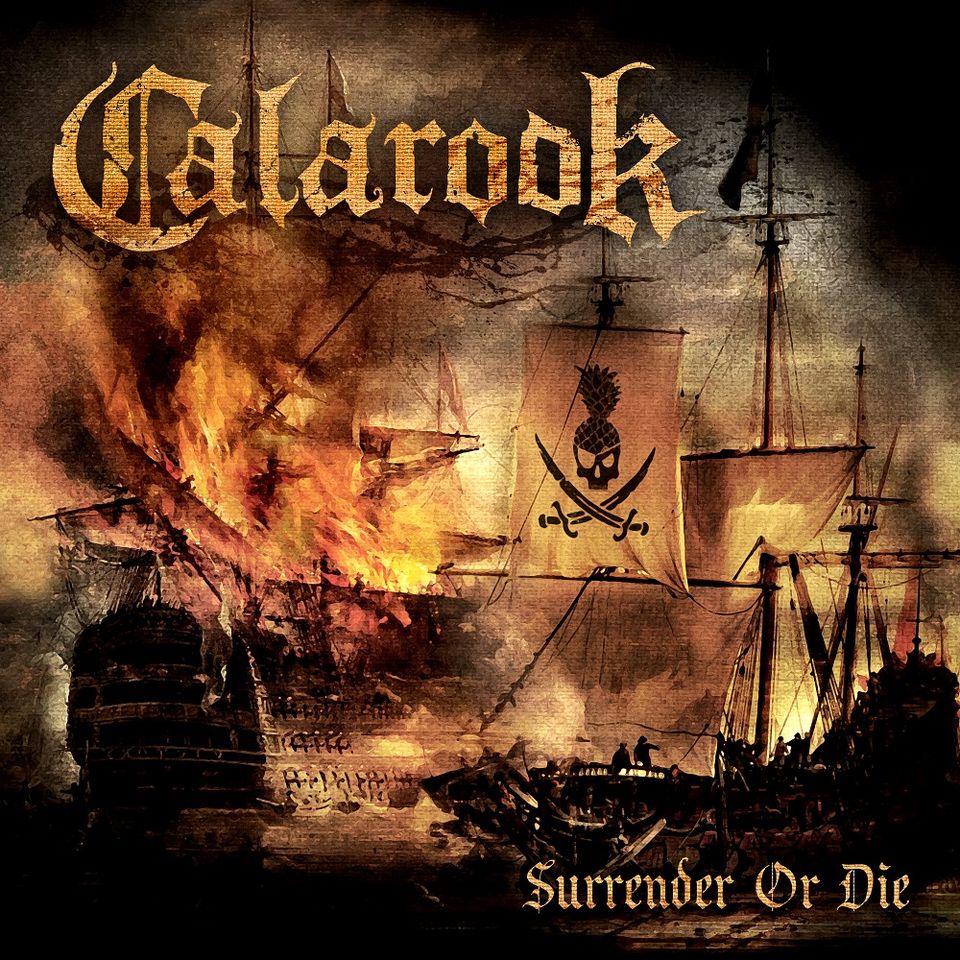
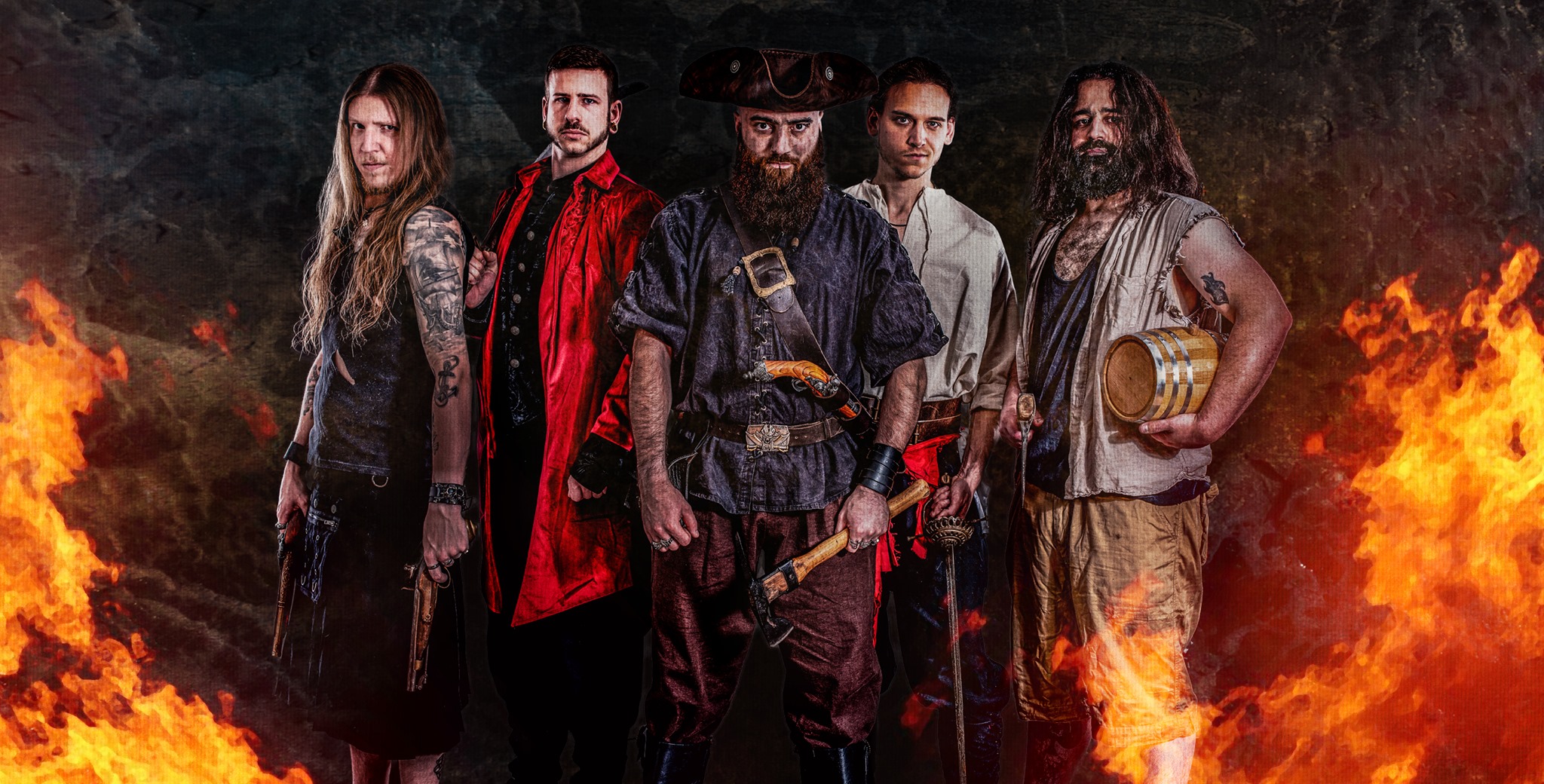
On a quest for booze we go! That’s what frontman Philipp Wyssen, guitarist Nico Wiget, bassist Flavio Pompeo, drummer Yves Locher and violinist Lukas Mischler, collectively known as the unrelenting Winterthur, Switzerland-based Pirate Metal crew Calarook, promise to deliver in their debut full-length album Surrender Or Die, mixing rabid Melodic Death Metal with Folk Metal parts and sometimes a pinch of wonderful nonsense, therefore inviting us all to celebrate, mosh and headbang like there’s no tomorrow. Calarook have been on a roll since the band’s inception in 2014 (under the name Calico), firing an endlessly captivating seafaring sound that leaves no one standing still or even sober, starting with their 2017 EP Calico, but it’s now with Surrender Or Die that the quintet is ready to take us all on a full-bodied adventure across the seven seas, offering our avid ears over 69 minutes of first-class metal music while at the same time being always ready for more booze, pillaging and partying in the name of heavy music.
The tolling bells in the epic intro 47°30’18”N 8°51’52”E warn us all their festivities are about to start in A Cursed Ship’s Tale, sounding furious and imposing thanks to the crushing beats by Yves and the guttural roars by Philipp, while Lukas brings his share of lunacy with his whimsical violin, flowing smoothly until its climatic finale. They offer more of their visceral fusion of Melodic Death Metal with classic Death Metal and pirate music in Quest For Booze, an ode to all alcoholic beverages where Nico is unstoppable with his riffage accompanied by the rumbling bass by Flavio and the once again magical violin by Lukas, whereas it’s time to break your necks headbanging to the sound of Into The Storm, with Yves pounding his drums like a cannon from a pirate ship while Philipp continues to blast his inebriate, unfriendly growls. In the title-track Surrender Or Die the “captain” vociferates the song’s sailing lyrics rabidly (“We change the course / To pursue the prey / The distance gets smaller / The target turns away / But we can catch up / Prepared to fight / The cannons are loaded / Everyone is quiet”) while his bandmates generate a strong ambience with their respective instruments, inspiring us all to fight side by side with the band; and Flavio and his metallic bass ignite the rhythmic, dancing tune curiously titled Invisible Pineapples, showcasing an amazing job done by Nico with his slashing riffs. Put differently, simply grab your beer and your sword and get ready to rock together with those metal pirates.
And those buccaneers keep delivering heaviness, speed and harmony in the excellent Kraken’s Chest, the epitome of Pirate Metal overflowing electricity and fury, also presenting an interesting paradox between Lukas’ classy violin and Yves’ thunderous beats, before it’s time to slam into the circle pit to the fun Paul The Parrot. Let’s all be honest, no one can stand still to a metal song about a parrot, with Nico and Yves making sure the rhythm remains as vibrant as possible in a great display of modern-day Melodic Death Metal, while Jack Rackham is another song exhibiting a pleasant speed and pace, with the violin by Lukas adding tons of finesse to the overall result while his bandmates continue to invite us all to prance around the fire pit. Kicking Flamingos is what I call a weird name for a song, but they’re pirates which means all makes sense; however, musically speaking it’s not on par with the rest of the album, sounding a bit generic despite Flavio’s great performance on bass. Fortunately, Calarook get back on track with their trademark Pirate Metal in Davy Jones’ Locker, a lot more introspective than its predecessors while Nico dictates the pace with his classic riffs, accompanied by Philipp’s deep growling.
In Tentacle Explosion we have less than three minutes of hammering Melodic Death Metal infused with the stylish violin by Lukas, resulting in a great option for their live performances which will certainly inspire us all to raise our horns and grab a pint in the name of metal music; and their loyalty to drinking and piracy goes on in Loyal To None But Rum, where all Calarook are telling us is to simply get drunk and slam into the circle pit to the sound of their thrilling music. Then venturing through more traditional lands, they fire their most Heavy Metal of all songs, The Legend Of Liquor Island, bringing forward a galloping rhythm led by Yves and his old school beats while Philipp keeps roaring and growling like a true pirate, whereas in The Feast Of Emerald Meadows the band fills our ears with a more vicious and violent sonority while Nico’s riffs walk hand in hand with Lukas’ violin. Hence, it will certainly urge you to sing its chorus along with Calarook while crushing your skull into the mosh pit once again, and closing this 69-minute pirate quest the band fires the classic The Undying Sailor, where despite the great job done by Yves and Lukas with their beats and violin, the final result is a bit messy, not to mention the song goes on for way too long.
If you’re ready to set sail together with the drunk and talented Swiss pirates of Calarook and support them in their epic adventures, you can follow the band on Facebook and on Instagram, subscribe to their YouTube channel for their fun and fresh official videos, stream more of their rebellious music on Spotify, and obviously purchase a copy of Surrender Or Die from the band’s own webstore (and soon enough from several other locations). In a world where people have the attention span of a goldfish, we must admit releasing a 69-minute album is a beyond bold move by Calarook, but yet again, as already mentioned they are not just musicians, but metal pirates, and as the great privateers they are they know exactly what they are doing by releasing such imposing and epic album. Or do you think only 20 or 30 minutes of music would be enough for all the action you can have together with Calarook on board of their ship in their quest for metal, rum, flamingos, parrots and pineapples?
Best moments of the album: Quest For Booze, Invisible Pineapples, Kraken’s Chest and The Feast Of Emerald Meadows.
Worst moments of the album:Kicking Flamingos and The Undying Sailor.
Released in 2020 Independent
Track listing 1. 47°30’18”N 8°51’52”E 2:02
2. A Cursed Ship’s Tale 4:33
3. Quest For Booze 5:36
4. Into The Storm 7:05
5. Surrender Or Die 4:27
6. Invisible Pineapples 5:09
7. Kraken’s Chest 5:46
8. Paul The Parrot 3:36
9. Jack Rackham 3:22
10. Kicking Flamingos 3:33
11. Davy Jones’ Locker 3:47
12. Tentacle Explosion 2:34
13. Loyal To None But Rum 4:38
14. The Legend Of Liquor Island 3:03
15. The Feast Of Emerald Meadows 4:34
16. The Undying Sailor 5:37
Band members Philipp Wyssen – vocals
Nico Wiget – guitar
Flavio Pompeo – bass
Yves Locher – drums
Lukas Mischler – violin
The brand new album by an amazing Icelandic Atmospheric Black Metal unity sounds as beautiful and inspiring as it is quietly somber and menacing, and as illuminating as it is sorrowful.
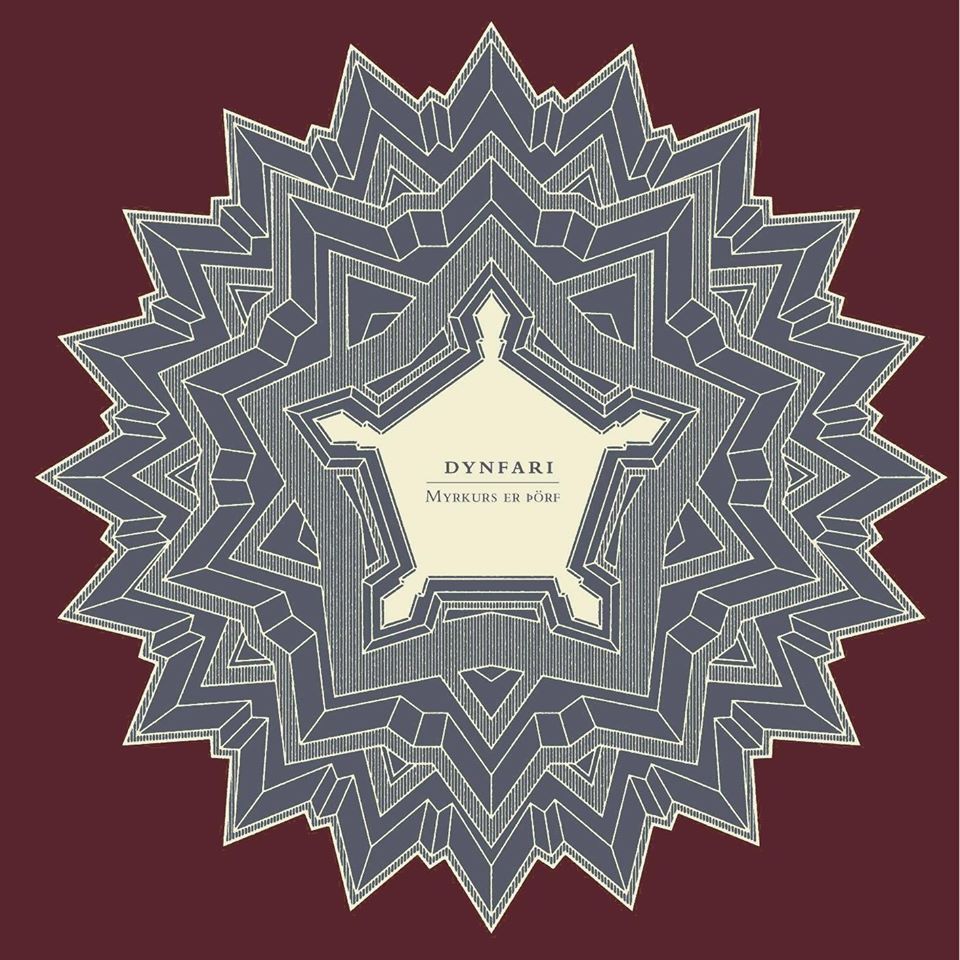
Since the band’s formation as a duo in 2010 in the city of Reykjavík, Iceland, the Atmospheric Black Metal unity known as Dynfari has been making a name for themselves not only in Icelandic lands, but anywhere else in the world where Black Metal influenced, heavily atmospheric music is appreciated. Currently comprised of Jóhann Örn on vocals, bass, accordion, synths and guitars, Jón Emil on percussion and guitars, and Martin Tsenov and Bragi Knutsson also on the guitars, Dynfari deal with the philosophy of life, death, the universe, loss, hope and sorrow, having explored more progressive soundscapes in their blend of Post-Rock and Black Metal in the most recent works, while returning to a more atmospheric and direct attitude now in 2020 with their fifth full-length opus, titled Myrkurs er Þörf, or something like “darkness in needed” in English. Featuring a cryptic artwork by Metaztasis (Watain, Behemoth), the album is a chameleonic, labyrinthine mix of subgenres of rock and metal, sounding thickly atmospheric, as beautiful and inspiring as it is quietly somber and menacing, and as illuminating as it is sorrowful, flowing towards a darker, heavier side of the musical spectrum, expressing a violent refusal of merely becoming a means to an end.
The opening track Dauðans Dimmu Dagar (“the dark days of death”) starts in an ominous and ethereal way to minimalist guitar notes, being gradually accompanied by the percussion and beast by Jón until a dense wall of instrumental Atmospheric Black Metal fills out every single space in the air, morphing into the enfolding Langar Nætur (Í Botnlausum Spíralstiga), or “long nights (in bottomless spiral staircase)”, a flawless depiction of modern-day Icelandic Black Metal with Jóhann delivering anguished vocal lines while Martin and Bragi slash their seven-stringed weapons majestically. And the title-track Myrkurs Er Þörf keeps embracing our souls and taking us to chilling and despondent Icelandic lands showcasing another amazing guitar job done by the quartet, while Jóhann’s vocals sound like they’re coming from a place far, far away, whereas Ég Fálma Gegnum Tómið, or “I fade through the void”, exhales melancholy and hopelessness, with the Doom Metal-inspired beats by Jón walking hand in hand with the strident riffs by Martin and Bragi, keeping the album as dark and grim as possible.
The serene instrumental interlude titled Svefnlag (“sleeping layer”) brings some peace to our blackened hearts, setting the tone for the ode to despair and obscurity named Ég Tortímdi Sjálfum Mér (“I destroyed myself”), where Jóhann blasts his most introspective roars of the entire album while the song’s imposing background keys support the piercing riffage delivered by the quartet. Then what at first seems to be another calm and bitterly cold creation by Dynfari turns into a 10-minute majestic feast of heavy-as-hell, hypnotizing sounds titled Peripheral Dreams, a lecture in contemporary Black Metal led by the crushing beats by Jón intertwined with grandiose keyboards and doomed passages, also presenting elements from Folk Metal and Blackened Doom, running wild and free until its climatic grand finale. Lastly, the wicked bass lines by Jóhann ignite the closing tune Of Suicide and Redemption, an Atmospheric Black Metal aria that lives up to the legacy of the genre, bringing forward their trademark blast beats and symphonic keys and, therefore, ending the album on a truly inspiring note.
After all is said and done, I’m more than certain you’ll be mesmerized by the atmospheric and absolutely stunning music by Dynfari, and in order to show the band your support and appreciation don’t forget to follow them on Facebook, and of course to purchase a copy of Myrkurs er Þörf from their own BandCamp page, from the Aural Music webstore in CD, silver LP, or splatter LP format, and from other locations such as Amazon and mvdshop.com. An introspection on thoughts of suicide and self-destruction, Myrkurs er Þörf is another beautiful product form the always prolific and dynamic Icelandic metal scene, showing us all that not only Icelandic Black Metal continues to be on a healthy and inspiring rise, but also that we can count on the talented guys from Dynfari to keep embellishing the airwaves with their creations until darkness finally consumes us all.
Best moments of the album: Langar Nætur (Í Botnlausum Spíralstiga), Myrkurs Er Þörf and Peripheral Dreams.
Worst moments of the album: None.
Released in 2020 Code666
Track listing 1. Dauðans Dimmu Dagar 5:23
2. Langar Nætur (Í Botnlausum Spíralstiga) 6:37
3. Myrkurs Er Þörf 4:52
4. Ég Fálma Gegnum Tómið 4:39
5. Svefnlag 2:57
6. Ég Tortímdi Sjálfum Mér 5:10
7. Peripheral Dreams 10:35
8. Of Suicide and Redemption 6:37
Band members Jóhann Örn – vocals, bass, accordion, synths, guitars
Jón Emil – percussion, guitars
Martin Tsenov – guitars
Bragi Knutsson – guitars
A UK-based Symphonic Power Metal squad continues to chronicle the epic battles between men and dragons on the high seas of Andria in the second part of their new trilogy.
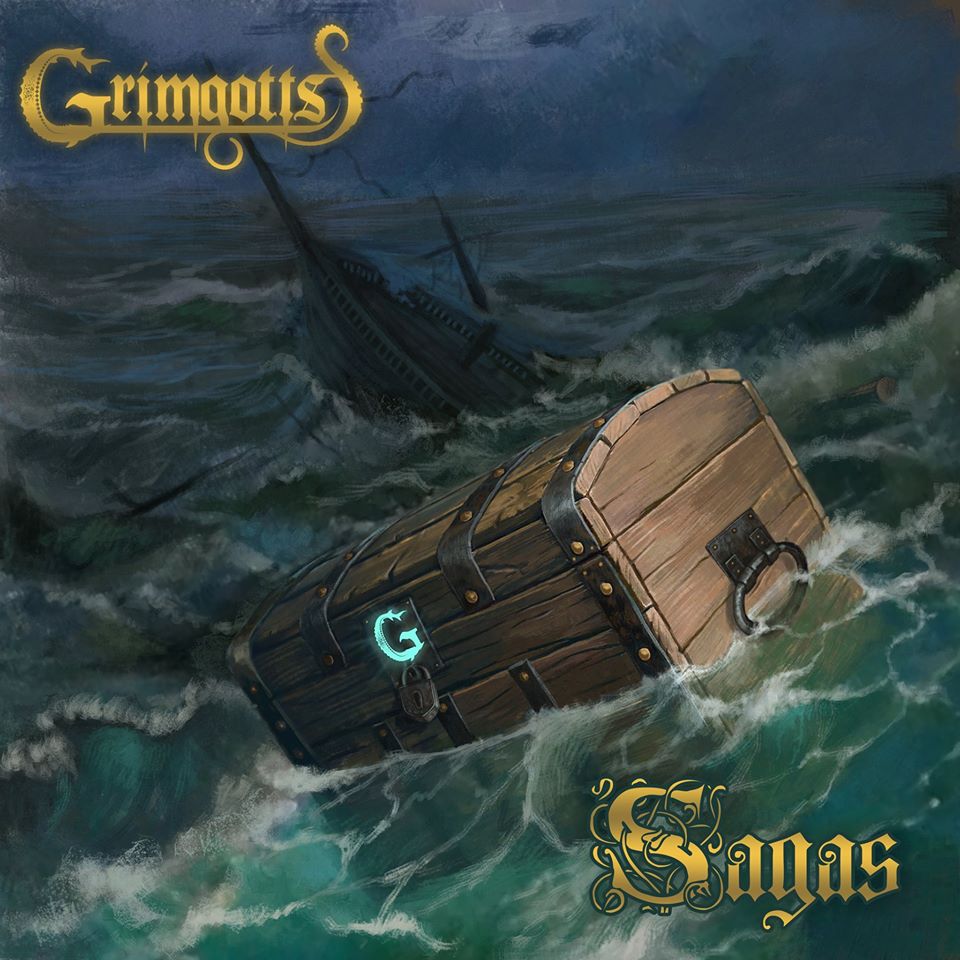
Fans of Rhapsody of Fire, Dragonforce, Sonata Arctica and Alestorm will be signing up to set sail with London, UK-based Symphonic Power Metal band Grimgotts with their brand new EP entitled Sagas, the second part of a trilogy that started earlier this year with the release of the EP Tales, and that will see its epic conclusion later in 2020 with the third EP Legends. Sagas continues to chronicle the epic battles between men and dragons on the high seas of the mythical land of Andria, which is by the way the band’s own original fantasy realm, just like what was told in the first EP of the trilogy and in their previous releases Lions of the Sea (2017) and Dragons of the Ages (2019), proving the band formed by frontman Andy Barton, guitarist David Hills, keyboardist Fabio Garau, bassist Nelson Moreira and drummer Mo Abdelgadir definitely know how to unite fantasy and heavy music with tons of symphonic and epicness flawlessly for the delight of metal fans across the seven seas (and beyond).
It’s time to sail together with the pirates from Grimgotts in the opening tune Northern Passage, a symphonic and epic feast led by the inspiring keys by Fabio and the always precise beats by Mo, while Andy declaims the song’s lyrics like a true bard. Put differently, simply grab your sword and join the band in their quest for metal, whereas the strident riffage by David ignites the even more metallic Power Metal tune Rise Again, accompanied by the rumbling bass by Nelson and the awesome balance between Andy’s vocal lines and Fabio’s magical keyboards, definitely making your day more exciting and fun. Then we have Plunder, Loot & Chantey, an absolutely perfect soundtrack for prancing around the fire while drinking a pint of mead, or if you prefer a more “technical” language, this is a very entertaining fusion of Symphonic Power Metal with Folk and Epic Metal, with Mo dictating the pace with his classic beats. And lastly, the band offers the faster and more traditional title-track Sagas, another great option for banging your heads with Grimgotts, with David and Fabio making an incendiary duo with their respective riffs and keys while Andy showcases all his talent as the band’s frontman, leaving us eager for the last EP of their trilogy in a not-so-distant future.
It feels like Grimgotts are following a treasure map with Tales, Sagas and Legends, with each EP and each song being a different adventure the listener needs to face before reaching the glorious end of the trilogy, and let’s all admit their formula is working really well, making us all excited and ready for their next challenge. Hence, don’t forget to follow those UK metallers on Facebook and on Instagram, to listen to more of their music on Spotify, and to grab your copy of Sagas (sooner than you can scream “ahoy!”) and all of their previous albums from their own BandCamp page, showing them your true support and proving you have what it takes to sail the unruly seas of Andria together with the boys from Grimgotts, spending your time signing metal anthems while drinking beer and raising your swords until the end of their exciting saga.
Best moments of the album: Rise Again and Plunder, Loot & Chantey.
Open your heart and join musician and songwriter Tom Perrett in his Atmospheric Black Metal journey through the Iron Ages in Scotland.
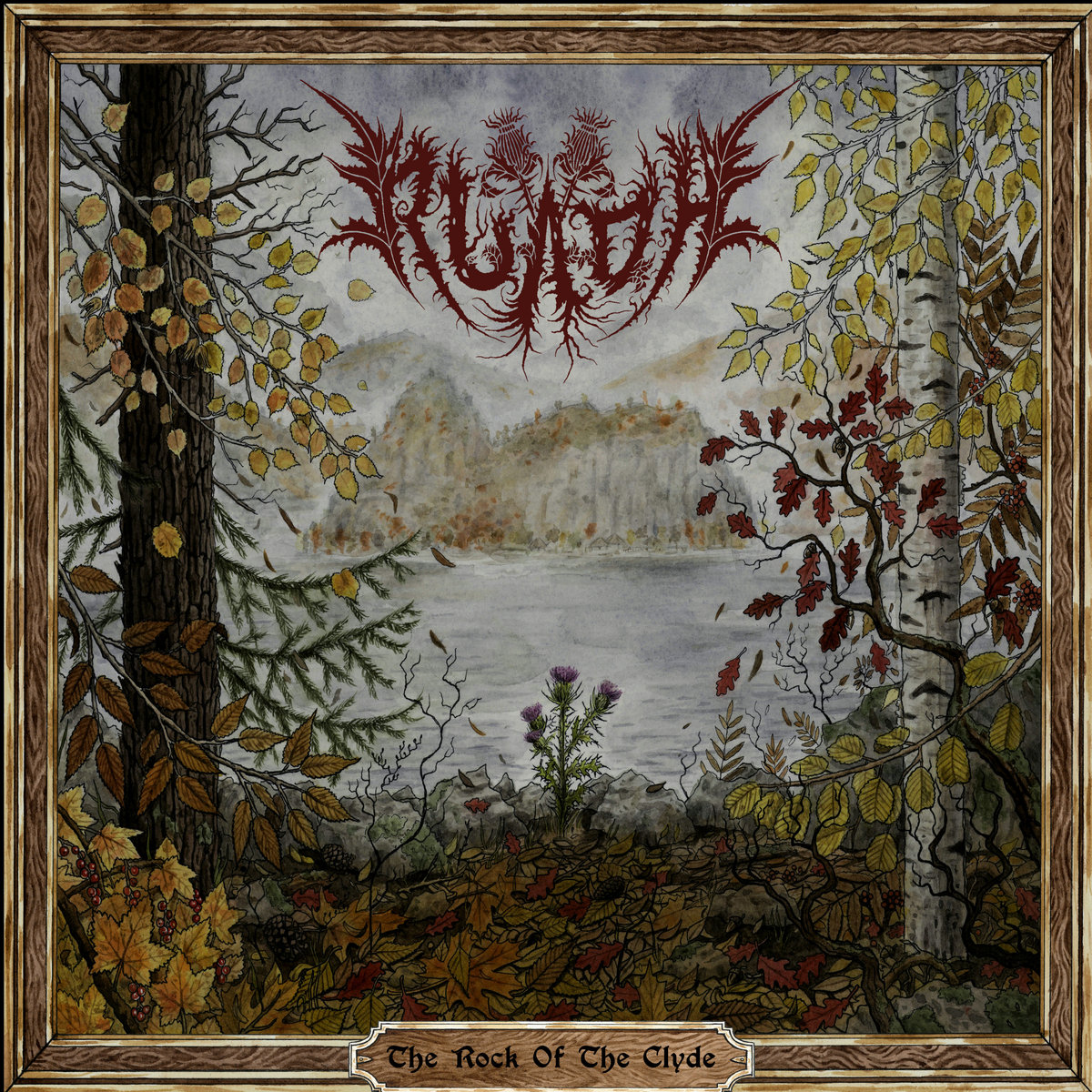
Drawing from the vast well of history, culture and mythology, Glasgow, Scotland’s own musician and songwriter Tom Perrett set out to compose music purely to taste with his Atmospheric Black Metal solo-project Ruadh (which is pronounced ‘Roo-Ah’ and translates to ‘red’), creating an unmistakable atmosphere with the beating heart of old school Black Metal favourites of his since the project’s inception in 2018, such as Windir, Bathory, Burzum and others, which should also appeal to fans of Saor, Winterfylleth, Panopticon and similar acts. Hailing from Rutherglen (also known as the red glen) in the central belt of Scotland, Tom and his very special guests Cieti on female vocals, Kimberly Copland on bass and Philip Morrison on drums are unleashing upon us all Ruadh’s sophomore album The Rock of the Clyde, an evolution from their 2019 debut album Sovereign presenting six tracks of epic Scottish Atmospheric Black Metal with Folk elements, taking you through the Iron Ages in Scotland and also exploring the history and mythology of the people of Scotland, conveying both sorrow and uplifting, almost heroic tones, all embraced by the delicate and enthralling artwork by Joan Llopis Doménech Illustrations.
Tom and his bandmates don’t waste a single second and fill every single space in the air with crisp, dark and atmospheric sounds in Embers, where Tom fires some deep guttural roars accompanied by Philip’s classic, steady beats and Cieti’s delicate vocals in a 10-minute sonic voyage alternating between heavier moments and an enfolding and whimsical vibe, not to mention the amazing job done by our brave Scottish warrior with his strident guitar riffs. After a fantastic welcome card like that, a ritualistic intro kicks off the title-track The Rock Of The Clyde, morphing into an Atmospheric Folk and Black Metal extravaganza where Kimberly and Philip generate a bold and groovy base for Tom and his soulful riffs and solos, as well as his potent clean vocals, also bringing to our ears acoustic passages and endless melancholy before finally exploding into a visceral fusion of traditional Folk and Black Metal. And in Winters Light the band continues to pave their dark and introspective path, with Kimberly delivering thunderous bass jabs together with the blast beats by Philip while Tom is once again on absolute fire with his growling, his riffage and all background elements found throughout the song’s inspiring nine minutes of music.
Fields Of Heather is another lecture in Atmospheric Black Metal made in Scotland going full Black Metal at times, with all band members generating a classy and piercing sonority with their sonic weapons, sounding at the same time violent, rebellious and epic, and with Tom’s riffs and Kimberly’s bass walking hand in hand it doesn’t matter the speed of the music. Then acoustic and serene sounds and tones permeate the air in Only Distant Echoes Reign (Part 1), a very personal and gentle creation by Tom heightening our senses and warming up our hearts for the second part of this beautiful aria, Only Distant Echoes Reign (Part 2), where a murder of ravens in fugue follows Tom and his dense and captivating music, uniting the heaviness and darkness of Black and Death Metal with more atmospheric and ethereal sounds while Philip dictates the rhythm and Tom barks rabidly as usual, flowing majestically until the song’s grand finale and, consequently, putting a stunning conclusion to such vibrant voyage through Scottish lands.
You don’t need to travel all the way to Scotland to join Tom and his Ruadh in their quest for Atmospheric Black Metal, as all you need to do is follow the project on Facebook and on Instagram to know more about his music, his goals and his music, and above all that, grab your copy of The Rock of the Clyde directly from Ruadh’s own BandCamp page, from the Northern Silence Productions’ BandCamp page, or simply click HERE for all locations where you can buy and stream the album. Massive in both scope and scale, The Rock of the Clyde will feature among the best Atmospheric Black Metal albums of the year without a shadow of a doubt, proving not only that Tom is thoroughly connected to his Scottish roots, but also that underground metal music always sounds more compelling and vibrant when its made of Scottish iron.
Best moments of the album: The Rock Of The Clyde and Fields Of Heather.
Worst moments of the album: None.
Released in 2020 Northern Silence Productions
Track listing 1. Embers 10:01
2. The Rock Of The Clyde 10:20
3. Winters Light 9:01
4. Fields Of Heather 10:56
5. Only Distant Echoes Reign (Part 1) 4:44
6. Only Distant Echoes Reign (Part 2) 8:54
Band members Tom Perrett – vocals, all instruments


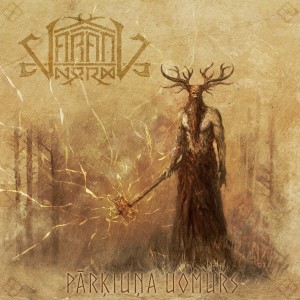 Founded in 2014 in the cold woods of Latvia, more specifically in the city of Daugavpils, located in south-eastern Latvia, the unstoppable horde known as Varang Nord combines harsh Death Metal riffs with epic accordion chants, creating a unique blend of northern Folk, Pagan and Viking Metal while praising a mighty battle, a bloody sacrifice to the Old Gods and a joyful northern feast with endless mugs of ale. Now in 2021, the band comprised of Maksims “Wolf” Popovs on vocals and guitar, Jelena Kalniša on vocals and accordion, Javgenijs Selivanovs also on the guitar, Danila Lopuha on bass and vocals, Vjačeslavs Janens on percussion and vocals, and Aigars Zeiza on drums returns to the battlefield with Pārķiuņa Uomurs, or “thunder’s hammer” in English, their fourth studio album, proudly dedicated to their homeland, the power and beauty of its nature and the depth of its cultural roots. Produced by the band and recorded at their personal studio, and mixed and mastered by Gints Lundbergs at Sound Division Studios, Pārķiuņa Uomurs is also the band’s first-ever album where all lyrics are written in the Latgalian language (an eastern dialect of Latvian), giving it an even more personal and organic feel.
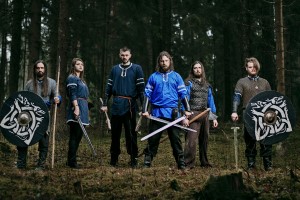 Having said all that, I guess I don’t need to tell you that the time has come to grab your sword and shield, and join Varang Nord in the battlefield to the sound of their new opus, right? In order to do that, you can stream the album in full on Spotify, or prove you’re a true warrior from the North and purchase a copy of the album from Dead Pulse or from Apple Music. Also, don’t forget to follow the band on Facebook, on VKontakte and on Instagram for all things Varang Nord, and to subscribe to their YouTube channel for more of their epic music and videos. Varang Nord are not just another band recommended for fans of bands the likes of Ensiferum, Amon Amarth and Turisas, but a fantastic Latvian institution that truly deserves our appreciation for their contribution to heavy music. And let those talented Latvians bring down the hammer on us all!
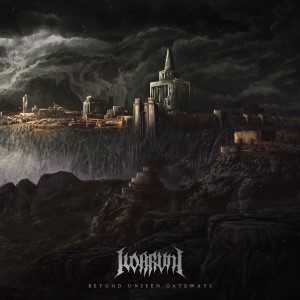 Having emerged as a raging force from the depths of the Armenian underground metal scene in 2016, Yerevan-based Pagan Black Metal horde
 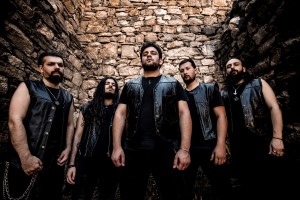 I must say that listening to Beyond Unseen Gateways is indeed a unique sonic experience, or a “spiritual journey” as the band itself mentioned, and the hybrid of Black Metal with folk elements and paganism matched flawlessly with the stories told throughout the album’s impressive 52 minutes of first-class metal music. Having said that, let’s all show our total support and respect to the guys from Ildaruni by following them on






 THE HEADBANGING MOOSE