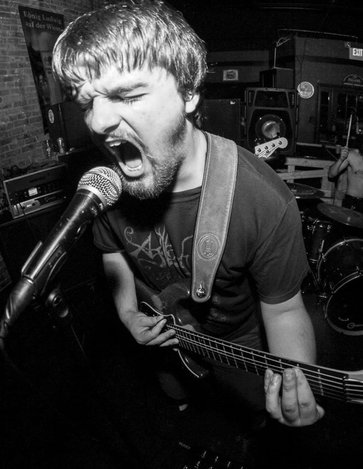
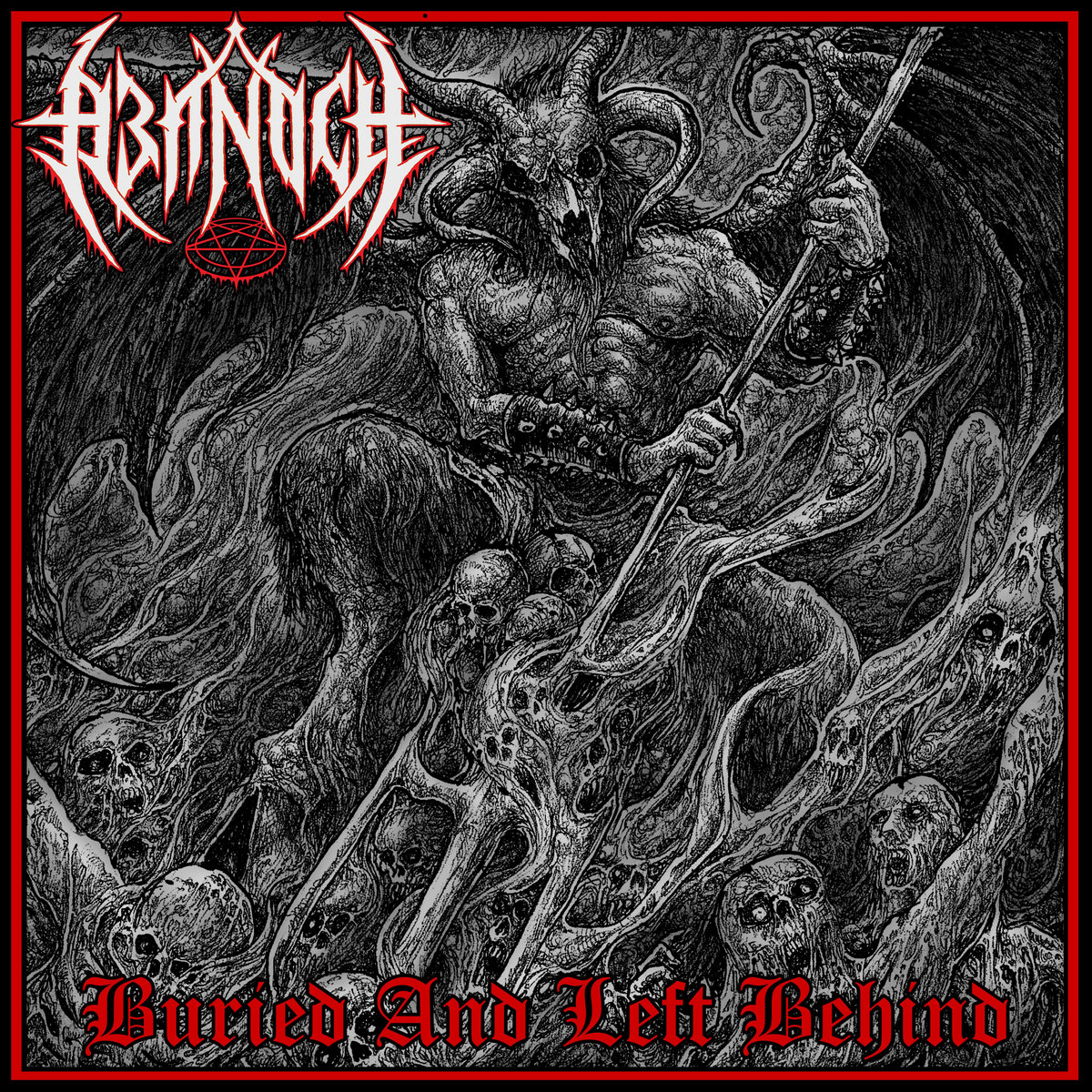
Dealing with the apocalyptic reality we live in, the debut EP by this Qatar-based quartet brings to our ears a classic fusion of Death, Black and Thrash Metal.
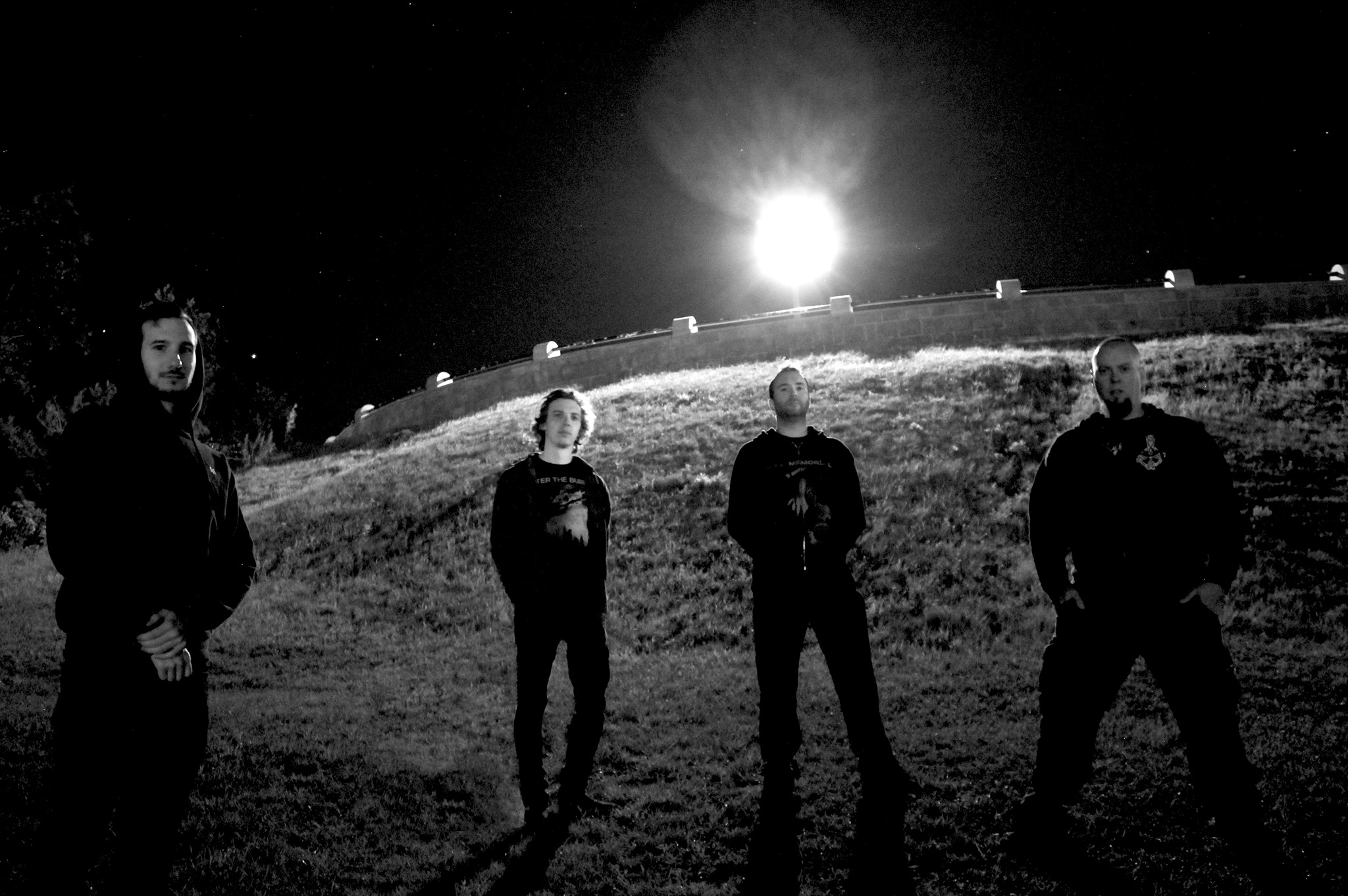
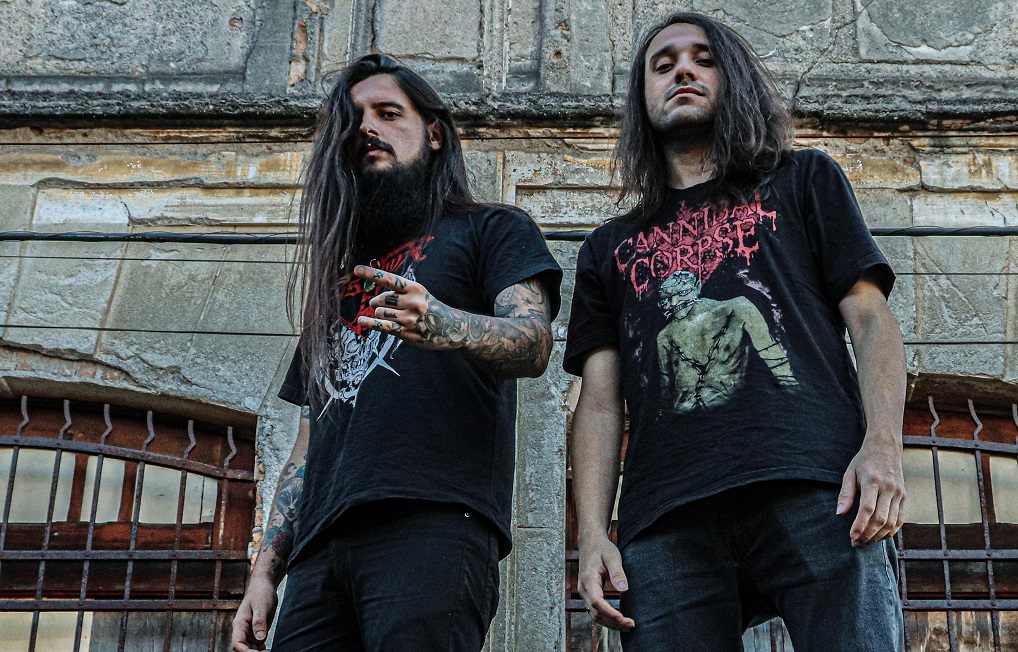
Blending traditional Death Metal with a myriad of sounds ranging from Thrash and Black Metal to classic Heavy Metal and even Progressive Rock since their inception in 2015, the up-and-coming Doha, Qatar-based hellraisers Abanoch are the sole Extreme Metal band hailing from their homeland playing original music, proudly carrying the flag of metal and defying all social and religious norms wherever they go. Now in 2020 the quartet comprised of Almarri on vocals and rhythm guitars, Sefiroth Ounane on lead guitars, Dahman Ouzzane on bass and Geoff Fontillas on drums aims at new heights with their debut EP Buried And Left Behind, an awesome warm-up for their first full-length opus which is currently scheduled to be released by the end of this year. Taking their name from ancient Middle-Eastern demonology, more specifically from a book titled The Sun of Major Knowledge (or The Sun Of Knowledge & Kindly Knowing) by Ahmed Bin Ali Al-Bonny, meaning a demon king who ruled the Sabbath, Abanoch deals with the apocalyptic and dark reality we live in in their new album, calling for Abanoch’s saving in all his glory to take us out of this reality.
The quartet begins hammering their instruments mercilessly in The Rise Of Abanoch, led by the electrifying riffs by Almarri and Sefiroth while Geoff smashes his drums in great Death Metal fashion, also presenting eerie, atmospheric passages and a huge amount of adrenaline and rage. Then another round of their solid and intricate Death Metal comes in the form of Five Spells, with Almarri’s demonic screeches and roars adding an extra touch of darkness to the music while Almarri himself together with Sefiroth and Dahman keep the ambience aggressive and sharp with their stringed weapons; whereas in End Of Times the band mixes the violence by bands such as Death and Cannibal Corpse with the obscurity and epicness of Cradle Of Filth, with its demonic growls, slashing riffage and nonstop blast beats turning it into an amazing option for slamming into the circle pit, all spiced up by a spot-on guitar solo by Sefiroth. The title-track Buried And Left Behind brings forward the most metallic and cutting riffs of the entire EP, resulting in a Death Metal feast tailored for admirers of the genre with Geoff dictating the pace with his rhythmic and berserk beats, and lastly, venturing through more thrashing and visceral lands, the band offers us all Treacherous Ways, highly inspired by 80’s Thrash and Speed Metal and showcasing an amazing job done by both Almari and Sefiroth with their scorching shredding, reminding me of the early days of Megadeth. In other words, get ready for over eight minutes of experimentations, epic riffs and fast beats, flowing smoothly until its climatic finale.
You can enjoy Buried And Left Behind in its entirety on YouTube and on Spotify, but of course in order to show your true support to Abanoch you should follow them on Facebook and grab your copy of the album from their own BandCamp page. The metal scene in Qatar is making its baby steps, and with our support in spreading the word the guys from Abanoch hope they can encourage more bands to come out and create music in their homeland, elevating the importance of extreme music all over the country and, therefore, opening the minds of their young generation to the beauty of Death, Black and Thrash Metal. Just like in the aforementioned book, Abanoch are among us to save us all from our harsh reality with their first-class extreme music, with Buried And Left Behind representing only the first step in their promising career.
Best moments of the album: The Rise Of Abanoch and Treacherous Ways.
Worst moments of the album: None.
Released in 2020 Independent
Track listing 1. The Rise Of Abanoch 4:20
2. Five Spells 3:29
3. End Of Times 4:33
4. Buried And Left Behind 4:17
5. Treacherous Ways 8:17
Band members Almarri – vocals, rhythm guitars
Sefiroth Ounane – lead guitar
Dahman Ouzzane – bass
Geoff Fontillas – drums
A unique and caustic album of Black Metal made in Poland about myths, projections, appearances, fears we fight, and the legacy we cannot deny.
Formed in the year of 2009 in the obscure basements and gray courtyards of the charming city of Kraków, in Lesser Poland by vocalist, guitarist and bassist Stawrogin (Gruzja, Massemord and Totenmesse) and guitarist, bassist and drummer Priest (Massemord, Totenmesse and Voidhanger), the Stygian Black Metal duo known as Odraza, or “disgust” from Polish, returns from the pits of the underworld with their sophomore studio album Rzeczom(“things”), the follow up to their 2014 debut opus Esperalem Tkane. Recorded, mixed and mastered at Impressive-Art Studio in Beskidu Małego, Poland, and portraying the stunning Polish model Dorota Maria Kuźmicka as its cover art, Rzeczom will take you on a dark and captivating journey through the wicked world of Odraza. “We dedicate Rzeczom to ourselves, the authors. It is a diary; excerpts from our lives and the lives of the people once close to us come across the words by the authors that inspire us. It is about myths, about projections, appearances, fears we fight, and the legacy we cannot deny. It is also about the lie – after all, it is but us who decide how many of those memories reflect what has never been,” darkly commented the duo about their new and weird creation.
In the opening tune titled Schadenfreude (“malicious joy” or “spitefulness” from German), an eerie, cryptic intro quickly explodes into modern and visceral Black Metal led by the duo’s scorching riffs, with Priest blasting savagery and intricacy through his beats nonstop. The album couldn’t have started in a better (and more venomous) way, I might say, with the duo’s rumbling bass igniting the title-track Rzeczom, sounding as if Triptykon went full Blackened Doom. Moreover, Stawrogin growls and barks like a true demonic beast throughout the entire song, spiced up by somber passages and vicious backing vocals, resulting in a song definitely not recommended for the lighthearted. Then back to a more ferocious and berserk mode those Polish metallers fire the Behemoth-inspired W Godzinie Wilka (“at the hour of the wolf”), bringing to our ears Blackened Death Metal at its finest with Stawrogin’s harsh gnarls being effectively supported by Priest’s pounding drums; whereas a serene, acoustic intro permeates the air in …Twoją Rzecz Też (“…your thing too”), evolving into a metallic and alternative, almost circus-like onrush of sounds showcasing the band’s versatility and their will to never sound outdated or repetitive.
Once again sounding wicked and vile form start to finish, the duo surprises us with another round of unusual extreme music in Długa 24 (“long 24”), where Stawrogin does a very entertaining job with both his darker vocals and his clean vociferations, followed by Świt Opowiadaczy (“dawn of the storytellers”), offering the listener six minutes of obscure passages and endless violence flowing from their damned instruments, with Priest stealing the spotlight with his frantic and intricate drumming. And venturing through the realms of Doom and Stoner Metal to give their core Black Metal an even more badass vibe, they offer us all Młot Na Małe Miasta (“a hammer for small towns”), with both Stawrogin and Priest extracting electricity from their stringed weapons and, therefore, keeping the album at a high level of obscurity and madness.
After such demented tune, we’re treated to Najkrótsza Z Wieczności (“the shortest of eternities”), a contemplative and melancholic display of extreme music made in Poland where Stawrogin devilishly declaims the song’s Polish words, being multi-layered and grim just the way we like it in Extreme Metal. Following this cryptic composition, a phantasmagorical storm is about to begin in Bempo, growing in intensity until morphing into ass-kicking Blackened Death Metal led by Priest’s always fulminating drums, also showcasing a razor-edged guitar solo by guest musician Azar. And last but not least, it’s time for Odraza to stun us once and for all with eight minutes of absolute darkness in the instrumental aria Ja Nie Stąd (“I’m not from here”), starting in a progressive and atmospheric manner and flowing beautifully to the riffage and beats by the band’s dynamic duo until its inevitable and ethereal end.
This precious gem of contemporary Black Metal made in Poland can be better appreciated in its entirety on YouTube and on Spotify, but of course you should definitely buy a copy of the album from Odraza’s own BandCamp page, as well as from the Godz Ov War Productions’ BandCamp page or webstore and from Discogs, showing your true support to the talented Stawrogin and Priest and to the entire underground scene. Also, don’t forget to follow Odraza on Facebook and to subscribe to their YouTube channel for news, tour dates and more of their distinguished music. It doesn’t matter if you are a native Polish metalhead or if you don’t understand a single word said by the band in Rzeczom, this is the type of album that’s a must-have in your collection of dark and acid extreme music, and just like Odraza dedicated the album to themselves, you can go ahead a dedicate it to your own Black Metal persona in your most introspective moments in life.
Best moments of the album: Schadenfreude, W Godzinie Wilka and Młot Na Małe Miasta.
Worst moments of the album:Długa 24.
Released in 2020 Godz Ov War Productions
Track listing 1. Schadenfreude 4:18
2. Rzeczom 5:21
3. W Godzinie Wilka 4:50
4. …Twoją Rzecz Też 5:43
5. Długa 24 2:06
6. Świt Opowiadaczy 6:01
7. Młot Na Małe Miasta 5:41
8. Najkrótsza Z Wieczności 5:06
9. Bempo 6:29
10. Ja Nie Stąd 8:01
Band members Stawrogin – vocals, guitars, bass
Priest – guitars, bass, drums
Guest musician Azar – guitar solo on “Najkrótsza Z Wieczności” and “Bempo”
Pure gore, violence and blood in less than eight minutes of music, carefully blasted by a new Brazilian duo through their putrid debut EP of Death Metal and Grindcore.
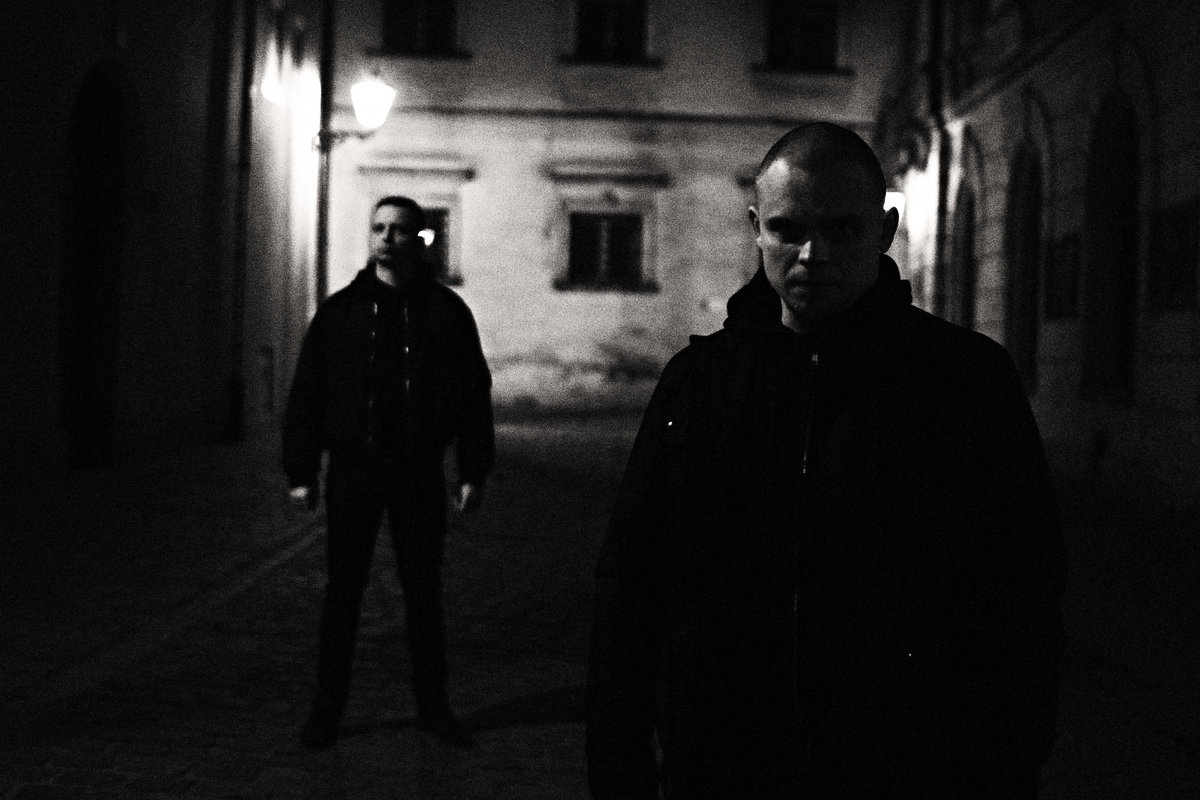
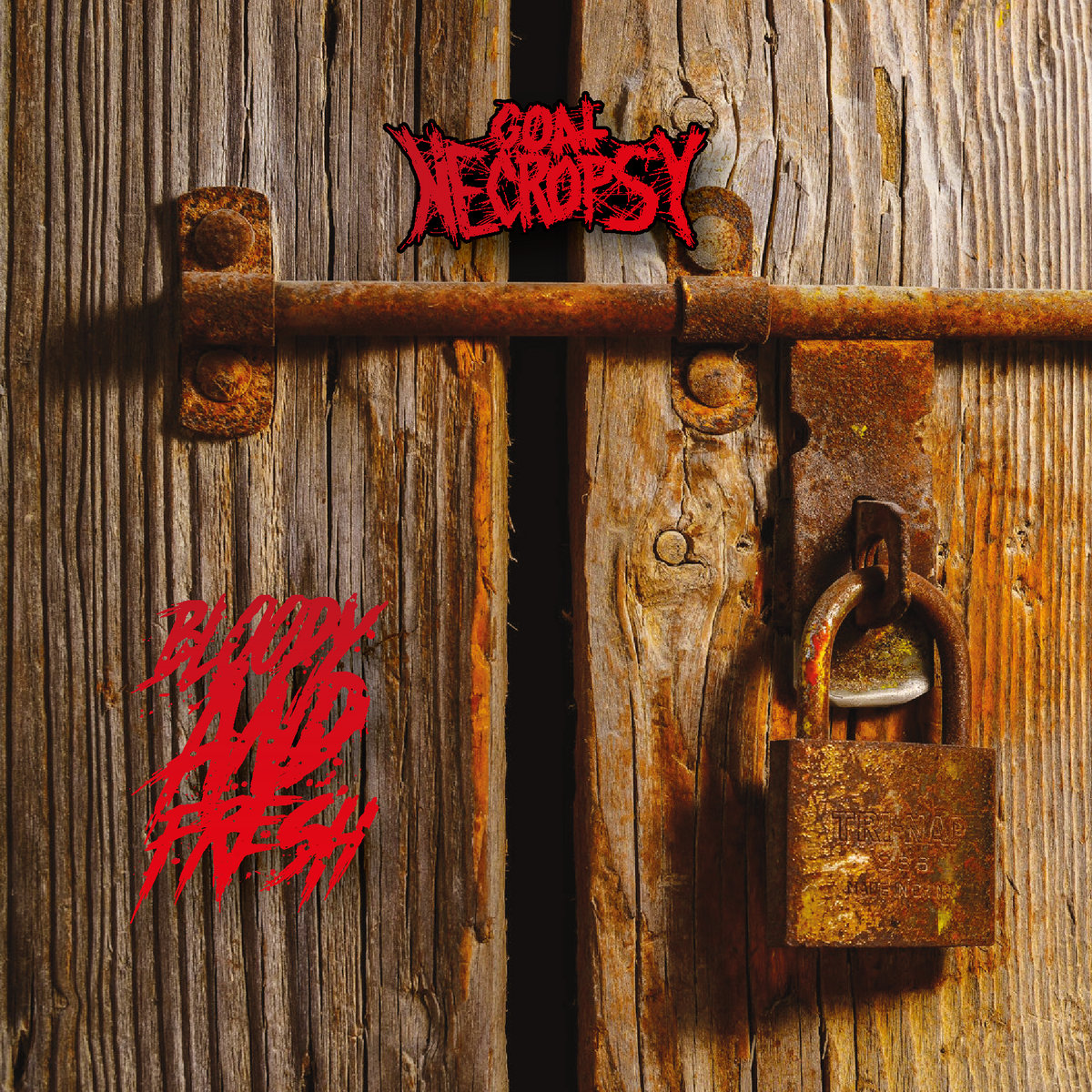
There’s a new dynamic (and vicious) duo hailing form the city of São Paulo, Brazil that not only knows how to apply all aspects of the DIY approach to their music, but they also do it in the goriest and most violent way possible, resulting in an avalanche of demented sounds that will leave completely disoriented after its less than eight minutes are over. I’m talking about the ruthless Death Metal/Grindcore act Goat Necropsy, who are ready to butcher us all with their berserk debut EP entitled Bloody and Fresh. Except for the photo session conducted by Brazilian artist Jessica Mar (Reverbera Music Media), everything else was done by vocalist Vic Ferreira and guitarist and bassist W. Johann (from bands such as Krow, Nervochaos and Victorizer), including all the music and lyrics, the drum programming, the artwork and the overall production, mixing and mastering of the album, and let’s say those two insane metallers nailed it from start to finish, delivering a more-than-fine debut effort that lives up to the traditions of our beloved Goregrind the likes of Carcass, Exhumed, Cattle Decapitation, Napalm Death and Aborted, among several others.
As soon as you hit play and the opening track Chopping Organs begins, you’ll be asking yourself “how can only two guys generate such demolishing and disturbing sonority?” It’s truly pulverizing in its entirety, with Vic sounding infernal with his inhumane roars and gnarls darkly vociferating the song’s visceral words (“Creeping / The butcher arrives / Wretched, mindless / Disturbing death / This grinding machine / Will open your guts / My merciless knife / Reddish shines”), while W. Johann extracts sheer savagery from his riffs. Then continuing their path of devastation and gore, razor-edged riffs and menacing bass lines permeate the air in The Collector, where the gruesome screeches by Vic will disturb your peace of mind in great Goregrind fashion, also sounding very detailed taking into account it’s only two minutes long; and it’s time to go utterly mental to the sound of Anal Vomit, a frantic and demonic display of Death Metal and Grindcore perfect for smashing your skull into the circle pit. Furthermore, Vic and W. Johann once again bring chaos and blood to our ears through their respective screams and riffage, which is also the case in the bestial Devoured by the Hounds, showcasing devilish, psychological lyrics barked by Vic and the awesome Cannibal Corpse-inspired riffs by W. Johann. In addition, we must all admit they did an amazing job with the drum programming throughout the entire EP, sounding very organic and extremely aggressive.
In case you don’t believe when I say Goat Necropsy might be one of the most violent Extreme Metal unities hailing from Brazil, simply dedicate nothing more, nothing less than eight minutes of your spare time to take a full listen at Bloody and Fresh on YouTube or on Spotify, and after being annihilated by such demented duo go check what they’re up to on Facebook and on Instagram, and above all that, purchase your copy of their debut endeavor from their BandCamp page or from Apple Music, showing the world you have what it takes to face sheer gore and dementia in the form of extreme music. Vic and W. Johann surely have a great future ahead of them as Goat Necropsy, proving through their austere compositions that less is always more (brutal, of course).
Best moments of the album: The Collector and Devoured by the Hounds.
Worst moments of the album: None.
Released in 2020 Independent
Track listing 1. Chopping Organs 1:26
2. The Collector 2:30
3. Anal Vomit 1:18
4. Devoured by the Hounds 2:15
Band members Vic Ferreira – vocals, drum programming
W. Johann – guitars, bass, drum programming
If there’s a woman that loves heavy music from the bottom of her (darkened) heart, more specifically our always controversial and blasphemous Black Metal, as well as music in general, that lady has to be the unrelenting Italian-born bassist Mia Wallace, who you’ll also find in several bands and projects under the names Michelle Mia Wallace, Mia W. Wallace, White Wallace or even Winter Wallace. As a matter of fact, either being a coincidence or not, the name Mia Wallace was given to the fictional character portrayed by the stunning Uma Thurman in the 1994 Quentin Tarantino cult movie Pulp Fiction, just to give you an idea of how mysterious, sexy and provocative our metal chick of the month of May can be, exactly how we expect from any true Black Metal musician. Known for her work in distinguished metal projects such as The True Endless (under the controversial moniker Soulfucker), Abbath, Triumph of Death and Niryth, among several others, Mia will undoubtedly hypnotize you with her obscure looks and smash your senses with her thunderous bass, proving once and for all Black Metal is and will always be home for some of the most talented women in the history of music.
Born somewhere, sometime in the always gorgeous Italy, Mia Wallace started playing bass in the now distant year of 1994. She said in one of her interviews that her boyfriend at the time, Italian multi-instrumentalist Marco De Rosa (R.I.P.), also known as simply M., who would become her bandmate in distinct bands and projects and best friend for over 25 years, encouraged her to try his white Fender Squier Vintage bass. She mentioned it was extremely heavy, but she immediately became passionate about that amazing instrument. Her first bass was then a four-string Hoyer SG-type from 1970, helping Mia become most probably the first female bass player in the entire Italy to wear corpsepaint, to play Black Metal on stage, and to perform fire-breathing during her live concerts. Among her gear, you’ll find some amazing stuff such as the Epiphone Nikki Sixx Blackbird, the BC Rich Beast and the Clover BassTard bass guitars; the Boss ODB-3, Boss DD-3 and Marshall Reflector RF-1 effects; and the Warwick Profet 5.2 amps.
There are several bands and projects where you can enjoy Mia kicking some serious ass with her rumbling bass, and in order to tell you a little about each one of those let’s start with the most recent or active ones and then move on to her previous bands which have either disbanded or have been put on an indefinite hiatus. Right now, we can say Mia is involved in two main projects, those being an Italian Electronic/Industrial/Alien/Darkwave Pop/Rock project entitled Kirlian Camera, where not only she plays bass but also keyboards (also doing backing vocals), and a mysterious Swiss project that goes by the name of Niryth, where she’s a co-founder, songwriter and lead bassist. There might be a third project which could be called her solo band Mia Wallace, but as there’s nothing online anywhere about it let’s just say there’s no reason for extending the topic on it.
Anyway, her role with Kirlian Camera (which name was taken from what’s known as Kirlian photography, a collection of photographic techniques used to capture the phenomenon of electrical coronal discharges) obviously goes beyond her usual bass playing duties, providing a unique support to the band’s mastermind Angelo Bergamini and frontwoman Elena Alice Fossi during their live performances. The band was founded in the distant year of in 1979 in the city of Parma by Angelo Bergamini and was a pioneering act of the Italian synthpop scene, featuring musicians from four distinct locations (Piombino, Marciana, Parma and Novara, all in Italy), and after a few ups and downs the duo now shares the stage with obviously Mia and other renowned musicians form the Italian scene such as Alessandro Comerio, Davide Mazza and Falk Pitschk. Having released a good amount of albums since their inception, starting with their 1983 debut effort It Doesn’t Matter Now until their most recent installment Hellfire, released in 2019, the project has always pushed the boundaries of experimental and electronic music, winning several awards through the years, with Mia bringing her share of heaviness and creativity to the band on stage. You won’t be able to listen to Mia in any of their studio albums, of course, but you can certainly enjoy some awesome live footage on YouTube such as this soundcheck in 2018 at a festival in Switzerland, this live version of the song V2K in Leipzig, Germany in 2020, or this 30-minute footage of the band live in Torino, Italy in 2018 playing some of their songs such as Holograms, Black August and News.
Her other project is considerably unique and I can’t even say if it’s still going on or if it has been archived by its band members. I’m talking about Nyrith, a distinguished metal project founded by Mia together with the one and only Tom. G Warrior (Hellhammer, Celtic Fost, Trypticon) with tastes of heavy and obscure doom, blending different styles from the music by Sisters of Mercy to Pink Floyd, all performed by not only one, not two, but three bass players. In one of her interviews Mia mentioned that Nyrith were ready to release their debut album depicting their visions of life and death, their struggles and pains, but so far nothing has been made official yet. She also said the idea of Nyrith came from Tom after Mia was left without a band a few years ago (and we’ll talk more about that later), including the idea of having three bass players on the same band, as at that time nobody was comfortable giving a woman the control of a new or existing band. In this project, Mia mentioned she was working on all the music which was refused by her previous band, a very restricted and traditional Black Metal act by the way, with all of her ideas being pretty much outside the Black Metal world. As aforementioned, there’s nothing officially released up to now, but we should all keep an eye on Nyrith as this is a very promising metal project (if it truly happens one day, of course). In addition, as an accomplished bass player, Mia has been asked several times about her technique, about how she enjoys playing bass and other nice-to-know details. For instance, when questioned about the fact she would play a five-string bass with Nyrith, she said that “I’ve been playing four-string basses for 20 years, but with Niryth, it is absolutely essential to play five-string bass, as the music requires far more versatility. I always felt good vibes with BC Rich basses. Among my favorite basses is a BC Rich Beast, in fact.”
Now it’s time to talk about all of her previous bands, starting with the one that’s in my opinion her most interesting and powerful project to date, Italian Black Metal horde The True Endless, founded in 1997 by M. and Mia (under the moniker Pollon, and later under her most controversial moniker Soulfucker) with the main goal of crafting violent and trendkiller music. After a couple of rehearsal tapes and some shows, The True Endless recorded their first studio work in 1999 called The Trendkiller EP, followed by an array of EP’s, splits, compilations, livr albums and obviously some very interesting and heavy-as-hell full-length albums, those being Wings of Wrath (2003), A Climb to Eternity (2005), Buried by Time and Dust (2006), 1888 from Hell (2008), An Year in Black (2009), Legacy of Hate (2013), and last but not least, Blacklight Inferno (2017), all with Mia kicking ass on bass and even working in the mastering of their 2008 album 1888 from Hell. Featuring lyrics in English, Italian and Novaras, a dialect of the Piedmontese language (Piemontèis) that was used to give their sound a more ancestral feeling, the scorching Black Metal played by The True Endless led the band to share the stage with some of the most important names of the extreme music scene such as Marduk, Deicide, Vader, Helheim, Darkened Nocturn Slaughtercult, Besatt, Morrigan, Vesna, Mortuary Drape, Opera IX and many more, playing through countless countries across Europe. You’ll “only” be able to find their latest released Blacklight Inferno on their official BandCamp page, but you can enjoy several of their songs and live footage by visiting their official YouTube channel (as well as other channels), as for example their cover version for Hellhammer’s classic Massacra, the songs Pale Waves, Under The Horned Waning Moon, Black Swamp, I Drink The Devil’s Blood and Nightfall, and this live version of Freezing Moon in the Czech Republic in 2011.
Unfortunately, after months fighting against a deadly cancer, the multi-talented M. sadly passed away on November 16, 2017 at the age of 43, and due to such tragic loss Mia and the band’s drummer Algol decided to end the project after 20 years of intense activity. However, as Mia herself always says, “the flame will burn forever.” And the skillful M. was also the founder of many other amazing projects such as Darkness, Huggin, Skoll and Teuta, most of them featuring our dauntless Mia on bass and/or on keyboards, and usually under the moniker Pollon. For instance, she played bass on the 2013 album Anti Human Life, by Italian Black/Thrash Metal band Darkness, on the 1998 demo Tales (from the Ancient Times), by Italian Black Metal horde Huginn, and played keyboards on the 1999 album Through the Mist We Come Back and on the 2000 split Keep Alive Your Heathenfolk/La oss slakte Guds lam, both by Italian Pagan Black/Viking Metal band Skoll. After listening to such amazing bands, we must all agree with Mia that the flame of M. will always burn bright through his classy and dark music across the centuries, no doubt about that.
This slideshow requires JavaScript.
Another memorable moment in Mia’s undisputed career happened between 2019 and 2020 when she joined the iconic Norwegian Black Metal act Abbath, spearheaded by one of the co-founders of Immortal, one of the trailblazers of the infamous Norwegian Black Metal scene. When asked about how the invitation to join Abbath in 2019 happened, Mia said that she always been part of the Bergen family, and as Abbath needed a strong figure to replace his previous bassist he noticed her as an experienced musician who would fit perfectly into his lineup. Mia was the bass player in Abbath’s latest opus, his 2019 album Outstrider, and you can enjoy her thunderous and menacing bass lines in songs like Harvest Pyre and Calm in Ire of Hurricane. Mia mentioned Outstrider was pretty much written when she joined the band, with Abbath asking her to write the bass lines and then they decided together about some adjustments on them, also saying that she didn’t feel any real pressure as the replacement of one of the most recognizable bassist in Black Metal, the iconic King ov Hell (God Seed, Gorgoroth), as they’re two musicians with different skills that were not actually competing nor anything like that. However, on January 28, 2020, Mia revealed that she was no longer part of the band, being informed over the phone by the Abbath’s manager shortly before the beginning of the Outstrider 2020 European tour. No formal announcement was made by the band, but she was replaced on bass by touring member, Rusty Cornell. As you can check HERE, Mia was not happy about the way things happened. “I am disappointed that none of my former colleagues have contacted me in this process except for the five minute phone call from Abbath’s manager in which I was told I would no longer be needed. I was told not to contact anyone in the band. The explanation for this had no substance and just made more questions and confusion for me. Up until then I had been preparing for the European tour as I had been told to do. I had to cancel other plans, and get time off work for the tour which I spent much time preparing for,” said Mia, also citing her comments to the media after the disastrous Abbath two-song concert in Argentina in 2019 as one of the probable reasons for being fired from the band.
Another amazing project where we were all able to enjoy Mia’s crushing bass lines between 2018 and 2019 was Tom G. Warrior’s Triumph Of Death, a tribute to his former group Hellhammer, consisting of playing the legendary music by Hellhammer from their three demos (Death Fiend, Triumph of Death and Satanic Rites) and the EP Apocalyptic Raids onstage after 37 years, starting in the summer of 2019. According to Tom and Mia, Triumph of Death is a Zurich, Switzerland-based open-ended project playing only select concerts and festivals, basically choosing the songs from the band’s small but rich catalog depending on how they felt at that moment, always open to change from time to time. When asked about how she felt playing those songs together with Tom and therefore continuing the legacy of one of the pioneers of Black Metal, she said it was a true honor for her as she’s been highly influenced by Hellhammer throughout her entire career, and you can see how happy Mia truly was by watching her interviews together with Tom in 2019 at some of the best metal festivals in the world such as Hellfest, Wacken Open Air and Brutal Assault, always talking about how it feels to play with Triumph of Death, the legacy of Hellhammer and why the name Hellhammer wasn’t used, as well as performing at the same time with Tom and Abbath. In addition, if you want to experience the music by Triumph of Death live, you can check some awesome live footage on YouTube such as the song Vision of Mortality at Kilkim Žaibu (the biggest ancient traditions and Extreme Metal festival in the Baltic States), Blood Insanityat Hellfest, Triumph of Death in Essen, Germany, or this full concert at Psycho Fest in Las Vegas, Nevada, in the United States.
Lastly, there’s one more metal project that’s worth mentioning, which is Swiss Goregrind/Death Metal band Embalming Theatre, where Mia didn’t play bass or keyboards, but instead she was the one responsible for crafting the intros and outros to pretty much all of their releases from 2000 until 2006, such as the intro, intermezzo and outro to the 2003 album Sweet Chainsaw Melodies, and the intro to the 2004 split Death Metal Karaoke/My Flesh Creeps at Insects. One curious thing is that if you go to the band’s official BandCamp page you’ll notice most of the albums there do not contain the intros and outros by Mia, and I have absolutely no idea why those pieces are missing. Anyway, Embalming Theatre are a very entertaining Goregrind act, with all of their albums being worth a shot with or without Mia’s insane collaboration.
Regarding her main influences and idols in music and in life in general, as mentioned a couple of times already she sees the iconic Tom G. Warrior as her master and mentor, even saying that “he is the one who unleashed the dormant beast inside me.” Without him, Mia said she would not have been able to effectively express her music and her creativity, complementing by saying her writing and composing process is very similar to his due to the huge influence his music has always had on her since her childhood, even before knowing him in person. According to our badass bassist, there would be no Black Metal without Tom, with his classic bands Hellhammer and Celtic Frost being obviously among her favorite metal acts of all time. Mia also mentioned in some of her interviews the huge influence she also had from Abbath himself, whose real name is Olve Eikemo, always acknowledging the humongous importance his former band Immortal has always had on the birth and evolution of our beloved Norwegian Black Metal. I guess even after being fired from Abbath’s solo band the way it happened, Mia still sees him as a legend and as a true inspiration, and I’m sure she’ll always keep those moments onstage with him among her best memories in her musical career. Furthermore, in regards to bass players, Mia always mentions the enigmatic and multi-talented Peter Steele (R.I.P.), the lead singer, bassist and composer for Gothic Metal band Type O Negative, as her personal bass hero, but she also said she has always been fascinated by the onstage charisma of Martin Eric Ain (R.I.P.), the former bassist for Extreme Metal titans Celtic Frost, proving Mia definitely knows how to choose her music idols.
Finally, as much as we all see Mia as the talented and indestructible Black Metal bass player that she is, needless to say she’s also a human being like the rest of us, having to handle her own issues and struggles just like any regular person. As you can see in this article by Blabbermouth from the end of February, Mia mentioned in a special and very personal Facebook post that the past few months have been the been the darkest and most painful period of her life, with all recent events leaving her physically and emotionally destroyed. “I tried to face hell trying not to crack, always holding hard in front of events which, daily, were destroying my soul and my emotions, unfortunately, also physically, by pushing up that strong Mia everyone knows,” she wrote, complementing that by saying that “these terrible experiences are always destructive, but they also left a positive note: the ability to see who stayed, who, day after day, try to be close to me, without judging me or making me feel wrong, without making me feel the weight of my reactions dictated by despair, but simply making me feel that even though Mia is going through a negative phase, something good in her is still there, holding my hands and telling me that it will pass, listening to my pain, drying my tears and looking for the best way not to make me collapse.These people are the people who love me, my family, the people to whom my gratitude and love will remain as long as I am alive, and to whom I will give all of myself, with my strength and, unfortunately, flaws.” Those were the honest and austere words by “the imperfect” Mia, who we all wish a quick and healthy recovery and, of course, who we wish to see on stage smashing our skulls with her thunderous bass as soon as possible.
May 6, 2020 UPDATE: As you can see HERE, the unrelenting Mia Wallace has just been announced as the new bass player for Brazilian all-female Thrash Metal band Nervosa! The band’s mastermind Prika Amaral couldn’t have made a better choice to take care of their bass duties! Congratulations, Mia!
“As I have often been wont to do, I’ll quote Friedrich Nietzsche: ‘Without music, life would be a mistake.’ That has always been my modus vivendi.” – Mia Wallace
Hailing from Western Australia, an infernal horde returns with more of their ancient and inscrutable Black Metal in the form of the mightiest album of their career.
Back from the hellish pits of Perth, Western Australia with the mightiest album of their career, the excellent Acts of Repentance, a ruthless Black Metal horde known as Wardaemonic has gone from strength to strength in their new album, incorporating slower, dissonant parts that work brilliantly when contrasted with their trademark “ancient and inscrutable Black Metal”. Furthermore, the band comprised of Maelstrom on vocals and drums, Anharat and Lord Bane on the guitars and Blitz on bass and synths offers fans of the music by iconic names such as Immortal, Marduk, Watain and Dark Funeral, among others, everything we crave in classic Black Metal, feeling uncompromising and steely in its approach while backed with enough experience to make the entire album memorable and also intriguing for the listener to keep coming back to it for more. Featuring a sulfurous artwork by French artist Leoncio Harmr (Eternal Storm) and layout by Finnish artist Turkka Rantanen (Paganizer, Demilich), Acts of Repentance is not only a fantastic addition to the band’s discography, marking their fourth full-length opus and the follow-up to their 2015 installment Obsequium, but also a must-have release for anyone who respects and admires underground Black Metal from the bottom of their (evil) hearts.
Dragging our souls to their Stygian Australian lair, the quarter begins their devastating Black Metal onrush in the first of the album’s five acts from hell, Act I – Introspection, where Maelstrom sounds beyond infernal with both his blast beats and devilish vociferations, resulting in a lecture in old school Black Metal clearly inspired by the genre’s infamous Scandinavian sound. Not only that, Anharat and Lord Bane will penetrate deep inside your psyche with their crushing riffage, and if you survive such demented and vicious display of extreme music you better get ready for another ass-kicking tune titled Act II – Admission, offering the listener nine minutes of blackened sounds and cryptic passages where those four black metallers from Down Under don’t stop hammering their instruments for our total delight. Moreover, Blitz makes the earth tremble with his bass lines and diabolical synths, helping the music flow as darkly and aggressively as it can be until the very end.
Then an absolutely atmospheric and phantasmagorical intro ignites the 12-minute aria entitled Act III – Castigation, morphing into a disruptive and evil sonic feast led by Maelstrom and his unstoppable blast beats and also bringing elements of primeval Doom Metal and Blackened Doom to our avid ears, not to mention the strident riffs and endless rage flowing from Maelstrom’s inhumane gnarls, sounding multi-layered, dense and utterly impactful. Another grim and captivating ambience brought forth by Wardaemonic is suddenly replaced by an avalanche of violent Black Metal titled Act IV – Sufferance, where the somber vocalizations by Maelstrom make an interesting paradox with his trademark deep roars while the band’s guitar duo continues to breathe fire from their stringed weapons. And ending the album in the most brutal and demolishing way we have Act V – Repentance, an unrelenting display of traditional Black Metal infused with Melodic and even Atmospheric Black Metal nuances. Your mind will be destroyed by the stunning riffs by both Anharat and Lord Bane accompanied by Blitz’s thunderous bass punches, concluding the album’s five acts on a truly high note.
Wardaemonic Acts of Repentance Autographed CD Boxset
The gates to the underworld of Australian metal are open once again thanks to Wardaemonic and their wicked new opus Acts of Repentance, available for a full listen on YouTube and on Spotify, and in order to join those talented metallers in their quest for Black Metal simply follow them on Facebook and on Instagram, and purchase your copy of the album from their own BandCamp page, from the Transcending Obscurity Records’ webstore in CD format or as an amazing autographed CD boxset, or from Apple Music. After such pulverizing opus of Extreme Metal, I bet you’re eager for more of the music by Wardaemonic, and I’m quite sure we won’t have to wait for another five excruciating years to hear again from one of the most talented and solid metal acts coming from Australia, darkening the skies and our souls with their undisputed Black fuckin’ Metal.
Best moments of the album: Act I – Introspection and Act III – Castigation.
Worst moments of the album: None.
Released in 2020 Transcending Obscurity Records
Track listing 1. Act I – Introspection 7:15
2. Act II – Admission 8:58
3. Act III – Castigation 12:09
4. Act IV – Sufferance 9:01
5. Act V – Repentance 8:14
Band members
Maelstrom – vocals, drums
Anharat – lead guitars
Lord Bane – guitars
Blitz – bass, synth programming
Enter the phantasmagoric realms of Death Metal ruled by four skillful and ruthless musicians from the underground Norwegian scene.
Forged in 2014 in the fires of Oslo, the capital of the always alluring country of Norway, when guitarist Audun Melbye brought in some songs from his former band Pieces, the up-and-coming Death Metal squad known as Coldflesh started recording their first studio album back in 2016 (when they settled on the band name, by the way), but after several vocalists and inadequate conditions to record it (resulting in tracks that were not showing the band’s full potential), the album was reduced to a four-track EP entitled Phantasmagoric Realms and postponed to a March 2020 release. However, the band now comprised of vocalist and guitarist Robin Berg Pettersen, guitarist Audun Melbye, bassist Magnus Slettebø and drummer Laszlo Juhos nailed it in their debut endeavor, delivering a high-end fusion of old school Death Metal with more contemporary Extreme Metal sounds and, therefore, pointing to a bright future for this Norwegian horde.
The opening track Deficiency already begins in full force, with Robin and Audun’s heavy riffage together with Laszlo’s pounding beats generating a reverberating atmosphere, blending classic Death Metal with the Melodic Death Metal from the Gothenburg scene, not to mention Robin’s demonic, deep growling. Then we have the title-track Phantasmagoric Realms, a solid tune full of classic beats, soulful guitar solos and endless rage that keeps inviting us all to slam into the mosh pit, with Robin and Audun, supported by the massive bass punches by Magnus, slashing our ears mercilessly; followed by Aeons Absorbed, another crushing Death Metal extravaganza led by Laszlo’s rhythmic drums and Robin’s wicked roars, sounding perfect for banging your head nonstop and reminding me of some of the creations by the mighty Unleashed (but with a darker twist). And the final act by Coldflesh comes in the form of Eradicate The Futile, a mid-tempo, hammering tune where the bass by Magnus sounds infernally heavy, with Laszlo bringing forth a warlike ambience perfect for the band’s guitar duo to kick ass with their shredding, effectively ending such short but very entertaining album of extreme music.
In summary, although Coldflesh were forced to shorten their debut installment due to unforeseen reasons, those Norwegian metallers managed to do a really good job in Phantasmagoric Realms, showcasing all their talent, dedication and passion for Death Metal in the 18 minutes of music found in the EP. Hence, go check what this new name from the underground Norwegian scene is up to on Facebook, and of course go show your true support to independent metal by purchasing your copy of Phantasmagoric Realms from the band’s own BandCamp page. As aforementioned, Coldflesh have a promising future ahead of them based on this short and sweet sample of how crushing their Death Metal can be, and it’s only a matter of time until we hear form those guys again, hopefully with an absolutely demolishing full-length spawn.
An insatiable lust for blood and passion for the night will grow inside you to the sound of the debut album by this American Symphonic Black and Thrash Metal one-man army.
My dear creatures of the night, it’s time to join a Symphonic Black/Thrash Metal one-man army formed in 2018 in Phoenix, Arizona, in the United States that goes by the straightforward name of Vampiric in his quest for blood with the released of his debut full-length opus The Magic of the Night, offering us all nine original songs that exhale darkness and the sweet smell of fresh blood. As a matter of fact, the true beginnings of Vampiric can be traced back to 2008, when the band’s mastermind, vocalist and multi-instrumentalist Nik Williams started writing music and recording demos at the young age of 14, eventually forming a full-bodied band and opening for renowned acts like Mayhem, Abigail Williams and Keep of Kalessin. This live lineup disbanded after a while, but Nik kept experimenting with music until the release of his debut EP Death Tore Through, in 2018, ranging from the project’s core Black and Thrash Metal to distinguished styles like Gothic, punk and classical, further developing all that depth and diversity this year with his newborn spawn The Magic of the Night.
The Cradle of Filth-inspired riffs and keys by Nik kick off the phantasmagorical opening track A Death in the Throne Room, an old school Extreme Metal tune reeking aggressiveness, madness and obscurity; and his slashing guitars keep dictating the rhythm in the faster and more exciting Vampire Blood, where not only we’re treated to poetic lyrics (“I wake from a deathlike slumber / And gaze at the harvest moon in the night sky / Bloodlust, the children of the night sing / As I fly above the land of broken hearts”), but once again Nik generates a cryptic paradox between his atmospheric keys and enraged growls. And if you’re still hungry for human flesh it’s time for over six minutes of pitch black darkness and blood in The Full Moon Rising, with his keys sounding as strident and piercing as usual, while at the same time he kicks ass on drums, resulting in sheer adrenaline in the form of Symphonic Black Metal that sounds and feels hypnotizing and ritualistic form start to finish.
Adding the frantic riffage of Thrash Metal and the complexity of Progressive Metal to his core obscurity, Nik delivers Gothic, This Masquerade, a true masquerade ball feeling like two or three songs in one where our dauntless one-man band goes full thrasher on vocals, reminding me of Exodus original singer Paul Baloff (R.I.P.) at times. Of Bloodlust and the Moon is another display of bestiality and insanity the likes of Cradle of Filth, Dimmu Borgir and Marduk where Nik’s raspy gnarls and scorching riffs steal the spotlight, and with its last piece being an instrumental shredding extravaganza for our total delight; followed by Nosferatu, filling the airwaves with three minutes of an intense feast of Thrash and Black Metal by Vampiric where the guitars breathe fire while drums are played with tons of violence and rage, all spiced up by Nik’s demonic vociferations.
Then pounding his drums manically Nik offers another circle pit-catalyst entitled The Witch, with its heavier-than-hell riffs being perfectly complemented by somber and piercing background sounds, leaning towards classic Blackened Thrash Metal. And besides, songs about witches are always very enjoyable and fun to listen to, don’t you think? In Carpathian Lycan Curse our talented musician puts the pedal to the metal in a hurricane of cryptic keys and berserk shredding, also presenting elements from bands like Slayer and Misfits added to his traditional sonority, while its catchy chorus is an ode to all wolf-men of the world (“Carpathian lycan curse / Condemned to darkness and blood thirst / Carpathian full moon curse / The wolfs bane blooms to my return”). Lastly, closing the album we have the 11-minute aria of darkness titled The Magic of the Night, living up to the legacy of the emperors of long and intricate extreme music compositions such as Cradle of Filth and their infamous Bathory Aria. Nik does an amazing job throughout the entire song, elevating the electricity of all instruments to new heights and also making the whole ambience absolutely enfolding and Stygian until the very last second.
If you’re more than eager to join Nik’s Symphonic Black and Thrash Metal coven, simply go check what he’s up to on Facebook, and don’t forget to purchase your copy of The Magic of the Night directly from his own BandCamp page. After listening to such well-crafted, aggressive and melodic album of extreme music, you better be prepared to feel an insatiable lust for blood growing inside you, dragging you into an endless night and keeping you away from sunlight for all eternity. Well, in the end, who doesn’t want to be an immortal, bloodthirsty creature of the night, always accompanied by a good dosage of metal music, right?
Best moments of the album:The Full Moon Rising, Nosferatu and The Witch.
Worst moments of the album:A Death in the Throne Room.
Released in 2019 Independent
Track listing 1. A Death in the Throne Room 6:27
2. Vampire Blood 3:33
3. The Full Moon Rising 6:16
4. Gothic, This Masquerade 7:22
5. Of Bloodlust and the Moon 4:20
6. Nosferatu 3:06
7. The Witch 4:40
8. Carpathian Lycan Curse 6:40
9. The Magic of the Night 10:53
Band members
Nik Williams – vocals, all instruments
Witness the spiritual putrefaction of men in the form of raw extreme music, crafted by a cryptic Venezuelan duo that refuses to compromise or embrace standardized creation processes.
On their horrific debut opus entitled Typhomanteia: Sacred Triarchy of Spiritual Putrefaction, Venezuelan Black/Death Metal abominable duo Cthonica unravels almost an hour of blood-curling and slithering ritualistic aural terror the hideousness and repulsiveness of which has rarely been seen on this earth, being highly recommended for admirers of the extreme noise blasted by bands such as Immolation, Incantation, Beherit, Blasphemy and Portal. Adding hazy layers of purulent noise and sepulchral dark ambient murk to further disfigure their abhorrent creation, Cthonica have crossed a new threshold in Extreme Metal, setting an entirely new standard of sonic inversion with their raw and decaying sound, and taking the glorification and worship of death and perversion to an entire new realm of conceptual and audial atrocity.
Formed in the Venezuelan capital city of Caracas in 2016 by D.V. on guitars, bass and drums, and H.K. on vocals, noise, electronics, lyrics and concept, rising from the ashes of a previous incarnation of the project called Okkvlt, Cthonica are a proudly home-recorded project, both for necessity due to the precarious access to resources in the tumultuous Venezuelan society and general lack of most things out there, and for the complete refusal by the core duo behind the project to compromise or embrace standardized and commonly acceptable creation processes. Mixed and mastered at Necrosound Studio, and featuring an artwork of surreal visual horror by Venezuelan artist Bryan Maita (BMS Illustration), Typhomanteia: Sacred Triarchy of Spiritual Putrefaction deals with the Tehomic-Typhonian metamorphosis of every man’s reason through what they call “spiritual putrefaction”, or the progressive human corruption through the guidelines of opprobrious disciplines and their teachings, and even if you have no idea of what this means at all simply (try to) relax and enjoy over 50 minutes of first-class, utterly raw extreme music made in Venezuela.
Typhomanteia: Sacred Triarchy of Spiritual Putrefaction, which seems to be purposely split into two distinct parts, kicks off with the first act of the first part, Act I: The Chalice, sounding dissonant, disruptive and absolutely raw from the very first second. H.K. begins growling deeply and rabidly in great Death Metal fashion while D.V. does an amazing job with both his flammable riffs and demonic blast beats, generating a Stygian ambience that will crawl deep inside your skin like a putrid maggot, resulting in a very atmospheric experiment with phantasmagorical passages and creepy intermissions to make things even more mesmerizing. Act II: The Lantern begins in full force, with the duo smashing our souls with their crude Experimental Black Metal, and you can easily sense the dirtiness flowing from D.V.’s devilish riffage throughout the entire song. Furthermore, H.K. continues to fire gargantuan harsh gnarls like a beast in this brutal and disturbing ode to the void, followed by Act III: The Verb, just as gruesome and infernal as its predecessors, with D.V. unleashing pure obscurity from his Doom Metal beats. Put differently, it can’t get any more experimental than this, and it’s quite impressive how they captivate our senses no matter how lengthy and intricate their wicked creations might be. In addition, H.K. not only is a talented growler, but his background noises and tones also add an extra touch of lunacy to the music.
Featuring guest vocalist İanzél (Ancient Blood, Desesperanza, Precaria), IV:I: Nor The Deadliest Disease Shall Be Compared With His Gift of Salvation… (the first aria of the second part of the album) brings to your ears a humongous wall of blackened sounds that will crush you like an insect, with the guitars and bass by D.V. reaching a new level of malignancy and sulfur while H.K. darkly vociferates the song’s words from the very depths of the underworld. This is the perfect sample of what underground extreme music is all about, which can also be said about V:II: … for the Children of he Who Lurks Beyond Shall Not Witness This Showcase Of Glory…, showcasing a tribal and absolutely vile intro led by the scorching hot riffs by D.V. while H.K. fires his trademark enraged roars. Its strident riffs and solos, together with its crisp beats, generate a dense and furious sonority that flows smoothly until everything ends in the most aggressive and demented way possible. Then prepare your ears and minds for another onrush of obscurity and dementia in the form of raw Black Metal by the duo titled VI:III: … Not As Those Who Served and Preached in Obeisance., where visceral blast beats and riffs permeate the air, blackening your heart and thoughts while H.K.’s vocals get more and more deranged as the music progresses. And to properly conclude the album we have the cinematic outro VII: Ω De Derelictum Domum Sacrorum with its eerie noises, haunting screeches and demonic tones, putting a beyond devilish ending to such unique opus.
This precious and raw gem of underground extreme music made in South America can be appreciated in full on Spotify, but of course if I were you I would show my utmost support to H.K. and D.V. by purchasing Typhomanteia: Sacred Triarchy of Spiritual Putrefaction from one of the several locations where the album is on sale, such as the Sentient Ruin Laboratories’ BandCamp or webstore (if you fancy the vinyl format), the Cagliary Records’ BandCamp or webstore (for admirers of the cassette format), from the Clavis Secretorvm’s BandCamp or webstore in digipack format or as a black or white double LP, and Apple Music. The current state of Venezuela might be precarious and extremely delicate, but even facing all types of barriers and against all odds Cthonica managed to deliver an excellent debut album for our total delectation, proving once again that the underground is (and will always be) alive and kicking, and that the spiritual putrefaction of the human being can be useful at least as fuel when Black Metal is the music in question.
Best moments of the album:Act II: The Lantern and IV:I: Nor The Deadliest Disease Shall Be Compared With His Gift of Salvation….
Worst moments of the album: None.
Released in 2019 Clavis Secretorvm/Sentient Ruin/Caligari Records
Track listing 1. Act I: The Chalice 11:19
2. Act II: The Lantern 7:49
3. Act III: The Verb 9:51
4. IV:I: Nor The Deadliest Disease Shall Be Compared With His Gift of Salvation… 6:34
5. V:II: … for the Children of he Who Lurks Beyond Shall Not Witness This Showcase Of Glory… 8:20
6. VI:III: … Not As Those Who Served and Preached in Obeisance. 5:30
7. VII: Ω De Derelictum Domum Sacrorum 2:57
Band members H.K. – vocals, noise, electronics
D.V. – guitars, bass, drums
Guest musician İanzél – additional vocals on “IV:I: Nor The Deadliest Disease Shall Be Compared With His Gift of Salvation…”
Canadian powerhouses of Blackened Death Metal return with the heaviest, most obscure and most infernal opus of their undisputed 30-plus-year career.
The gates to the underworld are open once again for another onslaught of Canadian Blackened Death Metal, courtesy of the most demonic and ancient horde hailing from the city of Montreal, the one and only infernal beast Necronomicon, and you better get ready for the searing cacophony of blistering riffs, machine-like drums and a symphonic ambiance found in their brand new album, titled UNUS, the Latin word for “one”. And the band founded by vocalist and multi-instrumentalist Rob “The Witch” Tremblay back in the distant year of 1988 sounds better than ever in their newborn spawn, proving why Necronomicon have been on the road for such a long period of time and, more important than that, continuously producing high-quality metal that’s just as dark and brutal as it is elegant.
Recorded at Silver Wings Studio, mixed and mastered at Darth Mader Music, and featuring a grim cover art and layout by German artist Totleben (Metal Artworks), UNUS, the crushing and cinematic follow up to the band’s 2016 opus Advent of the Human God, flawlessly combines the most infuriated elements of Death Metal with the orchestral prowess of Black Metal, creating the perfect synthesis of both genres and being highly recommended for fans of the music by Dimmu Borgir, Septicflesh, Behemoth and Deicide. Accompanied by newcomer Divider on drums, Rob takes care of all vocal duties, guitars and bass on the album, which therefore creates a very powerful and honest connection between the band’s mastermind and the music found in his new album, also showcasing all his refined skills and passion for dark music.
And Rob begins his onrush of violence and darkness in From Ashes into Flesh, featuring cryptic, phantasmagorical piano notes by guest musician Geirlioz. From the very first second we can witness how sensational Divider is on drums, setting fire to the music with his hellish beats. Put differently, what a bestial display of Symphonic Black Metal to kick off the album, with that devilish aura going on in Infinitum Continuum, where the slashing riffs by Rob dictate the rhythm while his vocals sound a lot more Death Metal than ever, bringing an extra dosage of rage to the music. Its flammable musicality is beyond perfect for slamming into the circle pit, not to mention Rob’s incendiary guitar solo, elevating the overall quality of the album to new heights. Then it’s time for Divider to crush our skulls with his rumbling drums in Paradise Lost, a lesson in Blackened Death Metal by Necronomicon, sounding as dense and obscure as it can be and with Rob growling and roaring like a true creature from the netherworld.
The cinematic instrumental bridge The Price of a Soul sets the stage for Rob and Divider to explode our senses in the fulminating Singularis Dominus, a grandiose display of Black and Death Metal showcasing nonstop blast beats, electrifying riffs and deep, harsh growls. Put differently, it can’t get any better than this, with all that devastation being embraced by an epic aura generated by the song’s background keys and choir, flowing like an arrow on fire in pitch black darkness until its thunderous finale. And a mesmerizing intro evolves into an Arabian nightmare entitled The Thousand Masks, with its keys bringing an extra dosage of epicness to the overall musicality, while Rob is on fire with his demonic growls and Divider keeps smashing our skulls with his blast beats.
Arising from the underworld like a fiendish entity, Necronomicon blend the aggressiveness of their trademark Blackened Death Metal with the obscurity of Blackened Doom in Ascending The Throne of Baator, feeling utterly sluggish and disturbing from start to finish and with the strident sound of its guitars being perfect for haunting your damned soul during your sleepless nights. Fhtagn is another atmospheric instrumental piece emerging from the crypts of Hades, preparing the listener for the devastating anthem Cursed MMXIX, a thrash-death-black spawn that will rip your heart out and feed it to the demons, with Rob delivering sheer darkness through his Death and Black Metal riffs and monstrous guttural vocals, resulting in what’s by far one of the heaviest and most frantic of all songs of the album. And Vox Draconis, the last song in UNUS, is just as brutal and exhilarating than its predecessors, bringing forward insanely sharp and heavy guitar solos by Rob supported by Divider’s rhythmic and precise drumming. What an epic and thunderous ending fur such grandiose album of Extreme Metal, I might say, leaving us completely disoriented and eager for more of Necronomicon’s music in a not-so-distant future.
You can get a very good sense of how somber and powerful the music found in UNUS is by listening to the full album on YouTube or on Spotify, but of course if I were you I would definitely purchase one of the best underground albums of 2019 from Necronomicon’s own BandCamp page, from the Season of Mist webstore, from the Napalm Records webstore, or from several other locations such as the FYE webstore, Waterloo Records, Apple Music or Amazon. Rob and his horde really stepped up their game in their 2016 opus Advent of the Human God, sounding extremely focused and professional back then, but there’s something about UNUS, which is by the way the “666th” album in their career, that makes it absolutely addictive and evil, just like the fictional grimoire from H. P. Lovecraft’s horror stories that gives the band its classy name. It might be its absurd level of darkness and rage, its frantic speed, its epicness or everything at once. What really matters is that Necronomicon kicks ass in UNUS, cementing their name as one of the powerhouses of Canadian extreme music and, therefore, positioning them as the true leaders of extreme music in Canada hands down.
Best moments of the album:Infinitum Continuum, Singularis Dominus, The Thousand Masks and Cursed MMXIX.
Worst moments of the album: None.
Released in 2019 Season of Mist
Track listing 1. From Ashes into Flesh 4:23
2. Infinitum Continuum 5:27
3. Paradise Lost 4:55
4. The Price of a Soul 1:56
5. Singularis Dominus 4:50
6. The Thousand Masks 3:20
7. Ascending The Throne of Baator 4:54
8. Fhtagn 1:59
9. Cursed MMXIX 4:13
10. Vox Draconis 4:13
Band members Rob “The Witch” Tremblay – vocals, guitar, bass
Divider – drums
Guest musician Geirlioz – piano on “From Ashes into Flesh”
A fascinating journey into a unique universe of Avantgarde and Progressive Dark Metal inspired by Lucretio’s poem “De Rervm Natvra” and his theory of the universe.
Forged in in 2006 the fires of Rome, the stunning capital of Italy, with the main goal of uniting the dark and epic Progressive Metal from bands like Symphony X and Adagio with elements from Avantgarde and Extreme Metal bands, as well as several orchestral outfits like Arcturus, Winds, Dimmu Borgir and Opeth, Avantgarde/Progressive Dark Metal four-piece act Embrace of Disharmony is unleashing upon humanity their second full-length opus entitled DeRervm Natvra, which translates from Latin as “on the nature of things”, a fascinating journey into a unique musical universe thoroughly crafted by the band, released five years after their debut album Humananke.
Comprised of Gloria Zanotti on vocals, Matteo Salvarezza on guitars, vocals and programming, Leonardo Barcaroli on bass and Emiliano Cantiano on drums, Embrace of Disharmony offer in De Rervm Natvra a more extreme sonority but at the same time a more avantgarde-ish aura than in Humananke, all spiced up by idiosyncratic electronic elements and a superb lyrical theme based on Lucretio’s poem “De Rervm Natvra” and his theory of the universe. Recorded at Dis(agio)harmony Studios and Hombre Lobo Studios with Valerio Fisik, mixed by Giuseppe Orlando at Outer Sound Studio, and mastered by Mika Jussila at Finnvox Studios, De Rervm Natvra is not only a great piece of symphonic and extreme music, but the overall sound quality of the album is simply outstanding, showing how focused all band members and their entire crew were, delivering first-class metal music to our avid ears.
Ethereal sounds permeate the air in Prohoemivm (“introduction”), with the voices in the background delivering a cryptic message and warming up our senses for the symphonic and eerie Lavdatio Epicvri (“in praise of Epicurus”), where Matteo’s background effects and keys grow in intensity until the entire band begins smashing their instruments furiously. And their venomous version of Dream Theater mixed with Cradle of Filth goes on in the 10-minute extravaganza De Primordiis Rervm (“the beginning”), a darker version of Epic Symphonic Metal with Emiliano sounding like a stone crusher on drums and with the delicate vocals by Gloria bringing more finesse to the overall musicality in an avalanche of symphonic sounds, somber passages, operatic choirs and tons of progressiveness. Then the quartet continues to mesmerize us with their dark symphony in De Motv Primordiorvm Rervm (“the beginning of motion”), another thrilling Progressive Dark Metal voyage where Matteo delivers crisp riffs while Leonardo and Emiliano are at the same time utterly progressive and vicious with their bass and drums, respectively; followed by De Infinitate Orbivm (“infinite worlds”), where a wicked intro evolves into a feast of Symphonic Metal showcasing classic piano notes, a menacing atmosphere and rumbling bass lines. Furthermore, Gloria and Matteo make a very dynamic and inspired vocal duo, while Emiliano doesn’t stop hammering his drums for our total delight.
In De Mortalitate Animae (“the immortality of the soul”), it’s impressive how the quartet is capable of transforming their music into some sort of theater or movie score, showcasing acoustic guitars while the smooth vocals by Gloria dictate the song’s rhythm, also presenting explosions of extreme music intertwined with pure Progressive Metal. De Pavore Mortis (“the terror of death”) starts in a whimsical and serene manner, again morphing into a Symphonic Metal party where Emiliano sounds even more brutal than before on drums while Gloria delivers some vicious, heavier-than-usual vocal lines to add an extra kick to the song; whereas in the Symphonic and Progressive Metal aria De Captionibvs Amoris (“the seizures of love”) we’re treated to the most wicked intro of the entire album, a dark and futuristic start that gets even more enfolding thanks to Matteo’s keys and Emiliano’s beats, generating a powerful paradox of sounds and setting the stage for Gloria to shine on vocals. Lastly we have De Formatione Orbis (“the formation of the world”), the most experimental of all songs, closing the album in a really distinct way and even flirting with Folk Metal at times. Once again presenting a potent vocal duet by Gloria and Matteo and flammable guitar riffs, the music gets a bit too atmospheric compared to the rest of the album, but nothing that could harm its overall electricity and impact.
In summary, Embrace of Disharmony are more than ready to take your hand and guide you through their whimsical and captivating world of heavy music in De Rervm Natvra, which is by the way available for a full listen on Spotify, and in order to show them your true support and admiration go check what they’re up to on Facebook, and purchase De Rervm Natvra from their BandCamp page, Apple Music, Amazon, or Discogs, or click HERE for all available options in the market. Gloria, Matteo, Leonardo and Emiliano might be only four musicians, but what they offer our ears in their new album sounds like if they were a full-bodied orchestra, meaning that not only they’re extremely talented and passionate about what they do, but also that fortunately for all of us we’ll be hearing from Embrace of Disharmony for many years to come, embellishing the airwaves with their fusion of the past, present and future of heavy music.
Best moments of the album:De Primordiis Rervm, De Infinitate Orbivm and De Captionibvs Amoris.
Worst moments of the album:De Formatione Orbis.
Released in 2019 My Kingdom Music
Track listing 1. Prohoemivm / Lavdatio Epicvri 3:05
2. De Primordiis Rervm 9:54
3. De Motv Primordiorvm Rervm 5:58
4. De Infinitate Orbivm 6:53
5. De Mortalitate Animae 7:53
6. De Pavore Mortis 6:12
7. De Captionibvs Amoris 5:53
8. De Formatione Orbis 8:14
Band members Gloria Zanotti – vocals
Matteo Salvarezza – guitars, vocals, programming
Leonardo Barcaroli – bass
Emiliano Cantiano – drums
Guest musician
Marco Migliorelli – spoken words on “De Infinitate Orbivm” and “De Mortalitate Animae”